Huntington, SpeakEasy’s Co-Production “The Band’s Visit” Serves Up A Sublime Slice of Life

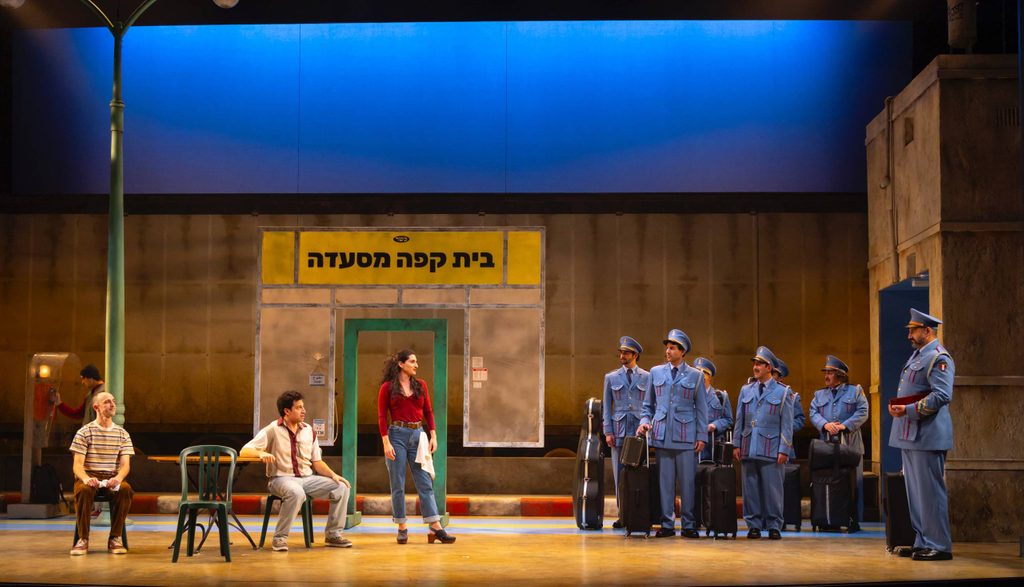
The cast of “The Band’s Visit” at the Huntington. Photo by T Charles Erickson

By Shelley A. Sackett

The delightful musical “The Band’s Visit” is a welcome breath of air in the current asphyxiating climate surrounding the war between Israel and Hamas. Its focus is a single night in Bet Hatikva, a tiny Israeli town that feels more like a pit stop on the way to someplace more important than a destination.

“You probably didn’t hear about it,” says Dina (played by a magnificent Jennifer Apple in a star-making performance), the proprietor of Bet Hatikva’s only café and its resident narrator and cynic. “It wasn’t very important.”

As she goes about her business at the café, lamenting her plight in this Podunk town in the middle of nowhere, her fellow residents, workers and perpetual customers join in witty song to echo her sentiments.

Everyone is waiting for something to happen. Everyone is bored. Everyone is “looking off out into the distance/Even though you know the view is never gonna change.”

And then, suddenly, an entire band of Egyptians clad in gaudy, bright powder-blue uniforms shows up as if beamed down from heaven in answer to their unspoken prayer. It is as disorienting as it is exciting.
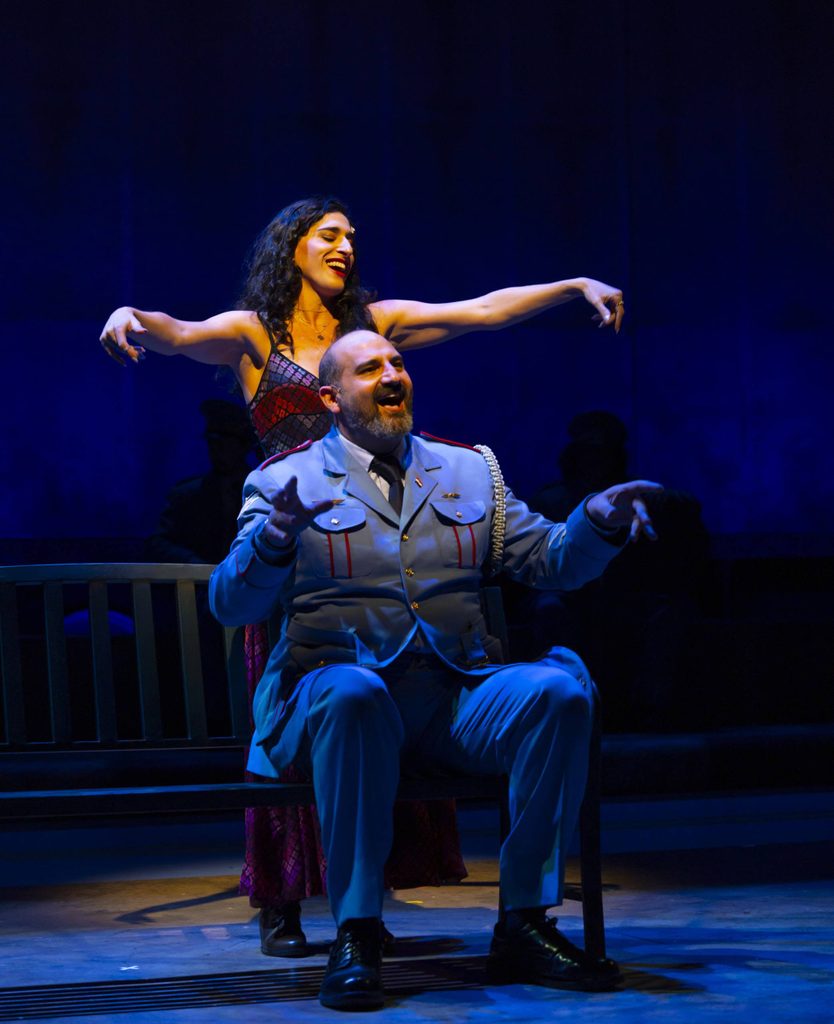
Jennifer Apple, Brian Thomas Abraham
 

It’s as if the cast from Wes Andersen’s “Budapest Hotel” showed up en masse dressed as bellhops.

The members of the Alexandria Ceremonial Band, led by its uptight, by-the-book conductor, Tewfiq (played with a hint of vulnerability and compassion by Brian Thomas Abraham), seem to be unwitting victims of confusion and ineptness. They are due at the Arab Cultural Center in the thriving city of Petah Tikva. Instead, they have landed in the motheaten town of Bet Hatikva, where they are truly strangers in a strange land.

Making matters worse, there is no bus until the next morning. There are also no hotels. The Egyptians are as stuck as the residents. Not to worry, Dina says. The locals will be happy to host the Egyptians for the night.

And for the next 90 intermission-less minutes, these two very different groups of individuals who do not share the same language or culture will bond in ways that reveal gossamer layers of tenderness, humanity and hope. The ice breaker, it turns out, is music, the universal language of the soul.

Which is lucky for us. With songs by David Yazbek and a script by Itamar Moses, “The Band’s Visit” is as satisfying a musical as it gets. The ballads and character songs blend wisps of haunting Middle Eastern and klezmer melodies and rhythms with poignant, funny Sondheim-quality lyrics. Icing atop this sumptuous cake is the fact that each syllable is crystal clear thanks to perfect enunciation and expert sound.

The action, as it were, takes place as vignettes of intimate interactions between the Israelis and their guests. In the process, we get to glimpse the similarities of sadness, regret, dashed dreams and promises unfulfilled that they all share. These seemingly disparate people, Egyptians and Israelis, learn there is more that joins than separates them when politics are ignored.

The salve of that message alone is reason enough to see this show. The pitch-perfect production under Paul Daigneault’s direction and stand-out acting and musicianship raise the bar to a sublime level.
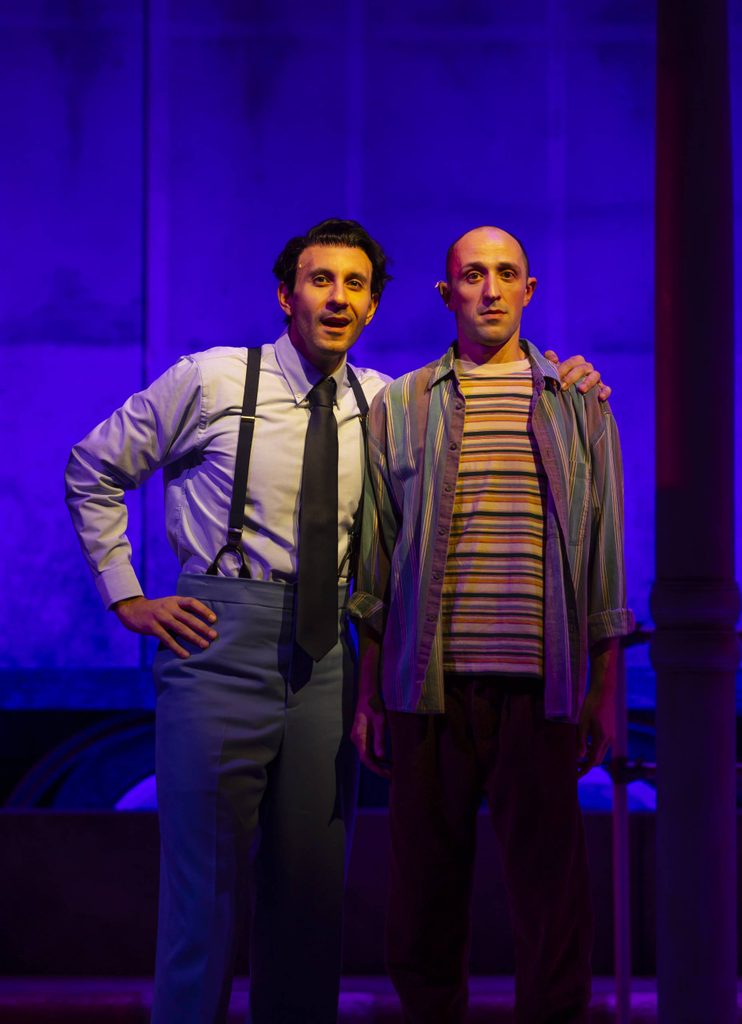
Kareem Elsamadicy, Jesse Garlick

As Dina, Apple is riveting. She brings fire (think Selma Hayek), ice and a powerful set of pipes to the complicated woman who rages against life’s disappointments while being unable to let go of her lifeline of hope. Her body language is eloquent and articulate. The scenes between her and Tewfiq, where each reveals their most secret secrets, are heartbreaking. In another life, at a different time, these two could have been a match made in heaven.

Everyone benefits from these chance encounters, learning more about themselves in the course of learning more about the “other.” An Egyptian clarinetist and assistant conductor help Itzhak and Iris, a floundering young couple on the brink of losing the thread of their union. A Don Juan hopeful trumpeter (Kareem Elsamadicy) gives the socially awkward Papi (a scene-stealing Jesse Garlick) a lesson in how to approach girls.

There is also laughter, mirth and the delight of cast members who do double duty as musicians. It is pure magic each time the six members of the band break into song on stage.

By morning, when it’s time for the band to depart, things have shifted. There is a new melancholy in the air, yet it is not borne of despair or sadness. Rather, it stems from the experience of how one single night can change a person — and an entire community — in a profound way that leaves hope in its wake.
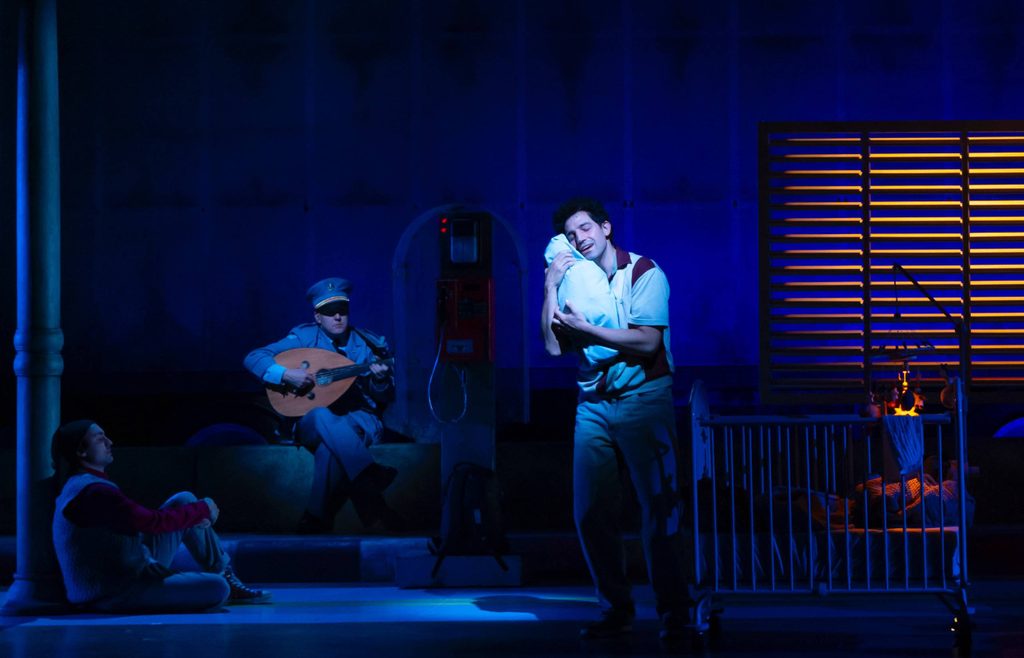
Marianna Bassham, Andrew Mayer, Robert Saoud, James Rana, Jared Troilo

Dina and Tewfiq face each other for the last time, sharing both the joy of having discovered that there is a comforting home even for their shattered hearts and the pain of knowing that that bed will never be feathered. When Tewfiq raises a palm to Dina and she raises her back, the emotional gravitas of their goodbye ranks right up there with Rick and Ilsa’s embrace on the tarmac in “Casablanca.”

“Nothing is as beautiful as something you don’t expect” is a common refrain. By the play’s end, every character has been transformed in some indelible way by the band’s unexpected visit. And, after experiencing 90 minutes of a music-filled world devoid of ethnic conflict and invectives, where Arabs and Jews connect and share just as regular folks looking out for each other, so have we.

For information and to buy tickets, go to https://www.huntingtontheatre.org/

“The Band’s Visit” — Music and Lyrics by David Yazbek. Book by Itamar Moses. Based on the Screenplay by Eran Kolirin. Directed by Paul Daigneault; Choreography by Daniel Pelzig. Music Direction by José Delgado. Scenic Design by Wilson Chin and Jimmy Stubbs. Costume Design by Miranda Kau Giurleo. Lighting Design by Aja M. Jackson. Sound Design by Joshua Millican. Produced by Huntington Theatre in collaboration with SpeakEasy Stage at 264 Huntington Ave. Boston through December 17.
ASP’s Not-to-Be-Missed “How I Learned to Drive” Explores Abuse and Memory in a Tour de Force Production

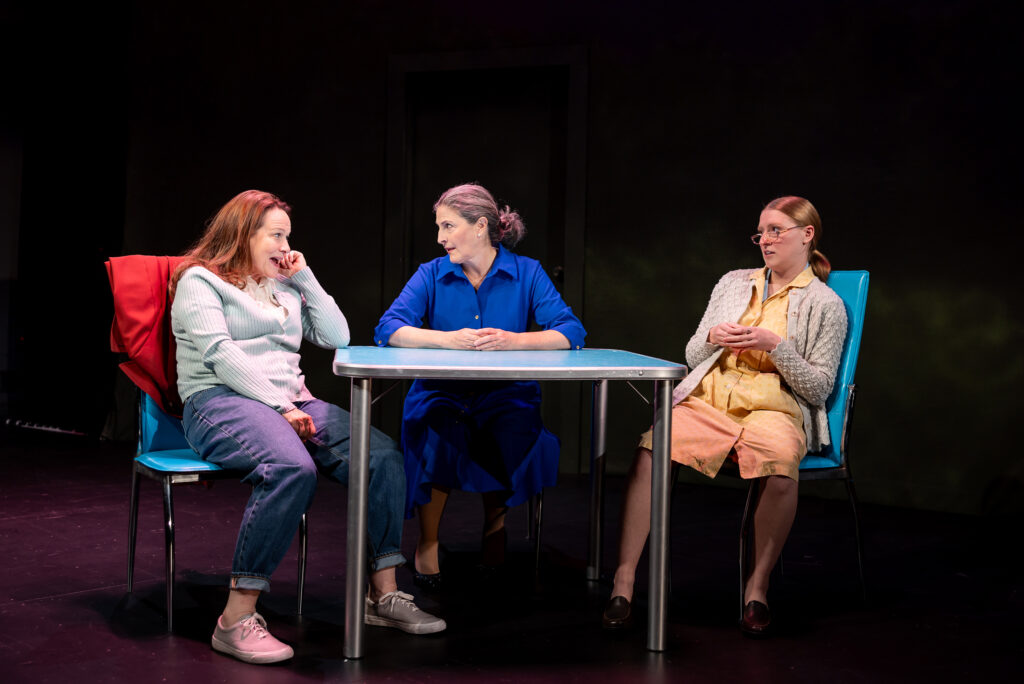
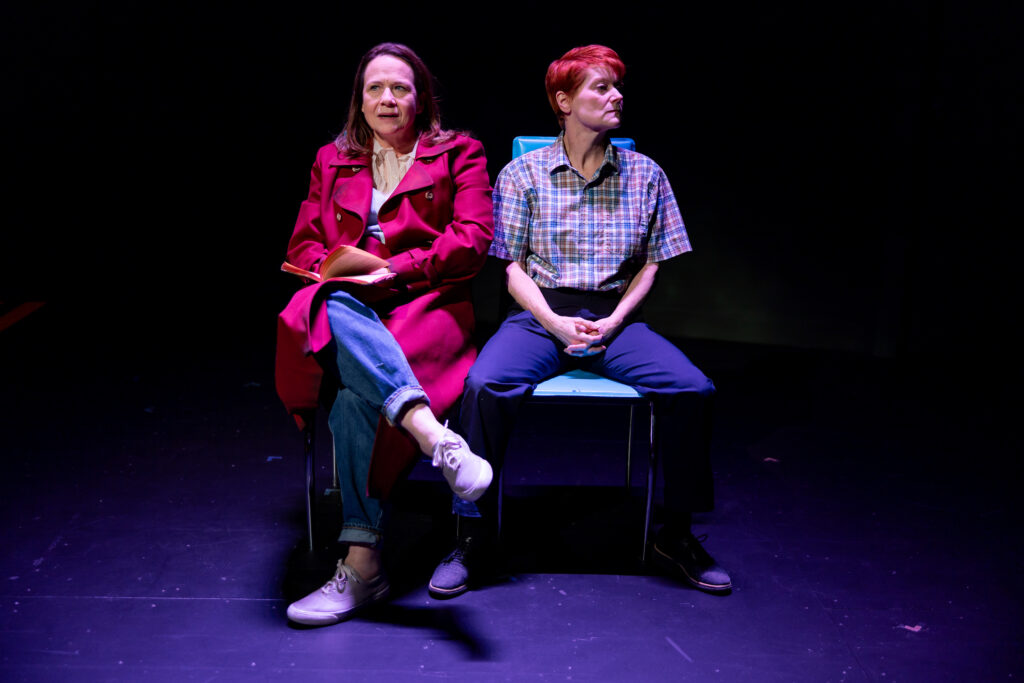
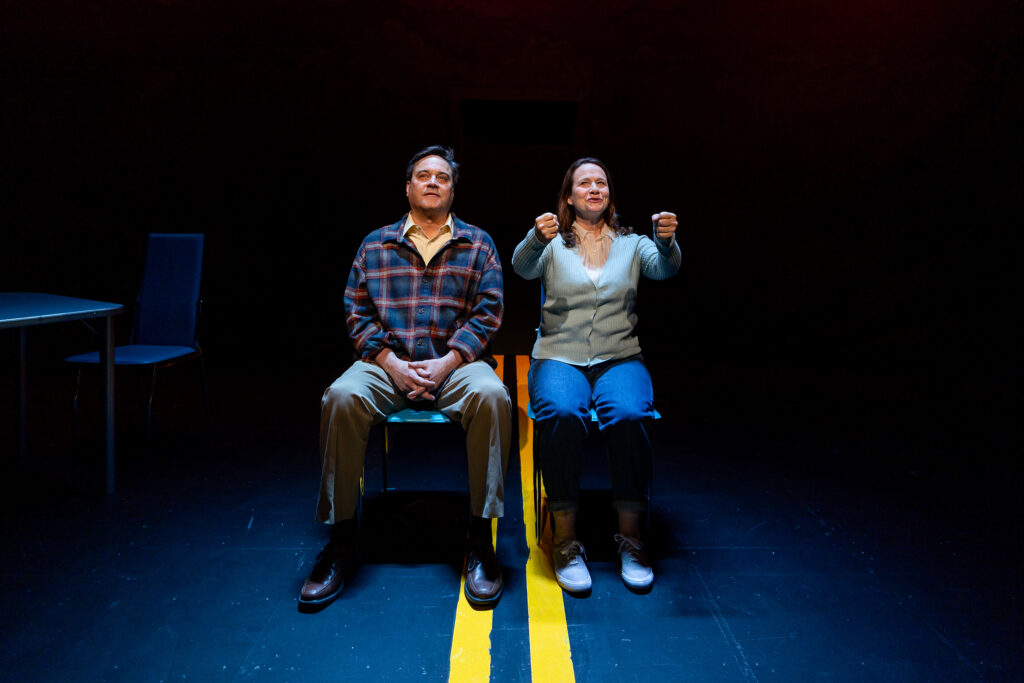
Dennis Trainor, Jr. and Jennifer Rohn in Actors’ Shakespeare Project’s ‘How I Learned to Drive’
(Photo Credit: Nile Scott Studios)

By Shelley A. Sackett

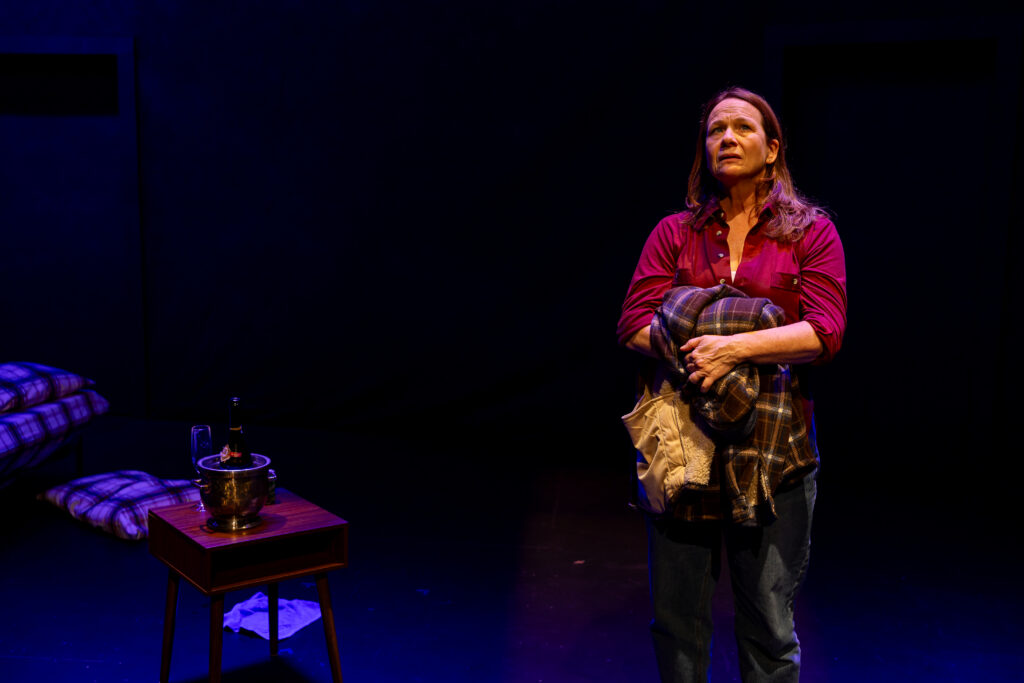
“You and Driver Education — Safety First,”  a voice announces as the lights dim. A middle-aged woman steps onto a bare set, composing herself. She turns to face the audience, addressing them as though mid-conversation.

“Sometimes, to tell a secret, you first have to teach a lesson,” she says. “We’re going to start our lesson tonight on an early, warm summer evening.”

So begins Paula Vogel’s brilliant Pulitzer Prize Award-winning play, “How I Learned to Drive,” in which she examines the complicated ways in which we process the trauma, shame, and blame associated with pedophilia and family complicity. If the topic sounds heart-wrenching and heavy, that’s because it is.

Yet, thanks to superb acting, Elaine Vaan Hogue’s sensitive direction, and Vogel’s candid and non-judgmental script, we grow to care about the characters — all of them, including the predator, Uncle Peck. Although a testament to Vogel’s ability to create a defective character whose humanness prevents us from dismissing him as pure evil, that is perhaps the most disturbing part of the play.

Set in Maryland in the 1960s and ‘70s, the non-chronological scenes are narrated by Li’l Bit (the spectacular Jennifer Rohn), a woman now in her mid-30s who plumbs her memories of the sexual assault she endured beginning at age 11 and continuing until her 18th birthday. The abuse began as a driving lesson, and Vogel uses titles from a guide to a driving handbook as a device to link the nonlinear episodes.

Rohn

As “Drive” moves back in time, from when Li’l Bit was 17 to 15 to 13 and, finally, 11,  the horror and helplessness of the situation hangs heavy. Endowed from a young age with very large breasts, Li’l Bit is ridiculed and bullied at school and at home. Only Uncle Peck (an equally amazing Dennis Trainor, Jr.), whose playful, empathetic, and supportive relationship is a welcome refuge for the isolated and lonely child/woman, seems to understand and care about her. Their relationship forms the backbone of the play.

We watch as Uncle Peck systematically grooms and desensitizes Li’l Bit, nefariously making her his accomplice instead of his victim. “Have I forced you to do anything?” he asks repeatedly as he unlatches her bra with one hand, joking about how boys her own age probably fumble and need her assistance to accomplish the same feat. “Nothing is going to happen between us until you want it to,” he croons. “You just can’t tell anyone.”

Interspersed between the edgy scenes of seduction are narration and a Greek chorus of three (Amy Griffin, Sarah Newhouse, and Tommy Vines, all superb) who deliver monologues and play many roles in family scenes, driving lessons, restaurants, and the schoolyard. In one scene, our hearts ache for 11-year-old Li’l Bit as her family (mother, aunt Mary, Uncle Peck, cousin BB, Grandma and Grandpa) shrieks derisively as they joke about her breasts. No wonder she takes refuge in the kitchen with Uncle Peck as he washes the dishes and converses with her as if she were his peer.

Their weekly driving lessons start shortly after.

As Li’l Bit plumbs her memory, revealing and reliving episodes of these driving lessons and submission to the accompanying sexual abuse, she also reveals how the years of trauma finally caught up with her, leading to her drinking to excess and getting expelled from college. She relives other memories, too, some so painful she can’t deal with them and, continuing the driving metaphor, changes them “like changing stations on the radio.”

Vogel expertly uses humor and slapstick to lighten the emotional load of the unrelenting manipulation and abuse. “A Mother’s Guide to Social Drinking” and “On Men, Sex and Woman” feature bravura performances by Newhouse as Li’l Bit’s mother and make their points while making the audience laugh.

Vogel turns to a monologue by Aunt Mary (also Newhouse) to answer the question of whether Li’l Bit’s family knew what was going on.

Rohn, Sarah Newhouse, Amy Griffin

Turns out, they did.

Alone on stage, Aunt Mary defends her husband, claiming he is the victim of Li’l Bit’s manipulation. She can’t wait for Li’l Bit to go off to college, so things can go back to normal. “I’m a very patient woman,” she states with more than a whiff of menace. ”But I’d like my husband back.”

Even more chilling, if that is possible, is the scene titled, “Uncle Peck Teaches Cousin Bobby How to Fish,” during which it becomes clear that Uncle Peck also assaulted his young nephew BB after baiting and trapping him with the same kindness, gifts and you-can-trust-me-banter he used on his niece. The ruthless and deliberate nature of the premeditated attack, stripped naked of the frisky banter of his encounters with Li’l Bit, unmasks Uncle Peck for the cold-blooded pedophile he is.

Eventually, Li’l Bit breaks free of Uncle Peck on her 18th birthday in a pivotal scene where Uncle Peck exposes how unhinged he has become, and Li’l Bit finally leaves him and their situation for good. The trouble is, the years of trauma have etched an indelible toll on her, one that leaves her reflecting on why Uncle Peck molested her and what responsibility she bears. She ruefully wonders whether she will ever be able to forgive Uncle Peck and, by extension, herself.

As Li’l Bit and Uncle Peck, Rohn and Trainor are spot-on perfection. Trainor captures Uncle Peck’s crushed spirit and underlying aw-shucks grace, his tortured yet thoughtful self. Rohn brings an incandescence to the complex Li’l Bit and the chasms separating her bone-weary adult sadness and giddy little girl appreciation for adult attention and admiration. It is a fine line, and Rohn navigates it effortlessly. A set bare of all but a few chairs, tables, and a bed places the focus squarely where it should be: on the characters.

At the end of the play, Vogel’s script returns to the present. Li’l Bit thinks about her next steps now that she is 35. “That’s getting up there for a woman. I find myself believing in things that a younger self vowed never to believe in. Things like family and forgiveness,” she says.

Rohn, Tommy Vines

Despite everything she has been through and the fact that it all began with her sitting in the driver’s seat, she is grateful for the freedom she feels when she drives, the nearest sensation she can muster of “flight in the body.”

As she sits alone in her car, adjusting her rear view mirror, she notices Uncle Peck sitting in the back. After smiling at him, she steps on the gas pedal and drives away.

Although first produced in 1997, it wasn’t until 2020 that Vogel first spoke about the play as autobiographical. “I didn’t go into this concerned with the forgiveness of that person [Peck is based on]. I went into this concerned with the forgiveness of myself. Because the truth is the children always feel culpable. And the structure of this is me getting to a point where I’m like, ‘You know what? You were a kid. That’s all I wanted, to get there and feel that. And to have it be such a basic truth that my childhood self would accept it,” Vogel said in an earlier interview.

‘How I Learned to Drive’ — Written by Paula Vogel. Directed by Elaine Vaan Hogue. Scenic Design by Baron E. Pugh; Lighting Design by Marcella Barbeau; Costume Design by Marissa Wolf; Sound Design by Mackenzie Adamick. Presented by Actors’ Shakespeare Project at the Roberts Studio Theatre, Calderwood Pavilion, 527 Tremont St., Boston through November 25.

For information and tickets, go to https://www.actorsshakespeareproject.org/how-i-learned/

ELVIS Is Another NSMT Crowd Pleaser

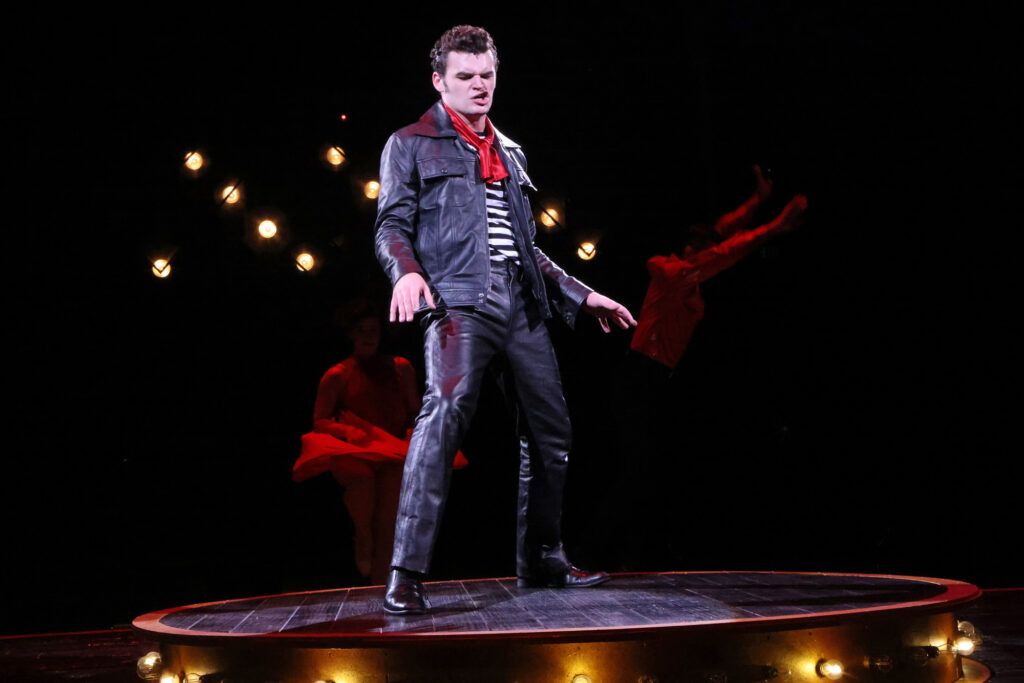
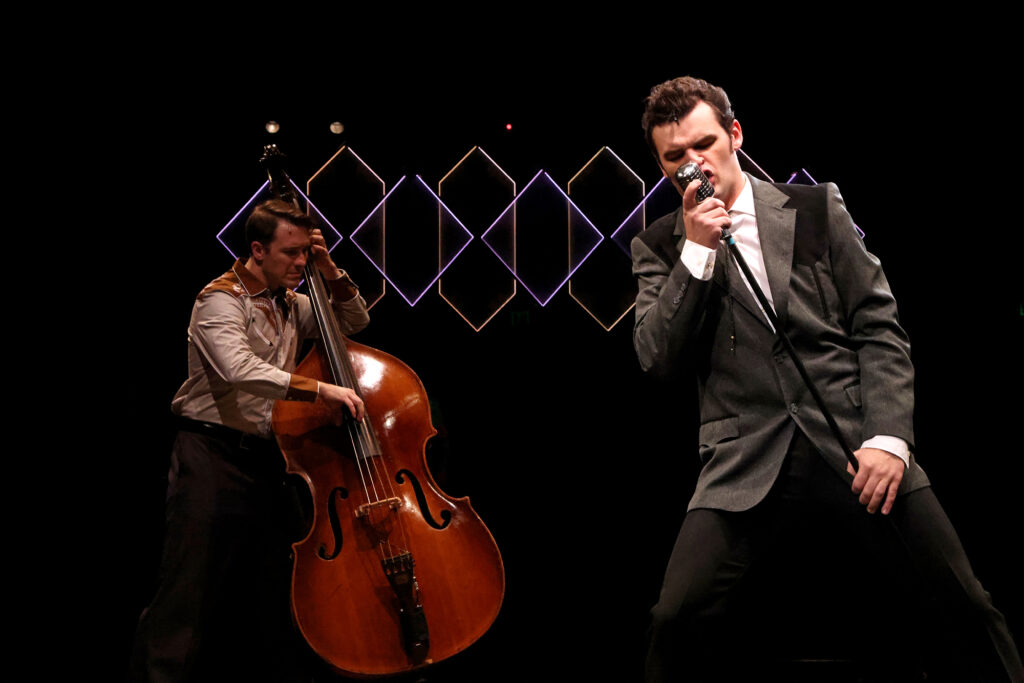
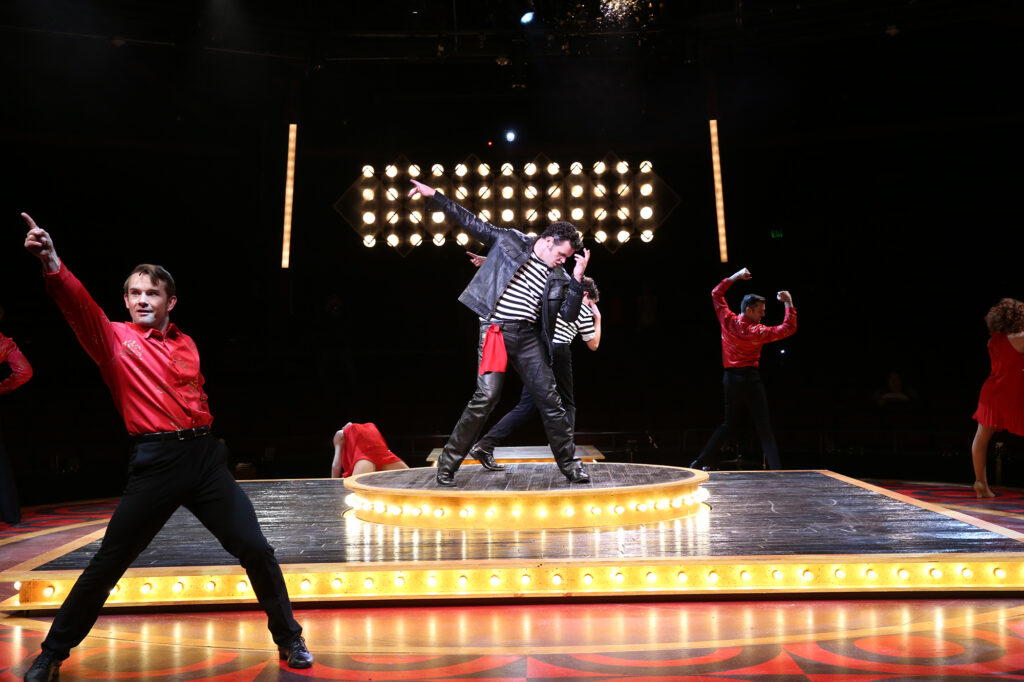
Dan Berry in “Elvis” at the North Shore Music Theatre. Photo © David Costa Photograph

By Shelley A. Sackett

Who can resist the charm, energy and smoldering heat of that hip-swinging, pelvis-grinding consummate crooner and actor known as Elvis? At Bill Hanney’s award-winning North Shore Music Theatre, fans and fans-to-be of the “King of Rock and Roll” can spend a toe-tapping two and one-half hours (one intermission) as over 40 of Elvis’ most famous songs are belted out by talented Dan Berry while a cast of 29 sings and dances their hearts out to a live orchestra of nine.

Throw in the theater-in-the-round setting with its intimacy and excitement, and you’ve got all the ingredients for an evening of sheer entertainment.

The bio-musical picks and chooses pivotal moments of the cultural icon’s life to explore through song, dance, and drama. (For those thinking of taking their children, be forewarned that Elvis and others have a bit of a potty mouth, and the f**k word is frequently bandied about). We learn about Elvis by eavesdropping on those who knew him best, like the kind and maternal record store owner Betty (a standout Altamiece Carolyn Cooper), who teaches 13-year-old Elvis (Asher Stern) about more than Black gospel music. Through her, he gets a hands-on lesson in what a color-blind world might look like and a taste of what it feels like to be taken seriously by an adult.

The loosely woven plot follows Elvis’ ascension from an impoverished but loving childhood in Tupelo, Mississippi to being discovered by recording studio owner Sam Phillips to his having his contract sold to the conniving, heartless Colonel Tom Parker, who treats Elvis like a prized cow to be milked dry and then sold to slaughter. (David Coffee is spot-on perfect as Parker, shedding an even more shameful light on the dreadful miscasting of Tom Hanks in the role in the 2002 movie biopic. Coffee’s Parker is a John Huston-like character, all imposing charm and smarm until he sinks his teeth into your jugular).

Although the song and dance numbers take up a lot of the evening, there is still enough time to weave a Cliff Notes version of the King’s life. We are a fly on the wall when Elvis is drafted and when he first meets Priscilla. We witness the rapid ups and downs of their courtship and marriage and his devastation at the death of his beloved mother. We watch as Elvis’ many appetites spiral out of control and are heartbroken as his career circles the drain with B- films like “Change of Habit.”

Writers Abbinati and Cercone may have sacrificed a smoothly scripted biographical timeline in favor of including a challenging number of musical and dance numbers, but they nonetheless managed to put enough dramatic meat on its bones to flesh out Elvis as a nuanced and complicated individual. That is no small feat.

Kudos to director and choreographer Kevin P. Hill for keeping the ball rolling with a lively pace and varied dance routines. This reviewer’s particular favorite was “You’re the Boss,” the red hot, sizzling Elvis/Ann-Margaret number pas de deux (Alaina Mills is riveting).

Although long and a bit repetitive, “Elvis” fits the bill if you’re looking for an evening of the kind of rocking entertainment NSMT is known for.  

Elvis: A Musical Revolution’ at North Shore Music Theatre. Book by Sean Cercone and David Abbinanti. Based on a concept by Floyd Mutrux. Direction and Choreography by Kevin P. Hill. Co-Music Direction by Milton Granger and Robert L. Ruckinski. Scenic Design by Kyle Dixon. Costume Design by Travis M. Grant. Lighting Design by Jack Mehler. Sound Design by Alex Berg. Wig and Hair Design by Rachel Padula-Shufelt. At the North Shore Music Theatre through November 12.

For tickets and more info, visit: https://www.nsmt.org/

Blue Man Group Presses the Refresh Button while Keeping the Best of Its Core

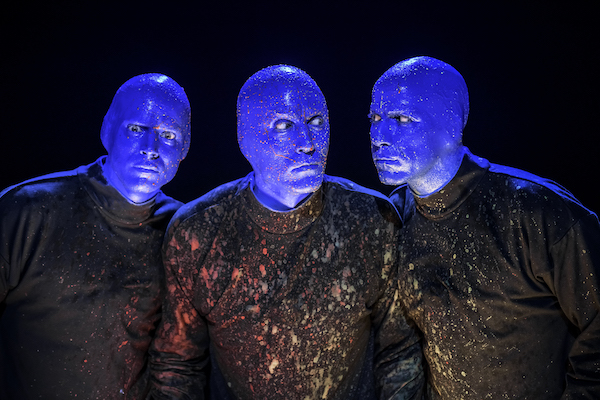
Blue Man Group

By Shelley A. Sackett

Blue Man Group is a global entertainment phenomenon known for its award-winning theatrical productions, unique characters and multiple creative explorations. With its all-new 2024 show at The Charles Playhouse, it has upped the ante on its high-energy production with new music, two new acts and a finale that feels like a Las Vegas New Year’s Eve celebration, complete with streamers, confetti and bubbles.

Yet, the show remains true to its core, despite the addition of many AI, A/V, and audience participation bells and whistles. Still a euphoric celebration of human connection through art, music, comedy and non-verbal communication, the show features its signature magic of the three bald and blue men who explore today’s cultural norms with wonder, poking fun at the audience’s collective quirks and reminding them how much they all have in common.

The music is infectious, with a great beat that dares the audience to sit still. This show is live and alive, tickling all the senses (especially the ears. The one thing that hasn’t changed is that it is LOUD. You might want to pack earplugs, especially for children).

It is also fun. When the blue men start tossing paintballs into each other’s mouths and spray painting it onto spinning canvases, the veteran attendees breathe a sigh of relief that that old standby routine made the renewal cut.

What hits and misses are the additional tips of the hat to Artificial Intelligence, the Internet, and our relentless and narcissistic obsession with self-documentation. Multi-screens are placed throughout the theater and a camera person shoots video that is broadcast in real-time. There are even ad spoofs for products like “Hope jolt nasal spray” to ease us through our existential crises.

When latecomers are featured on the big screen and called out over the loudspeakers, the gestalt of the experience shifts from funky quirkiness to late-night talk show gimmickry. The same for the segments with audience members, who are solicited and vetted before the show. Some are invited onto the stage to participate in distracting, second-rate skits. One even volunteered to have a camera snake down his throat so he could share his esophageal sphincter with the rest of the audience. On the big screen. In pulsating color.

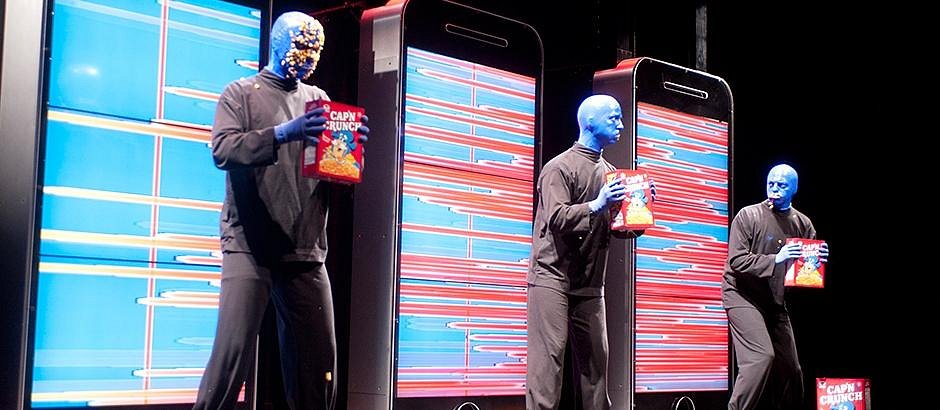
Yet enough of the original magic and charm remains to satisfy Blue Man Group traditionalists. The modern plumbing musical set, Cap’n Crunch cereal routine, and paint-infused drumming are real crowd-pleasers. Blue Man Group is owned and operated by Cirque du Soleil Entertainment Group, and when that lineage shines through, the show’s underlying charisma does too.

The show remains a family-friendly party with enough content that is over kids’ heads to keep the adults engaged and enough silliness and jaw-dropping effects to keep the kids enchanted. With its excellent music and iconic, charismatic blue men, it is an excellent respite from the dreary onslaught that passes for news and the prospect of 4 p.m. sunsets to come.

Blue Man Group’ – Created, Written and Directed by Matt Goldman, Phil Stanton and Chris Wink. Lighting Design by Matthew McCarthy; Set Design by David Gallo; Video Design by Caryl Glaab. Presented by Blue Man Productions at The Charles Playhouse, 74 Warrenton St., Boston. Ongoing.

For information and tickets, go to www.blueman.com