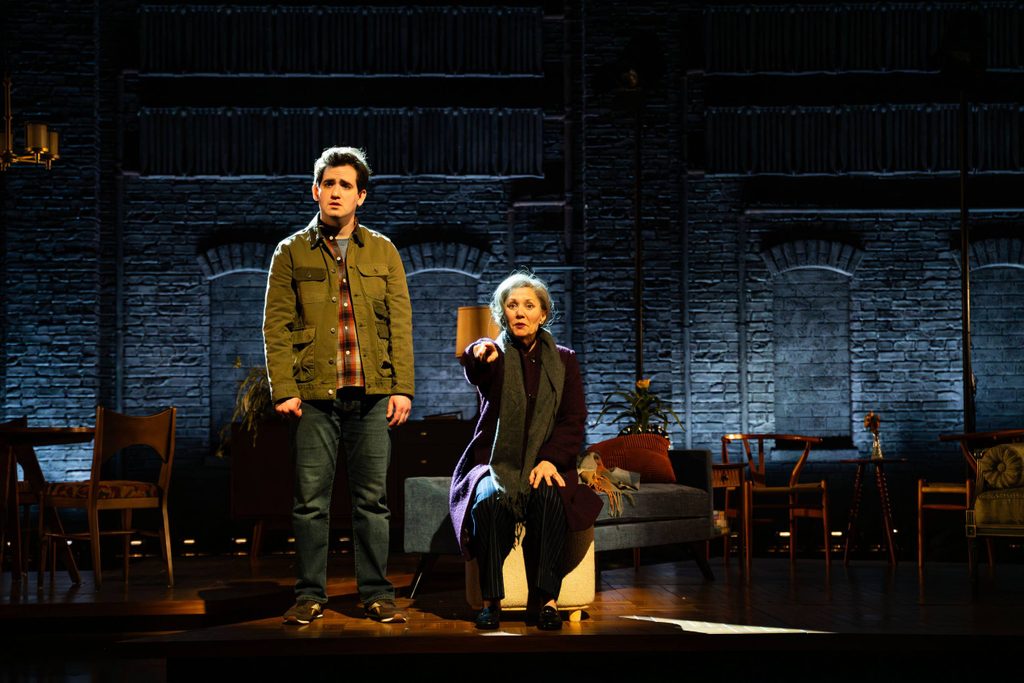
‘We Had A World’ — Written by Joshua Harmon. Directed by Keira Fromm. Scenic Design by Courtney O’Neill; Costume Design by Izumi Inaba; Lighting Design by Tyler Micoleau; Sound Design and Original Music by Melanie Chen Cole, Presented by The Huntington at Wimberly Theatre, Calderwood Pavilion, 527 Tremont St., Boston through March 15.
By Shelley A. Sackett
Joshua Harmon covers a lot of ground in the arresting We Had A World. On its surface, the 100-minute one-act play is a deeply personal disinterment and examination of the complicated dyad relationships among his grandmother (Nana/Renee), his mother (Ellen), and Josh, Harmon’s autobiographical self. Equal parts loving requiem and vicious vendetta, the playwright fleshes out these complicated characters, channeling the emotional messiness and magnificence of a family where acrimony, blame, selfishness, and self-destruction share the stage with humor, love, gratitude, generosity, self-sacrifice and honesty. Spanning 1988-2018, the story is told in a nonlinear fashion, a patchwork quilt of episodes where each square is one person’s version of the same event. As the colors and patterns shift, so do our impressions of the three characters.
Scratch even slightly below that surface, however, and a more universal message bubbles up: we all have secrets, every family harbors its own shame, every family member has their own version of what REALLY happened. “Family is just a collection of people who can see things extremely differently,” Josh explains.
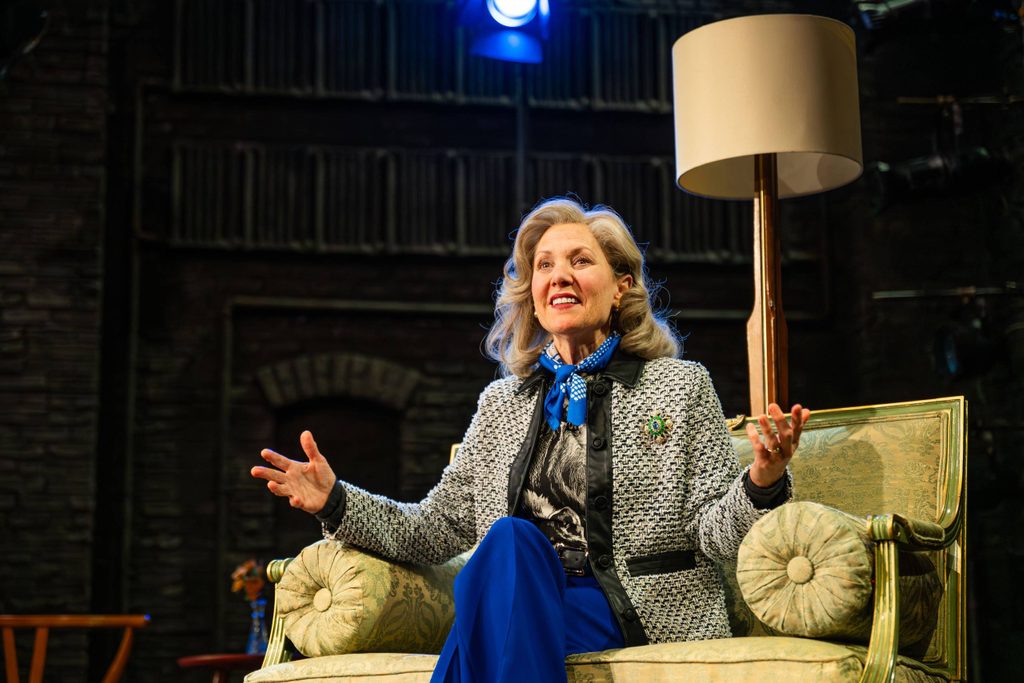
The play begins with 94-year-old Renee (a commanding Amy Resnick) telling Josh (Will Conard, perfectly cast) she has incurable cancer. She asks him to write a play about their family, giving him the green light to do what he has always wanted to but was afraid to ask for her permission. There is one catch, however: the play must be as bitter and vitriolic as possible. “It ought to be a real humdinger,” Nana says gleefully. “You can even make your grandmother a real Medea.” (Reminder – Medea is the one who kills her own children and suffers neither consequence nor conscience).
Josh literally jumps at the chance to plumb his backstory, both to pay homage and loosen its tightly wrapped shroud. When Nana and mom Ellen (a forceful Eva Kaminsky) snatch the mic out of his hand, he gives them free rein to chime in, but this is his story, and their accounts reach us as his memories of them.
We start our journey riding shotgun beside a 5-year-old Josh. He lives in the suburbs of New York City, which he realizes, even at that young age, is not where he belongs. Nana lives in an elegant apartment in Manhattan’s Upper East Side. She feigns a British accent, despite being raised in Brooklyn by immigrant parents. Even her furniture has an exotic backstory (she brought it home from Paris).
She is as devoted to her grandson as he is smitten with her. She is unfiltered, outrageous and honest. She treats him as an equal, speaking as if he were a contemporary rather than six decades her junior. At five, she signs him up for a two-week art class at the Met. At nine, she takes him to a Robert Mapplethorpe exhibit. She senses the smoldering ember of Josh’s artistic proclivity and, rather than dousing it, turns the fan on full blast.
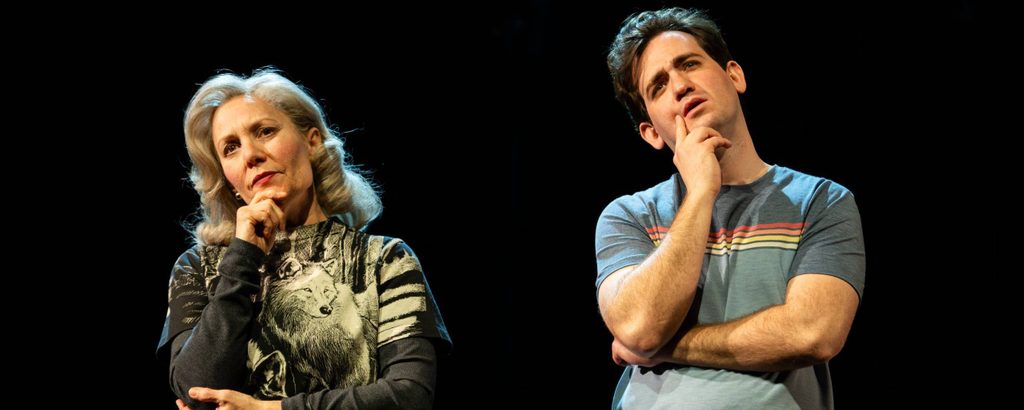
At ten, she takes him to see Medea. Afterwards, he asks her if she would ever kill her own children. “That would depend on the situation,” she says without hesitation.
Josh’s mother, Ellen, is as buttoned up and earthbound as Nana is mercurial. A lawyer and self-proclaimed bitch, Ellen is the personification of the sandwich generation, responsible parent to both her mother, Renee, and son, Josh. She is a problem solver and provider. She feels burdened and resentful, seething with anger at her own mother, yet unable to let go of her need to be her caregiver.
If ever there were a contest for poster children to represent destructive co-dependence, these two would win hands down.
Josh is caught in the middle of a situation he doesn’t understand. Why can’t the two most important people in his life get along? Why does he have to feel like he has to choose sides?
Eventually, after Nana fails to show up at Josh’s first acting gig, Ellen unlocks the family closet and the skeletons come tumbling out. Josh learns that Nana is an alcoholic. Ellen’s father was, and remains, her enabler and protector. Ellen grew up neglected and psychologically abused, cleaning up after her mother and, in return, earning attacks of her unbridled rage.
His mother’s vigilance and overprotection are not, Josh realizes, based on jealousy of his relationship with Nana. She is only trying to be the kind of parent she wishes she had had. “If you botch raising your children, nothing else matters,” Ellen tells Josh. “Raising your children is the most important thing we do.”
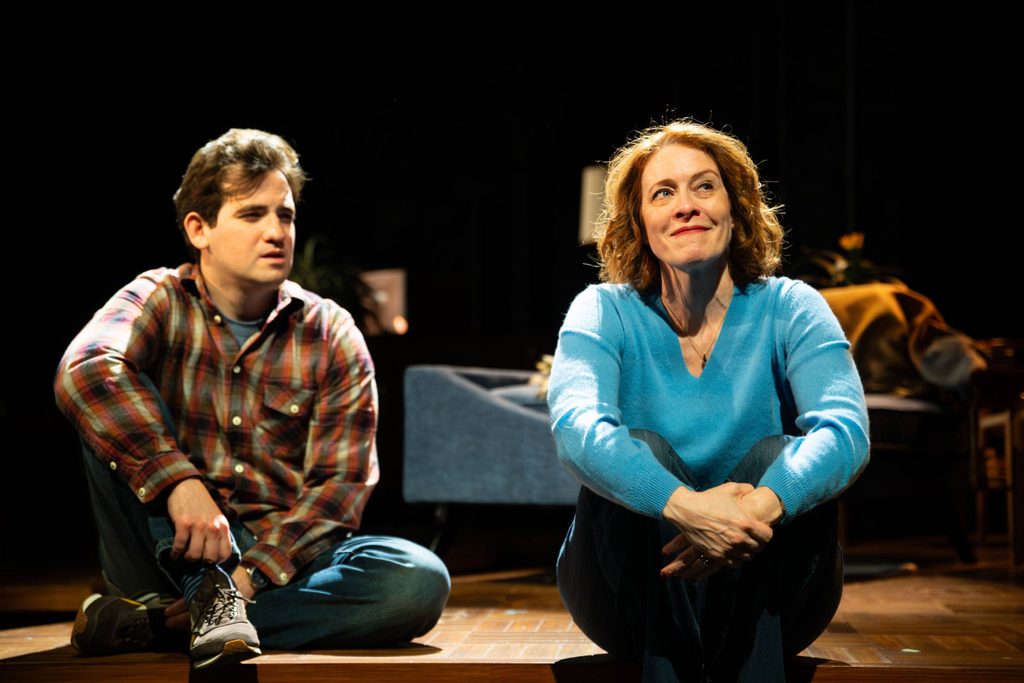
Suddenly, Josh’s world is flipped on its head. His mom’s animosity toward her mother makes sense. And Nana, whose crown he has happily polished and revered, is suddenly off her pedestal. How he reconciles his feelings about both with this new intel puts his loyalty squarely in his mother’s court. When Renee, ever the triangulator, tries to pit Josh against his mother, he responds differently for the first time.
“I cannot think of a more giving, generous, loving, thoughtful member than my mother, and attempts to hurt her hurt me very, very deeply. Trying to balance my relationship with my family and you has not been easy the past few years. But if you force me to choose sides, as it were, you must know I will always side with my family,” he writes in response to an invitation from Renee to a family vacation that excludes Ellen.
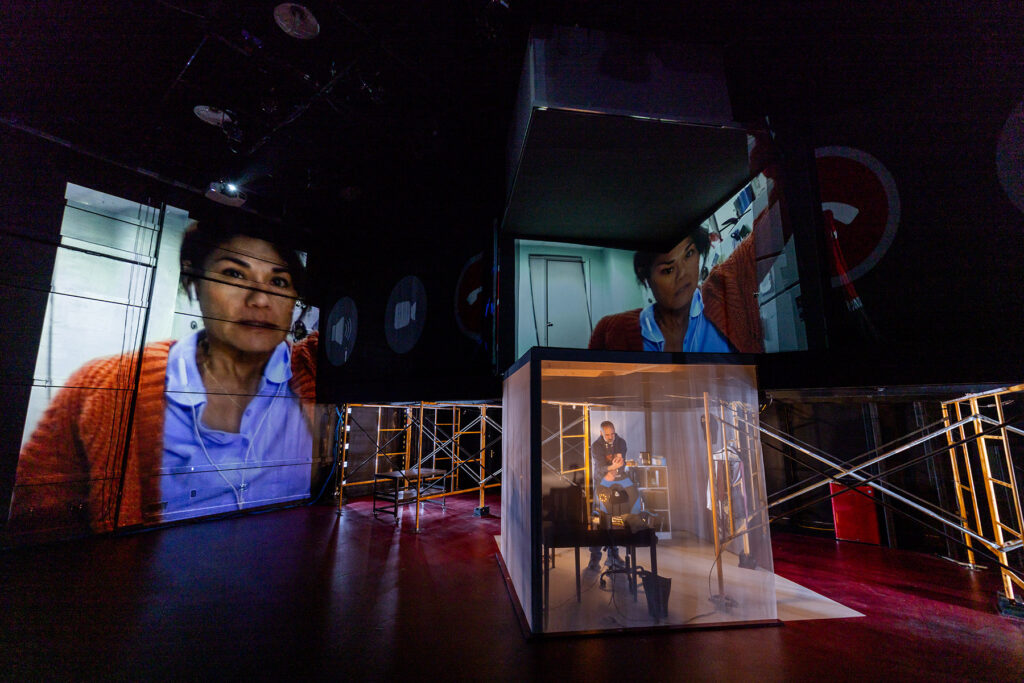
In a play with only three characters, the quality of the acting is critical, and director Keira Fromm has plenty to work with. The chemistry among the actors is palpable, and each brings a believable naturalness to their role. Resnick, as Renee, shines, relying on gestures, gait and cadence to skip from 65- to 94-years-old. Although presenting physically as frail and diminutive, Resnick’s Renee casts an oversized shadow over Courtney O’Neill’s fetching set.
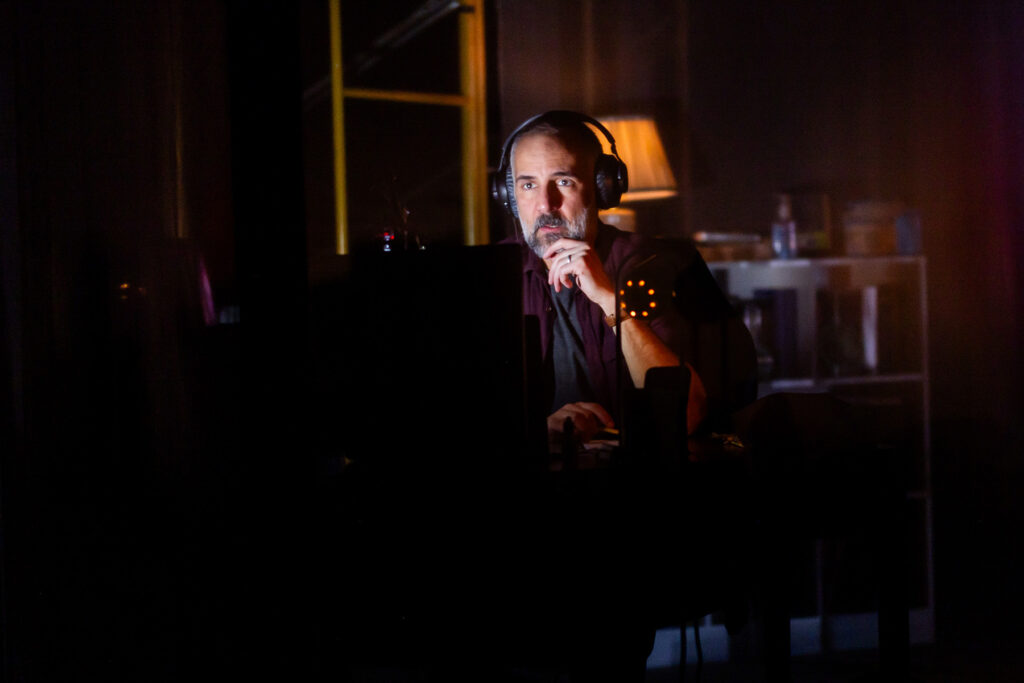
Kaminsky is solid as Ellen, bringing an element of compassion and empathy to an otherwise one-dimensional, strident role. It is Conrad’s Josh, however, who is the centrifugal force that keeps these two repellant magnetic forces from sailing off into the stratosphere. His unpretentious ease and facial expressions rope us in and give nuance and gravitas to what could have been a plastic character in less skilled hands.
Harmon’s script is by no means perfect, and the nods to climate change feel forced and awkward, as do some vignettes which overstay their welcome by a beat or two. Overall, though, the pace is brisk, the humor (for the most part) lands well, and the dialogue and narration hit their marks.
Harmon, whose credits include Prayer for the French Republic, Bad Jews, Admissions, and Significant Other, is no stranger to tackling big-ticket, macro topics. In We Had A World, he still examines Judaism and Jewish identity, family dynamics, and the effects of the passage of time, but this time, he brings it to a micro level where it is possible to submerge and totally relate.
Grandparents are meant to play a different role in their grandchildren’s lives, and Harmon’s valentine to his own Nana, warts and all, is as universal as it is heartwarming.
“Women who should not have been mothers can make very compelling grandmothers,” Josh concludes. “Nana, if you’re really watching, I just want to say thanks.”
For more information, visit https://www.huntingtontheatre.org/


 InSights