Broadway in Boston’s ‘Shucked’ Is Just What the Doctor Ordered – A Funny, Punny and Talent-Packed Musical

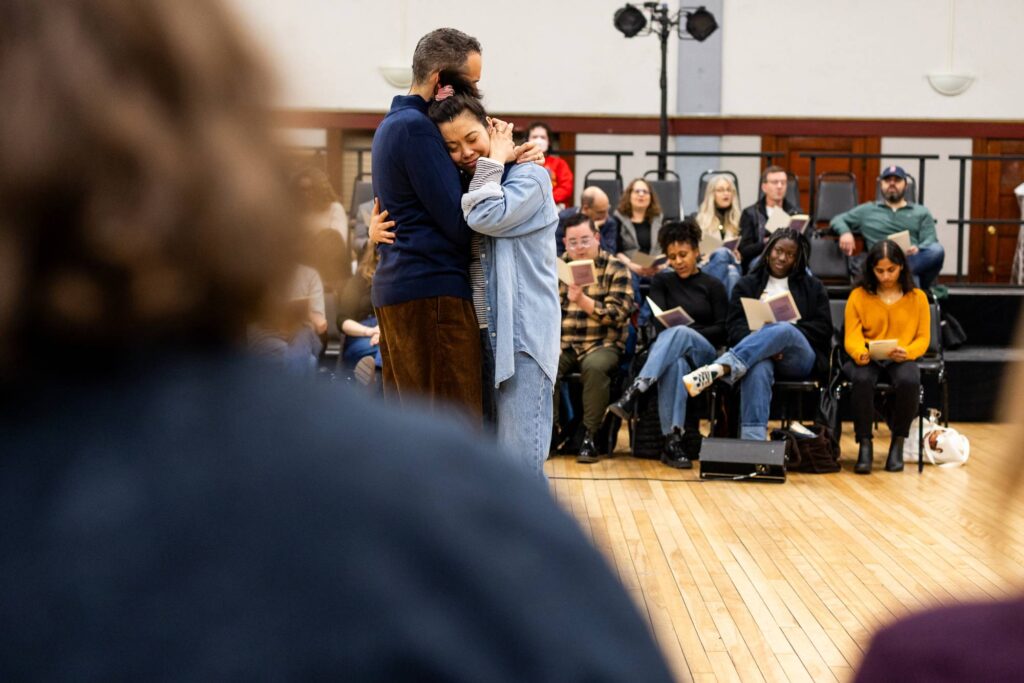
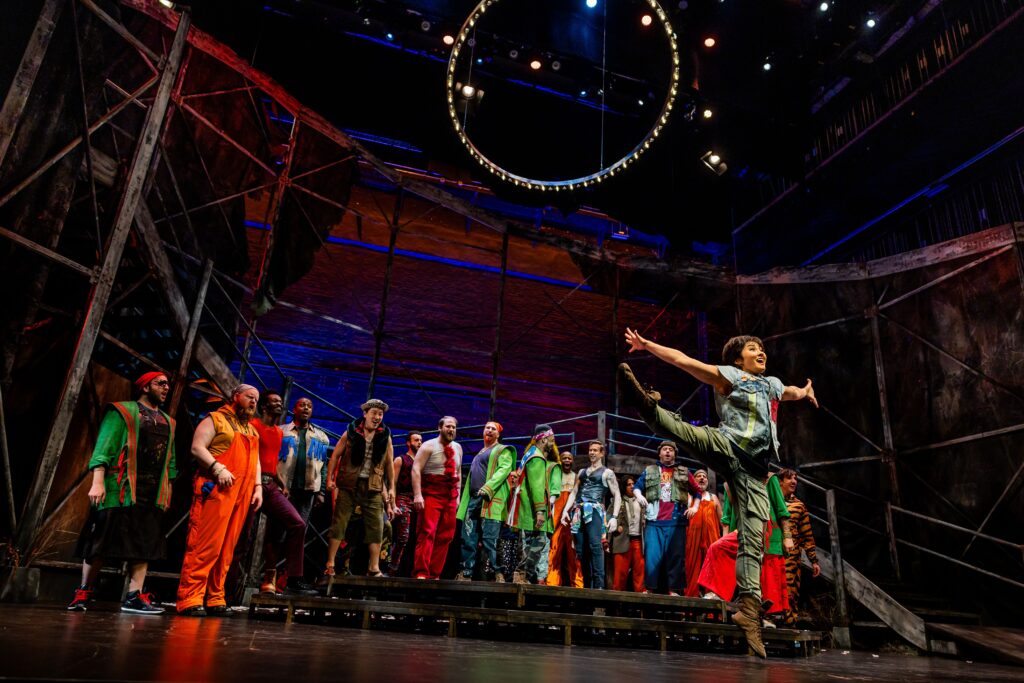
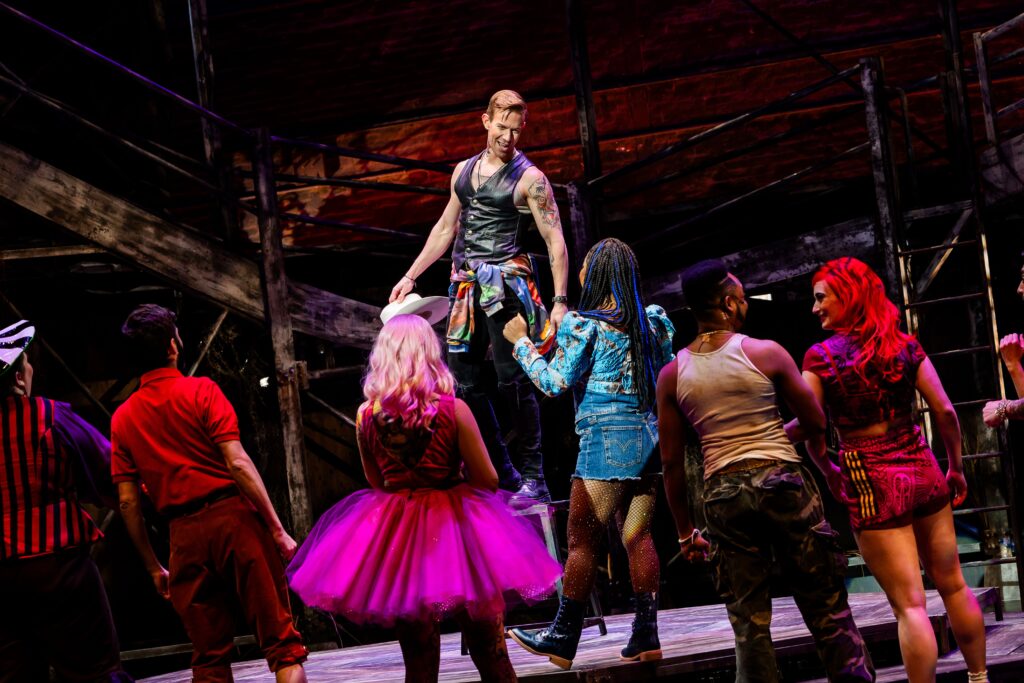
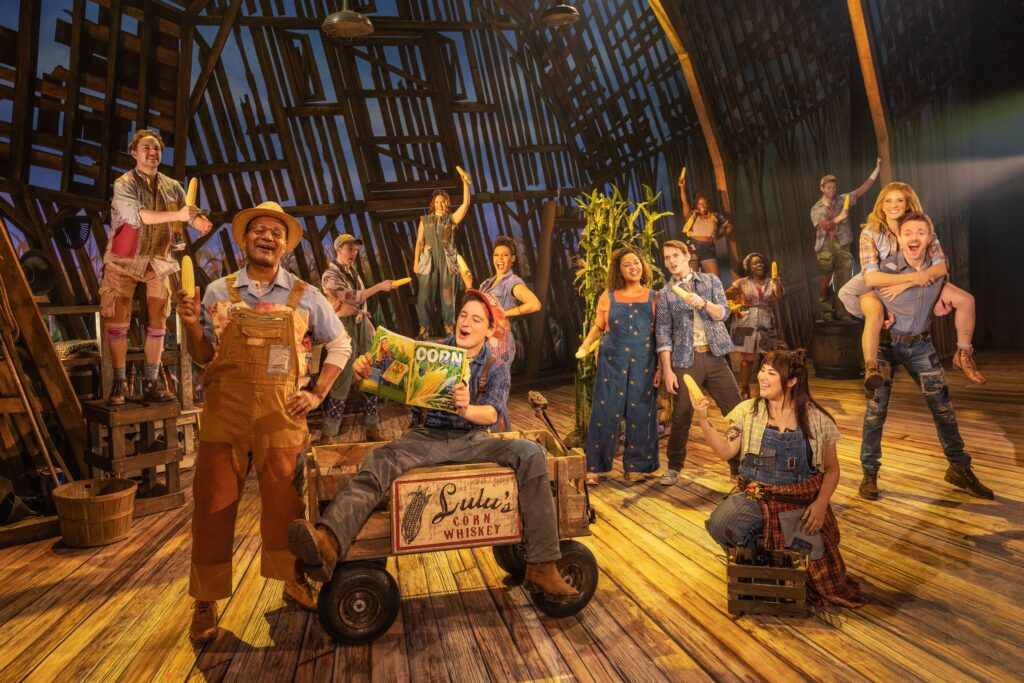
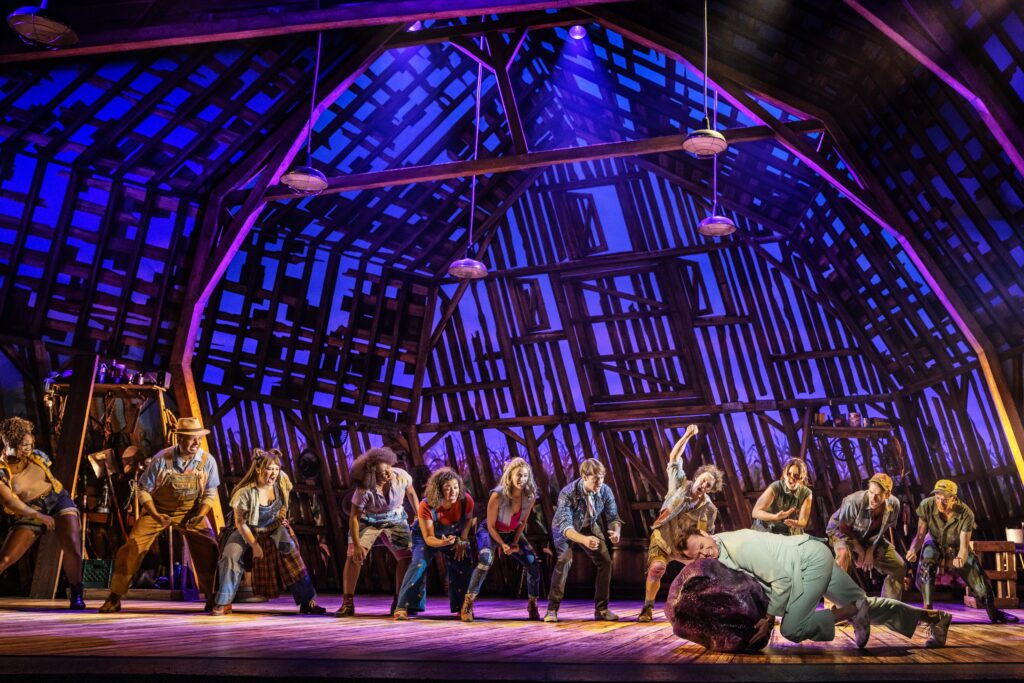
Cast of Broadway in Boston’s ‘Shucked’ at Citizens Opera House
Photos by Matthew Murphy and Evan Zimmerman

By Shelley A. Sackett

If ever we were collectively in need of some levity, it’s now. Between the political roller coaster, serious Boston theater topics and frigid spring temperatures, we could all use a light, fun break. As if reading the tea leaves, Broadway in Boston has come to our rescue with its lighthearted, raucous production, Shucked.

A Tony Award-winning musical comedy, the play is based on a book by Tony Award winner Robert Horn (“Tootsie”), with a score by the Grammy Award-winning Nashville songwriting team of Brandy Clark and Shane McAnally (Kacey Musgraves’ “Follow Your Arrow”), and direction by Tony Award winner Jack O’Brien (“Hairspray”). A talent-packed cast (including two original Broadway members) is icing on the cake.

Mention must be made about the clear-as-a-bell sound system and actors’ enunciation. I cannot remember the last time I wasn’t straining to hear and/or understand what was being said on stage, and attending ‘Shucked’ reminded me of what is possible and what I’ve been missing.

The plot is simple and functions primarily as a vehicle for the creative team to flex their considerable muscle and concoct two and a half hours (one intermission) of lowbrow entertainment consisting of nonstop corny but hilarious one-liners and playlist-worthy songs.

The setting is fictional Cob County, a southern enclave isolated from the outside world and inhabited by cheerful inbred families who have been each other’s best friends and drinking buddies for generations. The town is cut off from the rest of the world by rows of corn stalks, which provide identity, livelihood, and moonshine. One day, the corn goes flaccid, and the town melts down along with it.

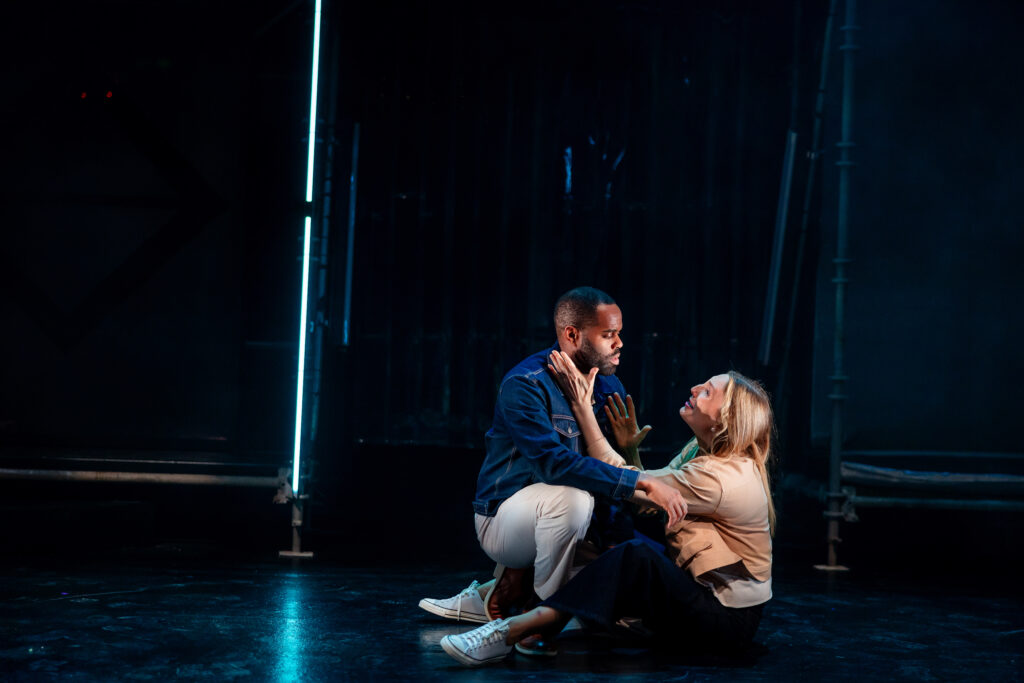
Jake Odmark and Danielle Wade

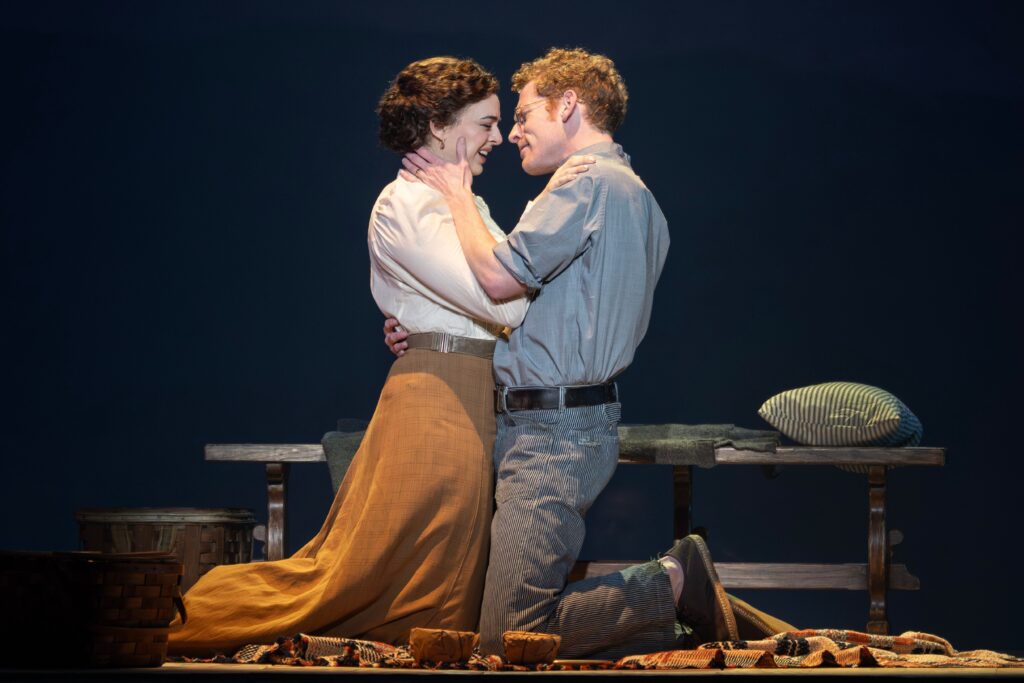
The crisis hits the central romantic couple, Beau (Jake Odmark) and Maizy (Danielle Wade), hardest. Their wedding is postponed, and Maizy, braver than Beau, ventures to the megapolis of Tampa to seek help.

There, she meets Gordy (Quinn VanAntwep), a podiatrist who advertises as a “corn doctor.” Gordy is a handsome grifter who is in hock up to his eyeballs with the mob. He smells a sucker ripe for the picking when Maizy shows him a bracelet her grandfather made from rocks beneath her house that resemble precious gems. Gordy has them assessed, determines they are his key to freedom, and follows Maizy home.

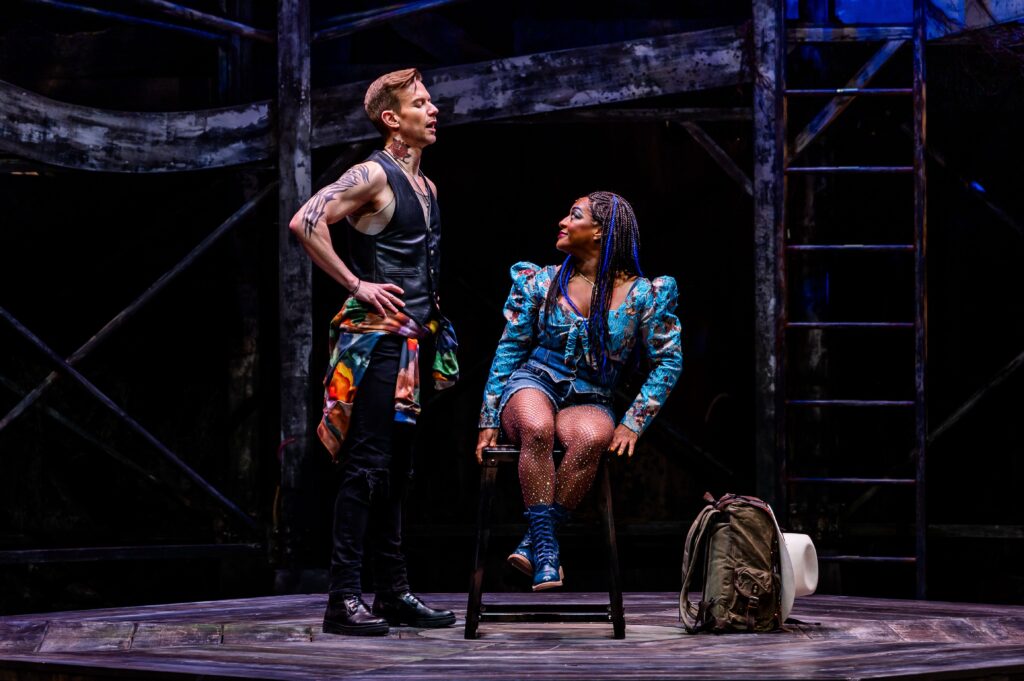
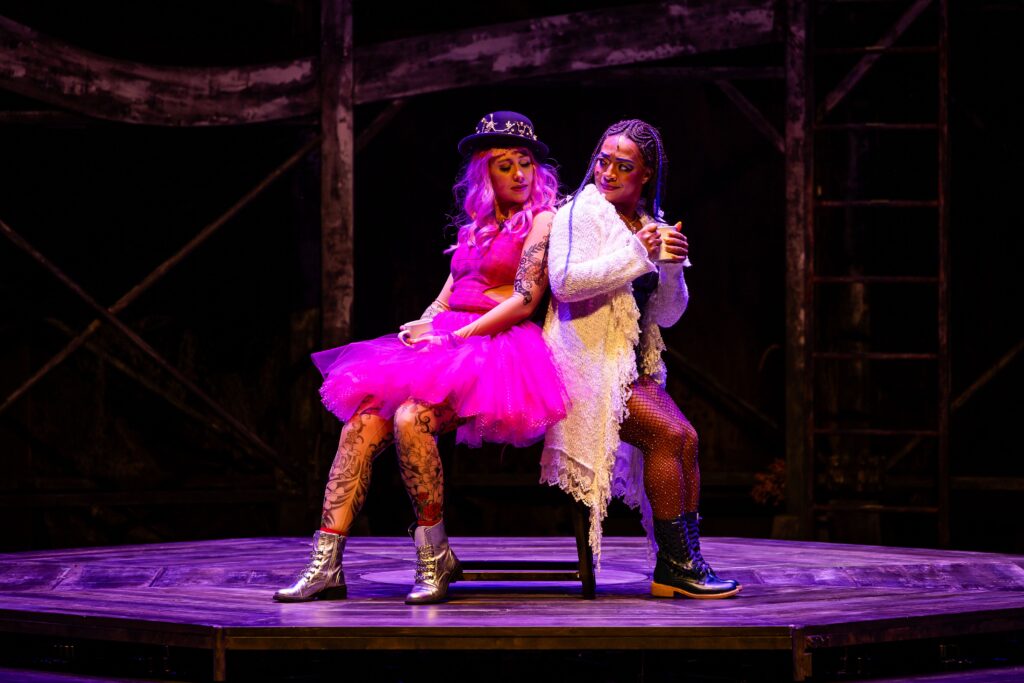
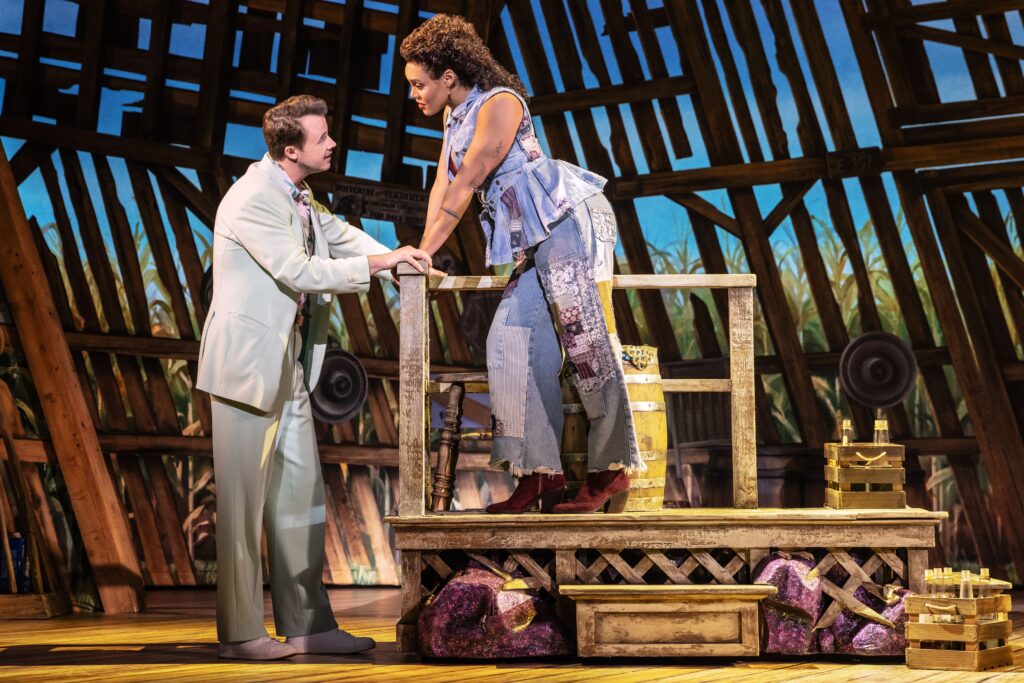
He convinces all the locals he is the answer to their troubles; all, that is, except Beau, whose lifelong romance with Maizy is interrupted by Gordy’s hold over her, and Lulu (the amazing Miki Abraham), Maizy’s cousin and local booze distiller, who smells a rat. Nonetheless, Lulu ends up falling for Gordy, Maizy re-falls for Beau, and still the corn stalks droop.

Eventually, romantic snags untangle, the corn is saved, and all’s well in Cob County once again. As I said, you don’t go to ‘Shucked’ for the storyline.

Quinn VanAntwerp and Miki Abraham

What you DO go for, however, are outstanding performances, quirky secondary characters, and an uninterrupted barrage of the corniest, belly-laugh-out-loud one-liners and terrific song and dance numbers. Remember the guiltless pleasures of “Laugh In,” “Hee Haw,” “Green Acres,” “Gomer Pyle” and “The Andy Griffith Show,” and you get the picture.

Horn does come up with some clever dramatic maneuvers, and his most effective is the use of narrators, Storyteller #1 (Maya Lagerstam) and Storyteller #2 (Tyler Joseph Ellis), who guide us through the “farm to fable” tale. They provide the play’s only surprise in a sweet and unexpected twist at the very end.

The real stars of the show, however, (across the board magnificent performances notwithstanding) are the groan-worthy but ingeniously smart jokes. Horn’s puns are raunchy, dopey, and Borsht-belt worthy. The opening number, “Corn,” praises its subject with the description, “It’s the same going in as coming out.” Peanut (Mike Nappi), Beau’s half-wit brother who compulsively fires off random one-liners, channels a dumbed-down stand-up comedian.

Examples of the rapid fire barrage are: “Remember when we used to make sandcastles with Grandma until Dad took the urn away?” “Politicians and diapers should be changed regularly for the same reason.” “If life were fair, mosquitos would suck fat instead of blood.” And, “It’s like not realizing how many people you hate until you try to name a baby.” Hackneyed? Maybe. Funny? Definitely.

In addition to the uplifting script are the fabulous song and dance numbers. Abraham (Lulu), Wade (Maizy), Lagerstam (Storyteller #1), Odmark (Beau), and VanAntwerp (Gordy) have amazing sets of pipes, and the harmonies (especially in the duets) are swoon-worthy. Abraham’s “Independently Owned” brought down the house while “I Do” is worthy of release as a single.

At this time of heavy headlines and trauma-laden theater, it’s a treat and welcome reset to indulge in an angst-free Vaudevillian spoof. We all deserve a night of tasty, tantalizing empty calories.

‘Shucked.’ Book by Robert Horn. Music and Lyrics by Brandy Clark and Shane McAnally. Directed by Jack O’Brien; Choreographed by Sarah O’Gleby; Music Supervision by Jason Howland. Presented by Broadway in Boston at  Citizens Opera House, 539 Washington St., Boston through April 20.
For more information, go to https://www.citizensoperahouse.com/

In Huntington’s “Don’t Eat the Mangos,” a Matriarchy is Reclaimed When Dark Family Secrets are Revealed

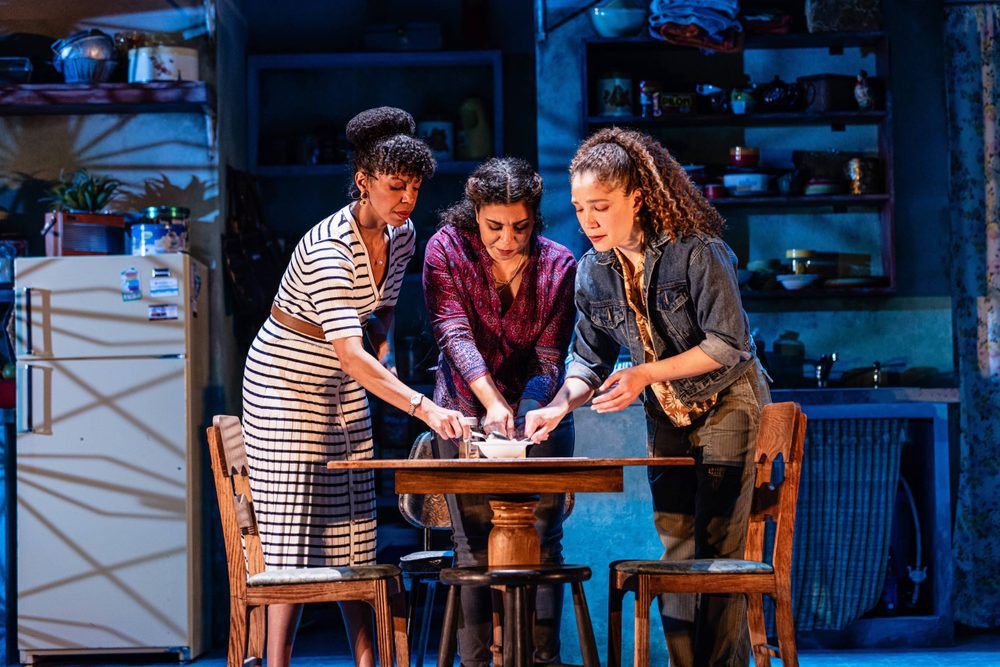
Evelyn Howe, Jessica Pimentel, Yesenia Iglesias in The Huntington’s Don’t Eat the Mangos
Photos by Marc J. Franklin

By Shelley A. Sackett

‘Don’t Eat the Mangos,’ Ricardo Pérez González’s one-act play, has a lot going for it. Set in 2019 in El Comandante, a neighborhood outside San Juan, Puerto Rico, Tanya Orellana’s bright island set plunks the audience smack into a festive, colorful vibe where curtains are doors and a commanding mango tree dominates the yard. We immediately meet three sisters, as different in personality as in looks, yet clearly cut from the same mold.

Of course, they are in the kitchen, where the women curse affectionately, call each other out, and demonstrate the kind of familiarity and genuine love that underlies their shrillest screaming matches.

Ismelda (Jessica Pimentel), the oldest, is all business. The most buttoned-up of the three, she has never married, remaining in the childhood home where she cares for their ailing parents and works as a loan officer. She is stoic and stubborn, bearing her burden but letting her sisters know she could use their help. She takes her role seriously; she actually dusts the plants.

Iglesias, Pimentel, Howe

Yinoelle (Yesenia Iglesias), the middle sister, is the most traditional of the three. Her husband is a successful construction manager who has an opportunity to move to the States. She is stylish, watches her figure and practically vamps with the spoon as she stirs the family dinner.

Wicha (Evelyn Howe) is the youngest, hippest and most passionate. She is a teacher and single mother who embraces causes and barely contains her wild hair. She is clearly comfortable in her own skin and, despite disapproving glares from the other two, plunks herself down at the table and eats cookies straight out of the tin. (That is, until Ismelda replaces the tin with the more proper plate and napkin).

This opening scene is one of the play’s best. González’s script has two goals, and he accomplishes both beautifully — we learn the family’s backstory and witness the sisters’ indelible bonds as they dance their unique sisterly dance.

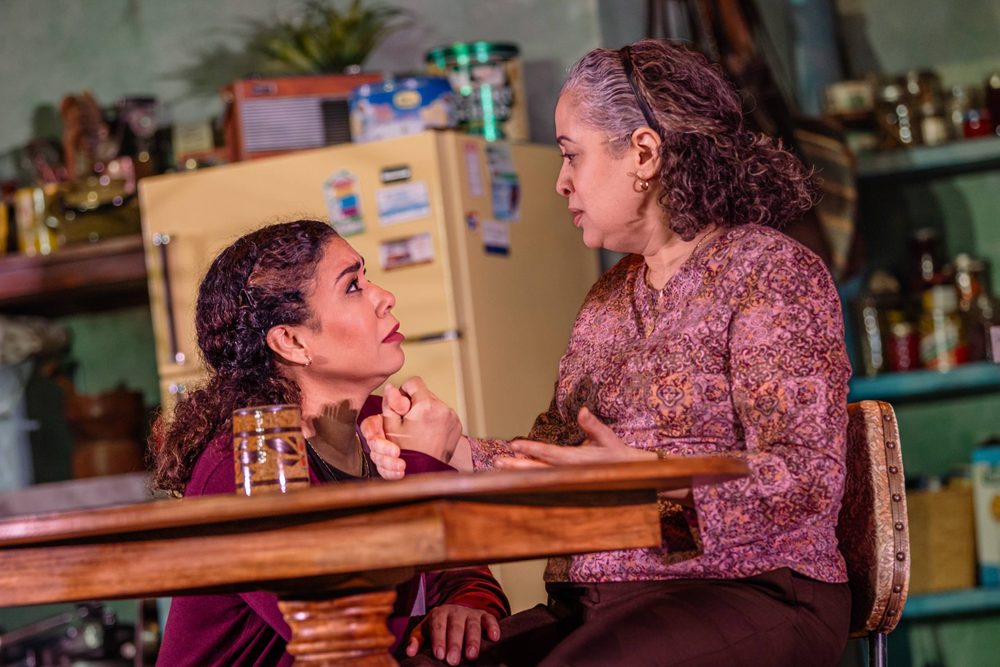
Pimentel, Susanna Guzmán

They speak of Mami (Susanna Guzman), who has suffered a relapse of cancer, and Papi (José Ramón Rosario), who is paralyzed and requires a machine to constantly pump phlegm. The girls take turns dealing with him when a storm causes a power outage and they have to suction him by hand. It is during their discussions of how to settle up with a narcissistic man who neglected and abused his family that the true family dynamics – and secrets – are revealed.

As is often the case, each sister experienced a different version of what growing up in the same household was like and throughout the play, dyads share confidences with the admonition, “Don’t tell the others.” When Ismelda tells the truth about why the mango tree’s fruit lies uneaten and rotten despite the family’s need for food (no spoilers here!), bigger questions surrounding trauma, shame, blame, oppression and duty explode. Throughout the fabric of this micro private story, González masterfully interweaves threads of macro interest, such as the complicated relationship between Puerto Rico and the US, and whether abandoning one’s native island for the mainland is a cop out or no-brainer. “This place is not our future,” Yinoelle warns, to which Ismelda responds, “I stay so you can go.”

Guzman brings an understated grace and gravitas to Mami, the family’s glue and true north. She has parented with healthy doses of superstition, discipline and common sense. She alone holds the keys to both their pasts and futures, and her final gift is to set them all free.

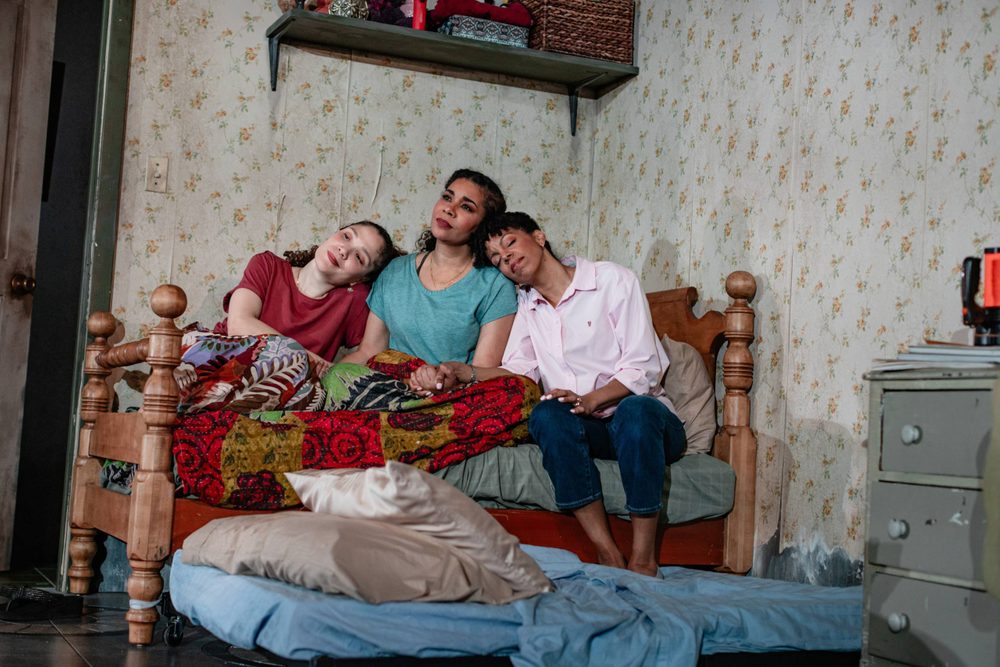
Orellan’s set channels island life, with three rotating sets that feature a cozy but cramped kitchen, bedroom/hospital and backyard, complete with rusty gate and laundry line. Director David Mendizábal effectively and efficiently makes use of every inch, but it is Jake Rodriguez’s sound design, with lightning, insects and salsa, that fine-tunes the tone.

The acting is terrific, especially all three sisters who create a tight ensemble that provides for spotlighted individuality. Howe, as youngest sister Wicha, is a standout, with her malleable features, punchy delivery and irresistible physicality. One potentially macabre but wonderfully hilarious scene turns on the talent of this splendid actress.

Howe, Pimentel, Iglesias

For all its humor, pathos and big ticket, universal questions, however, ‘Don’t Eat the Mangos’ is not unflawed. González’s inclusion of Spanish in the script establishes place and context quickly and seamlessly, but he goes overboard with whole Spanish tracts at the very beginning of the play. Unless  González’s intention is to make non-Spanish speakers feel deliberately excluded, then he needs to either trim the amount of Spanish or provide English Cliff Notes.

Equally confusing is the use of nicknames for characters the playbill lists by full names, particularly in the first few minutes. When they face away from the audience and are not easily understood, the problem is compounded. Finally, the play sometimes seems to be in the throes of an identity crisis, not sure whether to play a scene as straight drama, slapstick comedy, or some hybrid.

Yet, on balance, ‘Don’t Eat the Mangos’ is entertaining, enlightening and thought-provoking, the trifecta gold standard that makes theater such a meaningful part of our lives. 

‘Don’t Eat the Mangos.’ Written by Ricardo Pérez González. Directed by David Mendizábal. Scenic Design by Tanya Orellana; Costume Design by Zoë Sundra; Lighting Design by Cha See; Sound Design by Jake Rodriguez; Original Music by Jake Rodriguez with Alexandra Buschman-Román and Jason Stamberger. Produced by The Huntington Theatre Company, Calderwood Pavilion, Boston Center for the Arts, 527 Tremont St., Boston, through April 27.

For more information, visit: https://www.huntingtontheatre.org/whats-on/dont-eat-the-mangos/

Harbor Stage Brings the Cult Film ‘My Dinner with André’ to Life

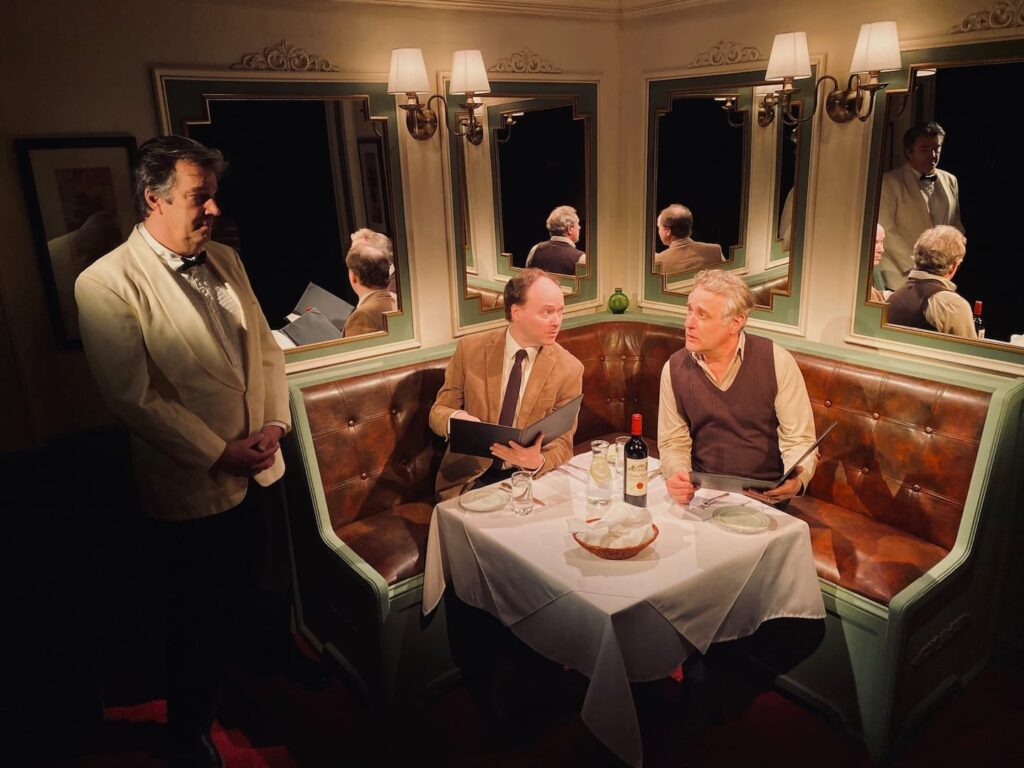
Robin Bloodworth, Jonathan Fielding, and Robert Kropf in Harbor Stage Company’s “My Dinner with Andre.” Photo: Joe Kenehan

By Shelley A. Sackett

A corner booth, fancy fare and tasty conversation — who doesn’t remember the cult frenzy caused by Louis Malle’s 1981 110-minute film that enchanted audiences, defied pigeon-holing and raised the bar on the “art” referred to as conversation?

This unconventional film should have been all but unwatchable. After all, it is simply a cinema verité version of a conversation between playwright Wallace Shawn and André Gregory, a well-known experimental theater director who seems to have dropped off the edge of the planet and whom Shawn has been trying to avoid for years.

For some, the film actually was unwatchable, and it is not to that audience that Harbor Stage’s theatrical version is geared. For those, however, who found the film charmingly quirky, the production at BCA Plaza Black Box Theatre is right up your alley.

Adapted by Jonathan Fielding (who plays – and looks like – Wally Shawn) and Robert Kropf (ditto for André Gregory), the play brings its audience through the celluloid keyhole right into the cozy, ritzy Manhattan restaurant. Evan Farley’s terrific scenic design channels the film’s setting with chandeliers, chic sconces and rich red leather upholstery. Four gilt-framed mirrors line the walls above the booth, a stroke of brilliance that allows the audience to witness the characters’ actions and reactions from multiple angles and perspectives.

Breaking the fourth wall from the get-go as narrator and soul bearer, Wally lets the audience eavesdrop on his internal monologue Woody Allen-style. “Asking questions always relaxes me,” he confides, setting the tone for the questions about life, death and everything in between that will occupy the next 90 intermission-less minutes.

The two meet at the restaurant and it is immediately clear that Wally is a fish out of water with the swanky menu (which, in an aside, he confesses he can’t translate) and even swankier server (a Lurch-like Robin Bloodworth). André is comfortably in his element and, with infinitesimal prodding, launches into an epic monologue that is as shocking in its length as in the fact that it is neither boring nor obnoxious, despite André’s obsessive fascination with all things André.

He tells Wally that he strives to lead his life as improvisational theater, and his journeys through the Sahara desert to Tibet to the forests of Poland are surreal and capture Wally’s attention. (In truth, Wally may be less captivated than relieved to be cast as the silent listener). Nonetheless, André’s insistence on waking himself to the true meaning of life and hurtling through the emotional cosmos contrasts perfectly with Wally’s grounded, simpler take on what it means to be a human being.

For André, a complacent life is a squandered life. Wally, on the other hand, not only sees nothing wrong with comfort but actively seeks it out. He’s just trying to survive, he admits, and unapologetically takes pleasure in such simple matters as errands, responsibilities, and Charlton Heston’s autobiography. He can’t understand why André is so wrapped up in figuring out what makes a hypothetical life worth living that he is unable to enjoy the details of his own life. Exasperated, Wally blurts out, “I don’t know what you’re talking about,” the truest words he’s uttered all evening.

When the two discuss theater and the responsibility of its creator to its consumer, things get more interesting and realer because Wally (finally) speaks up and disagrees with André. André insists that theater needs to show the audience a version of the world that is different from their reality, to take them to an extreme place that will shake and shock them into consciousness.

Wally believes that theater should connect people with reality and be enjoyable. People go to theater to be entertained and to relax, not to be confronted by existential crises. He is more perplexed by the challenge of eating quail (“God, I didn’t know they were so small”) than the quest for the answer to the meaning of life.

Even if all this verbosity, pompousness and navel-gazing turns you off, you might still consider seeing ‘My Dinner with André’ just to bask in the performances. Kropf is phenomenal as André, his cadence and gestures imbuing pages of monologue with simplicity and purposefulness. The tiniest flicker of an eye or tonal shift softens his character and exposes an interiority that prevents André from devolving into a shallow, two-dimensional showoff.

Fielding is the perfect foil. His Wally is a little nervous, a little frumpy and satisfied enough – for now. His facial reactions to André’s stories say more than pages of dialogue might; his slight self-conscious discomfort renders him all the more endearing. If the ordinary rules of life don’t seem to apply to André, Wally is only too happy to take up the slack, following the path of least resistance and most relief.

‘My Dinner With André’ – Based on the film by Wallace Shawn and André Gregory. Developed by Johnathan Fielding and Robert Kropf. Production Stage Management by D’Arcy Dersham. Scenic Design by Evan Farley. Lighting Design by John Malinowski. Produced by Harbor Stage Company, ‘My Dinner With André’ runs at BCA Plaza Black Box Theatre at 539 Tremont Street, Boston. Run has ended

For more information visit: https://www.harborstage.org/

In The Huntington’s ‘The Triumph of Love,’ All’s Fair in the War Between Reason and Romance

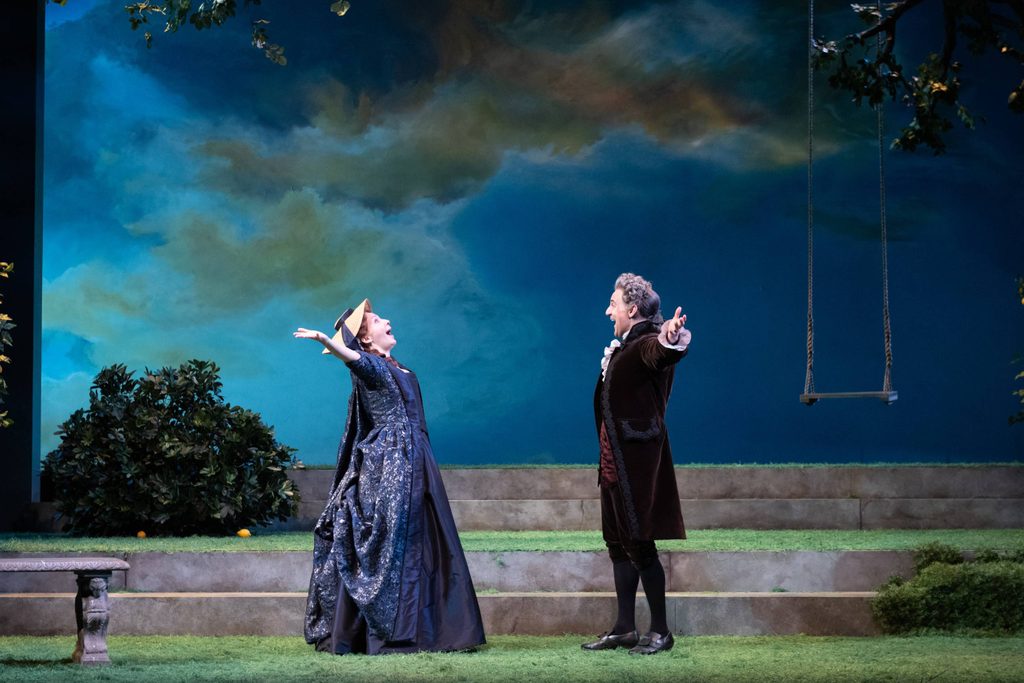
Marianna Bassham, Nael Nacer in Huntington’s ‘The Triumph of Love’. Photos by Liza Voll

By Shelley A. Sackett

Pierre Carlet de Marivaux’s “The Triumph of Love,” which premiered in 1732 and is at The Huntington through April 6, is like a trifle dessert, with light spongey layers of raucously funny deceptions, disguises and mistaken identities soaked in a sherry-spiked pastoral period set design. Instead of the traditional alternating tiers of sweet jams and custard, however, Marivaux has substituted a bitter concoction of calculated cruelty and manipulation. The end result is a sugar-coated confection that leaves a very bitter taste in the mouth.

Stephen Wadsworth’s definitive and sparkling translation is chock-full of clever double entendres and contemporary plays on words that prevent Marivaux’s commedia dell’arte from getting stuck in 18th-century French linguistic mud.

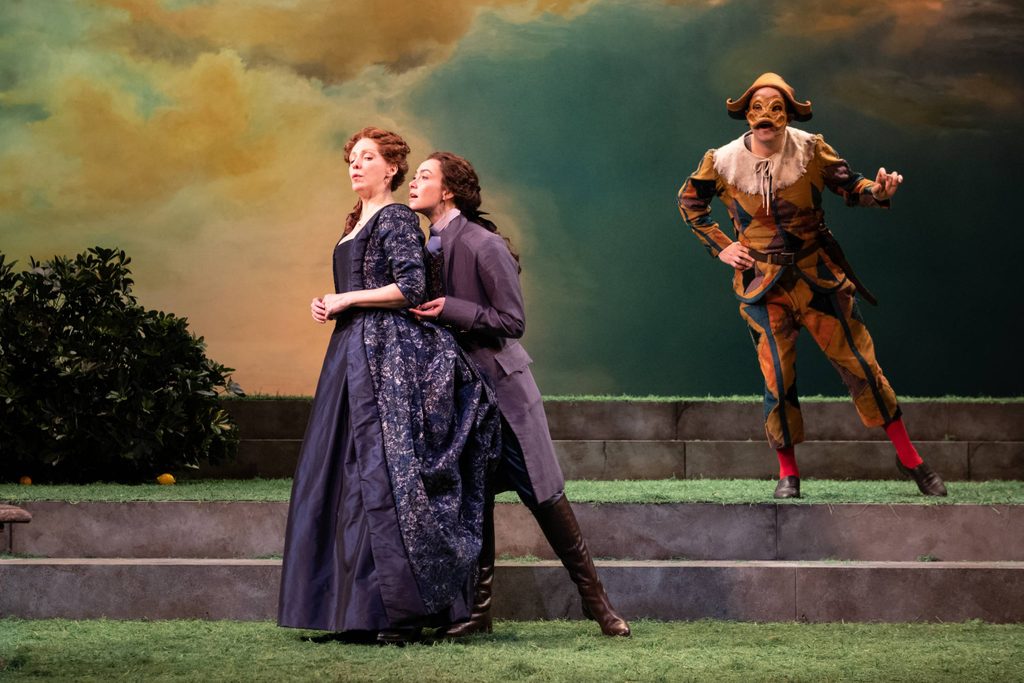
A hectic first scene gives the lay of the land. We meet two women, loosely disguised as men, in the country retreat setting of a manicured garden. Princess Léonide (an excellent Allison Altman) and her maid, Corine (Avanthika Srinivassan), quickly bring the audience up to speed on who they are, why they are there, and what they plan to accomplish.

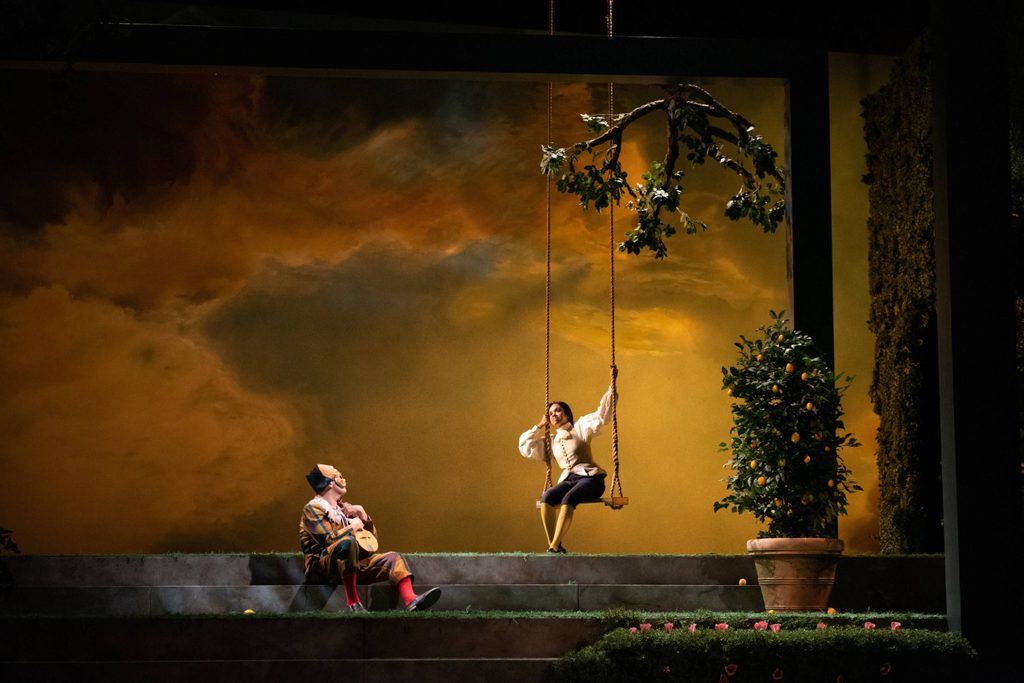
Vincent Randazzo, Avanthika Srinivasan

Léonide (incognito as the man Phocion) is the princess of Sparta, but only because her uncle stole the throne from the rightful king (who, to make matters more complicated, had kidnapped the rightful king’s mistress). While on a walk in the woods, Léonide spotted the young man Agis (Rob Kellogg), who lives in the household of the old philosopher Hermocrates (a terrific Nael Nacer) and his spinster sister, Léontine (Marianna Bassham, perfectly cast). It turns out that Agis is the true prince and rightful heir to the Spartan throne. Hermocrates, a strict follower of Enlightenment tenets, rescued him and raised him in seclusion to embrace the safety of rational reason and spurn the dangers of the kind of romantic love that destroyed his parents.

Undaunted, Léonide vows to win Agis’ heart and restore him to power. First, though, she has to get past the brother and sister team of Hermocrates and Léontine. No problem for our wily and ingenious princess; she will simply get them both to fall in love with her so she can then use them in her pursuit of her true love.

All of which, through a series of tricks, treacheries and outright cons, she accomplishes. Employing a variety of alter egos and all her charm and quick-tongued-ness, she turns the heads of the stuffy Hermocrates, his desiccated old maid sister, and his virginal charge.

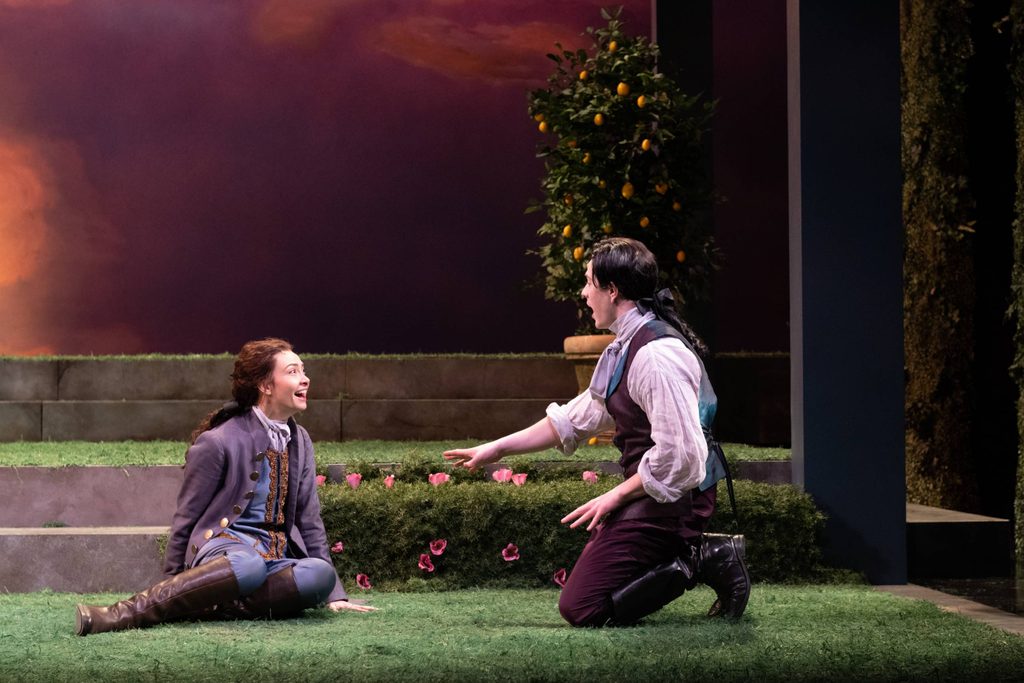
Allison Altman, Rob B. Kellogg

On its surface, ‘A Triumph of Love’ explores and ridicules the sharp lines drawn between the Enlightenment’s Age of Reason and the subsequent Romanticism movement, which focused instead on emotion, individualism, and the sublime. There are some great supporting characters, including Hermocrates’ servant, Harlequin (a delightfully spry Vincent Randazzo), and gardener, Dimas (Patrick Kerr), and some corny, rim-shot humorous one-liners. (“They are dresspassers,” Harlequin says of Léonide and Corine, and “Digression is the better part of a valet.”) Harlequin and Dimas are breaths of fresh air, and Randazzo’s entr’acte solos are wonderful diversions.

There is also a lot of meaty, thought-provoking dialogue about the meaning of life, liberty and the pursuit of happiness, especially when it comes to love. Marivaux isn’t afraid of exposing his characters’ seamier sides, and he asks some tough, smart questions about complicated philosophical issues.

Bassham, Altman, Randazzo

Junghyun Georgia Lee’s classically elegant set and costume designs are spot on, as is Tom Watson’s hair, wig, and makeup design (special kudos for Nacer’s transformed pate!). Although the first act drags a bit, director Loretta Greco (and, therefore, her cast) find their footing in the second act, which flows more easily and naturally. As Léonide, Altman is a triumph, which is fortunate since she dominates nearly every scene during the production’s 135 minutes (one intermission). She never ceases to surprise and engage, no matter how contrived and repetitive the ruse, a masterly feat to be sure.

Yet, for all the romping and spoofing, there is an undeniable nastiness reminiscent of “Les Liaisons Dangereuses.” To try to change the minds of those stuck in the rigid rules of reason and logic, and advocating for a life of feeling and love by engaging in honest debate, is one thing. But proving your point that a life of passion is not only possible but preferable by tricking people to fall in love with you and then discarding them is just plain mean. Awakening a frozen heart to feeling and then condemning it to a life of philosophy without love not only proves the point that love is self-serving, hazardous and risky; it also raises an even bigger and more timely issue: can nefarious means ever justify the ends?

‘The Triumph of Love.’ Written by Pierre Carlet de Marivaux. Adapted by Stephen Wadsworth. Directed by Loretta Greco. Scenic and Costume Design by Junghyun Georgia Lee. Hair, Wig, and Makeup Design by Tom Watson. Lighting Design by Christopher Akerlind. Composer and Sound Design by Fan Zhang. Presented by The Huntington Theatre, 264 Huntington Ave., Boston through April 6, 2025.

For more information, visit https://www.huntingtontheatre.org/whats-on/the-triumph-of-love/

Don’t Let The Bleak Premise Of The First Rate Musical “Parade” Scare You Away

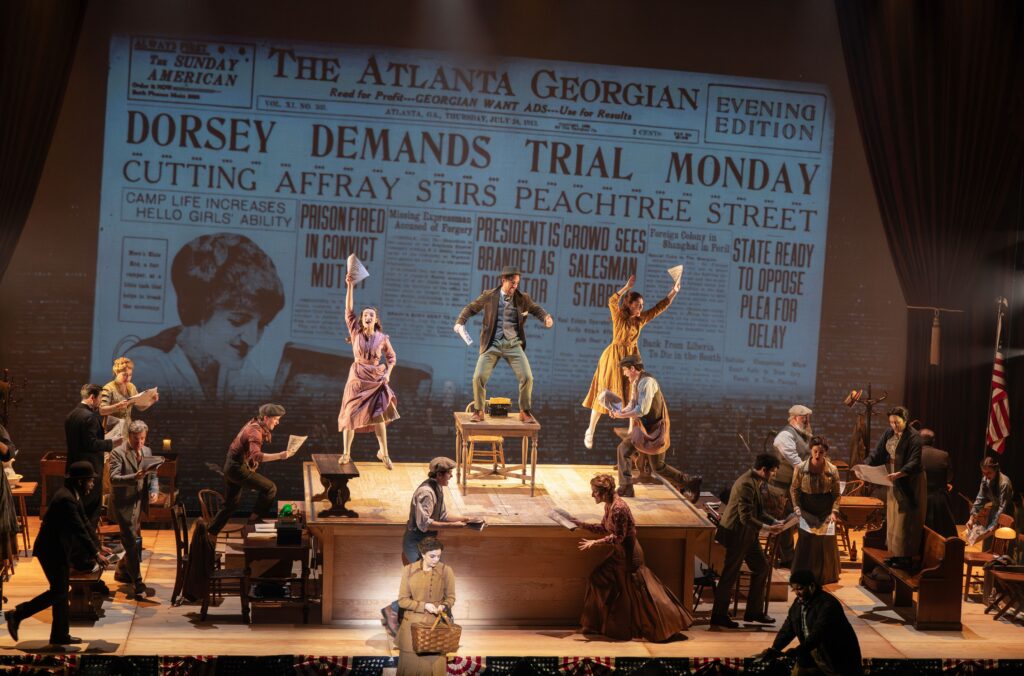
Cast of the National Tour of ‘Parade’ at the Emerson Colonial Theatre.
Photos by Joan Marcus

By Shelley A. Sackett

It was with trepidation that I attended opening night of “Parade,” now at the Emerson Colonial Theatre through March 23. After all, the premise of the 2023 multiple Tony Award-winning musical revival is hardly uplifting. The book by Alfred Uhry (author of “Driving Miss Daisy”) is set in 1913 Atlanta and tells the true story of Leo Frank, a transplanted Brooklyn Jew and pencil factory supervisor who is married to his Jewish boss’s daughter, Lucille. As the newlyweds struggle to carve out their lives in the red hills of Georgia, Leo is falsely scapegoated for the murder of a 13-year-old white girl in his employ. The rest of the play dramatizes his trial, imprisonment, and 1915 mob lynching.

In the current climate of rampant disinformation and antisemitism, it’s easy to understand why some might eschew entertainment that is grounded in both.

At no point does the 180-minute show (one intermission) shroud the wretched facts of the case and the ginned up hate, prejudice and calculated lies that fueled Atlanta’s judicial, political and journalistic engines. Yet, like alchemy, first-rate staging, talent and especially Jason Robert Brown’s rapturous Tony Award-winning score of 29 songs transform this cheerless tale into a riveting musical production that scratches well below the surface to examine just what made the Jim Crow South tick.

Max Chernin, Talia Suskauer

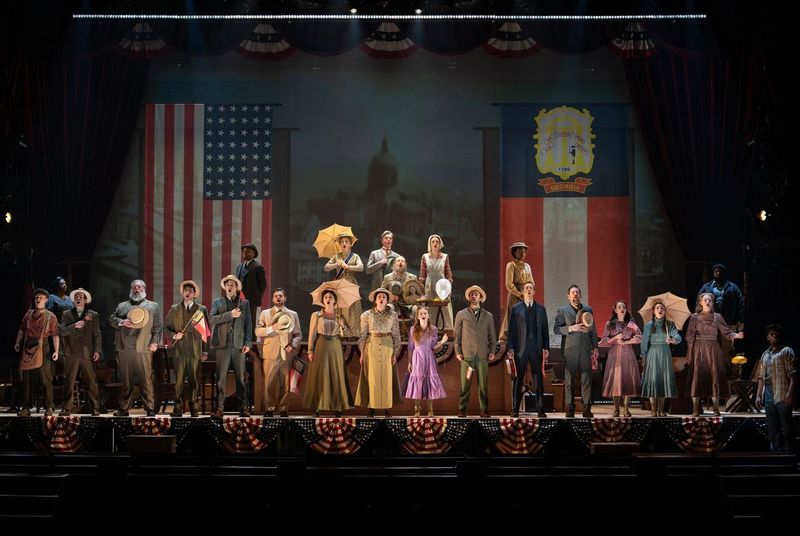
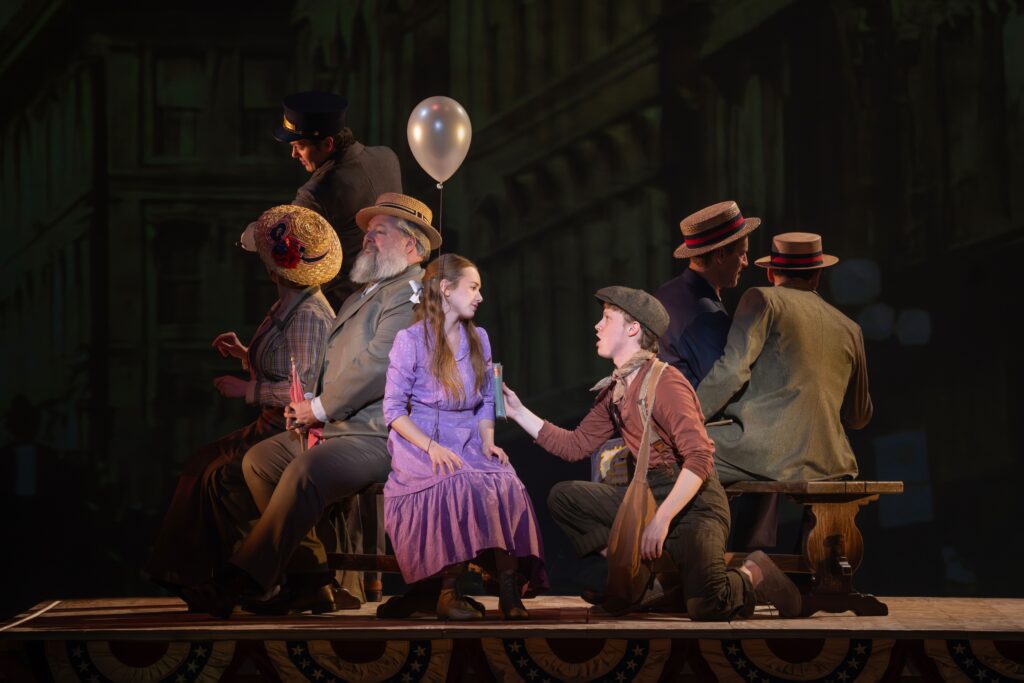
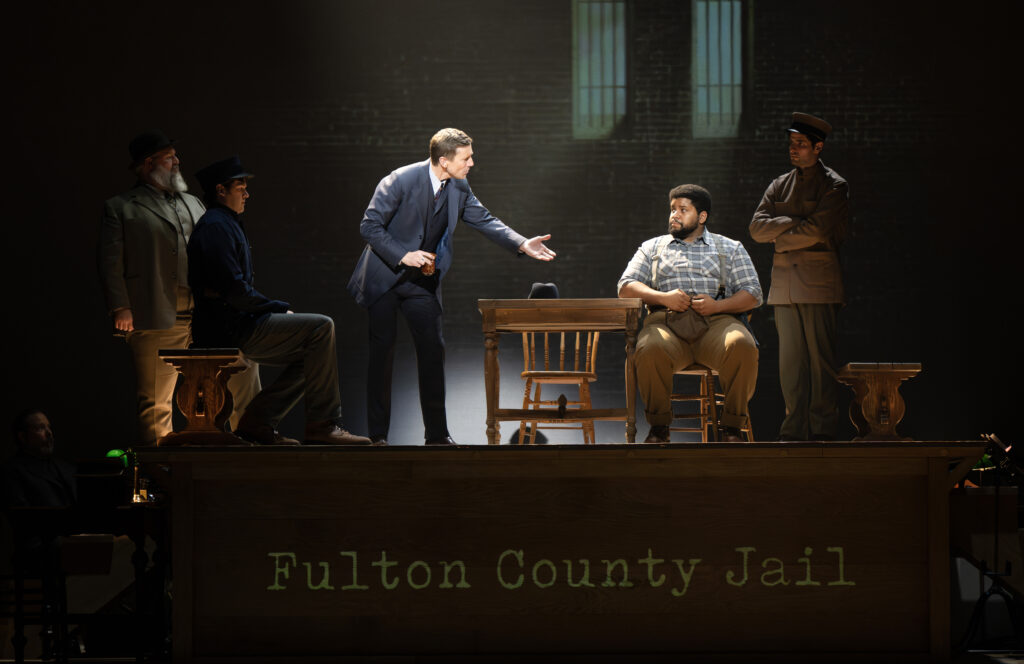
The stage is minimally set (design by Dane Laffrey) with a high and low platform that will magically evoke the Franks’ home, a witness box, a factory, a soapbox, a cell and a governor’s mansion. Throughout the show, background projections display real photographs, names and dates of the play’s characters as well as archival photos of 1910s Atlanta, newspaper stories and the “Leo Frank Lynching” memorial plaque in Marietta, Georgia. These both make the action easier to follow and remind us that “Parade” is based on truth.

The play opens in 1863 Marietta (“The Old Red Hills of Home”) as a young soldier leaves his lover for battle. Fifty years later, Atlantans still romanticize and mythologize the glories of the Civil War’s “Lost Cause” with Confederacy Day, which is when we first meet Leo and Lucille Frank.

“Why would anyone want to celebrate losing a war?” Leo (a pitch perfect, exceptional Max Chernin) asks his wife. Wiry, prickly and bespeckled, he struggles to fathom the mores of Atlantans. “For the life of me, I can’t understand how God could create people who are Jewish and Southern at the same time,” he bemoans.

Lucille (Talia Suskauer, whose voice seems directly wired to her emotions) doesn’t understand Leo’s Yankee manners any better than he grasps the ways of a Jewish southern belle. We are left wondering what drew these two to each other in the first place. Their singing selves couple in a soaring intimacy that their characters just can’t mirror.

Olivia Goosman, Jack Roden

Their marital conflict pales compared to the troubles that unfold when the body of Mary Phagan is discovered  in the factory. Two suspects are ripe for the picking: Newt Lee, the Black night watchman, and Leo Frank. That Leo is a self-absorbed workaholic who carries himself with a supercilious self-importance may make him hard to like, but his downfall is no less tragic.

District Attorney Hugh Dorsey (a believably slimy Andrew Samonsky) needs a conviction, and hanging another Black “ain’t enough.” The professional boost he seeks requires something more. This time, he’ll need to hang “the Jew.” He suborns testimony from many sources, threatening and cajoling even the Frank’s loyal maid, Minnie. Ex-con Jim Conley (Ramone Nelson in a barnstorming, show-stopper of a performance) fabricates eye witness evidence to save his own skin, yet ends up back on the chain gang when Donley double crosses him. Newspaperman Britt Craig (Michael Tacconi) hails the resurrection of his career as he stokes antisemitic hysteria and catches the eye of his editor.

Atlantans are only too happy to take the bait and, as Act I ends, Leo is swiftly convicted, sentenced to death and jailed.

Director Michael Arden’s staging at several critical moments expands “Parade’s” theatricality and our access to Leo’s opaque interiority. Now imprisoned, Leo spends the entire intermission sitting onstage with his head in his hands. Shed of his cocky, brittle skin, he presents as more grounded and relatable. Although jarring, having Leo mime the false testimony of others during his trial is another stroke of dramatic brilliance.

Act II shifts to Leo and Lucille’s marriage, which is strengthened by his imprisonment and their joint efforts to prove his innocence. Eventually, Governor Slaton (a solid Chris Shyer) heeds Lucille’s pleas and, after investigating, commutes Leo’s sentence to life. His fate has already been sealed in the book of public opinion, however, and he is kidnapped and hanged.

With this storyline fully established from the prologue, it is indeed a wonder that “Parade” feels as dynamic, affective and —yes — entertaining as it does. Make no mistake; this is a first rate Broadway production with a lot going for it.

The cast of vocal performers (particularly the leads and Nelson) is, with few exceptions, extraordinary, and they have a lot to work with in Brown’s marvelous score. Backed by a terrific orchestra, Brown’s Sousa-style marches, work songs, haunting duets and raw blues and efficient, targeted lyrics achieve more than a page of dialogue might. While injustice and inhumanity are ever present, they simmer and percolate rather than boil over. Granted, some of the actors’ accents need polishing and the characters’ unambiguous goodness/evil renders them somewhat two-dimensional, but the timeliness and relevance of this ongoing story is almost reason enough to see it.

(Foreground) Andrew Samonsky, Robert Knight

The wave of antisemitism that results in Leo’s conviction and lynching led to both the formation of the Anti-Defamation League and the resurgence of the Ku Klux Klan, both still significant forces. When the chorus of white Georgians chants, “hang ‘im, hang ‘im, make him pay,” it’s impossible not to hear the January 6 refrain and feel its aftershocks. As “Parade” points out, although Leo Frank’s death sentence was commuted, the case, reopened in 2019, is ongoing. Mary’s killer was never found. Unlike the more than 300 cases overturned thanks to the Innocence Project, he has never been exonerated.

As Leo is about to be hanged, right before chanting his final “Shema,” he states, “God chose me for a plan. I don’t know what it is.” Perhaps, at this time of thinking about who gets to write history’s story, one thread of that unknown plan is to broaden the inquiry and ask ourselves who had to pay for those stories we get to tell, and at what price? 

Parade – Book by Alfred Uhry; Music and lyrics by Jason Robert Brown; Co-conceived by Harold Prince; Directed by Michael Arden; Choreography by Lauren Yalango-Grant & Christopher Cree Grant; Music direction by Charlie Alterman. At the Emerson Colonial Theatre, Boston, through March 23rd.  

For tickets and more information, visit emersoncolonialtheatre.com/

SpeakEasy’s ‘A Man of No Importance’ Is Must-See, Feel-Good Theater at Its Absolute Finest

Theater Mirror

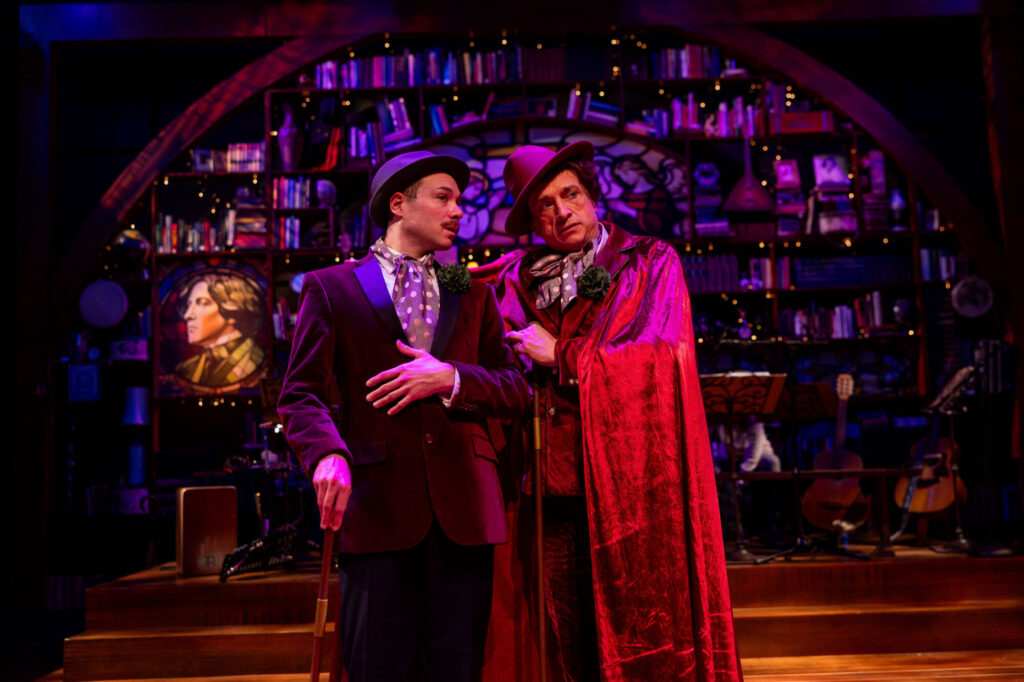
Eddie Shields and Will McGarrahan in Speakeasy’s ‘A Man of No Importance’
Photos by Nile Scott Studios

By Shelley A. Sackett

There is so much to praise about SpeakEasy Stage Company’s ‘A Man of No Importance,’ director Paul Daigneault’s swansong production after leading the company he founded for 33 years, it’s hard to know where to begin.

Terence McNally’s Tony Award-winning play, for starters, is a brilliant choice for any audience at any time, but its message is especially poignant today. A musical based on the 1994 film, it tells the story of an amateur theatre group in 1964 led by their queer, closeted bus driver leader who is determined to stage a version of “Salome” at his church, despite the objections of church authorities.

1960s Ireland had not yet progressed beyond the era of Oscar Wilde, who was jailed from 1895-7 after a criminal conviction for gross indecency for homosexual acts. Decades away from the days when “coming out” became acceptable, being gay was still a crime in Ireland. McNally, an ardent gay rights advocate, infuses his main character, Alfie Byrne, with his passion. Eddie Shields plays the charismatic character with a pitch-perfect blend of pathos, compassion, and zeal.

At the heart of the play is Alfie’s painful struggle to be his authentic self. He finds relief by channeling his energy and angst in the St. Imelda’s players, a group of local amateurs whom Alfie imbues with his own love for the magnetic magic of the theater.

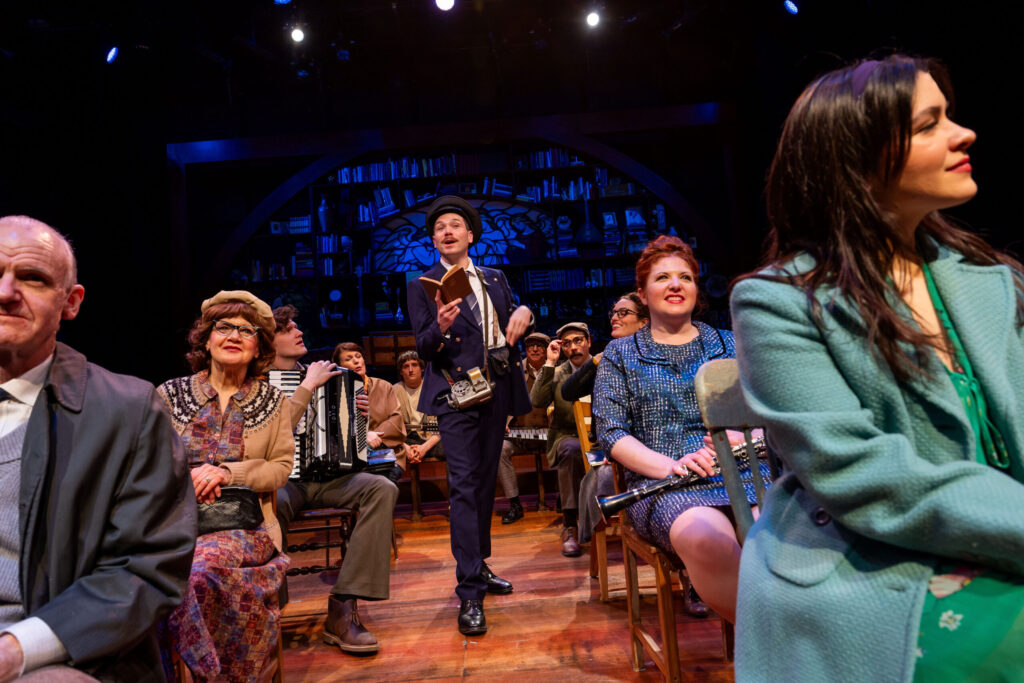
Shields and cast

The rehearsal space and the camaraderie it engenders create a sanctuary where the community can gather and unapologetically be themselves. They are there for each other but most of all, they are there for Alfie and the life of the artistic world he has introduced them to.

The problem is he has audaciously chosen Wilde’s one-act tragedy, “Salome,” to stage in the Catholic church. The play-within-a-play, which depicts the attempted seduction of John the Baptist by Salome, goes too far. The Archbishop ordains the work as obscene and banishes the troupe from St. Imelda’s.

Alfie protests that the play is dramatic art at its finest, but to no avail. St. Imelda’s doors, Alfie’s sole conduit for emotional release from the loneliness and tension of leading a double life, are closed and bolted.

While Alfie is the eponymous man of no importance, it is the ensemble of first-rate supporting actors, musicians, choreography, set design, 20 songs, and brilliant directing that are the shining constellation at the epicenter of this production.

Keith Robinson and Shields

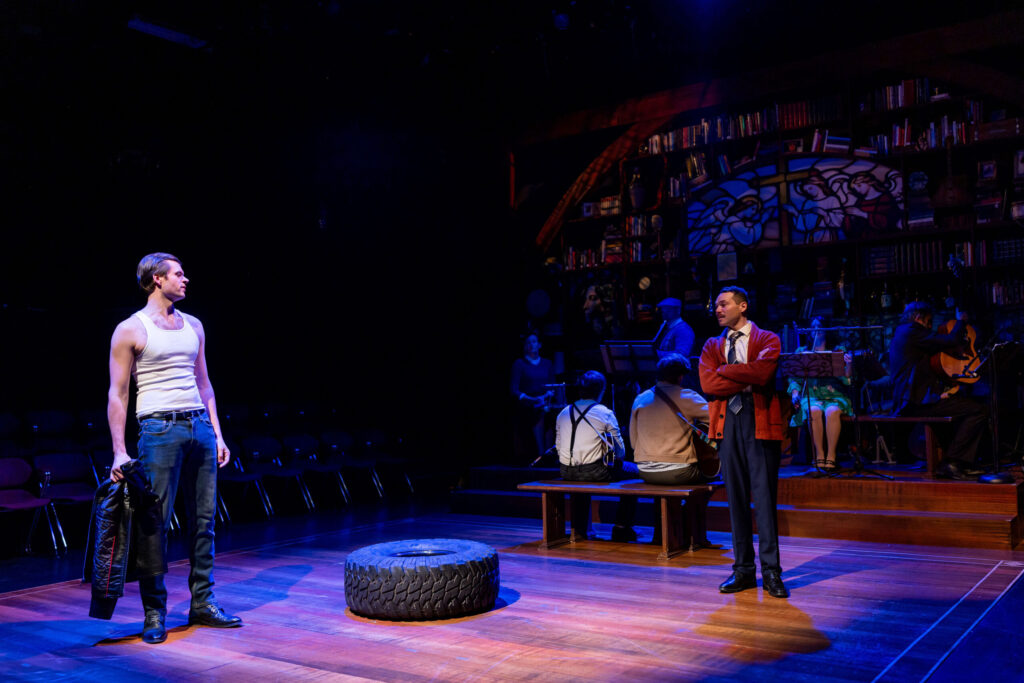
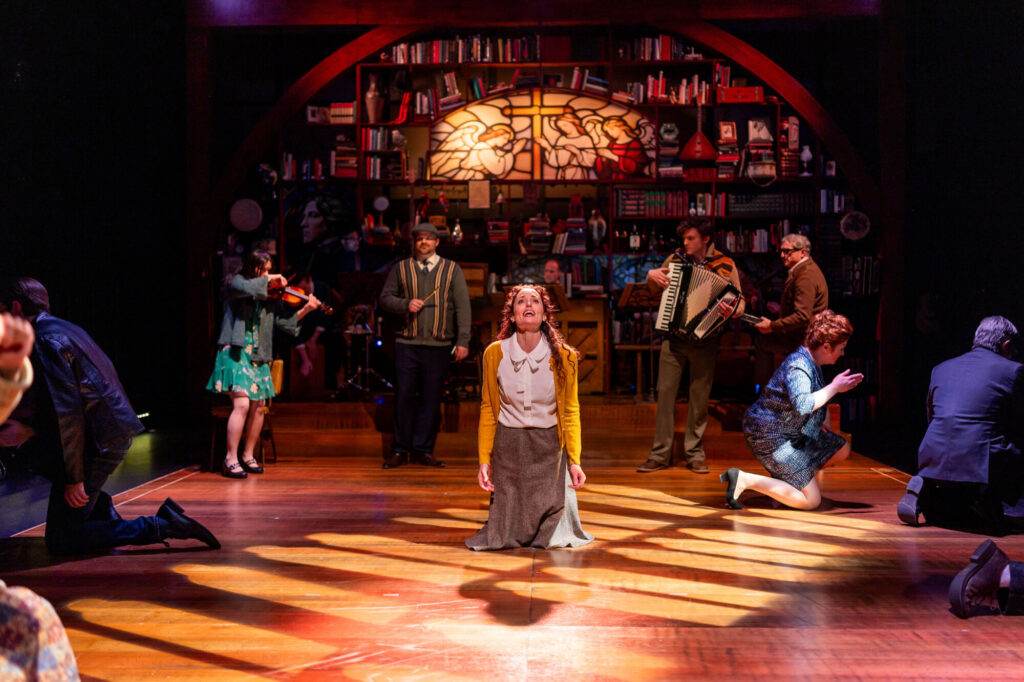
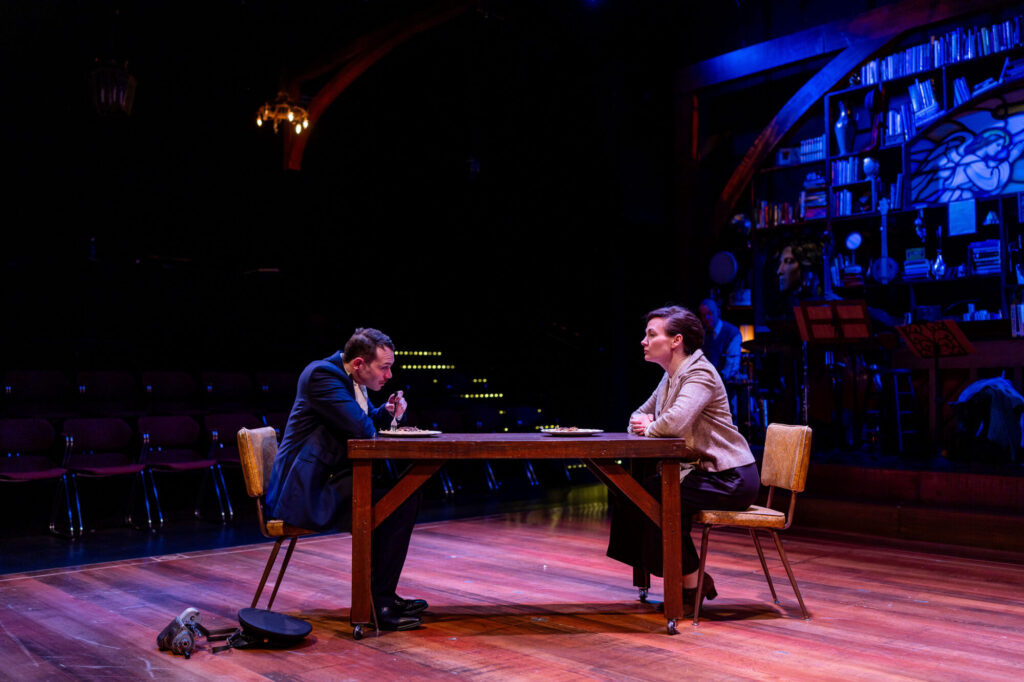
Jenna McFarland Lord’s set literally sets the stage and mood from the get-go. The audience is seated on three sides around a platform in the square. The fourth side holds a small stage with just enough room for musicians. Above them is an amalgam of Alfie’s book-stuffed bedroom, St. Imedlda’s stained glass window, and the rough-hewn wood that hints at a traditional Irish pub.

For 105 minutes (no intermission), live traditional Irish music accompanies the brilliantly poetic and funny songs (Lynn Ahrens’ lyrics and Stephen Flaherty’s music) and acts as a background. Actors double as musicians and enter, exit and linger in the aisles. The effect is live surround sound and the audience can’t stop smiling and tapping their feet in appreciation.

Master choreographer Ilyse Robbins has designed playful, effective moves for the nimble cast that are both functional (moving furniture, for example, to create a bus or pub) and wildly adorable (Kathy St. George’s tap dance is a show-stopping knockout).

Jennifer Ellis (center) and cast

As Lily, Alfie’s devoted sister who has put her life on hold until her brother finds a wife to take care of him, Aimee Doherty brings depth, humor and impeccable timing. Her duet with butcher Carney (a delightfully smarmy Sam Simahk), “Books,” is a storytelling first-rate number and a stand-alone hit.

Another storytelling marvel, “The Streets of Dublin,” takes the audience into the world of the workingman’s pub, capturing the characters’ everyday world of pints, traditional ballads and dancing. In adding the ghost of Oscar Wilde to his adaptation of the film, McNally gives Alfie the opportunity to express his true self to his idol and imaginary mentor. Will McGarrahan brings flourish and panache to red-caped Wilde, and Alfie takes his support and advice to heart. Encouraged by Wilde to “love who you love” and get rid of temptation by yielding to it, he braves the first step down the path of sexual authenticity to predictably disastrous results. Alfie is beaten up, outed, and publicly shamed.

This is, after all, still 1960, and the love that dare not speak its name has no place in a world that desperately clings to what it knows.

Despite setbacks and disappointments, the play ends on an uplifting note, one that is as relevant and helpful today as it might have been in Oscar Wilde’s day. Alfie’s theatrical community and sister don’t abandon him and he basks in a new understanding of what is of most importance in a world that thrives on conflict, humiliation and accusation.

Shields and Aimee Doherty

“I used to think the most thrilling words in the English language were ‘At Rise’ as we began a new project and opened our books to the first page of the playwright’s text,” he says.

After his ordeal and the rallying of his troupes, he has changed his mind. “The most thrilling words in the English language,” he amends, “are these: ‘Good morning, my dear friends.’”

‘A Man of No Importance’ – Based on the film, ‘A Man of No Importance.’ Lyrics by Lynn Ahrens; Music by Stephen Flaherty; Book by Terrence McNally; Directed by Paul Daigneault. Choreographed by Ilyse Robbins. Music Direction by Paul S. Katz. Scenic Design by Jenna McFarland Lord. Presented by SpeakEasy Stage Company. At the Roberts Studio Theatre, Calderwood Pavilion, Boston Center for the Arts, through March 22.

For more information and tickets, go to: https://speakeasystage.com/

‘Art’ Becomes More Than What Meets The Eye in Lyric Stage’s Splendid Production

Theater Mirror

John Kuntz and Michael Kaye in Lyric Stage’s ‘Art’. Photo Credit: Mark S. Howard

By Shelley A. Sackett

The French playwright, actress, novelist, and screenwriter Yasmina Reza has a special talent for creating dialogue and characters that simultaneously focus inward on the complexities of interpersonal relationships and outward on the demands and mores of contemporary middle-class society. ‘Art,’ now enjoying a magnificent run at Lyric Stage Company, premiered in Paris in 1994 and took both London’s West End and New York’s Broadway by storm. It won Olivier, Tony, Molière, and every other major theatre award and has been packing in audiences worldwide in 30 languages ever since.

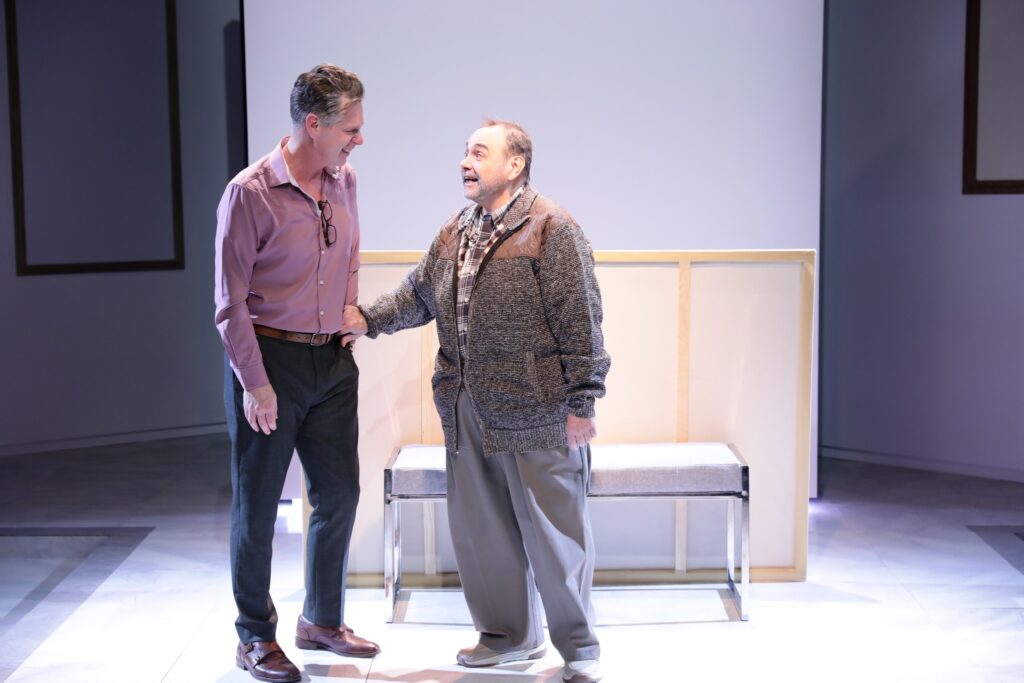
The plot is deceptively simple. Serge (Michael Kaye), Marc (John Kuntz) and Yvan (Remo Airaldi) have been friends for 15 years. Serge is a successful dermatologist. Marc is an aeronautical engineer and Yvan has spent his life “in textiles.” Unlike his friends, his professional life has been a failure and he has a new job as a sales agent for a wholesale stationery business. He’s engaged to marry his boss’s daughter in a couple of weeks.

Kaye, Kuntz and Airaldi

When Serge spends an extortionate amount of money on a modernist painting by Atrios that is all white with three white stripes, his close friends are not just baffled but deeply rattled. Like an earthquake, Serge’s purchase shakes the bedrock of their friendship and sends aftershocks and tsunamis in its wake.

Marc is appalled to hear that Serge had paid two hundred thousand francs for “a piece of white shit.” Serge argues that the painting, created by a reputable artist (“he has three paintings in the Pompidou”) is worth its hefty price, but Marc remains unconvinced. The two draw verbal swords, and the temperature in the room rapidly rises as the thrusts and parries turn nasty and personal.

Both break the fourth wall, addressing the audience with what they really think. Serge mocks Marc, one of the “new style of intellectuals” who are enemies of modernism yet know nothing about it. Marc is upset on a deeper, more individual level. His friend has done something he cannot understand or relate to. He is hurt and untethered. “It’s a complete mystery to me, Serge buying this painting. It’s unsettled me, it’s filled me with some indefinable unease,” he admits. Worst of all, Serge seems to have lost his sense of humor. Marc can’t bear the thought of not sharing a laugh with Serge, even though it is over an act Serge himself committed.

Overwhelmed by the perceived seriousness of the situation, both Serge and Marc confide in Yvan about their disagreement. Yvan, who is dealing with his own conflict over his forthcoming wedding, tries to remain a neutral peacemaker, giving each just enough of what they want to hear while avoiding firmly taking sides. To Serge, Yvan is noncommittal, only admitting that he does not grasp the essence of the painting. To Marc, Yvan laughs off the price tag, but suggests that the work is not quite meaningless “if it makes Serge happy.”

Kuntz and Kaye

Serge’s shuttle diplomacy is a failure. Instead, each digs in his heels deeper, and the clash escalates to all-out war. Objective art appreciation shifts to subjective, petty, tactless attacks. At the heart of the matter is the fact that these two really care about each other and this schism wounds them both. “What I blame him for is his tone of voice, his complacency, his tactlessness. I blame him for his insensitivity. I don’t blame him for not being interested in modern art, I couldn’t give a toss about that…,” Serge says. In an aside to the audience, Marc admits that, bottom line, his feelings are hurt. “What kind of friend are you if you don’t think your friends are special?” he laments.

Yvan’s vacillations are gas on the flames of his friends’ conflict. When neither Serge nor Marc succeeds in their goal of manipulating Yvan to their side, they turn on Yvan after he is late for dinner. Not even a Moth StorySLAM-worthy monologue of an excuse (Airaldi deserved a standing ovation) can dissuade Serge and Marc from attacking Yvan for being, well, Yvan.

That a male friendship could become unglued over a provocative painting rather than a love or property rivalry underscores the way Reza deftly peels this delicate onion to reveal the kind of profoundly felt emotions more usually explored among female relationships. These three ask deep and heady questions, revealing their innermost private selves in their answers. They are brutally honest, especially when they know the truth will sting. Yet, when all has been said and done, the underlying bond they share withstands even this most violent rupture.

Kaye and Remo Airaldi

Airaldi imbues Yvan with the kind of heart, humor and self-acceptance reminiscent of Jonathan Winters at his best. Kaye’s Serge is nuanced; he’s snooty and disdainful one minute yet insecure and lonely the next. As Marc, Kuntz has the difficult job of hiding his fears and vulnerabilities beneath a frosty veneer of supercilious superiority and furious frankness. All three actors give flawless performances, the kind that make 90 intermission-less minutes fly by.

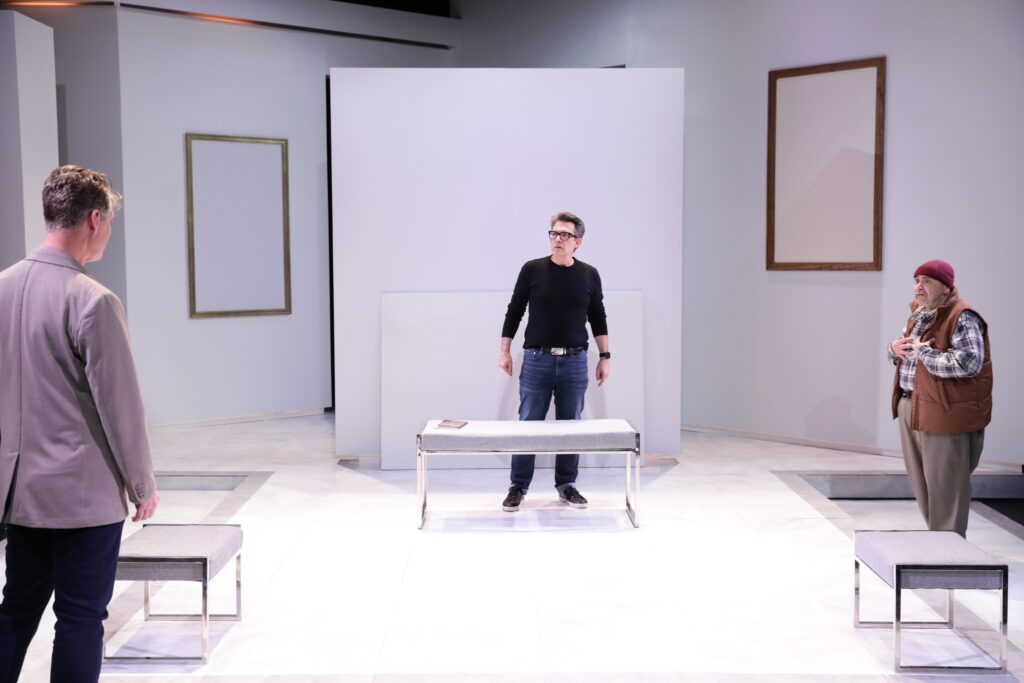
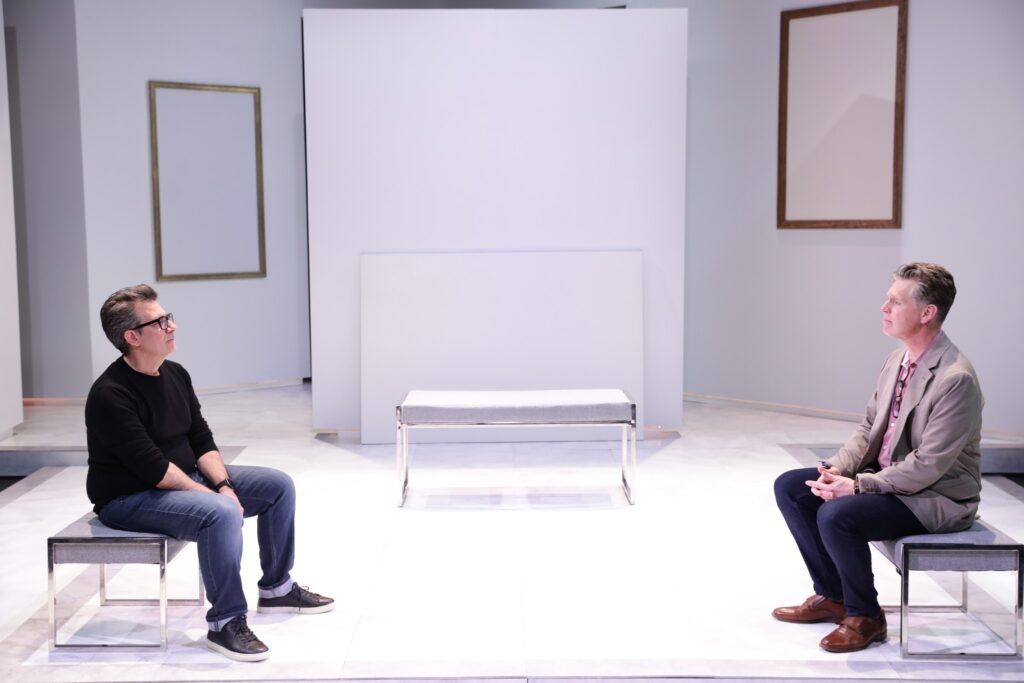
Shelley Barish’s sleek, contemporary set mirrors the painting’s self-conscious minimalism. Chrome and steel benches adorn a simple platform of white tiles bordered in pale gray. The tone is both monastically sterile and peacefully Zen.

Kudos to Courtney O’Connor for her pitch-perfect direction. Recommended.

‘Art’ by Yasmina Reza. Translated by Christopher Hampton. Directed by Courtney O’Connor. Scenic Design by Shelley Barish. Costume Design by Chelsea Kerl, Lighting Design by Elmer Martinez. Sound Design by Adam Howarth. Presented by The Lyric Stage Company of Boston, 140 Clarendon Street, Boston, through March 16.

For more information or to buy tickets, visit https://www.lyricstage.com/

Hell Hath No Fury Like Hedda Gabler’s Scorn

Theater Mirror

Parker Jennings and Joshua Lee Robinson in Apollinaire’s ‘Hedda Gabler’
Photo Credits: Danielle Fauteux Jacques

By Shelley A. Sackett

In ‘Hedda Gabbler,’ Ibsen dramatizes the miserable life of his title character, the iconically unclassifiable Hedda Gabbler. The pampered daughter of a wealthy general, Hedda recently married the mild-mannered, decidedly middle-class George Tesman. Fearing her years of youthful abandon might be behind her, she snagged the first – and only – bird that actually landed in her hand. “I can’t think of anything ridiculous about him,” she explains when asked by a former suitor why she had settled for George. He is also respectable, conscientious about his research work, and intent, under any circumstances, to look after her.

What George is not, however, is dangerous, sexy or aggressive, three traits Hedda admires, embodies and craves.

Director Danielle Fauteux Jacques cleverly arranges for the actors and audience to settle simultaneously. As the theater seats fill, actors stroll across the comfortable set, moving furniture, placing flowers, even repositioning a piano. The spacious, tastefully furnished drawing room is decorated in dark colors and lit by tiers of candles. Solo piano music enhances the mood, and Elizabeth Rocha’s costumes reflect the play’s end-of-19th-century time period.

The Tesmans, we learn from the maid Berta (Ann Carpenter) and Aunt Julia (a splendid (Paola Ferrer), have just returned to Christiana (Oslo) from a whirlwind six-month European honeymoon. George (played by a suitably understated, good-natured, if somewhat clueless, Conall Sahler) is enthralled by both their new wife, Hedda, and the ancient manuscripts he unearthed. He and Aunt Julia (the maiden aunt who raised him) are in the midst of reconnecting over George’s boyhood slippers when Hedda stomps onto the stage, barefoot and with a head full of steam explainable only by her having been interrupted either in the middle of brawl or while on the prowl to start one.

Unlike George, Hedda (played with almost relentless malice and moue by Parker Jennings) has returned bored, disappointed, and generally pissed off. She doesn’t like the house; she insults Aunt Julia’s new hat, and most of all, she doesn’t like being married to George. Like a freshly caught wild animal suddenly caged and on display, she paces. She is trapped but not tamed.

Disengaged from her own life, Hedda is in desperate need of a diversion. When Judge Brack (a smarmy Christhian Mancinas-García) comes to call, he and Hedda have the opportunity to reconnect in private. It’s clear the two share both a sexual backstory and many of the same values. “I get these impulses,” Hedda confesses to Brack. “I have no talent for life.” He seems to know exactly what she means.

Brack offers a polyamorous triangular relationship as a solution, but Hedda’s boredom is not that easily assuaged. What she needs, she declares, is to manipulate another’s life, to control them completely through her power and her will. As if on cue, her girlhood schoolmate, Thea (a credibly solid, earnest Kimberly Blaise MacCormack), arrives with all the ingredients to set Hedda’s plan in motion.

Paola Ferrer and Conall Sahler

George’s academic rival, Eilert Løvborg (an outstanding Joshua Lee Robinson), has resurfaced. An alcoholic, Løvborg was mired in scandal and poverty after squandering the family fortune on debauchery. Recovered and renewed, Løvborg wrote a book that was received with thunderous acclaim. The bestseller is in the same field as George’s, and George worries that Løvborg’s success could put a damper on his chances of securing the professorship he was financially banking on when he married Hedda and went into hock to buy her a house (which she hates) and take her on the extravagant honeymoon she expected and abhorred.

Thea’s agenda has nothing to do with the Tesmans. She and her husband, Sheriff Elvsted, took Løvborg in when he was down and out to tutor Thea’s stepchildren. While her husband was away on business, she worked closely with Løvborg on his newest manuscript and developed a great love for him. She worries that his fragile rehabilitation is in jeopardy now that he is back in the city with a pocketful of royalties money. She has packed a bag, left her disastrous marriage, and is now trying to locate Løvborg so they can pick up where they left off.

Knowing that he and George were university chums, she has come to ask George to write a letter asking Løvborg to visit him. She tells the Tesmans that her husband sent her, but Hedda has a nose for deception (being the Queen herself) and sniffs out the juicier tale.

She dispatches George to write the letter and ruthlessly grills Thea until the poor girl divulges her secret to her new and trusted confidante. Hedda assures Thea she will take care of everything, but as she breaks the fourth wall and treats the audience to a Snidley Whiplash wink, we know all will not end well for anyone.

Jennings

Løvborg gets the message and comes to the Tesman house in a tizzy. From the first hello, it is clear he and Hedda also shared a romantic past. In their scenes together, Hedda comes as close as she does in the play to displaying genuine compassion and vulnerability. Jennings and Robinson have real chemistry in the scenes when they sneak embraces as George comes in and out of the room. Hedda’s evil side doesn’t need the hammering Parker sometimes gives it; her words make her unlikeable enough. But these tiny glimpses of her inner humanity soften her character just enough to make her believable and less of a melodramatic stereotype. A very little could go a very long way.

In any case, Hedda will be damned if she lets Thea’s influence over Løvborg eclipse her own. No matter what it takes, she vows to smash their liaison.

To George’s relief, Løvborg has no intention of competing with him for the coveted professorship but has his hopes pinned on the masterpiece sequel he has written, the only copy of which he totes about in a brown paper envelope. Thea shows up, and Hedda immediately breaks her promise of confidentiality, telling Løvborg that Thea followed him to the city because she feared he would relapse. Løvborg reacts poorly, and Hedda delights when he goes off the wagon in front of her. She convinces him to accompany George and Brack to a party where she knows there will much drinking and carousing, assuring him she and Thea will be fine dining alone.

Predictably, Løvborg falls hard, failing to show up at the Tesmans the next morning. George returned earlier with the coveted manuscript, which Løvborg lost during the evening. When he is called away to his dying Aunt Rima’s bedside, he instructs Hedda to safeguard it.

Løvborg does eventually show up, a messy aftermath of a nasty night. He lies to Thea and Hedda, telling them he destroyed his manuscript. Thea is bereft; that work was their love child, a validation of her worth and his reform. Hedda does nothing to contradict Løvborg or reassure Thea. Distressed and disappointed, Thea leaves the former lovers alone.

Løvborg confesses that he actually lost the “child,” an act infinitely more unforgivable than destroying it. Hedda convinces him that the only recourse is for him to end his life with “vine leaves in your hair.” (Vine leaves in the hair are a symbol of Dionysus, the Greek god of wine and tragic insight). She gives him one of her father’s pistols and happily sends him away with one command: that if he chooses to do this, he do it beautifully.

Cristhian Mancinas-García, Robinson, and Sahler

The moment he leaves, she retrieves the manuscript and, one page at a time, ceremoniously burns it in its entirety, her face aglow from the flames and her own inner satisfaction. “One is not always mistress of one’s thought,” she will later muse.

It would be unforgivable to spoil the rest of the plot, but suffice it to say that Hedda’s plan goes awry, and she gets a healthy dose of her own medicine. Fauteux Jacques takes directorial liberties and adds elements that translate what passed for shock in 1891 into terms that resonate more in 2025 (I refer to one of the final scenes between Hedda and Brack). Kudos to Fauteux Jacques for this bold and stirring move.

Yet, despite inspired staging and acting, Ibsen’s starchy, dusty “Hedda Gabbler” is a difficult piece to access. Hedda is neither rational nor irrational in the usual sense of being random and unaccountable. Her logic is personal and unique. What she desires is critical to her happiness, yet it represents what “normal” society would reject as unacceptable. Hedda’s interior is as complicated as her exterior, which is razor-focused. Jennings does an excellent job of trying to carry this intricate character from beginning to end, but it is a real challenge to make believable why Hedda would command the attention of the men in her life, much less that of her audience.

‘Hedda Gabbler’ — Written by Henrik Ibsen. Adapted by the company from the translation by Edmund Grosse and William Archer. Directed by Danielle Fauteux Jacques; Scenic and Sound Design by Joseph Lark-Riley; Costume Design by Elizabeth Rocha; Lighting Design by Danielle Fauteux Jacques. Presented by Allpoinnaire Theatre Company at Chelsea Theatre Works, 189 Winnisimmet Street, Chelsea, through March 16.

For more information and to buy tickets, go to www.apollinairetheatre.com

Jenece Upton Channels Billie Holiday Body and Soul in ‘Lady Day At Emerson’s Bar and Grill’ at MRT

Jenece Upton in Merrimack Rep’s ‘Lady Day At Emerson’s Bar and Grill’

‘Lady Day At Emerson’s Bar and Grill’ by Lanie Robertson. Directed by Candice Handy. Music Direction by David Freeman Coleman. Scenic Design by Tony Hardin. Costume Design by Yao Chen. Lighting Design by Brian Lillienthal. Sound Design by David Remedios. At Merrimack Repertory Theatre, Lowell, MA. Run has ended.

By Shelley A. Sackett

I was lucky enough to squeeze into the next to the last balcony row at the sold-out last performance of ‘Lady Day At Emerson’s Bar and Grill’ at Merrimack Repertory Theatre. Based on comments by colleagues and friends, Jenece Upton in the title role was this season’s not-to-be-missed performance.

“Not-to-be-missed” was an understatement. Upton brings Billie to life, plumbing every aspect of the jazz and swing singer’s difficult life with humor, charm and prodigious vocal chops. She is front and center the entire show (90 minutes, no intermission), backed by Jimmy Powers (Jorden Amir), her pianist and guardian angel.

The play takes place in South Philadelphia in March 1959, where Billie Holiday is performing in a run-down bar during one of her last performances before her death in July 1959 from complications of alcoholism. Between songs, she tells stories about her life as she becomes increasingly intoxicated and incoherent. Far from a simple songbook, the sixteen songs and narration paint a portrait of a horrifically tragic life filled with racism, abuse, and toxic relationships. Yet, what reverberates more than Billie’s tragedies are her triumphs of both spirit and artistry. She confronts her history with steadfast eyes wide open, unapologetically and honestly. “What they don’t know is you can only get to where you’re at by the way of where you been. It don’t matter if it’s good or bad, you wouldn’t be what or who you are now if you hadn’t been whatever you was way back when. See, I KNOW who I am now is because of who I was THEN,” Billie explains.

That she is not bitter may be the eighth wonder of the world.

Under Candice Handy’s direction and with Tony Hardin’s set, the production creates an immersive atmosphere of the small, intimate jazz club. Lanie Robertson’s script breaks the fourth wall, with Billie addressing the audience directly. Although visibly distressed when making her entrance, she turns on the charm and assures the audience, “It’s just like I was home and all you was my friends.” She then opens up about her life: her mom’s nickname, her father’s death, her first love, her musical influences, being a Black woman in Jim Crow America, and being arrested for her struggles with drug addiction.

Even though Billie uses laughter to deflect the pain and inhumanity at the root of many of her stories (and songs, like “Strange Fruit”), that laughter, far from infectious, instead twists the blade of our discomfort and plunges it in deeper.

Upton is a consummate actress, effortlessly offering great depth and detail into Billie’s soul. She is absolutely captivating as she performs hit after hit from Billie, capturing the plaintive sound, the eccentric phrasing and all the little vocal catches that identify Billie Holiday’s unique style.

I am very glad I heeded the advice to catch a very talented actress in a tailor-made role. I’m only sad the run has ended, so others can’t benefit too.

‘The Grove’ Continues the Ufot Family’s 9-Play Journey from Past to Present to Future

The cast of ‘The Grove’ at the Huntington. All Photo Credits: Marc J Franklin

‘The Grove’ – Written by Mfoniso Udofia. Directed by Awoye Timpo. Scenic Design by Jason Ardizzone-West; Costume Design by Sarita Fellows; Lighting Design by Reza Behjat; Sound Design and Original Music by Rob Milburn and Michael Bodeen. Produced by The Huntington Calderwood at BCA Plaza Theatre at 539 Tremont Street, Boston, through March 9.

By Shelley A. Sackett

Anyone remotely interested in the Boston theater scene is aware of the city-wide, unprecedented commitment to present Mfoniso Udofia’s Ufot Family Cycle over the next couple of years. These nine plays follow a Nigerian family in America and Africa through 40 years and three generations. The first, “Sojourners,” premiered at The Huntington last fall to universal praise. In it, audiences were introduced to Adiaha, the first American-born daughter born to Nigerian immigrants Abasiama and her husband Ukpong. The setting is 1970s Houston, where Abasiama studies hard and works in a gas station to make ends meet. When Ukpong goes AWOL, Disciple Ufot befriends and eventually marries her, raising Adiaha as his own. Like Abasiama, Disciple is studious and hardworking, with a plan, like hers, to return to Nigeria upon graduation. Unlike Abasiama, he is also intensely religious.

The Huntington continues with its world premiere of ‘The Grove,’ the second play in the cycle, which picks up the Ufot family story 30 years later, in 2009 in Worcester. Family and friends have gathered to fête and honor Adiaha (a magnificent Abigail C. Onwunali) after her graduation with a master’s degree in creative writing.

Abigail C. Onwunali

The pre-party atmosphere is anything but festive. Her father, Disciple (Joshua Olumide), sings Ibibio praise songs while relentlessly and neurotically barking orders at Adiaha and her younger siblings, sister Toyoima (a very good Aisha Wura Akorede) and brother Ekong (Amani Kojo). Nothing is clean enough; nothing is good enough. Every minute is spiritual warfare.

Toyoima and Ekong, who still live under Disciple’s roof, tolerate his harangues, complying with just enough teen attitude to satisfy their need to feel like they are dissing him, yet not so much to risk his catching on.

Adiaha, on the other hand, is walking on eggshells. She defers to Disciple, cajoling her siblings to humor him. She is, after all, the one child Disciple trusts with his legacy. It is a great honor; it is an even greater burden. That legacy is a collectivist Nigerian culture where values of family and community eclipse the individual and her particular emotional and psychological needs. Adiaha is, and has always been, the daughter who made her family proud and internalized and externalized her Nigerian roots. Even today, as her increasingly frantic father sputters and verbally abuses his family, she is the compliant one, humoring him while urging her siblings to just play along and keep the peace in the house.

Onwunali and Patrice Johnson Chevannes

If Adiaha looks adrift and uneasy — and she does — she has every reason to. She is a lesbian, sharing her small apartment with her artist childhood best friend, Kim (Valyn Lyric Turner). She has led a closeted life as far as her family goes, that is, until her mother recently found out and was devastated. Her father remains clueless. If he finds out the truth about her queerness, his image of her will implode (as might he).

The set changes to Adiaha’s childhood bedroom, where she busies herself throwing the trophies that line her shelves into her trash basket, ridding herself of “the kid I was.” Emmy Award-winning scenic designer Jason Ardizzone-West has created a rotating set that is like a crème-filled cookie — the outsides are the family living room, Adiaha’s bedroom in Worcester, and later, her apartment in Brooklyn.

The rich middle is a grove of metal poles. Five female “Shadows,” dressed in traditional garb, live in this middle ground, dancing and chattering and chanting in Ibibio (Nigeria’s native language). They beckon to Adiaha. While they and their staging are captivating, their role is not just as artistic eye and ear candy. They are storytellers who tell their tales through choreography and language. They will show Adiaha that she can be true to herself while still being part of a rich heritage that only became patriarchal and homophobic with the advent of colonialism. They want to help her with safe passage from past to present to future, a true rebirth into a world of self-acceptance and cultural pride. (Kudos to director Awoye Timpo for her steady, light touch).

Janelle Grace and Ekemini Ekpo

Meanwhile, however, Adiaha is in a pickle. Her father has gathered Udosen (the magnetic Paul-Robert Pryce), her assimilated, “fun” uncle, and Maduka Steady (Godwin Inyang), the “stodgy” uncle who wears his Nigerian garb as if wielding a royal scepter. The conversation among the men centers on despair over the plight of their heritage at the hands of the young who have adapted in America by embracing, for example, all matters of things that involve earplugs.

“Look at our history. When did we lose our way?” Disciple and Maduka lament.

While the men try to relegate women to subservient roles, the scenes between Adiaha and her mother, Abasiama (Patrice Johnson Chevannes) and sister Toyoima are among the most poignant and revealing. Adiaha’s younger sister tries in vain to get her to confide in her as a way to ease her pain and grease the wheels to her freeing herself from her father’s yoke. Her mother admits that her father is difficult and getting worse, yet she values and, therefore, must prioritize her tribal heritage over her personal happiness.

“Continuing the line is the most important thing in life,” she admonishes. “If you are a lesbian, then you can’t have a child…Sometimes life is sacrifice. Putting aside what you feel for what is righteous.”

Act II of the 1 hour 45 minute (1 intermission) play opens with a prolonged scene that sheds light on Adiana and Kim’s relationship. Although going through a rough patch, it’s clear that the two share a bond that goes deeper than girlfriends; they truly are soulmates, able to talk and share in intimate and revealing ways. When Adiana begins speaking Ibibio in her sleep, we sense the possibility of a bridge between past and present.

Onwunali and Valyn Lyric Turner

Eventually, Adiaha learns (with guidance and help from the Shadows) that she can indeed be the way she is and still be Nigerian. She is a tree who finds her grove and is not alone. Just like when she was a child, all will be good again.

Playwright Udofia, a Southbridge native, started writing ‘The Grove’ in 2009 but put it aside as she struggled with her own issues about being both Nigerian and queer. Luckily, she returned to the work once she realized that the collective could honestly and naturally hold everyone — including a queer Nigerian — and that there were deep roots that existed even for her. Part three of the Ufot Family Cycle, runboyrun, will be produced as an audio play adaptation by Next Chapter Podcasts in partnership with GBH with readings held at Boston Public Library – Central Library: GBH Studio & The Huntington Theatre. I, for one, can’t wait.

Note: Although the cast of 13 is a terrific ensemble, Olumide might choose to reread playwright Udofia’s character notes, which describe Disciple as “not a one-dimensional monster; he is a complex human being. He displays signs of PTSD/emotional and psychological distress, the influence of traditional Nigerian cultural norms and patriarchy, as well as bad behavior.” Olumide’s unnuanced version on opening night was frantic and loud, leaving little room for audience empathy.

For more information and to buy tickets, go to https://www.huntingtontheatre.org/