‘My First Ex-Husband’ Spotlights Joy Behar And Divorce’s Light and Dark Sides

THE VIEW – The View’s Season 28 Co-host photo shoot – Joy Behar. “The View” airs Monday-Friday, 11am-12noon, ET on ABC. (ABC/JEFF LIPSKY) JOY BEHAR

By Shelley A. Sackett

Joy Behar is familiar to fans of television’s ABC daytime talk show, “The View,” as the co-host with the comedic, acerbic wit. She won an Emmy Award in 2009 and is also known as a sharp-tongued, incisive stand-up comic.

With My First Ex-Husband, her fourth play that ran successfully off-Broadway and is now in production at The Huntington Calderwood through September 28, she will be known to Boston audiences as a playwright as well.

The idea came to her from her own divorce in the early 1980s. She and her girlfriends would get together and talk about their experiences. Wading through the painful, she also uncovered the humorous.

She decided (with permission, of course) to tape some of their conversations, eventually transforming them into a 90-minute Moth-like show of eight vignettes, read by a rotating cast of five, including Joy at select performances.

My advice: if you plan to see the show, make sure you are seeing it on a night when Behar is performing. The woman, at 82, is a pint-sized firecracker. As Rob Reiner’s mother ad-libbed in “When Harry Met Sally,” I’ll have what she’s been having. Her enthusiasm and energy are as contagious as it is a delight to witness. That she is 82 is both an inspiration and an aspiration.

The full cast of stars from theater, television, and film also includes Veanne Cox, Judy Gold, Jackie Hoffman, and Tonya Pinkins.
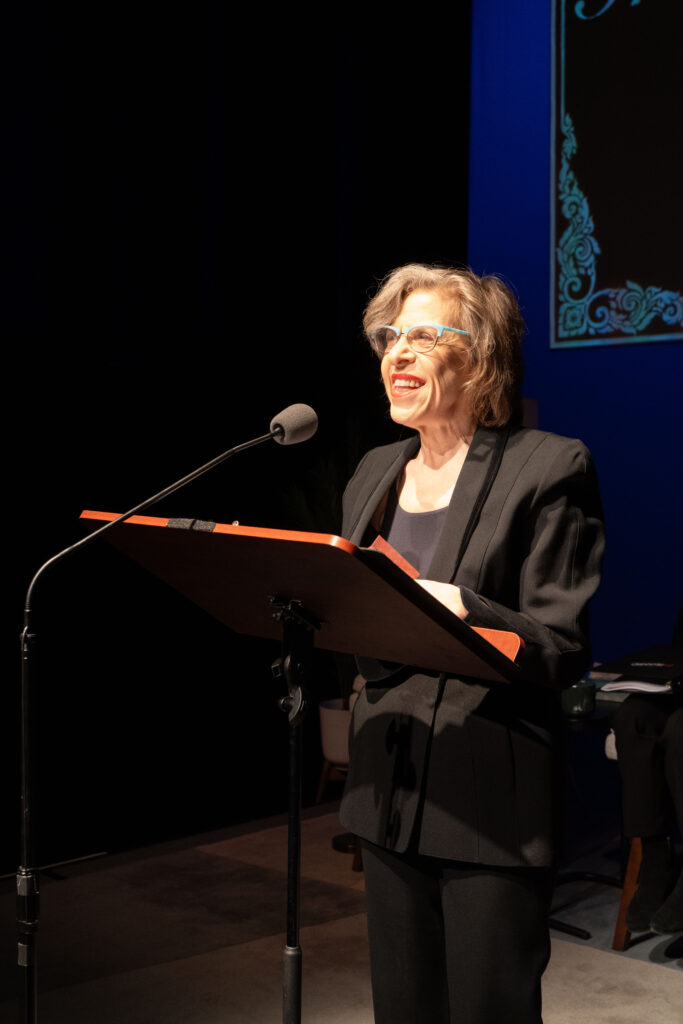
Jackie Hoffman. Photo: Huntington

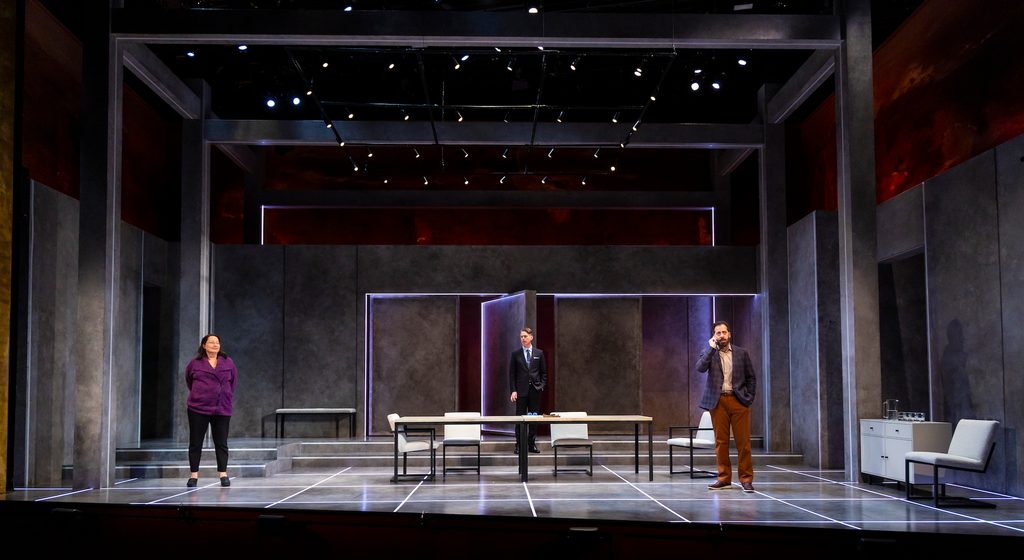
The stage is set like ‘The View,” with four seats set in front of luscious red velvet curtains. “My First Ex-Husband” hangs over the stage, framed like a valentine. The microphone and reading stand host each reader in turn.

“Hello, Boston!” Behar calls as she walks onto the stage. The crowd last Sunday, clearly fans, greets her with adoring applause. “How many of you are divorced?” A sea of hands wave. She pauses with expert timing before following up with, “How many of you would like to be divorced?”

She begins by describing the state of divorce in the U.S. There has been an uptick in divorces of those over 50. “The only people under 50 getting married are gay people,” she jokes. Seriously, she continues, she was intrigued by this statistic. She started interviewing women about why they wanted to get divorced. “Women couldn’t wait to tell me their stories,” she says.

The men, not so much.

All the stories in My First Ex-Husband are true, she explains, adding that her next show will be titled My Next Ex-Husband.

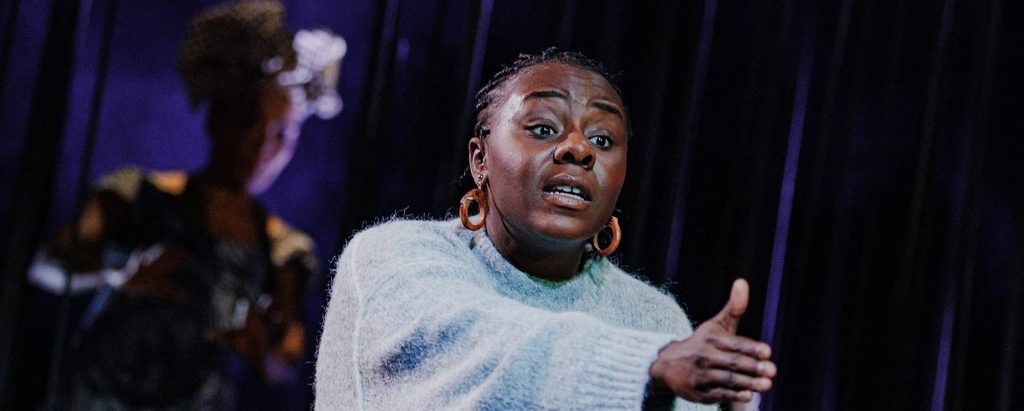
Tonya Pinkins is first to the podium. renowned theater actress, she is a three-time Tony nominee, winning the award in 1992 for her performance as Sweet Anita in Jelly’s Last Jam. The title of each monologue appears above the stage. Hers is “Where You At?” Her delivery is full-throated, emotive, and dramatic.

Next up is Vivien Cox, who has received a Special Drama Desk Award for “Excellence and Significant Contributions to the Theatre” and an Obie Award for “Sustained Excellence.” “Show me a man who loves a plump woman, and I’ll show you a foreigner,” she deadpans. “Walla Walla Bang Bang” features Judy Gold, a stand-up comedian, actor, author, TV writer, and activist who The New York Times dubbed, “an underappreciated gem of the New York comedy scene.”

Lanky, tall, bespeckled and with a head of bouncing blond curls, she is the opposite of Cox’s prim, proper and controlled persona. The personalities and presentations of each actress complement and complement each other visually, stylistically, and delivery-wise, keeping the staging from getting stale.

Gold’s story is about being dragged from her dream of an East Side high-rise in New York City to a farm in upstate New York by a husband whom, unsurprisingly, she later divorces.

Behar, however, is the most effective, her stand-up chops on full display. Each actress gets another bite at the apple, with a total of eight stories. Most are funny, all are unfiltered, and the audience leaves a little lighter than it arrived. Who, after all, can’t use a good laugh these days?

‘My First Ex-Husband’ — Play by Joyce Behar. Directed by Randal Myler. Presented by The Huntington Selects. Produced by Caiola Productions and Cyrena Esposito. At The Huntington Calderwood, 537 Tremont St., Boston, through September 28.

For more information, visit Huntingtontheatre.org
‘The Grove’ Continues the Ufot Family’s 9-Play Journey from Past to Present to Future

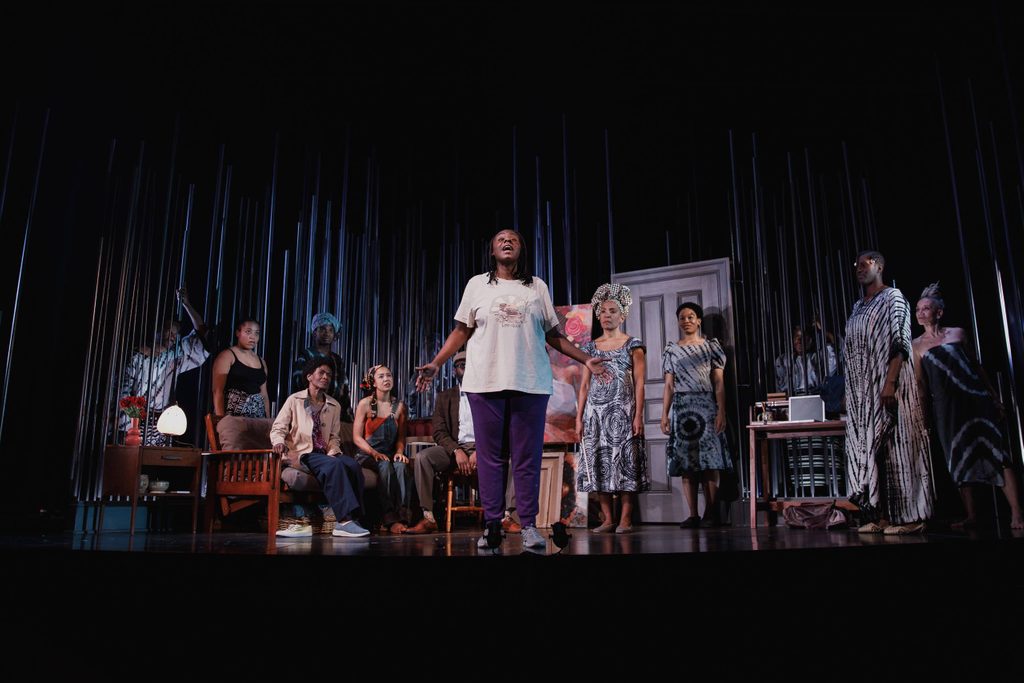
The cast of ‘The Grove’ at the Huntington. All Photo Credits: Marc J Franklin

‘The Grove’ – Written by Mfoniso Udofia. Directed by Awoye Timpo. Scenic Design by Jason Ardizzone-West; Costume Design by Sarita Fellows; Lighting Design by Reza Behjat; Sound Design and Original Music by Rob Milburn and Michael Bodeen. Produced by The Huntington Calderwood at BCA Plaza Theatre at 539 Tremont Street, Boston, through March 9.

By Shelley A. Sackett

Anyone remotely interested in the Boston theater scene is aware of the city-wide, unprecedented commitment to present Mfoniso Udofia’s Ufot Family Cycle over the next couple of years. These nine plays follow a Nigerian family in America and Africa through 40 years and three generations. The first, “Sojourners,” premiered at The Huntington last fall to universal praise. In it, audiences were introduced to Adiaha, the first American-born daughter born to Nigerian immigrants Abasiama and her husband Ukpong. The setting is 1970s Houston, where Abasiama studies hard and works in a gas station to make ends meet. When Ukpong goes AWOL, Disciple Ufot befriends and eventually marries her, raising Adiaha as his own. Like Abasiama, Disciple is studious and hardworking, with a plan, like hers, to return to Nigeria upon graduation. Unlike Abasiama, he is also intensely religious.

The Huntington continues with its world premiere of ‘The Grove,’ the second play in the cycle, which picks up the Ufot family story 30 years later, in 2009 in Worcester. Family and friends have gathered to fête and honor Adiaha (a magnificent Abigail C. Onwunali) after her graduation with a master’s degree in creative writing.

Abigail C. Onwunali

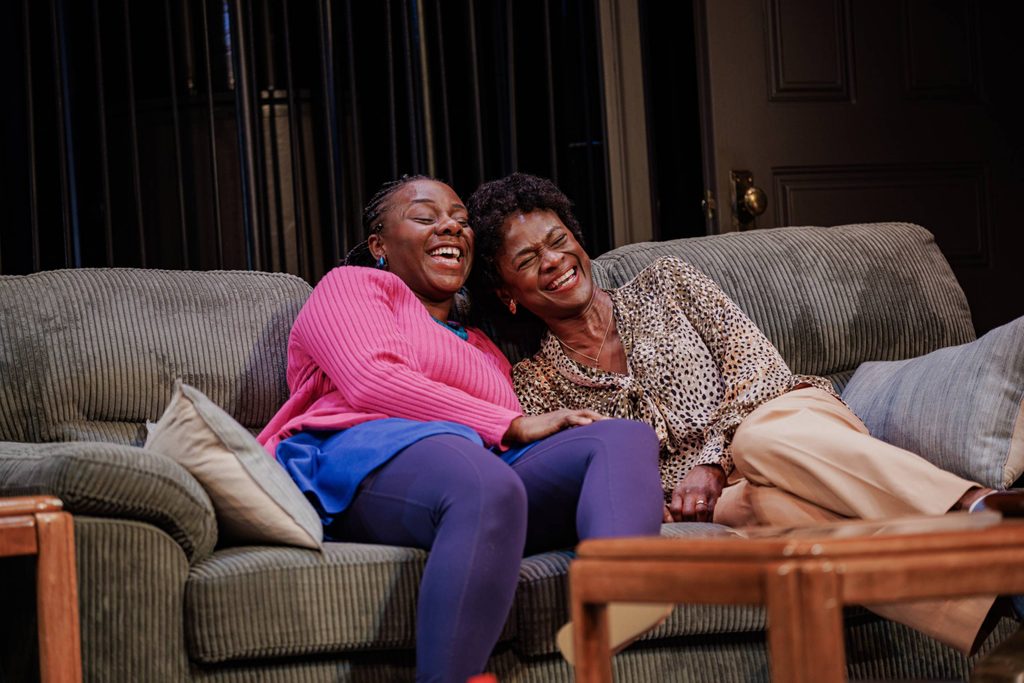
The pre-party atmosphere is anything but festive. Her father, Disciple (Joshua Olumide), sings Ibibio praise songs while relentlessly and neurotically barking orders at Adiaha and her younger siblings, sister Toyoima (a very good Aisha Wura Akorede) and brother Ekong (Amani Kojo). Nothing is clean enough; nothing is good enough. Every minute is spiritual warfare.

Toyoima and Ekong, who still live under Disciple’s roof, tolerate his harangues, complying with just enough teen attitude to satisfy their need to feel like they are dissing him, yet not so much to risk his catching on.

Adiaha, on the other hand, is walking on eggshells. She defers to Disciple, cajoling her siblings to humor him. She is, after all, the one child Disciple trusts with his legacy. It is a great honor; it is an even greater burden. That legacy is a collectivist Nigerian culture where values of family and community eclipse the individual and her particular emotional and psychological needs. Adiaha is, and has always been, the daughter who made her family proud and internalized and externalized her Nigerian roots. Even today, as her increasingly frantic father sputters and verbally abuses his family, she is the compliant one, humoring him while urging her siblings to just play along and keep the peace in the house.

Onwunali and Patrice Johnson Chevannes

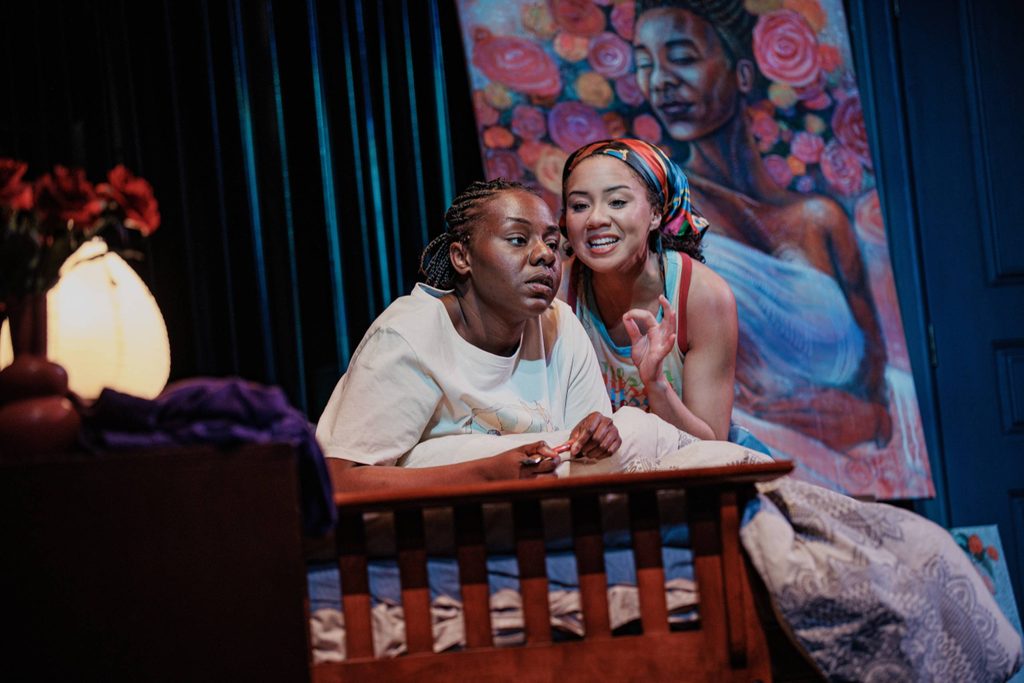
If Adiaha looks adrift and uneasy — and she does — she has every reason to. She is a lesbian, sharing her small apartment with her artist childhood best friend, Kim (Valyn Lyric Turner). She has led a closeted life as far as her family goes, that is, until her mother recently found out and was devastated. Her father remains clueless. If he finds out the truth about her queerness, his image of her will implode (as might he).

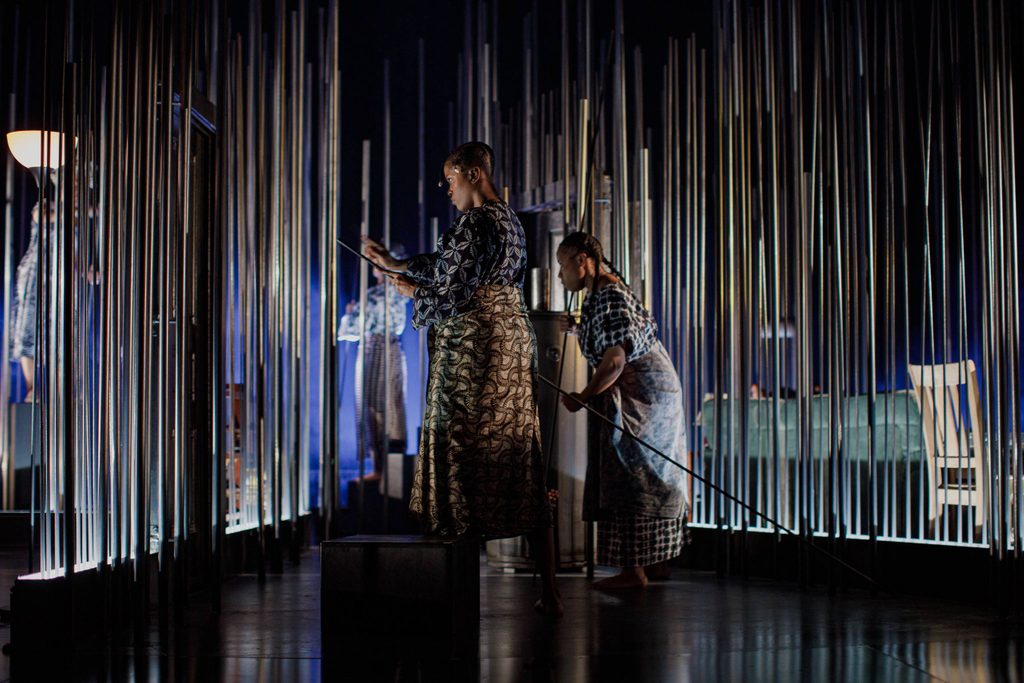
The set changes to Adiaha’s childhood bedroom, where she busies herself throwing the trophies that line her shelves into her trash basket, ridding herself of “the kid I was.” Emmy Award-winning scenic designer Jason Ardizzone-West has created a rotating set that is like a crème-filled cookie — the outsides are the family living room, Adiaha’s bedroom in Worcester, and later, her apartment in Brooklyn.

The rich middle is a grove of metal poles. Five female “Shadows,” dressed in traditional garb, live in this middle ground, dancing and chattering and chanting in Ibibio (Nigeria’s native language). They beckon to Adiaha. While they and their staging are captivating, their role is not just as artistic eye and ear candy. They are storytellers who tell their tales through choreography and language. They will show Adiaha that she can be true to herself while still being part of a rich heritage that only became patriarchal and homophobic with the advent of colonialism. They want to help her with safe passage from past to present to future, a true rebirth into a world of self-acceptance and cultural pride. (Kudos to director Awoye Timpo for her steady, light touch).

Janelle Grace and Ekemini Ekpo

Meanwhile, however, Adiaha is in a pickle. Her father has gathered Udosen (the magnetic Paul-Robert Pryce), her assimilated, “fun” uncle, and Maduka Steady (Godwin Inyang), the “stodgy” uncle who wears his Nigerian garb as if wielding a royal scepter. The conversation among the men centers on despair over the plight of their heritage at the hands of the young who have adapted in America by embracing, for example, all matters of things that involve earplugs.

“Look at our history. When did we lose our way?” Disciple and Maduka lament.

While the men try to relegate women to subservient roles, the scenes between Adiaha and her mother, Abasiama (Patrice Johnson Chevannes) and sister Toyoima are among the most poignant and revealing. Adiaha’s younger sister tries in vain to get her to confide in her as a way to ease her pain and grease the wheels to her freeing herself from her father’s yoke. Her mother admits that her father is difficult and getting worse, yet she values and, therefore, must prioritize her tribal heritage over her personal happiness.

“Continuing the line is the most important thing in life,” she admonishes. “If you are a lesbian, then you can’t have a child…Sometimes life is sacrifice. Putting aside what you feel for what is righteous.”

Act II of the 1 hour 45 minute (1 intermission) play opens with a prolonged scene that sheds light on Adiana and Kim’s relationship. Although going through a rough patch, it’s clear that the two share a bond that goes deeper than girlfriends; they truly are soulmates, able to talk and share in intimate and revealing ways. When Adiana begins speaking Ibibio in her sleep, we sense the possibility of a bridge between past and present.

Onwunali and Valyn Lyric Turner

Eventually, Adiaha learns (with guidance and help from the Shadows) that she can indeed be the way she is and still be Nigerian. She is a tree who finds her grove and is not alone. Just like when she was a child, all will be good again.

Playwright Udofia, a Southbridge native, started writing ‘The Grove’ in 2009 but put it aside as she struggled with her own issues about being both Nigerian and queer. Luckily, she returned to the work once she realized that the collective could honestly and naturally hold everyone — including a queer Nigerian — and that there were deep roots that existed even for her. Part three of the Ufot Family Cycle, runboyrun, will be produced as an audio play adaptation by Next Chapter Podcasts in partnership with GBH with readings held at Boston Public Library – Central Library: GBH Studio & The Huntington Theatre. I, for one, can’t wait.

Note: Although the cast of 13 is a terrific ensemble, Olumide might choose to reread playwright Udofia’s character notes, which describe Disciple as “not a one-dimensional monster; he is a complex human being. He displays signs of PTSD/emotional and psychological distress, the influence of traditional Nigerian cultural norms and patriarchy, as well as bad behavior.” Olumide’s unnuanced version on opening night was frantic and loud, leaving little room for audience empathy.

For more information and to buy tickets, go to https://www.huntingtontheatre.org/

The Huntington’s Must-See ‘John Proctor Is the Villain’ Conjures Pure Theatrical Magic

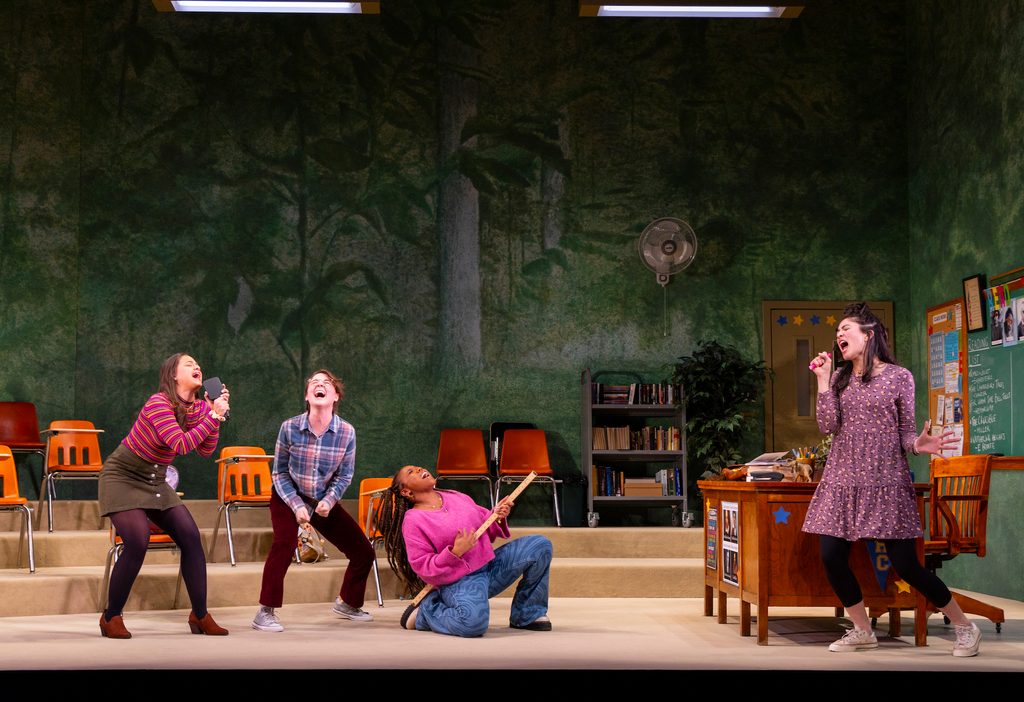
Isabel Van Natta, Jules Talbot, Victoria Omoregie, Haley Wong in ‘John Proctor is the Villain’ at The Huntington. Photo Credit: T Charles Erickson

By Shelley A. Sackett

In 1692, a witchcraft panic in Salem, Massachusetts, led to the conviction and execution of 19 innocent people (14 women and five men) for a crime that not only was never committed but that never happened in the first place.

A mixture of irrational fear, unchecked religious and patriarchal power, and a persecuting mentality led to the emergence of witch hunts and subsequent witch trials.

Arthur Miller fictionalized and immortalized this historical event in 1953 with The Crucible, a mainstay of most high school English Literature curricula. He intended it as an allegory for and indictment of the rabid McCarthyism of the 1950s, when the U. S. government blithely persecuted citizens accused of being communists based, often, on nothing more than innuendo and hearsay.

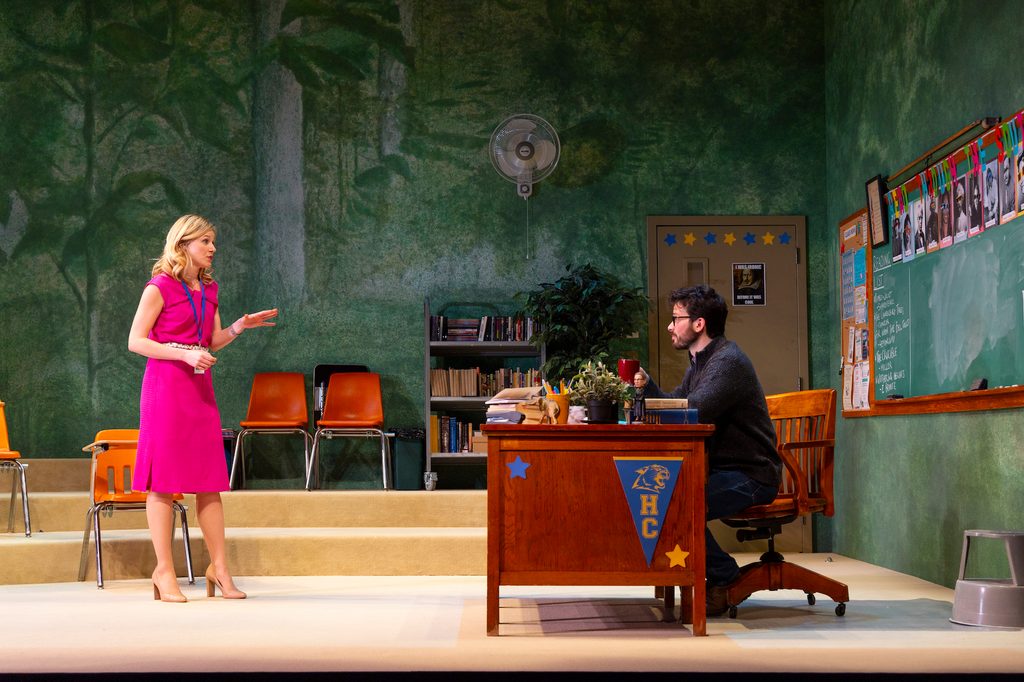
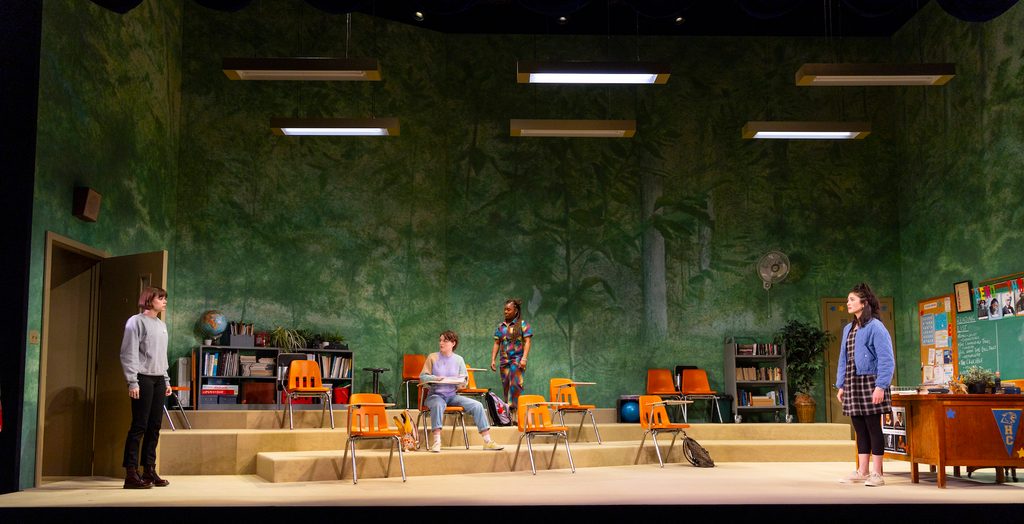
Fast forward to 2018 and an 11th-grade honors English literature class in rural Georgia, the time and place where “John Proctor Is the Villain,” Kimberly Belflower’s razor-sharp and timely play, is set. The opening scene finds Carter Smith (played by Japhet Balaban), the laid-back, I-could-be-your-buddy teacher, standing in front of a group of bored teenagers, each with their textbook open.

“Sex,” he says. In unison, the students robotically recite the administration and school board approved definition.

We get an inkling of the seven students’ (five girls and two boys) personalities and styles through the intimate banter that ensues. Beth (Jules Talbot), an eager, smart student, complains about squandering lit time for the ten minutes of sex education that the curriculum demands of each class.

Nell (Victoria Omoregie), a new transplant from Atlanta, says she had sex ed in fifth grade. Ivy (Brianna Martinez) is all business and practicality (“Doesn’t it make sense for sex ed to actually come like before people know about sex?”). Raelynn (Haley Wong) is a cheerleader type, scowling one minute and vamping the next. Lee (Benjamin Izaak) is the quintessential poster boy for teenage testosterone, and Mason (Maanav Aryan Goyal) is the class loafer.

We also get a glimpse of Carter and the adoration he culls and basks in. “I know it seems really lame, guys. Believe me, I remember being exactly where you are and feeling like, ‘Are you kidding me?’ but this is the curriculum. These are the facts.”

He is the teacher we all wanted to have in high school — smart, a little goofy, and universally appealing. He culls his students’ trust.

He also has a laundry list of issues, including ones respecting boundaries. Caught in the netherworld between being a teenager himself and entering the adult world of his student’s parents, he evokes both our affection and suspicion.

Olivia Hebert, Japhet Balaban

Following several more excruciatingly boring call-and-response sex ed definitions, Carter explains that the class’s next assignment will be to read and critique “The Crucible.” He teaches it in a fairly traditional way and proclaims John Proctor as the hero of the play.

Proctor, as a reminder for those who don’t remember the details of The Crucible, is the 35-year-old married man who has an affair with Abigail, a teenage girl in his employ. To save his honor, he lies about the affair up until the moment he is about to be hanged and only confesses because he thinks it will literally save his own neck.

Carter deems Abigail, who is disgraced and fired from her job, as the play’s true villainess because she starts the witch hunt that leads to the Salem Witch Trials. “Abigail is like really determined to get revenge. She becomes kind of a ringleader to everyone making these accusations and it gets pre-tty crazy,” Carter explains.

His five #MeToo generation female students don’t quite see it that way. After all, Proctor committed adultery with a teenager, lied about it, and let her take the blame for the affair. They maintain that Abigail’s acts of “revenge” — accusing citizens of consorting with the devil — was the only way for her to achieve empowerment in a theocratic, Puritanical patriarchal society that marginalized and demonized her.

Victoria Omoregie, Jules Talbot, Haley Wong

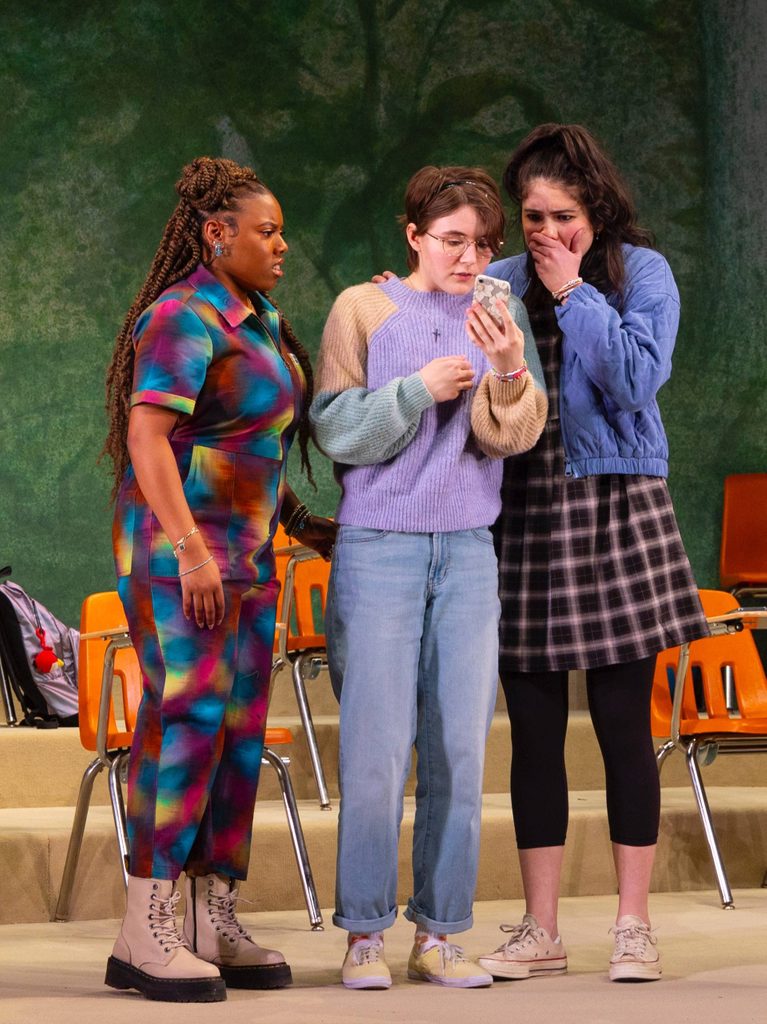
Shelby (Isabel Van Natta), who has returned to school after an unexplained absence, is particularly incensed. Where is the goodness, she asks, in a man who seduces a teenage girl and then throws her out when his wife finds out? A man who only had to lie to be able to put the whole mess behind him?

Adding to the caldron of budding feminism these five students are stirring is the fact that their request to start a Feminist Club (to “spread awareness, foster dialogue, and ignite change”) has been rejected by the school board. Their guidance counselor, Miss Gallagher (Olivia Hebert), delivers the bad news. When Carter steps up and offers to be its faculty advisor so it can go forward, the pieces are all in place for playwright Belflower to conjure her dramaturgical magic.

And make no mistake. Bridging eras of 17th-century Calvinist Puritanism, 20th-century McCarthyism, and the 21st-century #MeToo movement to create a cogent, insightful, accessible, and – most of all – funny commentary on the issues of male power and female vulnerability and agency is nothing short of miraculous.

The plot of John Proctor Is the Villain is so integral to its message and enjoyment that it would be a spoiler to detail what happens next in this theatrical gem. Suffice it to say that there are enough surprises, twists, and turns to make 100 intermission-less minutes fly by and a climactic finale that is guaranteed to leave you clapping furiously during a standing ovation.

Director Margot Bordelon squeezes every drop of theatrical juice out of this fast-paced, fabulous, must-see play. Under its comic overtones lie deep issues such as female friendship, gender dynamics, speaking truth to power, and patriarchal autocracy. Kudos to Bordelon for aiming equal beams on the light and dark elements of the play’s messages.

To be fair, Bordelon has a lot to work with. Belflower has an uncanny ear for dialogue, and she has penned spectacular characters. Her teenagers are articulate and insightful. They are also silly, petty, and childish. In short, they are believable adolescents, and the cast wears their roles as if they were made to order.

Isabel Van Natta, Jules Talbot, Victoria Omoregie, Haley Wong

Carter, as the John Proctor stand-in, is appropriately smarmy and endearing. He is like jello. He presents as solid but, in truth, is an eely mass of spineless gelatin, and Balaban taps into this duplicity with subtlety and self-assurance.

John Proctor Is the Villain is what good theater is all about. Its storyline is a dynamo of action and intrigue, of pathos and laugh-out-loud humor. Engaging and thought-provoking, its message is one that rings loud and true today. As Carter explains in his introductory lesson on The Crucible, “Later we found out that all those accusations were untrue. Innocent people died, and why? Largely mass hysteria, spurred on by … a bunch of people saying untrue things that could become dangerous if left unchecked.”

Highly recommended.

‘John Proctor Is the Villain’ — Written by Kimberly Belflower. Directed by Margot Bordelon. Scenic Design by Kristen Robinson; Costume Design by Zöe Sundra; Lighting Design by Aja M. Jackson; Sound Design by Sinan Reflik Zafar. Presented by The Huntington at Performing at the Calderwood Pavilion at the BCA, 527 Tremont Street, Boston, through March 10, 2024.

For tickets and information, go to https://www.huntingtontheatre.org/

The Huntington’s ‘The Art of Burning’ Smolders and Sparks

Adrianne Krstansky, Michael Kaye and Rom Barkhordar in The Huntington’s ‘Art of Burning’
Photo Credit: T Charles Erickson

“The Art of Burning” by Kate Snodgrass. Directed by Melia Bensussen. Scenic Design: Luciana Stecconi; Lighting Design: Aja M. Jackson; Sound Design: Jane Shaw; Costume Design: Kate Harmon. Presented by The Huntington, Calderwood Pavilion at the BCA, 527 Tremont Street, Boston through February 12.

by Shelley A. Sackett

Patricia (Adrianne Krstansky), a frumpy middle-aged painter, opens Kate Snodgrass’ ‘The Art of Burning’ mid-conversation with her friend Charlene (Laura Latreille). “Sometimes we have to kill the things we love to save them,” she announces seemingly out of the blue. Charlene adds critical context. The two have just seen a production of “Medea” and are debriefing outside the theater.

In the ancient Greek tragedy by Euripides, Medea takes vengeance on her unfaithful husband Jason by murdering his new younger wife as well as her own two sons, after which she escapes to Athens to start a new life. To Charlene’s discomfort, Patricia not only sympathizes with Medea, she praises her.

“She saves her children,” Patricia explains. “She doesn’t want to but she has to. The world will make their lives miserable and she doesn’t want that. She loves them.” Patricia may look mousey, but she is a mouse that roars.

Under Melia Bensussen’s fast-paced direction, the audience is quickly brought up to speed as the brilliantly designed (Luciana Stecconi) and lit (Aja M. Jackson) set morphs into a conference room. This is the divorce war room. Patricia’s husband Jason (groan…) has – you guessed it! – left her for a younger woman (Vivia Font). Jason (Rom Barkhordar) has enlisted Mark (Michael Kaye), a family friend and Charlene’s husband, to mediate their contentious divorce despite glaring and unethical conflict of interest.

Adrianne Krstansky, Michael Kaye and Rom Barkhordar

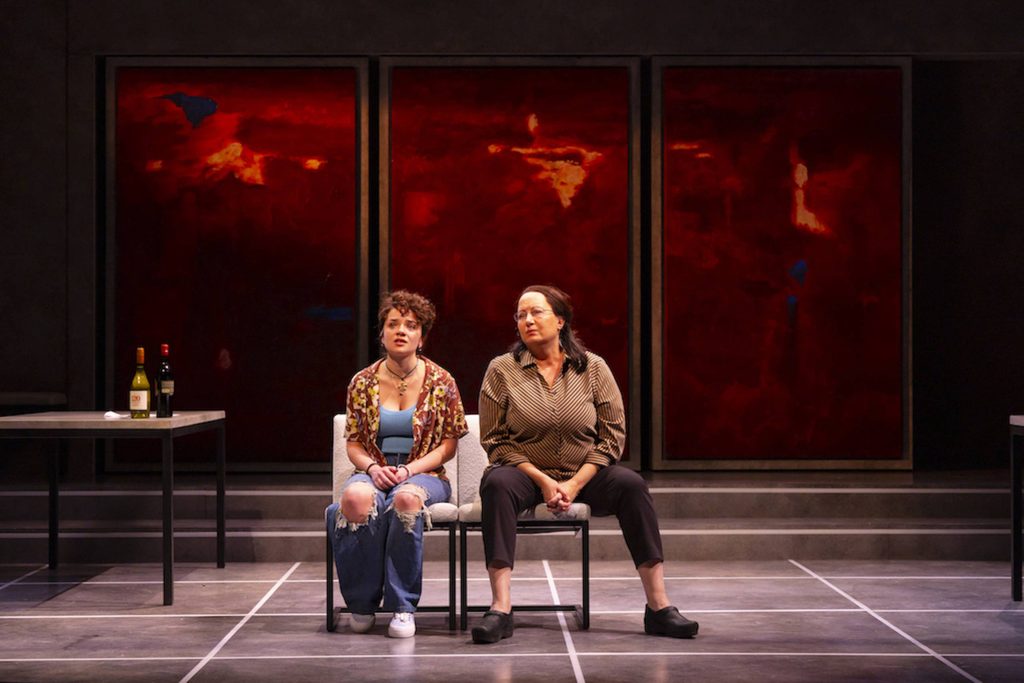
While waiting for Jason to arrive, Patricia continues her tribute to Medea, much to Mark’s discomfort. The more Mark squirms, the more Patricia rhapsodizes. Adding to the slow burn are these facts: Patricia recently torched Jason’s antique desk on their front lawn and their divorce hinges on who will have custody of their 15-year-old daughter Beth (Clio Contogenis). As the animosity and toxicity of their marriage is revealed, the audience feels increasingly sorry for the teenager who must choose between these two. “Custody” in this context feels more like incarceration than protective caregiving.

Through Patricia’s unhinged tirades, Snodgrass seems to want us to wonder whether she is grandstanding or has become so untethered that she imagines herself a 21st century reincarnation of the Greek cuckolded princess. Unfortunately, the characters are too undeveloped and the play too full of clichés and tropes to create the kind of tension required to pull off this level of subtle, emotion-driven drama. Instead, the audience is served up a contemporary look at conflicted, flawed characters who are doing the best they can, more of a slow roasted marshmallow than daring flambé.

Which by no means suggests that the 85-minute intermission-less play should be ignored. Snodgrass raises important issues and the cast capably rises to the occasion. She adds meat to the play’s bones through the interactions between mediator Mark and Charlene (played with comic spunk by a splendid Latreille), who are going through their own marital bumps. Their scenes together bring a chemistry and ease that underscore the tedium of Patricia and Jason’s cardboard, rancorous  communication.

As Patricia, Krstansky delivers her pithy lines with a deadpan earnestness and impeccable timing that hints at the blaze raging inside her. The more controlled she appears, the more hysterical her character reads. Kudos to the talented actress for pulling off this marvelous feat.

Clio Contogenis, Krstansky

Her scenes with daughter Beth (Contogenis brings a welcome multi-dimension to the role) are among the most meaningful and poignant. Beth tries to explain to her mother that her anxiety and discomfort go way deeper than reactions to her parents’ divorce and normal teenage growing pains. She is that Gen-Z “woke” teen who viscerally feels the existential crisis of the world with every pulsating neuron in her body. She lives in a constant state of fear and disgust and marvels at the psychological trauma inflicted upon her by her clueless parents’ irresponsible childrearing.

Poor Beth, it seems, is the fulcrum of her parents’ dysfunctional marriage. How and why the two ever got together, let alone thought they could parent, becomes even more a mystery as Beth fills in the gaps.

Unlike Jason, Patricia finally listens — and really hears — her daughter after a pivotal interaction where she faults her Beth’s outfit for provoking sexual date abuse. “Guys never get blamed, Mom. You don’t know. You don’t get anything!” Beth cries. All Patricia can demurely offer is a heartfelt, “I’m just trying to help.” By the end of the play, the path these two bravely forge together is the most inspiring and meaningful of all the characters’ relationships, and the coals post-theater discussions love to fan. For tickets and information, go to: https://www.huntingtontheatre.org/whats-on/the-art-of-burning/