‘Message In A Bottle’ is a Sublime Synchronicity of Song, Dance and Story

‘Message In A Bottle’ at Emerson Colonial Theatre

By Shelley A. Sackett

The only negative comment that anyone could possibly utter about the earth-shattering Message In A Bottle is that it is an unforgivable shame that its Boston run is a mere five days (seven performances). My suggestion is to interrupt reading this review, trust the reviewer, and jump on your computer to secure tickets while there might still be some left.

Yes, it really is that good.

Since Sting burst onto the music scene with The Police four decades ago, his eclectic styles, keen sense of lyrical storytelling, and hypnotic voice have earned him 17 Grammys, 25 American Music Awards, and 2 MTV Music Awards. He is known for his sociopolitical critiques as much as for his virtuoso musicianship.

Thanks to the virtuosity of British Oliver Award nominee Kate Prince (whose renowned narrative choreography includes West End theatrical hits Some Like it Hip Hop, Into the Hoods, and Everybody’s Talking About Jamie), 28 of Sting’s iconic songs have been transformed into the score for Message In A Bottle, Prince’s phenomenal newest production, which she created, choreographed, and directed.

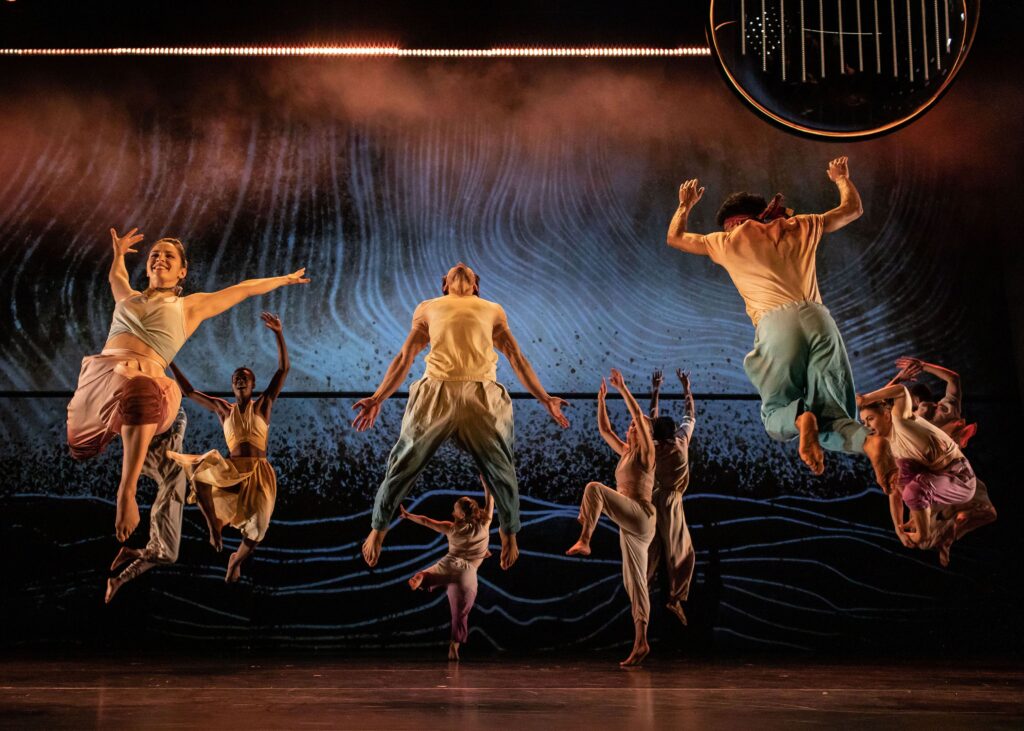
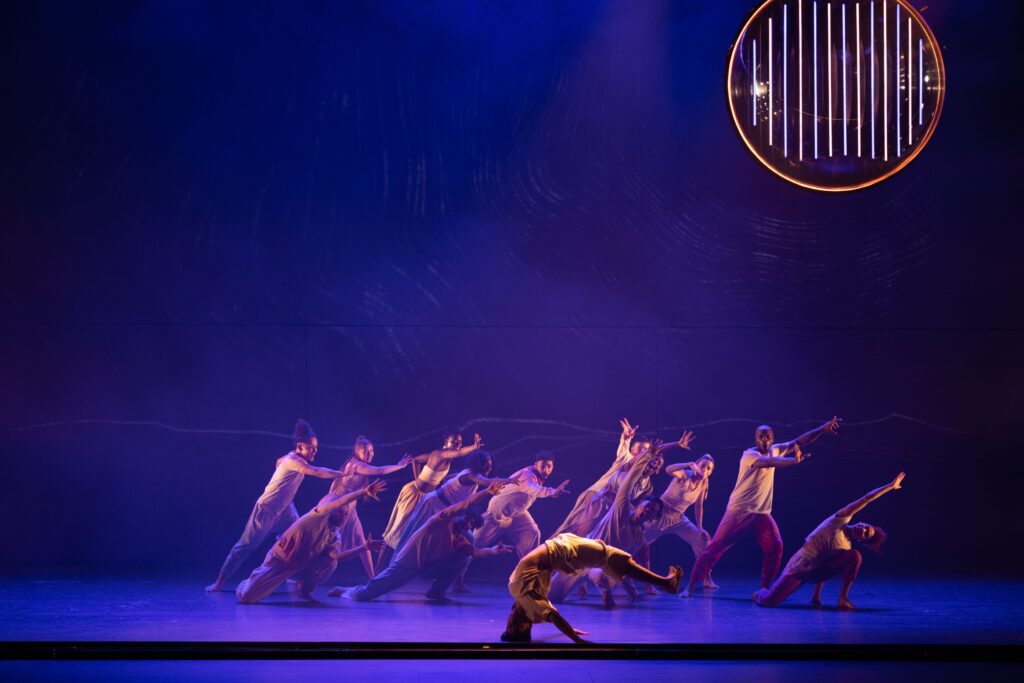
Master of hip hop, break dance, modern, swing, ballet, and street styles, Prince brings 23 members of her prodigious ZooNation dance company to daze and amaze their Boston audience with their flexibility, acrobatic prowess, and sheer stamina. At times, they seem to float in defiance of gravity, pure gossamer, and magic.

Prince’s storyline focuses on civil wars and the global migrant crisis they have spawned. Through the experiences of one innocent family (father, mother, and three teenage children) who become refugee collateral damage, she shows the wrenching toll exacted on these victims.

She uses Sting’s lyrics, the dancers’ prodigious acting skills, and first-class lighting (Natasha Chivers), set design (Ben Stones), costumes (Anna Fleischle), and video (Andrej Goulding) to narrate this emotional, full-length tale.

Even before the curtain rises, Message In A Bottle makes it clear that this is not simply a dance concert. Creative sparks are everywhere, starting with the opening song (“Desert Rose,” which inspired Prince to create the production) set against giant shadow silhouettes that mask dancers behind a gauzy drape. The drape lifts, revealing a minimalist but effective set with a huge screen backdrop that displays mood-altering graphics. A simple open box-like structure will shift use and mood throughout the production depending solely on how it is lit and how the dancers treat it.

We are thrust into the joyful, bustling thrum of a small village. People are happy. A man (the father) does acrobatic head dancing, then leaps and gyrates with superhuman speed and lightness. The dancers wear brightly colored costumes. There is a spritely playfulness in their steps.

Suddenly, bombs explode, menacing soldiers show up, and this peaceful community is peaceful no more. Violence and danger are now armed and in charge. Costumes change from primary to earthen tones.
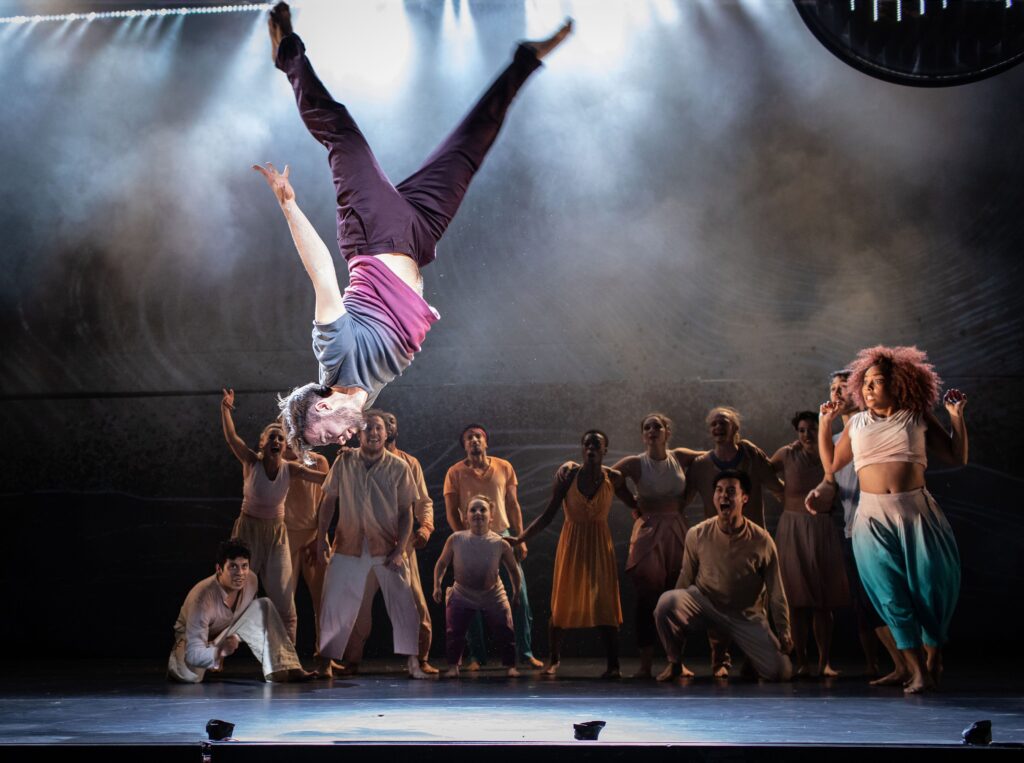
Many villagers are sent to a refugee camp, where they are humiliated and tortured. Costumes again change, this time to gray, the benign box in center stage becomes a jail, and rape, pillage, and death are hinted at.

Sting’s “Don’t Stand So Close To Me” and the lyric “To hurt they try and try” are especially powerful and spot-on soundtracks.

Our family flees across the ocean on a flimsy raft, eventually having to separate to safer ground as strangers in strange lands.

“Rescue me before I fall into despair…I’ll send an S.O.S. to the world,” Sting sings as Act I ends somberly.

Act II is more uplifting, though to her credit, Prince does not tie it all together in a happily-ever-after bow. The daughter ends up in a Tahiti-like community where everyone wears long, billowy green skirts and offers her love, safety and a fresh start. Haunted by her trauma and missing her family, she nonetheless latches on and stays.

The two brothers find love, one in the arms of a man, the other in the arms of a woman. (ZooNation is a true company. None of the dancers have named headshots, so I can’t applaud them separately. However, the impossibly willowy blond who plays the bride is the production’s knockout standout.) The scenes of their rebound, with sensational pas de deux, are emotionally tender and artistically astonishing.

Although the siblings may never find each other again, the ending is hopeful; they are together in spirit. They have each found a new life that allows them to live in inner and outer peace.

It is not easy to describe the sheer miracle of this show. The 23 dancers move as a single unit, heaving and weaving in controlled yet casual waves as they leap, twirl, and use their limbs as organic punctuation. Yet individuals become recognizable, especially the blond bride and whirling dervish who play the father in the opening scenes. What a pleasure — and how noticeable — that Prince has brought members of her London-based company on the road with her instead of relying on a touring company to step into their impossible-to-fill shoes.

Prince’s choreography and direction are unquestionable genius. She (and dramaturg Lolita Chakrabati OBE) have woven together a contemporary story about the chaos and upheaval in the world as over 100 million people—more than half under age 18—are forced from their homes only to be greeted as unwelcome immigrants when they seek shelter elsewhere. And they have done it using the language of dancers’ bodies instead of spoken dialogue. The sheer dramatic power of this feat can neither be overstated nor overpraised.

The coordination of set, lighting, costumes, sound, and videography changes tone, place, and time in subtle and effective ways. The boat scenes, in particular, evoke what it would feel like to be at the mercy of both politics and roiling seas.

The lighting is organic, becoming a character that evokes woodcuts, rain, a prison, a love nest, and lush landscapes. In “The Bed’s Too Big Without You,” projected images and razor-sharp choreography and direction create a diorama that the audience can just slip inside.

While the dancers and the realness they bring to the stage can’t be overemphasized, the night really belongs to Sting, who re-recorded his songs for this production, many with female guest vocalists. He has had so many hits over the decades, changing genres and flowing from The Police to various musical partnerships and solo endeavors, that it is easy to forget what a brilliant songwriter and musician he is. Prince has cherry-picked the most perfect lyrics to narrate her story, and hearing this playlist elevates Sting’s work to that of a full opera score. Andrew Lloyd Weber can only be pea green with envy.
This show must be seen both because of its raw and relevant message and because it celebrates the extraordinary feats humans can achieve when they work together to create instead of to destroy.

‘Message In A Bottle’ — Music and Lyrics by Sting. Directed and Choreographed by Kate Prince. Music Supervisor and New Arrangements by Alex Lacamoire; Set Design by Ben Stones; Video Design by Andrej Goulding; Costume Design by Anna Fleischle; Lighting Design by Natasha Chivers; Sound Design by David McEwan. Presented by Sadler’s Wells and Universal Music UK Production with ZooNation: The Kate Prince Company at Emerson Colonial Theatre, 106 Boylston St., Boston, through March 30.

For tickets and more information, go to: https://www.emersoncolonialtheatre.com
No One Gets a Free Ride in Speakeasy’s Rich ‘Cost of Living’

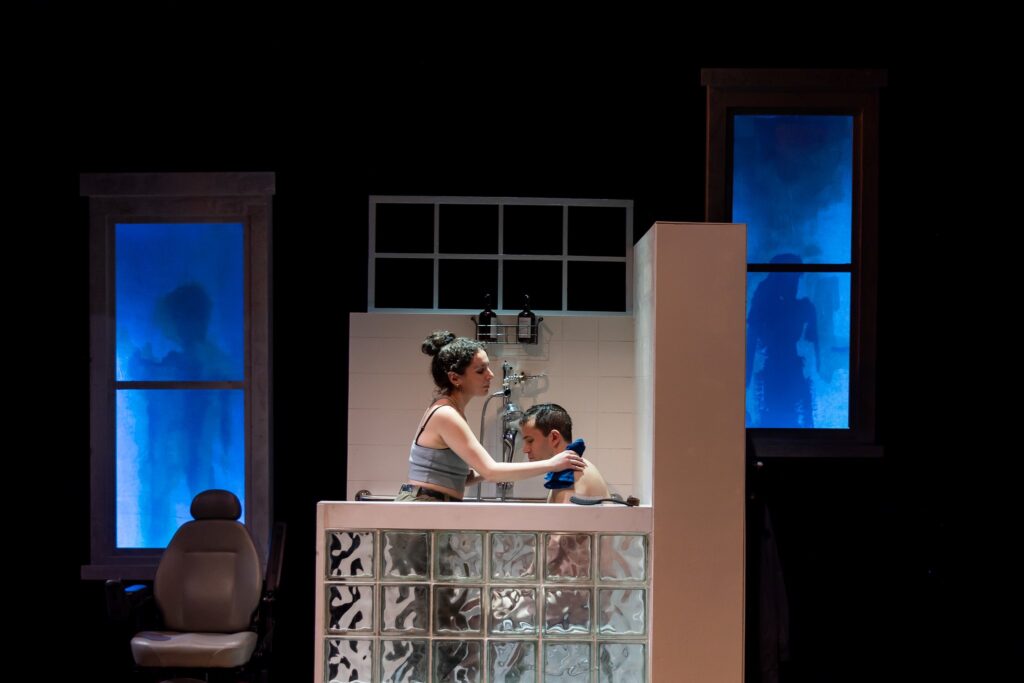
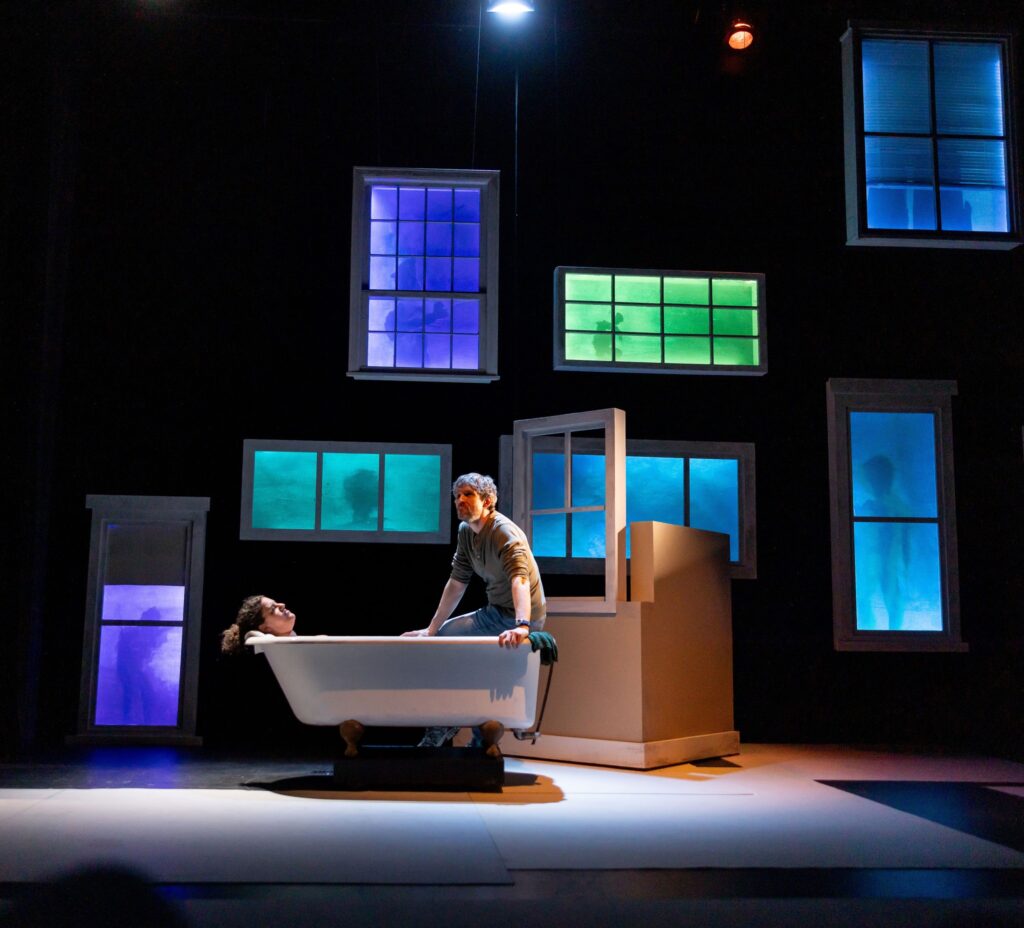
Stephanie Gould and Lewis D. Wheeler in “Cost of Living” at Speakeasy Stage
Photos: Nile Scott Studios

By Shelley A. Sackett

At its heart, ‘Cost of Living,’ is about relationships: how two people meet; how and whether they connect, separate, and reconnect; and how they handle caring and being cared for.

In playwright Martyna Majok’s magic hands, the fact that one person in each relationship has a disability is secondary (though hardly unimportant). Rather, she focuses on the universal vicissitudes of life — emotional, financial, good luck and bad, good health and illness — and how we handle them. The delicacy and craftsmanship of that artistic feat won her the 2018 Pulitzer-Prize award for Drama.

In ‘Cost of Living,’ everyone carries baggage, some external and others internal. The richness of Majok’s script lies in the way she peels back her character’s outer, tougher layers to reveal the softer, vulnerable center within.

Eddie (a magnificent Lewis D. Wheeler) is an unlucky former long-distance trucker. We meet him in a bar in the play’s riveting opening monologue, during which he pours out his grief over the recent loss of his wife, Ani (a top-notch Stephanie Gould). We learn quite a bit about him. He is funny, lonely and somewhat introspective. He is also boyishly guileless in a way that’s hard to resist. He is 12 years sober, struggles to make ends meet, and believes his dead wife can text him from the beyond, where he hopes she is having the time of her afterlife.

Gina Fonseca, Sean Leviashvill

In flashbacks, we meet Ani, Eddie’s estranged wife. Just released from the hospital after a horrific car accident that shattered her spine, she must learn to adjust to life as a paraplegic who needs constant care. She is alone with her wheelchair in an apartment filled with boxes and gloom.

Suddenly, Eddie shows up, unannounced and unexpected. These two are in that marital purgatory of married but separated, separated but not yet divorced, and from the get go, it is easy to see that whatever flame drew them together initially still smolders.

Their easy going banter and underlying affection shines through even Ani’s most withering and acerbic comments. “We have too much dirt on each other,” Ani says, and she doesn’t mean that that’s necessarily a bad thing. Eddie just wants to be near her, needs to be near her, even though he now lives with the woman who was the reason the marriage broke up.

Ani gives him no end of lip, but Eddie, resolute and undaunted, cajoles and pleads and turns on his considerable charm. Eventually she relents, and Eddie becomes her full time caregiver.

Across town in a tonier part of New Jersey, lives John (an effective Sean Leviashvill), a wealthy and nit-picky (think Niles Crane in “Frasier”) Princeton University doctoral student who happens to have cerebral palsy. We meet him in his wheelchair as he is interviewing — make that grilling — Jess (an outstanding Gina Fonseca) for the job as his early morning caretaker.

“How much life have you lived?” he demands over and over again. Turns out that Jess, a first generation working-class graduate of Princeton, has lived plenty. She works at a bar often until 4 am, but assures John she can handle the hours, physical demands and intellectual sparring that caring for him would involve.

She says she needs the money, but it’s clear she needs more than that. This job provides as much a life line for her as she would for John.

The more John tries to dissuade her, the more Jess digs in her heels, determined to land this job. Even at this meet and greet, it’s evident that these two will be a good match. Despite the gaping disparities in their physical abilities and economic class, they are intellectual equals who enjoy a good academic romp.

Wheeler, Gould

“Working all the time doesn’t seem like a life,” John tells her right before hiring her. Unspoken but communicated telepathically is Jess’s response: Neither does sitting alone in a fancy apartment. These are two kind-hearted, lonely people who need each other’s care in more ways than they realize.

Over the course of 90 minutes (no intermission), these two relationships develop in tandem and, thanks to Janie E. Howland’s clever set, side by side. The action switches seamlessly from Ani’s meager digs to John’s upscale apartment with the rolling in and out of various props and sectioned set pieces.

We really feel as if we are there in the room with these couples. Howland built a perimeter of walls and peppered them with large window frames that house backlit silhouettes. The effect creates a space where the audience feels both the discomfort of being watched (and judged?) and the relief of being in a safe and cozy environment, sealed off from the outside world which can look in but not enter.

In the show’s two most affecting scenes, the stage is magically transformed into a bathroom. Eddie pushes Ani onstage in a full length tub of water (Amanda E. Fallon’s lighting design is breathtaking) and tenderly washes her for the first time since the accident. Although Ani loses none of her acerbic edge, there is a playful tenderness that shines through. Eddie wears his heart on his sleeve, caring and solicitous in ways he probably wasn’t during their marriage. Watching these two have a second chance at getting back to the essence of what drew them together in the beginning is as emotionally satisfying as it is structurally effective.

Equally touching is the scene where Jess showers John. His edges soften as he trusts her with his vulnerabilities and fears. She responds with affectionate competence and confidence, allaying his concern while basking in the closeness she yearns for.

In less skillful hands, these scenes could have been sappy, awkward or implausible. Under Alex Lonati’s spot on, sensitive direction, they instead serve as a magic keyhole through which the audience really gets inside these characters’ skins and witnesses their revelations that they are lonely and alone. Each not only discovers they need people; they also discover they need to be needed. These are regular people with imperfections and eccentricities, and the four actors who play them are engaging and believable.

Fonseca, Leviashvill

As Jess, Fonseca struts her tough girl stuff but the challenges and pain that lurk just below the surface are impossible to hide. Wheeler is a stand out as Eddie, so at ease in his role that it’s hard to separate the two. He IS Eddie. Both Leviashvili and Gould were born with cerebral palsy, and they bring a special sensibility to their roles.

Although Gould says she did a lot of hiding when she was growing up because her disability was emotionally and physically painful, she’s more comfortable and confident now. “I want to show people that disabled actors are just as worthy of stage time as ‘normal’ actors,” she told the Boston Globe. After viewing her in ‘Cost of Living,’ it’s clear she has done just that — and more.

Cost of Living – Written by Martyna Majok; Directed By Alex Lonati; Scenic Design by Janie E. Howland; Costume Design by Chelsea Kerl; Lighting Design by Amanda E. Fallon; Sound Design by Anna Drummond. Presented by Speakeasy Stage Company at 527 Tremont St, Boston  through March 30th, 2024.

For tickets and information, click here.

Truth and consequences collide in the Huntington’s bewitching ‘John Proctor is the Villain’

Left to right: Brianna Martinez, Jules Talbot, Victoria Omoregie, Haley Wong in ‘John Proctor is the Villain,’ directed by Margot Bordelon/T. CHARLES ERICKSON

In 1953, the great Jewish American playwright Arthur Miller saw his new play, “The Crucible,” produced on Broadway. Miller wrote it as an allegory for Senator Joseph McCarthy’s anti-Communist and antisemitic fearmongering and the House Un-American Activities Committee, a congressional committee tasked with rooting out dangerous inhabitants.

These so-called communists were no more a threat to America’s political order than those accused of witchcraft posed to Salem’s Puritan community in 1692, when hysteria based on nothing more than innuendo and hearsay led to the conviction and execution of 19 people.

“The Crucible” remains a mainstay of most high school curricula, including in an 11th-grade honors English literature class in 2018 rural Georgia, the time and place of “John Proctor is the Villain.” Kimberly Belflower’s razor-sharp and timely play is now on stage at the Huntington Calderwood Pavilion/Boston Center for the Arts.

The opening scene finds Carter Smith, the laid back I-could-be-your-buddy teacher, standing in front of a group of bored 16-year-olds. “Sex,” he says, to which they respond in robotic call and response, reciting the administration’s sanctioned definition.

All junior English classes are charged with including 10 minutes of sex ed class for six weeks. This community clearly exerts cultural and political power over what the next generation is supposed to think (and when they’re supposed to learn it) about matters that are both personal and societal.

We get glimpses into the seven students’ and their teacher’s personalities and the strictures of their one-stoplight town through the intimate banter that interrupts these sex ed drills.

Beth, eager and smart, complains about squandering academic time. Nell, a new transplant from Atlanta, says she had sex ed in fifth grade. Ivy is all business and practicality (“Doesn’t it make sense for sex ed to actually come like before people know about sex?”). Raelynn is a cheerleader type, scowling one minute and vamping the next. Lee is the quintessential poster boy for teenage testosterone and Mason, the class clown and slacker.

Carter is the teacher we all wanted to have in high school – a little goofy, learned, and universally appealing. He basks in his students’ trust and adoration.

He also has a laundry list of issues, many of which are later aired. Caught in the netherworld between being a teenager himself and entering the adult world of his students’ parents, he evokes both our affection and suspicion.

He is traditional, however, when it comes to teaching “The Crucible,” the basis for their junior lit project and the platform that triggers a collision between age-old Southern cultural tradition and religious values and the #MeToo headlines that highlight a national reckoning with gender, power, and toxic complicity.

John Proctor, he proclaims, is the hero of the play because he speaks the truth.

Proctor, as a reminder, is the 35-year-old married man who seduces Abigail, a teenage girl he employs. Abigail, shamed and disgraced, is thrown out of the house. Proctor lies about the affair right up to the moment he is about to be hanged, confessing only because he hopes his honesty will redeem him and literally save his neck.

To Carter, Abigail is the villainess because she starts the witch rumors that eventually lead to the Salem Witch Trials. His five #MeToo generation female students don’t agree. They maintain Abigail’s “revenge” was the only way for her to achieve power in a society that marginalized and demonized her.

Adding to this caldron of budding feminism, these five are stirring in their desire to start a feminist club to “spread awareness, foster dialogue, and ignite.” When Carter offers to be their faculty adviser, the pieces are all in place for Belflower to conjure her dramaturgical magic.

And make no mistake – Bridging eras over 300 years to create a cogent, insightful, accessible, and – most of all – funny commentary on male power, female vulnerability, and agency is nothing short of miraculous.

To describe the plot further would deprive its audience of the pleasure its surprises, twists, and turns bring. Belflower has an uncanny ear for dialogue and has penned spectacular characters. Director Margot Bordelon squeezes every drop of theatricality out of this fast-paced play, and her cast wear their roles as if they were custom-made.

Although not flawless (the actors’ enunciation, projection, and timing frequently preclude comprehension), “John Proctor is the Villain” is what good theater is all about. Its storyline is a dynamo of pathos and laugh-out-loud humor.  Θ

In production at The Calderwood/BCA, 527 Tremont St., Boston, through March 10. For tickets, visit huntingtontheatre.org.

ASP’s Impressive ‘King Hedley II’ Is a Requiem to a Dream

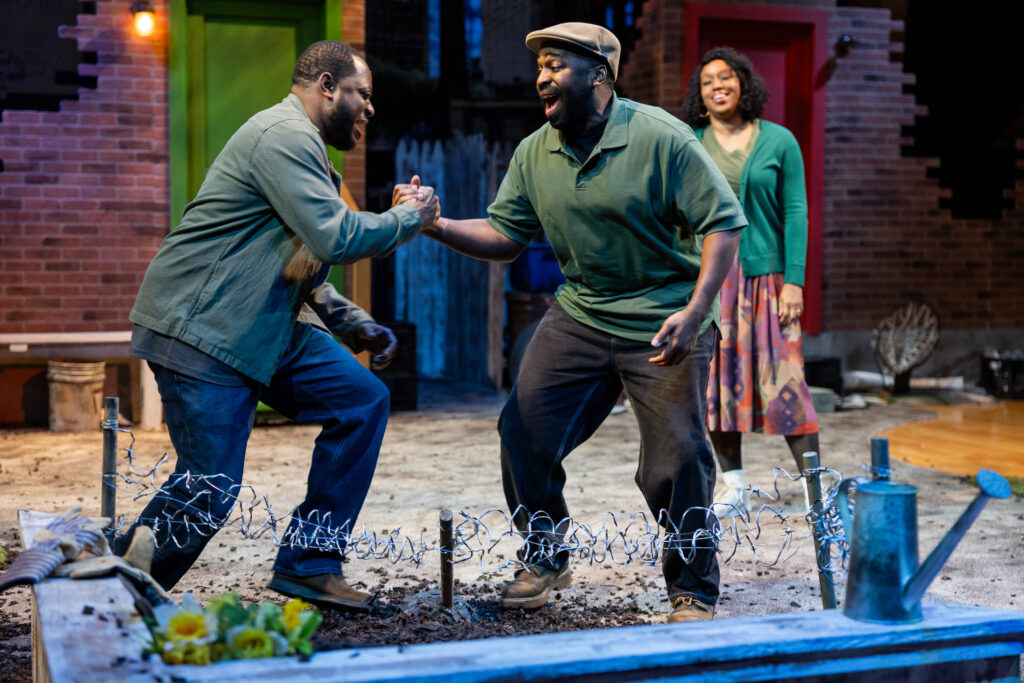
James Ricardo Milord and Omar Robinson in Actors’ Shakespeare Project’s production of August Wilson’s King Hedley II. Photo by Maggie Hall Photography.

By Shelley A. Sackett

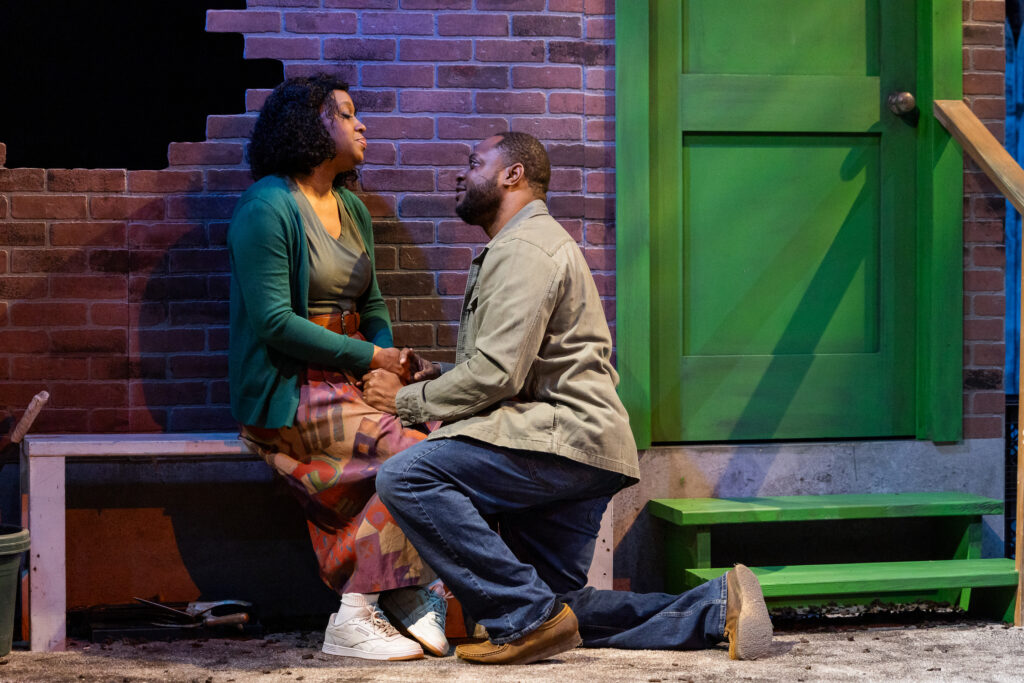
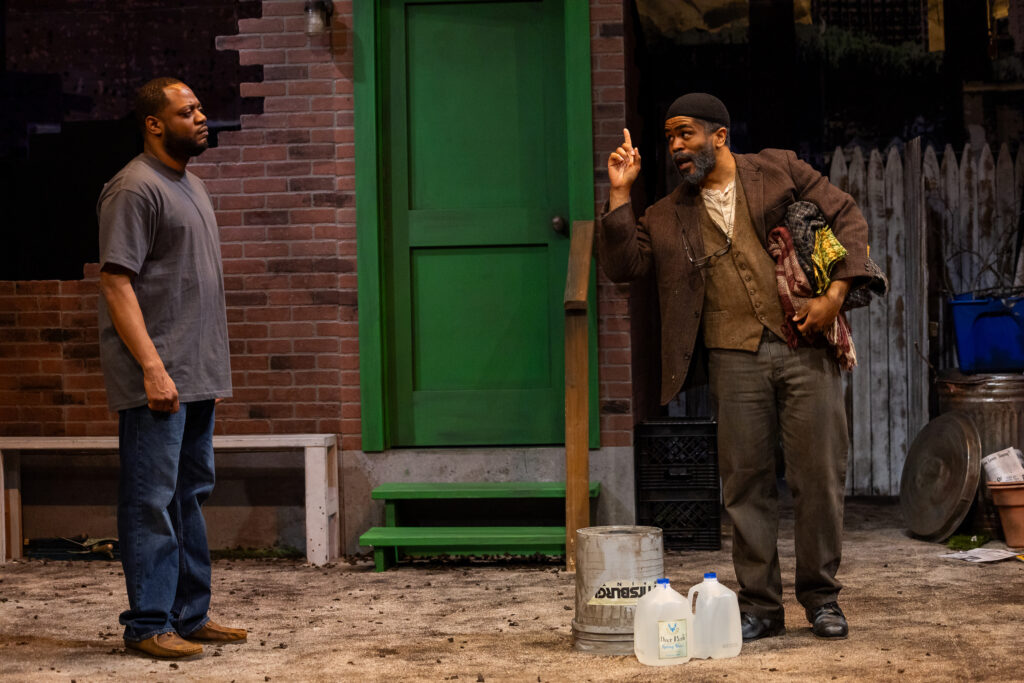
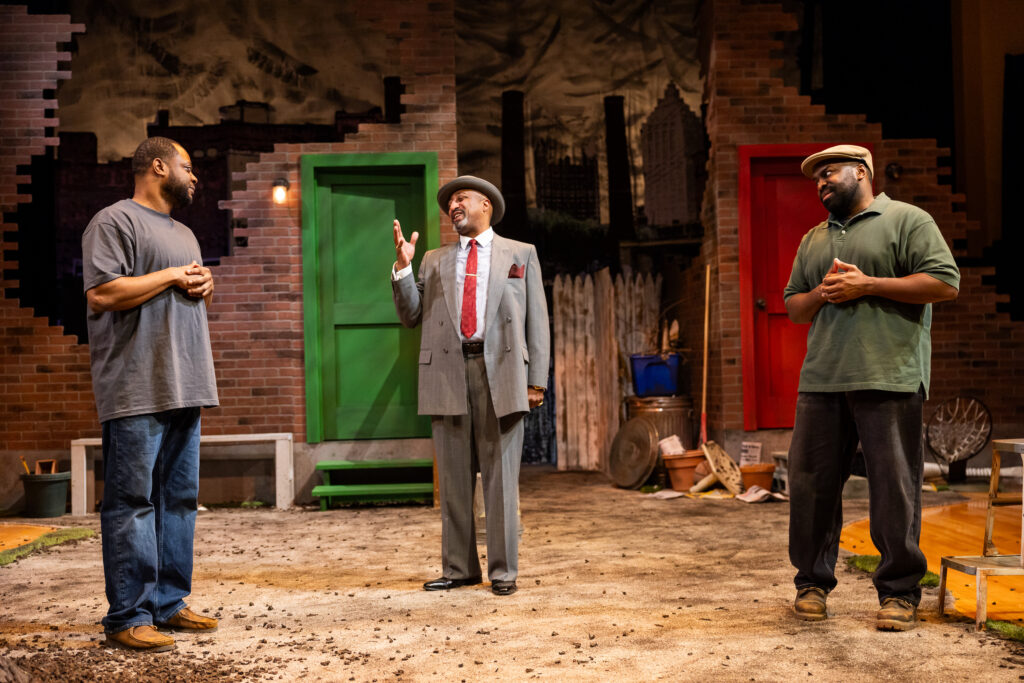
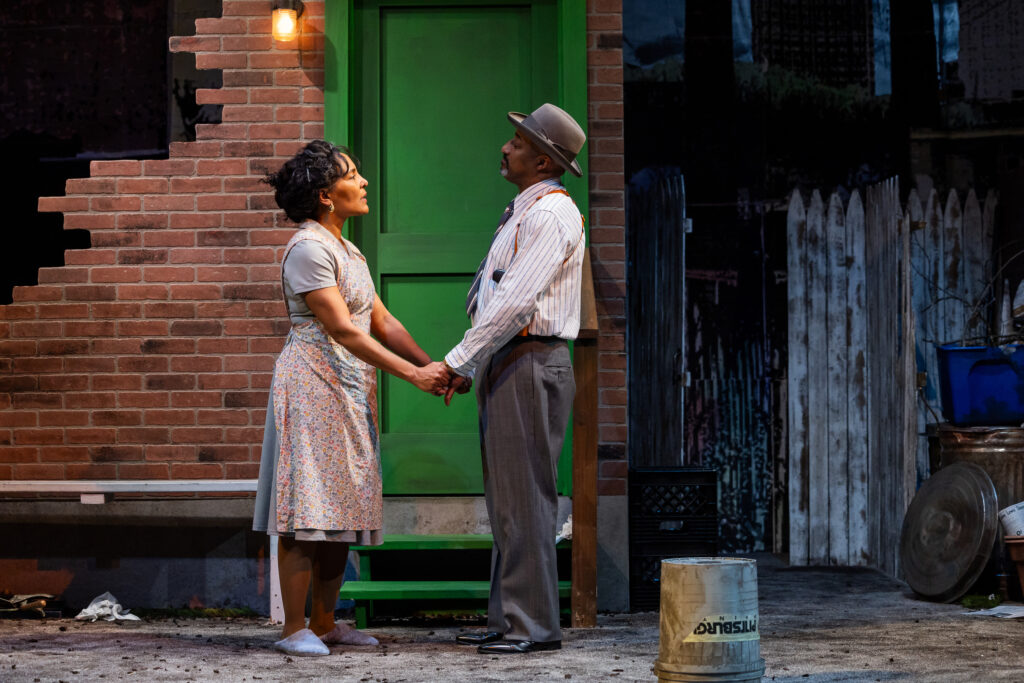
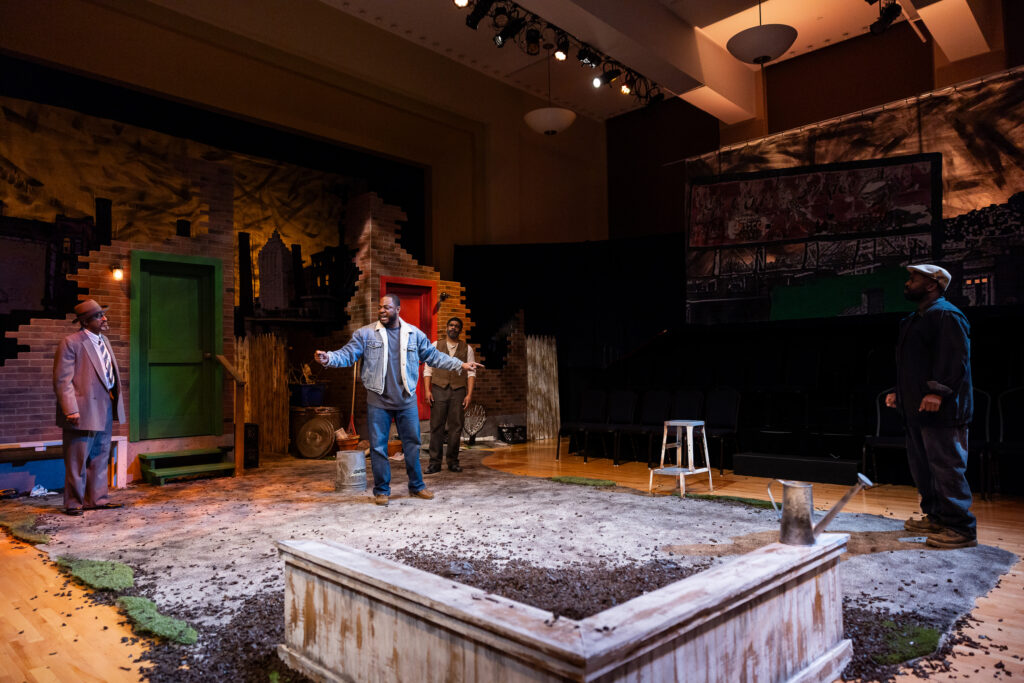
August Wilson’s King Hedley II, the Pulitzer Prize nominated play, is set in 1985 in the same Pittsburgh Hill District backyard where Wilson set his previous work, Seven Guitars (which received a knock out production in 2023 by Actor’s Shakespeare Project). Jon Savage’s same terrific set (and Anshuman Bhatia’s spot-on lighting) adds continuity and interest.

It’s now 40 years and several generations later, and the upbeat, soulful guitar blues arias soundtrack of Seven Guitars has been replaced by a thrumming funeral march set in a minor key.

Hill District is a poster child for its era: the promised trickle-down effect of Reaganomics has instead trickled up, and Black communities, always hampered, are now in a keyless lockbox.

Murder and crime are bit players in this tragedy of dreams confused and deferred, lurking behind every door and hiding under every unturned stone. Yet, as always, Wilson manages, through sheer artistic genius, to find a glimmer of light in this dark place. As with all ten of his Century Cycle plays (also called The Pittsburgh Cycle, a collection of ten plays that span across decades to document African American experiences in the 20th century), it is family and community that are Wilson’s main focus.

Milord, Karimah Williams

And it is through their words — brilliantly crafted dialogues, monologues and epistles — that he brings his characters to life and prevents the play from spiraling into a bottomless abyss of sorrow and gloom.

Which is a good thing, because King Hedley II’s backstory has already taken place when it begins. Much of its 90-minute first act is characters talking about what has already happened or what is happening offstage. Telling rather than showing rarely makes for thrilling theater.

Luckily, Wilson can create whole worlds through his dialogue.

King Hedley II fast forwards from where Seven Guitars ended. King (an outstanding James Ricardo Milord), last “seen” in utero, is now in his late thirties. He has just returned from a seven-year stint in prison and has a huge scar on the left side of his face, a reminder that he killed a man and a source of his unease and insecurity.

“Anyone who killed someone has no right to God. Living without God is the ultimate punishment,” a character says.

Milord and Brandon G. Green

He is desperate to restart his life. His to do list includes resuming his relationship with his second wife Tonya (Karimah Williams) and getting $10,000 so he and boyhood best friend Mister (an effectively under-stated Omar Robinson) can open a video store.

King and Mister have amassed a pool of cash by selling refrigerators with suspicious chains of ownership to their Black neighbors and supplementing that with recreational crimes like a midday jewelry heist. Despite pressing immediate needs for the money — Mister’s wife left him and took all the furniture; King wants to move from the Hill District to give him, Tonya and their expected baby a fresh start — they tamp down these immediate gratification urges in favor of the patience needed to achieve their American dream.

Ruby, (Patrice Jean-Baptiste, in a role and under direction that, after the disappointing  Trouble in Mind, thankfully allows her to strut her acting chops) a sixty-something former blues singer who recently moved back to Pittsburgh, is King’s biological mother. When we last saw her, she was a 20-something spitfire visiting her Aunt Louise. Pregnant by one of her two lovers (Leroy Slater or Elmore), she ended up leaving King with Louise and her boyfriend, King Hedley, who assumed the role of the boy’s father. The two raised King, although Hedley I died when he was three.

Milord, Naheem Garcia, and Robinson

Aunt Louise recently died and Ruby is back to claim her rightful property inheritance. She also wants to take a stab at establishing a mother-son relationship with King. Still hot on her trail is Elmore (a best-in-show Naheem Garcia), the unapologetic, charismatic snake-oil salesman who blows with the wind as long as that wind involves a con and carries Ruby’s scent. The two are moths drawn to each other’s flames, and it’s with a comparatively light heart that the audience watches their pas de deux, wondering how close they can dance before singeing their wings and retreating.

Stool Pigeon (Brandon G. Green) rounds out the cast, and as Greek chorus and narrator, his role is crucial. Through him, Wilson permeates his script with Black folklore, scripture, societal observation and bigger picture commentary. He picks up where King’s titular father, Hedley I, left off.

In Seven Guitars, Hedley I is an old man, not altogether right in the head, who has turned his back on the white world he loathes. He’s a Caribbean islander, a believer in saints, spirits, prophets and the ghost of Charles (Buddy) Bolden, the legendary New Orleans trumpeter who died in an insane asylum. More than anything else, Hedley would like to sire a messiah. (Throughout King Hedley II, King asks, “Is there a halo around my head?”)

Stool Pigeon’s opening prologue (the first time Wilson used this device in a Cycle play) gives context and content while firmly establishing his position as Hill elder spokesman, conduit to the outside world, and spiritual and practical truthsayer.

As the play opens, he has just learned Aunt Ester, who lived nearby, has died at age 366. (Interesting sidenote: that would mean she was born in 1619, the first year a documented African arrived in the continental US and a year before the Puritans landed. Throughout the Cycle plays, she has been the embodiment of African wisdom and tradition.)

Patrice Jean-Baptiste, Garcia

Her death devastates the Hill District community. Stool Pigeon warns, “Lock your doors! Close your windows! Turn your lamp down! We in trouble now.”

He worries that without Aunt Esther to guide them, they will be lost and future generations of the Black community are at risk of never knowing where they came from.

“The people need to know the story. See what part they play,” he says. “God has already written the script, and man’s role is to play his part as written. Period.”

Their fates may be in God’s hands, but as for the ability to understand the meaning of it all and make the lack of free will bearable, well that’s another story altogether. “(God) said, ‘Let he who has wisdom understand.’ Aunt Esther got the wisdom. All that’s left now is the playing out,” Stool Pigeon says.

And for over three hours (plus one 20-minute intermission), the outstanding cast of King Hedley II does just that. Under Summer L. Williams’s crisp-paced and compassionate direction, the ensemble plays it out as both a single collective and a collection of individuals.

Notwithstanding their flaws, violent streaks and knuckleheaded moves, the men are at heart decent, caring and wanting to do the right thing. They can be whimsical and curious, undaunted by repeated set-backs. “Life is funny,” one says. “I keep trying to figure it out.”

Tonya and Ruby are voices of logic and healing, reality checks in a world where murder is a male rite of passage and a single slight can rip a dream to shreds.

King Hedley II tackles some meaty issues, both concrete and existential. Guns are everywhere, as are the consequences of their use and misuse. Poverty and conflict go hand in hand, as do death and deceit. Life is a gritty game where the white man makes the rules and those rules are in constant flux.

Yet the overarching question — how can a Black person survive, let alone thrive, in racist country? — is treated with thoughtfulness and introspection. King embodies and epitomizes the agony of trying to raise a family when all the odds are stacked against his success. “How do you build a better future when everything around you is going to shit?” he asks.

Nonetheless, his destiny is to try. When Tonya advocates for abortion over bringing a child into a world where motherhood is reduced to trying to keep that child alive, King chides her for having the baby buried before he’s born. He needs this baby both as a legacy (he already refers to him as King Hedley III) to redeem himself and as a way to prove that he has the ability to do something right.

This blind optimism is epitomized by King’s determination to force seeds to grow in a dried up patch of ground in the backyard in the middle of a slum. The image of him on his knees, tenderly tilling the dirt and rejoicing at the first signs of life, are heartbreaking and exhilarating. While the play ends on a disturbing note, this is the image remains: the extraordinariness that this ordinary man can do an ordinary thing on an ordinary day.

‘King Hedley II’ – Written by August Wilson; Directed by Summer L. Williams; Scenic Designer: Jon SavageCostume Designer: Becca JewettLighting Designer: Anshuman BhatiaSound Designer: Caroline Eng. Presented by Actors’ Shakespeare Project at Hibernian Hall, 184 Dudley St, Roxbury, through April 7, 2024

For tickets and information, go to: https://www.actorsshakespeareproject.org/