Iranian Girls Just Wanna Have Fun in Gloucester Stage’s Thought-Provoking “Wish You Were Here”

‘Wish You Were Here’ — Written by Sanaz Toossi. Directed by Melory Mirashafi. Scenic Design by Lindsay G. Fuori; Costume Design by KJ Gilmer; Lighting Design by Amanda Fallon; Composer and Sound Design by Bahar Royaee. At Gloucester Stage in Gloucester through August 25.

By Shelley A. Sackett

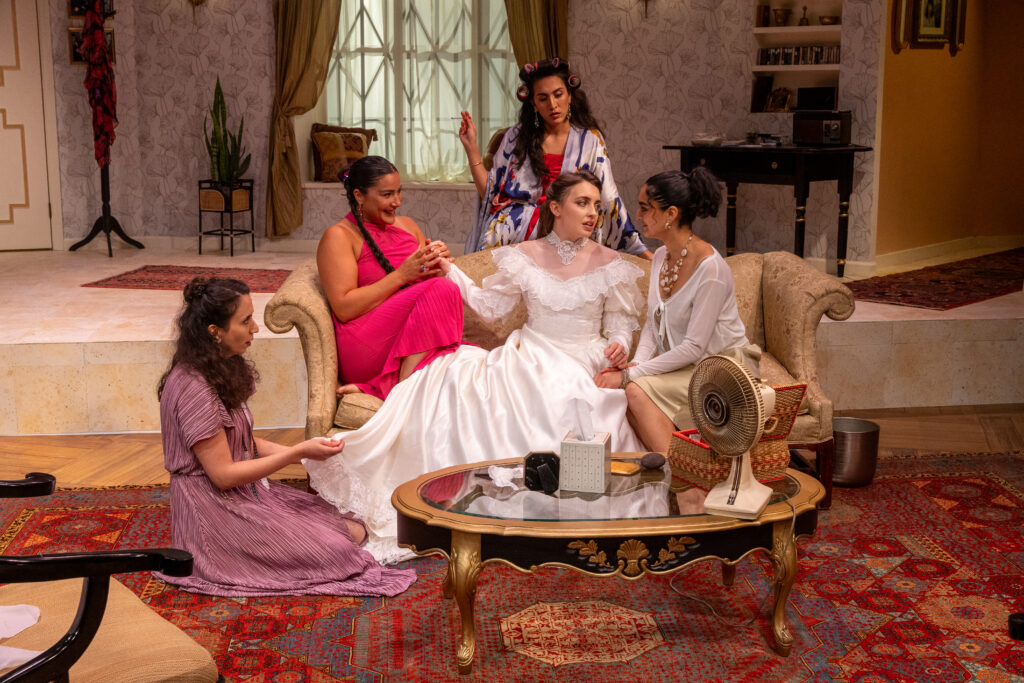
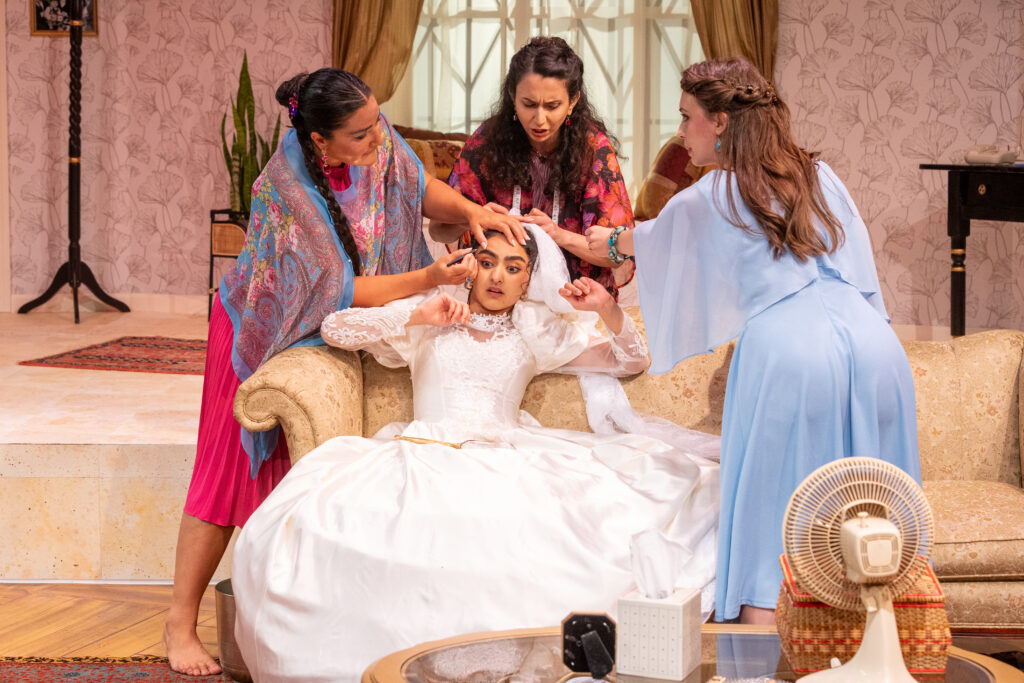
“Wish You Were Here,” in its regional premiere at Gloucester Stage, opens on three frozen tableaux set in a lavish apartment with Persian-inspired décor. At an ornate make-up table, two women hover over a third clad in a billowing wedding dress. Another, wearing a red silk short kimono and huge pink curlers, is draped over a couch, a cigarette dangling provocatively from her languid hand. A fifth slouches against the wall. All appear to be in their late teens/early 20s.

Suddenly, the three scenes simultaneously spring to life, all five women speaking to and over each other.

The friends have gathered to prepare for the wedding of Salme (Josephine Moshiri Elwood), the first among them to get married. She is the straightest, most religious and purest of the five. She prays faithfully and frequently on behalf of her friends, hoping their lives will be set on the path she deems is in their best interest.

The girls are chatty, animated, without a care in the world other than outwitting the wittiest and shocking the most prudish among them.

Shideh (Cerra Cardwell) neurotically frets over whether she will get into medical school. Nazarin (Deniz Khateri), a sullen eye roller, plans to become an engineer. She and best friend Rana (Aryana Asefirad), the kimono girl, vow never to marry and have children. Zari (Isan Salem), the youngest of the group, longs for sex. Vagina and large penis jokes are their favorites.

Although the setting is 1978 in Karaj, Iran, a city about 26 miles from Tehran, these five rambunctious friends could be straight out of the pajama party scene in “Grease.” They are silly, lewd and disarmingly intimate. They bicker and clown. They mock and soothe. They constantly touch each other and tease about sex and their bodies.
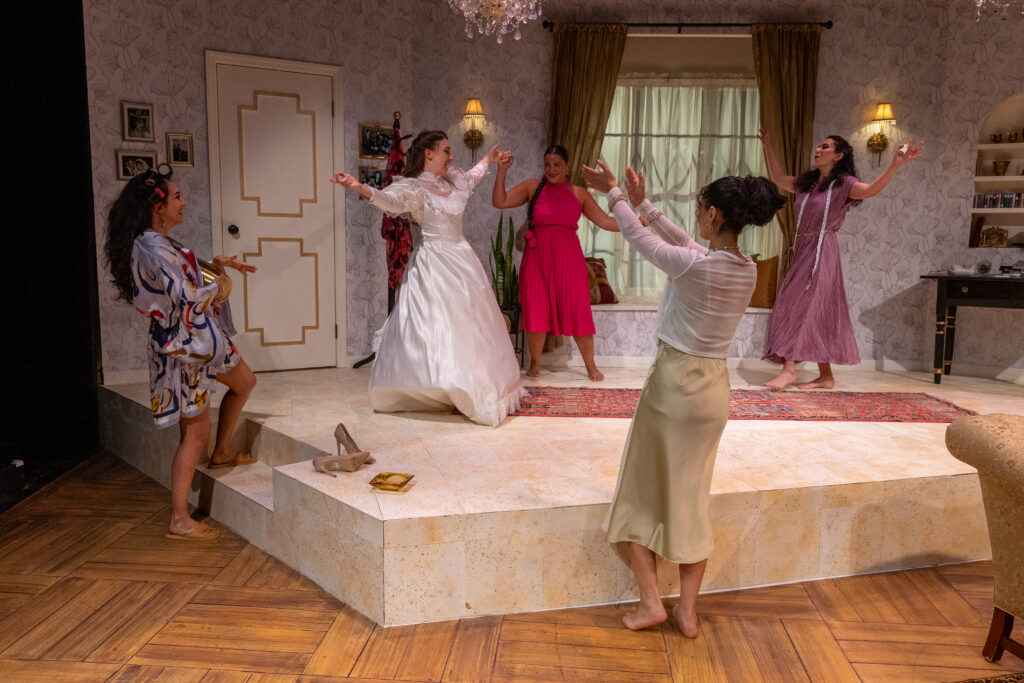
They paint each other’s nails, remove each other’s unwanted hair and perform the pre-wedding night olfactory “pussy audit.” Their favorite game is the telepathic “What am I thinking?” Through the boisterous banter and loving friction, their deep commitment to this quintet is unmistakable.

The atmosphere inside this posh apartment crackles with pop culture and the promise of youthful dreams of adventure, travel and sex. Although “there’s static in the air,” the girls are unconcerned about anything outside their snow globe existence. They hear the protests outside and are aware that the Shah has left, but blithely ignore the shape-shifting world around them.

Over the next 100 minutes, we will drop in on this living room and this group another 10 times, following them from 1978 until 1991. Mirroring the upheaval experienced by their country (from the Shah’s exile to the Islamic crackdown and revolution led by Khomeini to the American hostage crisis to the Iran-Iraq War), these five will face marriage, loss, the impact of misogynist religious zealotry and the torment of dreams snuffed out.

The first intrusion of the outside world into their cocoon comes the next year.

Before the Shah’s exile, Jews lived safely beside their Muslim fellow Iranians, flourishing and blending in. Muslims and Jews lived side by side, and religious freedom was a nonissue. Affluence and status mattered much more. With the Islamic Revolution, all that changed.

When we encounter the group for the next wedding (1979), there is turmoil in the streets. The Shah is out, and Khomeini is in. This turbulence directly affects our friends when Rana, the “cool Jewish girl and Nazanin’s best friend,” and her entire family go missing. Dishes were left in the sink, and there was no sign of a struggle. No one has seen or heard from them since.

Each girl deals with this loss in telling and different ways.
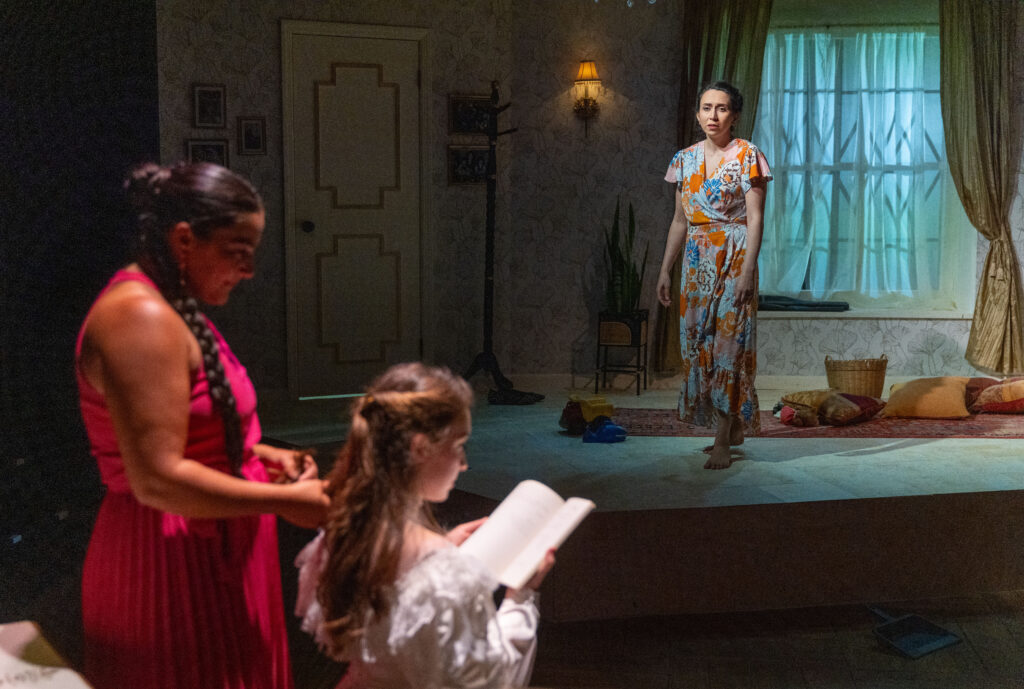
Cerra Cardwell, Elwood, Khateri

“She’s fine,” Nazanin says, although, as another points out, “A whole family of Jews missing is usually not a good sign.” Only Salme tries to find her through prayer and the internet. Later, in Act II, one wonders, “Where do we all go when there is no one trying to locate us?” a recurrent rhetorical and thematic thread.

By the third wedding, there may be Bee Gees disco in the background, but the internal atmosphere of the apartment has been infiltrated. The radio crackles with static, but when it is clear, Nazanin is nearby, hoping to hear a word about what is going on outside their doors.

As religious piety and intolerance increasingly rule the land, the group dwindles further. Salme embraces religion and prayer but meets an untimely death when she drowns while swimming in her burka. Shideh takes the opposite path, fleeing to the United States to study medicine. Nazarin and Zari, who never really cared for each other, are the sole sorority sisters.

“Do you love me because I’m the only one left?” Zari asks when they rekindle their friendship. They bond out of desperation and loneliness, vowing to remain in Iran and feed the flames of their newfound friendship. Yet Zari applies for a green card “just to be safe” and Nazarin is caught up in the torment of disappointment and confusion.

She disdains prayer, but believes in its power. She wonders every day how her life might have turned out had she been able to become an engineer had the winds of politics been blowing in her favor. She desperately misses Rana, yet never tried to find her. She swore she would settle for no less than true love, yet admits on her wedding day that she doesn’t love the man she is about to marry.

Iran, her homeland, is a dead end for everything that matters to her, yet she steadfastly refuses Zari’s offer to get her a green card. “Why,” she wonders aloud, “don’t I want to leave?”

When Rana finally gets in touch, 10 years after leaving, Nazanin and she pick up exactly where they left off. “Are you still a Muslim?” Rana asks. “Are you still a Jew?” Nazanin fires back, not missing a beat.

After five years in Israel, Rana now lives in California and works in a Pizza Hut. Suburban America may be spiritually lifeless, but she will never return to Iran. Instead of turmoil, revolution, persecution and flight, her children will know only one home, one that can’t inflict the kind of heartbreak and devastation she suffered.

Toossi revisits many of the same themes of emigration, national identity, home and displacement she so brilliantly tackled in her Pulitzer Prize winner, “English.” “Who do you think of when you think of where you’re from?” she asks through her characters. Who defines you? Where do you find your home? Is it a place? The people? Shared experiences? Where you grew up or where you live now?

Unfortunately, “Wish You Were Here” misses the high mark set by “English.” Toossi doesn’t flesh out these girls’ backgrounds and individualities; they lack nuance and depth. They live in an impenetrable bubble, teetering on a tipping point, and we have a hard time caring.

Director Mirashrafi does the best she can with a script that compresses 13 years into 100 minutes and 10 scenes that are confusing because they give too little context about the raging Iranian politics. There is a Dramaturgy & Timeline in the Playbill (which is most helpful if read BEFORE the play starts), but that doesn’t take the place of timeline references within the script, especially where the play is meant to cover so much ground in such a short time.

Sometimes it was impossible to tell that a new scene in a new year had started until it was almost over. It was also often impossible to tell who was who, especially at the very beginning when each girl seemed to be shouting, the pace was a little too quick and the girls’ names were indecipherable.
Nonetheless, it’s always a pleasure to attend a performance that may take several days of percolating before its impact bubbles up. In addition to the timely issues she raises, American-Iranian Toossi provides a compassionate multi-layered glimpse of Iranian society. Several scenes, although they also present speed bumps in the drama’s flow, are poignant reminders of the beauty and mystery at the heart of Islam.

There are joyful elements of traditional music, dress, and custom. The full silence during Salme’s long prayer scene lets the audience (and the less observant and devoted girls) through the keyhole of the sweet, nourishing elements of a religion that has been hijacked and weaponized by militant male power grabbers determined to dominate women and infidels.

It’s too bad Toossi didn’t spend more time exploring this element, as well as giving her characters a third dimension. Who knows? That might have elevated this play to the level we know she has the chops to write. For more information, go to https://gloucesterstage.com/

Gloucester Stage’s ‘Wish You Were Here’ gives glimpse of life for women of Iran

The cast of Gloucester Stage Company’s production of “Wish You Were Here.” / JASON GROW PHOTOGRAPHY

By Shelley A. Sackett

Jewish Journal

Iranian-American playwright Sanaz Toossi covers a lot of ground in “Wish You Were Here,” at Gloucester Stage Company through Aug. 25. She follows the evolution of a group of friends from 1978 to 1991 in Karaj, Iran, an industrial city 26 miles from Tehran. The revolutionary political and societal upheavals experienced during these years are the backdrop for Toossi’s bigger focus: The everchanging tides of female friendship.

The play opens in a lavish apartment with Persian-inspired décor. Two women hover over a third swathed in a billowing wedding dress. Another, wearing a short kimono and huge pink curlers, drapes over a couch, a cigarette dangling from her hand. A fifth slouches against the wall. All appear to be in their late teens/early 20s.

Suddenly, the set springs to life, all five women speaking to and over each other.

The friends have gathered to prepare Salme, the first to get married and the most religious of the five. Shideh neurotically frets over whether she will get into medical school. Nazarin, a sullen eye–roller, plans to become an engineer. She and best friend Rana, the kimono girl, vow never to marry and have children. Zari, the youngest of the group, longs for sex.

Although set in 1978 Karaj, these five could be straight out of the pajama party scene in “Grease.” The atmosphere crackles with pop culture and the promise of youthful dreams of adventure, travel, and intimacy. The girls can hear political protests outside the window, but unconcerned, they ignore the shape-shifting world around them.

Over the next 100 minutes, we will drop in on this living room and this group another 10 times, following them from 1978 until 1991. Mirroring the upheaval experienced by their country (from the shah’s exile to the Islamic crackdown and revolution led by Ayatollah Khomeini to the American hostage crisis to the Iran-Iraq War), these five will face marriage, loss, the impact of misogynist religious zealotry, and the torment of dreams snuffed out.

Its first intrusion comes when they gather the next year for Zari’s wedding.

There is turmoil in the streets. The shah is out and Khomeini is in. Rana, the “cool Jewish girl” and Nazanin’s best friend and her entire family, is missing. They departed suddenly, leaving dishes in the sink and no clues. No one has seen or heard from them.

Before the shah’s exile, Jews lived safely beside their Muslim fellow Iranians, flourishing and blending. Jews began settling in Iran around 2,700 years ago, and their years under the shah during his reform plan of 1964-1979 are considered a golden age. In 1978, the Iranian Jewish population numbered 80,000 and the vast majority was middle or upper-class. There were 30 synagogues in Tehran alone.

With the Islamic Revolution in 1978, all that changed overnight. Jews became enemies of the Islamic Republic – Zionists in league with Israel. Over two-thirds emigrated rather than face certain confiscation of their property and even execution.

Each girl deals with the loss of Rana in different ways. “She’s fine,” Nazanin says, although, as another points out, “A whole family of Jews missing is usually not a good sign.” Only Salme tries to find her through prayer and the internet.

As religious piety and intolerance increasingly rule the land, the group dwindles further. Salme embraces religion and prayer, but meets an untimely death when she drowns while swimming in her burka. Shideh takes the opposite path, fleeing to the United States to study medicine. Nazarin and Zari, never close, now seek solace in each other.

“Do you love me because I’m the only one left?” Zari asks when they rekindle their friendship out of desperation and loneliness. Zari applies for a green card “just to be safe” and Nazarin is caught up in the anguish of disappointment and confusion.

Nazanin disdains prayer, but believes in its power. She wonders every day how her life might have turned out had she been able to become an engineer, but she refuses Zari’s offer to get her a green card. “Why,” she asks aloud, “Don’t I want to leave?”

Toossi revisits the same meaty and timely themes of emigration, national identity, home, and displacement she so brilliantly tackled in her Pulitzer Prize-winning play, “English.” “Who do you think of when you think of where you’re from?” she asks through her characters. “What defines you? Is it a place? The people? Shared experiences? Where you grew up? Where you live now?”

Unfortunately, “Wish You Were Here” misses the high mark set by “English.” Toossi doesn’t flesh out these girls’ backgrounds and individualities; they lack nuance and depth. They live in an impenetrable bubble, teetering on a cataclysmic tipping point, yet we have a hard time even caring.

We also have a hard time following the play’s storyline because Toossi provides few contextual clues. There is a timeline in the playbill (which is most helpful if read BEFORE the play starts), but that doesn’t take the place of scripted points of reference.

Nonetheless, Toossi proffers gifts, most notably compassionate, multilayered glimpses of Iranian society. Several scenes, although also speed bumps in the drama’s flow, are poignant reminders of the beauty and mystery at the heart of Islam.

There are joyful elements of the traditional music, dress, and custom. The full silence during Salme’s long prayer scene lets the audience (and the less observant and devoted girls) through the keyhole of the sweet, nourishing elements of a religion that has been hijacked and weaponized by militant male power-grabbers determined to dominate women and eradicate infidels.

It’s too bad Toossi didn’t explore this element more. Who knows? That might have been the magic ingredient that could add a sorely lacking third dimension to her characters and elevate this play to the level we know she has the chops to write.

For more information, go to gloucesterstage.com.

Emerson Colonial Theatre’s Dazzling “Queen of Versailles” Showcases Kristin Chenoweth’s Super-Sized Talent

Cast of “The Queen of Versailles” at Emerson Colonial Theatre. Photo Credit Matthew Murphy

By Shelley A. Sackett

There is no more perfect setting for a play about Versailles and consumerism gone awry than Boston’s own Colonial Theatre, with its gold, glitz, and Rococo splendor. On opening night last Thursday, the festive crowd for “The Queen of Versailles,” the Broadway-bound musical extravaganza, was dressed as if auditioning as contemporary cast extras with bling, boas, and bottles of champagne.

But that was nothing compared to Dane Lafrey’s lavish Louis XIV worthy set, thankfully on pre-curtain-rise display to accommodate selfies and elicit oohs and aahs.

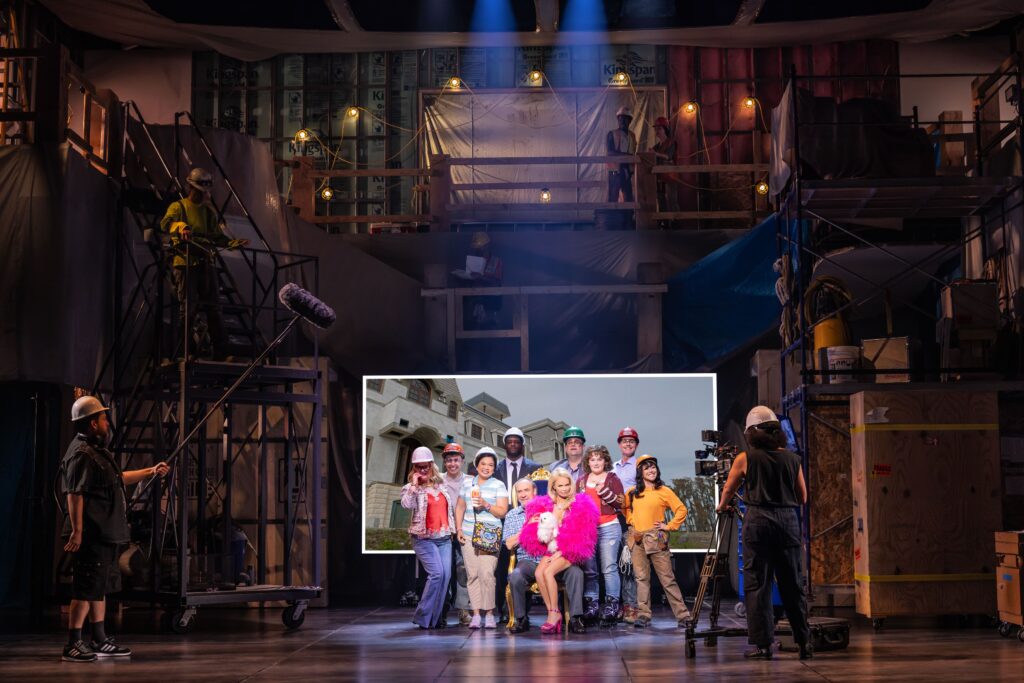
On walls as tall as the Louvre hung oil paintings with ornate gold frames. Chandeliers descended, and palace workers dressed in period wigs and frocks went about their menial duties, dusting and fussing. The staff joked about the comical and pompous King Louis XIV (Pablo David Laucerica), who proudly admits he commissioned the Palace of Versailles “because I can.”

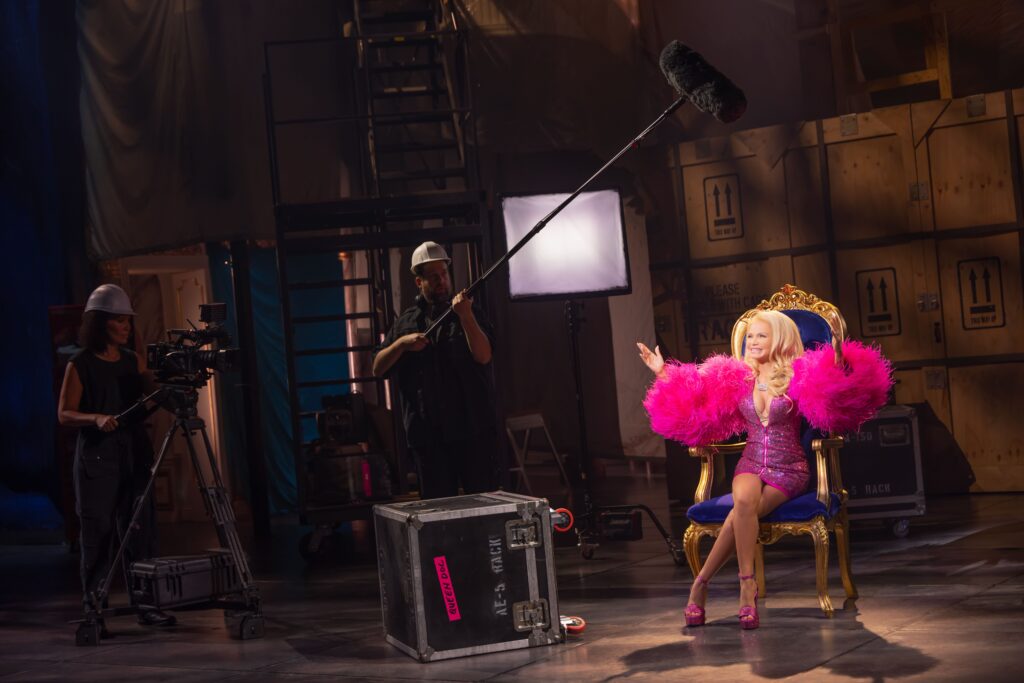
This first musical number primed the audience, and they were cocked and ready for the main attraction. When the royal set lifted along with the curtain, revealing Kristin Chenoweth seated on stage, they exploded into the kind of boisterous adulation reserved for, well, royalty.

Kristin Chenoweth

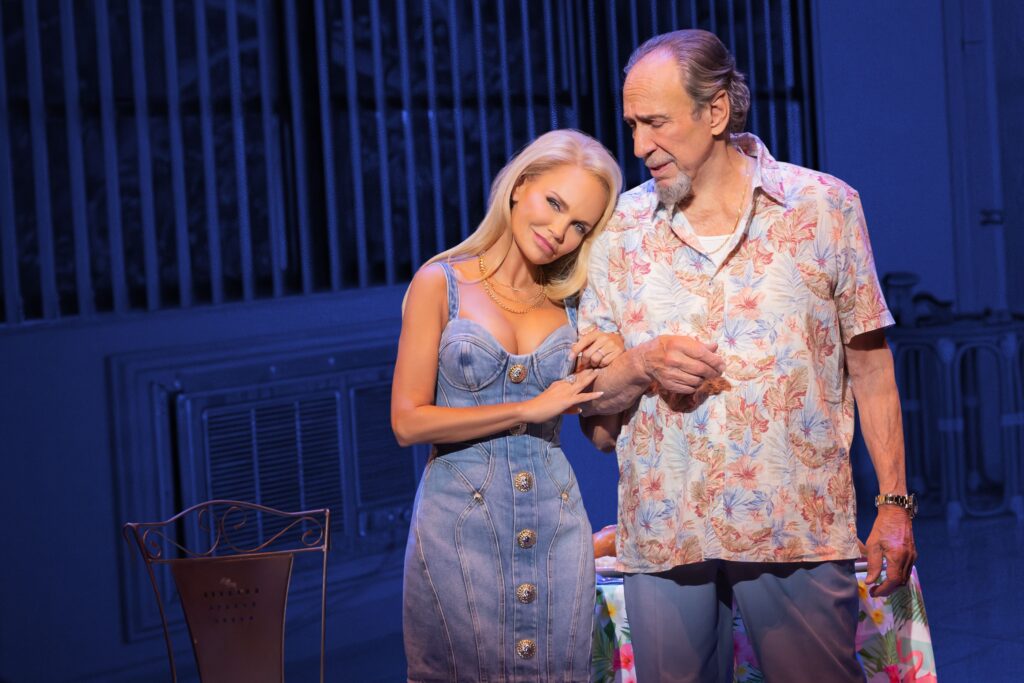
From the get-go, it was evident the audience’s admiration was well-placed. Chenoweth is a pint-sized spitfire with super-sized talent. She belted out her first song in a clear, articulate voice that was perfectly projected. What a joy to be able not only to hear the lyrics but also to understand them. Stephen Schwartz’s score is smart, funny, and sharply satiric and deserves no less, especially since much of the action takes place in song. (Question for the production team — why no song list?).

In a nutshell, the show is about the riches-to-rags-to-resurrection story of Jackie and David Siegel, whose saga was the topic of Lauren Greenfield’s award-winning 2012 documentary by the same name. Its filming is where Act I opens.

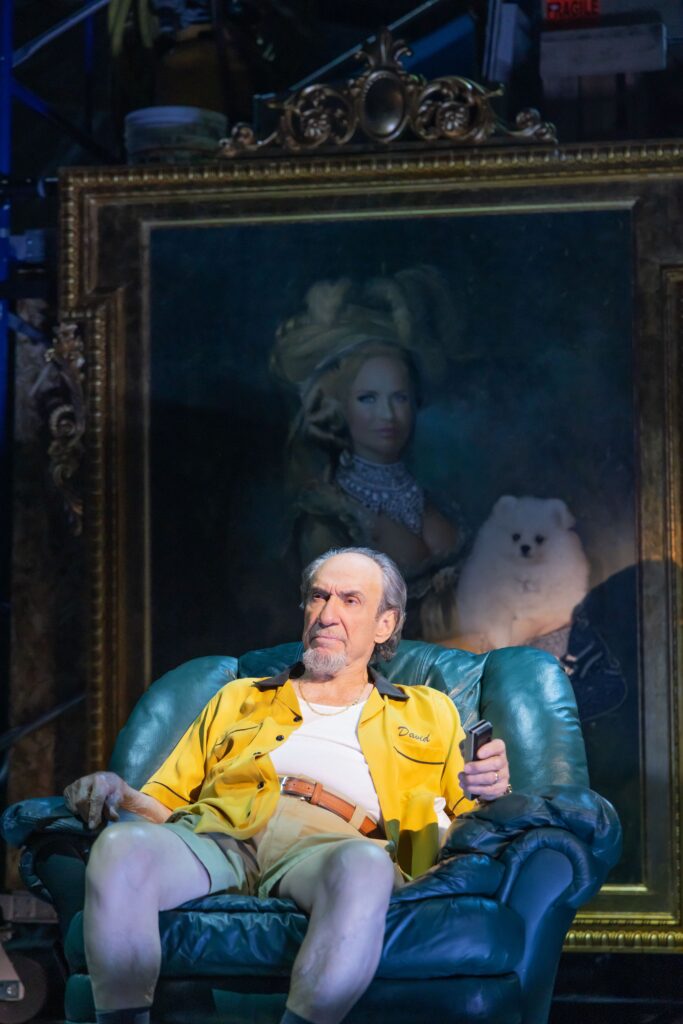
Clad in one of Christian Cowan’s sensationally tacky costumes, Jackie literally holds court in the midst of the construction site of her and time-share mogul husband David’s (a superb F. Murray Abraham) life-fulfilling project: building the largest private home in America.

Why are they building this 18-bedroom, $100 million home? It’s simple when you have champagne wishes, caviar dreams, and deep, deep pockets. “Because we can,” Jackie boasts, echoing her French idol.

F. Murray Abraham

Their 90,000-square-foot house is based on the mirrored palace with a few modifications: Versailles, France, is swapped for Orlando, Florida, and Queen Marie Antoinette has morphed into Jackie. In terms of pointed social commentary, especially since 2016, their story is particularly poignant, and the show milks it dry. “Anyone can become royalty in America,” is the Siegel family credo – or president, even.

Jackie takes us (as the documentarian’s camera rolls) backstage to her humble beginnings. She was raised in Endwell, New York, where she worked several minimum-wage jobs and honed her appetite for success and power at the encouragement of her simple and decent parents. The family’s favorite show was “Lifestyles of the Rich and Famous,” which they watched together with near-religious reverence.

She earned a bachelor’s degree in computer engineering in 1989 and polished her gutsy in-your-face, tell-it-like-it-is style at her first job with IBM. Though Jackie may dress like an airhead, it masks underlying book and street smarts. Coupled with her cutthroat drive, she is a force to be reckoned with.

After moving to Florida with her husband, he becomes abusive, and she enters the Mrs. Florida America beauty pageant as a way out (she won), determined to make her pipe dream of great wealth come true. Following her divorce, the now single mom does just that when she meets and, in 2000, marries the financier and “Timeshare King,” David Siegel.

The two travel to France for their honeymoon dressed like Barbie and Ken (“This may surprise you, but we’re not old money,” David dead-pans). When Jackie goes gaga over Versailles, it mirrors every selfie-obsessed narcissist’s sex dream; David declares his ever-lasting devotion in the language that is the vernacular of their relationship: he will build one for her.

The rest of Act I (a hefty 90-plus minutes) details Jackie’s voracious appetite for children (she births 7 and adopts one more, her niece Jonquil) and things. The oldest daughter, Victoria, the product of Jackie’s first abusive marriage (a very good Nina White), is, in Jackie’s estimation, overweight and under-acquisitive. Her clueless mother is tone-deaf and blind to her daughter’s unhappiness. If anything, she adds to it. Jackie, the quintessential material girl who craves its empty calories, urges Victoria to curb her fondness for the one thing that comforts and nourishes her — food.

In Victoria’s solo (in which White shines), she describes the pain and heartbreak she suffers as her mother’s daughter. “Pretty always wins. The only way for me to win that game is not to play it,” she says.

Her sister/cousin Jonquil (Tatum Grace Hopkins), on the other hand, takes to excess like a fish to water. “I could get used to this,” she croons.

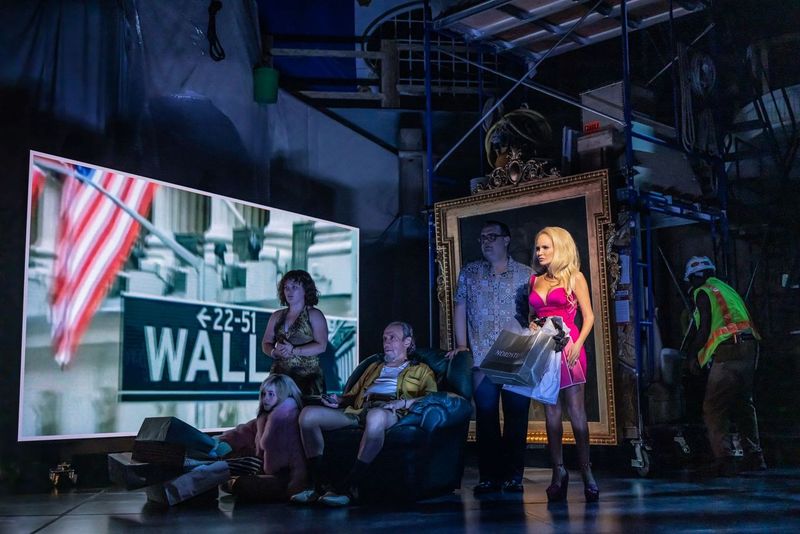
Act I closes in 2008, as the Siegel’s world comes crashing down alongside the global financial and subprime markets. Overnight, they go from prince to pauper, monitoring electricity with the same zeal they had reserved for padding their warehouses with stuff. David retreats to his study, demanding Jackie pull the plug on the documentary now that their lives have gone sideways. Jackie, however, has the soul of a phoenix and a cat’s nine lives. She’s not going down with the ship. As God is her witness, she will get her Versailles back.

Act II opens with one of the show’s musical highlights, a gorgeous duet with Jackie and Marie Antoinette (the fabulous Cassondra James). In a rare moment of acknowledging and really listening to Victoria, Jackie realizes the toll all this has taken on her. The girl is depressed and adrift. She needs some roots and parenting.

The two pay a visit to Jackie’s parents, who open Victoria’s eyes to a new world. For the first time, she sees that some people (her grandparents among them) are actually happy with what they have. They have found the magic of “enough.”

Although mother and daughter sing another lovely duet about little homes with big hearts, Jackie chides Victoria when she says she’d like to stay in Endwell. Jackie reminds her of what great wealth can buy, renewing her vow to get Versailles back. “Just because we can doesn’t mean we should,” Victoria says, sounding more like a parent than a child.

The Siegels ultimately regroup after their personal and financial setbacks, but they have paid a heavy price. They keep the unfinished Versailles and even manage to exploit Victoria’s tragedy, manipulating a spin to their own financial and marketing advantage. They are deplorable peas in a morally bankrupt pod, easily two of the least sympathetic characters we’ll ever meet on stage.

Yet, along with the glitterati in the audience, I too rose in a standing ovation, surprised by how much I had enjoyed the show.

Chenoweth is the little engine that can, relentlessly driving the show uphill when its length, digressions and sour message threaten to derail it. She is a prodigious talent and she brings it to bear on her portrayal of Jackie. We may want to dismiss the self-appointed queen as a crass example of the worst capitalism can spawn, yet Chenoweth’s nuanced portrayal leaves the door open enough to glimpse the shadow of admiration and sympathy. And boy, can she sing!

The rest of the cast is a star-studded who’s who of Broadway luminaries. One can only hope that the “Queen of Versailles” that reaches the Big Apple is leaner, more focused, and more deserving of the gifted artists and advance hype it has attracted. Many scenes (especially a cowboy-themed one) belong on the cutting room floor, as do a couple of the many flashbacks to King Louis’s days.

The show has great bones, an engaging score, and a tornado of a star. All it needs is disciplined tweaking, refining, and shortening before it travels south. It deserves to take Broadway by storm.

“The Queen of Versailles” — Music and Lyrics by Stephen Schwartz. Book by Lindsey Ferrentino based on the documentary film “The Queen of Versailles” by Lauren Greenfield and the life stories of Jackie and David Siegel. Directed by Michael Arden. Scenic and Video Design by Dane Laffrey; Costume Design by Christian Cowan; Choreography by Lauren Yalango-Grant and Christopher Cree Grant; Music Supervised by Mary-Mitchell Campbell; Lighting Design by Natasha Katz; Sound Design by Peter HylenskiProduced by Bill Damaschke, Seaview, and Kristen Chenoweth, through her production banner Diva Worldwide Entertainment. Presented by Emerson Colonial Theatre at 106 Boylston St., Boston through August 25.

For tickets and more information, go to www.emersoncolonialtheatre.com.

Cirque de Soleil Dives into the Insect World in the Colorful “OVO”

Cirque de Soleil‘s ‘OVO’

“OVO” – Guide and Founder – Guy Laliberté. Artistic Guide – Gilles Ste-Croix. Writer, Director and Choreographer – Deborah Colker. Costume Design by Liz Vandal. Set Design by Designer Gringo Cardia. Musical Composition and Direction by Berna Ceppas. Lighting Design by Éric Champoux. Presented by Cirque de Soleil at Agganis Arena, 925 Commonwealth Ave, Boston, MA. Run has ended.

By Shelley A. Sackett

“How did they do that?” exclaimed my companion with all the amazement and awe of a seven-year-old as a cluster of red-clad creatures slid down poles horizontally and screeched to a halt inches above the floor.

Whether seven or seventy-seven, the artistic magic and athletic showmanship of a Cirque de Soleil performance never gets stale.

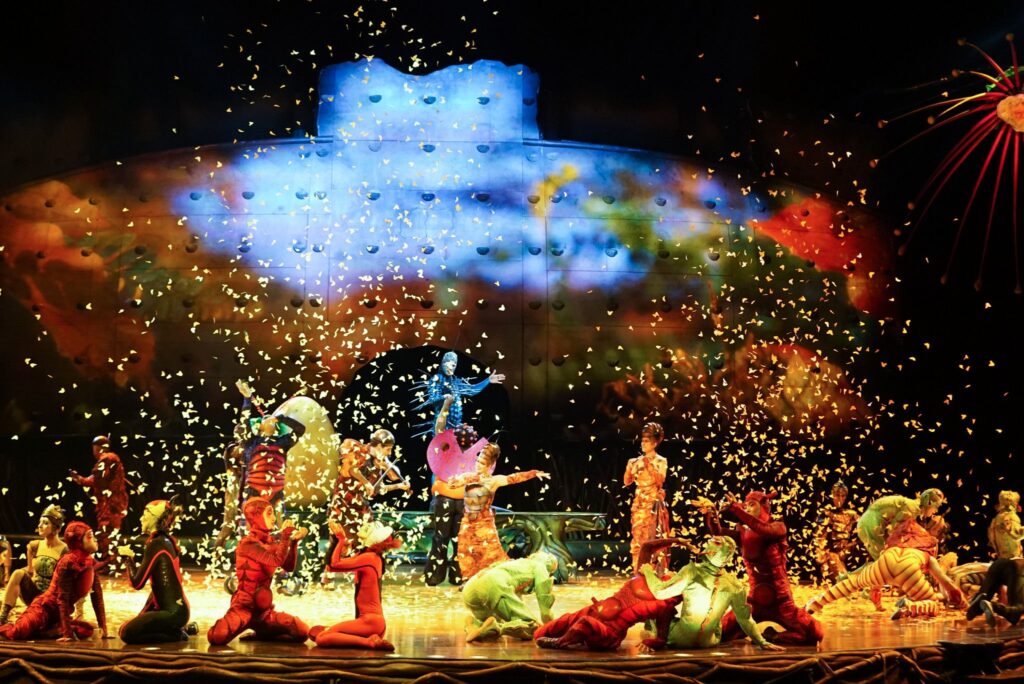
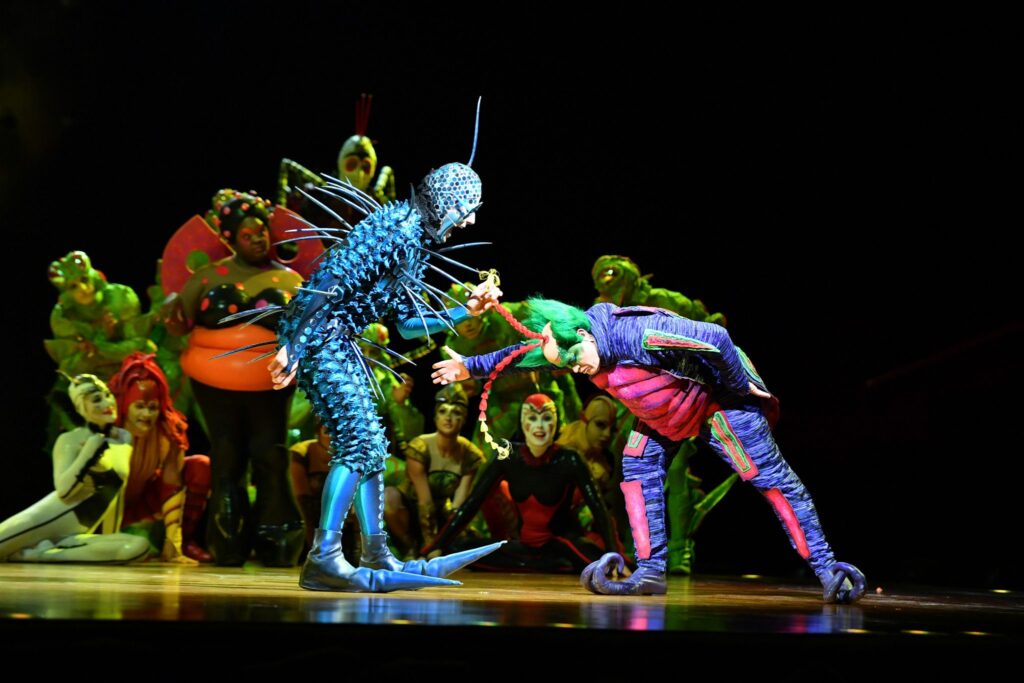
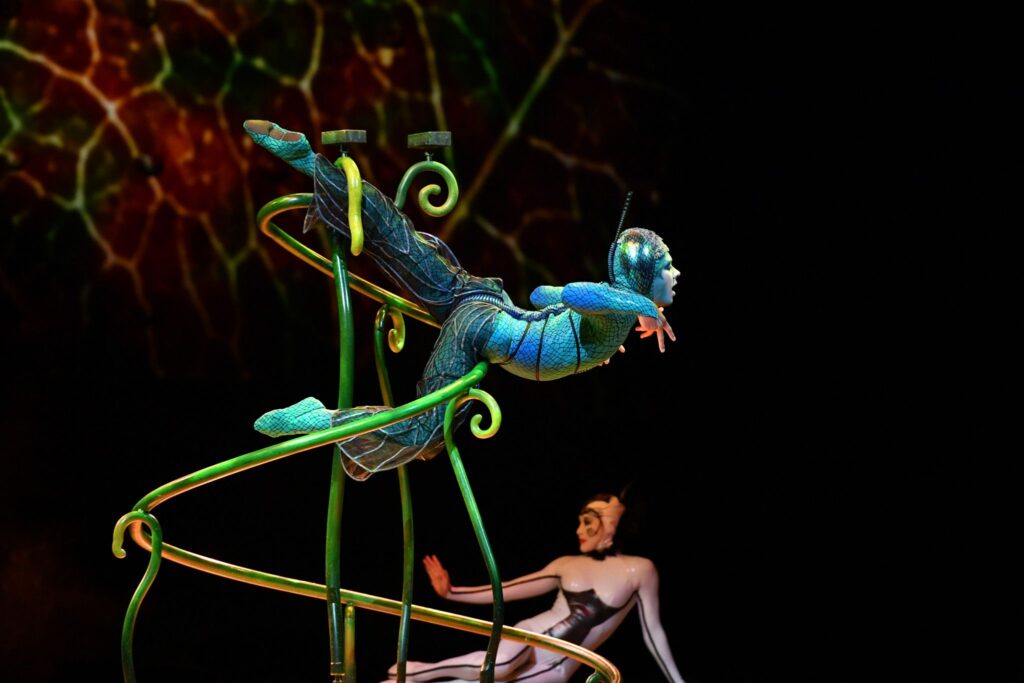
This year’s show, OVO (Portuguese for “egg”), takes us on a magical mystery tour into the secret world of insects, where crickets, ladybugs, and spiders live inside a colorful and chaotic world. Crickets chirp nonstop. The music is whimsical, and the sets are as fabulous and creative as the costumes. There are trampolines, climbing walls, and enormous monitors that screen vibrant close-ups of nature and psychedelia.

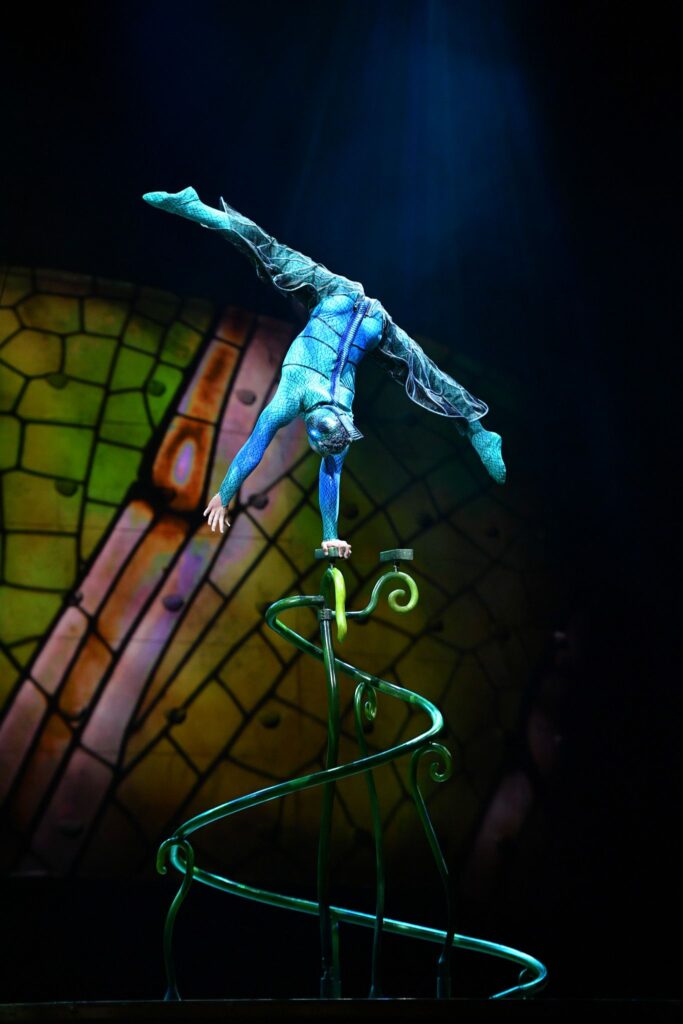
And then there are the amazing acrobatic acts, which stretch the imagination and defy the human body’s normal physical limitations.

OVO‘s creator and director, Deborah Colker, took inspiration from the world of insects. The idea for OVO was not to be about the acts, dancing, or insects but about movement. The movement of life permeates the entire show, with creatures flying, leaping, bounding, and crawling.

All Cirque de Soleil shows have underlying stories. OVO takes place in the teeming, creepy crawling world of the insect world, where critters eat, play, flirt, squabble, and horse around. The nonstop action and vitality are a riotous world of energy, emotion, and chatter.

A mysterious, quirky insect arrives in this microcosm carrying a mysterious egg. The community gathers around it, curious and a little intimidated. A ladybug catches the newcomer’s eye, and he quickly takes his eye off the egg as he pursues his new love.

Eventually, the mystery of the egg and its symbolic representation of the cycles of life, death, and rebirth are revealed.

The meat of the evening, however, is in the acrobatic performances. A performer high above the stage emerges from a cocoon as a butterfly and flies away. Acrobat “crickets” bounce between a trampoline and a rock wall in frenetic leaps and boundsA seemingly jointless spider weaves a mysterious web.

There are even nightclub-esque singing numbers, on-stage live musicians, and audience participation numbers. These are more annoying and distracting than entertaining for the true Cirque fan and feel like additions meant to pad the show and run out the clock. The techno beat starts to grate, and the ladybug shtick gets very old very quickly. Even the kids in the audience grew fidgety, especially in Act II.

This reviewer would have preferred a shorter, intermission-less show with more meat and less filler.

Although not the most thrilling or satisfying Cirque de Soleil, OVO’s originality, grace, and world-class international talent is nonetheless as astonishing as always. If you can’t be at the Olympics, this might just be the next best thing.