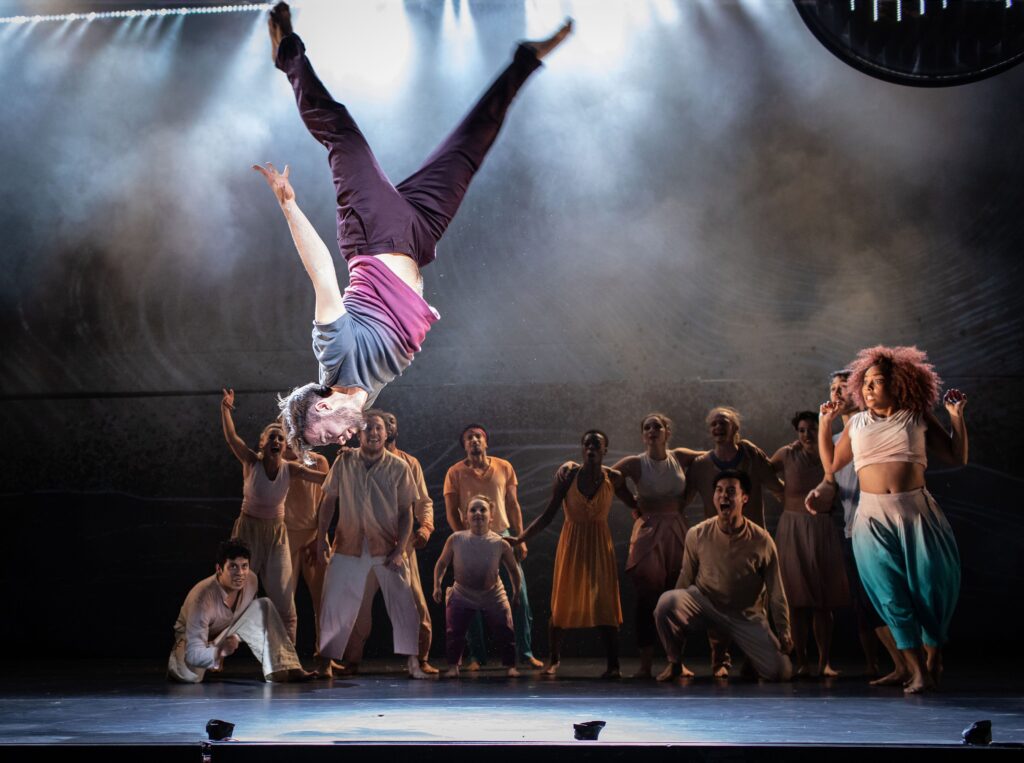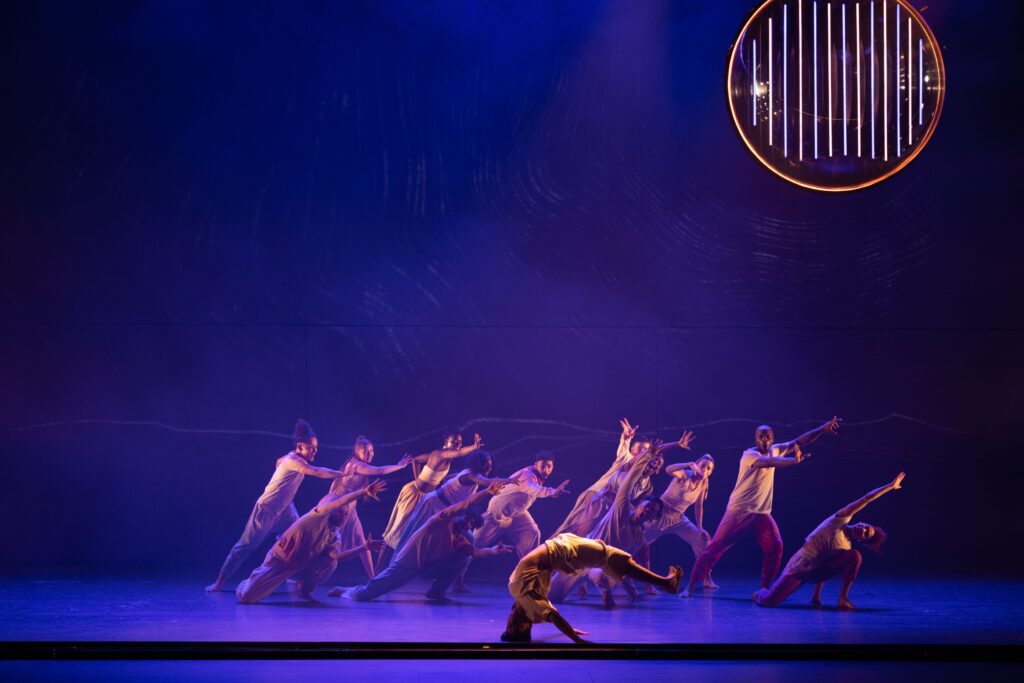
Boston Ballet’s ‘Jewels’ Is A Real Gem

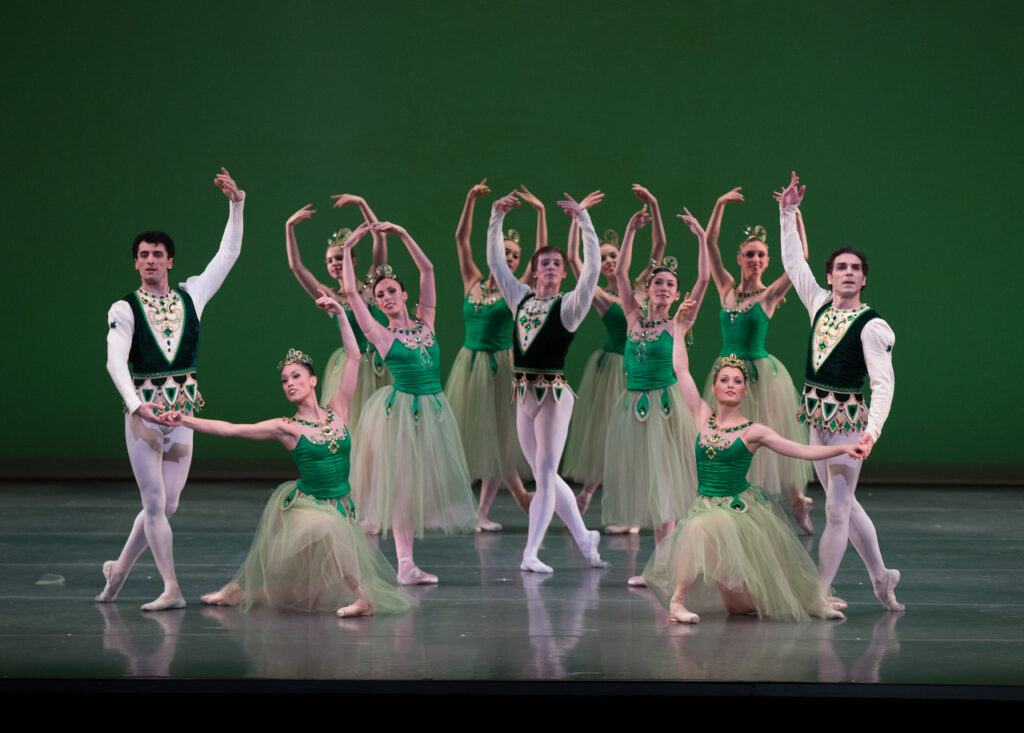
Boston Ballet in George Balanchine’s ‘Jewels’ ©The George Balanchine Trust, photo by Rosalie O’Connor courtesy of Boston Ballet

By Shelley A. Sackett

It’s easy to understand why George Balanchine’s Jewels has endured for more than 50 years. An abstract work, the triptych is not shackled to the narrative constraints of traditional ballet. Rather, each of its three pieces — “Emeralds,” “Rubies,” and “Diamonds” — is a pure sensorial feast of luscious music and stunning choreography. The work is easily appreciated by audiences new to the genre, yet also presents challenges for experienced dancers and critical aficionados.

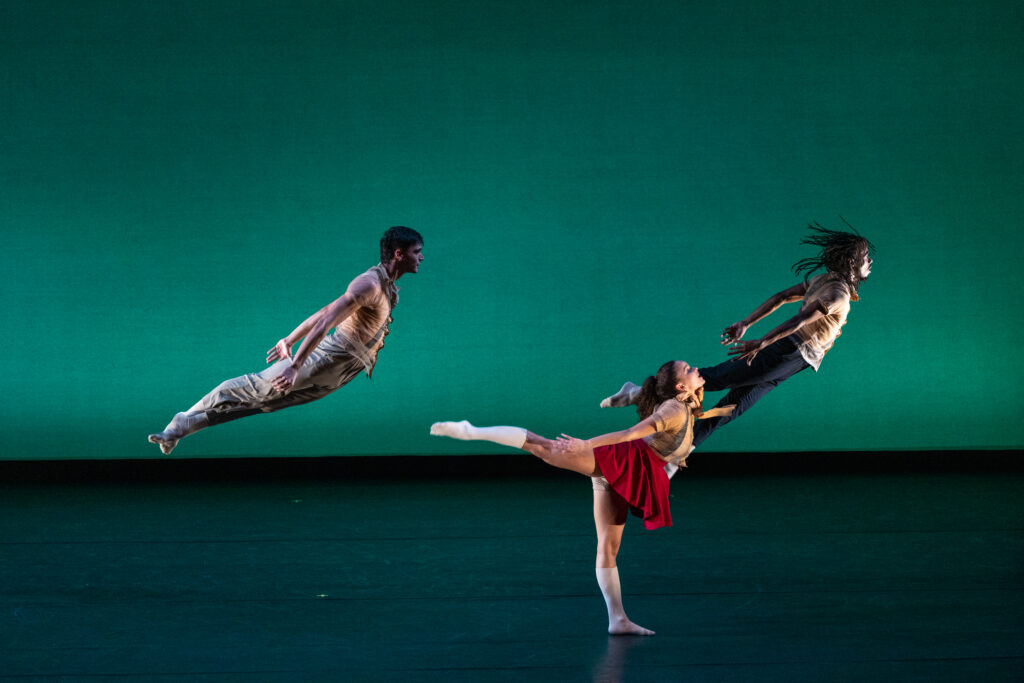
The first Friday evening performance opened with the dreamy and poetic “Emeralds.” Featuring “Pélléas et Mélisande” and “Shylock” by the French composer, Gabriel Fauré, the piece is meant to evoke Paris. The curtain raised on ten members of the corps, bejeweled in crowns and regal necklaces and dressed in a lime green chiffon that you could almost taste. Like porcelain figures in a French masterpiece oil painting, the figures seem momentarily frozen, and then suddenly the stillness is broken and the dancers spring to life.

With its green backdrop and even greener costumes, “Emeralds” evokes the pastoral enchantment of forests, hunting scenes, courtships, and a tapestry of youthful magic. Balanchine mixes it up enough to keep the audience engaged (pas de deux, staccato hand movements and playful, joyful solos) without demanding overthinking. Oboes, French horns, and flutes present the perfect shading for the elegant partnering of standouts Lia Cirio and Patrick Yocum and the perfect lush background for the final piece, where the full corps strikes a tableau that mirrors and bookends the piece’s opening scene.

After a 20-minute intermission (the show runs 2 hours, 10 minutes total), the evening shifts gears with “Rubies,” Balanchine’s jazzy, modern and saucy piece set to Stravinsky’s “Capriccio for Piano and Orchestra.” Witty, playful and athletic, the dancers emote and engage with the audience, winking, nodding and sharing a sly smile. Karinska’s flapper-inspired ruby red costumes are perfect companions.
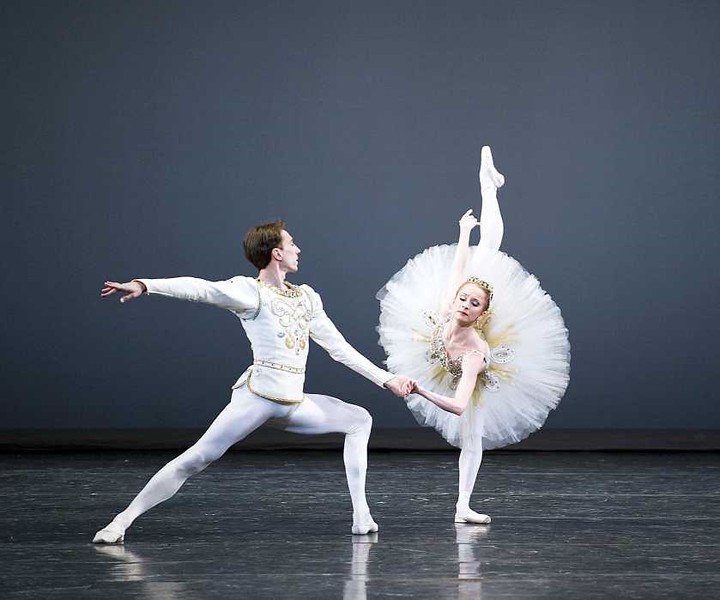
Roman Rykine and Larissa Ponomarenko

Balanchine clearly wanted everyone to have fun with this bold, American neoclassical piece. Influenced by Broadway and sexually charged, its emphasis on communication and merriment contrasts sharply with the preceding arms-length, performative “Emeralds.” The dancers jump rope, ride stick ponies and flirt shamelessly. Chyrstyn Mariah Fentroy is a cheeky breath of fresh air and Chisako Oga and Sun Woo Lee are evanescent as a seductive Adam and Eve couple who tango their way (among other feats) through Ruoting Li’s brilliant rendition of Stravinsky’s piano solo.

Balanchine circles back to his Russian roots with “Diamonds,” set in St. Petersburg to Tchaikovsky’s “Symphony No. 3, Op. 29, D major.” A tribute to Russian classicism, costumes are glittering white tutus and the set includes a glistening chandelier and generous pleated layers of thick satin draped and tiered along the stage’s sides and across the front. The effect is of an ice castle filled with sugar plum fairies until the dancers begin to prance like reindeer and engage in exuberant couplings.

Grand and imperial, the dancers exhibit disciplined symmetry, creating patterns and shapes. A pas de deux, long and undulating as it unfolds, features the marvelous Viktorina Kapitonova (and talented Sangmin Lee) who steal each other’s — and the audience’s — hearts as their movements reflect the music’s building crescendos and ascending scales, only to resolve harmonically and melodically. There is only grace and beauty in their dance, although the music could have been equally served by more urgent and fitful movements. Fortunately, Balanchine opted for the former approach.
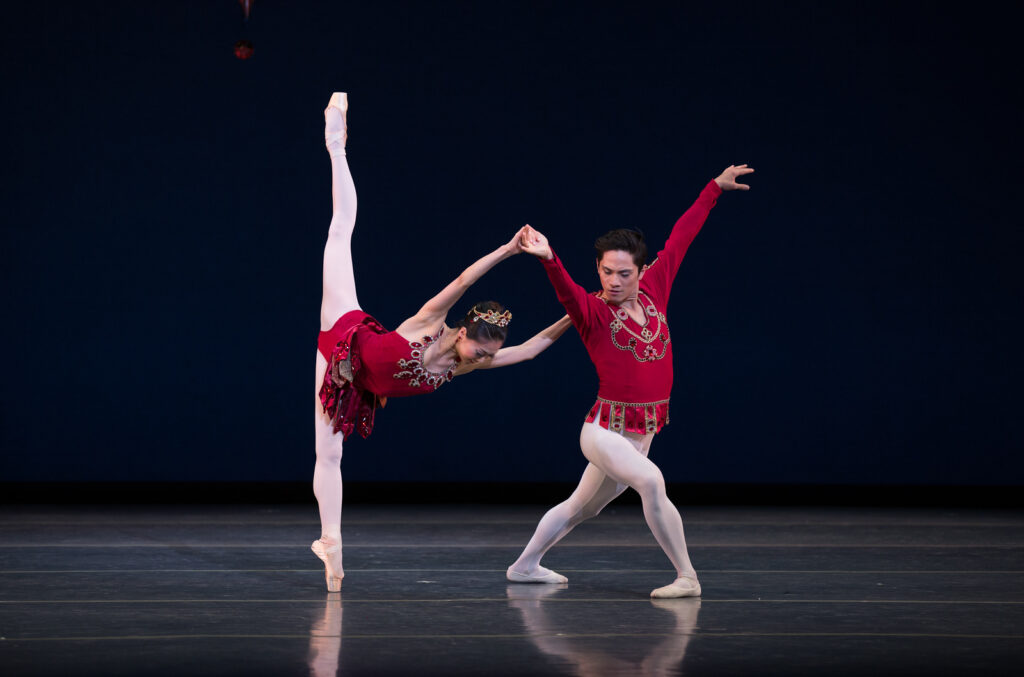
Misa Kuranaga and Jeffrey Cirio

Jewels premiered in 1967 at New York Ballet, where Balanchine was Ballet Master and Principal Choreographer. The full length ballet, one of the world’s first “abstract” ballets, was inspired by a visit to the renown jeweler, Van Cleef & Arpels. Struck by the shimmering contents of the store’s cases, he decided to create dances that would emulate those shimmers with distinctive moods, styles and musical voices.

Boston Ballet is off to a spectacular start in its 2025-2026 season. Be sure to visit their site for more information and to purchase tickets at https://www.bostonballet.org/

‘Jewels’ — Choreography by George Balanchine. Music by Gabriel Fauré, Igor Stravinsky, and Peter Tchaikovsky. Costumes by Karinska. Lighting by Brandon Stirling Baker. Presented by Boston Ballet. With the Boston Ballet Orchestra conducted by Mischa Santora. Run has ended.
Alvin Ailey‘s Legacy Uplifts and Transforms — As Always

Alvin Ailey American Dance Theater at Boch Center Wang Theatre. Photos by Paul Kolnik

By Shelley A. Sackett

Like daylight savings time, red-winged blackbirds and early flowering trees, Celebrity Series of Boston’s presentation of Alvin Ailey American Dance Theater is an annual harbinger of spring. Its arrival is cause for celebration for the reliably breathtaking performances that await and as a sign that, at last, the long, dark, COLD winter months are behind us.

The Saturday, April 26 matinée was a special treat; its program included both Sacred Songs and Many Angels in addition to Revelations, Ailey’s most celebrated work and a cornerstone and frequent feature of the company’s repertory.

When Revelations was first performed in 1960, it was twice as long as the version now performed. A dancer and choreographer, Ailey company member Matthew Rushing became its Rehearsal Director in 2010, Associate Artistic Director in 2020, and Interim Artistic Director in 2023. In 2024, Rushing and Ailey Music Director, Du’Bois A’Keen (himself a dancer and composer), gathered the songs that were removed from the original Revelations and reimagined them as a more contemporary version of the piece. The wanted their version to still showcase African American cultural and historical heritage, but to also resonate with a 21st century audience. Sacred Songs was the result.

The piece begins with house lights up and 10 dancers seated on stools, reminders of Revelations and the women seated on stools in “Rocka My Soul.” Rushing’s Sacred Songs pays homage to Revelations, but bears his fingerprints. Its playlist is edgier, and includes funk, updated arrangements of spirituals, calypso, big, brassy jazz and Hendrix-like fuzz guitar. Its choreography is more lighthearted and less muscular. There are even moments of thoughtful introspection set to a soundtrack that is literally no more than a whisper.

Corrin Rachelle Mitchell and Yannick Lebrun

Ailey based Revelations on his childhood memories, where church played an important role. Traditional Black spirituals, work songs, and blues both reflected Black American history, with its roots in slavery, and honored Black perseverance and faith.

Rushing’s choreography is overall more celebratory and looser than Ailey’s, his dancers more earthbound. They express pain and joy as they soar and collapse, exalt and pray. They leap, melt and sway with the flexibility of boneless cartilage. When they reach for the sky, palms turned up, the stage lights with hope. Next moment, they are in a speakeasy with the frenzy and excitement of living on the edge in the moment.

Again and again, we marvel at the troupe’s gravity-defying moves and acrobatic-like prowess, wondering almost aloud, “How DO they do that?” Miranda Quinn and James Gilmer are particular standouts in an ensemble of universal excellence, their time on stage glimpses of earthly blessing.

Andre A. Vazquez’s stunning lighting with its nuanced use of spotlights and color, and Danté Baylor’s simple but elegant billowing costumes complete without competing. When the final section winds down with the ensemble kneeling beneath a blue-tinged lighting, as if by a pool of water, the effect is of a stiller, more contemplative version of Revelation’s “Wade in the Water.” Rushing has done an amazing job of remaining loyal to Ailey’s original while creating a signature piece of his own.

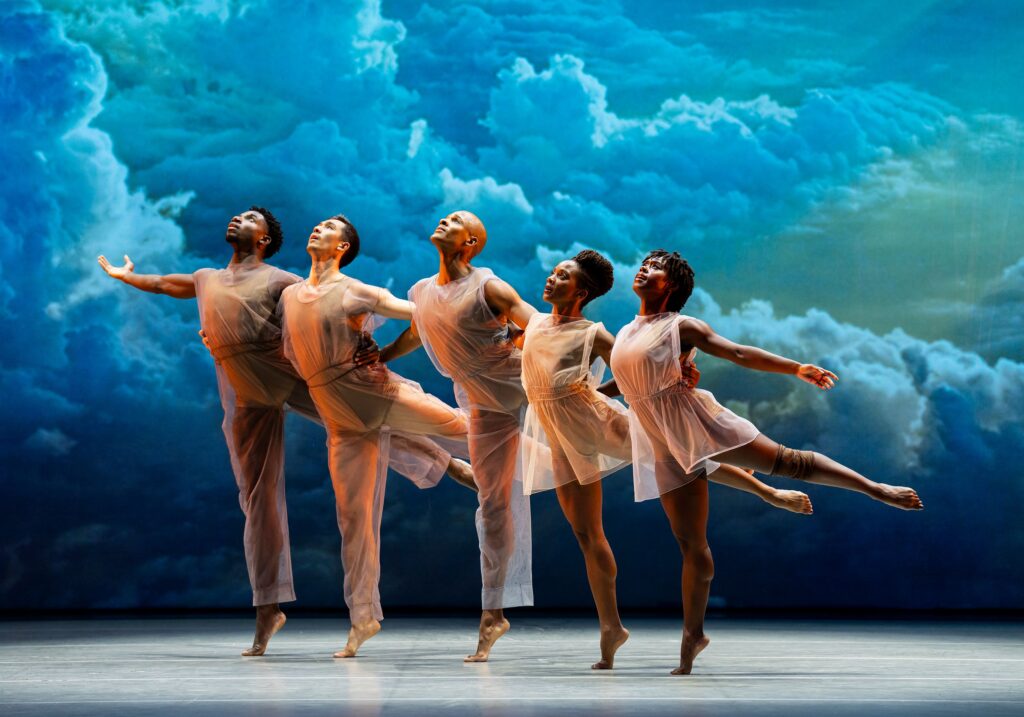
After an intermission, the program’s palate cleanser and highlight (for this reviewer) silently bursts into view as the curtain rises on world-renowned Lar Lubovitch’s first work for the Alvin Ailey company, Many Angels. A backdrop of Michelangelo-like clouds celestially lighted (designed by Lubovitch) beams the audience inside the Sistine chapel’s heavenly ceiling, among angels. In setting his piece to Gustav Mahler’s lofty “Adagietto” from Symphony No, 5 in C-Sharp Minor, Lubovitch was inspired by 13th century theologian St. Thomas Aquinas, who famously asked, “How many angels can dance on the head of a pin?”

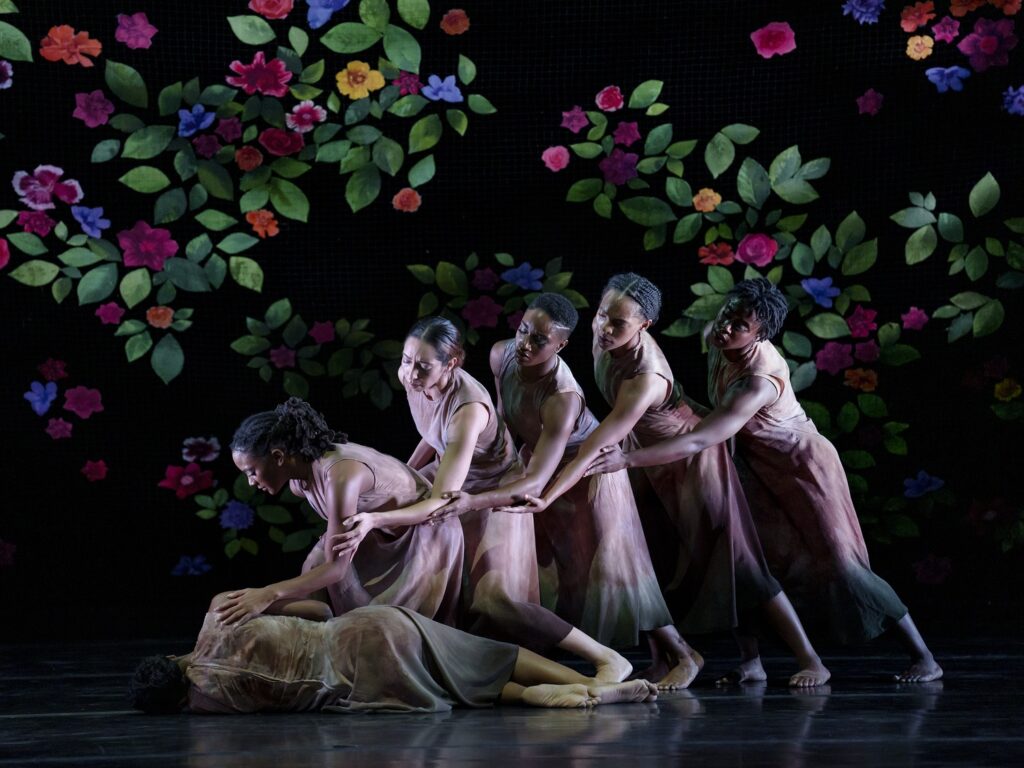
A mound of five dancers adorn the stage, arranged jenga-like in a soft mass. Slowly, they disentangle, arms gracefully reaching upwards as the pile separates into unique bodies. Clad in sheer, shimmering other-worldly costumes of luscious fabric that catches the light and seems to absorb it (costumes by Harriet Jung and Reid Bartelme), they twist, turn and slide over each other with all the loveliness of, well, angels. With its flowing movements and transcendent moments, the choreography evokes feelings of weightlessness and miracles.

This short piece is entirely ballet, with lifts and poses that take one’s breath away with their grace and sheer beauty. The artistry is stunning, message-less and simple synchronicity of movement and music. As Lubovitch comments in the program notes, “Occasionally, something may exist in the world just for the sake of itself.” He has certainly created such a wonder with his Many Angels.

After a brief pause, the familiar first notes of “I Been Buked” electrifies the seasoned audience with excitement as they ready for the icing on the Ailey cake — the incomparable Revelations, which, no matter how many times witnessed, is always fresh and enthusiastically welcomed. The 30+ minute work has three parts, starting with “Pilgrim of Sorrow.” The words in these songs create a heartbreaking operatic narrative arc of the struggle, pain and burdens of being Black in America. “Fix Me Jesus” is particularly poignant; dancers Corrin Rachelle Mitchell and Yannick Lebrun bring sensitivity and strength to their delicious duet.

Part two takes us to the water and its power to honor, redeem and anoint. Ella Jenkins’ “Wade in the Water” is etched in hope. The dancers are dressed in white with white umbrellas, hankies and streamer flags, creating a joyful mashup of baptism and New Orleans second line (costumes by Ves Harper).

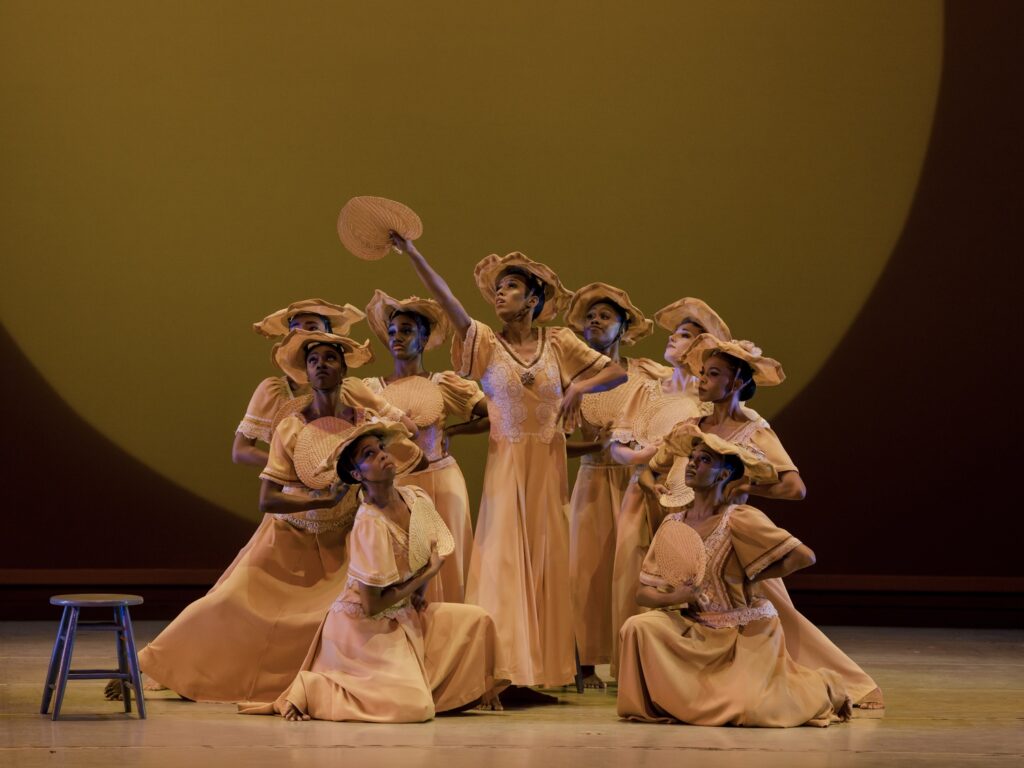
“Move, Members, Move” pays homage to southern matriarchal community life, where women and church were the glue that held it all together. Barbara Forbes dresses the women in sunflower yellow hats, flouncy dresses and fans, and the men in matching vests, billowy shirts and fitted trousers. By the time “Rocka My Soul in the Bosom of Abraham” begins, the crowd is on their feet, clapping and singing and dancing in place. The fourth wall has melted and we are all one community, basking in the pageantry of the magnificent Boch Center Wang Theatre and the pure magic Alvin Ailey American Dance Theater always leaves in its wake.

Alvin Ailey American Dance Theater. Presented by Celebrity Series of Boston. At Boch Center Wang Theatre. Run has ended.
Tap and Piano Fuse Magically in the Unique ‘Counterpoint’

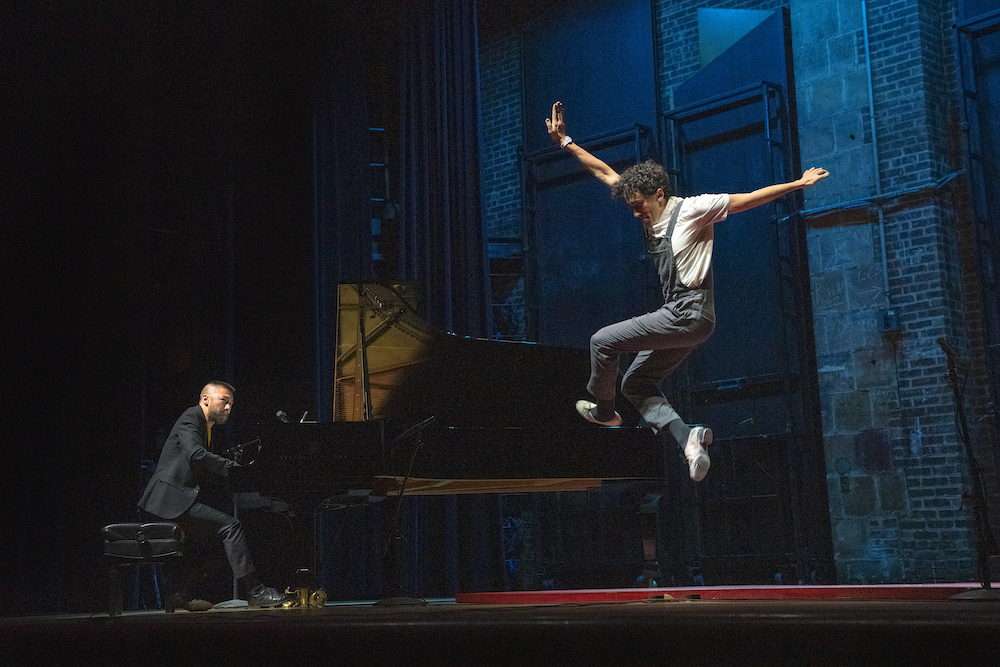
Conrad Tao (L) and Caleb Teicher in ‘Counterpoint, presented by Celebrity Series of Boston. Photo by Richard Termine

By Shelley A. Sackett

Counterpoint, the 75-minute collaboration between pianist and composer Conrad Tao and choreographer and dancer Caleb Teicher, is a magical journey that explores the interplays between two seemingly divergent art forms — tap and solo piano.

Yet, these two virtuoso performers, who met as teenagers and immediately hit it off artistically and personally, perform alchemy to fuse their music and dance and conjure something unique and thrilling. Their exploration of connection rather than divergence results in a program that feels more like eavesdropping on a private performative conversation than attending a formal concert.

Being in the audience (almost) equals the fun and exuberance they exhibit on stage.

“Counterpoint,” is defined in music as the art of playing melodies in conjunction with one another according to fixed rules. In Counterpoint, it becomes a discussion or conversation between Tao and Teicher’s different art forms of music and dance, between their different instruments of piano and tap and between the different traditions that have been attached to each.

It is also an opportunity for the two to improvise, bringing fresh energy to familiar pieces that span a wide selection of musical genres. Their back-and-forth brims with theatricality, harmony and raw rhythm.

Stylistically, the program of 11 pieces meanders from J.S. Bach’s “Aria” from his Goldberg variations to Art Tatum’s “Cherokee,” a Honi Coles and Bufalino Soft Shoe, Brahms’ Intermezzo in E Major, Gershwin’s iconic “Rhapsody in Blue” and back again to Bach’s “Aria.” There is a Schoenberg, Mozart and Ravel along the way, and even two exceptional original pieces, one that changes with each performance and is titled “Improvisation.”

The set is simple: a shiny piano, tap platform, and chair. At first, Teicher just sits as Tao’s soulful rendition of the Bach aria fills the hall. When Teicher stands, his white, short-sleeved jumpsuit is mirrored in the piano’s sheen. He slowly, thoughtfully begins to drag his feet, transitioning to graceful almost slow-motion ballet moves and  eventually breaking into a whimsical introduction to the clickity-clack of the tap element. It’s a perfect way to start this quirky tête-à- tête between pianist and dancer.

“Improvisation” at Saturday’s matinée started with a slow interchange between dissonant piano chords and the soft scarping of Teicher’s shoe. Both increase in intensity almost to the breaking point, yet the two rhythms complement, rather than compete with, each other.

Teicher gives the audience a glimpse of his prodigious stage presence with the theatrical facial expressions and body languages he brings to “Cherokee.” A mere tilt of the head, the whisper of a wink and a smile, silently speak volumes. With his introduction of “Coles and Bufalino Soft Shoe,” he is also the charming emcee, genuinely interested in having the audience join in on the fun.

“Swing Two,” an excerpt from the duo’s Bessie Award-winning “More Forever,” exemplifies the concept of Counterpoint, or two melodic lines interacting. Tao’s piano is as rhythmic as Teicher’s dancing, which is as tuneful as Tao’s keyboard.

The expressive, easily accessible “Rhapsody in Blue” earns the pair an interruptive standing ovation. Its happy fusion of jazz and Broadway and the dramatic blue lighting are perfect backdrops for Tao’s vivid, emotive piano and Teicher’s expressive dancing. They both display playful attitude in this piece. When Teicher strikes a pose or seems to float on the tip of his shoe, there is an impish, elfin hammy element to him that makes his performance all the more endearing.

Both have their solo moments too, Tao in the Schoenberg and Ravel pieces and Teicher in the Bufalino soft shoe and the magnificent Mozart “Alla Turca,” where he demonstrates tap’s vocal range while exuding joy and adorability. Although there is no piano accompaniment, Teicher’s masterful dancing creates an imaginary score which he encourages the audience to try to access. “When you hear these sounds and see me gesture and dance, use your imagination to create a story and fill in the blanks,” he advises. “Watch it again and think about what you see and feel.”

The program ends with an “Aria” bookend, and we have come full circle, but so much richer for the experience.

Celebrity Series of Boston presents Caleb Teicher & Conrad Tao in ‘Counterpoint.’ At the Boston Arts Academy Theater, Feb. 7-8.

Theater Mirror’s Shelley Sackett Interviews Modern Dance Visionary Mark Morris

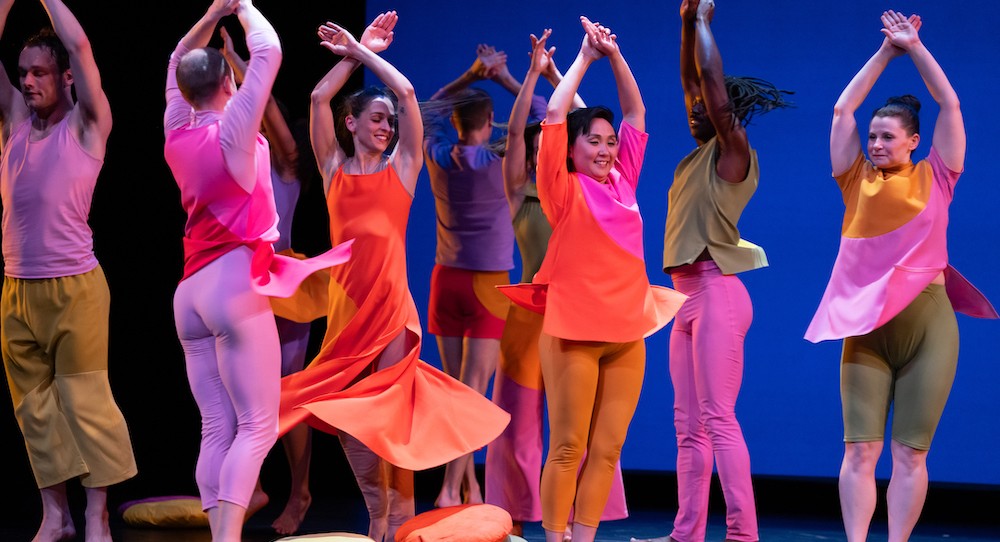
The Mark Morris Dance Company in The Look of Love. Photo: Julieta Cervantes

The Mark Morris Dance Group returns to Boston with Morris’ evening-length work, The Look of Love at Emerson Cutler Majestic Theatre from January 23 through January 26. The piece is a wistful and heartfelt homage to the chart-topping hits of Burt Bacharach, a towering figure of popular music, newly arranged by jazz pianist, composer, and MMDG musical collaborator Ethan Iverson. Bacharach’s melodies and unique orchestrations soar with influences from jazz, rock, and Brazilian music. The stage comes alive in a powerful fusion of dance and music with an exceptional ensemble of vocals, piano, trumpet, bass, and drums, led by singer, actress, and Broadway star Marcy Harriell.

SAS: Is there an overarching philosophy or spirit that you bring to your choreography?

MM: I wouldn’t know. I’m the wrong person to ask. I have no philosophy. I mean I famously answered that in Brussels. ‘I make it up. You watch it. End of Philosophy.’

I meant it. It’s not a word thing. It’s a choreo-musical thing. It’s not a philosophy. It’s been my only job, and I‘ve been doing it for nearly 50 years. So, I’m not waiting to figure out what it is. It’s music and dance; that’s what I’m about. It’s vocal music a lot, and vocal music has lyrics. Whether it’s an opera or popular songs or whatever language, the music exists because of the text.

So in the case of Hal David and Burt Bacharach meets Dionne Warwick, that’s a fabulous, brilliant combination of those things, and then I do like I would with Schumann or Handel or anything, I work with the music on its own terms. It’s always the same, in that I’m always working from music.

SAS: So what was it about the Burt Bacharach music and oeuvre that appealed to you?

MM: What happens is that good music lasts, and all good art is relevant to the people who find it appealing. The idea that it’s popular music and, therefore, not valuable is just utter nonsense. All good art is relevant to the people who find it appealing. It isn’t just written for just one person, it’s written for everybody, and it’s written from a particular point of view.

A lot of popular music fades away. So whether you know who wrote it or not, whether you know the words or not, whether you like it or not, you recognize certain bits of Burt Bacharach when you hear it. His music has endured.

He wrote from a huge range of points of view and it was all amazing music. Why Burt Bacharach? Why anybody’s music? Why would I choreograph it? I like it. I can’t work with shitty music, and I only work with live music.

In talking with Ethan Iverson about 15 years ago about music we’d been familiar with our whole lives, actively or not, music that was ‘in the air,’ Burt Bacharach’s name came up, and we thought, ‘Well, sure. Let’s do this.’

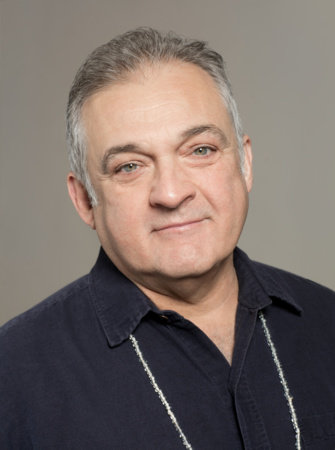
Mark Morris

SAS: He wrote so many songs, how did you decide on the ones you chose and how did you decide on the order in which they appear?

MM: First of all, Ethan Iverson (who was my music director for a number of years long ago and whom I’d worked with before on “Pepperland,” the evening-length choreography and arrangement of Beatles music to celebrate the 50th anniversary of the release of Sgt. Pepper’s Lonely Heart’s Club Band album) and I listened to Burt’s music. We each picked our favorite songs. We also knew we didn’t want a whole bunch that were similar in style, tempo, or key.

In meeting with Burt, he gave us full approval and loose reins for the arrangements. When we got the rights, Ethan started arranging and I started choreographing. The very last thing was what order they would be in, and it went almost right up to opening night before we had the exact order because of the way I choreographed and the way they fit together according to key signature or rhythm or familiarity. I didn’t want it to be just a jukebox.

That’s the fun part, but it was a lot of hard work and we have now been performing it for a few years. It lives on and it’s really great.

SAS: What is The Look of Love about?

MM: The songs are all about love. Some are terribly sad, but many are upbeat. There’s optimism, but there’s also realism. They’re very profound songs. We don’t change the show performance to performance, but there are pockets of improvisation like there is in anything live, but it’s the same text and the same piece every night.

That’s why, if you go early (in the run), you can go back and see it again. That’s the live aspect of it, and there’s nothing better than that.

We haven’t been to Boston for six years! Covid was four and a half of them, but it’s been a while and we have an audience in Boston, we just haven’t been able to go for a long time, so we’re really happy to be back.

SAS: Your designer is the great fashion guru Isaac Mizrahi. How did that work?

MM: Isaac and I work together a lot. We’re very close friends. We’re both busy and we don’t work together that often. I knew that he was the right person for this, and so did he. We start with the music, which is how I start with everyone (lighting, design, costumes and music). I send Isaac the playlist of what I think is going to be the music long before we even start. He gives me some designs, and we talk about them and change them or not. It doesn’t start with a finished dance and then we add on to it. It’s pretty organic right from the starting gate.

That’s the way I like to work. It’s more thorough and it’s a collaboration. I’m in charge ultimately, but I listen and we participate or fight and it’s good. I don’t work with a lot of different people. I have a small roster of collaborators and it’s familiar in the sense that we don’t have to lie. We might say, ‘That’s the ugliest I’ve ever seen,’ or ‘That’s boring,’ or even, ‘That’s the greatest thing I’ve ever seen.’ That happens too sometimes, and it’s nice.

It’s friendly, but we’re pretty honest.

SAS: A lot of these songs are hits from long ago that younger audience members might be totally unfamiliar with them. Any thoughts about that?

MM: If you go see the show because you’re curious, and you can afford a ticket, that’s great. There’s no lesson to be learned from the show. It’s been very successful, and not just with seniors who, unfortunately, start singing along. The musicians start to play “Alfie,” and everyone goes, ‘Ohhh….’

This music is part of American folk ways now. Bacharach is part of the American Songbook.

SAS: Do you plan to keep doing what you’re doing? What next creative itch are you looking to scratch?

MM: I’m working on several things already. It’s been a very difficult period for everybody. I have a piece that will be premiering in early April, so I’ve been working on that all the time we’re not on the road.

This is my only skill. I’m going to do it til I can’t. One thing, I’m making up dances for after I don’t choreograph, after I’m dead or incapacitated. It’s a project called “Dances for the Future.” I have several pieces that are in the can, as they say, they’ve been choreographed, there are designs and notations and we’re going to keep them until I can’t make up dances anymore and then we’ll release them one a year for as long as we can do that. It’ll be a world premiere out of boredom, which I think is a fabulous, morbid idea.

I’m also working on a piece called “Moon” for a small festival in April commissioned by the Kennedy Center and inspired by the Golden Record on the 1977 Voyager.

SAS: Anything else you want to riff on?

MM: The Look of Love is not performed all that frequently. We don’t tour it for six weeks to five cities, it’s 3-5 shows and then it might weeks or months before we do it again. We re-rehearse it and buff it up and it’s a bit different and more confident and swings better every time we bring it back. It doesn’t change, but the tone and the ease with which we can present it is reassuring; it means we are performing it more, and we’re getting back in the hang of it.

For a YouTube preview of The Look of Love, click here. For tickets and information, go to: https://www.globalartslive.org/events/list-events

Malpaso Dance Company Brings Its Hot Fusion of Cuban Dance, Music, and Spice to Boston’s Winter Wonderland

Malpaso Dance Company. Photos by Robert Torres

By Shelley A. Sackett

With good reason, Malpaso Dance Company is one of Cuba’s most sought-after dance companies. Since its inception in 2012, the company of 11 dancers has served as global ambassadors of Cuban culture, heritage and artistry.

Celebrity Series brought the vibrant troupe back to Paramount Center’s Robert J. Orchard Stage for three performances. On opening night, there was as much excitement in the packed house as there would be on stage during the 90-minute performance.

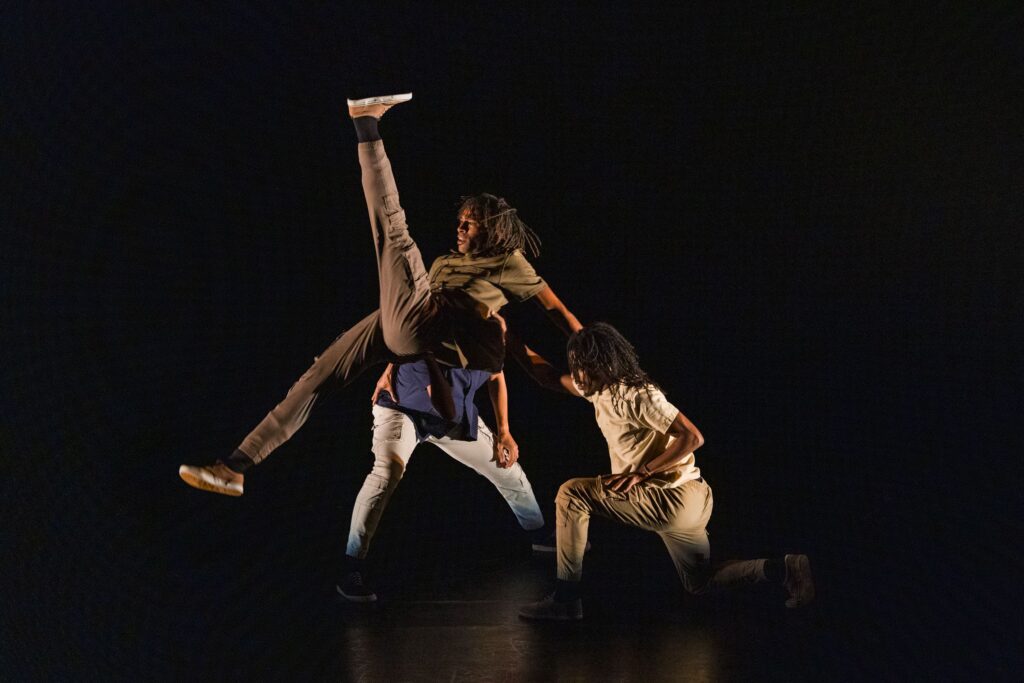
The program of three dances opened with “Floor…y Ando,” a 2023 piece choreographed by Ephrat Asherie (who also designed the costumes) and set to music by Aldo López-Gavilán. Three male dancers stand on stage as the piano jazz solo begins and the house lights dim. Two stand upstage; the third is somewhat downstage on the opposite side. Manuel Da Silva’s spot-on lighting catches their white shirts and pants, arms and legs moving slowly.

As the solo dancer starts to move, the other two follow his lead as mirrored tandem images. The music shifts to a more upbeat tempo, and the dancers follow with short, rapid, fluid floor work. They bounce and roll with joyous abandon, and just as quickly, they’re on their feet, leaping and then shuffling, their sneakers squeaking across the stage.

All too quickly, it’s over and the dancers walk off-stage as they walked on, two audience-left, one audience-right.

The piece (loosely translated as “Floor..and Walking”) is Asherie’s tribute to the late Gus Solomons, Jr., an American dancer, choreographer, dance critic, and actor who was a leading figure in postmodern and experimental works. He also studied architecture at M.I.T. One of his most quoted statements is, Architecture and dancing are exactly the same. You design using all the same elements — time, space and structure — except that in dance, time is not fixed.”

After a brief pause, the curtain opens on choreographer Ronald K. Brown’s “Why You Follow,” a 2014 piece set to hip-hop music that exemplifies the multicultural influences that make Cuba the unique artistic petri dish it is. The full company is dressed in simple costumes (Keiko Voltaire), each sporting a spot of red, either as a belt, shirt patch, or pant stripe. The effect is subtle and coherent.

The dancers celebrate the rhythms of the music by incorporating elements of salsa, samba and Bhangra. There is also a smattering of classical ballet and traditional jazz thrown into the mix. The pure, simple but never monotonous beat of the soundtrack (“Look at Africa” by Zap Mama; “En Route to Motherland” and others by Gordheaven & Juliano) has the dancers shaking their hips and the audience dancing in their seats.

The stage is set like a crowded club, and dancers appear as solos, pairs, and groups. Sometimes, the rush of figures feels like a conga line; other times, a single dancer’s graceful and impossibly supple body is the focus.

There is also a playful element in this piece, a funky, spunky confidence as the dancers circle the stage riding what could be stick horses that they slap with their long, graceful arms. This upbeat element is repeated throughout the piece, each time eliciting the same audience reaction of delight.

Clifton Taylor’s fire engine red lighting design mirrors the up-tempo and pulsation of the dancers and music, creating an electrifying performance that leaves the jubilant audience applauding wildly.

After a brief intermission, “A Dancing Island,” the evening’s longest and final piece, brings the full company back to dance to the music of Alejandro Falcón and Ted Nash & the Cubadentro Trio. Choreographed by Osnel Delgado in 2023, the piece is non-stop sparkle and fizz, a full-throated jamboree of thick, sultry, sassy and uniquely Afro-Cuban Music and dance.

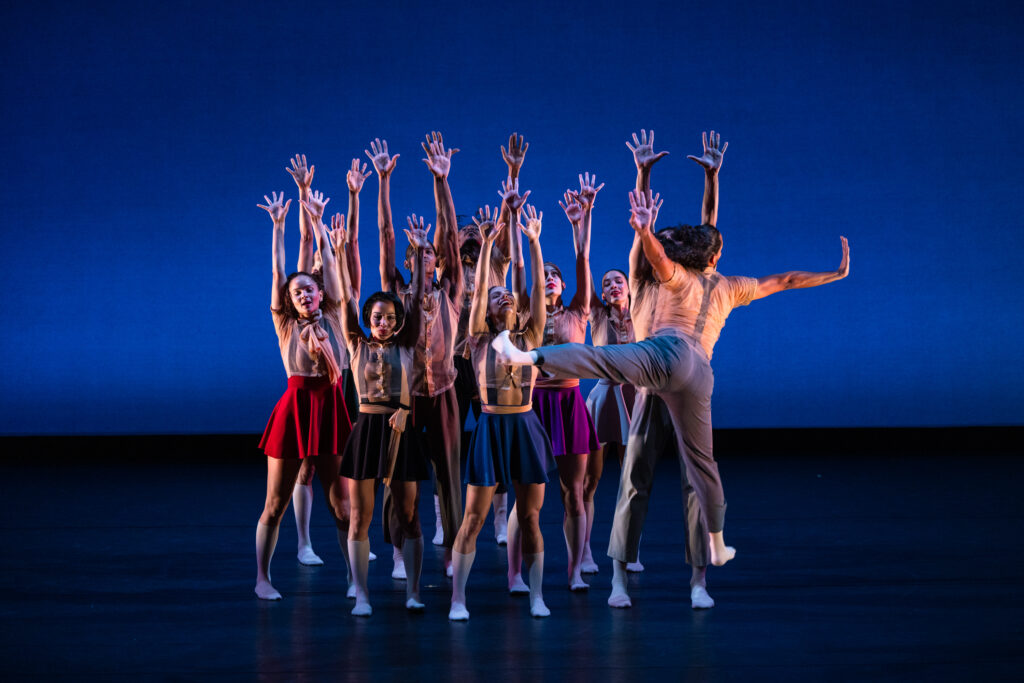
The piece opens with the sound of wind and/or waves, the dancers bathed in hazy spotlights (Manuel Da Silva), clad in flirty costumes (Guido Gali) that are as revealing as they are cheerleader cute. The women even wear white knee socks and T-strap shoes, their sheer-ish tops looking like suspenders over tattoos.

“A Dancing Island” is more of a journey than a single theme, with dancers hanging upside down, then lying prone on the floor for one minute and reflecting the more somber tone of a single female acapella voice the next. There is also an intense intimacy as dancers pair and intertwine, barely touching yet presenting in perfect synchronicity. At one point, the house lights come up and a dancer slowly walks down the aisle to join his partner on stage, a poignant and creative touch.

Like Malpaso Dance Company itself, “A Dancing Island” casts a wide net, one the audience is delighted to be caught in. The only shame is that they were in Boston for such a short time. Be sure not to miss them the next time Celebrity Series brings them to town!

Celebrity Series of Boston presents Malpaso Dance Company. Executive Director and Co-Founder Fernando Sáez. Artistic Director and Co-Founder Osnal Delgado. At the Robert J. Orchard Stage, Paramount Center, January 17-18.

100 Years Later, Martha Graham Remains the Gold Standard of Contemporary Dance

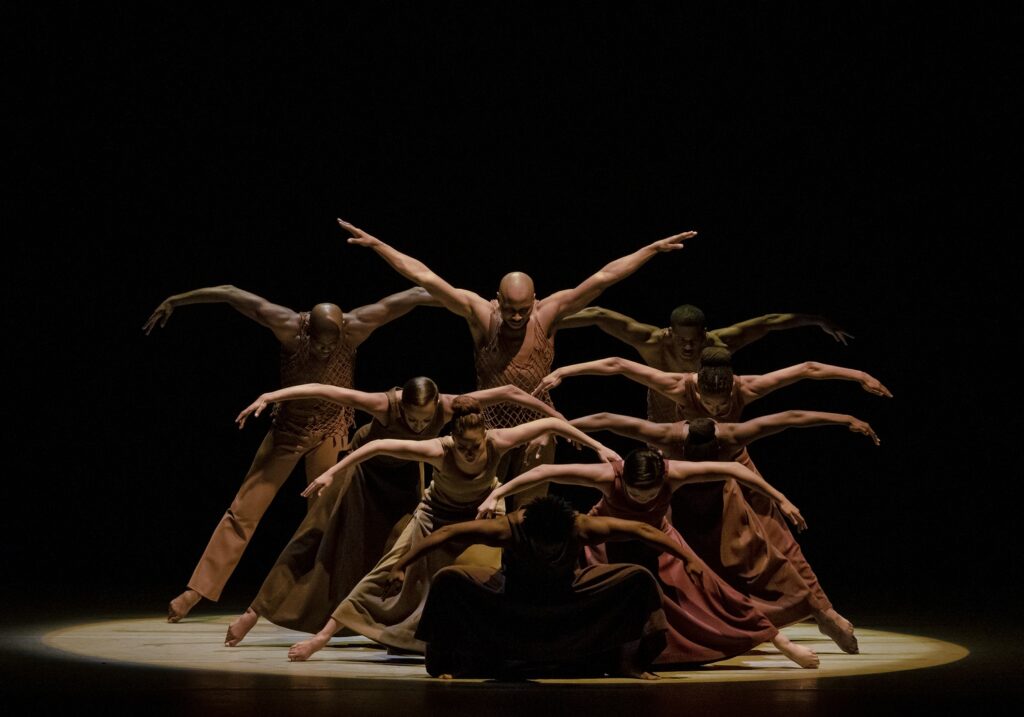
Cast of Martha Graham Dance Company

Martha Graham Dance Company’ — Presented by Celebrity Series of Boston at Emerson Cutler Majestic. Run has ended.

By Shelley A. Sackett

The last time I saw a Martha Graham piece performed was at the Metropolitan Museum of Art in October 2023, when I had the random good fortune to attend its exhibition, Art for the Millions: American Culture and Politics in the 1930s. As part of that exhibit, dancers from the Martha Graham Dance Company staged some of Graham’s most powerful ’30s solos in galleries throughout the museum.

I was lucky enough to catch “Lamentations” in the New Greek and Roman Galleries, the spectacular “museum-within-the-museum” built to display the Met’s extraordinary collection of Hellenistic, Etruscan, South Italian, and Roman sculpture.

Graham’s 1930 work, set to Hungarian Zoltàn Kodàly’s plaintive music, features a single dancer whose angular moves inside a stretchy fabric cocoon have long marked Graham’s trailblazing style. Over a mere four minutes, the dancer fights what feels like an eternal battle to get out of her encasement. Only her face, hands and feet are visible, yet the geometric shapes she creates epitomize her fruitless struggle. She pleads and prays, but there is no escape. Graham called the piece “the personification of grief.”

Seeing the timeless, sculptural piece in a sun-filled atrium with an audience of ancient statues was nothing short of sublime.

Its recent performance at the 1,200-seat beaux-art Emerson Cutler Majestic, though a less intimate setting, was no less astonishing.

Few dance companies have transfigured the art of contemporary dance quite like Martha Graham’s. Since the company’s founding in 1926, Graham’s signature style has remained a bedrock of American modern dance and continues to be taught worldwide.

In anticipation of the company’s 100th birthday celebration in 2026 (GRAHAM100), the Boston Celebrity Series brought the legendary troupe to Boston for three special appearances to kick off its own 2024/2025 Season Dance Series.

The Friday night capacity show illustrated why Graham remains the gold standard of contemporary dance choreography.

The program opened with “Dark Meadow Suite (1946), highlights from her longer “Dark Meadow.” The full ensemble (featuring Lloyd Knight and Anne Souder) performs an ancient mating ritual as part of Graham’s American homage to a mythological rite of spring.

The piece opens with a Greek chorus of five women who circle trancelike, stamping a primordial rhythm with their bare feet. Thick, rich music by Carlos Chávez sets the auditory stage for stunning, sensual, animal-like movements as dancers join, separate, and pulsate in perfect synchronicity. Playful lighting (Nick Hung) adds color and texture and black and orange flowing costumes (Martha Graham) are equal parts elegance and flirty frolic. Knight and Souder are the embodiment of grace as they perform their coupling ceremony, which Graham described as “a re-enactment of the mysteries which attend the eternal adventure of seeking.”

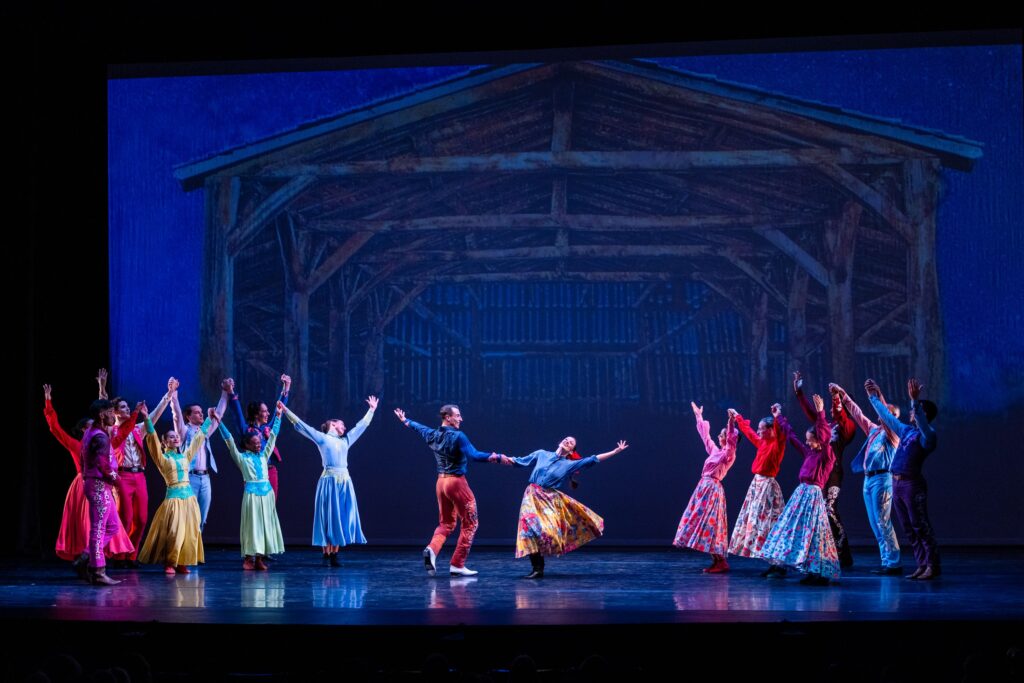
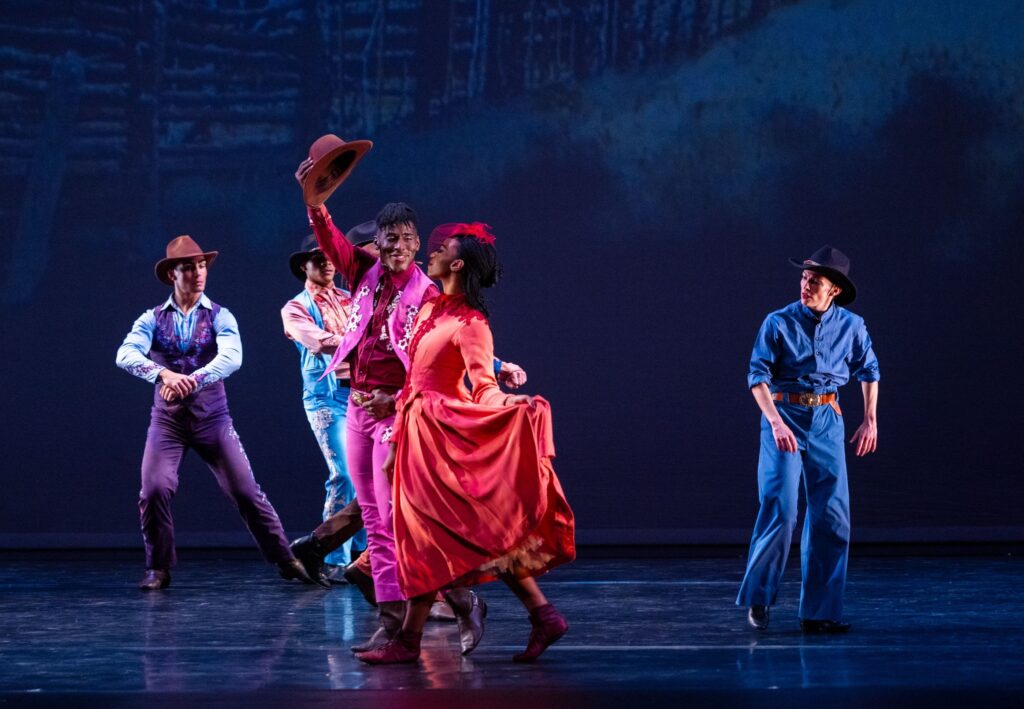
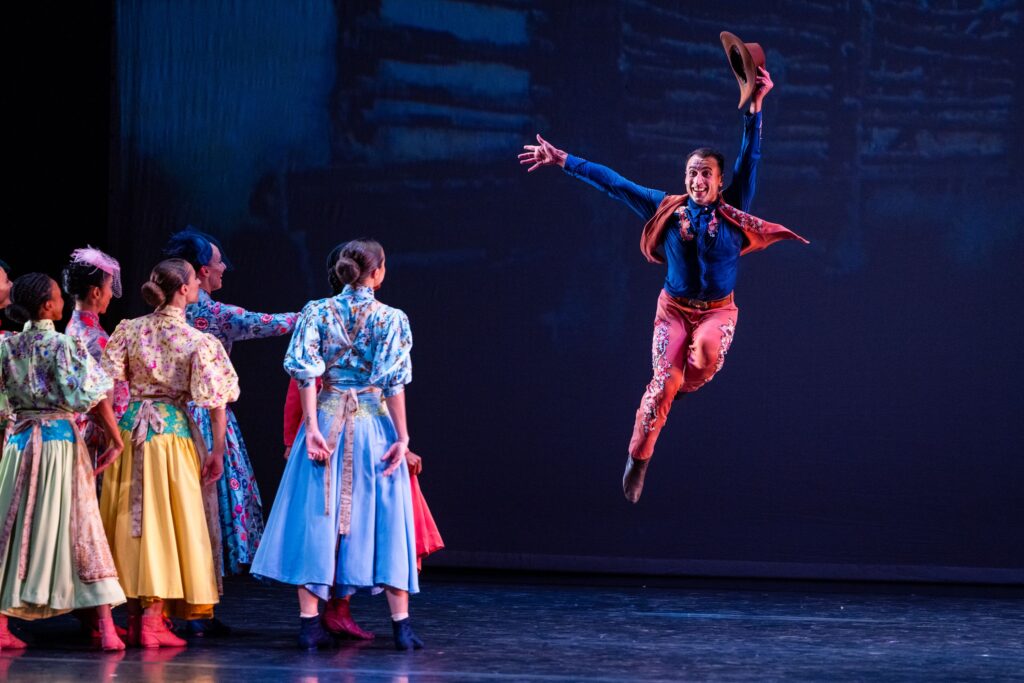
Close Graham friend and collaborator Agnes de Mille, the storyteller niece of filmmaker Cecil B. DeMille, choreographed the iconic “Rodeo or The Courting at Burnt Ranch.” For its GRAHAM100 3-year celebration, Gabriel Witcher rearranged Aaron Copeland’s trademark music for a six-piece bluegrass ensemble. Celebrating the diverse genesis of America, the piece is a series of humorous vignettes featuring dancers clad in full-blown cowpoke, cowgirl, and genteel pioneer women’s regalia.

Like a silent movie, the action takes place on a Saturday afternoon and evening on a ranch in the southwest. DeMille referred to her work as “a pastorale, a lyric joke,” and as The Cowgirl, Laurel Dalley Smith manages to be sassy and funny while displaying serious dancing talent. The piece flits from a Wyatt Earp TV set to a mariachi band to a barn dance, loving spoofs that straddle Broadway blockbuster musicals, classical ballet, and cowboy rodeo activities. In between are tastes of square dances, polkas, and couples pairing and unpairing. Screen projections that change from ranch to sunset to starry night to barn dance are effective without being hokey.

Post intermission, the afore-described “Lamentations” is even more stunning on the heels of the slapstick-like “Rodeo.” So Young An, the recipient of the International Arts Award and the Grand Prize at the Korea National Ballet Grand Prix, is a talent to be reckoned with.

The evening ends with the 2024 piece, “The People.” Choreographed by Jamar Roberts, who describes his work as “part protest, part lament,” the piece resonates with references to American history. Dancers are both uplifting paeans to the hope and promise of American folk music and downtrodden, burdened examples of what can happen when America doesn’t live up to its promises. A new score by Pulitzer Prize-winning composer and American roots musician Rhiannon Giddens (arranged by Witcher) spotlights rich, throaty harmonies peppered with pockets of poignant silence.

The last time the Martha Graham Dance Company adorned Boston’s stage was in 2005. Judging from the exuberant standing ovation its 2024 audience bestowed last Friday evening, one can only hope they got the message that they have been away far too long.

Rejoice! Alvin Ailey Is Back in Town!!!

Alvin Ailey American Dance Theater at the Boch Center Wang Theatre
Photos by Paul Kolnik

By Shelley A. Sackett

There is always a special buzz in the air before the curtain rises on an Alvin Ailey American Dance Theater performance, but at Saturday’s matinee, the packed house was positively gaga with anticipation. They were not disappointed. For over two hours, the company thrilled its audience, leaving it enraptured and standing in a deafening ovation.

Presented by Celebrity Series of Boston at the queenly Boch Wang Theatre, five performances offered three programs: “Ailey Classics,” and two programs featuring new productions by other choreographers. All ended with the full production of Ailey’s signature work, Revelations.

“Ailey Classics,” Saturday afternoon’s three-act program, was a brilliant curation of excerpts from eight of Ailey’s jazzy pieces.

The first dance, Memoria, is elegant and delicate. Ailey composed it in 1979 as a tribute to his deceased colleague, Joyce Trisler, and there is an otherworldly translucent quality to his choreography. The curtain rises on a Tiffany blue background, a soloist in a flowing white dress flanked by two male companions in purple pants and billowing white shirts. Keith Jarrett’s abstract “Runes” (Charlie Haden’s bass is delicious) adds to the drama and flow as the ensemble encircles and wanders through the triangle of the three principal dancers. The ghostliness of the costumes, beauty of the movement, and entrancing emotiveness of the soloist leaves the audience tingling.

Movements II and III of Night Creature (1974) change the mood from ethereal to earthbound and earthy. Set to Duke Ellington’s snappy music, this piece featured Constance Stamatiou as a saucy, sexy flapper who sets the tone and commands our attention. Set in the night world of vintage jazz clubs, the piece is playful and steamy, a toe-tapping delight. A large ensemble struts, leaps and slinks through swing and jitterbug dance moves as they toy with each other and the audience. The star-burst finale is Ailey at his most brilliant.

After a brief intermission, a Pu Pu Platter of bite-sized Ailey excerpts maintains the crackle and pop. Pas De Duke (1976) showcases Ellington’s infectious melodies and a charismatic couple, she dressed in a black vest and tight pants, he in a Travolta-worthy white suit. They are synchronicity personified as they cavort in front of a backdrop of pop art bubbles reminiscent of a lava lamp.

The program continues with music that is conducive to narrative storytelling. Maskela Langage (1969; ‘Morolo’ by Hugh Maskela) is based on the music of the South African trumpeter Hugh Masekela. It is set in a bar—but the bar itself is in a kind of no men’s land. There is an element of sadness and despair in the way a hot mama dispassionately lures three men to dance with her. At the time he created the piece, Ailey apparently wanted to draw parallels between the era of South African apartheid and the race-induced violence of 1960s Chicago.

Love Songs (1972; ‘A Song for You’ by Leon Russell) offers an emotional journey through love and longing, set to a song recorded by Donny Hathaway. Side lit against a black screen, the solo dancer is lyrical and poignant.

With For ‘Bird’ — With Love- Excerpts 1 and 2 (1984), Ailey pays tribute to the great Charlie Parker, the now-legendary alto-saxophonist known familiarly as Bird and after whom the jazz club, Birdland, was named.

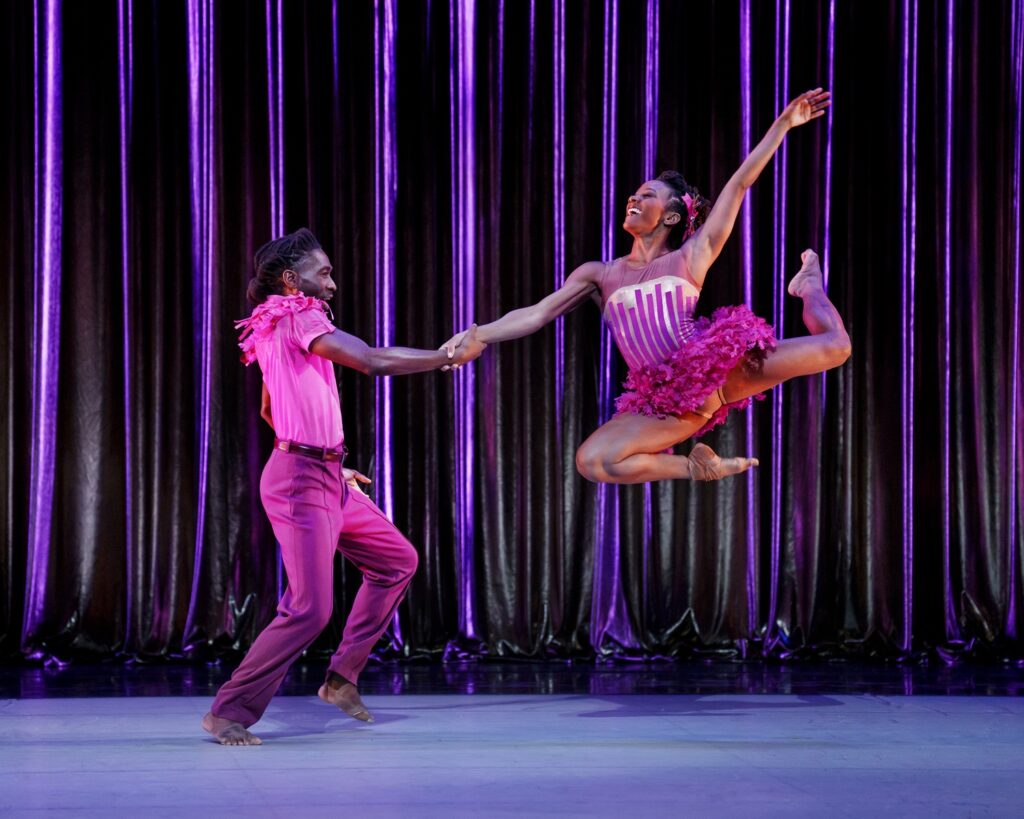
With a disco ball, a big crowd of exotic dancers clad in sparkling beaded costumes and feathered headdresses, and music by Coleridge-Taylor Perkinson, Ailey magnificently recreates the Harlem jazz scene. The dancers, like characters in a musical number from a vintage era film, seem to emulate Parker’s style, swinging and glamming with smooth ease.

Excerpt 2 is giddy pleasure, with costumes of red jumpsuits, tails and dancing stick, white suits and red dresses. It is color, joy, and the excitement of top-notch dancing.

When Alvin Ailey started in 1958, he envisioned a company dedicated to enriching the American modern dance heritage and preserving the uniqueness of the African American cultural experience. Since then, his troupe has continued for 66 years with only three artistic directors, the most recent (Robert Battle) since 2011. Of its 32-member ensemble, many have been with the company for more than ten years.

Stability and continuity are hallmarks of the Alvin Ailey company. So is ending its performances with Ailey’s 1960 masterpiece, Revelations.

Even before the second intermission was over, the audience was writhing in anticipation. Like concertgoers who want to hear their musical idols sing the hit song they know all the words to, these Alvin Ailey groupies were primed and ready. With the first notes of the hauntingly beautiful spiritual “I’ve Been ‘Buked,” they were clapping. By the time the curtain rose a few moments later, they were cheering loudly.

And for good reason.

Ailey’s classic is a wonderous tapestry of universal themes, emotion, symbolism and — of course — mind-bogglingly exquisite dancing. No matter how many times I have seen it, it never gets old and it never gets boring because I always notice something for the first time. Revelations somehow manages to combine the comfort of greeting an old friend with the delight of discovering something new about them.

Divided into three sections, the 36-minute piece was inspired by Ailey’s “blood memories” of growing up in rural Texas during the American Civil Rights Movement of the 1960s. “Pilgrim of Sorrow” is an appeal to God for relief from sorrow and destitution; “Take Me to the Water” represents baptism and the welcoming to the church as a full member; and “Move, Members. Move” depicts a traditional Southern Baptist church service.

Four pieces in particular resonated on this most recent viewing. “I’ve Been ‘Buked” opens as a mass of dancers fitted together into a fluid triangle that rises and falls, a pulsating, breathing organism. I never cease to be amazed by the “wow” factor of this use of space and bodies and by the grace and plasticity of the dancers’ arms.

“Fix Me Jesus” is a gorgeous duet that ends in a breathtaking arabesque. Three men race around the stage in “Run Sinner Man.” Their muscular moves against a backdrop of pink and red satanic flames heighten the feeling of frenzied entrapment. In “You May Run On,” those delightful fan-flicking congregational women are a swarm of bees, gossiping and forming fluid cliques. Like hens coming home to roost, they carry their milking stools and fans, plopping themselves down whenever and wherever they please. The effect is charming.

Notwithstanding the above, Revelations really is a piece that must be experienced live to be understood and appreciated. Reading (and writing) about it is simply no substitute. Its passion and power are palpable. The choreography, with its thrilling athletic leaps, cheery jubilance and tender pas de deux, is peerless. Its ten individual dances, from “I Been ‘Buked” to “Rocka My Soul in the Bosom of Abraham,” are stand-alone masterworks. Strung together as a story that is both timeless and timely, it is a magnum opus that must be witnessed live — again and again. Just ask anyone who was at the Saturday matinee.

Thanks to the Celebrity Series of Boston, Alvin Ailey American Dance Theater makes an annual visit to Boston. If you missed it this year, promise yourself you won’t make the same mistake in 2025.

Alvin Ailey American Dance Theater. Presented by Celebrity Series of Boston. At Boch Center Wang Theatre through May 5.

For more information, go to www.celebrityseries.org/

The Israeli Dance Company Vertigo Hit It Out of the Park with ‘MAKOM.’

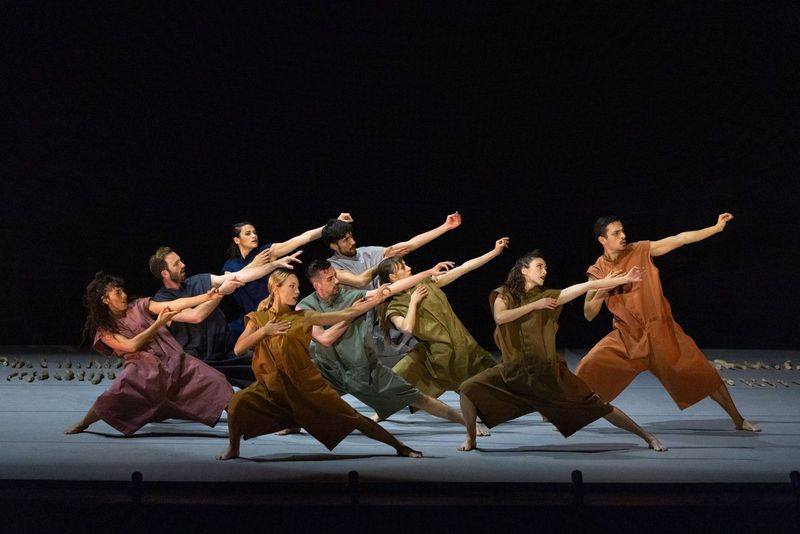
MAKOM – Vertigo Dance Company. Choreographed by Noa Wertheim and Rina Wertheim-Koren. Music by Ran Bagno; Lighting Design by Dani Fishof-Magenta; Costume Design by Sasson Kedem; Stage Design by Zohar Shoef. Presented by Celebrity Series of Boston at the Boch Center Shubert Theatre. Run has ended.

By Shelley A. Sackett

Renown Jerusalem-based contemporary dance company Vertigo does much more than its modest claim of “exploring the creative process.” Artistic Director and Co-Founder Noa Wertheim’s newest work, MAKOM (Hebrew for “place”), breaks new ground with its exciting blend of storyline, emotion, sound, and movement. The result is an evening-length journey that takes us to a deep place within and without ourselves, where language is more than words and meaning is more than content.

If that description sounds a little trippy, it’s because Wertheim and her spectacular troupe of nine dancers defy pigeonholing and quotidian dance performance vernacular. Wertheim listens to the movement of her body, watches her dancers improvise, and builds the choreographic narrative from that core out. Her overlying concept evolves from the movement, bottom-up rather than top-down.

She is keenly observant and deeply introspective, committed to earthly and spiritual elements, and the rich work she creates is nothing short of magic. Only after she has finished the choreography does she invite composer Ran Bagno to create musical accompaniment. The synchronicity of sound and movement that results is exceptional.

MAKOM can mean a real or imaginary place, and to Wertheim, it is a spiritual refuge, a home away from the fray of polarities and conflict where inner equilibrium opens the door to unity and collaboration. Connection, awareness, paying attention and the freedom to reject order are the main ingredients. Mysticism and meditation add intoxicating spice.

In MAKOM, wooden sticks are the only props. The backdrop is black matte and the dancers are clad in sack-like costumes of muted earth tones. Throughout the piece, they come together and then drift apart, undulating like water one moment and exploding like crackling flames the next.

There is joy, whimsey, and extraordinary talent in the choreography and its execution.

Thanks to spot-on lighting and sound, the dancers are the focus. Wertheim uses their bodies (especially the intertwining and draping of arms and hands) to create organic wholes out of many parts. Hers is a true company. While there are standout individuals (Sian Olles is impossible to look away from, even when hidden in the back, which — thankfully — she rarely is), there is no showboating or acrobatic theatricality. These nine dancers seem to share a single heartbeat.

Duets, in particular, focus on the push-pull fluidity of relationships as partners drift in and out of solos and various dyads. Dancers caress each other with tenderness one moment, then leap apart and drag one another across the floor.

Olles and Tommaso Zuchegna are particularly enthralling in a gorgeous pas de deux that is both simple and dramatic. Olles is like quicksilver, and she uses every molecule of her impossibly lithesome body to mesmerize and enchant. When she and Zuchegna interweave their arms and move in and out of the spotlight, the luminosity of their limbs creates a magical forest where humans and nature truly are one.

Towards the end, the captivating Olles sheds her outer garment and dances in a thin, delicate white slip. In a dramatic turn, other dancers collaborate to assemble a makeshift ladder out of the prop poles, which Olles balances atop and hinges over. The effect is simultaneously of calm and turmoil, togetherness and individuality, strength and weakness.

When the dancers dismantle the ladder, they construct the beginning of what becomes a bridge. Tentatively, some hold hands. Some explore the bridge, crawling up from opposite ends to meet in the middle and form a single, symbiotic unit. Some practice coupling, parting, and recoupling.

Finally, in a burst of hope, joy, and community, all nine join hands and dance together, encircling the bridge that will allow them to return to their makom, that place of balance and peace.

Wertheim has spoken eloquently about the need for humans to strive for the unity and wholeness that speaks to the fundamentals of the human condition. With MAKOM, through movement rather than words, she has shown us one path that can lead us to that place that brings us closer to ourselves by bringing us closer to ourselves.

‘Message In A Bottle’ is a Sublime Synchronicity of Song, Dance and Story

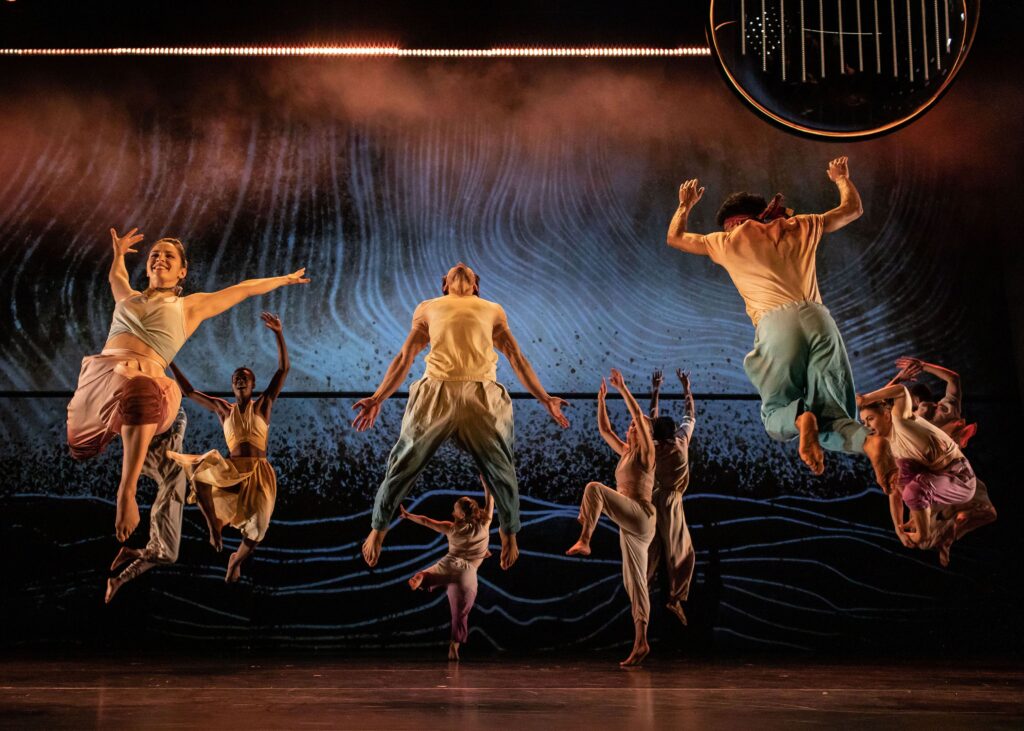
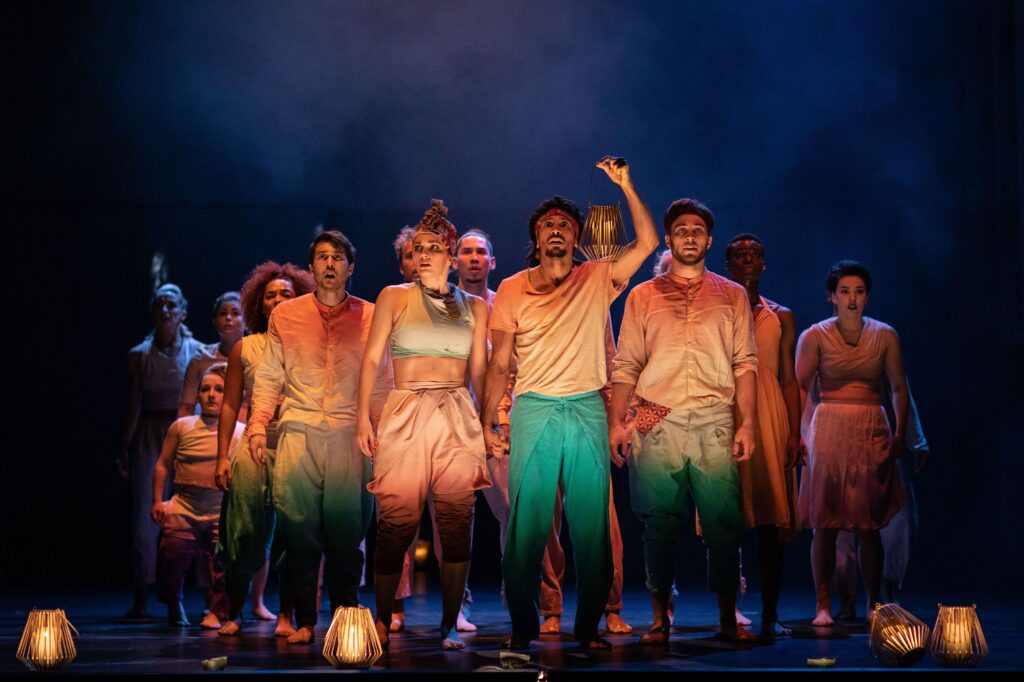
‘Message In A Bottle’ at Emerson Colonial Theatre

By Shelley A. Sackett

The only negative comment that anyone could possibly utter about the earth-shattering Message In A Bottle is that it is an unforgivable shame that its Boston run is a mere five days (seven performances). My suggestion is to interrupt reading this review, trust the reviewer, and jump on your computer to secure tickets while there might still be some left.

Yes, it really is that good.

Since Sting burst onto the music scene with The Police four decades ago, his eclectic styles, keen sense of lyrical storytelling, and hypnotic voice have earned him 17 Grammys, 25 American Music Awards, and 2 MTV Music Awards. He is known for his sociopolitical critiques as much as for his virtuoso musicianship.

Thanks to the virtuosity of British Oliver Award nominee Kate Prince (whose renowned narrative choreography includes West End theatrical hits Some Like it Hip Hop, Into the Hoods, and Everybody’s Talking About Jamie), 28 of Sting’s iconic songs have been transformed into the score for Message In A Bottle, Prince’s phenomenal newest production, which she created, choreographed, and directed.

Master of hip hop, break dance, modern, swing, ballet, and street styles, Prince brings 23 members of her prodigious ZooNation dance company to daze and amaze their Boston audience with their flexibility, acrobatic prowess, and sheer stamina. At times, they seem to float in defiance of gravity, pure gossamer, and magic.

Prince’s storyline focuses on civil wars and the global migrant crisis they have spawned. Through the experiences of one innocent family (father, mother, and three teenage children) who become refugee collateral damage, she shows the wrenching toll exacted on these victims.

She uses Sting’s lyrics, the dancers’ prodigious acting skills, and first-class lighting (Natasha Chivers), set design (Ben Stones), costumes (Anna Fleischle), and video (Andrej Goulding) to narrate this emotional, full-length tale.

Even before the curtain rises, Message In A Bottle makes it clear that this is not simply a dance concert. Creative sparks are everywhere, starting with the opening song (“Desert Rose,” which inspired Prince to create the production) set against giant shadow silhouettes that mask dancers behind a gauzy drape. The drape lifts, revealing a minimalist but effective set with a huge screen backdrop that displays mood-altering graphics. A simple open box-like structure will shift use and mood throughout the production depending solely on how it is lit and how the dancers treat it.

We are thrust into the joyful, bustling thrum of a small village. People are happy. A man (the father) does acrobatic head dancing, then leaps and gyrates with superhuman speed and lightness. The dancers wear brightly colored costumes. There is a spritely playfulness in their steps.

Suddenly, bombs explode, menacing soldiers show up, and this peaceful community is peaceful no more. Violence and danger are now armed and in charge. Costumes change from primary to earthen tones.

Many villagers are sent to a refugee camp, where they are humiliated and tortured. Costumes again change, this time to gray, the benign box in center stage becomes a jail, and rape, pillage, and death are hinted at.

Sting’s “Don’t Stand So Close To Me” and the lyric “To hurt they try and try” are especially powerful and spot-on soundtracks.

Our family flees across the ocean on a flimsy raft, eventually having to separate to safer ground as strangers in strange lands.

“Rescue me before I fall into despair…I’ll send an S.O.S. to the world,” Sting sings as Act I ends somberly.

Act II is more uplifting, though to her credit, Prince does not tie it all together in a happily-ever-after bow. The daughter ends up in a Tahiti-like community where everyone wears long, billowy green skirts and offers her love, safety and a fresh start. Haunted by her trauma and missing her family, she nonetheless latches on and stays.

The two brothers find love, one in the arms of a man, the other in the arms of a woman. (ZooNation is a true company. None of the dancers have named headshots, so I can’t applaud them separately. However, the impossibly willowy blond who plays the bride is the production’s knockout standout.) The scenes of their rebound, with sensational pas de deux, are emotionally tender and artistically astonishing.

Although the siblings may never find each other again, the ending is hopeful; they are together in spirit. They have each found a new life that allows them to live in inner and outer peace.

It is not easy to describe the sheer miracle of this show. The 23 dancers move as a single unit, heaving and weaving in controlled yet casual waves as they leap, twirl, and use their limbs as organic punctuation. Yet individuals become recognizable, especially the blond bride and whirling dervish who play the father in the opening scenes. What a pleasure — and how noticeable — that Prince has brought members of her London-based company on the road with her instead of relying on a touring company to step into their impossible-to-fill shoes.

Prince’s choreography and direction are unquestionable genius. She (and dramaturg Lolita Chakrabati OBE) have woven together a contemporary story about the chaos and upheaval in the world as over 100 million people—more than half under age 18—are forced from their homes only to be greeted as unwelcome immigrants when they seek shelter elsewhere. And they have done it using the language of dancers’ bodies instead of spoken dialogue. The sheer dramatic power of this feat can neither be overstated nor overpraised.

The coordination of set, lighting, costumes, sound, and videography changes tone, place, and time in subtle and effective ways. The boat scenes, in particular, evoke what it would feel like to be at the mercy of both politics and roiling seas.

The lighting is organic, becoming a character that evokes woodcuts, rain, a prison, a love nest, and lush landscapes. In “The Bed’s Too Big Without You,” projected images and razor-sharp choreography and direction create a diorama that the audience can just slip inside.

While the dancers and the realness they bring to the stage can’t be overemphasized, the night really belongs to Sting, who re-recorded his songs for this production, many with female guest vocalists. He has had so many hits over the decades, changing genres and flowing from The Police to various musical partnerships and solo endeavors, that it is easy to forget what a brilliant songwriter and musician he is. Prince has cherry-picked the most perfect lyrics to narrate her story, and hearing this playlist elevates Sting’s work to that of a full opera score. Andrew Lloyd Weber can only be pea green with envy.

This show must be seen both because of its raw and relevant message and because it celebrates the extraordinary feats humans can achieve when they work together to create instead of to destroy.

‘Message In A Bottle’ — Music and Lyrics by Sting. Directed and Choreographed by Kate Prince. Music Supervisor and New Arrangements by Alex Lacamoire; Set Design by Ben Stones; Video Design by Andrej Goulding; Costume Design by Anna Fleischle; Lighting Design by Natasha Chivers; Sound Design by David McEwan. Presented by Sadler’s Wells and Universal Music UK Production with ZooNation: The Kate Prince Company at Emerson Colonial Theatre, 106 Boylston St., Boston, through March 30.

For tickets and more information, go to: https://www.emersoncolonialtheatre.com

Exotic “Grupo Corpo” Troupe Combines Exceptional Dancing with Brazilian and African Rhythm for a Spectacular Evening of Excitement and Adventure

“Grupo Corpo” Artistic Director – Paulo Pederneiras; Choreographer – Rodrigo Pederneiras; Presented by Celebrity Series at Boch Center Shubert Theatre. Run has ended.

By Shelley A. Sackett

Founded in 1975 by Paulo and Rodrigo Pederneiras, the Brazilian dance company Grupo Corpo (meaning “Body Group” in Portuguese) is renowned for its unparalleled blend of popular Brazilian culture, African rhythms, and classical technique.

At last Saturday night’s performance, the troupe treated its audience to a mesmerizing evening of ingenious choreography, tireless, virtuoso dancers, inventive lighting and stage design, and pulsating, tribal-tinged music by Bahian songwriter Gilberto Gil and the Brazilian jazz band, Metà Metà.

The concert was as thrilling, riveting and entertaining as it gets.

In the first piece, “Gil Refazendi (Gil Remaking),” a subtly shifting abstract image of unfolding sunflowers is background to a stage lit by simple, single white light spots. (Scenography and lighting by the talented Paulo Pederneiras). The jazzy, infectious beat of ancestral drums, electronic distortions, African percussion gourds, and woodwinds sets the mood.

Known as the godfather of Brazilian music, Gilberto Gil’s compositions are high energy and uplifting, impossible not to sway and toe tap to. Conceived and then, post-pandemic, fully reconceived by choreographer Rodrigo Pederneiras, “Gil Refazendi” contains themes of renewal, rebuilding, and revitalization.

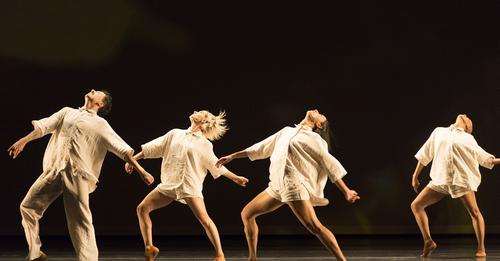
Female dancers explode onto the stage, alighting like beams of Tinkerbell magic clad in oversized white raw linen shirts and scanty shorts. The male dancers follow, dressed in the same breezy material cast as casual shirts over billowing pants (Costumes by Freusa Zechmeister). The effect is smooth, graceful, and playfully sexy.

Under Pederneiras’s mind-boggling choreography, the dancers stretch, pirouette, leap and undulate to the varying strains of samba, bossa nova and rock. They dance solo, as couples and in various groupings.

Although each dancer has their moment in the spotlight, what resonates most is the awe-inspiring synchronicity of the twenty-member troupe. When on stage as an ensemble, they move as a single organic whole. Not one wrist flicks out of tempo; not one back arches higher than another. That degree of skill and discipline is nothing short of astonishing and a rare pleasure to behold.

The second piece, “Gira,” is less abstract and more somber in tone. It is based on the rites of “Umbanda,” one of the most widely practiced Brazil-born religions that pulls on traditions from West African practices, Candomblé, Catholicism and others. In some Umbanda rituals, participants release control of their bodies to the spirits of ancestors or deities in what’s described as an altered state of consciousness.

Pederneiras’s choreography reflects gestures and movements he witnessed during actual ceremonies. There is a hint of menace in the air, particularly during the male/female couplings, which frequently teeter on the edge of violence before withdrawing back to more tender territory.

Male and female dancers are dressed identically, with naked torsos and white skirts of raw linen. Red paint on their necks adds a formal, sacramental touch. Again, the dancers are impossibly lithesome, transitioning from jolts of electric voltage to supple melting seamlessly. That they are dressed identically further blurs the edges between solo and troupe, between the individual and the collective.

Pederneiras started to choreograph in 1978 and has become known for the way in which he constructs sophisticated dialogues between music and dance using the bodies of his dancers as his interpreters. His work is a thrill to behold and one-of-a kind, a genuine reimagining of the ways in which humans can harness, express and appreciate the magic of creative energy.