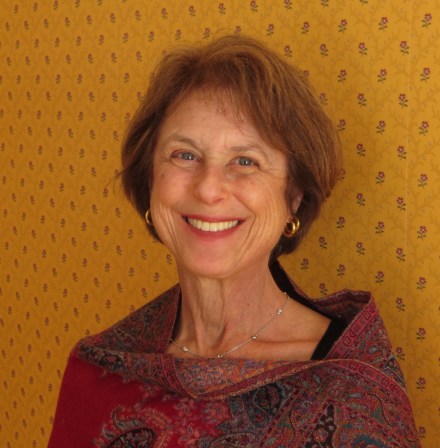
Rosh Hodesh, Mother’s Day and Me


I am a mommy-in-the-middle: I have a mother and I am a mother. I get a lot of pleasure from both roles, but every year, Mother’s Day falls flat for me. I’m so busy being either mother or daughter that I never feel a personally meaningful or satisfying connection.


Yet, I certainly connect to being a mother. I just don’t connect to Mother’s Day.


So I decided that this year, rather than accepting and ignoring the hollowness of Mother’s Day, I would dig deeper until I discovered something that resonated with me in the way traditional Mother’s Day was supposed to, but didn’t.


Before discarding it out of hand, however, I thought I should learn more about Mother’s Day. It all started in the 1800’s when Ann Reeves Jarvis, an Appalachian social activist and women’s event planner, created “Mother’s Day Work Clubs” to help educate women about how to care for their children and keep them healthy. After the war, she organized “Mother’s Friendship Picnics” to encourage Confederate and Union loyalists to ignore their differences and remember their common bond of motherhood.


When Ann died, her daughter Anna wanted to celebrate her beloved mother. She organized an honorary event in West Virginia on May 10, which soon spread to a number of states. In 1914, President Woodrow Wilson designated the second Sunday of May as Mother’s Day, declaring that the holiday offered a chance to “[publicly express] our love and reverence for the mothers of our country.”


Anna’s idea was that children would spend the day with their mothers in appreciation of all they had sacrificed for them. When the day quickly turned into a retail gold mine, she was so disappointed that she spent the rest of her life fighting to have its holiday status revoked. She failed, and by 2014 Americans spent almost $20 billion on Mother’s Day goods and services.


While building personal bonds among mothers was a terrific legacy worth preserving, Anna Jarvis had correctly recognized that her original Mother’s Day had morphed into something commercial and trivial.


Many cultures and religions — including Judaism — have other ways for women to gather and pay homage to their unique feminine qualities.


We Jewish mothers are lucky to have Rosh Hodesh, the first day of the Jewish lunar month, which coincides with the new moon. It is a minor festival that has long been associated with, and sacred to, women. Midrash (biblical legend) holds the holiday was given to women as a reward for their refusal to give up their jewelry to help create the Golden Calf.


Women’s Rosh Hodesh groups started springing up in the 1980s as a way to revive its observance in a modern, more meaningful way.


My own introduction to Rosh Hodesh took place soon after moving to Swampscott in 2001 when I was invited to join a Hadassah evening of study and community. The focus was Rosh Hodesh. We each received a copy of “Moonbeams”, Hadassah’s guide to Rosh Hodesh modern practices. It still calls to me, the enchantment of its watercolor cover and thoughtful readings undiminished.


The next year, my daughter celebrated her Bat Mitzvah on Rosh Hodesh Sivan, which happened to fall on Mother’s Day. Rosh Hodesh and I had some sort of special bond, but the connection wasn’t yet clear.


Then, about five years ago, I learned to chant the Rosh Hodesh Torah parsha, which I have done almost every month since, always using my daughter’s Bat Mitzvah yad. Last week, at Rosh Hodesh Iyar, something felt different.


I felt a spark of kinship with the spirits of all women who ever stood where I stood, especially my daughter and my mother when the three of us shared the bimah in celebration of her Mother’s Day Bat Mitzvah 15 years ago. How had I forgotten?


That personal, spiritual way to connect with Mother’s Day I longed for was right in front of my eyes all along. All I had to do was to open them and notice.


This year, when I send that Hallmark card and buy that Mother’s Day gift, it will be with a full and grateful heart. Mother’s Day is my holiday too.


Shedding a Special Light on Hanukkah at the MFA


It was beginning to feel a lot like Hanukkah at the Museum of Fine Arts last Wednesday when the Shapiro Family Courtyard was transformed into a large-scale celebration for the senses. The oversized interactive menorah cast its magic light over the crowd as some swayed to Ezekiel’s Wheels Klezmer Band, some created their own menorahs at the nearby crafts table, and some checked their official program guide, trying to fit as many of the evening’s overlapping art, music and storytelling offerings into their time schedule as possible.

menorah-making

Young and old gather in the Shapiro Family Courtyard to create one-of-a-kind menorahs.


Harriet and Jeff Brand of Marblehead were among the more than 1,000 attendees. At the third annual event “It’s just so festive and wonderful to see all the families here,” said Harriet, as a group of toddlers scrambled past. “It’s exciting the MFA is recognizing the joy of Hanukkah,” added Jeff.


“Hanukkah, the Festival of Lights” was presented by the MFA in partnership with the Combined Jewish Philanthropies of Greater Boston (CJP) and the newly formed Jewish Arts Collaborative (JArts), with support from the Consulate General of Israel to New England.

menorah2

The large-scale, interactive menorah changes whose flames change color as visitors approach.


This year’s celebration featured “Inworlds”, a cutting-edge mixed reality short performance created by Secret Portal in association with Dudley Square Studios that was as experiential as experimental. A live actor and a volunteer who wore a virtual reality headset interacted on a stage bathed in projected visuals that mirrored what the volunteer was seeing. The first-of-its-kind exploration told a story of loss, miracles, friendships and discovery, meant to reflect the miracle of Hanukkah itself.


For Laura Mandel, JArts Executive Director, this was the highlight of the 2016 event, and not just because her husband is part of the creative team behind it. “I have loved watching the evolution of our virtual reality endeavor. The end result is a beautiful look into the most current technology out there,” she said. “It excites me that we can inspire artists to push these boundaries in innovative ways, all tying us back to the miracle and illumination of Hanukkah.”


JArts was launched last December when the Boston Jewish Music Festival and New Center for Arts & Culture joined forces to create a bold new initiative to share the history, artistry and universality of Jewish Culture. Joey Baron, who co-created the Boston Jewish Music Festival with Jim Ball, is JArts Creative Director.


Baron’s selection of the evening’s musical events included a Hanukkah sing-a-long with cantor and klezmer clarinetist Becky Khitrik, the klezmer band Ezekial’s Wheels, a group Boston Jewish Music Festival helped introduce to Boston audiences, and the award-winning Nigun Chamber Ensemble.

nigun

The award-winning Nigun Chamber Ensemble perform Jewish songs from pre-war Eastern Europe.


Baron was most enthusiastic about Wendy Jehlen’s performance. Jehlen is founder and artistic director of Anikaya Dance, which weaves together music, dance and storytelling from disparate traditions and different ways of understanding.


“I’m not all that much of a dance fan, but there’s nothing like experiencing a dancer performing to live music in such an inspiring setting as a museum gallery setting. I think it could be magical,” he said.


Throughout the evening, “Spotlight Talks: Judaica” explored works of Judaica in four galleries with 15-minute talks that featured exploration of one or two specific pieces. A panel of curators, artists, Rabbis and educators discussed Judaica and Judaism at the MFA, in Bosoton and beyond.


No Hanukkah festivity would be complete without gifts, and the MFA celebration was no exception. The crowd eagerly awaited the unveiling of the just released 2016 Hanukkah stamp, its official party favor of the evening. The United States Postal Service’s official representative did the honors with great flourish to the sounds of snapping cameras and cell phones and robust claps and cheers.


usps

A United State Postal Service representative officially unveils the 2016 Hanukkah stamp.

But it was the installation of the giant menorah that really stole the show. The unique art menorah installation, “Step To Hanukkah Lights”, uses advanced technology to enable visitors to “light” a menorah by stepping on a platform with nine, free standing 8-foot candles. When they approach each candle, their proximity changes the menorah’s colors. The number of people close to the menorah and to each other alters the intensity and the color of the “flames.” It is quite something to behold and even more amazing to experience.


The menorah will remain on display at the MFA for two weeks and was created by a team of three local artists: Saul Baizman, Fish McGill and Andrew Ringler.


Neil Wallack, chair of CJP Board of Directors, was one of eight who offered remarks prior to the candle lighting. He referred to the evening as illustrative of “our combined efforts to repair the world. The light in our community gets brighter when we are together.”


After the menorah was lit, everyone joined in singing the Hanukkah prayers. “I get goose bumps every time I see 1,000-plus people singing Hanukkah blessings in the courtyard. That moment is the definition of community to me,” said Mandel, holding her squirming 18-month old.

Justice Is Not Denied in “Denial”


By Shelley A. Sackett


When historian Deborah E. Lipstadt walked onto the stage on September 22 for a Q&A after a preview of the film “Denial”, she was asked what it felt like to be portrayed by the Academy Award-winning actress Rachel Weisz. “It was surreal,” she said with a laugh, noting that the most remarkable part was hearing her own Queens accent perfectly mimed by the English film and theater star.


But with that, any light-heartedness faded as discussion turned to her real life role as defendant in a British lawsuit brought by Hitler admirer and “historian” David Irving. After Lipstadt labeled him a Holocaust denier in her 1993 book, “Denying the Holocaust: The Growing Assault on Truth and Memory”, Irving sued her and her publisher, Penguin books, for libel, claiming her false statements had harmed his reputation.


Her subsequent ten-week legal battle in 2000 to defend herself and establish the “historical truth” that the Holocaust did indeed occur formed the basis of her “History on Trial: My Day in Court with a Holocaust Denier” (2005), the book on which playwright David Hare’s script for “Denial” is based.


denial2

Rachel Weisz as Deborah Lipstadt in the true story, “Denial”.


As Irving knew, in Britain libel laws favor the plaintiff. The defendant must prove that statements the plaintiff considered libelous, or false, are indeed true. In this case, Lipstadt had to prove that the Holocaust really happened, and that, therefore, Irving intentionally lied when he insisted there were never any gas chambers at Auschwitz and that the Nazis had never murdered any Jews.


As if this isn’t complicated (and heart wrenching) enough, Lipstadt and her team had two additional stumbling blocks. The first was a lack of physical evidence. The team had to amass their case despite the facts that the Nazis never allowed photographs of prisoners being gassed in Auschwitz and further covered their tracks by destroying the gas chambers.


The second was defense counsel’s decision not to allow Lipstadt or any Holocaust survivors to testify for fear that Irving, who was acting as his own attorney, would humiliate and exploit them. For Lipstadt, this was worse.


“A trial is not therapy,” Lipstadt’s British solicitor, Anthony Julius (Andrew Scott, known to TV’s “Sherlock” fans as Moriarty), tells her. Furious, she tries to make him understand that it is not their own catharsis the survivors seek. “You think they want to testify for themselves? It’s not for themselves. They want to give voice to the ones who didn’t make it.” Unmoved, Julius replies, “It’s the price you pay for winning.”


The bulk of the film centers on the trial and all the testimony comes directly from the actual trial transcripts. “This was a film about truth and it had to be truthful,” Lipstadt said during the Q&A. Although some of the film’s detailed court procedures may be confusing (and boring to a non-attorney), the exchanges between Irving (Timothy Spall) and the defense’s Scottish barrister Richard Rampton (Tom Wilkinson) crackle, due in large part to the stellar acting of both.


Spall, who recently starred in “Mr. Turner”, has a rubber face perfectly suited to playing the duplicitous and self-impressed Irving. One minute, he is all smarmy self-justification, buttering up the judge and showboating for the spectators. The next, he is at his most infuriating, spewing diabolical anti-Semitic racist invectives and then playing the victim, accusing Lipstadt of tarnishing his reputation with a “verbal yellow star”.


The always-terrific Wilkinson brings weight and nuance to a cool-headed performance that hints at the roiling emotion lurking just below the surface. The film’s most satisfying moments are when his Rampton slyly lures Irving in during cross examination, then ferociously pounces, drawing and quartering his squirming prey.


Its most moving scene is during the legal team’s visit to Auschwitz. When Rampton steps on a barbed wire shard on his way to the gas chamber entrance, he suddenly understands the enormity of the atrocity perpetrated by the Nazis. To imagine a barefooted Jew stepping on a piece of barbed wire on his way to his imminent murder is unspeakably unjust — and real.


Given the extraordinary pre-release press “Denial” has engendered, it can hardly be a spoiler to reveal that Lipstadt won her case. The Holocaust scholar, however, hopes the biggest takeaway of the film is not her victory, but a recognition that not all opinions merit defending.


“There are not two sides to every story. The Holocaust happened. Slavery happened. There are some things you cannot debate,” she said. “I will debate you on the facts. I will not debate liars.”


Noting that earlier in the day, the New York Time used “lie” to describe some of the things Donald Trump has said, Lipstadt is worried about what lies ahead. “We are living in a time when lying has become mainstream. The needle has moved so far,” she said. “There is an anti-intellectual, anti-factual attitude which is frightening.”


She paused for a moment and then directed the Q&A session towards the audience. “Where does that put us? As academics and people interested in social justice, what do we do?” she asked.


Rosh Chodesh, Elul and Me

Every month, I look forward to Rosh Chodesh. This started in September 2001, soon after moving to Swampscott from Denver, when I was invited by some new acquaintances to join them at a Hadassah evening of study and community. The focus of the evening was Rosh Chodesh, and we all received a copy of “Moonbeams,” a guide to Rosh Chodesh celebration and ceremony. The cover charmed me with its watercolor image of a woman in tallit, backlit by a pink sky filled with clouds, stars and moon. Fresh from Denver’s two-year Florence Melton Jewish studies program, I was thirsty for traditional knowledge and also contemporary customs. “Moonbeams” had both, with poetry and other writings as a bonus. And it was so pretty.

Then in 2002, my daughter was bat mitzvahed. On a Sunday morning. On Rosh Chodesh. On Mother’s Day. The stars and moon had aligned. I was like the mother of a bride who wants a barefoot potluck wedding in a pasture in Vermont instead of the sit-down, catered affair I had envisioned for her. My connection to this event eclipsed hers. My daughter soldiered through it all, and still shudders at the recollection of the process and the day itself. For me, it was another sign that Rosh Chodesh and I had some sort of a special bond.

All this rose to a new level when I started attending morning minyan on a regular basis and realized that my favorite ritual, the blowing of the shofar, occurred more often than during the High Holidays. In fact, it occurred monthly, on the first day of every Jewish lunar month. Hearing its ancient call more than compensated for the fact that services that morning, with the additions of Torah, Hallel and Musaf, were twice their usual length.

Next came my learning to chant the Rosh Chodesh parsha from the Torah (so far just parts 1, 2 and 3 but I will master 4 before long). My beloved and dearly missed spiritual guide and minyan companion, Cantor Emil Berkovitz, inspired and encouraged me to study trope at the classes he taught on Sunday mornings. As part of the study, we learned the Rosh Chodesh parsha. Makes a lot of sense if you’re only going to learn one: you get to do it 12 (sometimes 13!) times a year. That’s a lot of bang for the buck. I have read these three parts of the parsha at most Rosh Chodesh services this past year, always using the yod I had bought for my daughter to use at her bat mitzvah.

It was Rosh Chodesh Elul some years back when I discovered that, for the entire month, we blew the shofar every morning (except, of course, Shabbat and the day before Rosh Hashanah). That’s how special Elul is.

Preparing us for Rosh Hashanah and Yom Kippur, Elul begins the month-long process of putting our spiritual homes in order to welcome the New Year, much as we clean our earthly homes to prepare for Passover. It is a sacred time of self-reflection and quiet, private assessment. It is a reminder that each of us matters and that tikkun olam (repairing the world) depends on each of us doing his best.

This morning, Rosh Chodesh Elul 5775, I stood at the torah. I chanted what others have chanted before me for thousands of years and what others will chant for thousands after. With my daughter’s yod lighting my way, I felt blessed by the feeling that in that one moment and by that one act, I was indeed being and doing my very best.

One Handful of Mud at a Time

Pictured above: Professor Mohammed Khallouk

When is the last time you read the same two articles in a Jewish newspaper and an Islamic e-magazine?

This is a story about a Muslim professor and e-magazine publisher and a Jewish writer and editor who saw in each other’s writing an opportunity to broaden the horizons of their readerships. It is a story about hope and possibility. It does not dwell on the challenges that politics, culture and religion pose. Instead, it focuses on common human ground and the way each of us can build a better future, one relationship at a time.

As editor of the bi-weekly Jewish Journal, I received scores of unsolicited articles and opinion pieces. A small percentage of the ones I actually read were appropriate for our publication and of those, I only had room for a handful in every issue.

Every now and then, however, an article would reach out and grab me in a way that I knew I had to publish it. Professor Mohammed Khallouk’s “Can Sworn Enemies Ever Become Friends?” was one.

This is how it began:

“In my youth in Morocco I was taught to hate Jews, and especially Israelis. I was convinced that Jews and Muslims could never become friends and that the relationship between Israelis and Arabs was based on hostility. The reality of cultural and religious pluralism in my new home country of Germany and an examination of Moroccan history, which shows that Jews and Muslims have lived in harmony for centuries, have convinced me that differences in religion cannot be the true reason for the animosity between them in the Middle East today.

I recently traveled to Jerusalem and wrote a travelogue about the experience. My meeting with one Jewish shopkeeper in the Western part of Jerusalem was especially unforgettable. My experience with this friendly and open-minded man named Abraham motivated me to write him a letter, which I included at the end of my book. This letter is a mirror of my experiences in the Holy City on the whole and my experiences meeting Abraham in particular.”

In his letter to Abraham, Professor Khallouk’s describes his revelations while in Israel, the gist of which are reprinted here:

“Even more than at the Holy Sites, I experienced this sense of brotherhood in Jerusalem’s everyday life. There were Jews like you who approached me as a fellow human with neither awkwardness nor fear. Appearance, origin and religious belief were unimportant. You saw me as a person who needed your assistance, and you spontaneously offered your help.

This human interaction has shaped my view of Jerusalem ever since. Jews are henceforth in my consciousness no longer my sworn enemies. I was able to experience them as my friends, soul-mates and spiritual brothers. While I continue to disagree in many key points with the State of Israel’s political stand on the Middle East conflict, Jews in West Jerusalem now matter to me as much as do Arabs and Muslims in the east of the Holy City. You have shown that you understand the importance of humanity essential to both Islam and Judaism.

The experience of seeing people of different cultures and religions coexisting so closely makes me long to return one day to the Holy City. The warmth with which we dealt with each other makes me hopeful that it might also inspire the political and social leaders. This is how political conflict can be overcome. Brotherhood and solidarity need to be the dominant image that Jews and Muslims have of each other.

I recognize your human kindness as a model for the rest of the world as well. This applies not least to German society, in which despite its cultural and political pluralism sometimes indifference and self-centeredness prevail. In Jerusalem I met a Judaism that reaches out to others. The guiding principle can be expressed thus: Only in dealing with the You, can the I find its identity.”

I emailed Professor Khallouk, telling him how much his message moved me and that, while I would have to edit it due to print space constraints, I wanted to publish it. I wanted our Jewish readers to hear a reasoned and reasonable Muslim voice, one that advocated human kindness and empathy, one that, these days and especially recently in the Journal’s pages, is too often ignored.

We exchanged several increasingly friendly emails. His article appeared at the top of the Jewish Journal May 28 Opinion page. Mine appeared at the bottom, an article entitled “Baccalaureate: Not Your Average Graduation Ceremony” that praised the interfaith Tufts University Baccalaureate ceremony for being a powerful reminder that we are members of a common community that embraces, rather than fears, the differences of our separate identities.

When I sent Professor Khallouk the pdf of the Opinion page, he replied with this email:

Dear Shelley,

Thank you very much for the publishing of my  article. It was a great pleasure for me to find it on the same page with your nice literary report about diversity and the baccalaureate service.

If you do not mind I would like to translate  your piece into German and publish the translation on the website of the Central Council of Muslims in Germany

I also wish you a beautiful day and would be happy for another opportunity to work together with you.

Mohammed

The article appeared recently at http://islam.de/26575.php.

The point of the story is quite simple. We can recognize and seize opportunities to shape the future with a foundation of coexistence and compromise, or we can construct it from a place of separation, hostility and stereotyping. Either is possible and both require the same action: human hands, building together, one handful of mud at a time.

Prof. Mohammed Khallouk is a political and Islamic scientist with German and Moroccan roots. He is an expert in Islamic Thought and Politics, Political Islam and is skilled in intercultural dialogue between the West and the Islamic World.

Prof. Khallouk received his Ph.D. in 2007 in Political Science at the Philipps-University of Marburg, Germany. His doctoral thesis dealt with Political Islam in his country of origin, Morocco. His M.A. degree in Political Science at Marburg University in 2003, based on his thesis about the possibility of peace between Israelis and Palestinians, was honored with the German Academic Exchange Prize. He also received a M.A. degree in Arab and Islamic Thought at Mohammed V – University of Rabat, Morocco, in 1997.

Khallouk served as a lecturer in Political Science from 2008 to 2012 at Philipps-University of Marburg and from 2010 to 2012 at the University of German Federal Armed Forces Munich. Since 2014 he has served as Professor for Islamic Studies at Qatar University, Doha.

To read Professor Khallouk’s complete article, go to  http://boston.forward.com/articles/187449/can-sworn-enemies-ever-become-friends/#ixzz3fGMBw3Yy

Baccalaureate: Not Your Average Graduation Ceremony

My youngest recently graduated from Tufts University, marking a rite de passage and the turning of a page for both us. The day before Commencement, we attended his Baccalaureate Service. In the sea of caps and gowns, he was nearly indistinguishable from his 1,250 colleagues. In the audience, among the dewy-eyed adults, so was I. It was hard work to catch each other’s eye as the processional sped past. This was not a personal, private setting to mark a journey from one stage of life to the next. This was the Gantcher Family Sports and Convocation Center, and it was overflowing at its seams.

Yet, unlike the Commencement ceremony the next day, the Baccalaureate Service somehow spun a magic web that connected every individual in the building to each other. Despite the cavernous, detached environment, the substance of the service touched me in a way that was unexpectedly intimate, spiritual and bonding. This was no small feat for an arcane Christian tradition from medieval times.

The original purpose of the Baccalaureate was literally to honor graduates with “laurels of oration” as they cross the threshold into their lives beyond their college years. The ceremony, a religious graduation custom that originated in 1432 at the University of Oxford, was a religious service of worship in celebration of, and thanksgiving for, lives dedicated to learning and wisdom.

At Tufts, the Baccalaureate was coordinated by the University Chaplaincy and the Interfaith Student Council. It marked the last time for the senior class to be alone together as a class. As a parent focused on trying to figure out where 21 years went, it was a helpful reminder that this day was bittersweet for my son too.

It was also a multi-faith celebration that spotlighted the students’ (and their parents’) shared heritage of diversity and common values of learning, service and teamwork. The program emphasized prayer, meditation and contemplation. And live music: jazz, a traditional Gaelic song and a traditional African American spiritual.

Even the brochure felt more like a global prayer book than a graduation agenda. Instead of pages listing individual winners of competitive awards and prizes, the program was chockfull of readings and blessings. The title page pictured the 15 religious and philosophical symbols of the traditions practiced by the Tufts community.

Five “Lessons of Inspiration” illustrated the different ways students from 37 nations and 47 states acknowledged what is sacred to them. The selections came from Hindu, Jewish, Christian, Muslim and Humanist sacred texts. Reading the English translations, it was impossible not to admit and admire their similarities.

Hearing the Upanishad (Sanskrit), the Bible (Hebrew) and the Qu’an (Arabic) in their original tongues was even richer. The languages “felt” holy, both melodious and hymnal. Each prayer spoke of peace, the beauty of life and the dignity of endurance. It was a powerful reminder that, while we are a diverse people that honor and take fierce pride in our separate identities, we are also members of a common community that embraces, rather than fears, those differences.

Anthropologists define rite de passage as marking the passage of a person through the life cycle, from one stage to another over time. What a persuasive and nurturing capstone the Baccalaureate was for these fledgling adults. And for their parents, too.

’24 Days’: Because He Was Jewish

“24 Days: The True Story of the Ilan Halimi Affair” is not an easy film to watch. Based on a memoir written by the victim’s mother, the movie chronicles in excruciating detail the 24 days in 2006 between the abduction, torture and death of a 23-year-old Parisian Jewish cell phone salesman by a group of African and North African immigrants known aptly as the “Gang of Barbarians.” More shocking and disturbing than the physical violence, most of which occurs off camera, is the refusal of the French authorities to even entertain the possibility that Ilan was kidnapped solely because he was Jewish. 


The film opens with Ilan’s mother, Ruth (the superb Zabou Breitman), unflinchingly addressing the audience. “If my son hadn’t been Jewish, he wouldn’t be dead. It happened to me and my family, but it could have happened to others,” she says, leaving no doubt as to Ilan’s fate. Nonetheless, Director Alexandre Arcady skillfully manages to maintain a level of suspense and hope for the next 110 minutes as the events chronologically unfold, no easy cinematic feat.

The story is horrifying. Under the leadership of the savage Youssouf Fofana (a terrifying Tony Harrisson), a gang of multi-racial thugs operates out of a suburban public housing complex, plotting the kidnapping and ransoming of Jews under the theory that Jews are rich and the Jewish community would unite to rescue one of its own. In Ilan’s case, the bait is a sexy leather-clad girl who walks into his store, flirts with him and asks for his phone number. Later that night, she calls, asking him to meet her in a caf. While walking to her apartment, a gang ambushes Ilan and throws him into the back of a van. The girl was paid 5,000 euros.

24 days 2
Fofana (Tony Harisson), leader of the “Gang of Barbarians,” made nearly 700 calls with ransom demands, insults, threats and photos.


When the Halimis receive a ransom demand for more money than they could possibly raise, they go to the police. (Arcady filmed all these scenes in the actual 36th Precinct Police Headquarters, the first
time a film crew received permission to shoot in that building.) The detective in charge of the case enlists a psychologist who specializes in negotiation. The two peg Ilan’s father, Didier (an understated Pascal Elb), as the more cooperative parent and enlist his help in negotiating for his son. He alone will have direct contact with the blackmailers, but the authorities will be calling the shots.

For the next three weeks, he and his ex-wife Ruth field over 650 vile and abusive phone calls, many of them anti-Semitic rants. Despite Ruth’s gut recognition that this is an anti-Semitic crime that does not fit into the government’s cookie-cutter approach, the police stubbornly stick to their conception of the case. Their failure leads to the sad, but predictable, result.

The film’s focus seamlessly shifts from police activity to the Bagneux ghetto where Ilan is held. In scenes eerily reminiscent of the 1964 Kitty Genovese murder (where 38 people heard her cries for help and did nothing), the kidnappers act in broad daylight in clear sight of the hundreds of onlookers who go about their business as if nothing is amiss.

Director Arcady said in a press release that after reading the line, “I would like Ilan’s death to serve as an alert” in Ruth Halimi’s memoir, he knew he was meant to make “24 Days” to bear witness to the martyring of her son, the first young Jew to be killed in France simply because he was a Jew since the Holocaust.

“We return to the old schemas we thought disappeared with the Nazis and the final solution. All the elements were there: a Jew, who is locked away and starved and tortured, before having his head shaved, being disinfected, and thrown into a forest with passing trains, who is later burned… All the themes of anti-Semitism and of the Holocaust were reproduced during the abduction and assassination of young Ilan Halimi,” he said.

The epilogue provides the film’s one bright moment. After Ruth went public on a radio broadcast, the case sparked a national outcry against anti-Semitism and forced the government to treat it as the hate crime it was. Of the 29 suspects brought to court as implicated in the crime, 19 are serving prison sentences, including Fofana whose life sentence is without possibility of parole for 22 years.

Pictured at top: Ilan Halimi (Syrus Shahidi) kisses his mother Ruth (Zabou Breitman) for the last time. Menemsha Films

Celebrating the Miracle of Israel

The emergence of Israel from the ashes of the Holocaust is no less miraculous than the parting of the Red Sea during the Exodus.


Starting today, we celebrate a week of holidays that, like Passover, afford an opportunity to reflect, remember and reconnect to our Judaism. They also link that Judaism to the land of Israel. With Yom Hashoah (Holocaust Memorial Day), Yom Hazikaron (Memorial Day for Fallen Soldiers) and Yom Haatzmaut (Israel Independence Day), we commemorate how and why Israel came to be, and recommit to ensuring the survival of our homeland.

Yom Hashoah (April 16) reminds us that people are capable of unimaginable evil and cruelty. The lessons of the Holocaust and the dangers of passivity are unfortunately still relevant today. A global wave of anti-Israel and anti-Semitic sentiment has spilled over into dangerous acts of violence and intimidation against Jews. Life in the Diaspora remains difficult for Jews. What is different today is that we now have a safety net and its name is Israel.

Yom Hazikaron (April 22) acknowledges and laments the many who died to create and maintain the Jewish state. In Israel, where military conscription is mandatory, many families have suffered losses. For them, the holiday is neither abstract nor remote. They have paid, and continue to pay, the price to keep Israel free so that the world’s Jews have a place they can call home.

Yom Haatzmaut (April 23) commemorates the birth of Israel, the one place that unconditionally welcomes all Jews. On this day, we rejoice that we survived as a people and remember those who sacrificed and perished on our behalf. We forget the contemporary political and religious differences of opinion that may divide us and collectively marvel at the week’s journey from Holocaust to sacrifice to homeland.

What will we take away from this week? Perhaps a sense of responsibility and duty to safeguard Israel’s existence will inspire us to take action to contribute to her legacy. Perhaps awareness that we are all survivors will rekindle an image of a global Jewish family that can cherish Israel’s existence while acknowledging her faults. At the very least, we are reminded that Israel’s existence is nothing less than a miracle that should never be taken for granted.

Last week we ended our Seders with the words, “next year in Jerusalem.” This week we give thanks that, for us, that is a real option.

This originally appeared in the Jewish Journal on April 16, 2015.

Younger Generation Speaks Up for An Infrastructure of Hope in the Middle East

Last summer, Ohad Elhelo received a phone call while he was home in Israel after volunteering to serve in the Protective Edge military operation in Gaza. The Israeli-American Council invited him to address a Combined Jewish Philanthropies-sponsored August 14 “Stop the Terror” rally in support of Israel that was expected to draw 3,000 people in Boston. The 25-year-old Israeli Brandeis University economics and business major wasn’t sure he wanted to accept.

“I believe in delivering productive messages — those that have added value. To go on stage and tell people ‘You must support the IDF’ didn’t seem productive because those people already supported the IDF. That’s why they attended the rally,” he explained.

“I thought, ‘If I am going to speak at this event, I want to give my own message, which is more complicated.’” And more liberal.

Elhelo believes military means alone will not solve the Israeli-Palestinian conflict. It must be paired with a joint Israeli- Palestinian- American effort to rebuild the broken social and economic foundation of Gaza.

He calls this an “infrastructure of hope.”

Elhelo delivered a powerful six-and-a-half minute speech at the rally that went viral almost immediately, reaching over two million viewers http://www.ohadelhelo. com/#!video-gallery/cw47.

“Every round of violence in Gaza weakens the moderates and empowers extremism.

We say Hamas does not want peace and we are right. But being right is not enough. To succeed, we must be smart,” he told the crowd.

“The terrorist infrastructure is not just Hamas. It is also poverty, ignorance, hopelessness, desperation and a lack of political horizon. It is up to all of us — Jews, Arabs, Palestinians, Americans — to build an infrastructure of hope,” he said, summoning the thousands gathered to rise to the challenge of building this joint Israeli-Palestinian organization.

Hundreds of people waited to greet him offstage, many to tell him that they could relate to his words.

“I love Israel and there is no arguing that,” the IDF Special Forces veteran of three military operations said. “Even when I spoke about some sort of criticism for the Israeli government, people were supportive.”

After the rally, he realized he had been given an opportunity to pursue a unique trek.

Right after the Boston rally, Elhelo was interviewed by major TV stations and newspapers in Israel and the United States. He also received invitations to speak at such high-profile fundraising events as the International Lion of Judah Conference of the Jewish Federations of North America, where 1,400 top female contributors of the world donated $27.2 million, and the CJP Major Gifts event in Boston.

At those fundraisers, many people expressed their support for what he was saying. “I came with a message that is slightly different from what some of the peace organizations are doing,” he said, explaining that he doesn’t believe in the “kumbaya” approach of bringing Palestinians and Israelis together to talk about their feelings. “That is basically asking them to do what we want instead of what they want.”

Nor does he think about the leaders when he thinks about role models who can carry a message of collaboration and coexistence. “The current leadership on both sides cannot get along. That is a fact,” he stated.

Ehud 2

Ohad Elhelo and Lidor Cohen served in the Golan Heights, in 2011.

“I think about the entrepreneurs, the students, the young professionals. This is where I want to focus. What do young people care about? What prevents them from working together?” he asked. The answer, Elhelo believes, was they lacked a platform that interested them, one that focused on business startups, entrepreneurship and networking, rather than “coexistence.”

“My message was pragmatic and I needed to pursue this idea with pragmatic people,” he said.

He met with business executives and senior politicians, enlisting them to use their talents, experience and resources to help a younger generation make their voices heard and their constructive energy felt in the region. Brandeis’s senior administration was the first to sign on.

Elhelo explained his idea of setting up a foundation to bring outstanding Palestinian and Israeli students to American campuses to develop their leadership skills and build their own ventures with the goal of developing a new generation of Israeli and Palestinian leadership that will share a powerful vision for a common future. President Lawrence was one of the first to sign on and the Brandeis venture was born.

The cost for the program of two cohorts is $5.4 million, of which Brandeis is committed to contributing $1.4 million. The planning stage is completed and fundraising is in full swing. Projected launch date is either Spring or Fall 2016.

The Board of Advisors and list of mentors includes leaders from Israel, the Palestinian Territories and the U.S.

Under the  program, ten Palestinian and ten Israeli students will come to Brandeis each year for a 15-month Masters program in public policy and business that will focus on negotiations, mediation and leadership skills. Each student will have a mentor who has agreed to participate, including American, Palestinian and Israeli business executives and politicians, including parliament members, heads of security services and senior business executives.

The students will propose and establish their own ventures, up to three per year, from Brandeis and then bring those ventures back to their communities in Israel, the West Bank and Gaza.

Elhelo gave an example of how the program is meant to work.

“If you go to a Palestinian community and ask the students, ‘What do your people care about?’ sometimes the answers will be fascinating. They might tell you, ‘We don’t really mind about the Israeli army but in our village there are no light bulbs on the road and there are many car accidents and that bothers us,’” he said.

If one of the  student ventures were to equip that village with light bulbs, then the single  fellow who returned to his village would be bringing change that the community wanted and needed. “That fellow will be seen as a leader. He is a change agent,” Elhelo said.

In the meantime, the recipient of the prestigious Brandeis University Slifka scholarship is a change agent in his own right. “Collaborative ventures are the answer. They are cheaper than rockets and have greater implications in the long run,” he said.

Pictured at top: Ohad Elhelo addressed the CJP Major Gifts event last fall.

It’s a Good Friday for a Seder

Passover and Easter are highly charged religious holidays. This year, the first Seder falls on Good Friday and it’s a perfect opportunity to reflect on some surprising similarities between the Jewish and Christian springtime commemorations.


Both memorialize important historical events central to the identity and belief systems of Judaism and Christianity. For Jews, the Passover tradition is a powerful link that defines us and binds us as a people to each other and to God. We share the retelling of our Exodus from bondage in Egypt when God promised to save us and we were delivered from slavery to freedom. For Christians, the week of important historical events leading to Christ’s crucifixion and resurrection is the backbone of their narrative as a people. Both stories are full of pain; both stories transform that pain into salvation.

Like Passover, Easter centers on the family and food. The Seder and Easter dinner are sacred times for families to gather, share a meal and renew their connection to their heritage through ceremony. Both holidays transform bread into ritual symbols. We eat unleavened bread, or matzah, to remember our ancestors who fled so quickly they did not have time to let their bread rise. Matzah is both the bread of our affliction and the sustenance of our freedom. For Christians, too, bread is both sacrament and sacrifice in the form of the Holy Eucharist, a wafer that represents Christ’s body.

Finally, both holidays acknowledge reverence for springtime, the season of renewal and rebirth. The egg, symbol of fertility and new life, plays a prominent role at the Seder as we dip a hardboiled egg in salt water to symbolize both new life and sacrifice. After the meatless (and eggless) Lenten fast, eggs became a staple of the Easter meal to celebrate the end of the privation of Lent. Today, dyeing Easter eggs celebrates rebirth through rededication of faith.

While we are certainly aware of the stark religious differences between Jews and Christians that Easter crystallizes, perhaps this year when we sit down to our Seder on Good Friday, maybe even as an interfaith family, we might focus as well on the commonalities that transcend those distinctions. We all cherish freedom, we all love God and, especially this year, we all revere spring.

This originally appeared in the Jewish Journal on April 2, 2015.