The Huntington’s Must-See ‘John Proctor Is the Villain’ Conjures Pure Theatrical Magic

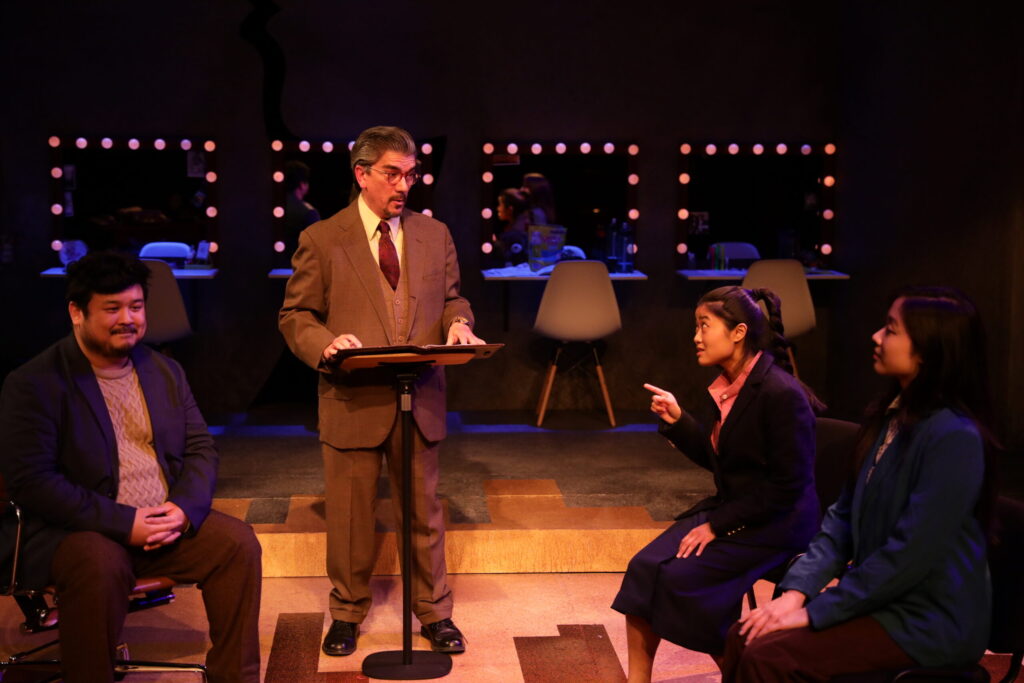
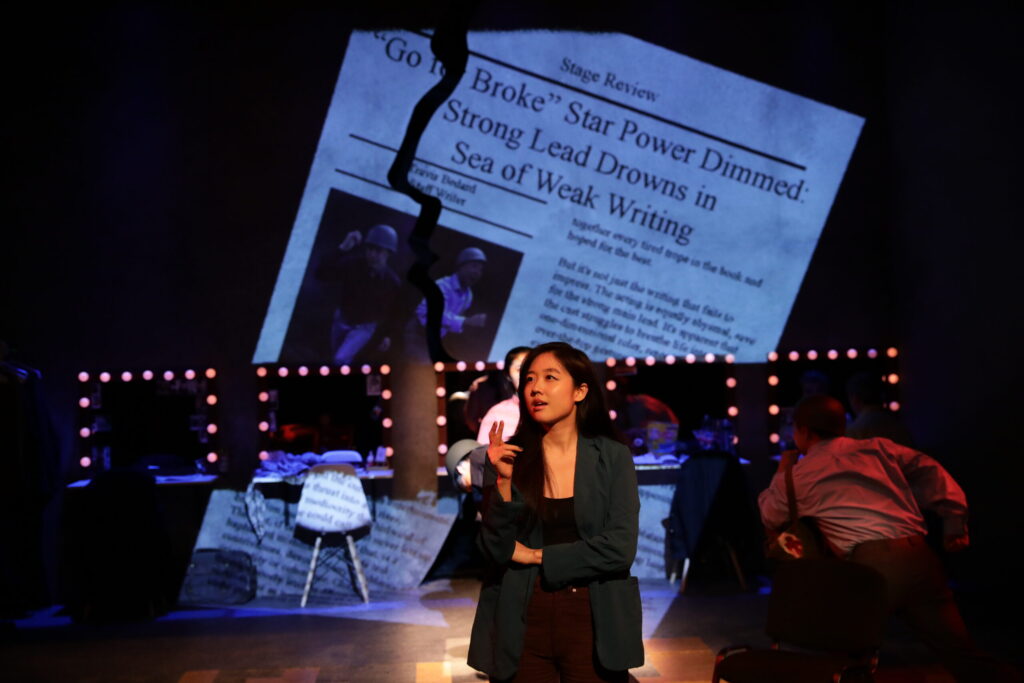
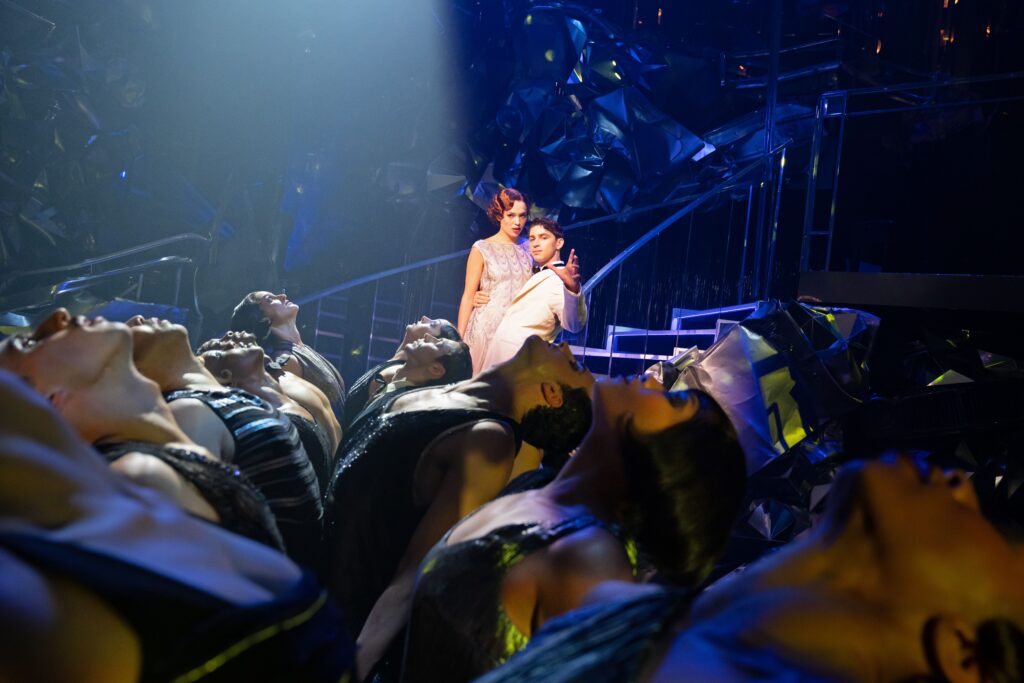
Isabel Van Natta, Jules Talbot, Victoria Omoregie, Haley Wong in ‘John Proctor is the Villain’ at The Huntington. Photo Credit: T Charles Erickson

By Shelley A. Sackett

In 1692, a witchcraft panic in Salem, Massachusetts, led to the conviction and execution of 19 innocent people (14 women and five men) for a crime that not only was never committed but that never happened in the first place.

A mixture of irrational fear, unchecked religious and patriarchal power, and a persecuting mentality led to the emergence of witch hunts and subsequent witch trials.

Arthur Miller fictionalized and immortalized this historical event in 1953 with The Crucible, a mainstay of most high school English Literature curricula. He intended it as an allegory for and indictment of the rabid McCarthyism of the 1950s, when the U. S. government blithely persecuted citizens accused of being communists based, often, on nothing more than innuendo and hearsay.

Fast forward to 2018 and an 11th-grade honors English literature class in rural Georgia, the time and place where “John Proctor Is the Villain,” Kimberly Belflower’s razor-sharp and timely play, is set. The opening scene finds Carter Smith (played by Japhet Balaban), the laid-back, I-could-be-your-buddy teacher, standing in front of a group of bored teenagers, each with their textbook open.

“Sex,” he says. In unison, the students robotically recite the administration and school board approved definition.

We get an inkling of the seven students’ (five girls and two boys) personalities and styles through the intimate banter that ensues. Beth (Jules Talbot), an eager, smart student, complains about squandering lit time for the ten minutes of sex education that the curriculum demands of each class.

Nell (Victoria Omoregie), a new transplant from Atlanta, says she had sex ed in fifth grade. Ivy (Brianna Martinez) is all business and practicality (“Doesn’t it make sense for sex ed to actually come like before people know about sex?”). Raelynn (Haley Wong) is a cheerleader type, scowling one minute and vamping the next. Lee (Benjamin Izaak) is the quintessential poster boy for teenage testosterone, and Mason (Maanav Aryan Goyal) is the class loafer.

We also get a glimpse of Carter and the adoration he culls and basks in. “I know it seems really lame, guys. Believe me, I remember being exactly where you are and feeling like, ‘Are you kidding me?’ but this is the curriculum. These are the facts.”

He is the teacher we all wanted to have in high school — smart, a little goofy, and universally appealing. He culls his students’ trust.

He also has a laundry list of issues, including ones respecting boundaries. Caught in the netherworld between being a teenager himself and entering the adult world of his student’s parents, he evokes both our affection and suspicion.

Olivia Hebert, Japhet Balaban

Following several more excruciatingly boring call-and-response sex ed definitions, Carter explains that the class’s next assignment will be to read and critique “The Crucible.” He teaches it in a fairly traditional way and proclaims John Proctor as the hero of the play.

Proctor, as a reminder for those who don’t remember the details of The Crucible, is the 35-year-old married man who has an affair with Abigail, a teenage girl in his employ. To save his honor, he lies about the affair up until the moment he is about to be hanged and only confesses because he thinks it will literally save his own neck.

Carter deems Abigail, who is disgraced and fired from her job, as the play’s true villainess because she starts the witch hunt that leads to the Salem Witch Trials. “Abigail is like really determined to get revenge. She becomes kind of a ringleader to everyone making these accusations and it gets pre-tty crazy,” Carter explains.

His five #MeToo generation female students don’t quite see it that way. After all, Proctor committed adultery with a teenager, lied about it, and let her take the blame for the affair. They maintain that Abigail’s acts of “revenge” — accusing citizens of consorting with the devil — was the only way for her to achieve empowerment in a theocratic, Puritanical patriarchal society that marginalized and demonized her.

Victoria Omoregie, Jules Talbot, Haley Wong

Shelby (Isabel Van Natta), who has returned to school after an unexplained absence, is particularly incensed. Where is the goodness, she asks, in a man who seduces a teenage girl and then throws her out when his wife finds out? A man who only had to lie to be able to put the whole mess behind him?

Adding to the caldron of budding feminism these five students are stirring is the fact that their request to start a Feminist Club (to “spread awareness, foster dialogue, and ignite change”) has been rejected by the school board. Their guidance counselor, Miss Gallagher (Olivia Hebert), delivers the bad news. When Carter steps up and offers to be its faculty advisor so it can go forward, the pieces are all in place for playwright Belflower to conjure her dramaturgical magic.

And make no mistake. Bridging eras of 17th-century Calvinist Puritanism, 20th-century McCarthyism, and the 21st-century #MeToo movement to create a cogent, insightful, accessible, and – most of all – funny commentary on the issues of male power and female vulnerability and agency is nothing short of miraculous.

The plot of John Proctor Is the Villain is so integral to its message and enjoyment that it would be a spoiler to detail what happens next in this theatrical gem. Suffice it to say that there are enough surprises, twists, and turns to make 100 intermission-less minutes fly by and a climactic finale that is guaranteed to leave you clapping furiously during a standing ovation.

Director Margot Bordelon squeezes every drop of theatrical juice out of this fast-paced, fabulous, must-see play. Under its comic overtones lie deep issues such as female friendship, gender dynamics, speaking truth to power, and patriarchal autocracy. Kudos to Bordelon for aiming equal beams on the light and dark elements of the play’s messages.

To be fair, Bordelon has a lot to work with. Belflower has an uncanny ear for dialogue, and she has penned spectacular characters. Her teenagers are articulate and insightful. They are also silly, petty, and childish. In short, they are believable adolescents, and the cast wears their roles as if they were made to order.

Isabel Van Natta, Jules Talbot, Victoria Omoregie, Haley Wong

Carter, as the John Proctor stand-in, is appropriately smarmy and endearing. He is like jello. He presents as solid but, in truth, is an eely mass of spineless gelatin, and Balaban taps into this duplicity with subtlety and self-assurance.

John Proctor Is the Villain is what good theater is all about. Its storyline is a dynamo of action and intrigue, of pathos and laugh-out-loud humor. Engaging and thought-provoking, its message is one that rings loud and true today. As Carter explains in his introductory lesson on The Crucible, “Later we found out that all those accusations were untrue. Innocent people died, and why? Largely mass hysteria, spurred on by … a bunch of people saying untrue things that could become dangerous if left unchecked.”

Highly recommended.

‘John Proctor Is the Villain’ — Written by Kimberly Belflower. Directed by Margot Bordelon. Scenic Design by Kristen Robinson; Costume Design by Zöe Sundra; Lighting Design by Aja M. Jackson; Sound Design by Sinan Reflik Zafar. Presented by The Huntington at Performing at the Calderwood Pavilion at the BCA, 527 Tremont Street, Boston, through March 10, 2024.

For tickets and information, go to https://www.huntingtontheatre.org/

Tone-Perfect ‘A Case for the Existence of God’ Finds the Sacred in the Profane


Jesse Hinson and De’Lon Grant in Speakeasy Stage’s “A Case for the Existence of God”.
Photos: Nile Scott Studios

“A Case for the Existence of God” — Written by Samuel D. Hunter. Directed by Melinda Lopez. Presented by SpeakEasy Stage Company at the Calderwood Pavilion, 527 Tremont Street, Boston, through February 17.

By Shelley A. Sackett

Once upon a time, there were two men who seemed to have little in common except their geographic histories in Twin Falls, Idaho, and the fact that their toddler daughters attend the same daycare.

Keith, a Black, gay mortgage broker, grew up living in a “nice house” in an intact family. His father, a lawyer, shared his love of travel with his children, exposing them to exotic places like Estonia at a young age. Keith is clearly in Twin Falls by choice. He even went away to college, earning a dual degree in Early Music and English, and returned. To Twin Falls. To be a mortgage broker.

Ryan, one of the popular kids in high school, grew up the son of two addicts with mental health issues who needed more parenting than they could offer. The only trip he remembers his father taking him on was to the edge of a cliff, where he literally told his young son he wanted to catapult them both off the edge to their deaths. He has never been out of the country, not even to Canada, which is a day’s round-trip car ride away. He barely ekes out a blue-collar existence working at the town’s yogurt factory.

The two strike up a conversation when picking up their daughters at daycare, and Ryan ends up in Keith’s office, a soulless cubicle, seeking his professional help in securing a loan to buy twelve acres of land that his grandfather originally homesteaded. He wants to build a house so he can have something of significance to leave his daughter, Krista.

It is in this claustrophobic yet intimate cubicle, mid-conversation, that playwright Samuel D. Hunter brings up the house lights on his tone-perfect two-hander and New York Drama Critics’ Circle 2021-22 Best Play, “A Case for the Existence of God.”

Keith, literally buttoned up in a collared and pressed Oxford shirt, is on a monologue roll explaining the difference between a mortgage broker and lender. Ryan, in a hoodie and work boots, is trying to wade through the papers he holds in his hands.

It’s as if they are protagonists in different plays. Yet, as the audience will discover over 90 delicious minutes of theatrical tour-de-force, these two not only share more common ground than not; they are actually the key to each other’s spiritual awakening and redemption.

Slowly and cautiously, they reveal details about their personal lives. Keith, after several false starts at adoption, is fostering Willa in the hope of adopting her when she turns 2 years old. He has raised her since infancy and is just two months shy of the finish line. He has just heard from his social worker that Willa’s aunt has suddenly surfaced as Willa’s next of kin and, upon learning he is both gay and Black, has voiced some concerns about the adoption.

Ryan is in the throes of a divorce and lives in a crummy cold water flat where his refrigerator is on the blink. He has terrible credit, no assets, and a delusionary dream of buying land and building a house so his 15-month-old daughter Krista will have the legacy and family home he so sorely missed out on.

Both are members of the marginalized class — Keith, by virtue of his race and sexual orientation, and Ryan, because of his poverty and lack of education. They are isolated, lonely, and deeply disoriented by a complex system that threatens to drown them in despair. All they want is what everyone wants — a home and a family — yet the stumbling blocks they face are as systemically engrained as they are emotionally debilitating.

Though they come from different worlds, they bond over their terror of the future and their helplessness in the face of such odds. As they connect over their reverence for fatherhood, a beautiful and genuine friendship evolves.

It turns out they attended the same high school, although the only time they interacted was when Ryan made fun of Keith’s T-shirt. Over time, they share much more — including a bottle of Johnnie Walker — peeling back the layers at the core of their dashed hopes and deferred dreams.

They are truly each other’s missing pieces.

Hunter’s masterful script and pitch-perfect direction by Melinda Lopez are solid arrows in this production’s quiver, but a two-hander is only as strong its actors, and in De’Lon Grant (Keith) and Jesse Hinson (Ryan), SpeakEasy Stage has hit the jackpot.

Grant brings a sweet openness to Keith, a quiet vulnerability and optimism. He is a bundle of nervous energy, a compulsive talker who wears his heart on his sleeve. Ryan is equally hopeful despite the insurmountable odds he has faced all his life. He, too, struggles to keep his head above the despair that threatens to drown him.

As this platonic male friendship blossoms, so does the duo’s conviction that they will, in the end, be OK. Whether they would have been able to embrace this positive outlook without each other’s support is an open question.

The play’s ending (no spoilers!) solidifies and elevates Hunter’s theme that the key to happiness and the point of God’s creating more than one human lies in the plan that they would find comfort and meaning in their relationships with one another. We need each other. What links us is what it’s all about. What separates us is a red herring meant to be overcome and ultimately ignored. 

Ryan and Keith’s friendship is hard-won and deeply sowed, their true legacy to those who will follow in their footsteps. If that isn’t a case for the existence of God, then what is?

For tickets and more information, go to https://speakeasystage.com/

‘Liv at Sea’ Navigates Emotional Tsunamis in a Pitch Perfect Production

“Liv at Sea” — Written and directed by Robert Kropf. Presented by Harbor Stage Company at Boston Center for the Arts, 539 Tremont St., Boston, through January 28.

By Shelley A. Sackett

Who among us has never wondered about what our lives might have been like if, like Robert Frost’s famous protagonist, we had chosen the road less traveled when our path diverged into two? Did we choose wisely? Given the chance to relive that pivotal moment, would we again choose the security and comfort of the path we know or risk all on the thrill of the other, the unknown?

Liv (a remarkably lithe and captivating Paige O’Connor), the title character in Robert Kropf’s dazzling “Liv at Sea,” is at just such a crossroad in her young but disappointing life. She lives with Nick, her longtime boyfriend. The play opens mid-conversation in their apartment, as Liv tries to articulate that she is unhappy with her monotonous, monogamous life. Her demeanor is emotionless, her pale skin shiny in an eerie, extra-terrestrial way. Her heart is heavy, she tells Nick. She is so thirsty. She needs water, a lot of water, so much water that she can set herself adrift and let the sea deposit her onto a beach where she can finally breathe.

Nick (an excellent Nick Wilson) has no idea what she’s talking about. A teddy bear of a guy, Nick is a whirl of physical and verbal kinetic energy that makes Richard Dreyfuss look mellow by comparison. He is terrified of losing Liv. He can change. He will change. He loves her. He does not need adventure and the thrill of the unknown. He needs what he knows. He needs Liv not to rock the moored boat and to remain where she is.

He is also overbearing and needy in a way that is both heartbreaking and suffocating. It’s not hard to understand Liv’s agitation and desire to break free of her situation.

Finally, at his wit’s end and as if reading the audience’s mind, Nick asks if Liv has met someone. Turns out she has. His name is Jack (Jack Aschenbach), he is in a longtime relationship, and he, too, is ready to embark on the path untravelled.

Kropf stages Liv and Jack’s first encounter as a flashback. A year earlier, they glimpsed each other on the street. This was followed by a second encounter, conversation, and a splendid afternoon spent on an untethered, playful journey.

They share an ease and rapport that seems unforced and comforting. Yet, is it enough to warrant such an impulsive, radical change? Is THIS “it?” Does it matter?

O’Connor brings a chameleon-like radiance to the transformed Liv. With Nick, she is earthbound and hollow-eyed. When with Jack, she smiles with her entire being. Her eyes glitter and there is music in her voice.

They are two peas in a pod, each wondering whether their current domestic couplings are “it” or whether they are settling out of fear or laziness. Aschenbach brings a laissez-faire to Jack that is so intoxicating Liv doesn’t question why he won’t tell her his last name. It is all part of his infectious not-Nick charm.

Kropf doesn’t just shine as a playwright, with inciteful, thought-provoking, and moving dialogue. He is also a gifted director, and he brings a special vitality and cinematic creativity to this 90-minute intermission-less production. The first-rate minimalist set (Sara C. Walsh), excellent lighting (John Malinowski), video (Adam Foster), and sound (Joe Kenehan) designs create a breathtaking theatrical synergy.

Yet the real shining stars are the trio of actors who both ground and catapult the show. O’Connor is flawless as Liv, navigating her through choppy waters of guilt, uncertainty, anxiety, infatuation, and delight. Her slightest gestures pack a well-aimed, emotional wallop. Her eyes are right out of an Italian Renaissance painting, keyholes to her soul. Wilson (Nick) and Auerbach (Jack) are her perfect romantic foils: yin and yang, overbearing and tenuous, obvious and intangible. The choreography of artistry and empathy among these three is a rare pleasure to witness.

At the end of the day, whether Liv runs off with Jack or not (no spoilers here!) is not as important as the questions Kropf asks his characters and their audience. Is it enough just to be loved, or is that settling? Is the risk of the unknown worth it? Can you live with that risk? Are you truly alive without it? What is real and, perhaps most importantly, what does it matter?

For tickets, go to https://www.livatseabca.com/

Huntington, SpeakEasy’s Co-Production “The Band’s Visit” Serves Up A Sublime Slice of Life

The cast of “The Band’s Visit” at the Huntington. Photo by T Charles Erickson

By Shelley A. Sackett

The delightful musical “The Band’s Visit” is a welcome breath of air in the current asphyxiating climate surrounding the war between Israel and Hamas. Its focus is a single night in Bet Hatikva, a tiny Israeli town that feels more like a pit stop on the way to someplace more important than a destination.

“You probably didn’t hear about it,” says Dina (played by a magnificent Jennifer Apple in a star-making performance), the proprietor of Bet Hatikva’s only café and its resident narrator and cynic. “It wasn’t very important.”

As she goes about her business at the café, lamenting her plight in this Podunk town in the middle of nowhere, her fellow residents, workers and perpetual customers join in witty song to echo her sentiments.

Everyone is waiting for something to happen. Everyone is bored. Everyone is “looking off out into the distance/Even though you know the view is never gonna change.”

And then, suddenly, an entire band of Egyptians clad in gaudy, bright powder-blue uniforms shows up as if beamed down from heaven in answer to their unspoken prayer. It is as disorienting as it is exciting.

Jennifer Apple, Brian Thomas Abraham
 

It’s as if the cast from Wes Andersen’s “Budapest Hotel” showed up en masse dressed as bellhops.

The members of the Alexandria Ceremonial Band, led by its uptight, by-the-book conductor, Tewfiq (played with a hint of vulnerability and compassion by Brian Thomas Abraham), seem to be unwitting victims of confusion and ineptness. They are due at the Arab Cultural Center in the thriving city of Petah Tikva. Instead, they have landed in the motheaten town of Bet Hatikva, where they are truly strangers in a strange land.

Making matters worse, there is no bus until the next morning. There are also no hotels. The Egyptians are as stuck as the residents. Not to worry, Dina says. The locals will be happy to host the Egyptians for the night.

And for the next 90 intermission-less minutes, these two very different groups of individuals who do not share the same language or culture will bond in ways that reveal gossamer layers of tenderness, humanity and hope. The ice breaker, it turns out, is music, the universal language of the soul.

Which is lucky for us. With songs by David Yazbek and a script by Itamar Moses, “The Band’s Visit” is as satisfying a musical as it gets. The ballads and character songs blend wisps of haunting Middle Eastern and klezmer melodies and rhythms with poignant, funny Sondheim-quality lyrics. Icing atop this sumptuous cake is the fact that each syllable is crystal clear thanks to perfect enunciation and expert sound.

The action, as it were, takes place as vignettes of intimate interactions between the Israelis and their guests. In the process, we get to glimpse the similarities of sadness, regret, dashed dreams and promises unfulfilled that they all share. These seemingly disparate people, Egyptians and Israelis, learn there is more that joins than separates them when politics are ignored.

The salve of that message alone is reason enough to see this show. The pitch-perfect production under Paul Daigneault’s direction and stand-out acting and musicianship raise the bar to a sublime level.

Kareem Elsamadicy, Jesse Garlick

As Dina, Apple is riveting. She brings fire (think Selma Hayek), ice and a powerful set of pipes to the complicated woman who rages against life’s disappointments while being unable to let go of her lifeline of hope. Her body language is eloquent and articulate. The scenes between her and Tewfiq, where each reveals their most secret secrets, are heartbreaking. In another life, at a different time, these two could have been a match made in heaven.

Everyone benefits from these chance encounters, learning more about themselves in the course of learning more about the “other.” An Egyptian clarinetist and assistant conductor help Itzhak and Iris, a floundering young couple on the brink of losing the thread of their union. A Don Juan hopeful trumpeter (Kareem Elsamadicy) gives the socially awkward Papi (a scene-stealing Jesse Garlick) a lesson in how to approach girls.

There is also laughter, mirth and the delight of cast members who do double duty as musicians. It is pure magic each time the six members of the band break into song on stage.

By morning, when it’s time for the band to depart, things have shifted. There is a new melancholy in the air, yet it is not borne of despair or sadness. Rather, it stems from the experience of how one single night can change a person — and an entire community — in a profound way that leaves hope in its wake.

Marianna Bassham, Andrew Mayer, Robert Saoud, James Rana, Jared Troilo

Dina and Tewfiq face each other for the last time, sharing both the joy of having discovered that there is a comforting home even for their shattered hearts and the pain of knowing that that bed will never be feathered. When Tewfiq raises a palm to Dina and she raises her back, the emotional gravitas of their goodbye ranks right up there with Rick and Ilsa’s embrace on the tarmac in “Casablanca.”

“Nothing is as beautiful as something you don’t expect” is a common refrain. By the play’s end, every character has been transformed in some indelible way by the band’s unexpected visit. And, after experiencing 90 minutes of a music-filled world devoid of ethnic conflict and invectives, where Arabs and Jews connect and share just as regular folks looking out for each other, so have we.

For information and to buy tickets, go to https://www.huntingtontheatre.org/

“The Band’s Visit” — Music and Lyrics by David Yazbek. Book by Itamar Moses. Based on the Screenplay by Eran Kolirin. Directed by Paul Daigneault; Choreography by Daniel Pelzig. Music Direction by José Delgado. Scenic Design by Wilson Chin and Jimmy Stubbs. Costume Design by Miranda Kau Giurleo. Lighting Design by Aja M. Jackson. Sound Design by Joshua Millican. Produced by Huntington Theatre in collaboration with SpeakEasy Stage at 264 Huntington Ave. Boston through December 17.

ASP’s Not-to-Be-Missed “How I Learned to Drive” Explores Abuse and Memory in a Tour de Force Production

Dennis Trainor, Jr. and Jennifer Rohn in Actors’ Shakespeare Project’s ‘How I Learned to Drive’
(Photo Credit: Nile Scott Studios)

By Shelley A. Sackett

“You and Driver Education — Safety First,”  a voice announces as the lights dim. A middle-aged woman steps onto a bare set, composing herself. She turns to face the audience, addressing them as though mid-conversation.

“Sometimes, to tell a secret, you first have to teach a lesson,” she says. “We’re going to start our lesson tonight on an early, warm summer evening.”

So begins Paula Vogel’s brilliant Pulitzer Prize Award-winning play, “How I Learned to Drive,” in which she examines the complicated ways in which we process the trauma, shame, and blame associated with pedophilia and family complicity. If the topic sounds heart-wrenching and heavy, that’s because it is.

Yet, thanks to superb acting, Elaine Vaan Hogue’s sensitive direction, and Vogel’s candid and non-judgmental script, we grow to care about the characters — all of them, including the predator, Uncle Peck. Although a testament to Vogel’s ability to create a defective character whose humanness prevents us from dismissing him as pure evil, that is perhaps the most disturbing part of the play.

Set in Maryland in the 1960s and ‘70s, the non-chronological scenes are narrated by Li’l Bit (the spectacular Jennifer Rohn), a woman now in her mid-30s who plumbs her memories of the sexual assault she endured beginning at age 11 and continuing until her 18th birthday. The abuse began as a driving lesson, and Vogel uses titles from a guide to a driving handbook as a device to link the nonlinear episodes.

Rohn

As “Drive” moves back in time, from when Li’l Bit was 17 to 15 to 13 and, finally, 11,  the horror and helplessness of the situation hangs heavy. Endowed from a young age with very large breasts, Li’l Bit is ridiculed and bullied at school and at home. Only Uncle Peck (an equally amazing Dennis Trainor, Jr.), whose playful, empathetic, and supportive relationship is a welcome refuge for the isolated and lonely child/woman, seems to understand and care about her. Their relationship forms the backbone of the play.

We watch as Uncle Peck systematically grooms and desensitizes Li’l Bit, nefariously making her his accomplice instead of his victim. “Have I forced you to do anything?” he asks repeatedly as he unlatches her bra with one hand, joking about how boys her own age probably fumble and need her assistance to accomplish the same feat. “Nothing is going to happen between us until you want it to,” he croons. “You just can’t tell anyone.”

Interspersed between the edgy scenes of seduction are narration and a Greek chorus of three (Amy Griffin, Sarah Newhouse, and Tommy Vines, all superb) who deliver monologues and play many roles in family scenes, driving lessons, restaurants, and the schoolyard. In one scene, our hearts ache for 11-year-old Li’l Bit as her family (mother, aunt Mary, Uncle Peck, cousin BB, Grandma and Grandpa) shrieks derisively as they joke about her breasts. No wonder she takes refuge in the kitchen with Uncle Peck as he washes the dishes and converses with her as if she were his peer.

Their weekly driving lessons start shortly after.

As Li’l Bit plumbs her memory, revealing and reliving episodes of these driving lessons and submission to the accompanying sexual abuse, she also reveals how the years of trauma finally caught up with her, leading to her drinking to excess and getting expelled from college. She relives other memories, too, some so painful she can’t deal with them and, continuing the driving metaphor, changes them “like changing stations on the radio.”

Vogel expertly uses humor and slapstick to lighten the emotional load of the unrelenting manipulation and abuse. “A Mother’s Guide to Social Drinking” and “On Men, Sex and Woman” feature bravura performances by Newhouse as Li’l Bit’s mother and make their points while making the audience laugh.

Vogel turns to a monologue by Aunt Mary (also Newhouse) to answer the question of whether Li’l Bit’s family knew what was going on.

Rohn, Sarah Newhouse, Amy Griffin

Turns out, they did.

Alone on stage, Aunt Mary defends her husband, claiming he is the victim of Li’l Bit’s manipulation. She can’t wait for Li’l Bit to go off to college, so things can go back to normal. “I’m a very patient woman,” she states with more than a whiff of menace. ”But I’d like my husband back.”

Even more chilling, if that is possible, is the scene titled, “Uncle Peck Teaches Cousin Bobby How to Fish,” during which it becomes clear that Uncle Peck also assaulted his young nephew BB after baiting and trapping him with the same kindness, gifts and you-can-trust-me-banter he used on his niece. The ruthless and deliberate nature of the premeditated attack, stripped naked of the frisky banter of his encounters with Li’l Bit, unmasks Uncle Peck for the cold-blooded pedophile he is.

Eventually, Li’l Bit breaks free of Uncle Peck on her 18th birthday in a pivotal scene where Uncle Peck exposes how unhinged he has become, and Li’l Bit finally leaves him and their situation for good. The trouble is, the years of trauma have etched an indelible toll on her, one that leaves her reflecting on why Uncle Peck molested her and what responsibility she bears. She ruefully wonders whether she will ever be able to forgive Uncle Peck and, by extension, herself.

As Li’l Bit and Uncle Peck, Rohn and Trainor are spot-on perfection. Trainor captures Uncle Peck’s crushed spirit and underlying aw-shucks grace, his tortured yet thoughtful self. Rohn brings an incandescence to the complex Li’l Bit and the chasms separating her bone-weary adult sadness and giddy little girl appreciation for adult attention and admiration. It is a fine line, and Rohn navigates it effortlessly. A set bare of all but a few chairs, tables, and a bed places the focus squarely where it should be: on the characters.

At the end of the play, Vogel’s script returns to the present. Li’l Bit thinks about her next steps now that she is 35. “That’s getting up there for a woman. I find myself believing in things that a younger self vowed never to believe in. Things like family and forgiveness,” she says.

Rohn, Tommy Vines

Despite everything she has been through and the fact that it all began with her sitting in the driver’s seat, she is grateful for the freedom she feels when she drives, the nearest sensation she can muster of “flight in the body.”

As she sits alone in her car, adjusting her rear view mirror, she notices Uncle Peck sitting in the back. After smiling at him, she steps on the gas pedal and drives away.

Although first produced in 1997, it wasn’t until 2020 that Vogel first spoke about the play as autobiographical. “I didn’t go into this concerned with the forgiveness of that person [Peck is based on]. I went into this concerned with the forgiveness of myself. Because the truth is the children always feel culpable. And the structure of this is me getting to a point where I’m like, ‘You know what? You were a kid. That’s all I wanted, to get there and feel that. And to have it be such a basic truth that my childhood self would accept it,” Vogel said in an earlier interview.

‘How I Learned to Drive’ — Written by Paula Vogel. Directed by Elaine Vaan Hogue. Scenic Design by Baron E. Pugh; Lighting Design by Marcella Barbeau; Costume Design by Marissa Wolf; Sound Design by Mackenzie Adamick. Presented by Actors’ Shakespeare Project at the Roberts Studio Theatre, Calderwood Pavilion, 527 Tremont St., Boston through November 25.

For information and tickets, go to https://www.actorsshakespeareproject.org/how-i-learned/

ELVIS Is Another NSMT Crowd Pleaser

Dan Berry in “Elvis” at the North Shore Music Theatre. Photo © David Costa Photograph

By Shelley A. Sackett

Who can resist the charm, energy and smoldering heat of that hip-swinging, pelvis-grinding consummate crooner and actor known as Elvis? At Bill Hanney’s award-winning North Shore Music Theatre, fans and fans-to-be of the “King of Rock and Roll” can spend a toe-tapping two and one-half hours (one intermission) as over 40 of Elvis’ most famous songs are belted out by talented Dan Berry while a cast of 29 sings and dances their hearts out to a live orchestra of nine.

Throw in the theater-in-the-round setting with its intimacy and excitement, and you’ve got all the ingredients for an evening of sheer entertainment.

The bio-musical picks and chooses pivotal moments of the cultural icon’s life to explore through song, dance, and drama. (For those thinking of taking their children, be forewarned that Elvis and others have a bit of a potty mouth, and the f**k word is frequently bandied about). We learn about Elvis by eavesdropping on those who knew him best, like the kind and maternal record store owner Betty (a standout Altamiece Carolyn Cooper), who teaches 13-year-old Elvis (Asher Stern) about more than Black gospel music. Through her, he gets a hands-on lesson in what a color-blind world might look like and a taste of what it feels like to be taken seriously by an adult.

The loosely woven plot follows Elvis’ ascension from an impoverished but loving childhood in Tupelo, Mississippi to being discovered by recording studio owner Sam Phillips to his having his contract sold to the conniving, heartless Colonel Tom Parker, who treats Elvis like a prized cow to be milked dry and then sold to slaughter. (David Coffee is spot-on perfect as Parker, shedding an even more shameful light on the dreadful miscasting of Tom Hanks in the role in the 2002 movie biopic. Coffee’s Parker is a John Huston-like character, all imposing charm and smarm until he sinks his teeth into your jugular).

Although the song and dance numbers take up a lot of the evening, there is still enough time to weave a Cliff Notes version of the King’s life. We are a fly on the wall when Elvis is drafted and when he first meets Priscilla. We witness the rapid ups and downs of their courtship and marriage and his devastation at the death of his beloved mother. We watch as Elvis’ many appetites spiral out of control and are heartbroken as his career circles the drain with B- films like “Change of Habit.”

Writers Abbinati and Cercone may have sacrificed a smoothly scripted biographical timeline in favor of including a challenging number of musical and dance numbers, but they nonetheless managed to put enough dramatic meat on its bones to flesh out Elvis as a nuanced and complicated individual. That is no small feat.

Kudos to director and choreographer Kevin P. Hill for keeping the ball rolling with a lively pace and varied dance routines. This reviewer’s particular favorite was “You’re the Boss,” the red hot, sizzling Elvis/Ann-Margaret number pas de deux (Alaina Mills is riveting).

Although long and a bit repetitive, “Elvis” fits the bill if you’re looking for an evening of the kind of rocking entertainment NSMT is known for.  

Elvis: A Musical Revolution’ at North Shore Music Theatre. Book by Sean Cercone and David Abbinanti. Based on a concept by Floyd Mutrux. Direction and Choreography by Kevin P. Hill. Co-Music Direction by Milton Granger and Robert L. Ruckinski. Scenic Design by Kyle Dixon. Costume Design by Travis M. Grant. Lighting Design by Jack Mehler. Sound Design by Alex Berg. Wig and Hair Design by Rachel Padula-Shufelt. At the North Shore Music Theatre through November 12.

For tickets and more info, visit: https://www.nsmt.org/

Blue Man Group Presses the Refresh Button while Keeping the Best of Its Core

Blue Man Group

By Shelley A. Sackett

Blue Man Group is a global entertainment phenomenon known for its award-winning theatrical productions, unique characters and multiple creative explorations. With its all-new 2024 show at The Charles Playhouse, it has upped the ante on its high-energy production with new music, two new acts and a finale that feels like a Las Vegas New Year’s Eve celebration, complete with streamers, confetti and bubbles.

Yet, the show remains true to its core, despite the addition of many AI, A/V, and audience participation bells and whistles. Still a euphoric celebration of human connection through art, music, comedy and non-verbal communication, the show features its signature magic of the three bald and blue men who explore today’s cultural norms with wonder, poking fun at the audience’s collective quirks and reminding them how much they all have in common.

The music is infectious, with a great beat that dares the audience to sit still. This show is live and alive, tickling all the senses (especially the ears. The one thing that hasn’t changed is that it is LOUD. You might want to pack earplugs, especially for children).

It is also fun. When the blue men start tossing paintballs into each other’s mouths and spray painting it onto spinning canvases, the veteran attendees breathe a sigh of relief that that old standby routine made the renewal cut.

What hits and misses are the additional tips of the hat to Artificial Intelligence, the Internet, and our relentless and narcissistic obsession with self-documentation. Multi-screens are placed throughout the theater and a camera person shoots video that is broadcast in real-time. There are even ad spoofs for products like “Hope jolt nasal spray” to ease us through our existential crises.

When latecomers are featured on the big screen and called out over the loudspeakers, the gestalt of the experience shifts from funky quirkiness to late-night talk show gimmickry. The same for the segments with audience members, who are solicited and vetted before the show. Some are invited onto the stage to participate in distracting, second-rate skits. One even volunteered to have a camera snake down his throat so he could share his esophageal sphincter with the rest of the audience. On the big screen. In pulsating color.

Yet enough of the original magic and charm remains to satisfy Blue Man Group traditionalists. The modern plumbing musical set, Cap’n Crunch cereal routine, and paint-infused drumming are real crowd-pleasers. Blue Man Group is owned and operated by Cirque du Soleil Entertainment Group, and when that lineage shines through, the show’s underlying charisma does too.

The show remains a family-friendly party with enough content that is over kids’ heads to keep the adults engaged and enough silliness and jaw-dropping effects to keep the kids enchanted. With its excellent music and iconic, charismatic blue men, it is an excellent respite from the dreary onslaught that passes for news and the prospect of 4 p.m. sunsets to come.

Blue Man Group’ – Created, Written and Directed by Matt Goldman, Phil Stanton and Chris Wink. Lighting Design by Matthew McCarthy; Set Design by David Gallo; Video Design by Caryl Glaab. Presented by Blue Man Productions at The Charles Playhouse, 74 Warrenton St., Boston. Ongoing.

For information and tickets, go to www.blueman.com

Huntington’s “Fat Ham” Is A Raucous and Resonant Reinvention of Shakespeare’s Masterpiece, “Hamlet”

Cast of ‘Fat Ham’ The Huntington Theatre. Photos by T Charles Erickson

By Shelley A. Sackett

“Fat Ham,” winner of the 2022 Pulitzer Prize Award for best drama, is much more than a modern-day riff on “Hamlet,” one of Shakepeare’s most quoted, performed and adapted plays. Using the bones of the Bard’s tragedy as a structural anchor, the exceptionally talented playwright, James Ijames, has fleshed it out with analogous characters whose feet are firmly planted in the here and now and whose modern-day nightmares and dreams reflect both the mundane and the existential.

Like Shakespeare’s “Hamlet,” “Fat Ham” asks the question, “How do we cope in a belligerent world untethered?” and answers it simply: “To thine own self be true.” But instead of engaging in a bloody palace battle over his wearing his father’s coveted crown, this Hamlet wants only to prove his father’s murderer’s guilt and then high tail it to greener, less legacy-laden pastures where he can let down his guard and live an authentic and happy life.

Although full of allusions to the original tragedy about the Danish king (a splendid one-page graphic summary of “Hamlet” by Mya Lixian Gosling is a welcome inclusion in the program), “Fat Ham” stands on its own. Its story is told through the eyes of Juicy/Hamlet (a spot-on Marshall W. Mabry IV), a young, queer Black man marooned in no man’s land with no lifeboat in sight.

The play opens in Juicy’s backyard as Tio/Horatio (the stand-out, gifted Lau’rie Roach), his best friend and greatest advocate, tries to get his buddy to address and snap out of his melancholy. Juicy’s father, Pap, was recently killed in jail, where he was serving time for slitting a man’s throat because he couldn’t stand the smell of his breath.

Tio, more laid back than Juicy, diagnoses Juicy’s problem as more than a reaction to his recent domestic woes. According to Tito (who sees a therapist, so he has cred in this department), Juicy isn’t suffering from individual filial grief. Rather, his is the inescapable condition of Black “inherited trauma.” “Your Pop went to jail; his Pop went to jail. His Pop went to jail. His Pop went to jail, and what’s before that?” he asks. “Slavery.”

As if that weren’t heavy enough, Juicy (like Hamlet) has much more on his plate. His mother, Tedra (a slinky Ebony Marshall-Oliver), married Pap’s brother Rev (James T. Alfred, who also plays Pap) while Pap’s body was still warm. Then, just as the backyard bar-b-q wedding celebration is about to begin, Pap appears to Juicy as a ghost.

Pap is one mean son-of-a-bitch, cursing Juicy for being soft and trying unsuccessfully (he is, after all, a noncorporeal ghost) to beat him to a pulp. Yet, he has a message and directive that Juicy can’t ignore.

Rev was behind Pap’s murder, he tells his son. He insists Juicy man up and avenge his death.

“It’s amazing what fathers think they own just because they share the same name as their son,” Juicy tells Tito, who couldn’t see Pap’s ghost but knows exactly what Juicy means.

Mirroring the relationship he had/has with his father, there is also no love lost between Juicy and Rev, who treats his nephew/son with contempt and one-upmanship, calling him a pansy and stealing his college tuition money to remodel a bathroom worthy of a new man of the house.

What should Juicy do? Be a man, embrace violence and follow in his father’s footsteps? Or take the road advocated by the laidback, don’t-worry-be-happy Tito and reimagine what it means to be a man?

If this sounds solemn and heavy, it is. (Just read the original “Hamlet.”) Yet, in Ijames’ magical hands (and under Stevie Walker-Webb’s razor-sharp direction), such profound topics as: the unending cycle and generational trauma of male violence; sexual and racial inequity, and freedom of identity become manageable because they arrive wrapped in the gift of comedy.

Ijames’s true genius (and no doubt a reason for his well-deserved Pulitzer Prize) is his ability to infuse this story of tragedy and violence with laugh-out-loud jokes, songs, sight gags and such modern props as a karaoke machine. His troupe of lively, original and (other than Rev) compassionate people each literally vibrate to their own rhythm.

Opal/Ophelia (a perfectly cast Victoria Omoregie) is a pouty teenager, chafing at her mother’s heavy-handed directive to be ladylike and wear a dress when all she wants is to join the military and scream at the top of her lungs that she likes girls. Rabby, her rabid liquor-loving, church-lady mother and a stand-in for the equally judgmental Polonious, is played by scene-stealer Thomika Marie Bridwell. Larry/Laertes (the splendid Amar Atkins), Opal’s Marine brother who is also a closet gay, rounds out the cast.

Ijames has many tricks up his sleeve to keep the fast-paced, 90-minute (no intermission) play moving effortlessly. He manages to combine an unlikely list of ingredients (serious soliloquies, characters who break the fourth wall, slapstick, stoner raps, MTV-worthy musical song-and-dance numbers and internal monologues) to create a satisfying, hearty four-course meal.

Luciana Stecconi’s set brings the audience squarely into a lower-middle-class, well-loved, and much-used backyard. Her keen eye and attention to countless details, such as a screen door off its hinge, shows.

The one criticism (and this production is not alone in this department, unfortunately) is that the actors need to have better mics, and their lines frequently need better pacing. Nothing is more frustrating to an audience than when the end of a line is swallowed or a new one begun before laughter from the previous one has died down. Ijames’s writing is too delicious not to savor.

Some have complained that the end is a facile cop-out meant to offer an easy out for the current feel-good streaming culture. Ijames deserves more credit than that. His ending may be upbeat (and a delectable dessert), but it is deliberate and message-laden.

The playwright challenges us to answer Tito’s rhetorical question: What would life be like if we chose pleasure over harm? Judging from the audience’s reaction to the finale, it would be pretty darn good indeed.

Fat Ham’ — Written by James Ijames. Directed by Stevie Walker-Webb, Scenic Design by Luciana Stecconni, Costume Design by Celeste Jennings, Sound Design by Aubrey Dube, Lighting Design by Xiangfu Xiao. Presented by The Huntington Theatre in association with Alliance Theatre and Front Porch Arts Collective at the Calderwood Pavilion at the BCA, 527 Tremont St., through Sunday, October 29, 2023.

For tickets and information, go to: https://www.huntingtontheatre.org/whats-on/fat-ham/

‘Prayer for the French Republic’ chronicles generations of antisemitism

Carly Zien, Amy Resnick, Will Lyman and Joshua Chessin-Yudin. | PHOTO T Charles Erickson

By Shelley A. Sackett

Nothing crystallizes millennia of antisemitism like the Martyrology Service during Yom Kippur afternoon service. “Why are we so hated?” “Can anyplace ever be truly safe?” and “Where will be next on this list?” we can’t help wondering.

As if on cue, the Huntington Theatre’s season opener speaks to these questions and more with Joshua Harmon’s exceptional “Prayer for the French Republic,” winner of the 2022 Drama Desk Outstanding Play Award. Under Loretta Greco’s razor-sharp direction, Harmon’s themes of antisemitism, assimilation, family, freedom, identity, and fear come to life.

Set in Paris in 2016-17 and 1944-46, “Prayer” follows five generations of Jewish piano sellers. Marcelle Salomon Benhamou, the current matriarch, her husband Charles, and their children, Daniel, 26, and Elodie, 28, are the limbs of the original Salomon family tree.
The play opens with house lights up as Patrick, the play’s narrator and Marcelle’s brother, addresses the audience. His eye-contact and hands-in-trousers-pockets ease establish rapport and immediacy. “What is the beginning of a family?” he asks as he strolls across a set that will represent both 1944 and 2016. “And what,” he doesn’t ask but seems about to, “is its end?”

Abruptly, the calm evaporates. We are in the Benhamou apartment, where Marcelle (the sublimely talented Amy Resnick) is mid-sentence, explaining her convoluted genealogy to Molly, an American cousin who has just arrived to spend her junior year abroad. Only one thing seems clear: Marcelle’s Ashkenazi family has been rooted in French soil for centuries.

Just as Molly sort of gets it, Charles (the always amazing Nael Nacer) bursts through the front door with Daniel, who has been attacked by a gang of antisemitic thugs. Daniel’s face is bloodied, but he is nonplussed. His parents are apoplectic.

“How many times have I begged you to wear a baseball cap?” Marcelle pleads. Daniel teaches at a Jewish school and wears a kippah. She urges her son to acknowledge and adapt to the danger he invites by advertising his religion in a world where antisemitism and fascism are on the rise. What she doesn’t do is entertain any thought of leaving France.

Charles’ reaction is more flight and fright than fight. He has walked this walk and knows where it can lead. He and his North African Sephardic Jewish family have lived in diaspora since antisemitism forced them to flee Algeria in the 1960s.

“It’s the suitcase or the coffin,” he says. “I’m scared. Something is happening.” This wandering Jew is tired of living at the whim of host countries. He wants to go “home.” He wants to move to Israel.

Harmon quietly relocates us to 1944 (Andrew Boyce’s set makes this seamless), where we meet Marcelle and Patrick’s great-grandparents. They sit in their comfortable apartment, wondering what has happened to the rest of their family. Miraculously, they were able to remain in Paris during the war after the Nazi sent to deport them took pity on their age and left them alone. They even kept their piano store.

The rest of the play vaults between these two time periods, connecting them with the overarching question: When is the tipping point between suitcase and coffin? When is it best to leave, even if one’s family has been there for centuries and no other place will ever feel like home?

“You have to trust your instincts,” Charles implores. “It’s all you have.”

Writing cutting, funny, fast-paced, and well-researched dialogue that tackles difficult, uncomfortable topics is one of Harmon’s many attributes. His humor is often dark and our laughter is tainted with discomfort, but he wields his pen judiciously and always hits his introspective mark. He expertly uses Elodie (an electrifying Carly Zien) as his trademark firebrand mouthpiece, and her show-stopping monologue deserves a standing ovation.

Harmon doesn’t ignore the question of whether Israel’s politics have changed our feelings about it being a home for all Jews. Conflating Israel and Judaism has become painfully unavoidable. When Charles expresses his discomfort at reciting “A Prayer for the French Republic” during services, it’s hard not to relate.

Harmon is not pessimistic. We don’t pray to what is, he implies, but for what is not. “What is a prayer but speaking out loud to hope?” a character asks. Yet, can we really call a country whose politics marginalize who we are “home?” By ending “Prayer” with the cast belting out the French anthem, “La Marseillaise,” instead of Israel’s “Hatikvah,” Harmon’s answer, at least for now, seems to be yes.

The play runs through Oct. 8 at the Huntington Theatre, 264 Huntington Ave. Visit huntingtontheatre.org.

SpeakEasy’s “POTUS” Soothes Our Distressed Political Souls With the Balm of Humor

Cast of SpeakEasy Stage’s production of “POTUS” (Courtesy Nile Scott Studios)

“POTUS: Or, Behind Every Great Dumbass are Seven Women Trying to Keep Him Alive” by Selina Fillinger. Directed by Paula Plum. Scenic Design by Jenna McFarland Lord. Sound Design by Aubrey Dube. Lighting Design by Karen Perlow. Costume Design by Rebecca Glick. Fight Choreography by Angie Jepson. Presented by Speakeasy Stage at the Calderwood Pavilion, Boston, through October 15.

By Shelley A. Sackett

Hands down, “POTUS” takes the prize for the most winning opening scene currently on stage in Boston. It is shriek-out-loud funny, clever, pithy, lightning-paced, and uncompromisingly no-nonsense.

The setting is The White House, not exactly the Trump administration, but also not exactly not the Trump administration. Two pantsuit-clad women are in mid-conversation when the audience joins them.

Chief of Staff Harriet (Lisa Yuen) is filling in Press Secretary Jean (Laura Latreille) on the morning’s diplomatic meeting and on what POTUS did that she, as press liaison, will have to spin at the press briefing that is about to start.

The play’s first line sets the tone for the rest of the evening. “Cunt,” says Harriet, lassoing Jean’s and the audience’s attention. Apparently, POTUS excused his wife Margaret’s absence by saying she was having a “cunty” day. Beyond the use of the “C” word, the even bigger trouble is that Margaret was in the room. The whole time. Sitting (obscured) right in front of POTUS.

Not to worry. Jean’s job, after all, is to support and protect POTUS and, despite his worst instincts and basest actions, keep him (and herself) in power. She is used to donning rubber gloves and cleaning up the mess. “That’s not so bad. We can contain that,” she says, brightening. “We all have cunty mornings sometimes. My son has them every week.”

Playwright Selina Fillinger’s “POTUS” is aptly subtitled, “Or, Behind Every Great Dumbass Are Seven Women Trying to Keep Him Alive.” She has populated her farce/satire with seven strong behind-the-scenes women whose sole purpose is to keep a dangerous and inept man in office, not because they believe in him, but because the only way they are allowed near the epicenter of power is by clinging to his coattails.

Catia, Marianna Bassham, and Johanna Carlisle-Zepeda

In addition to Harriet and Jean, the other women in the president’s inner circle are his savvy, earthy, and jaded wife Margaret (Crystin Gilmore) and his neurotic, perfectionist personal secretary Stephanie (Marianna Bassham). Clearly, these women are the only reason he has a job. They are brilliant, dedicated, and gifted at damage control. What they aren’t is respected, acknowledged, or valued by anyone except each other.

“Why isn’t SHE president?” is the common refrain as each rises to the next challenge and douses the next blaze. The answer boils down to one word — patriarchy. “People don’t love him,” one character explains. They’re just afraid of the alternative — US!”

Add to the mix his cocky, queer, convicted-felon sister Bernadette (Johanna Carlisle-Zepeda), Chris, the recently post-partum reporter whose attire includes breast pump attachments (Catia), and the president’s pregnant girlfriend Dusty (the impossibly flexible Monique Ward Lonergan), and you have all the ingredients for a no-holds-barred satirical farce. There is a little of everything, from door slamming, slapstick, sight gags to dramatic anarchy, comic invective, and mistaken identity.

There’s even a bottle of psychedelic tabs masquerading as Tums.

Yet beneath all this droll merriment are serious messages for these serious times. According to Fillinger, those messages may be political, but they are hardly partisan. The pain and rage that underpin the biting humor in her words are aimed squarely at the White Patriarchy that keeps women in their places and men like POTUS in his.

Director Paula Plum has plumbed the sizeable talents of her extraordinary cast to create an ensemble where each individual performer shines, and the whole is even greater than the sum of its parts, no small feat with these remarkably gifted women.

Laura Latreille, Monique Ward Lonergan

Jenna McFarland Lord has created the perfect set, part “Laugh-In,” with lots of doors to open and slam, and part Pee Wee’s Playhouse, where even the pictures are askew. The result is a dizzying, unhinged quasi-reality, mirroring the conditions our heroines face daily.

Despite her use of potty language, piercing wit, and crude jokes (most of which hit their mark), Fillinger has a serious point to make. What would it be like if these skillful, thoughtful women were able to spend their time actually running the world instead of covering and cleaning up after the inept dumbass who was elected to perform that duty but can’t? Is that idea really that scary?

Asked what she hopes audiences take away from seeing “POTUS,” Fillinger said, “I hope they wake up the next day and put their money, time and votes towards equity and freedom for all,” to which we add, “Amen.” For tix and information, go to: https://speakeasystage.com/