‘Grease’ Is The Word at NSMT’s Knock-Out Production

Caroline Siegrist and Nick Cortazzo in “Grease” at North Shore Music Theatre. Photos by Paul Lyden.

By Shelley A. Sackett

If you think you’ve seen enough disappointing summer theater productions of the iconic film starring the incomparable John Travolta and Olivia Newton-John in their impossible-to-replicate roles (as I frankly did), think again and high-tail it to North Shore Musical Theatre’s rip-roaring, talent-laden, thoroughly enjoyable rendition of this phoenix of a musical.

For a little over two hours (one intermission), director and choreographer Kevin P. Hill, music director Milton Granger, and a superlative cast that includes the always pleasurable-to-behold Kathy St. George, create a Grease so fresh and vibrant that it’s hard to believe it’s based on a 1978 film that is based on a 1972 play.

The plot is as simple as an Archie and Veronica comic book.

During the summer of 1958, greaser Danny Zuko and straight-laced Sandy Olsen fall in love at the beach. As Sandy prepares to return home, she worries that she’ll never see Danny again, but he comforts her that the summer is “only the beginning” for them.
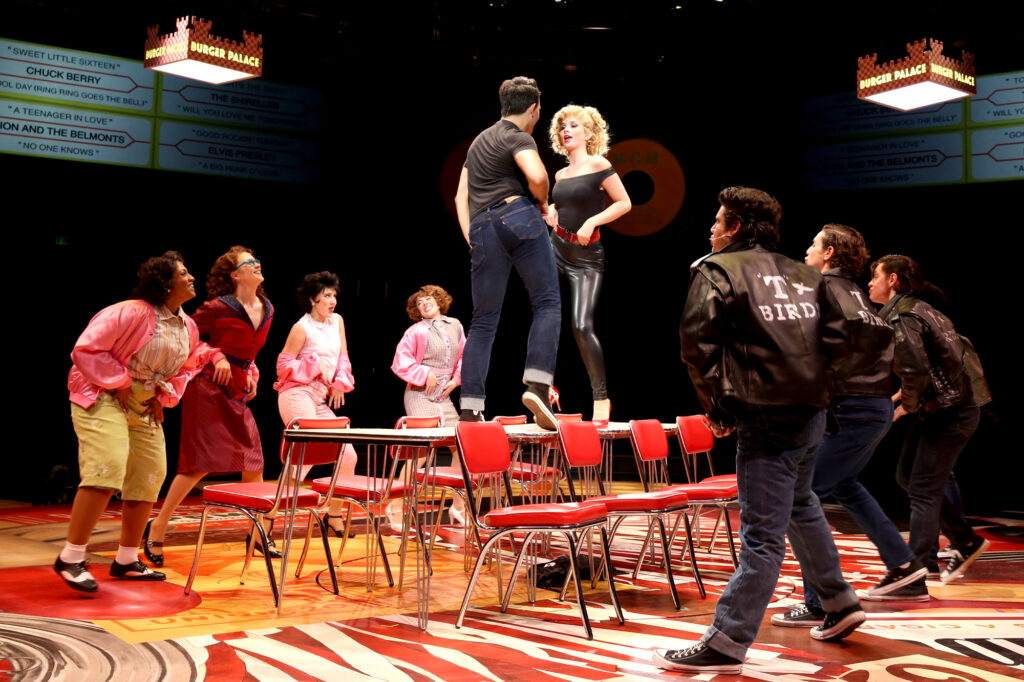
On the first day of his senior year at Rydell High School, Danny reconnects with the members of his greaser gang the T-Birds: Sonny, Putzie, Doody, and his best friend Kenickie. Sandy arrives at Rydell and is introduced to the girls’ gang, The Pink Ladies—Marty, Jan and leader Betty Rizzo—by mutual friend Frenchy. At lunch with their segregated social posses, Danny and Sandy each separately describe their summer. Sandy is unaware of Danny’s alternate T-Bird persona until she mentions his name, which the Pink Ladies recognize. Rizzo’s back goes up, her feathers obviously ruffled in a way that does not bode well for our virginal heroine.

Itching to kick the hornet’s nest, Rizzo gets the Pink Ladies to surprise Sandy by reuniting her with Danny at a school event. The two are blindsided. Sandy is thrilled and reaches out, expecting the tender, lovestruck Danny she last saw on the beach. Danny, buckling under the peer pressure of being a calm, cool and callous T-Bird, makes fun of her to maintain his tough image.
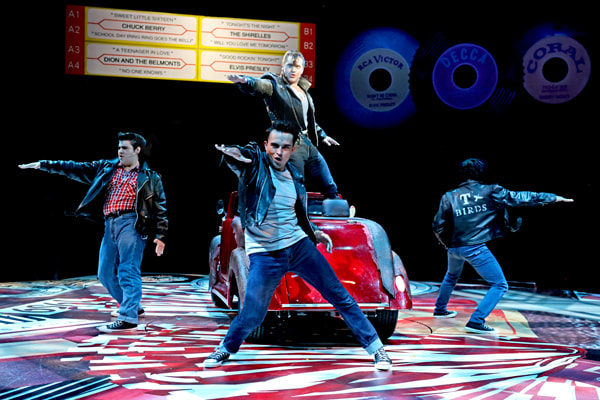
Hank Santos (Kenickie), Jeremiah Garcia (Roger), Nick Cortazzo (Danny Zuko),Jayson Brown (Doody)

The rest of the musical follows the antics of these teenagers as they navigate raging hormones and high school mores against an ever-shifting canvas of adventures and romances. The burning issue, however, is simple — can Danny and Sandy ever reclaim the innocent passion they shared when out of the spotlight of peer scrutiny and pressure to conform?

Thanks to high-energy song and dance numbers and a stellar production team, our star-crossed lovers’ potentially boilerplate journey from point A to point B and back again is anything but. As always, NSMT has many tricks up its sleeve, making expert use of its theater-in-the-round. This time, the guest star is an actual car that ambles onto stage (Kinicke’s red wannabe babe magnet, “Greased Lightning”) not once but twice. Rebecca Glick’s clever, creative costumes (“Beauty School Dropout” is a knockout for many reasons, one of them being the chorus’s costumes) are visual bonbons, and Jack Mehler’s scenic design is simply dazzling.

But the real stars of the show are the actors. Unusual in a cast this large, on which there are incessant singing and dancing demands, there is truly not a weak link in the bunch.
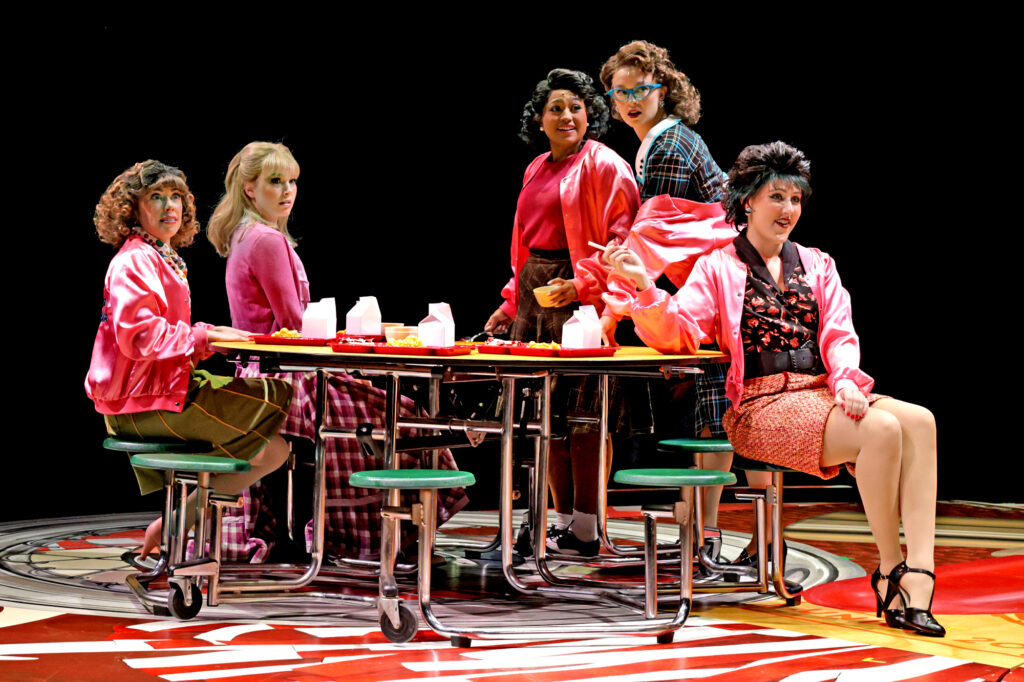
Lily Kaufmann (Frenchy), Caroline Siegrist (Sandy Dumbrowski), Sunayna Smith (Jan), Brittany Zeinstra (Marty), and Bailey Reese Greemon (Betty Rizzo)

As Sandy, Caroline Siegrist holds her own against inevitable comparisons to the late Newton-John. Her rendition of “Hopelessly Devoted to You” breathes new life into the legendary number. Bailey Reese Greemon lends Rizzo a sadness and resignation that is more nuanced than Stockard Channing’s signature portrayal (and can she sing and dance!). Brittany Zeinstra (Marty) is fabulous, especially in “Freddy, My Love,” and Jeremiah Garcia (Roger) is over the moon in “Mooning.” Nick Cortazzo (Danny) and Jayson Brown (Doody) are also noteworthy.

It is Avionce Hoyles, however, who brings down the house as Teen Angel in “Beauty School Dropout,” leaving the audience wishing the number would never end. And then there is the always riveting Kathy St. George (Miss Lynch), never more divine than when she so clearly is having a cheeky good time in a role she seems to be born to play.
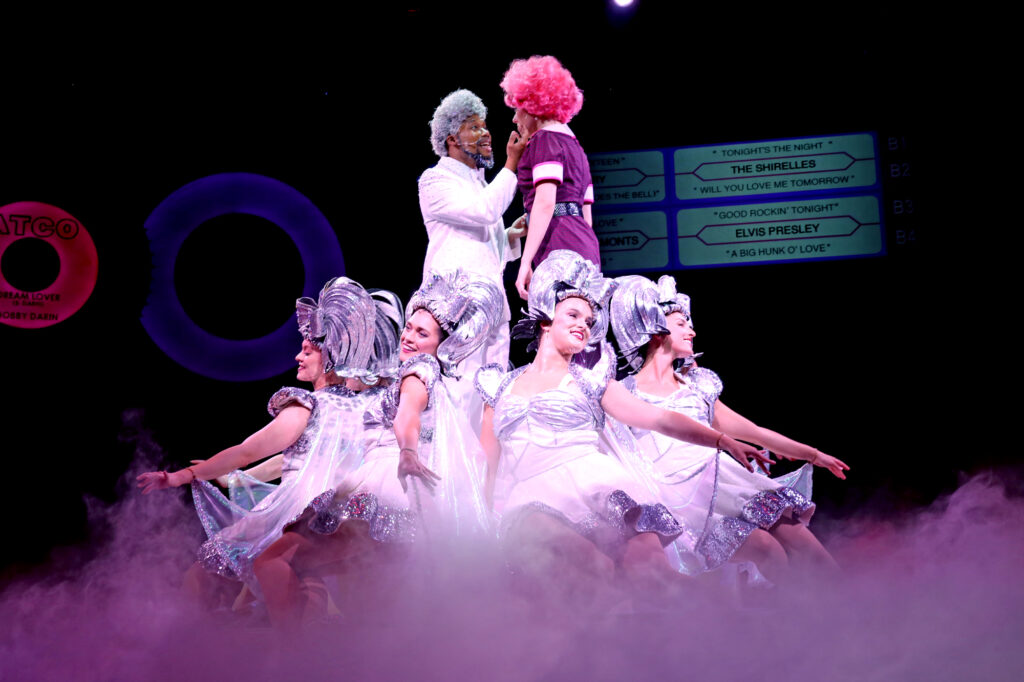
Avionce Hoyles (Teen Angel) with Lily Kaufmann (Frenchy) and the cast

While the show is certainly raw entertainment, chock-full of ear and eye candy, there is a layer of introspection below its surface. The moral themes of identity, fitting in, and balancing self-worth, self-doubt and societal expectations are as relevant today as they were in 1972. Then again, in these dark times of relentless stress, turmoil and immorality, why not let go of the need to peel the onion for deeper meaning and just kick back and enjoy the show!

Grease – Book, Music, and Lyrics by Jim Jacobs and Warren Casey.Kevin P. Hill (Director & Choreographer), Milton Granger (Music Director), Jack Mehler (Scenic & Lighting Design), Alex Berg (Sound Design), Rachel Padula-Shuflet (Wig & Hair Design), Rebecca Glick (Costume Coordinator), Alaina Mills (Associate Director & Choreographer). Presented by North Shore Music Theatre at 54 Dunham Rd., Beverly, MA, through August 24, 2025  

For more information, go to nsmt.org
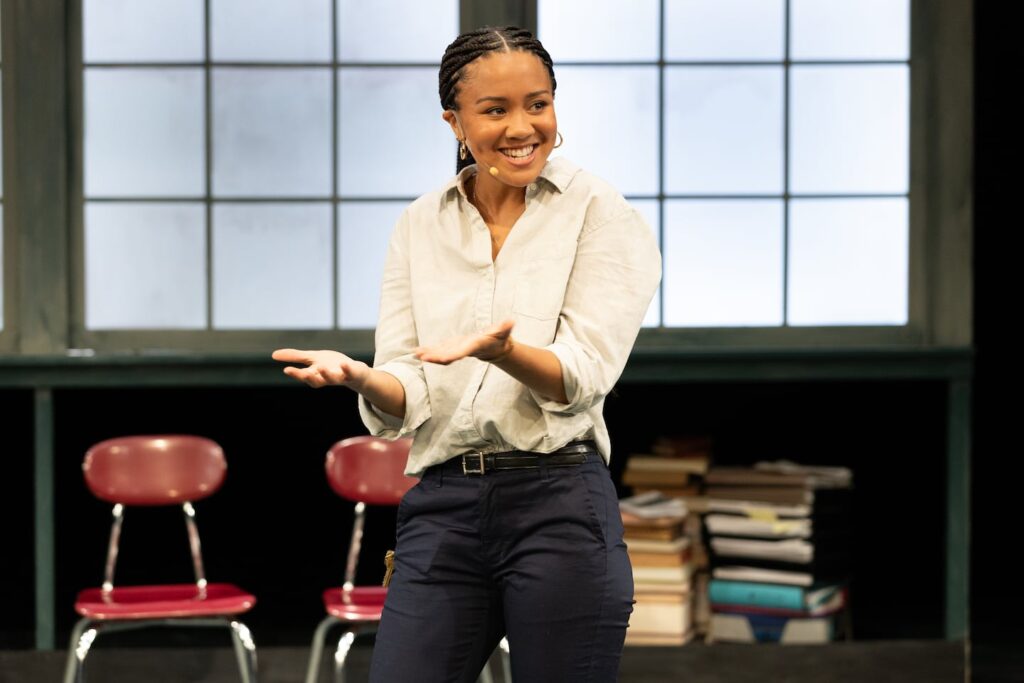
GSC’s Timely ‘No Child…’ Lauds Teachers And Showcases An A+ Solo Performance

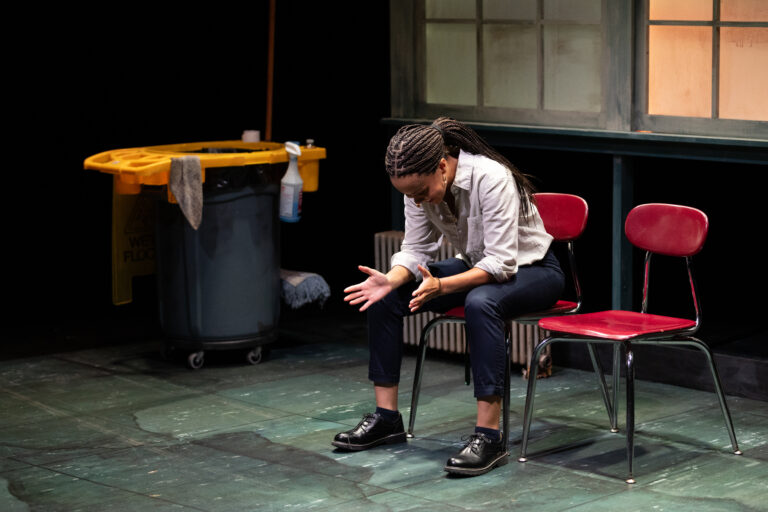
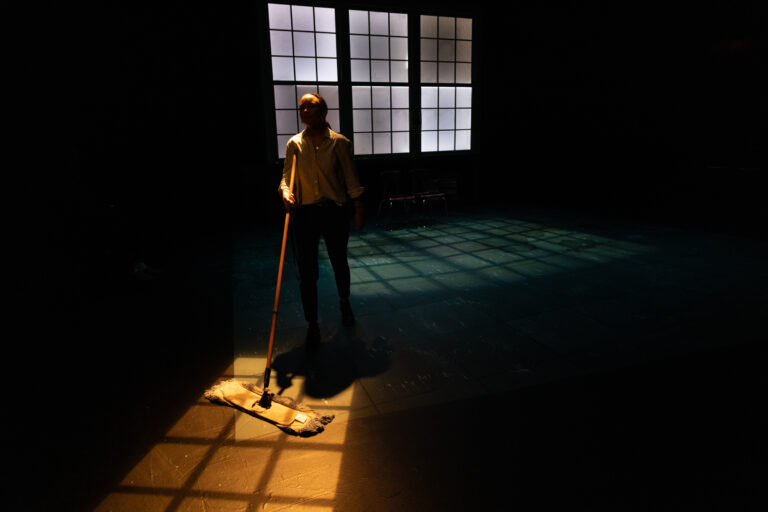
Valyn Lyric Turner in “No Child …” at Gloucester Stage Company. Photos by Jason Grow Photography

By Shelley A. Sackett

Playwright Nilaja Sun’s conventional tribute to the trials and tribulations of our unsung heroes who day after day teach the toughest kids at their toughest ages (high school) in the toughest neighborhoods is must-see theater for one reason— the luminous performance by its solo star, Valyn Lyric Turner.

Playing no fewer than a dozen roles, Turner is a whirling dervish of talent, her physicality and vitality hoisting the play from a ho-hum trope to a true tour de force.

The lights go up on Cristina Todesco’s deceptively simple set as a traditional version of “The Sun’s Gonna Shine in My Back Door Someday” sets the mood. Written as a song of hope during times of fear in 1901 by African-American Methodist minister Charles Albert Tindley, himself the son of slaves and a janitor, preacher and pastor, it serves as the show’s anthem and bookends the opening and closing scenes.

Jackson Baron Copeford, a janitor at Malcolm X High School, introduces himself as the story’s narrator. Setting the scene for the arrival of Ms. Sun, the protagonist, Baron mentions the school is situated in the poorest congressional district in the U.S., in the Bronx, where metal detectors and academically challenged youth share the space equally.

Before class, Ms. Sun, a struggling actor, has a conversation with her landlord about her late rent. She is about to teach a six-week workshop on Our Country’s Good, a play-within-a-play about convicts putting on the play The Recruiting Officer. Ms. Tam, a newly appointed and ineffectual teacher, introduces Ms. Sun to her English class of foul-mouthed, rowdy Grade 10 students.

The lessons begin. Ms. Sun earnestly sets out to teach her students to use theatrical techniques, like Method acting and vocal projection, to bring out the play’s themes. She is committed to getting these kids to relate to the script and open up about their lives. As she looks at the bars on the windows and reflects on her choice of a play, however, she wonders if maybe she didn’t choose something a little too close to home for comfort.

Janitor Baron, who functions as a Greek chorus of one, reflects on being the first black janitor at the school, and the long history he and it have shared through the political turmoil of the U.S., from the pristine institution that it once was to the neglected structure it has become.

Ms. Sun’s class is full of stereotypes, each of which Turner, under Pascale Florestal’s pitch-perfect, razor-sharp direction, embodies and delineates with the subtlest, most effective nuance. Giving each different vocal intonations and just a single physical trait (hair twirling, crotch-hugging slouch, scowl, dimpled solicitous smile), she makes us see clearly every colorful character: the leader Jerome, the flamboyant Shondrika, the nervous Chris, the doomed José.

For 75 intermission-less minutes, we ride shotgun as Ms. Sun perseveres against all odds to stage a successful production that transforms her and her students’ lives. Along the way, the audience is hit with vital, repetitive messages. Teaching is the world’s hardest and most important profession. Students will rise and fall based on the predetermined assessment and expectation of their instructors. The educational system is stacked against the have-nots that society has deemed throwaway and incapable of ever rising above their predestined station.

Yet, notwithstanding its polemical transparency, Sun’s sentimental and humorous dialogue and Turner’s performance (under Florestal’s direction) transform the one-woman show into an emotionally satisfying theatrical event. Turner is simply transfixing as she seamlessly melts from one character to the next, sometimes seemingly mid-sentence. A stand-out on every Boston stage she has graced, this is a showcase role she was born to play.

The show ends on an upbeat note and a glimmer of hope. Committed, skilled teachers who, despite the cards stacked against them and their students, care enough to sacrifice and invest actually can influence another’s life. Hard work pays off and the self-esteem it engenders is a true game changer. A little financial boost and a lot of faith and compassion can go a long way to opening the door of limitless options and mutual satisfaction.

In an epilogue that details the mostly rosy futures ahead of this class of 10th graders and their teachers, Janitor Baron leaves us with the mantra, “The times they are a-changin’.” In these days of defunded public education and callous, cruel policymakers intent on widening the gulf between the haves and have-nots, it’s hard to hang onto the belief that those changes are for the better and not the worse.

Highly recommended for Turner’s not-to-be-missed performance.

‘No Child…’ — Written by Nilaja Sun. Directed by Pascale Florestal. Scenic Design by Cristina Todesco; Costume Design by Chelsea Kerl; Lighting Design by Amanda Fallon; Sound Design by Jacques Matellus. Presented by Gloucester Stage Company, 267 East Main St., Gloucester through August 23.

For more information, visit gloucesterstage.com/

In Company One’s ‘The Meeting Tree,’ Family Legacy Confronts Memory To Reshape The Future

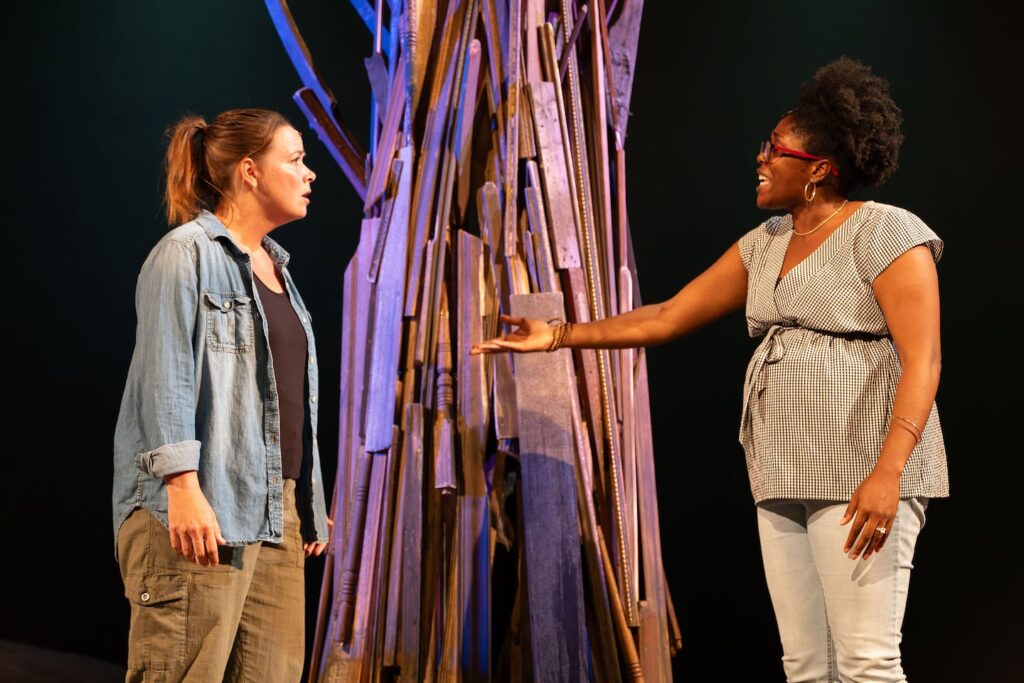
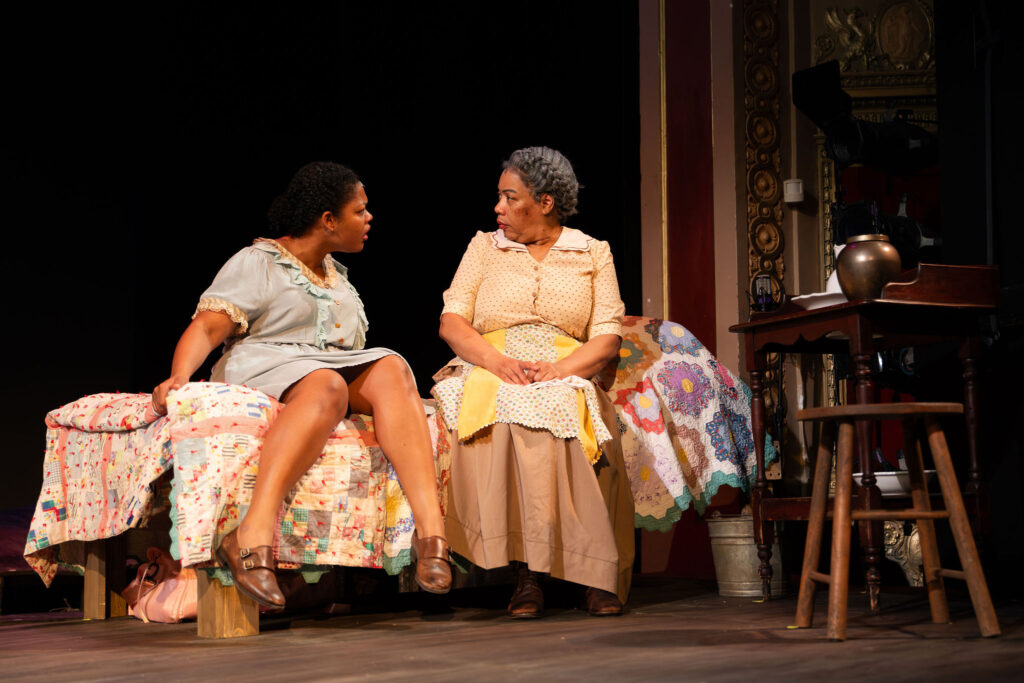
Sarah Elizabeth Bedard and Anjie Parker in Company One’s ‘The Meeting Tree’.
Photos by Annielly-Camargo

By Shelley A. Sackett

B. Elle Borders’ The Meeting Tree (her first play) is a bold and effective new work that portrays the story of six generations of women and their interconnected lives as a backdrop for her exploration of bigger ticket issues. For 75 intermission-less minutes, she keeps the audience engrossed with her skillful storytelling that combines a tale of complex, emotionally deep characters with thought-provoking questions that prompt reflection about family history, the legacy of slavery in the United States, and the power of personal connection to overcome history.

In polarized times, Borders seems to ask, is redemption and healing possible? And if it is, at what price?

The world-premiere production, produced by Company One in partnership with Front Porch Arts Collective and nine community partners, is fittingly staged at the storied Strand Theatre, itself a century-old cornerstone of Dorchester. It opened in 1918 on the same day as the Armistice ended World War I and, after renovations, the faded grande dame still struts her stuff with art deco details, a majestic stage and elegant bones.

An allegorical narrative based on Borders’ grandmother’s memories of a childhood friendship, The Meeting Tree opens with the arrival of Sofia (Anjie Parker) at the Alabama farm where her ancestors were once slaves and where her own grandmother, Dixie (the talented Beyoncé Martinez) was raised by her grandmother, Katherine “Kitty” Montclair (Jacqui Parker, in a stunning, stand-out performance).

Sofia, who is pregnant, in her 30s, and Black, reverently carries her grandmother Dixie’s ashes into the Alabama cabin where her family had lived as slaves. She talks to herself via conversations with the urn. We learn that she has returned to her ancestral roots to claim the rights to the land she believes is hers.

She arranges a meeting with Alison (a thoroughly believable Sarah Elizabeth Bedard), her white counterpart in the story. Also in her 30s, Alison inherited the farm from her grandmother, descended from the family of Sofia’s ancestral enslavers. The farm is now “brown and dead,” a far cry from what it was in its heyday when the two women’s great-great-grandmothers forged a friendship that crossed more than interracial boundaries.

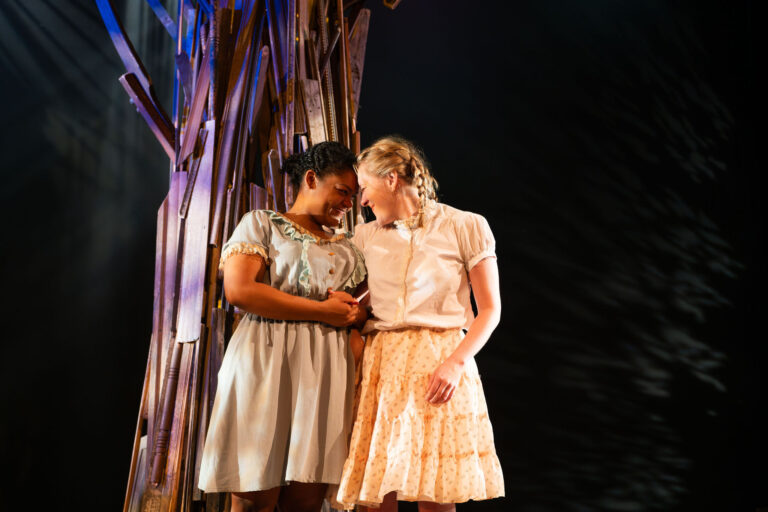
Beyoncé Martinez and Rachel Hall
 

Sofia believes there is a will that promised the house and land to her family. “This is my ancestral home. And your people tried to keep it from us, but no more. Not one generation will go without what is owed,” she defiantly announces. Alison, of course, is buying none of it.

At the heart of their story (and the “meeting place” of the title) is a pecan tree, which separated the slave quarters, where Sofia’s grandmother was raised, from the “big” house, where Alison’s grandmother had lived. Giant and looming on the spare but effective stage (scenic design by Cristina Todesco), the tree is the main character and Svengali of the play, magically opening a keyhole through which Alison’s grandmother, Tessie (a terrific Rachel Hall), and Sofia’s grandmother, Dixie, melded in a color-blind friendship that provided as much sustenance for the isolated girls as the pecans did when baked in Dixie’s renowned pies and sold to help them make ends meet.

The tree also has spiritual powers and holds a secret agenda set in motion by the girls’ great-great-grandfather, Percy Baptiste Montclair, Sr.

If all this ancestral tree information sounds dizzying, it is. Fortunately, the play’s program is a rich source of context and information and helpfully includes a family tree for reference.

Sofia has come to Alabama as a second-in-her-class graduate of Yale Law School, hellbent on following her grandmother’s directive to reclaim what was left to her by the patriarch, Percy. Alison, whose liberal street cred numbers graduating from Auburn University and self-description as “liberal enough,” couldn’t be more dumbstruck. After a rocky start and a grand reveal, the two eventually join forces in pursuit of “the truth.”

The enchantment of Borders’ play is the way she effortlessly traverses time and storylines to somehow create a seamless multi-generational tale. (She is aided by Todesco’s set, which credibly takes us from the porch of the “big house” to a one-room shack to the statuesque pecan tree, with its majesty and power.)

She also time-travels, from the 1930s, when Tessie and Dixie first meet as 9-year-olds, to their teen and adult years into the 1940s and ultimately to 2020, where the play finds them. The actresses who portray them on this journey (under director Summer L. Williams’ sharp but compassionate direction) are captivating in their individual roles and coalesce into a powerful ensemble.

Beyoncé Martinez and Jacqui Parker

The highlights are the scenes between the 9-year-olds and several stand-out performances. As Tessie, Hall is a high-spirited delight, her accent like just the right dose of honey, her physicality infusing her with colt-like playfulness. Dixie (Martinez) plays hard to get at first, but ultimately Tessie’s charm and persistence melt her defensive shell and the two vow to take care of each other when they get old. “Where there’s me, there’s you. Where there’s you, there’s me,” they promise.

And, with those innocent words from babes, Borders unleashes a motherlode of tacit yet reverberating undercurrents. Who teaches hate to those who haven’t lived and don’t know the history of that hate? Why would anyone want this innate, colorblind acceptance to be drummed out of people?

As if on cue to answer those queries, Tessie’s grandmother, Elizabeth “Grande-mere” Montclair (Alex Alexander), emerges onto the porch, commanding Tessie to never see Dixie again (which is pretty hard to do, since they live next door and both frequent the pecan tree). Dixie’s grandmother, Kitty, has a softer heart and keener emotional intelligence, and she recognizes the power and potential the girls’ bond represents. Plus, with the most subtle phrasing and tilt of the head, Kitty lets us know she also takes great pleasure in doing her part to stick and twist the knife in wherever Grande-mere’s heart should reside.

In due time, the girls move on and the grandmothers pass away, but not before Kitty tells Dixie the entire story of her legacy and stolen inheritance. It is this story (and the pecan tree) that links Sofia and Alison and offers a possibility of a different future for them.

Preserving the past while imagining and reshaping the future is a prodigious goal. While Borders’ play is not flawless (Sofia delivers a few polemical speeches and a plot wrinkle has Alison traveling at bends-inducing speed between threatening to call the police on Sofia and aiding and abetting her own disinheritance) and the sound system uneven, these minor glitches do not diminish its importance as a work of art and centerpiece for promoting discussion and reflection.

At what point, Borders asks, do subsequent generations have a responsibility to both let go of shame and blame and honor the past? Company One is certainly doing its part with the production of The Meeting Tree. As the program notes state, its goal is “to amplify the essential need to face our uncomfortable, shared American histories — to build common ground, foster solidarity, and cultivate restorative practices for a vibrant, more just future.”

Highly recommended.

‘The Meeting Tree’ — Written by B. Elle Borders. Directed by Summer L. Williams. Dramaturgy by afrikah selah and Ilana M. Brownstein. Scenic Design by Cristina Todesco; Costume Design by Amanda Mujica; Lighting Design by Elmer Martinez; Sound Design by Aubrey Dube. Presented by Company One Theatre in partnership with Front Porch Arts Collective and the City of Boston’s Office of Arts and Culture. At Strand Theatre, Boston through Aug. 9. All tickets are pay-what-you-want.

For more information, visit https://companyone.org/

CSC’s ‘As You Like It’ Breathes Fresh Air into the Bard’s Timeless Tale

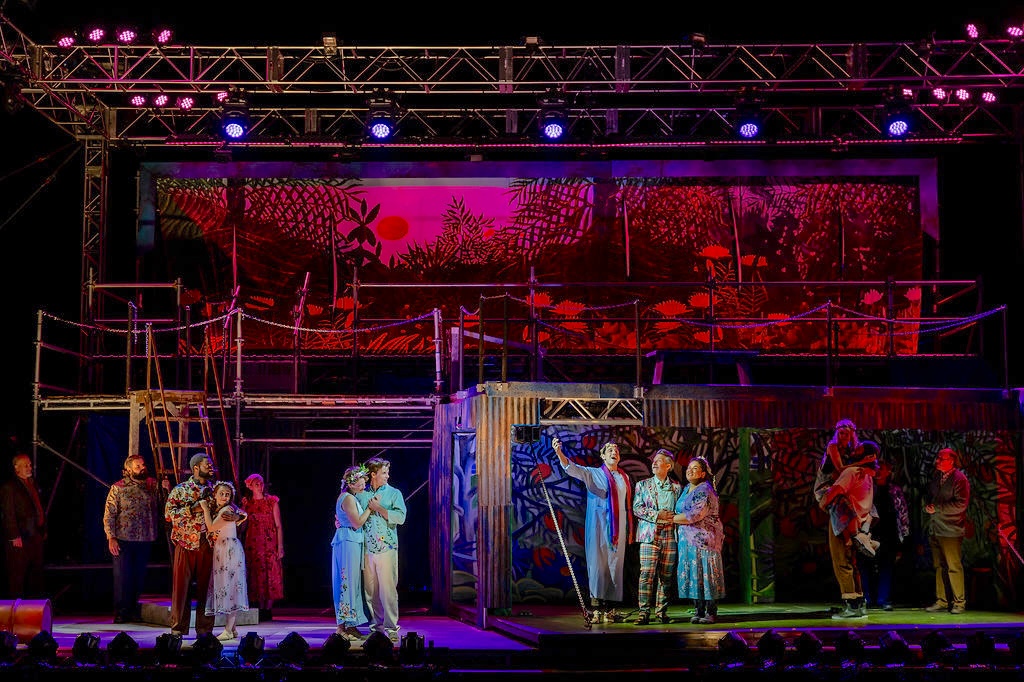
Cast of CSC’s ‘As You Like It’. Photos by Nile Scott Studios

By Shelley A. Sackett

Boston is a garden of many earthly delights, but none more eagerly awaited and appreciated than Commonwealth Shakespeare Company’s Free Shakespeare on the Common that, for 29 years, has invited people to lay down a blanket, bring a picnic dinner, and enjoy top-notch theater on Boston Common under a starry crescent-mooned sky.

Founding Artistic Director Steven Maler shares in the program notes that he chose As You Like It (which he also directs with surgical precision) because it is one of his favorite Shakespeare comedies. Based on the audience reaction last Wednesday, he may have added many new members to the play’s fan club.

Believed to have been written in 1599 and first published in 1623, As You Like It is the Bard at his most engaging — witty, silly and just plain fun. There is something to sate most palates, from political upheavals to love in various forms to a spritely forest bohemian refuge to mistaken identities and disguises. Yet, beneath the surface is a message that rings timely and (hopefully) true — even in the darkest times, the brightest light at the end of the tunnel is the flame of connection and resilience.

The play bears Shakespeare’s trademark of complex storylines, tangentially related characters, flowery language and one unparalleled speech (in this case, the one that begins, “All the world’s a stage, and all the men and women merely players…”)

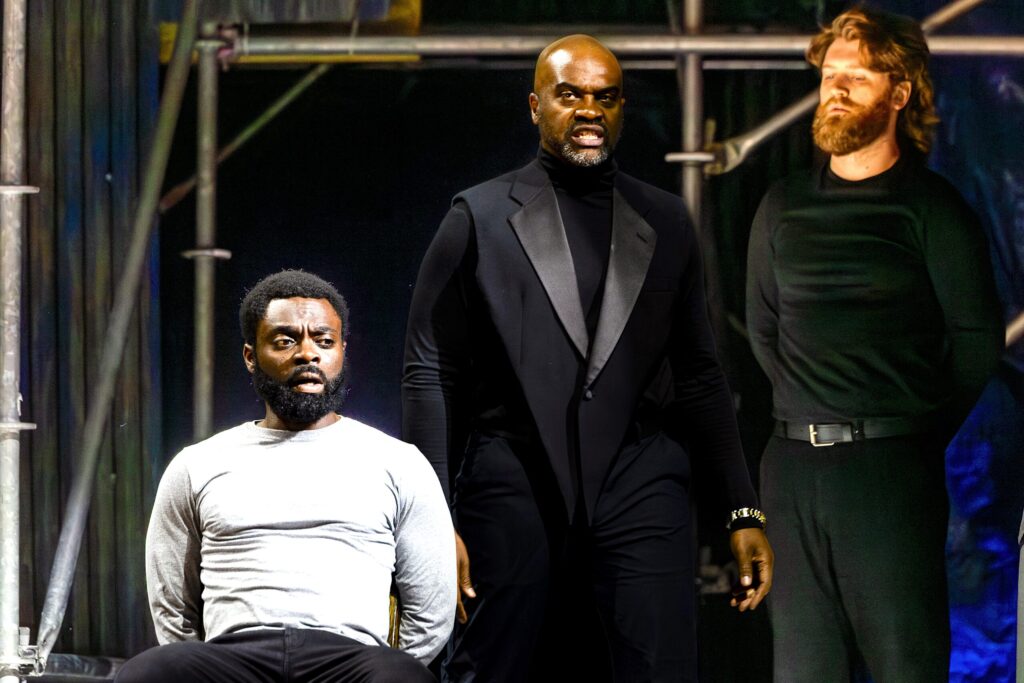
Joshua Olumide (Oliver), Maurice Emmanuel Parent (Duke Senior), and Cleveland Nicoll

Although billed as a comedy, the action opens on a dark note. Duke Frederick has banished his brother and rightful ruler, Duke Senior (both played by a plausible Maurice Emmanuel Parent), usurping a throne not rightfully his. Duke Senior has taken refuge in the Forest of Arden, and his daughter, Rosalind (a magnificent Nora Eschenheimer), has been allowed to remain in the court, mostly to keep her cousin, Celia (a charmingly bubbly Clara Hevia), company.

Enter into the court Orlando de Boys (Michael Underhill, an amalgam of James Dean, Marlon Brando and John Travolta). Orlando’s cruel older brother, Oliver (Joshua Olumide), has denied him the inheritance left to him by their recently deceased father. Looking for intervention from Duke Frederick, he instead literally steps into the court’s rink, forced to enter a wrestling match. He quickly dispatches the court champion, giving Orlando a chance to flash much muscle and toothiness. Rosalind, who witnesses the match, is thunderstruck with love at first sight.

Director Maler struts his stuff early on with this scene. Riw Rakkulchon’s set of sometimes clumsy (for the actors) scaffolding and metal fences echoes the depravity of the evil duke and his lackies. (It also brings to mind front-page headlines of the horrors immigrant detainees encounter in 2025 detention camps.) Drum beats and metallic rhythms (sound by Aubrey Dube) heighten the scene’s tension and primal flavor.

But when Orlando and Rosalind lock eyes, time stands still, and we are suddenly transported by Shakespeare’s rom-com mastery.

Nora Eschenheimer (Rosalind) and Michael Underhill (Orlando)

The plot thickens when Orlando discovers Oliver is planning to kill him, fleeing to the Forest of Arden with his aged servant Adam (Brooks Reeves). Meanwhile, Frederick banishes Rosalind, accusing her of being a traitor. She and Celia decide to disguise themselves (Rosalind as a lad, Ganymede, and Celia as his sister, Aliena), take the droll and clownish Touchstone (a scene-stealing John Kuntz), and head — you guessed it — to the Forest of Arden.

The forest is a melting pot of characters. There is the banished duke and his band of loyal followers (Paul Michael Valley brings a gravitas and grace to his standout performance as the moody, contemplative Jacques and Remo Airaldi is a delight as Corin, bringing a Jonathan Winters-like humanity and accessibility to his role). They meet and interact with local farmers and town folk, including a shepherd (Cleveland Nicoll as the patient Silvius) in love with haughty shepherdess Phebe (Stephanie Burden, either miscast, misdirected, or both). And, of course, there is our newest band of merry refugees.

As stark and dark as the court set is with its chain link fence and threatening graffiti, the Forest of Arden is its opposite. Painted panels reminiscent of Henri Rousseau’s finest work brighten the stage, and musical interludes by Amiens (a terrific Jared Troilo) and guitarist Peter DiMaggio (who wrote the arrangements) add a light touch. The costumes (Miranda Giurleo) breathe a dream-like air into the scenes, but as we are constantly reminded, this exile is no dream.

The true stars and focus of the forest scenes, however, are Rosalind as Ganymede and Orlando. Orlando hangs love poems to Rosalind all over the forest and Rosalind (as Ganymede) befriends him, offering to let him practice on him/her so that when he finally meets Rosalind in the flesh, he will know how to woo her. The chemistry between the two is critical to keeping the ruse from becoming tedious, and Eschenheimer and Underhill have chemistry and talent to spare. Eschenheimer in particular is a spritely delight as she pretends to be a man pretending to be a woman.

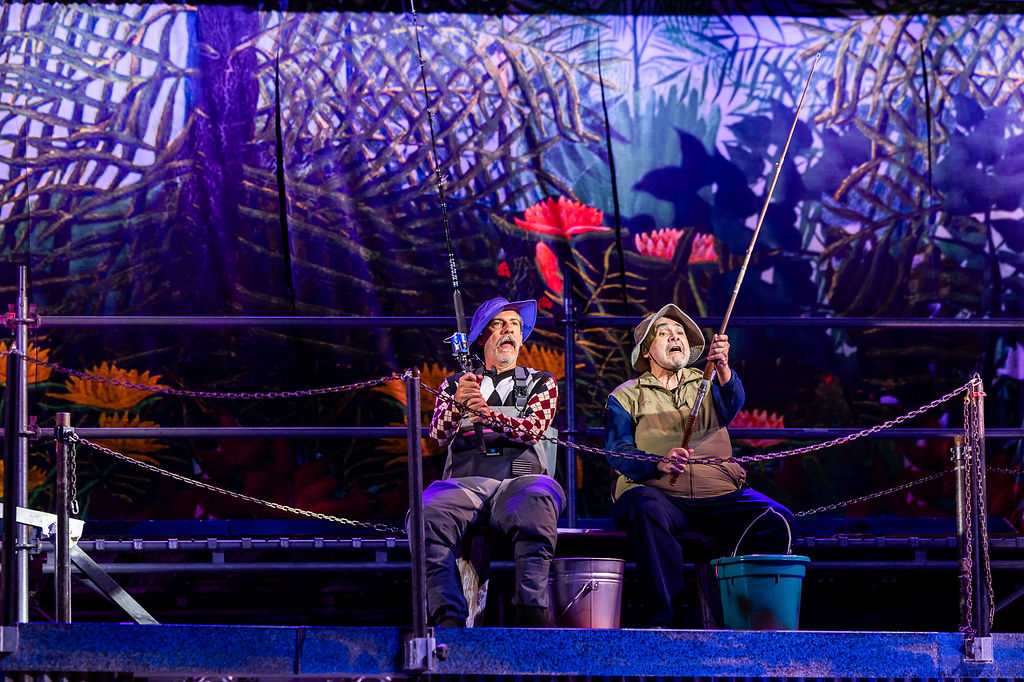
John Kuntz and Remo Airaldi

Other standouts include Valley, who brings a particular poignance and freshness to the familiar “All the world’s a stage…” speech, and Kuntz, as the harlequin-clad Touchstone.

After a number of plot twists and turns (including a lion attack, sibling reconciliation, and love connections and triangles), all ends well with marriages, revealed identities and renounced usurpations. Maler’s thoughtful, playful direction, a stellar cast, and a fun yet thought-provoking script make for yet another fabulous summer production from the beloved and reliable Commonwealth Shakespeare Company.

‘As You Like It’ — Written by William Shakespeare. Directed by Steven Maler. Scenic Design by Riw Rakkulchon; Costume Design by Miranda Giurleo; Lighting Design by Eric Southern; Sound Design by Aubrey Dube. Presented by Commonwealth Shakespeare Production on Boston Common through August 10.For more information, visit https://commshakes.org/production/asyoulikeit25/