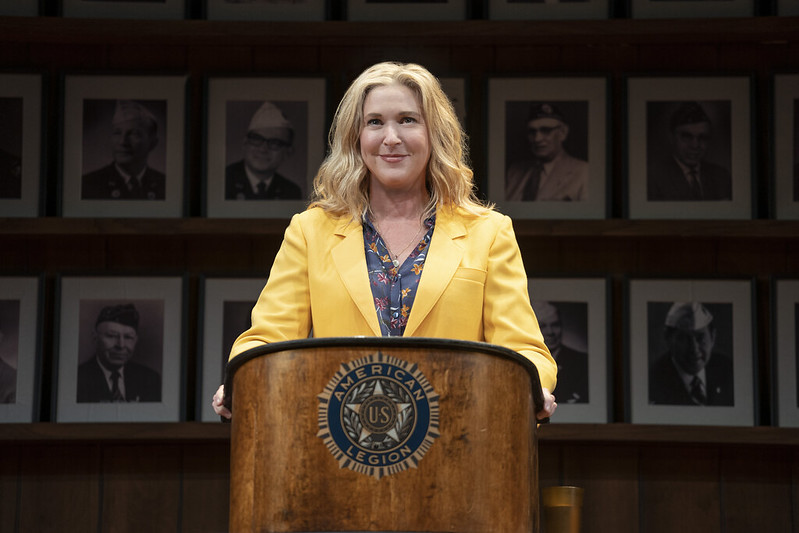
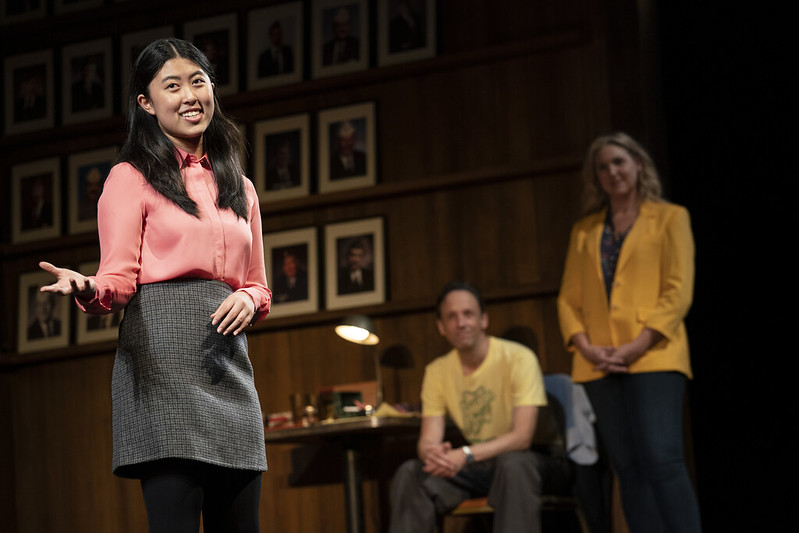
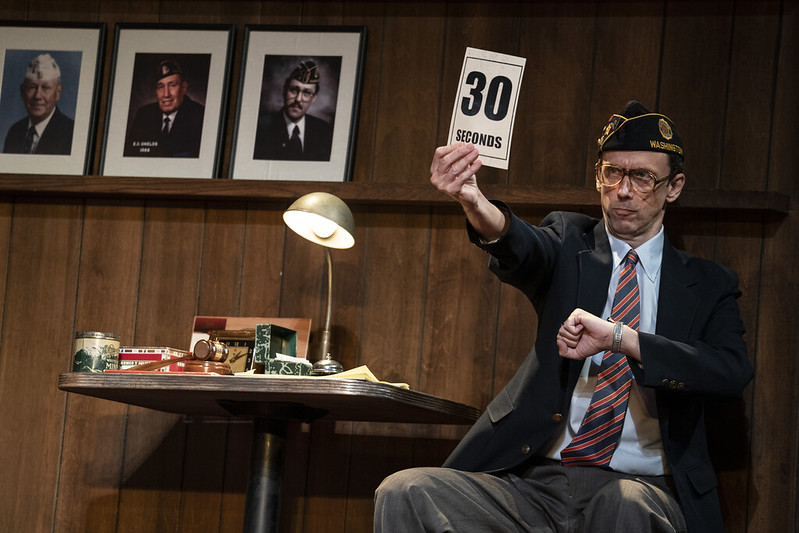
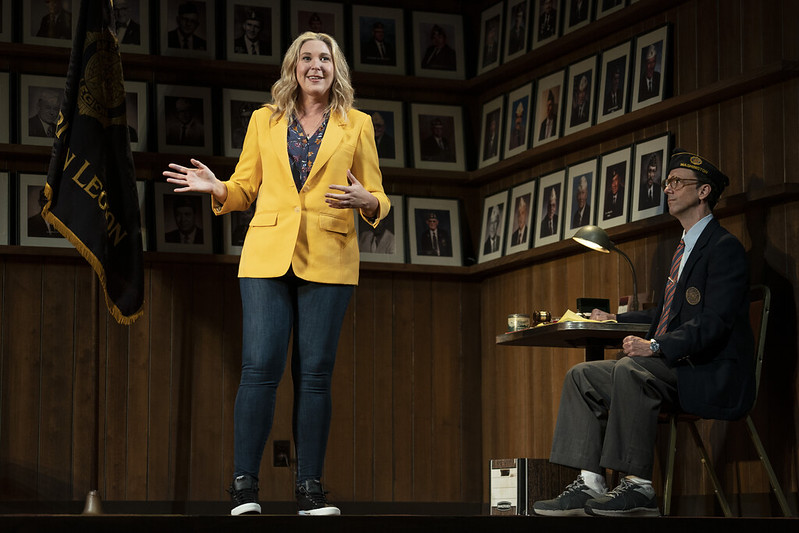
Huntington Theatre’s ‘The Bluest Eye’ Is A Triumph

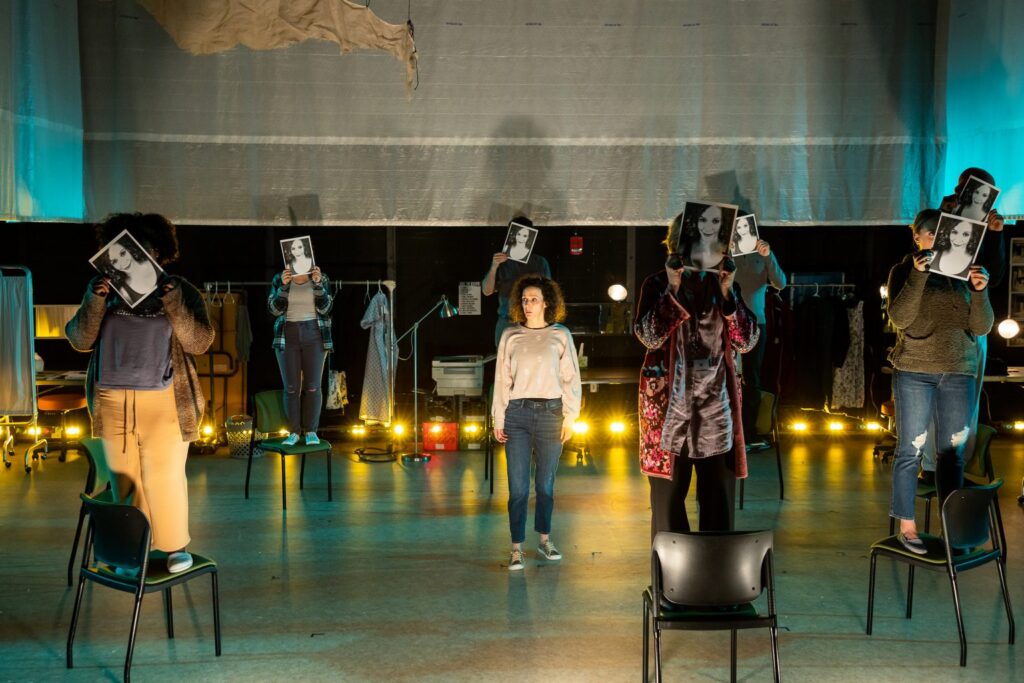
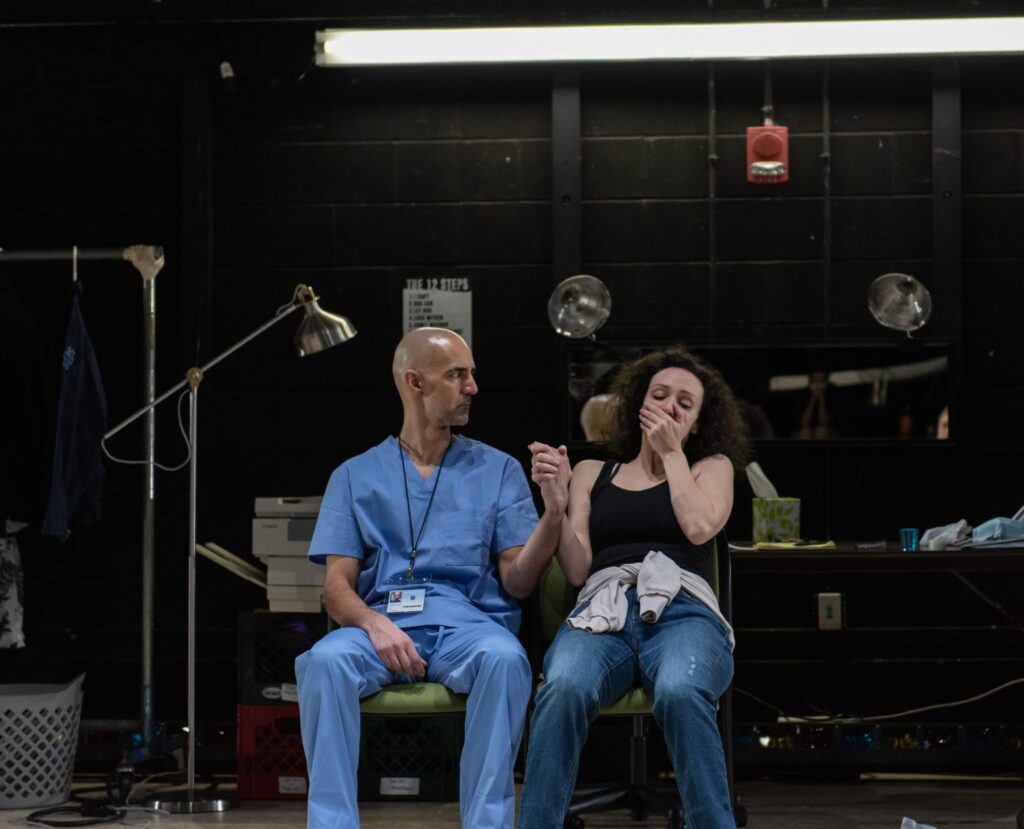
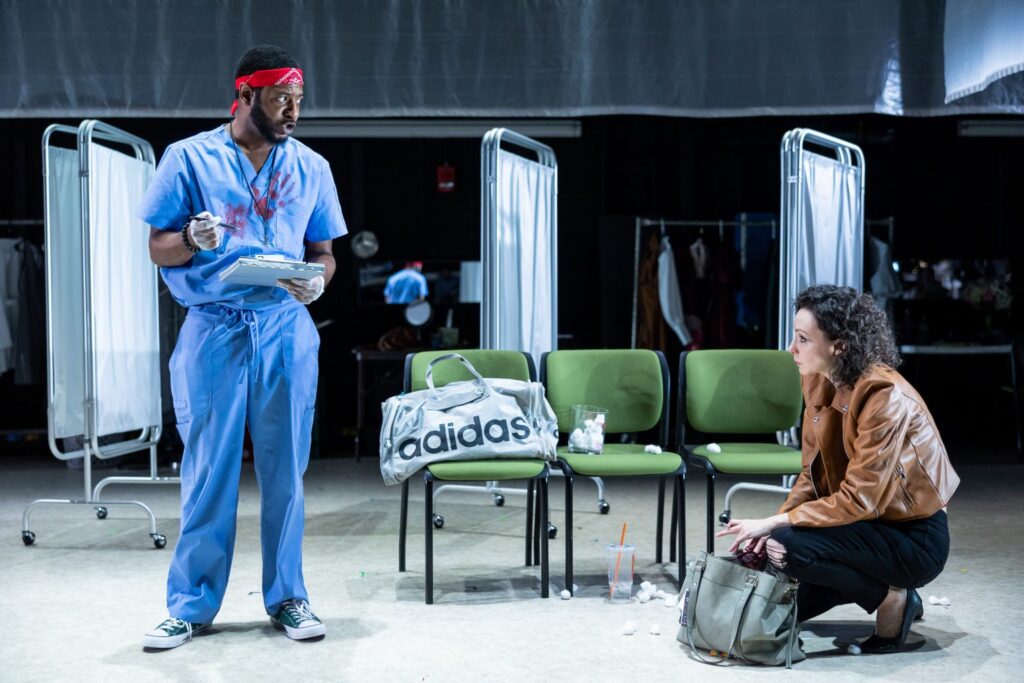
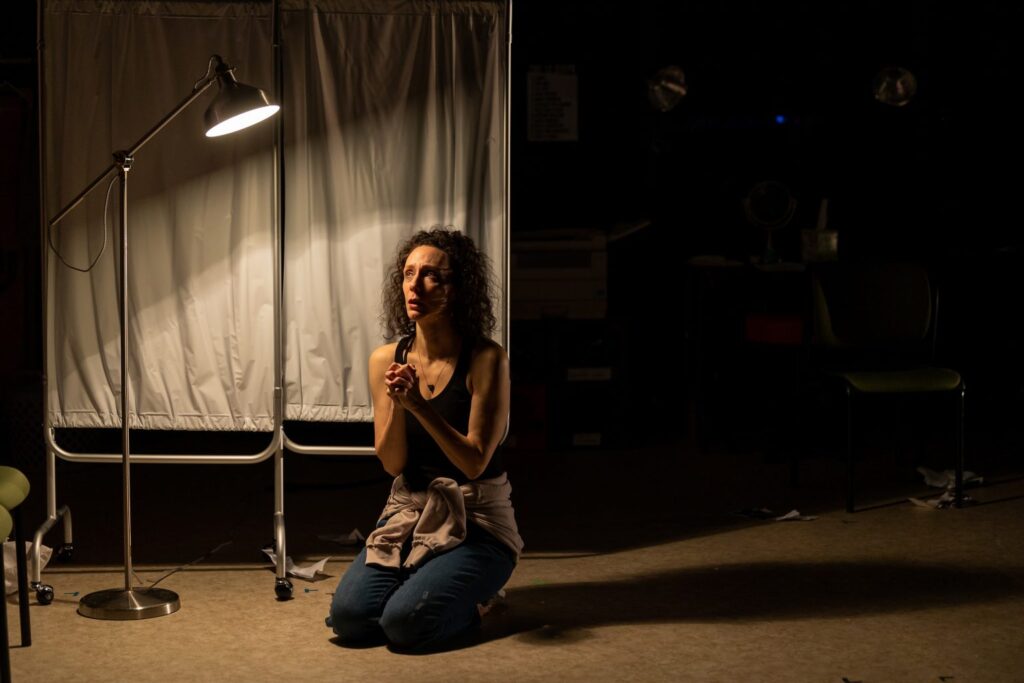
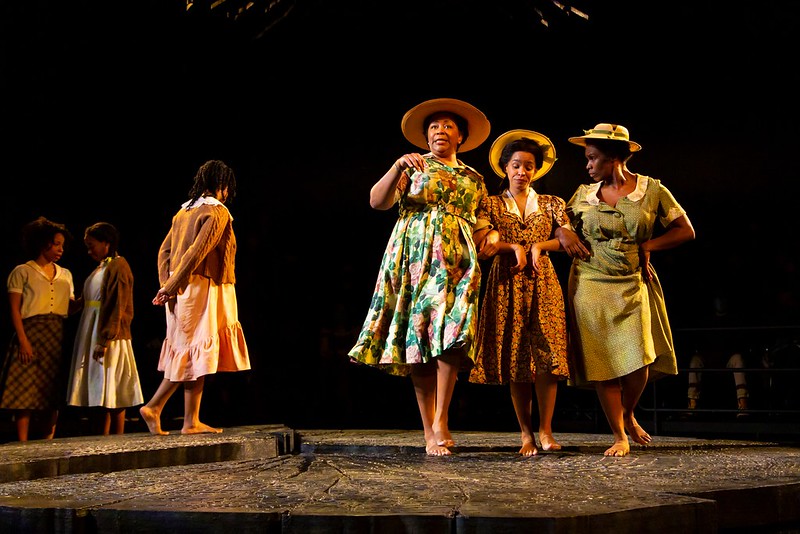
Cast of The Huntington Theatre’s production of The Bluest Eye by Lydia R. Diamond

by Shelley A. Sackett

Brimming with sparkling ensemble acting, inspired staging and soulful song and dance, Huntington Theatre’s The Bluest Eye packs a wallop. Thanks to Lydia R. Diamond’s faithful yet nuanced adaptation, Toni Morrison’s groundbreaking début novel about two poor Black families in 1940s Lorain, Ohio is brought to the stage with all its poetry, pathos and humor intact. You can almost feel Morrison’s presence in the audience, beaming pride and approval.

The story is neither easy nor pretty. Nor is it sugar-coated. A harrowing (and timely) tale about the insidious effects of racism, the 80-minute intermission-less play explores what happens to people — especially children — whose identities and self-images become distorted by the relentless oppression and cruelty they suffer.

What happens to that marginalized little Black girl who feels neglected, lonely and ugly? Whose hand local (white) shopkeepers won’t touch? Whose home life is abusive and unsafe? Whose only frame of reference for happiness, friendship and family harmony is the Dick and Jane primer she reads every day in school, the one about white, blue-eyed, blond Jane and her adoring, white parents?

Brittany-Laurelle, Hadar Busia-Singleton, and Alexandria King

From the get go, there is a feeling of community and engagement among the actors and between actors and audience. Performed on a raised, round stage between two semi-circles of audience members, the (masked) physical immediacy and intimacy heightens the mood. No one is hidden; no one can hide.

The play opens with two feisty preteen sisters discussing local gossip. Claudia (Brittany-Laurelle, who brings a powerful but contained individuality to the role) and Frieda (Alexandria King in a magnificently physical and expressive, punchy performance) will act as narrators and guides, and their sassy, lighthearted banter is the perfect foil to the heaviness of the story that will unfold. Like vocal choreography, their voices dance with and around each other, weaving a single tapestry from many strands.

Their main topic of conversation is the Breedlove family, the ugliest family in Lorain. “Their ugliness came from a conviction that they accepted without question,” Claudia explains. Eleven-year-old Pecola Breedlove (played by the hypnotic Hadar Busia-Singleton, who manages to infuse her unbearably sad character with a whisper of hope) knows the world finds her Blackness ugly. “How do you get somebody to love you?” she asks over and over.

But she has a plan. She has figured out the key to being lovable. All she needs are blue eyes, as blue as Jane’s and Shirley Temple’s. “Then the teachers would see me and people would have to be nice to me,” she explains matter-of-factly.

R foreground: Ramona Lisa Alexander, Lindsley Howard, McKenzie Frye

Claudia and Frieda’s recollections and narrations are the backbone of the play, told with overlying reenactments of the various scenarios that have shaped and marked their and Pecola’s families. Mrs. Breedlove (McKenzie Frye) is a cleaning woman with a bum foot and missing front tooth who would go to the movies and dream of looking like Jean Harlow. Her husband Cholly (Greg Alverez Reid) suffered the kind of loss, humiliation and violence that doesn’t excuse his inexcusable acts, but at least provides context. Beneath their toughened exteriors, each carries the weight of unbearable despair. Together, they are a ticking time bomb, Pecola its collateral damage.

By comparison, Claudia, Frieda and their Mama (played by Ramona Lisa Alexander as unyielding and fussy yet kindhearted) lead a life of relative ease and stability. These three are the source of the play’s lightness and humor. As Claudia, Brittany-Laurelle brings down the house in the reenactment of a scene when she received a blond, white baby doll as a gift. To her mother’s disbelief and horror, rather than covet it, she destroys it, but only after she has humiliated and terrorized it. She hates its so-called beauty. “What was I supposed to do with that?” she asks without irony.

Through a series of events that would include spoilers, Pecola’s prayers for blue eyes and all that means seem to be answered by the magic of Soaphead Church, a charlatan soothsayer, played brilliantly by Brian D. Coats. Yet, it is at such a steep price that we are left grieving for this child whose innocent light has been extinguished.

Under Awoye Timpo’s direction, The Bluest Eye brings a lot of extras to the table. She makes wonderful use of a trio of women who appear throughout the production, imbuing them with many of the gestures and props familiar to fans of Alvin Ailey’s “Revelations.” They are welcome palette cleansers, acting as part Greek chorus, part harpies, and part goddesses. The interweaving of a capella spirituals (Frye is a knockout) and choreography (especially the slow-motion battle scene between Cholly and Mrs. Breedlove) is inspired and welcome.

The Boston theater scene is replete with many productions that are well worth seeing. Only a handful rise to the level of “must see.” The Bluest Eye is one of them.

‘The Bluest Eye’ – Based on the book by Toni Morrison, adapted for stage by Lydia R. Diamond, Dramaturgy by Sandy Alexandre. Directed by Awoye Timpo; Set Design by Jason Ardizzone-West; Costume Design by Dede Ayite and Rodrigo Muñoz; Lighting Design by Adam Honoré; Sound Design by Aubrey Dube; Original Music by Justin Ellington; Choreography by Kurt Douglas; Music Direction by David Freeman Coleman. Presented by Huntington Theatre Company at Boston Center for the Arts through March 26. Digital recordings available Feb. 14 through April 9.For tickets and information, go to: https://www.huntingtontheatre.org/

Huntington Theatre’s Ambitious ‘Teenage Dick’ Challenges Our Assumptions

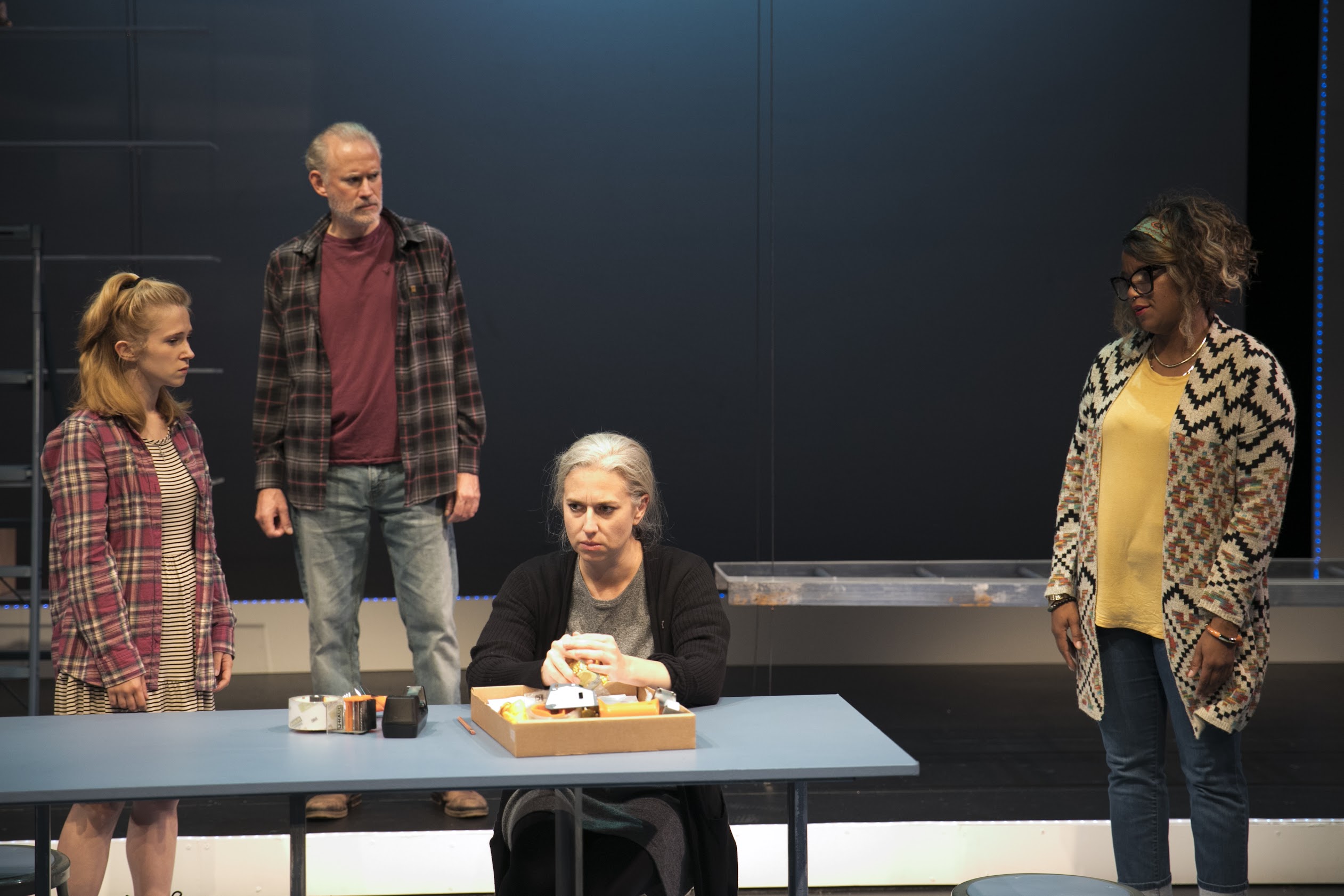
Louis Reyes McWilliams, Shannon DeVido, Emily Townley, Portland Thomas, Gregg Mozgala in ‘Teenage Dick’, at The Huntington Calderwood/BCA. Photos: Teresa Castracane

by Shelley A. Sackett

From the moment he walks onto the bare stage and addresses the audience in the first of many private monologues, it’s clear 17-year-old Roseland High School junior Richard Gloucester (Gregg Mozgala) has an angle beyond just establishing a connection with the audience. What that angle is is less clear, and will shape-shift with dizzying speed during the next 70 minutes until the audience is left in a delicious murky space of questioning almost everything they thought they knew about both Richard and themselves.

That Richard (and, as it turns out, Mozgala) has cerebral palsy, however, is indisputable. He wears two leg braces and walks with a spastic gait. It galls him that the junior class president is Eddie, the lunkhead quarterback and the vice president is Clarissa, a pandering religious toady, while he, imminently more qualified, languishes in his role as secretary.

But languish he will no more. Whatever it takes, this Richard is determined to rise to the top.

Mike Lew’s ambitious ‘Teenage Dick,’ a thinly disguised riff on Shakespeare’s “King Richard III,” appropriates the Elizabethan amoral, villainous scoliotic protagonist bent on murdering his way to the throne and recasts him as an impishly fiendish disabled high school senior, hell-bent on not just winning the election, but humiliating and grinding his opponents into dust.

Commissioned by Apothetae theater company, which is dedicated to productions that “explore and illuminate the ‘disabled experience,’” and where Mozgala is artistic director, ‘Teenage Dick’ deliberately features disabled actors on stage. The result lends a riveting authenticity. These actors aren’t just playing a part; they reveal what disability really feels like from the inside.

Back to teenage Richard who, still in his introductory aside, informs us matter-of-factly that he will “vault past my inglorious station” and become class president by systematically destroying the competition and holding dominion over the entire school. “I come to bury Eddie, not to praise him. Is this a ballot I see before me?” he asks in a mashup of well-known Shakespearean lines.

But why would he do something so mean? “Because they all hate me, that’s why! I was stamped for their hatred from birth. They see my unpleasant shape and like a magnet I must repulse,” he tells us. Yet, from the play’s prologue to its epilogue, we are left wondering: Is Richard’s self-hatred the result of his classmates’ rebuff or its cause? And, more critically, is disability something you learn to accept and adjust to or is it just one of life’s hurdles you strive to rise above?

Before those enquiries have time to sink in, poof! We are transported to Elizabeth York’s (Emily Townley) English class, where Richard’s classmates are none other than Eddie (Louis Reyes McWilliams), Clarissa (Portland Thomas) and “Buck,” (the show stopping, scene -stealing Shannon DeVido), Richard’s wheelchair-bound best friend.

Aptly, the class is studying Machiavelli’s The Prince, the original handbook for unscrupulous politicians. Unsurprisingly, Richard has devoured every word. He is armed and ready for election battle. He even has a plan: he will run a covert campaign.

He also has an accomplice. Or two. He has imperiously assumed Buck would be on board. He also manipulates the support of Ms. York —who is advisor to the drama club — by promising he will make sure the school’s discretionary funds don’t all go football. “I know someone like you understands the importance — the all-consuming social importance — of live theater!” she croons. When Richard responds by mugging to the audience, the masked crowd went wild.

Just as Shakespeare’s King Richard III seduces Lady Anne in his scrabble to the throne, Richard decides he needs to add Eddie’s cool ex-girlfriend, dancer Anne Margaret (the impossibly lithe and lovely Zurin Villanueva) to his arsenal. He turns his Machiavellian charm her way, conning her into asking him to the Sadie Hawkins dance and giving him dance lessons.

With his unbalanced and unpredictable shuffle, Richard is a challenge, but one Anne is up for. The scenes between these two are among the play’s most critical. They address disability head on and from the heart. Anne, intimately connected with the joy her body affords her, teaches Richard to acknowledge and accept his own limitations rather than fight against it. Their interactions are tender, intimate and beautifully staged.

“Richard, can I ask? What’s it like? Like the way that you move, what does it feel like to you?” Anne asks sincerely.

When Mozgala/Richard answers, the authenticity is palpable. “I’ve never been asked… You know how sometimes in winter when you hit an ice patch you didn’t know was there, how you brace yourself before you’re about to slip on the ice?… That’s what it’s like for me all the time,” he answers.

The interactions between the sardonic hilarious Buck and Richard are similarly loaded. These two travel the same path and when they talk about it, it is from a place of shared legitimacy. Yet, their approaches couldn’t be more different.

“Do you believe our social station is circummountable, or is it immutable? Don’t you believe we can rise past our station, given sufficient cunning and skill?” Richard asks. “Nope, I don’t. I’m not like you, yearning to fly beyond nature’s boundaries like some kind of disabled nerd Icarus,” Buck replies.

But then she asks him the bigger question, the one at the heart of his personal psychological limitation. “Richard. Why can’t you be happy just being yourself?” Richard responds: “This [high school] is as good as it gets for us. This isn’t our awkward phase, it’s the rest of our lives.”

Although the writing and acting is uneven, this production is worth seeing for DeVido’s performance as Buck alone. Her delivery, gesticulations and wheelchair maneuvering are spellbinding and side-splittingly hysterical. Lew has given her the play’s best lines and she chews them up, spitting them out with relish.

Kudos also to Mozgala and his nuanced performance, Villanueva for her dancing and  Palmer Hefferan for her punchy sound design.

Alas, Lew’s shifts from satire to TV sitcom to high drama, melodrama and horror give the audience a mild case of the bends, and by the time Richard reveals his true self in his epilogue monologue, emotional fatigue has set in. Yet these words arouse us from our sensory overload:

“You already decided who I was before it was mine to choose it, so what else could I do but act out the role that’s been writ? If that makes me the villain, welllll… You already knew I wasn’t the hero from the moment I came limping your way. So close your eyes and forget about me. You always do anyhow,” Richard says.

Lew’s zinger closing line goes to the heart of the biggest issues ‘Teenage Dick’ addresses, that is: Did Richard choose to be a villain or was he forced into that role? Is he undone by his own psychological defects or by outside forces that have marginalized and bullied him? And, ultimately and most importantly, how much of the responsibility do we in the able-bodied world bear based on how we might have perceived and treated the disabled?

For more information and to buy tickets, go to https://www.huntingtontheatre.org/season/2021-2022/teenage-dick/.

‘Teenage Dick’ – Written by Mike Lew; Directed by Moritz von Stuelpnagel; Scenic Design by Wilson Chin; Sound Design by Palmer Hefferan; Lighting Design by Amith Chandrashaker; Choreography by Jennifer Weber; Fight Choreography by Robb Hunter. Presented by The Huntington Theatre Company at The Calderwood Pavillion, 527 Tremont St., Boston through January 2, 2022.‘Teenage Dick’ – Written by Mike Lew; Directed by Moritz von Stuelpnagel; Scenic Design by Wilson Chin; Sound Design by Palmer Hefferan; Lighting Design by Amith Chandrashaker; Choreography by Jennifer Weber; Fight Choreography by Robb Hunter. Presented by The Huntington Theatre Company at The Calderwood Pavillion, 527 Tremont St., Boston through January 2, 2022.

Greater Boston Stage’s ‘All Is Calm’ Strikes the Perfect Chord

by Shelley A. Sackett

Cast of ‘All is Calm’ at Greater Boston Stage Company. Photo by Nile Scott Studios

From the first note of the first song in the remarkably affecting ‘All Is Calm,’ the choreography chops of its director, Ilyse Robbins, are indisputably evident. Two lines of uniformed men, distinguishable by their country’s military dress, slowly march to the front of the stage as they sing the Scottish folk song, “Will Ye Go to Flanders?” They briefly merge, forming a united single line, before those in the back row return to their original and separate positions. This powerful prologue literally sets the stage and tone for the next intermission-less 70 minutes. We have entered a holy place of unity where a folksong can become a hymnal and where men have the power and ability to come together as one, even if it is merely for a fleeting moment.

This documentary musical tells a well-known true story almost exclusively through a cappella song. On Christmas Day in 1914, with World War I just five months old, enlisted men on both sides of the mucky no-mans-land trenches in Ypres, Belgium emerged to put aside their political differences and celebrate the day and their shared humanity.

Written by Peter Rothstein, the founding director of Theater Latté Da in Minneapolis who also worked at the Minnesota Jewish Theatre Company, the play transcends its Christmas Day message and carols to deliver a powerful and universal message promoting peace, human dignity and reconciliation — a message no less welcomed by those of us lighting Hanukkah candles, spinning dreidels and recalling the battles faced by the Maccabees.

Combining storytelling, historical details, bits of poetry, archival letters and a score of 30 songs, the cast of ten men humanize their journey: from the optimism of their enthusiastic enlistment and deployment to the grim reality of war to the miraculous Christmas respite and momentary truce and back again to battle, they are individuals first, soldiers second. Robbins has gathered a splendid ensemble of complementary singing voices and acting styles, yet masterfully allows space for each performer’s unique qualities to shine as well.

The story itself is predictable. Men susceptible to war fever and the excitement it generated are crestfallen to realize that they might not survive the war they assumed would be over by Christmas. Hope curdles to despair; dreams of adventure morph into nightmares of doom. There is no revisionist history here. Rothstein presents the hardships and suffering of war in full mud-soaked misery.

What is not predictable is the emotional majesty created by Lichte and Takach’s clever interweaving and ordering of songs, particularly those chosen during the truce segment. Amidst the heartache and heartbreak of a Christmas celebrated with death and isolation instead of family and hearth, the Allied troops suddenly make out the familiar melody of “Silent Night” — sung in German. Unarmed, hands lifted and hoisting white handkerchiefs, the Germans emerge one by one. Sworn enemies unexpectedly find themselves face-to-face, one-to-one with the enemy, and “all is calm. All is bright.” Indeed, for those gun-less few moments, all is breathtakingly silent.

The men play football, exchange gifts and even help each other bury those whose deaths they caused. They talk as men, not enemies. “I have now a very different opinion of the Germans,” one soldier wistfully says.

Of course, this bottom-up hiatus can never last. Commanding officers on both sides put an immediate halt to the fraternization, and the soldiers reluctantly return to their trenches, guns obediently re-cocked and aimed. The plaintive “Auld Land Syne,” an ode to kinship remembered, switches almost imperceptibly to “We’re Here Because We’re Here,” sung mournfully as a lamentation to the immovable trap the troops find themselves in.

There are a few tricky moments with the European accents, but the cast is uniformly spot on with the a cappella singing, blending beautifully and consistently. Among the solo standouts are Christopher Chew, Brad Peloquin and David Jiles, Jr. Michael Jennings Mahoney’s haunting tenor beautifully bookended the show from prologue to epilogue.

Erik D. Diaz’s minimalist set design achieves maximum effect. A few packing crates, a starry full mooned backdrop and the constant slow seep of gauzy haze set the proper tone without distraction.

Although there is no ambiguity that ‘All Is Calm’ references Christmas, its universal message of peace transcends specificity of time, place and religion. Particularly during these times of increasing political rancor and division, this meditative production is palpably apolitical, yet makes its point while leaving us to wonder: What if ‘No Man’s Land” were truly ‘Everyman’s Land?” What if those at the top left negotiations to those in trenches? And what if those troops, ordered to go back to war after tasting the fruits of peace, had listened to Winston Churchill and simply gone on strike?

‘All Is Calm: The Christmas Truce of 1914’ – Written by Peter Rothstein; Vocal Arrangements by Erick Lichte and Timothy C. Takach; Directed by Ilyse Robbins; Music Direction by Matthew Stern; Set Design by Erik D. Diaz; Lighting Design by Jeff Adelberg; Sound Design by Dewey Dellay; Costume Design by Bethany Mullins. Presented by Greater Boston Stage Company at 395 Main St., Stoneham through December 23, 2021.For more information or to purchase tickets, call (781) 279-2200 or visit greaterbostonstage.org. Masks are required for all visitors, as well as proof of vaccination or a negative COVID-19 test within 72 hours. For more information about safety, visit geraterbostonstage.org/health-and-safety.html.

Arlekin Players Theatre’s documentary theater piece “Witness” asks “Where do unwanted people go?”

Igor Golyak

By Shelley A. Sackett

When Igor Golyak, founder and artistic director of Arlekin Players Theatre, was doing research for “The Merchant of Venice,” he was smacked in the face by the discovery that the Jews have been on the move throughout the span of their existence as a people. Their constant migration reminded him of his own family, which emigrated in 2004 from the Ukraine .

Then, on July 1, Brighton Rabbi Shlomo Noginski was stabbed. Golyak attended a meeting with other Jewish refugees and he remembers someone asking, “Where do we go now?”

“My family came here to escape anti-Semitism. What I suddenly understood is that there is no escaping anti-Semitism,” Golyak said by phone. That realization was the germ of the bold and complex new virtual documentary theater piece, “Witness,” which bears witness to the migratory experience of Jews throughout history. Based on interviews of Jewish people around the world by the Arlekin company members, along with historical records and documents, this timely piece will tell a multiplicity of stories of migration, displacement, home and identity.

“I want to make anti-Semitism and hate visible to people so they see that it doesn’t live only with Nazis and in history, but is here today. That’s the first step to trying to identify the problem,” he said.

Golyak enlisted the help of Moscow-based playwright Nana Grinstein to translate his idea into a script. He explained he wanted the play to be “documentary theater” — built out of historical primary sources (letters, journals, telegrams, newspapers, etc.) and interviews describing first-hand experiences— about what makes Jews move around the world.

Grinstein often works on this type of project and did a deep dive into what historical options existed that could be an accurate metaphor for this idea.

She proposed the history of the liner St. Louis, which sailed from Nazi Germany in 1939 shortly after Kristallnacht, but was not accepted by Cuba, the United States or Canada. The 900 Jews on board, who understood that their return to Germany meant certain death, spent several weeks on the ocean.

“The Holocaust is impossible to understand to this day. As one of the St. Louis passengers said, ‘I don’t understand how the world could watch this and nobody did anything about it.’ I hope the audience will find themselves in the shoes of the Jews, who have been, and still are, under the pressure of anti-Semitism, which has many forms — from everyday xenophobia to terror and massacres,” Grinstein said by email.

Golyak loved the St. Louis metaphor for the concept: Where Do People Go? He next contacted dramaturg Blair Cadden, whose job would be to help bring “Witness” to life by learning as much as possible about the play, the medium (virtual, immersive and interactive) and the context of its creation.

The end result will be a blend of pre-recorded and live performances that includes elements of interactivity with the audience. Set on a boat in digital space, actors and audience members will share a live interactive experience as they move together between countries and time periods in a game of life and death set in a virtual world. Previews begin December 10 with the World Premiere scheduled December 13.

“Witness“ brings a lot of theatricality and inventiveness to the way these true stories are presented. “The St. Louis is a vivid microcosm of the larger experience that is shared by so many Jews across the world,” Cadden explained by email. “Documentary theater is an exciting genre because it invites the audience to form a different connection with that history. Things that might feel very distant when we encounter them in the pages of a history book take a new immediacy in live theater.”

The performance, accessible on Zoom to an international audience through Arlekin’s Zero Gravity (zero-G) Virtual Theater Lab, allows the audience to gather from across geographical locations and time zones. The Arlekin team hopes people will share their own emigration stories for inclusion in the production (to share your or your family’s story, contact story@arlekinplayers.com or visit arlekinplayers.com/witness/)

Golyak hasn’t decided yet if parts of his own story will be included. He was brought up in the Soviet Union, where being Jewish was difficult. He was eight-years-old when his father, one morning while shaving, paused, faced his son, and told him matter-of-factly and out of the blue, “Oh, by the way, you’re Jewish.”

He then turned back to the mirror and continued shaving.

“It was like finding out you are from Mars,” Golyak said without a laugh. There was no context in Russia for what being Jewish entailed. “How does that affect who I am? There’s no language, there’s no land. I’m told I am a Jew, but what does that actually mean?” It is a question he is still trying to answer.

Cadden, who is not Jewish and whose ancestors came to the United States so long ago that no one in family remembers exactly when, hopes the common threads between the experience of the St. Louis passengers and the experiences of more recent Jewish immigrants and refugees will affect Jews and non-Jews alike. For those who share the Jewish heritage and/or immigrant experience, she hopes it will be a moment to feel seen and connected.

For everyone, it should be “an eye-opener to the continued prevalence of anti-Semitism and anti-Semitism in our own society and an invitation to empathize with the experiences of immigration and this search for Jewish identity and a sense of belonging,” she said.

Golyak hopes his “Witness” makes the audience aware of the prevalence of anti-Semitism today. “That’s the first step: to identify the problem. And then, hopefully, this will inspire people to think about and acknowledge the fact that this problem exists, so we can somehow try to solve it,” he said.

For more information or to buy tickets, visit arlekinplayers.com/2021-22-season/

Lyric Stage’s ‘Be Here Now’ Asks: “At What Price Happiness?”

Patty, Bari and Luann at work at the fulfillment center
(Photos by Mark S. Howard)

By Shelley A. Sackett

Deborah Zoe Laufer’s deceptively profound Be Here Now opens with an almost slapstick scene. Three women (Patty and Luanne Cooper and Bari) sit on yoga mats as the blissed-out disembodied voice coaches them to look inside themselves and “let go.” Patty (Shani Farrell) and Luanne (Katherine C. Shaver), dressed appropriately in latex, comply, closing their eyes and sinking into their mats. Bari (Samantha Richert) clearly marches to a different drummer. She is fully dressed (as in a midi dress and huge coat-sweater) and keeps her eyes defiantly open, widening them at each suggestion she close them. Her face portrays the furthest state from bliss possible. This woman is irredeemably and unapologetically miserable.

Turns out she has every reason to be.

She has lost her job at a university in New York City teaching — drum roll — nihilism because she is ABD (all but dissertation). She is 17 days away from her ultimate deadline; she has been working on it eight years. And she has been having bone-crunching headaches.

Exiled to her economically depressed small hometown its small-town people, she works at a fulfillment center (which is anything but) with Luann and her Aunt Patty Cooper, both Christian “believers.” Thirtyish Luann believes her choice to have faith and BE-LIEVE is behind her happiness (the anti-depressants don’t hurt either). “You can choose to be happy. Or you can choose to be sad. I prefer to be happy,” she explains to Bari.

“Whatever you choose, sooner or later it will end in grief,” Bari glumly replies. The spunky, honest, funny and compassionate camaraderie among these three provides both comic relief and fodder for deeper consideration — Does it really matter how one finds happiness? Is it really anybody’s business but your own?

Patty (also no stranger to mood enhancing drugs) decides to set Bari up with her cousin Mike (everyone in Coopersville has the surname Cooper except Bari), who has his own baggage and, literally, garbage. Bari outright refuses, immediately experiences the first of many forthcoming seizures, and ,with this seizure and its repercussions, playwright Laufer has penned the lynchpin on which the rest of the play’s message depends.

As Bari comes to, the sound shifts to the Zen meditation we heard at the beginning. For the first time in her life, Bari feels happy. She suddenly feels like everything matters, especially meeting Mike for a blind date. Suddenly she has “urges” that she must immediately satisfy. She loves this new euphoric Bari and will fight tooth and nail to hang onto it, whatever the price.

Turns out that price may be her life, but we don’t want to get ahead of ourselves.

Under the spell of post-seizure after glow, she meets Mike (Barlow Adamson) and promptly has another seizure, this one more of a doozy. When revives, she hears yoga music and a sea of Oms. The sees auras. She is a poster child for ecstasy. She is terrified the feeling won’t last and goads him into coming home with her and having sex.

Girl gets boy that night, girl loses boy next day when she kicks him out so she can write, girl begs forgiveness from boy by presumptuously showing up at his sparse cabin unannounced.

There is a lot more to Mike than his eccentricities of collecting garbage (“found objects”), living without cell phone or a car, and cohabitating with a crow might indicate. His tragic backstory carries a motherlode of pain, guilt and despair. Yet, he is determined to rebuild his life (literally) by creating MacArthur Fellowship Genius Grant-worthy shelters from these found objects.

He is trying to keep his life small. No one has ever been to his cabin until her. “I can’t take on anything more,” he says as Bari relentlessly presses him for more.

He is convinced Bari’s headaches are caused by a brain tumor, her post-seizure euphoria a medically common side effect. He agrees to let her stay as long as she forks over her cell phone and understands he will dial 911 if she has another seizure.

Bari rhapsodizes about how she feels with her “new brain.” She doesn’t want to give it up and doesn’t want to know if it is a tumor that will kill her. She knows now that happiness exists; does it matter if its source is religion, Zoloft, meditation, sheer will of choice or a deadly tumor? For the first time, she feels alive. And she loves it.

Of course, she has another seizure. Of course, Mike calls 911 and accompanies her to the hospital. She has a kiwi-sized tumor and will indeed die — and soon — unless it is removed. Yet she is afraid she won’t like Mike, that he won’t like her, that she will become anhedonic without it. Does it really matter how we achieve happiness, even if it kills us?

What comes next would be a spoiler to reveal and this is a play that really should be seen, so I’ll stop here.

The actors give uniformly beautiful performances. Barlow Adamson stands out, bringing both gravitas and grace to the smart, wounded, quirky visionary Mike. Adamson is a big guy, yet manages to  transform himself into a fragile bird with a broken wing.

Samantha Richert takes Bari though her highs and lows at breakneck speed. But is the interplay between Shani Farrel (Patty) and Katherine C. Shaver (Luanne) that are a delightful reprieve from the sometimes relentless Sturm und Drang. Farrel is as practical as Shaver is mercurial and the way they play off each other is a pleasure to behold. Think the cast of “Steel Magnolias” or “9 to 5” and you get the idea.

Finally, Courtney O’Connor’s directing, Janie E. Howland’s clever set, Karen Perlow’s subtle lighting and especially Dewey Dellay’s composition and sound design elevate the production in notable yet nonintrusive ways.

For tickets or more information, go to lyricstage.com/

Lyric Stage’s ‘Be Here Now’ Asks: “At What Price Happiness?”

‘Be Here Now — Written by Deborah Zoe Laufer. Directed by Courtney O’Connor. Scenic Design by Janie E. Howland. Costume Design by Rachel Padula Shufelt. Lighting by Karen Perlow. Composition and Sound by Dewey Dellay. Starring Barlow Adamson, Shani Farrell, Samantha Richert and Katherine C. Shaver. Presented by The Lyric Stage Company of Boston at 140 Clarendon St. through October 17.

Make SpeakEasy Stage’s Impeccable ‘The Sound Inside’ Your First Stop for In-Person Theater

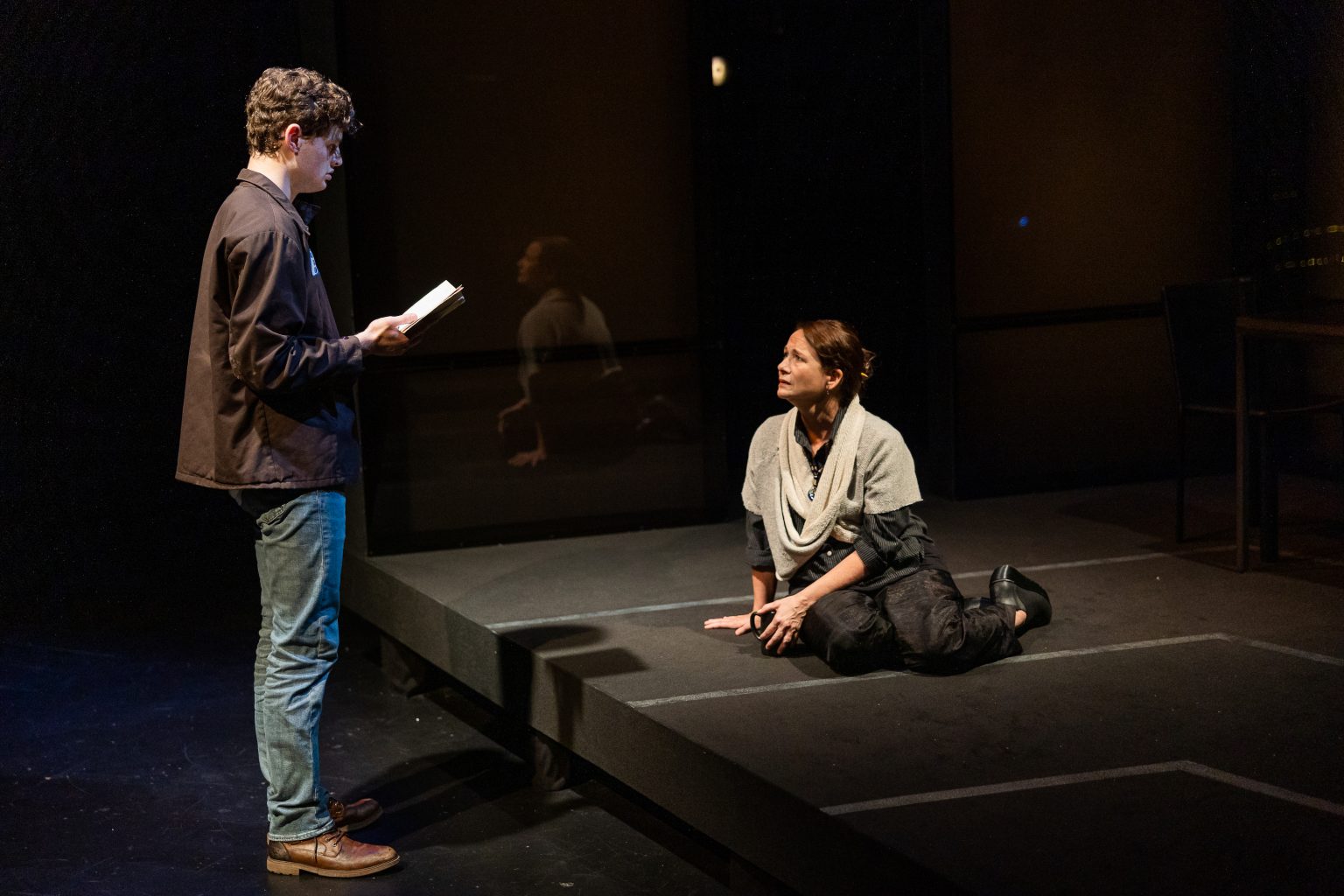
Jennifer Rohn and Nathan Malin in ‘The Sound Inside’ All photos by Nile Scott Studios

By Shelley A. Sackett

If your Covid Comfort Zone now includes attending indoor events, gallop on over to SpeakEasy Stage’s production of Adam Rapp’s The Sound Inside, a trifecta of what makes for exalted theater: flawless script, acting and directing. This two-hander doesn’t just hit a home run over the green wall; it launches it into outer space.

That said, it still takes a leap of faith to believe that it is safe to be packed together as tightly as a fully booked economy cabin as long as everyone is fully vaccinated and masked. It took me several minutes before my anxiety leveled off and I could be entirely present for the play.

And what an extraordinary play it is.

In a nutshell, Rapp has written a 90-minute intermission-less drama about two writers: Bella Baird (Jennifer Rohn), a 53-year-old Yale professor of creative writing who has just been diagnosed with stage 2 cancer, and Christopher Dunn (Nathan Mailin), her student who marches to a different drummer than his peers.

Through their intellectually intimate and intricate conversations, we glimpse the moving targets of their lives’ stories and the fictional lives each has woven as cover and cover up. We also glimpse their pain, isolation, loneliness and pessimism. They are as different as night and day, as similar as two peas in a pod.

There emerges an undercurrent of dormant dread and tension underlying their relationship., but also the hint of potential relief and comfort. Their hyper-articulate, erudite dialogue takes them on a roller coaster ride, sometimes igniting storage bins of disillusion and defeat. Other times, their conversations are the magical balm that soothes their aching souls. Rapp keeps us guessing whether grief or solace lurks around every encounter, as thoroughly engaging and enjoyable as good page turner.

Jennifer Rohan in ‘The Sound Inside’

Under Devorah Kengmana’s brilliant lighting design, the play opens in darkness. A spotlighted Bella emerges and begins to address the audience. As if workshopping a novel, she describes her experiences, thoughts, and disappointments. She is scathing and dispassionate, especially when critiquing herself, the author of two novellas and “an under-appreciated novel written in my late thirties that, despite some flattering reviews and a mention or two on a handful of year-end lists, is struggling to stay alive.” She is also not above petty jealousy. Although she adores James Salter’s “Light Years,” rereading it every year, she refuses to teach it because “it is a rare work of fiction that continues to reveal new things with each reading…It’s so good it enrages me.”

The set (by Cristina Todesco) is sparse, dark and efficient, a single table and two chairs. When Bella addresses the audience from the table and the lighting shifts, we are transported to her office. Christopher arrives without an appointment (for which she admonishes him, but doesn’t send him away). He speaks to Bella and she speaks both directly to him and to the audience in frequent pithy asides. Alternating who gets to play narrator is a device Rapp employs to great effect throughout the play.

Christopher is a Yale misfit, surly, full of contradictions, with a chip on his shoulder and a mind as focused on and in love with writing as is Bella’s. He is obsessed with Dostoyevsky’s “Crime and Punishment.” He is out of step with his generation (“Twitter is for people who are terrified of solitude”) and at heart an old-fashioned romanticist (“Email’s not my style. I prefer penmanship. Getting ink on your fingers. The human effort”).

In some ways, they are yin and yang; she’s all about following rules and protocol, while he simply follows his own instincts. Yet something sparks when they are together. They admire — and, surprisingly, seem to trust — each other. He loved her published works and cites long passages as he paces her office, praising her novel (after which she seems to melt, and tells him to call her Bella instead of Professor Baird). She is impressed by his ambition (he is writing a novella with himself as the protagonist) and prodigious intellect.

Under Bryn Boice’s spot on direction, the rest of the play (no spoilers here!) weaves a tapestry borne of their conversations. They become more honest and unguarded with each other, exposing an almost erotic, yet chaste, intimacy that lifts each out of his fundamental sadness. It is no surprise that Christopher’s novella bears a quote from “Crime and Punishment: “We sometimes encounter people, even perfect strangers, who begin to interest us at first sight, somehow suddenly, all at once, before a word is spoken.”

Jennifer Rohn brings a gorgeous nuance to Bella, imbuing her (many, many) lines with pathos, compassion and, when called for, playfulness. Her body language shifts on a dime; her vocal pacing and tone are subtle and effective.

As Christopher, Nathan Mailin brings the same qualities he did as a runaway star in ‘Admissions,’ the 2019 SpeakEasy Stage production where he debuted as a 20-year-old BU student. He has tempered and honed his style (which still has enormous range and presence) and brings depth, vulnerability and physicality to a character that could have easily become a caricature in less capable hands. Individually, each is superb; together, they are simply sublime.

Cannot be recommended highly enough.

Presented by Speakeasy Stage in the Calderwood Pavilion at the Boston Center for the Arts through Oct 16, 2021.

For COVID protocol, go to https://www.speakeasystage.com/visit/covid-masks-vax/

For tickets and more info, go to https://www.speakeasystage.com/shows/2021/09/the-sound-inside/

Nathan Malin and Jennifer Rohn in ‘The Sound Inside’

Dorset Theatre Festival’s ‘Queen of the Night’ Spins Evening Magic

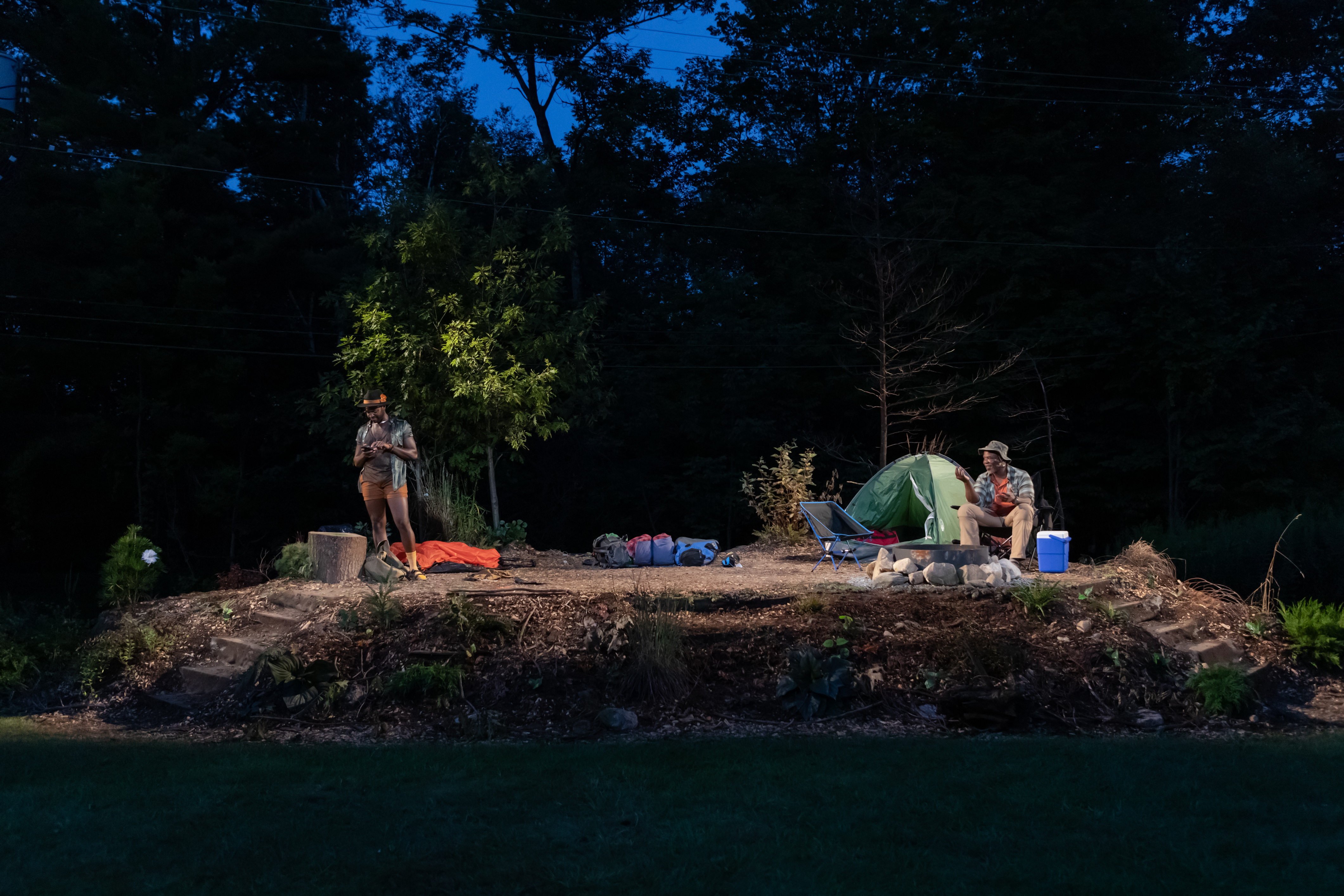
Leland Fowler (at left) and Danny Johnson in ‘Queen of the Night.’

By Shelley A. Sackett

Finding one’s seat (a folding beach chair) for  Dorset Theatre Festival’s world première of “Queen of the Night” at Southern Vermont Art Center’s rustic plein-air stage is like entering a fairy forest world where reality and theater blend. Night creatures are everywhere — by design piped in over the sound system, and by Mother Nature in the woods, open field and air that are the outdoor playhouse. As dusk fades to night, the stars complement the strung overhead lights to create a magical haven far removed from the day’s blaring headlines and latest COVID statistics.

The efficient and effective campsite set, designed by landscape gardeners Justin and Christopher Swader, blends into its organic setting. All the natural world is indeed this play’s intimate stage, and the audience is palpably grateful to be part of it. What could possibly go wrong on a night like this? By the time Tyler (Leland Fowler) and his father Stephen (Danny Johnson) amble onto the “stage” and begin to pitch their tents, it feels like we should jump up, welcome them to the neighborhood and offer to help them set up.

This father and son, however, are not simply taking a break from their Houston lives to spend three peaceful nights camping in a nearby state park. They have brought more baggage than their camping gear and a mile-long laundry list of issues that both unite and divide them. “Ty” is young, black, semi-employed and flamboyantly gay. For his first night in the woods, he shows up in orange short shorts and a black floral, lacy top. L.L. Bean he is not (thanks to Fabian Fidel Aguilar’s bold and fun costumes). He loves city life, gay bars, vamping, prancing and channeling Celine Dion at the top of his talented lungs. He worries about bad cell service and being eaten by bears. He is in constant motion and we are drawn to his physicality like a moth to a flame.

Stephen, on the other hand, is steady and solid, a reliable and dependable employee and family man. Think of a 63-year-old man with James Earl Jones’ octogenarian gravitas. He inhales the campsite with reverence and relief. He pays attention to nature with serious religiosity. He is the obvious yin to his son’s yang; and yet, as the play unfolds, we will see how these opposite and contrary forces may actually be complementary, interconnected, and interdependent. By the end, they actually give rise to and liberate each other as they interrelate.

The presenting reason for this father-son camping trip to their longtime stomping grounds is the impending remarriage of Ty’s mother, which both will attend. They are navigating difficult waters — Ty and his more successful corporate lawyer brother Marshall are trying to be there for both parents without making hurting either; Stephen admits he still loves his (ex-) wife. The weekend is meant to clear the air and reset their clock, to help them reconnect in the way they did when Ty was a young Boy Scout and he and his father would go camping, in this very spot, just the two of them.

The trouble is that they each have very different memories of those trips, and of just about everything else during Ty’s childhood. Stephen wanted to make Ty tough, independent and resourceful. All Ty wanted was to feel his father’s love and acceptance of him, just the way he was.

Over the course of the 90-minute intermission-less production, we witness the erosion of years of hurt, disappointments and missed opportunities as the two let down their guard and act more like buddies than adversaries. Stephen confesses that he has been laid off from his job and that he has been seeing a therapist. He’s changed. He’s sorry. He wants to be close to his son, to undo the damage he had no idea he caused. “You’re my missing piece,” he tells Ty. “I need you.”

Ty acknowledges his frailty and insecurity, his sadness and longing for paternal praise and love. His veneer of gaiety barely camouflages a melancholy so deep that he reflects on his desire to die alone in the woods at night.

tate uses this broken relationship as a platform from which to tackle a bunch of big-ticket themes: being Black; being gay; being a man; being a Black gay man; being accepted; being accepting; unconditional love; self-love, self-hatred, family dynamics, to name just a few. While his dialogue has moments of sharp insight and laugh-out-loud humor, it often feels preachy and spread too thin over too many issues. Some lines feel injected out of nowhere just to make a point, never a help to a two-handed play.

To the script’s rescue, however, is the spectacular acting of the two leads, reason enough to see the production (and anything else these two may appear in).

Danny Johnson brings an elegant sobriety to the father, Stephen. His raspy melodious voice, cadence and spot-on phrasing imbue his character with humility, decency and authenticity, bring true life to a role that could have been easily become two-dimensional. Leland Fowler brings equal parts joie de vivre and soul-crushing heartache to Ty, miraculously keeping the character light and accessible.

A cursory search reveals that Queen of the Night has many meanings, including the villain in “The Magic Flute,” a white night-blooming cactus flower and, slangily, a flamboyant and promiscuous gay man. It’s the operatic aria reference that resonates most with me, with its message that only those who embrace love and forgiveness are worthy to be considered human. These two are indeed all too human beings, dealing with their perceptions of who they are and who they want to be, starting with their roles as father and son.

Queen of the Night’ – Written by travis tate. Directed by Raz Golden. Scenic Design by Christopher and Justin Swader; Lighting Design by Yuki Nakase Link; Sound Design by Megumi Katayama; Costume Design by Fabian Fidel Aguilar. Presented by Dorset Theatre Festival at the Southern Vermont Arts Center in Manchester, Vermont through September 4.

For tickets and information, call 802-867-2223, ext. 101 or visit dorsettheatrefestival.org

Gloucester Stage’s ‘Baskerville” Is A Literal Breath of Fresh Air

By Shelley A. Sackett

Texan Sir Hugo Baskerville (Julian Manjerico) consults with Sherlock Holmes (Alexander Platt) and John Watson (William E. Gardin). All photos by Jason Grow

Nothing could be finer than to be at theater-en-plein-air in Rockport on a clear and balmy summer evening carousing with the brilliant cast of the spectacularly entertaining Baskerville: A Sherlock Holmes Mystery. Penned by Ken Ludwig, the Tony-award winning playwright of Lend Me A Tenor, this fast-paced comedic melodrama is a riff on the quintessential detective, Sherlock Holmes, and his faithful sidekick, Dr. John Watson.

This time, the dynamic duo is called upon to crack the case of “The Hound of the Baskervilles” before a family curse dooms its newest heir. Along the way, they encounter a motley crew of eccentric characters, hair pin plot twists and turns and red herrings galore. The 2-hour-15-minute (including one intermission) production flies by as five spectacularly talented actors play more than forty characters whose slapstick gestures and hyperbolic speeches they perform with impeccable pacing and precision. Couple this with stellar set, lighting, sound and prop designs, and theatergoers are in for a rollicking evening of good old-fashioned fun.

The play opens with Watson (William E. Gardiner) setting the stage by narrating what he and Holmes (Alexander Platt) know and what they need to learn about the mysterious deaths of the Baskerville heirs. Although the actors look and emote like their iconic cinematic predecessors, Basil Rathbone (Holmes) and Nigel Bruce (Watson), they each bring additional layers to the onion, remaking the characters as their own.

Gardiner’s Watson is a blend of subtle contradictions — confident, yet cautious; anxious, yet reckless; compassionate, yet unquestioningly loyal. Platt’s Holmes is delightfully quirky — blind to his worst foibles while perseverating over imagined transgressions; jumping up and down and squealing in delight one minute, while dispassionately describing a victim’s gory fate the next. Platt uses his height and leanness to bring spot on physicality and humor to his character. They are both up to the task of anchoring the play, both as its namesakes and as the two actors who play only one role.

The other three are maestros of quick change: character, costume and accent. Among them they play more than 40 characters with a style that would be at home in a Victorian melodrama. Anna Bortnick is a standout as she glides from character to character, morphing from a Scottish nurse to a severe, humorless Swedish caretaker to an older, maternal housekeeper to a scrappy Dickensian urchin boy (in whose skin Bortnick particularly shines).

Anna Bortnick and Alex Jacobs as messenger boys.

Alex Jacobs is superb as he flows from Stapleton (a seemingly geeky butterfly lover who conceals a psychopath within) to Barrymore (the mournful caretaker of Baskerville Hall) to Milker (the other scrappy Dickensian urchin boy) to Lucy (the loving wife of Wilson) to Dr. Mortimer the elegant, friendly and passionate.

Julian Manjerico rounds out the trio with versatility and verbal and physical nimbleness as he hops from Sir Hugo Baskerville (a brutal, cruel Cavalier) to Wilson (the exuberant, hearty head of a messenger office), to Sir Henry Baskerville (a young Texan relation to Baskervilles, open-hearted, earnest, ready for adventure and to fall in love), to Inspector Lestrade, a cocky police inspector.

They are all aided by Miranda Kau Giurleo’s flawless costume design, Erica Tobolski’s dialect coaching and Robert Walsh’s expert action consultation. Director Jim O’Connor utilizes Janie E. Howland’s efficient, moveable set and Dewey Dellay’s original music and sound design  to maximum advantage in creating a thoroughly satisfying theatrical experience.

Windhover Center for the Performing Arts is a hidden Shangri-la of a venue with a horseshoe shaped seating arrangement encircled by a grove of protective and comforting trees. The effect is intimate, organic and charming. For tickets and info, go to gloucesterstage.com/baskerville/.

‘Baskerville: A Sherlock Holmes Mystery’ – Written by Ken Ludwig. Directed by Jim O’Connor. Set Design by Janie E. Howland; Lighting Design by Marcella Barbeay; Original Music/Sound Design by Dewey Dellay; Costume Design by Miranda Kau Giurleo; Props Design by Emme Shaw; Dialect Coach – Erica Tobolski; Action Consultation by Robert Walsh. Presented by Gloucester Stage Company at the Windhover Center for the Performing Arts in Rockport through July 25.

‘Bar Mitzvah Boy’ wrestles with keeping the (Jewish) faith when bad things happen to good people

Rabbi Michael (Diane Di Bernardo) and Joey Brant (Peter Palmisano) prepare for Joey’s upcoming adult Bar Mitzvah in ‘Bar Mitzvah Boy.’

By Shelley A. Sackett

Right out of the gate, playwright Mark Leiren-Young challenges his audience to leave their assumptions in the (virtual) lobby. ‘Bar Mitzvah Boy,’ his prize-winning 90-minute two-hander, opens as a young woman wearing jogging gear, baseball cap and rock-blasting ear buds pauses by a bench, then continues on the wooded trail, straight up the front steps of a stately mid-20th century synagogue.

Inside the rabbi’s office, a 60ish man, dressed in full rabbinic regalia —  gray suit, tallis (prayer shawl), kippah and tefilln (phylacteries) — pulls a book from the book shelf. He sits at his desk, poring over it somberly, as a woman’s nasal voice bleats over a tinny loudspeaker, “Rabbi. You’ve got a visitor.”

The jogger enters and freezes. “Excuse me?” she says with ambiguous inflection. “I don’t mean to be rude, but I’m waiting for someone,” the man replies. In the first of many twists meant to keep us untethered, it turns out the woman is Rabbi Michael Levitz-Sharon (Diane Di Bernardo) and the man, a prosperous divorce attorney, is Joey Brant (Peter Palmisano).

Joey has a mission; he begs her to prepare him for a traditional Bar Mitzvah. He is desperate to carry on this family practice before his grandson, Ben, celebrates his own Bar Mitzvah the following week in the same synagogue, but “no one can know.” Rabbi Michael objects, complaining only a magician could pull off such a feat, but when Joey deploys his talent for persuasion, she reluctantly agrees to take him on as a student.

These opening scenes lay the groundwork for this thinly-plotted, character-driven play, and establish Leiren-Young as a gifted craftsman. The dialogue is witty, smart and fast, full of one-liners and prickly punch lines delivered by two talented actors. Although Joey and Rabbi Michael initially seem poles apart, the more they talk, the more their chemistry grows. They riff off each other. Both make their livings through words, and they delight in the gamesmanship of debate. They are skilled active listeners and articulate, honest responders. They share a sense of humor which has helped each navigate life’s hardships and disappointments. And they both wear their hearts — and their pain — on their sleeves.

Yet, on other levels, the two couldn’t be more different. Joey is impatient, pushy and demanding, a man who knows what he wants and is used to getting it. He abandoned Judaism 52 years ago and hasn’t  been in a synagogue since.

Rabbi Michael, on the other hand, is a third-generation rabbi who entered the “family business” because she wanted to help people. She is in love with the sense of home she gets every time she enters any synagogue, anyplace in the world. Her faith is her bedrock;  her community, her lifeline.

As the play evolves, the tenor of their conversation deepens and Leiren-Young lets his characters ask the question the audience has been pining to have answered. “Why are you here?” Rabbi Michael finally asks. Joey replies, “I want to believe in God,” but admits he has trouble when he sees “stuff like this,” referring to Rachel, the 11-year-old terminal cancer victim he saw at services the previous Saturday. “She’s my daughter,” Rabbi Michael (whose name, ironically, means “beloved of God) answers, and with that, ‘Bar Mitzvah Boy’ shifts gears as the two join forces in their quest to make sense of Judaism in the light of unspeakable tragedies.

The pitch of their conversations deepens in intellectual, spiritual and emotional tone as their relationship morphs from teacher/student to trusting friends. The rabbi shepherds Joey on his journey of Jewish rediscovery despite her breaking heart, putting on a “good face” for her congregation and supporting her daughter’s desire is to be called to the Torah as a Bat Mitzvah before she dies. She candidly admits that Rachel’s imminent passing and the marital separation it caused has stressed her faith to the breaking point. Whether it will survive her death is anyone’s guess.

Joey, too, lets down his guard and reveals the real reason he never had a Bar Mitzvah. For him, a Bar Mitzvah doesn’t represent a coming-of-age rite; it is a coming-back-to-faith turning point.

Joey and Rabbi Michael’s meaty discussions about the Bible as metaphor, miracles, forgiveness, tragedies, and what it means to “feel” Jewish are certainly heady and thought provoking. ‘Bar Mitzvah Boy’ is, after all, a Jewish play with a universal story about keeping faith when bad things happen to good people.

But at the end of the day, these scholarly concepts alone can’t save them. Rather, it is their personal connection as caring friends that helps them build a bridge over the rough waters of their doubts, and their shared faith in the power of community that might just carry them across.

‘Bar Mitzvah Boy’ — Written by Mark Leiren-Young; Directed by Saul Elkin; Produced by David Bunis; Managing Director- Jordana Halpern; Stage Manager- Keelin Higgins; Set Design by David Dwyer; Costume Design by Ann Emo; Sound Design by Nicholas Quin. Presented by Jewish Repertory Theatre. ‘Bar Mitzvah Boy’ is available for digital download from November 5-25. For more information or to purchase tickets, visit jccns.org/event/bar-mitzvah-boy/

‘Manifest Destiny’s Child’ or True Confessions of a Regretful 2016 Jill Stein Supporter

Dennis Trainor Jr in “Manifest Destiny’s Child

by Shelley A. Sackett

‘Manifest Destiny’s Child’ is a dramatization of Dennis Trainor, Jr.’s true story about his personal involvement in all things social justice, from protesting at Standing Rock and Occupy Wall Street to his hosting and writing the nationally syndicated news and politics show Acronym TV to, ultimately, becoming Communications Director of Dr. Jill Stein’s ill-fated third party run for President in 2016.

Created as a memoir at Boston’s creative writing space, Grub Street, Trainor decided to morph the piece into a one-man show. While he and director Jeff Wise wisely interspliced actual footage from the protests and Stein’s campaigns, that footage spotlights Trainor, either as participant or interviewer. Coupled with the remainder of the 63-minutes that focuses on Trainor as a talking head either in emotive full face  or — annoyingly — in static profile, that’s a LOT of on-screen Trainor, his Robert Downey, Jr./Matthew Perry appeal  notwithstanding.

Dennis Trainor Jr arrested in the Hart Senate Office Building during the Occupy Wall Street movement, October 2011. Image: Screenshot/ Manifest Destiny’s Child / AcronymTV.org

It’s hard to get a handle on Trainor’s point at first. We are introduced to his comfortable, well-appointed bourgeois lifestyle (love the art work!), his mid-life professional crisis and his inviolable weekly date nights with his wife. We also glimpse his rage and disappointment at “Trumplandia” and receive a history lesson on “Manifest Destiny,” the widely held 19th century American imperialist belief that American expansion throughout the continent was both justifiable and inevitable.

“How did we get into this Trump mess?” Trainor bemoans. “Inequality and poverty are not an accident. They are human made.”

Finally, some 20 minutes in, Trainor throws us a contextual lifeline. It is 2015 and, seemingly out of the blue, Dr. Jill Stein asks him to be her Communications Director for her presidential campaign. Trainor, flattered and relieved to have something meaningful to do with his life, accepts her offer. Nine months later, he quit but not before amassing a trove of frustrations and disappointments that he can’t wait to share.

The show sometimes feels like a TED talk, and perhaps that’s a venue Trainor should explore, since those parts of the piece feel most authentic and are most engaging. He holds forth on the history of third parties in American politics and the narrow but important victories they won, such as the end of slavery by the then third-party Republican party and women’s right to vote by the Woman Suffrage Party.

Yet, through the whining and misgivings, one can’t help wondering: Why did he work for Stein if he knew she would never be president? Why did she run if not to win?

Trainor’s point (and it is an excellent one) is that Stein should have set her sights on getting the Green New Deal passed rather than securing the presidency, which was completely beyond her grasp. However, she stubbornly stayed in the fray, eventually (in Trainor’s tortured mind) drawing enough votes away from Clinton to result in Trump’s victory. And he was her willing accomplice.

Although he quit Stein’s campaign after nine months, he returned a year later as an independent contractor handling her media (or “sales,” as he aptly puts it). Trainor feels residual existential guilt over his part in her toxic and unproductive run, and this is where the show changes tenor from memoir to chest-beating therapy, which is too bad.

Turns out, however, Trainor and Stein had more in common than not: they share an almost masochistic compulsion to make arguments and fight battles they are certain to lose. “Throwing sand at tsunamis,” he names it.

The piece does end on an upbeat note, heralding  revolutionary struggles that can actually be won, like Occupy Wall Street and Standing Rock. Still, it’s hard not to worry about Trainor personally. If the 2016 election threw him into a tailspin of depressing hours spent on Facebook, Twitter and list making, how must he be coping with that scenario redux and COVID?

‘Manifest Destiny’s Child’ — Written and performed by Dennis Trainor, Jr.; Directed by Jeff Wise and Dennis Trainor; Presented by Acronym TV. 

Manifest Destiny’s Child will stream on-demand October 24st — November 8th, 2020 here: https://acronymtv.org/mdc