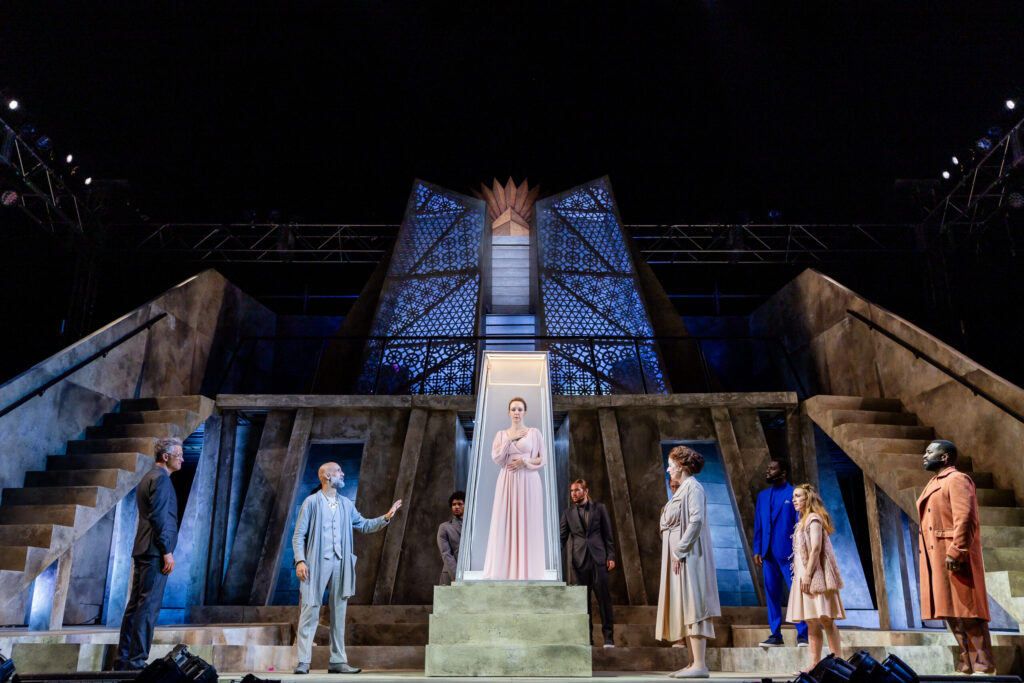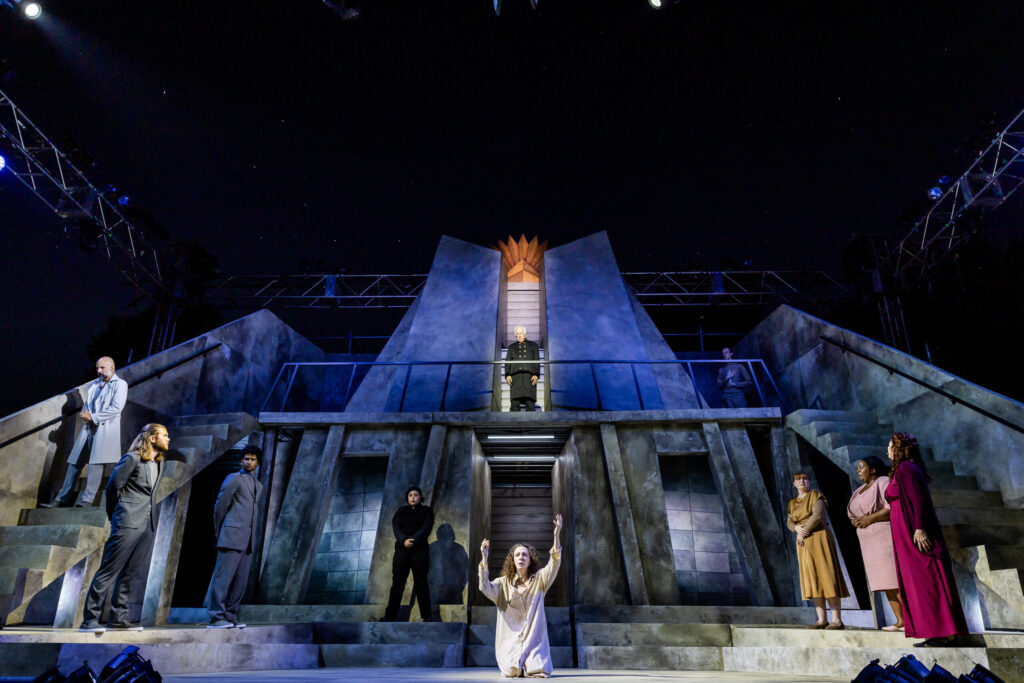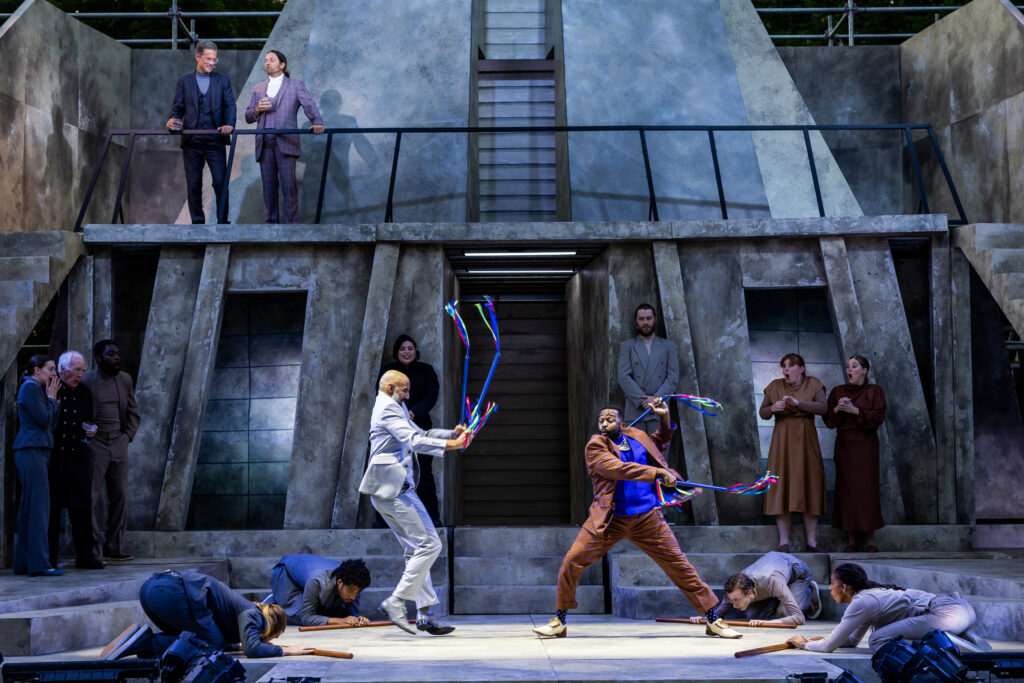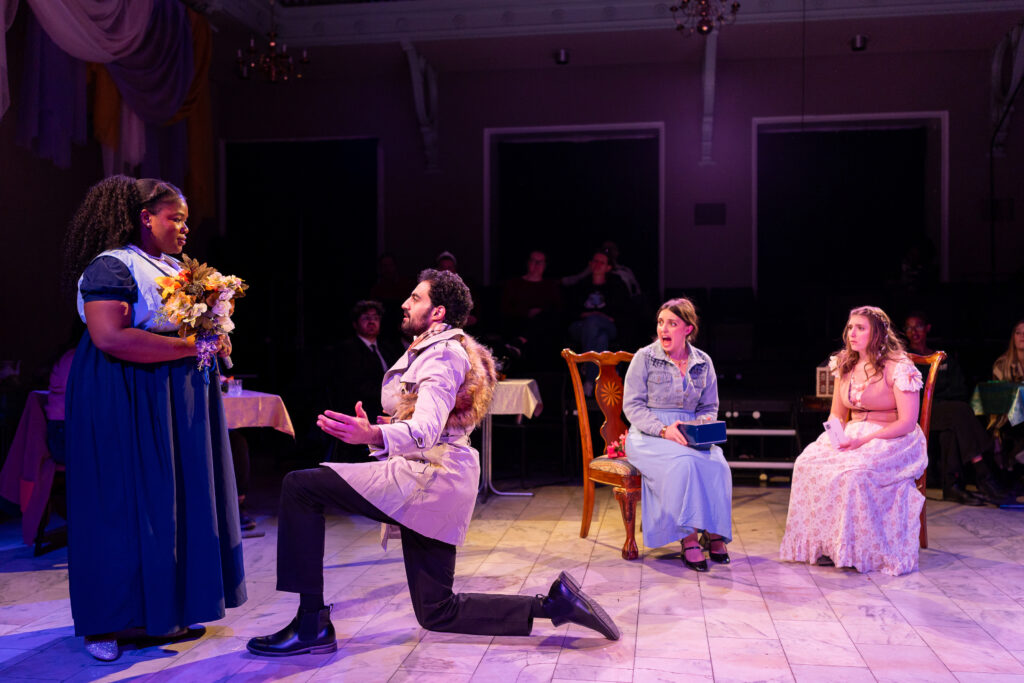
DTF’s Timely ‘True Art’ Is A True Masterpiece

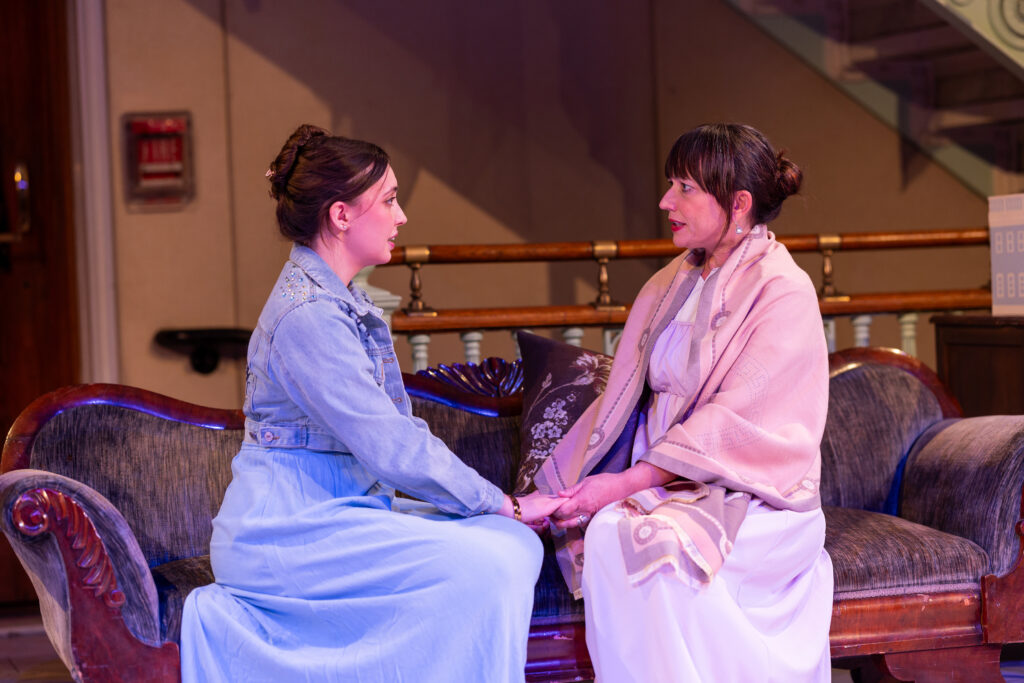
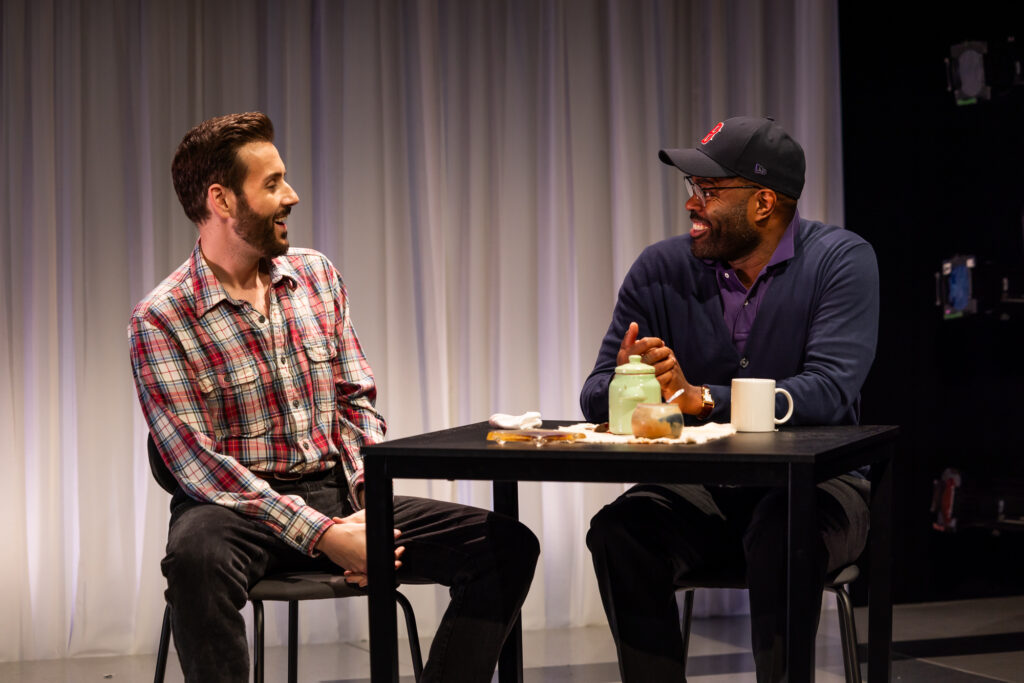
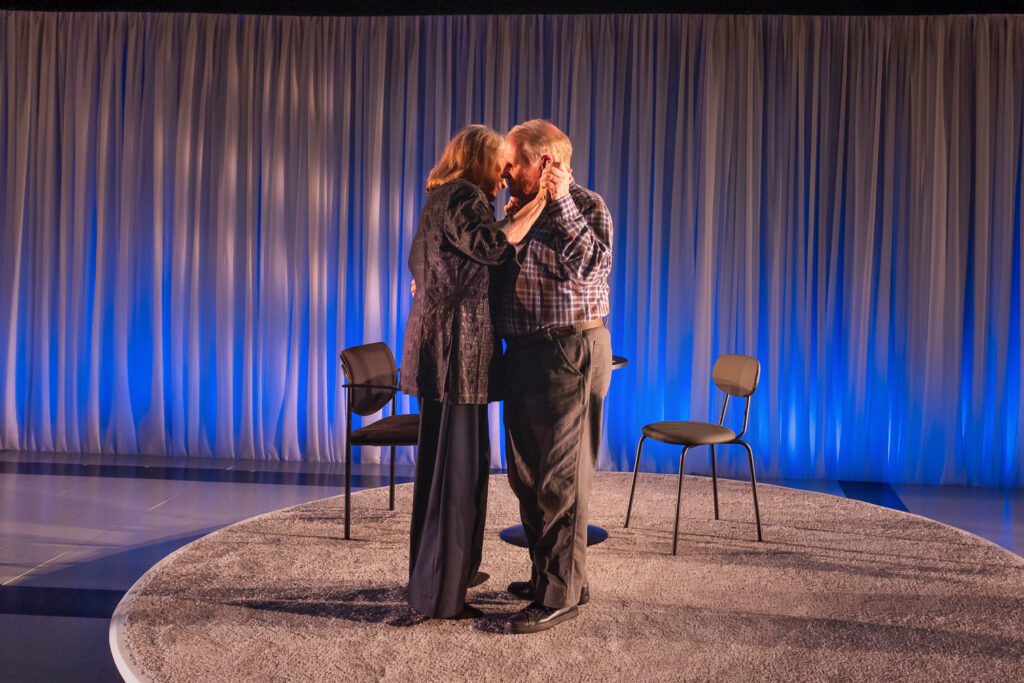
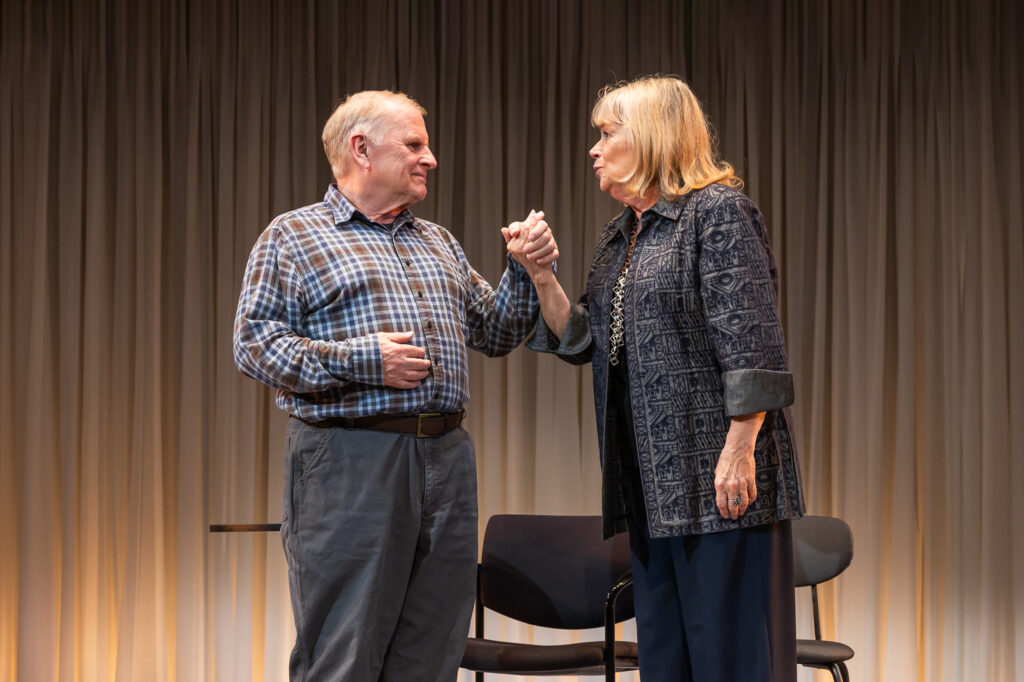
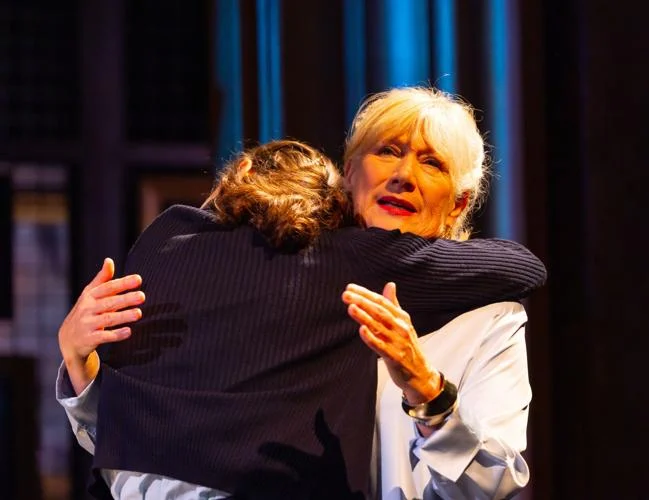
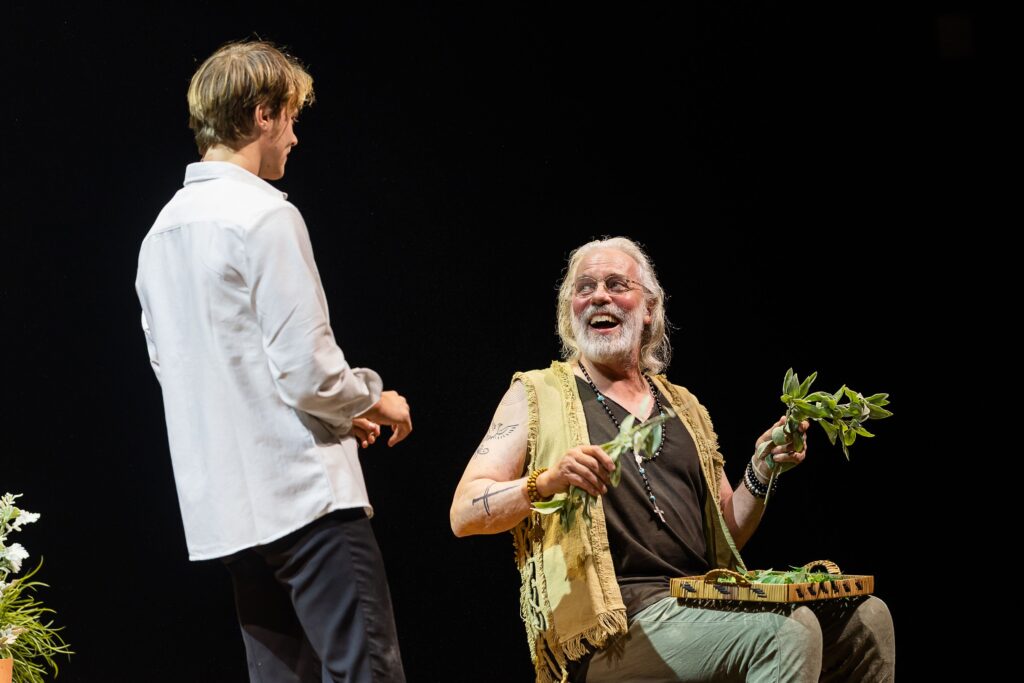
Jayne Atkinson, Fiona Robberson in Dorset Theater Festival’s Timely ‘True Art.’
Photos by T Charles Erickson

By Shelley A. Sackett

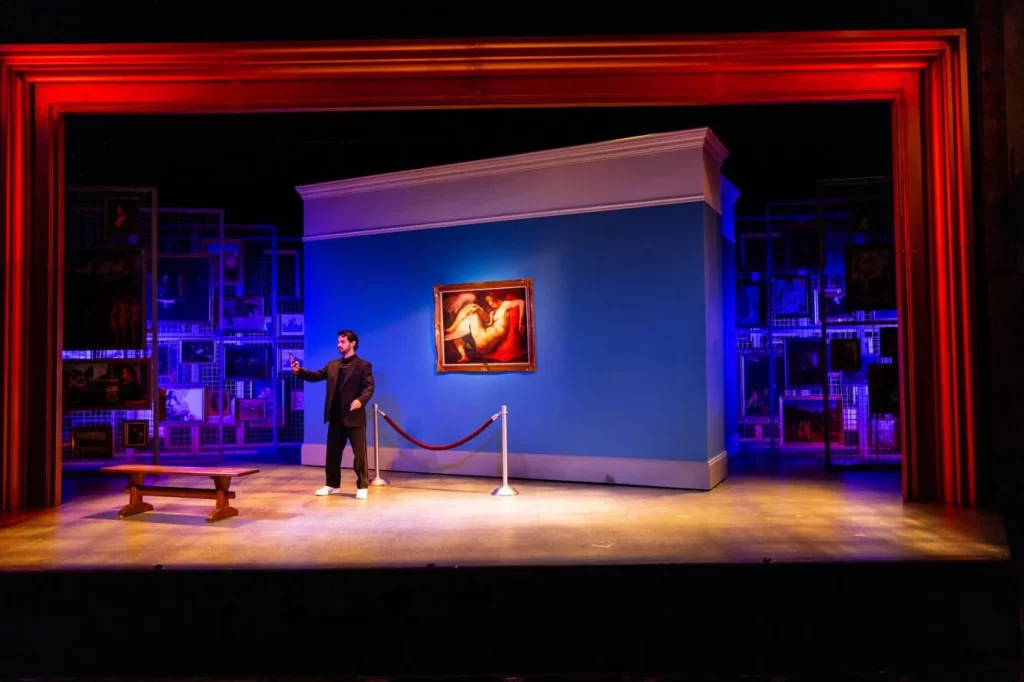
It was good planning to arrive a little early for the Dorset Theatre Festival’s world première of “True Art.” The bewitching set begged a closer look. Center stage, basking in Renaissance splendor, is Michelangelo’s “Leda and the Swan,’ mounted on a rich burgundy panel. Stage left and right are mirror rows of vertical metal grids, each loaded top to bottom with the A-list of coveted museum possessions, from Pollack to Picasso and Monet to Miro.

These were very good replicas, so good in fact, that even up close, even knowing I was in a converted barn in Dorset, Vermont, and not on Museum Mile in New York City, for a split second, I felt like I was on hallowed artistic ground. Although stage prop replicas, these paintings could evoke the same kinds of feelings as the real McCoys.

Is that a bad thing? Is “fake art” valueless? Can only authentic art evoke valid feelings? Is an emotional reaction to counterfeit art necessarily counterfeit too?

It turns out one of the central questions playwright Jessica Provenz asks in her biting, suspenseful, thought-provoking, and funny newest play is in this same vein: In the provenance of the art world, what makes something — and someone — authentic? Is it the art or the artist? Is it what’s on the canvas or what the critics have written about its artist?

Charlie Reid

And, more importantly, how much does its history and reputation as an “important” work of art influence whether and how much we do — or feel we should — like it?

Provenz has a light touch and a gift for writing colloquial dialogue, so her play doesn’t bog down under the weight of these and other important issues she raises. What a gift to make your audience simultaneously laugh, gasp, and contemplate, which she does from the moment the play starts.

The action begins in media res at Christie’s auction house. Between the Swader’s set and Joey Moro’s projections, it is as if we are in the audience as auctioneer Buddy Silver (Bob Ari) coaxes higher and higher bids out of imaginary art collectors. On the block is “Leda and the Swam,” the lost Michelangelo painting recently discovered in a farmhouse somewhere in France.

The painting sets a new record for the most ever paid for a work of art.

The scene switches to a bench in front of a painting in a gallery at an iconic and prominent museum, where we meet 22-year-old Lauren Anders (a wonderfully talented Fiona Robberson), a midwestern art history major and the new temp of Jodi Dean (the always fabulous Jayne Atkinson). Dean is the 60-something curator of Renaissance art and has a reputation for eating her interns alive. She averages one per month.

Bob Ari, Robberson

Enter J.J. Winchester (Charlie Reid), a flirty, slouchy young man around Lauren’s age who seems to have the keys that open every door in the museum yet has no articulable reason to be there. We get a lot of information from their casual and clever conversation.

Jodi, J.J. tells Lauren, is known as “Dragon Lady” and has had to claw her way to her position of power. She is the only woman being considered for the museum directorship and J.J.’s dad, the museum’s chairman of the board, is the lone holdout on her achieving this life-long goal.

The two are attracted to each other, and the actors bring an innocent carnality and spot-on delivery to their roles. Lauren tells J.J. she intends to become Jodi’s new intern. J.J. bets Lauren she won’t last the day as a temp.

As she scampers off to face the lion’s den, J.J., clearly smitten, gifts her with the tip that Jodi likes her coffee black, extra sweet.

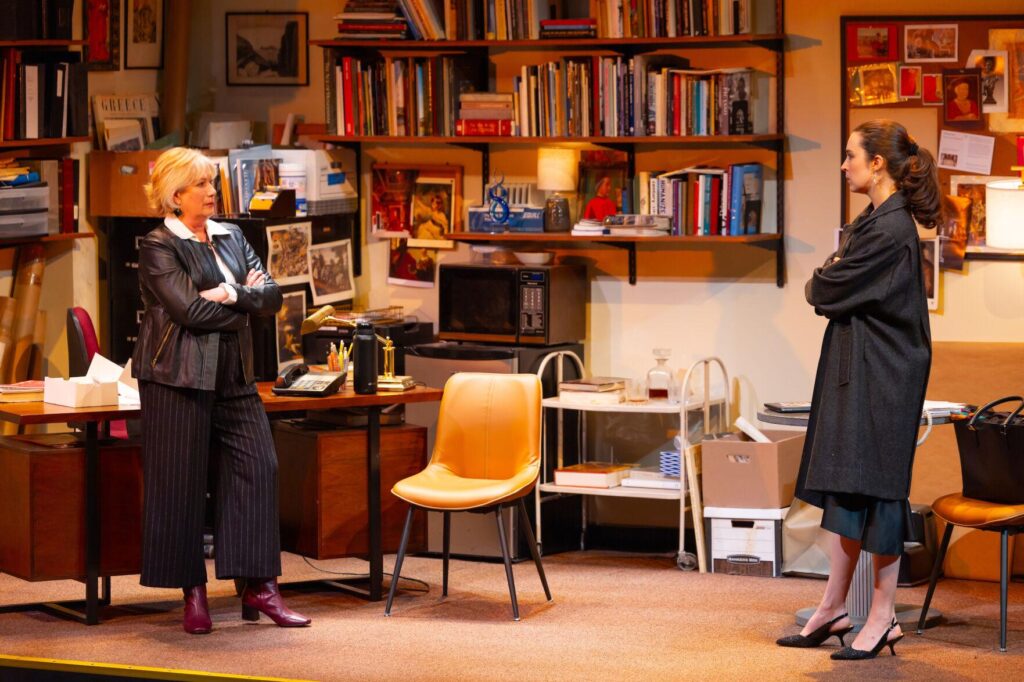
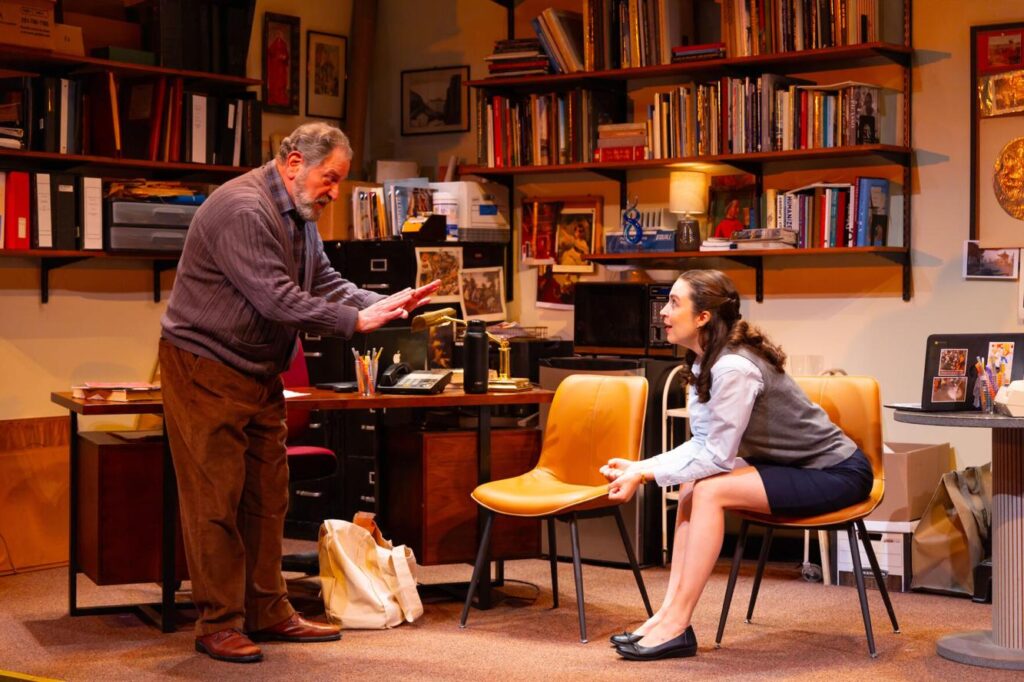
The Swader’s marvelous set then swivels to reveal Jodi in her lair. Atkinson is perfect, playing Jodi as a gladiator and survivor who, from time to time, reveals emotions that surface through the chinks in her armor. She greets Lauren with daring and disdain. She immediately sets ground rules and lets Lauren know the lay of the land.

From the get-go, Lauren stands her ground while slyly taking the wind out of Jodi’s confrontational sails. She predicts and fulfills her desires (like coffee taken black with extra sugar) while pretending to defer, bow and scrape. Lauren is, after all, a Jodi wannabe. She is as determined and ambitious as her boss, willing to do what it takes to get where she wants to go.

Jodi is on her way to an important press conference. It turns out that Jodi and Buddy, Christie’s auctioneer, art dealer, and her sometime boyfriend, are the ones who found the lost Michelangelo masterpiece, “Leda and the Swan.” Her Renaissance department was the anonymous bidder that purchased it.

It also turns out that Lauren did her thesis on that very painting. She does not share her boss’s enthusiasm for the painting or the story of how it was miraculously discovered. Her challenge is to figure out how to navigate in a dangerous sea of deception and high stakes while maintaining her integrity and her job.

Against this thriller backdrop of smoke and mirrors, truth and lies, Provenz weaves a fabulous page-turner plot that examines two meaty topics. First is a deep look into what it takes for a woman to achieve power in a male world and the lengths she will go to retain it as she reaches the twilight of her career.

The second is the whole notion of authenticity, both in the art world and the world of everyday honor and decency. Do facts matter? Does the truth matter? Does getting it right matter as much as getting ahead?

A woman in power? Facts mattering? Timely indeed.

Robberson, Atkinson

Director Michelle Joyner has an all-star cast to work with, and she milks their talent and Provenz’s script for all they’re worth. Atkinson, known on stage and television, has the chops to tap into both Jodi’s inner Dragon Lady and her insecurities with humor and humanity. Ari plays Buddy with equal parts smarm, charm, and menace. Reid is chameleon-like, understated and enigmatic one minute, and taking the helm and righting the ship the next.

But it is Robberson as Jodi’s protegée Lauren who really shines in every scene. She has a physicality of gesture and facial expression that dares the audience to look away from her. Hopefully, DTF theatergoers will see more of her next season.

“True Art” is chockful of great lines, high production value, and stellar performances, making it a theater lover’s trifecta of bounty. Yet it also leaves us with plenty to spark after-theater conversations, which are the measure of the most satisfying experience.

Jodi is at her rawest and most honest at the play’s end, when she looks herself in the eye, acknowledges the corners she cut and compromises she has made for the sake of her ambition, and wonders if it was worth it.

“What if my life’s work is wrong? What am I then?” she asks softly. What indeed.

“True Art” – Written by Jessica Provenz. Directed by Michelle Joyner. Scenic Design by Christopher and Justin Swader; Costume Design by Barbara A. Bell; Lighting Design by Patricia M. Nichols; Sound Design by Jane Shaw; Projection Design by Joey Moro. Presented by Dorset Theatre Festival, Dorset, Vermont. Run has ended.

A.R.T.’s Innovative “Romeo and Juliet” Elevates and Grounds Shakespeare’s Masterpiece

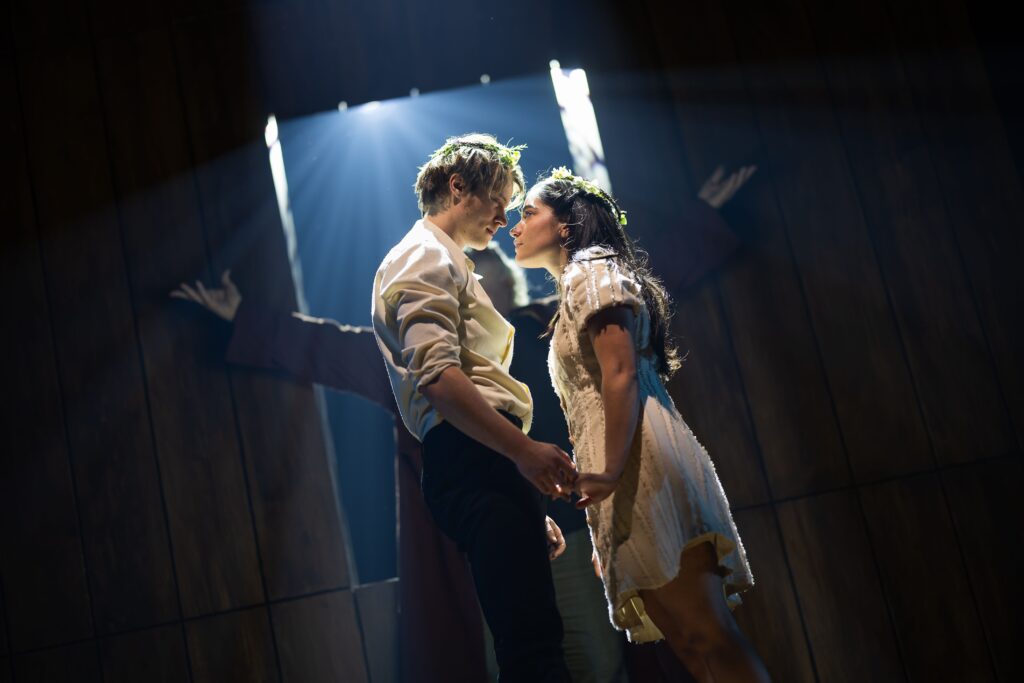
Emilia Suárez (Juliet) and Rudy Pankow (Romeo) in A.R.T.’s  Romeo and Juliet.
Photo Credits: Nile Scott Studios and Maggie Hall

By Shelley A. Sackett

Diane Paulus, Artistic Director at American Repertory Theater, has raised the bar on production values so often, we’ve come to expect the unexpected from her. From 1776 to Pippin to Gershwin’s Porgy and Bess, Gloria: A Life, Jagged Little Pill, Waitress, SIX, and moretheatergoers in Boston have benefitted from her inspiring collaborations and razor-sharp skills to enjoy Broadway-bound productions right in their own backyard.

Romeo and Juliet is no exception.

Working with a creative team of stellar talent, Paulus has breathed contemporary life into Shakespeare’s 16th-century well-known and oft-quoted masterpiece.

The tragic story is a familiar tale of star-crossed lovers caught in the crosshairs of a family feud so old that its origins have faded from memory. Paulus said she wanted to focus on the couple’s feelings for each other and highlight their love instead of their families’ hate. By using movement, evocative music, lighting, and a spectacularly efficient set, she creates the perfect stage upon which such a transformation can — and does — happen.

As with all Shakespeare (and especially in productions where there are no projected captions to serve as guides), a plot primer can be helpful.

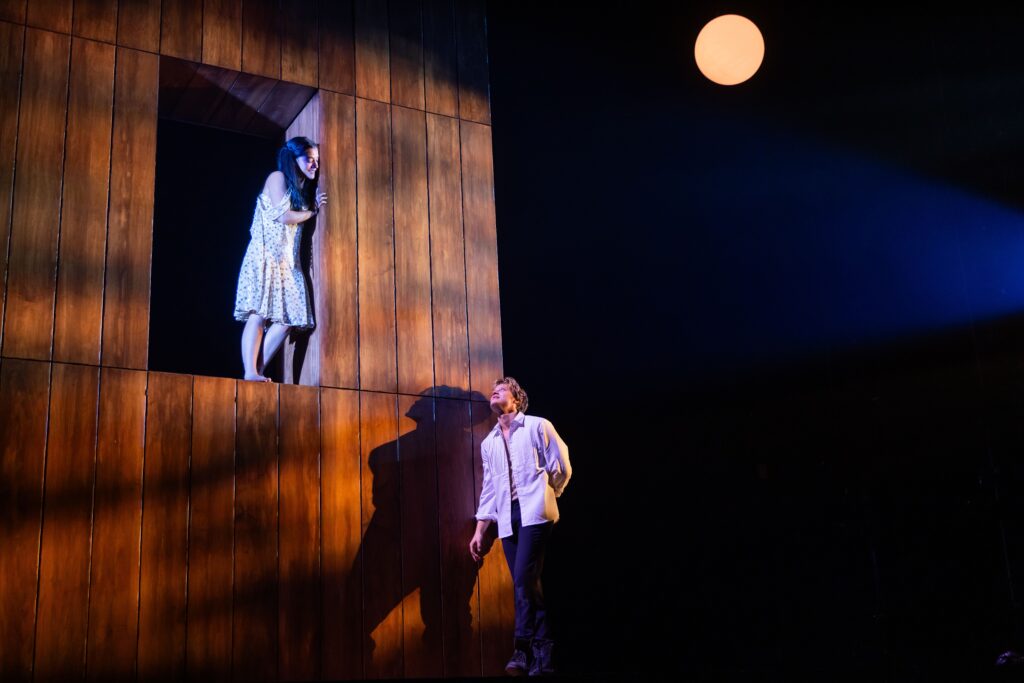
Juliet Capulet (Emilia Suárez of Hulu’s Up Here fame) and Romeo Montague (Rudy Pankow of Netflix’s Outer Banks) meet and fall instantly in love at a masked ball hosted by Juliet’s parents. They profess their devotion when Romeo, unwilling to leave, climbs the wall into the orchard garden of her family’s house and finds her alone at her window. Because their well-to-do families are enemies, the two are married secretly by Friar Lawrence (the fabulous Tony Award winner and multiple nominee, Terrence Mann).

When Tybalt (Alex Ross), a Capulet, seeks out Romeo in revenge for the insult of Romeo’s having dared to shower his attentions on Juliet, an ensuing scuffle ends in the death of Romeo’s dearest friend, Mercutio (Clay Singer). Impelled by a code of honor among men, Romeo kills Tybalt and is banished to Mantua by the Prince of Verona (Jason Bowen), who has been insistent that the family feuding cease.

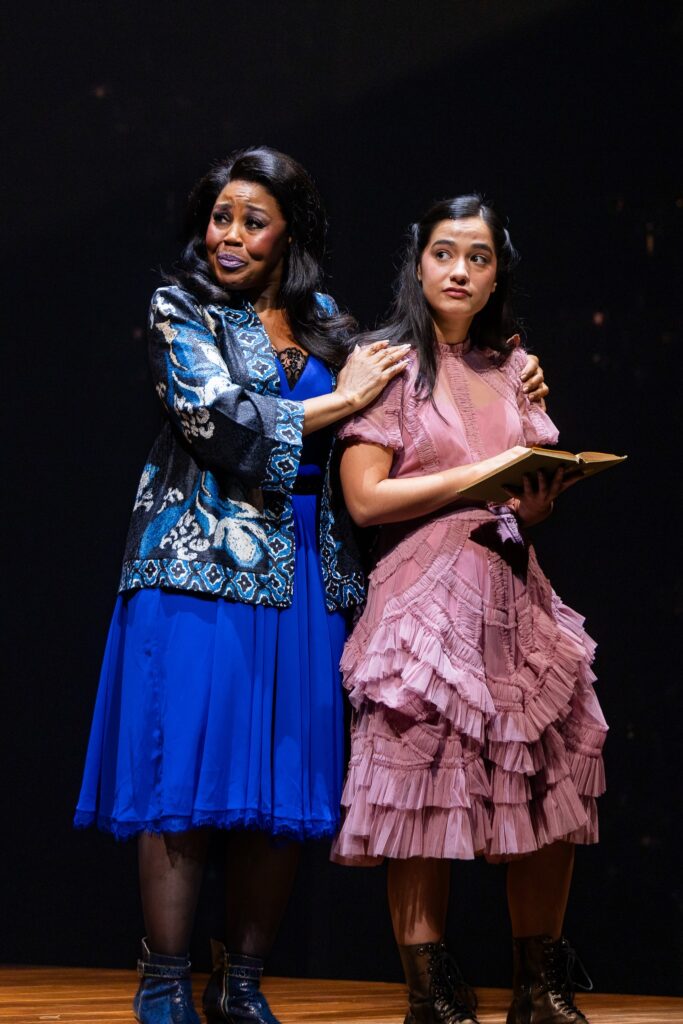
Sharon Catherine Brown and Suárez

Juliet’s father (Terence Archie), unaware that Juliet is already secretly married, arranges a marriage with the eminently eligible Count Paris (Adi Dixit). The young bride seeks out Friar Laurence for assistance in her desperate situation. He gives her a potion that will make her appear to be dead and assures her that if she takes it, he will arrange for Romeo to rescue her. She complies.

Romeo, uninformed of the friar’s scheme because a letter of explanation has failed to reach him, returns to Verona on hearing of Juliet’s apparent death. He encounters a grieving Paris at Juliet’s tomb, and reluctantly kills him when Paris attempts to prevent him from entering. There, he finds Juliet in the burial vault. Unaware that she is only sleeping, he gives her a last kiss and kills himself with poison. Juliet awakens, sees the dead Romeo, and kills herself. The families learn what has happened and end their feud.

At Wednesday’s preview performance, magic and pathos were on stage from the opening scene that revealed Amy Rubin’s simple, thick butcher block set bathed in spot-on, evocative lighting (Jen Schriever). Actors push the heavy door open, symbolically revealing the opportunity for closed doors to open. Later, the flexible set will metamorphosize into Juliet’s balcony, a tomb and a party. All of that possibility is communicated in the first few moments.

Background rumbling and emergent music (created by sound designer Daniel Lundberg and the composer of the play’s original music, Alexandre Dai Castaingset the tone for the opening fight scene, a West Side Story-esque stand-off between two teenage gangs. These are the Capulet and Montague clans, and the fury that boils in their blood is masterfully choreographed by fight consultant Thomas Schall and director/choreographer Sidi Larbi Cherkaoui. When the scene freezes into a bellicose tableau, the depth underlying this hostility is fixed on each light-bathed face. (Note: West Side Story is a modern adaptation of Romeo and Juliet that shares many themes and tells a similar story but is set in the 1950s in New York City’s Upper West Side).

Pankow, Terrance Mann

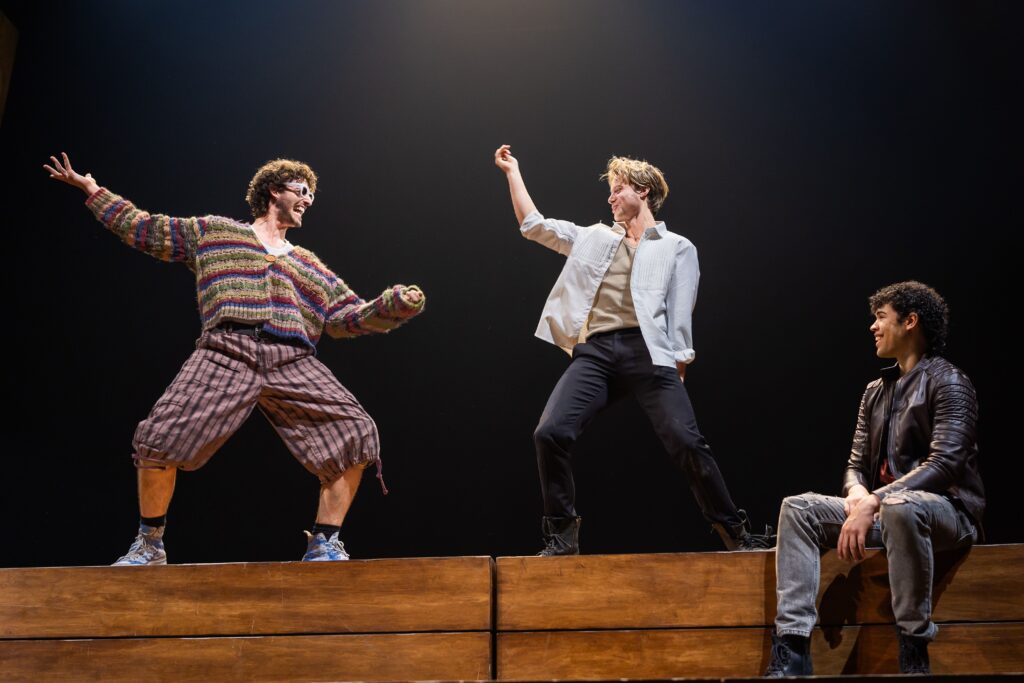
The impacts of visual imagery, light and sound throughout the two and one half hour (one intermission) production never wane. Rubin’s set frequently pivots to frame two or three scenes, providing simultaneous glimpses of different versions of the same event. Early on, as Romeo and Juliet prepare for the party her parents are throwing, Romeo and his buddies cavort stage left while Juliet preens stage right. The effect is as charming as it is enthralling.

Other special production moments are the use of globe lights (brilliant!), a warpath drumbeat soundtrack (by Dai Castaing), and the opening scene after intermission, when Juliet, wrapped in a white sheet, is lit like a fairy and the soft plunk of a harp highlight her delicate dancer’s gestures.

While enough can’t be written in praise of its production value, the real stars of Romeo and Juliet are the actors and the Bard’s sumptuous language. Cast standouts include Suárez as a stunningly lithesome Juliet, Nicole Villamil as Lady Capulet, Juliet’s mother, and the truly awesome Mann as Friar Laurence.

These three (and several other) actors seem to savor the play’s rich lines, lingering over some and articulating with a deliberateness that allows the audience to savor along with them. Unfortunately, some (most notably Singer as Mercutio) race through their lines, swallowing some of the glorious puns and humor that balance the play’s tragic overtones. A suggestion to A.R.T. is to consider following Shakespeare on the Common’s lead and provide projected captions. Absent that, audiences might want to read the play (it’s a short-ish one!) before or shortly after seeing this production. The added appreciation value is well worth the time spent.

Pankow, Suárez

Paulus ends the play on a note of hope despite the carnage that the Verona families’ feud has wrought. As Romeo, Juliet, Thibault, and Mercutio are eulogized and buried, the full cast is on stage. Bright white light bathes the scene as the entire community comes together to bury their dead and plant a garden. Despite the gloomy peace that reigns, the Prince of Verona reminds its citizens, “All are punished. For never was a story of more woe than this of Juliet and Romeo.”

As Capulets and Montagues sow flowers and trees, we imagine Adam and Eve in the Garden of Eden and the innocence and hope of starting fresh and turning the page. In the current climate of political and environmental angst, who can’t benefit from a message that hints at the possibility of restoration, revitalization, and rebirth?

Romeo and Juliet’ – By William Shakespeare. Directed by Diane Paulus. Movement and Choreography by Sidi Larbi Cherkaoui; Original Music Composed by Alexandre Dai Castaing; Scenic Design by Amy Rubin; Costume Design by Emilio Sosa; Lighting Design by Jen Schriever; Sound Design by Daniel Lundberg. Presented by American Repertory Theater at the Loeb Drama Center, 64 Brattle St., Cambridge through October 6.

For more information and to buy tickets, go to https://americanrepertorytheater.org/
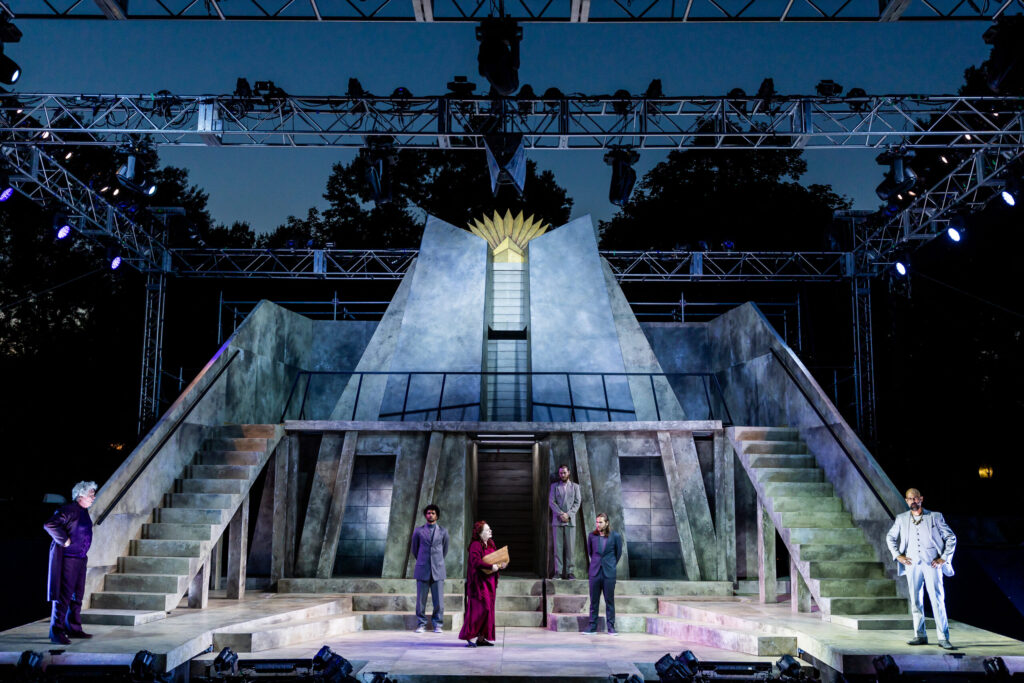
Iranian Girls Just Wanna Have Fun in Gloucester Stage’s Thought-Provoking “Wish You Were Here”

‘Wish You Were Here’ — Written by Sanaz Toossi. Directed by Melory Mirashafi. Scenic Design by Lindsay G. Fuori; Costume Design by KJ Gilmer; Lighting Design by Amanda Fallon; Composer and Sound Design by Bahar Royaee. At Gloucester Stage in Gloucester through August 25.

By Shelley A. Sackett

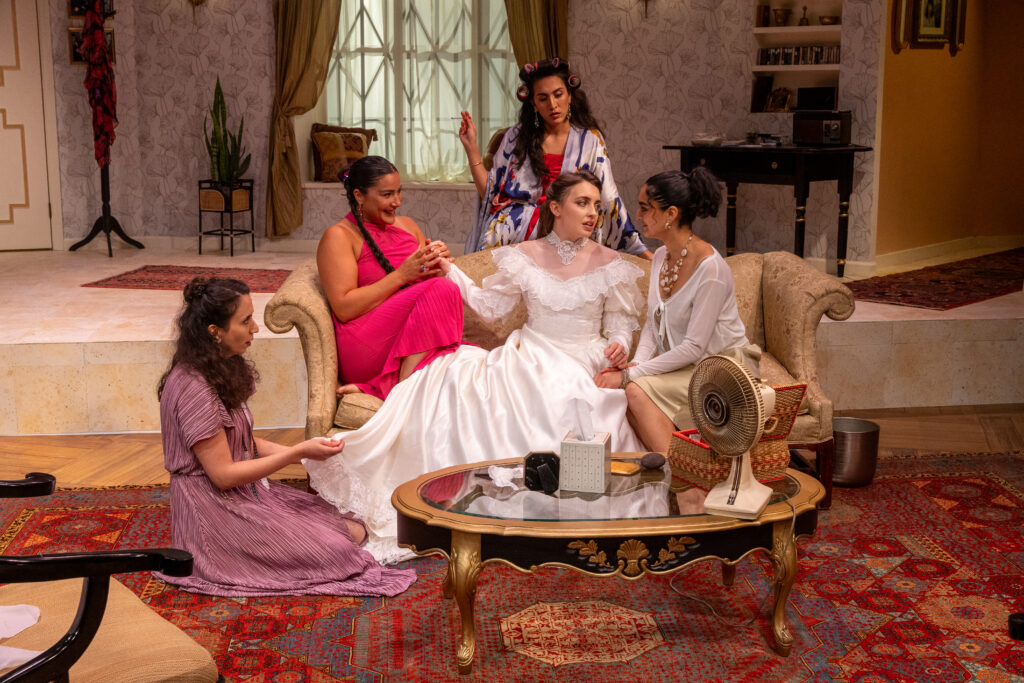
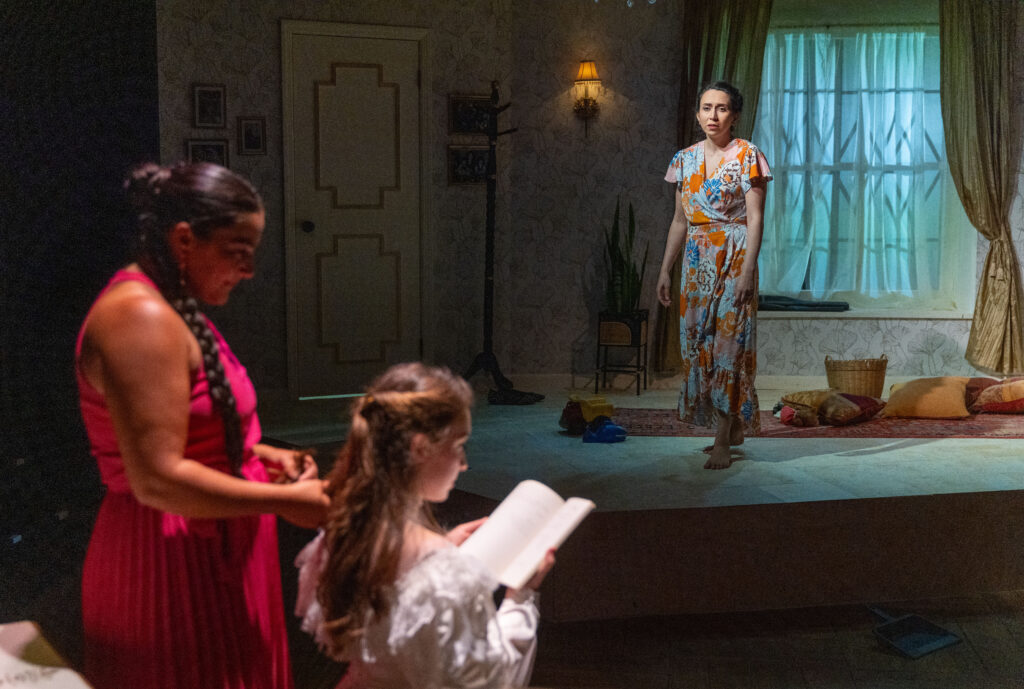
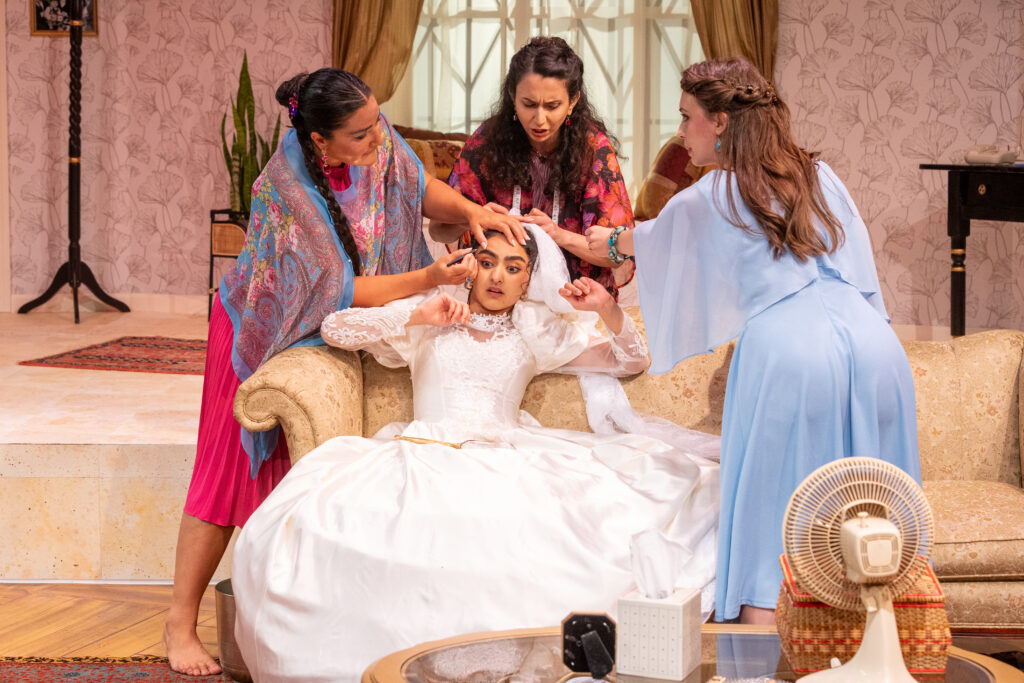
“Wish You Were Here,” in its regional premiere at Gloucester Stage, opens on three frozen tableaux set in a lavish apartment with Persian-inspired décor. At an ornate make-up table, two women hover over a third clad in a billowing wedding dress. Another, wearing a red silk short kimono and huge pink curlers, is draped over a couch, a cigarette dangling provocatively from her languid hand. A fifth slouches against the wall. All appear to be in their late teens/early 20s.

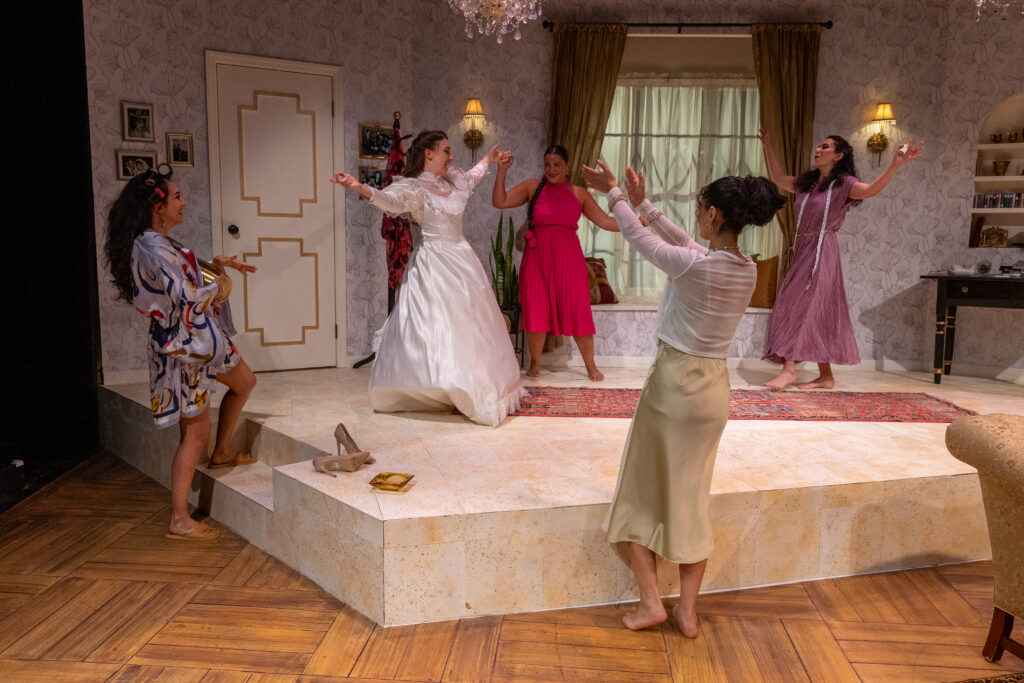
Suddenly, the three scenes simultaneously spring to life, all five women speaking to and over each other.

The friends have gathered to prepare for the wedding of Salme (Josephine Moshiri Elwood), the first among them to get married. She is the straightest, most religious and purest of the five. She prays faithfully and frequently on behalf of her friends, hoping their lives will be set on the path she deems is in their best interest.

The girls are chatty, animated, without a care in the world other than outwitting the wittiest and shocking the most prudish among them.

Shideh (Cerra Cardwell) neurotically frets over whether she will get into medical school. Nazarin (Deniz Khateri), a sullen eye roller, plans to become an engineer. She and best friend Rana (Aryana Asefirad), the kimono girl, vow never to marry and have children. Zari (Isan Salem), the youngest of the group, longs for sex. Vagina and large penis jokes are their favorites.

Although the setting is 1978 in Karaj, Iran, a city about 26 miles from Tehran, these five rambunctious friends could be straight out of the pajama party scene in “Grease.” They are silly, lewd and disarmingly intimate. They bicker and clown. They mock and soothe. They constantly touch each other and tease about sex and their bodies.

They paint each other’s nails, remove each other’s unwanted hair and perform the pre-wedding night olfactory “pussy audit.” Their favorite game is the telepathic “What am I thinking?” Through the boisterous banter and loving friction, their deep commitment to this quintet is unmistakable.

The atmosphere inside this posh apartment crackles with pop culture and the promise of youthful dreams of adventure, travel and sex. Although “there’s static in the air,” the girls are unconcerned about anything outside their snow globe existence. They hear the protests outside and are aware that the Shah has left, but blithely ignore the shape-shifting world around them.

Over the next 100 minutes, we will drop in on this living room and this group another 10 times, following them from 1978 until 1991. Mirroring the upheaval experienced by their country (from the Shah’s exile to the Islamic crackdown and revolution led by Khomeini to the American hostage crisis to the Iran-Iraq War), these five will face marriage, loss, the impact of misogynist religious zealotry and the torment of dreams snuffed out.

The first intrusion of the outside world into their cocoon comes the next year.

Before the Shah’s exile, Jews lived safely beside their Muslim fellow Iranians, flourishing and blending in. Muslims and Jews lived side by side, and religious freedom was a nonissue. Affluence and status mattered much more. With the Islamic Revolution, all that changed.

When we encounter the group for the next wedding (1979), there is turmoil in the streets. The Shah is out, and Khomeini is in. This turbulence directly affects our friends when Rana, the “cool Jewish girl and Nazanin’s best friend,” and her entire family go missing. Dishes were left in the sink, and there was no sign of a struggle. No one has seen or heard from them since.

Each girl deals with this loss in telling and different ways.

Cerra Cardwell, Elwood, Khateri

“She’s fine,” Nazanin says, although, as another points out, “A whole family of Jews missing is usually not a good sign.” Only Salme tries to find her through prayer and the internet. Later, in Act II, one wonders, “Where do we all go when there is no one trying to locate us?” a recurrent rhetorical and thematic thread.

By the third wedding, there may be Bee Gees disco in the background, but the internal atmosphere of the apartment has been infiltrated. The radio crackles with static, but when it is clear, Nazanin is nearby, hoping to hear a word about what is going on outside their doors.

As religious piety and intolerance increasingly rule the land, the group dwindles further. Salme embraces religion and prayer but meets an untimely death when she drowns while swimming in her burka. Shideh takes the opposite path, fleeing to the United States to study medicine. Nazarin and Zari, who never really cared for each other, are the sole sorority sisters.

“Do you love me because I’m the only one left?” Zari asks when they rekindle their friendship. They bond out of desperation and loneliness, vowing to remain in Iran and feed the flames of their newfound friendship. Yet Zari applies for a green card “just to be safe” and Nazarin is caught up in the torment of disappointment and confusion.

She disdains prayer, but believes in its power. She wonders every day how her life might have turned out had she been able to become an engineer had the winds of politics been blowing in her favor. She desperately misses Rana, yet never tried to find her. She swore she would settle for no less than true love, yet admits on her wedding day that she doesn’t love the man she is about to marry.

Iran, her homeland, is a dead end for everything that matters to her, yet she steadfastly refuses Zari’s offer to get her a green card. “Why,” she wonders aloud, “don’t I want to leave?”

When Rana finally gets in touch, 10 years after leaving, Nazanin and she pick up exactly where they left off. “Are you still a Muslim?” Rana asks. “Are you still a Jew?” Nazanin fires back, not missing a beat.

After five years in Israel, Rana now lives in California and works in a Pizza Hut. Suburban America may be spiritually lifeless, but she will never return to Iran. Instead of turmoil, revolution, persecution and flight, her children will know only one home, one that can’t inflict the kind of heartbreak and devastation she suffered.

Toossi revisits many of the same themes of emigration, national identity, home and displacement she so brilliantly tackled in her Pulitzer Prize winner, “English.” “Who do you think of when you think of where you’re from?” she asks through her characters. Who defines you? Where do you find your home? Is it a place? The people? Shared experiences? Where you grew up or where you live now?

Unfortunately, “Wish You Were Here” misses the high mark set by “English.” Toossi doesn’t flesh out these girls’ backgrounds and individualities; they lack nuance and depth. They live in an impenetrable bubble, teetering on a tipping point, and we have a hard time caring.

Director Mirashrafi does the best she can with a script that compresses 13 years into 100 minutes and 10 scenes that are confusing because they give too little context about the raging Iranian politics. There is a Dramaturgy & Timeline in the Playbill (which is most helpful if read BEFORE the play starts), but that doesn’t take the place of timeline references within the script, especially where the play is meant to cover so much ground in such a short time.

Sometimes it was impossible to tell that a new scene in a new year had started until it was almost over. It was also often impossible to tell who was who, especially at the very beginning when each girl seemed to be shouting, the pace was a little too quick and the girls’ names were indecipherable.

Nonetheless, it’s always a pleasure to attend a performance that may take several days of percolating before its impact bubbles up. In addition to the timely issues she raises, American-Iranian Toossi provides a compassionate multi-layered glimpse of Iranian society. Several scenes, although they also present speed bumps in the drama’s flow, are poignant reminders of the beauty and mystery at the heart of Islam.

There are joyful elements of traditional music, dress, and custom. The full silence during Salme’s long prayer scene lets the audience (and the less observant and devoted girls) through the keyhole of the sweet, nourishing elements of a religion that has been hijacked and weaponized by militant male power grabbers determined to dominate women and infidels.

It’s too bad Toossi didn’t spend more time exploring this element, as well as giving her characters a third dimension. Who knows? That might have elevated this play to the level we know she has the chops to write. For more information, go to https://gloucesterstage.com/

Gloucester Stage’s ‘Wish You Were Here’ gives glimpse of life for women of Iran

The cast of Gloucester Stage Company’s production of “Wish You Were Here.” / JASON GROW PHOTOGRAPHY

By Shelley A. Sackett

Jewish Journal

Iranian-American playwright Sanaz Toossi covers a lot of ground in “Wish You Were Here,” at Gloucester Stage Company through Aug. 25. She follows the evolution of a group of friends from 1978 to 1991 in Karaj, Iran, an industrial city 26 miles from Tehran. The revolutionary political and societal upheavals experienced during these years are the backdrop for Toossi’s bigger focus: The everchanging tides of female friendship.

The play opens in a lavish apartment with Persian-inspired décor. Two women hover over a third swathed in a billowing wedding dress. Another, wearing a short kimono and huge pink curlers, drapes over a couch, a cigarette dangling from her hand. A fifth slouches against the wall. All appear to be in their late teens/early 20s.

Suddenly, the set springs to life, all five women speaking to and over each other.

The friends have gathered to prepare Salme, the first to get married and the most religious of the five. Shideh neurotically frets over whether she will get into medical school. Nazarin, a sullen eye–roller, plans to become an engineer. She and best friend Rana, the kimono girl, vow never to marry and have children. Zari, the youngest of the group, longs for sex.

Although set in 1978 Karaj, these five could be straight out of the pajama party scene in “Grease.” The atmosphere crackles with pop culture and the promise of youthful dreams of adventure, travel, and intimacy. The girls can hear political protests outside the window, but unconcerned, they ignore the shape-shifting world around them.

Over the next 100 minutes, we will drop in on this living room and this group another 10 times, following them from 1978 until 1991. Mirroring the upheaval experienced by their country (from the shah’s exile to the Islamic crackdown and revolution led by Ayatollah Khomeini to the American hostage crisis to the Iran-Iraq War), these five will face marriage, loss, the impact of misogynist religious zealotry, and the torment of dreams snuffed out.

Its first intrusion comes when they gather the next year for Zari’s wedding.

There is turmoil in the streets. The shah is out and Khomeini is in. Rana, the “cool Jewish girl” and Nazanin’s best friend and her entire family, is missing. They departed suddenly, leaving dishes in the sink and no clues. No one has seen or heard from them.

Before the shah’s exile, Jews lived safely beside their Muslim fellow Iranians, flourishing and blending. Jews began settling in Iran around 2,700 years ago, and their years under the shah during his reform plan of 1964-1979 are considered a golden age. In 1978, the Iranian Jewish population numbered 80,000 and the vast majority was middle or upper-class. There were 30 synagogues in Tehran alone.

With the Islamic Revolution in 1978, all that changed overnight. Jews became enemies of the Islamic Republic – Zionists in league with Israel. Over two-thirds emigrated rather than face certain confiscation of their property and even execution.

Each girl deals with the loss of Rana in different ways. “She’s fine,” Nazanin says, although, as another points out, “A whole family of Jews missing is usually not a good sign.” Only Salme tries to find her through prayer and the internet.

As religious piety and intolerance increasingly rule the land, the group dwindles further. Salme embraces religion and prayer, but meets an untimely death when she drowns while swimming in her burka. Shideh takes the opposite path, fleeing to the United States to study medicine. Nazarin and Zari, never close, now seek solace in each other.

“Do you love me because I’m the only one left?” Zari asks when they rekindle their friendship out of desperation and loneliness. Zari applies for a green card “just to be safe” and Nazarin is caught up in the anguish of disappointment and confusion.

Nazanin disdains prayer, but believes in its power. She wonders every day how her life might have turned out had she been able to become an engineer, but she refuses Zari’s offer to get her a green card. “Why,” she asks aloud, “Don’t I want to leave?”

Toossi revisits the same meaty and timely themes of emigration, national identity, home, and displacement she so brilliantly tackled in her Pulitzer Prize-winning play, “English.” “Who do you think of when you think of where you’re from?” she asks through her characters. “What defines you? Is it a place? The people? Shared experiences? Where you grew up? Where you live now?”

Unfortunately, “Wish You Were Here” misses the high mark set by “English.” Toossi doesn’t flesh out these girls’ backgrounds and individualities; they lack nuance and depth. They live in an impenetrable bubble, teetering on a cataclysmic tipping point, yet we have a hard time even caring.

We also have a hard time following the play’s storyline because Toossi provides few contextual clues. There is a timeline in the playbill (which is most helpful if read BEFORE the play starts), but that doesn’t take the place of scripted points of reference.

Nonetheless, Toossi proffers gifts, most notably compassionate, multilayered glimpses of Iranian society. Several scenes, although also speed bumps in the drama’s flow, are poignant reminders of the beauty and mystery at the heart of Islam.

There are joyful elements of the traditional music, dress, and custom. The full silence during Salme’s long prayer scene lets the audience (and the less observant and devoted girls) through the keyhole of the sweet, nourishing elements of a religion that has been hijacked and weaponized by militant male power-grabbers determined to dominate women and eradicate infidels.

It’s too bad Toossi didn’t explore this element more. Who knows? That might have been the magic ingredient that could add a sorely lacking third dimension to her characters and elevate this play to the level we know she has the chops to write.

For more information, go to gloucesterstage.com.

Emerson Colonial Theatre’s Dazzling “Queen of Versailles” Showcases Kristin Chenoweth’s Super-Sized Talent

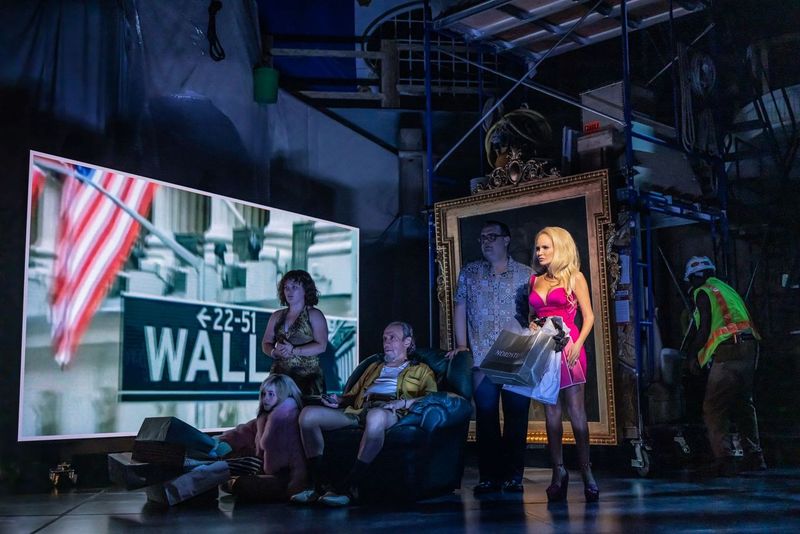
Cast of “The Queen of Versailles” at Emerson Colonial Theatre. Photo Credit Matthew Murphy

By Shelley A. Sackett

There is no more perfect setting for a play about Versailles and consumerism gone awry than Boston’s own Colonial Theatre, with its gold, glitz, and Rococo splendor. On opening night last Thursday, the festive crowd for “The Queen of Versailles,” the Broadway-bound musical extravaganza, was dressed as if auditioning as contemporary cast extras with bling, boas, and bottles of champagne.

But that was nothing compared to Dane Lafrey’s lavish Louis XIV worthy set, thankfully on pre-curtain-rise display to accommodate selfies and elicit oohs and aahs.

On walls as tall as the Louvre hung oil paintings with ornate gold frames. Chandeliers descended, and palace workers dressed in period wigs and frocks went about their menial duties, dusting and fussing. The staff joked about the comical and pompous King Louis XIV (Pablo David Laucerica), who proudly admits he commissioned the Palace of Versailles “because I can.”

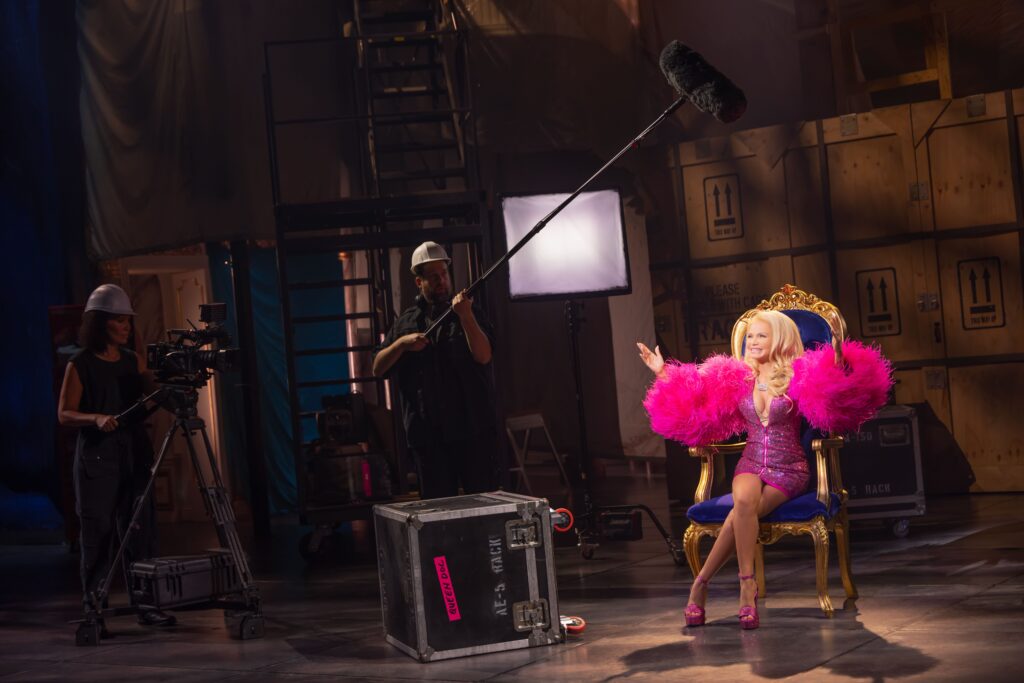
This first musical number primed the audience, and they were cocked and ready for the main attraction. When the royal set lifted along with the curtain, revealing Kristin Chenoweth seated on stage, they exploded into the kind of boisterous adulation reserved for, well, royalty.

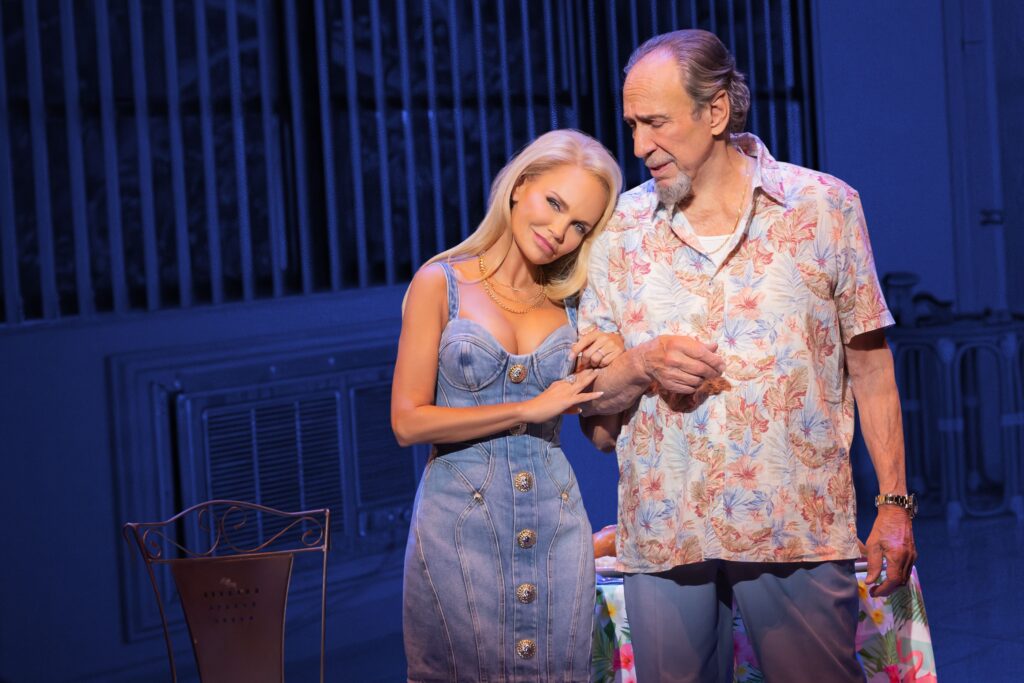
Kristin Chenoweth

From the get-go, it was evident the audience’s admiration was well-placed. Chenoweth is a pint-sized spitfire with super-sized talent. She belted out her first song in a clear, articulate voice that was perfectly projected. What a joy to be able not only to hear the lyrics but also to understand them. Stephen Schwartz’s score is smart, funny, and sharply satiric and deserves no less, especially since much of the action takes place in song. (Question for the production team — why no song list?).

In a nutshell, the show is about the riches-to-rags-to-resurrection story of Jackie and David Siegel, whose saga was the topic of Lauren Greenfield’s award-winning 2012 documentary by the same name. Its filming is where Act I opens.

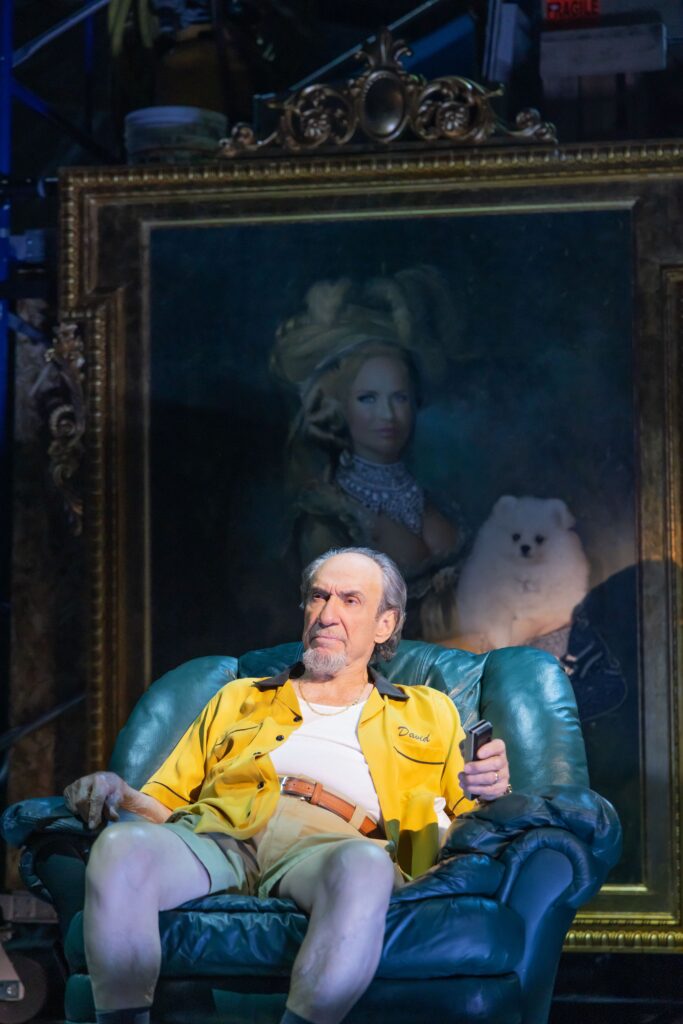
Clad in one of Christian Cowan’s sensationally tacky costumes, Jackie literally holds court in the midst of the construction site of her and time-share mogul husband David’s (a superb F. Murray Abraham) life-fulfilling project: building the largest private home in America.

Why are they building this 18-bedroom, $100 million home? It’s simple when you have champagne wishes, caviar dreams, and deep, deep pockets. “Because we can,” Jackie boasts, echoing her French idol.

F. Murray Abraham

Their 90,000-square-foot house is based on the mirrored palace with a few modifications: Versailles, France, is swapped for Orlando, Florida, and Queen Marie Antoinette has morphed into Jackie. In terms of pointed social commentary, especially since 2016, their story is particularly poignant, and the show milks it dry. “Anyone can become royalty in America,” is the Siegel family credo – or president, even.

Jackie takes us (as the documentarian’s camera rolls) backstage to her humble beginnings. She was raised in Endwell, New York, where she worked several minimum-wage jobs and honed her appetite for success and power at the encouragement of her simple and decent parents. The family’s favorite show was “Lifestyles of the Rich and Famous,” which they watched together with near-religious reverence.

She earned a bachelor’s degree in computer engineering in 1989 and polished her gutsy in-your-face, tell-it-like-it-is style at her first job with IBM. Though Jackie may dress like an airhead, it masks underlying book and street smarts. Coupled with her cutthroat drive, she is a force to be reckoned with.

After moving to Florida with her husband, he becomes abusive, and she enters the Mrs. Florida America beauty pageant as a way out (she won), determined to make her pipe dream of great wealth come true. Following her divorce, the now single mom does just that when she meets and, in 2000, marries the financier and “Timeshare King,” David Siegel.

The two travel to France for their honeymoon dressed like Barbie and Ken (“This may surprise you, but we’re not old money,” David dead-pans). When Jackie goes gaga over Versailles, it mirrors every selfie-obsessed narcissist’s sex dream; David declares his ever-lasting devotion in the language that is the vernacular of their relationship: he will build one for her.

The rest of Act I (a hefty 90-plus minutes) details Jackie’s voracious appetite for children (she births 7 and adopts one more, her niece Jonquil) and things. The oldest daughter, Victoria, the product of Jackie’s first abusive marriage (a very good Nina White), is, in Jackie’s estimation, overweight and under-acquisitive. Her clueless mother is tone-deaf and blind to her daughter’s unhappiness. If anything, she adds to it. Jackie, the quintessential material girl who craves its empty calories, urges Victoria to curb her fondness for the one thing that comforts and nourishes her — food.

In Victoria’s solo (in which White shines), she describes the pain and heartbreak she suffers as her mother’s daughter. “Pretty always wins. The only way for me to win that game is not to play it,” she says.

Her sister/cousin Jonquil (Tatum Grace Hopkins), on the other hand, takes to excess like a fish to water. “I could get used to this,” she croons.

Act I closes in 2008, as the Siegel’s world comes crashing down alongside the global financial and subprime markets. Overnight, they go from prince to pauper, monitoring electricity with the same zeal they had reserved for padding their warehouses with stuff. David retreats to his study, demanding Jackie pull the plug on the documentary now that their lives have gone sideways. Jackie, however, has the soul of a phoenix and a cat’s nine lives. She’s not going down with the ship. As God is her witness, she will get her Versailles back.

Act II opens with one of the show’s musical highlights, a gorgeous duet with Jackie and Marie Antoinette (the fabulous Cassondra James). In a rare moment of acknowledging and really listening to Victoria, Jackie realizes the toll all this has taken on her. The girl is depressed and adrift. She needs some roots and parenting.

The two pay a visit to Jackie’s parents, who open Victoria’s eyes to a new world. For the first time, she sees that some people (her grandparents among them) are actually happy with what they have. They have found the magic of “enough.”

Although mother and daughter sing another lovely duet about little homes with big hearts, Jackie chides Victoria when she says she’d like to stay in Endwell. Jackie reminds her of what great wealth can buy, renewing her vow to get Versailles back. “Just because we can doesn’t mean we should,” Victoria says, sounding more like a parent than a child.

The Siegels ultimately regroup after their personal and financial setbacks, but they have paid a heavy price. They keep the unfinished Versailles and even manage to exploit Victoria’s tragedy, manipulating a spin to their own financial and marketing advantage. They are deplorable peas in a morally bankrupt pod, easily two of the least sympathetic characters we’ll ever meet on stage.

Yet, along with the glitterati in the audience, I too rose in a standing ovation, surprised by how much I had enjoyed the show.

Chenoweth is the little engine that can, relentlessly driving the show uphill when its length, digressions and sour message threaten to derail it. She is a prodigious talent and she brings it to bear on her portrayal of Jackie. We may want to dismiss the self-appointed queen as a crass example of the worst capitalism can spawn, yet Chenoweth’s nuanced portrayal leaves the door open enough to glimpse the shadow of admiration and sympathy. And boy, can she sing!

The rest of the cast is a star-studded who’s who of Broadway luminaries. One can only hope that the “Queen of Versailles” that reaches the Big Apple is leaner, more focused, and more deserving of the gifted artists and advance hype it has attracted. Many scenes (especially a cowboy-themed one) belong on the cutting room floor, as do a couple of the many flashbacks to King Louis’s days.

The show has great bones, an engaging score, and a tornado of a star. All it needs is disciplined tweaking, refining, and shortening before it travels south. It deserves to take Broadway by storm.

“The Queen of Versailles” — Music and Lyrics by Stephen Schwartz. Book by Lindsey Ferrentino based on the documentary film “The Queen of Versailles” by Lauren Greenfield and the life stories of Jackie and David Siegel. Directed by Michael Arden. Scenic and Video Design by Dane Laffrey; Costume Design by Christian Cowan; Choreography by Lauren Yalango-Grant and Christopher Cree Grant; Music Supervised by Mary-Mitchell Campbell; Lighting Design by Natasha Katz; Sound Design by Peter HylenskiProduced by Bill Damaschke, Seaview, and Kristen Chenoweth, through her production banner Diva Worldwide Entertainment. Presented by Emerson Colonial Theatre at 106 Boylston St., Boston through August 25.

For tickets and more information, go to www.emersoncolonialtheatre.com.

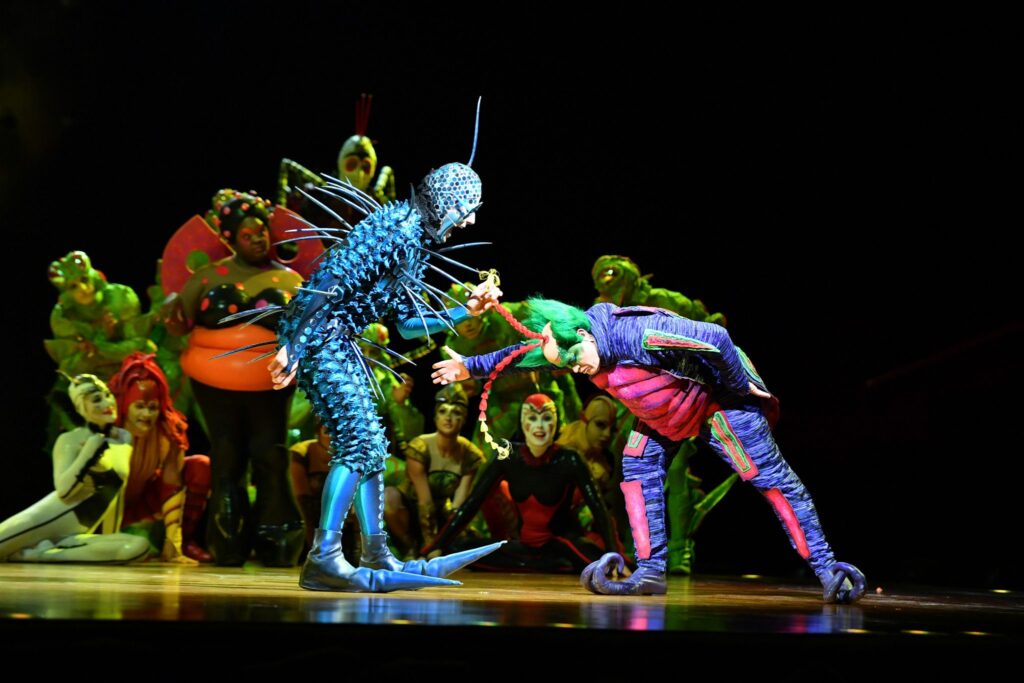
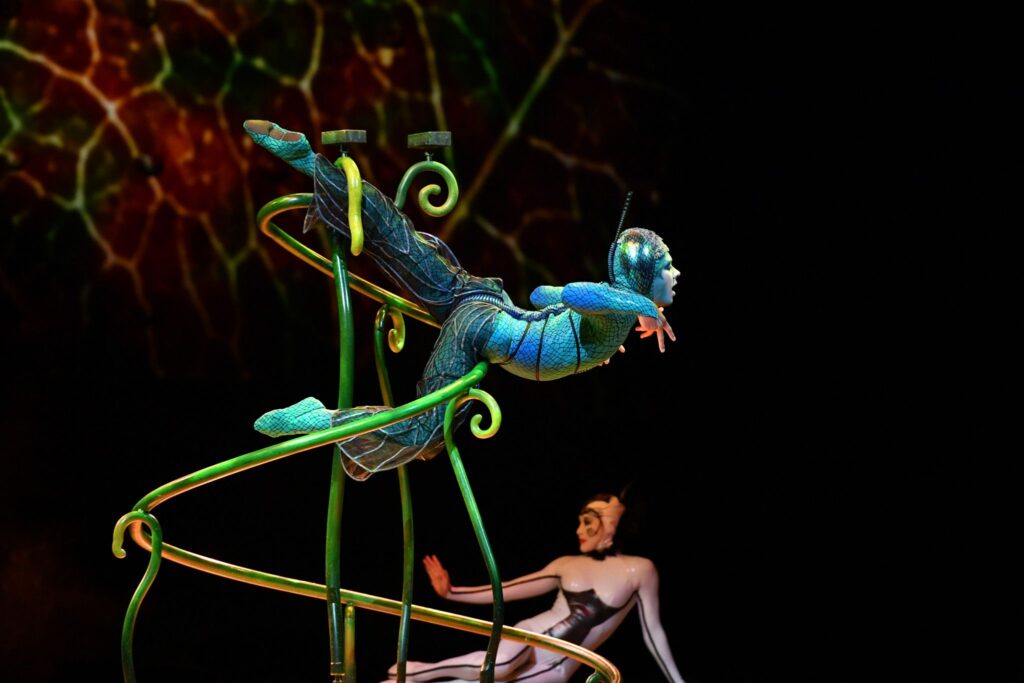
Cirque de Soleil Dives into the Insect World in the Colorful “OVO”

Cirque de Soleil‘s ‘OVO’

“OVO” – Guide and Founder – Guy Laliberté. Artistic Guide – Gilles Ste-Croix. Writer, Director and Choreographer – Deborah Colker. Costume Design by Liz Vandal. Set Design by Designer Gringo Cardia. Musical Composition and Direction by Berna Ceppas. Lighting Design by Éric Champoux. Presented by Cirque de Soleil at Agganis Arena, 925 Commonwealth Ave, Boston, MA. Run has ended.

By Shelley A. Sackett

“How did they do that?” exclaimed my companion with all the amazement and awe of a seven-year-old as a cluster of red-clad creatures slid down poles horizontally and screeched to a halt inches above the floor.

Whether seven or seventy-seven, the artistic magic and athletic showmanship of a Cirque de Soleil performance never gets stale.

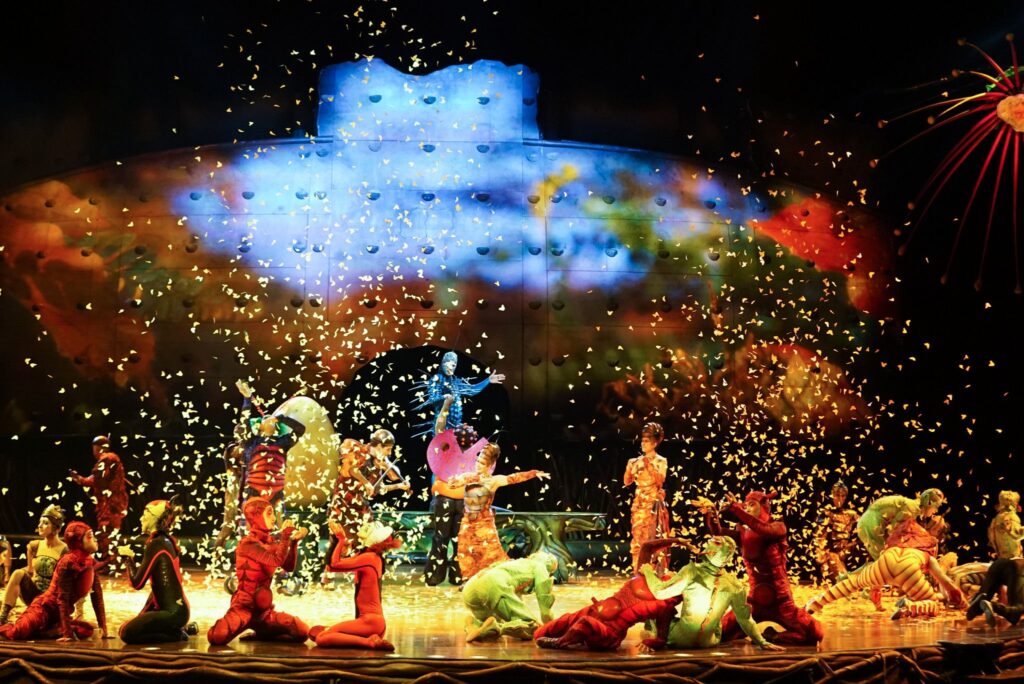
This year’s show, OVO (Portuguese for “egg”), takes us on a magical mystery tour into the secret world of insects, where crickets, ladybugs, and spiders live inside a colorful and chaotic world. Crickets chirp nonstop. The music is whimsical, and the sets are as fabulous and creative as the costumes. There are trampolines, climbing walls, and enormous monitors that screen vibrant close-ups of nature and psychedelia.

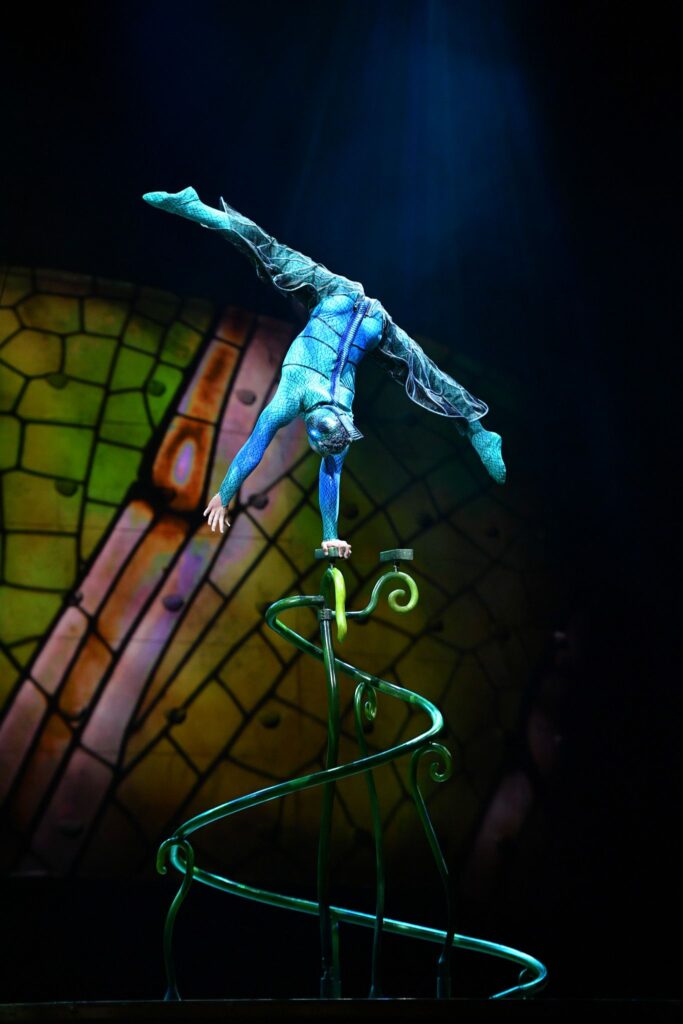
And then there are the amazing acrobatic acts, which stretch the imagination and defy the human body’s normal physical limitations.

OVO‘s creator and director, Deborah Colker, took inspiration from the world of insects. The idea for OVO was not to be about the acts, dancing, or insects but about movement. The movement of life permeates the entire show, with creatures flying, leaping, bounding, and crawling.

All Cirque de Soleil shows have underlying stories. OVO takes place in the teeming, creepy crawling world of the insect world, where critters eat, play, flirt, squabble, and horse around. The nonstop action and vitality are a riotous world of energy, emotion, and chatter.

A mysterious, quirky insect arrives in this microcosm carrying a mysterious egg. The community gathers around it, curious and a little intimidated. A ladybug catches the newcomer’s eye, and he quickly takes his eye off the egg as he pursues his new love.

Eventually, the mystery of the egg and its symbolic representation of the cycles of life, death, and rebirth are revealed.

The meat of the evening, however, is in the acrobatic performances. A performer high above the stage emerges from a cocoon as a butterfly and flies away. Acrobat “crickets” bounce between a trampoline and a rock wall in frenetic leaps and boundsA seemingly jointless spider weaves a mysterious web.

There are even nightclub-esque singing numbers, on-stage live musicians, and audience participation numbers. These are more annoying and distracting than entertaining for the true Cirque fan and feel like additions meant to pad the show and run out the clock. The techno beat starts to grate, and the ladybug shtick gets very old very quickly. Even the kids in the audience grew fidgety, especially in Act II.

This reviewer would have preferred a shorter, intermission-less show with more meat and less filler.

Although not the most thrilling or satisfying Cirque de Soleil, OVO’s originality, grace, and world-class international talent is nonetheless as astonishing as always. If you can’t be at the Olympics, this might just be the next best thing.

Commonwealth Shakespeare Co.’s “The Winter’s Tale” Sizzles on Boston Common

Cast of Commonwealth Shakespeare Co.’s “The Winter’s Tale”. Photo Credit: Nile Scott Studios.

“The Winter’s Tale.” Written by William Shakespeare. Directed by Bryn Boice. Scenic Design by James L. Fenton; Costume and Wig Design by Rachel Padula-Shufelt; Lighting Design by Maximo Grano De Oro; Sound Design by David Remedios; Original Music by Mackenzie Adamick. Presented by Commonwealth Shakespeare Company for Free Shakespeare on the Common, Parkman Bandstand, 139 Tremont St., Boston, through August 4.

By Shelley A. Sackett

The drizzly chill overhead did nothing to dampen Commonwealth Shakespeare Company’s sizzling (and free!) production of Shakespeare’s The Winter’s Tale. From James J. Fenton’s spectacular set to director Bryn Boice’s nuanced yet spunky direction to the exceptional cast, the evening was an example of Boston’s cutting-edge theater scene at its most exciting.

Although the clear-as-bell sound (Sound Design by David Remedios) and colloquial cadence of the actors’ deliveries didn’t require them, two large screens with closed captions were an added bonus, enhancing our ability to really savor Shakespeare’s Elizabethan verse. (There are some truly great and rarely quoted lines in this play.)

The Winter’s Tale was dubbed one of Shakespeare’s four “problem plays” by English critic and scholar Frederick S. Boas because it doesn’t fit neatly into the silos of tragedy or comedy but rather straddles the two. According to Boas, Shakespeare’s problem plays set out to explore specific moral dilemmas and social problems through their central characters. Boas contends that the plays encourage the reader to analyze complex and neglected topics. Instead of providing pat answers and arousing simple joy or pain, the plays confuse, engross, and bewilder.

Boas certainly was spot on as far as The Winter’s Tale is concerned.

The action opens with a full head of steam as a large cast of well-dressed men and women cavort in the castle of Leontes, King of Sicilia (played by the always magnificent Nael Nacer). His pregnant wife Hermione (a radiant Marianna Bassham) and their son are surrounded by loved ones as they entertain King Polixenes (Omar Robinson, fresh from his success in “Toni Stone”), Leontes’ childhood best friend and king of Bohemia.

Polixenes is set to depart for Bohemia after a nine-month visit to Sicilia. When Leontes’ attempts to persuade him to stay longer are unsuccessful, Hermione playfully takes up the challenge. After some innocent and very public mock hanky-panky of hand-holding and cheek-pecking, she accomplishes what Leontes could not. Polixenes will stay one more day.

As the audience witnesses the lightness of Polixenes and Hermione jesting stage right, there are dark clouds gathering stage left, where Leontes is slowly going off the rails. Nacer brings the full force of his physical talent to bear as we swear we see Leontes grow antennae that crackle and hum with every word spoken and gesture exchanged between his wife and best friend.

By the end of the scene, Leontes has gone feral, descending into an all-consuming raging derangement of sexual jealousy. He convinces himself that Hermione has cheated on him with Polixenes and that the baby Hermione carries is the result of the affair.

Leontes plunges into a madness that makes MacBeth and Hamlet look like amateurs. He transforms from a benevolent king to a tyrannical despot, declaring that Hermione will be tried for her crime of adultery, the punishment for which is imprisonment and possibly death. Othello may have his Iago, but Leontes has no need for anyone to egg him on; he is both torturer and the tortured, “in rebellion with himself.”

He entreats Camillo (an engaging Tony Estrella), his cupbearer, to poison Polixenes, but Camillo instead warns Polixenes and flees to Bohemia with him. Not even Paulina (the fabulous scene-stealing Paula Plum), a loyal lady-in-waiting to Hermione and the voice of Leontes’ conscience, can persuade him he is wrong. He can’t see that rather than outraged victim, he is the outrageous culprit.

Hermione gives birth to a girl, Perdita (Clara Hevia), whom Leontes commands Paulina’s husband, Antigonus (Robert Walsh) to abandon in Bohemia. On that dark note, Act I closes as the madness of Leontes’ paranoid jealousy takes its toll, leaving him standing in the smoldering ashes of what once was the heart and hearth of his family and kingdom.

Act II opens in a 180 degree turnabout, the comic antidote to Act I’s tragedies. Both Shakespeare (with his clown and trickster characters) and Boice (with her 21st century spin) have some fun.

Sixteen years have passed. Shakespeare has created a Greek chorus of one in his character Time, gifting her with an explanatory monologue that no one but Plum could deliver with such grandeur and emotion. Boice’s staging is breathtakingly brilliant.

Perdita, who ended up in Bohemia and was found and raised by an old shepherd (the endearing Richard Snee), is throwing a sheep shearing party to end all sheep shearing parties. It is the equivalent of her sweet-16, coming out celebration. Techno music reverberates. Neon abounds (Lighting Design by Maximo Grano De Oro). The guests dress and behave like MTV extras (Costume and Wig Design by Rachel Padula-Shufelt).

Although (like many MTV routines) it goes on a little too long, the scene draws our attention to the stark contrasts between the doom and gloom of Act I’s despotic Leontes’ Sicilia and Act II’s kinder, gentler Bohemian landscape and lordship.

Perdita even has a boyfriend, King Polixenes’ son Florizel (Joshua Olumide). Their relationship is the balm that ultimately heals the rift between their fathers and their kingdoms, a testament to Virgil’s poetic phrase, “Love conquers all.”

Eventually, all ends well enough and Shakespeare manages to reunite friends, foes and family. Leontes repents for his misguided ways, reaping forgiveness and sympathy. As far as he is concerned, he is redeemed and pardoned for his brutal and abusive misuse of power of trust. The death and destruction he caused was collateral damage, water under the bridge. Even Hermione, trapped as a statue, is resigned and forgiving.

Yet, the Bard has left a bitter taste in our mouths.

Boas was right about problem plays. “The Winter’s Tale” certainly explores specific moral dilemmas and social problems through its central characters, leaving us indeed engrossed and bewildered, especially given the discordant nature of the nation as it faces yet another toxic election season.

It is hard to sweep aside the gravity of Leontes’ transgressions and the sleight of hand by which they vanish. He wrecked a world and is then put on a pedestal when he conveniently comes to his senses and rues his own loss. Where is the fairness in that? What moral, social messages are we meant to take away? Where, Mr. Shakespeare, are the eloquent railings against tyranny, toxic masculinity and falsehood? Where are the consequences for immoral and corrupt behavior? And, a few empowering monologues notwithstanding, where have you left your women?

Highly recommended.

For more information, visit commshakes.org/production/winterstale.

At Boston’s Old North Chuch, “Revolution’s Edge” Time Travels to the Start of the American Revolution

“Revolution’s Edge.” Written by Patrick Gabridge. Directed by Alexandra Smith. Produced by Plays in Place. Commissioned by Old North Illuminated. Staged at The Old North Church, 193 Salem St, Boston through August 10.

By Shelley A. Sackett

“Revolution’s Edge,” a site-specific play by the award-winning playwright, producer, novelist, and screenwriter Patrick Gabridge, packs a lot into 45 minutes.

It is set on the evening of April 18, 1775, a turning point in both the history of the Old North Church (then Christ Church) and the history of America. The church played a pivotal role in the nation’s fight for independence. It was in its steeple, after all, where two lanterns were hung on that very night to signal that British soldiers were heading across the Charles River.

The event has been immortalized by the line, “One if by land, and two if by sea,” in Henry Wadsworth Longfellow’s 1860 poem “Paul Revere’s Ride.”

Gabridge’s inspired drama is set in the North Church in real time during a moment that is almost invisible in history books. It was mere hours before the signals were hung. Three men whose lives intersect and diverge meet in the church’s vestry as altercations between British troops and American patriots threaten to boil over just outside its doors. The imagined conversation among three real people on that historic afternoon is the subject of the play.

Christ Church’s second rector, the Rev. Dr. Mather Byles, Jr., remains loyal to the British crown. Vestry member John Pulling, Jr. is a fervent Patriot and one of the men who will later hang the lanterns in the bell tower. The two have been friends for decades. Their children have grown up together; their families even share the same pew. (Be sure to look at the pew where both Byles’ and Pullings’ families have plaques).

Cato, a slave, has just been baptized by Byles, his owner. Fearing for his family’s safety, Byles recently resigned as minister and plans to move his family to Portsmouth, New Hampshire.

All three characters are based on real people, and thanks to Gabridge’s fastidious research, they are as historically accurate as archival materials permit. The dramatic and personal details that transform them into three-dimensional characters are all thanks to Gabridge’s uncanny ability to dig deeply beneath the surface of his research and plumb the hearts and minds of his characters. “Revolution’s Edge” is no mere reenactment; it pulls back the curtain and lets a modern audience witness what really made these men tick.

That that audience is also sitting in the very place where the events of the play took place is nothing short of sublime.

As the conversation unfolds that tense day in 1775, Gabridge first focuses our attention on the characters’ commonalities. All three are fathers who value family above all else. They want the best lives possible for their children and are willing to sacrifice their own happiness to achieve that goal. They have all suffered profound losses and setbacks in their lives. At their cores, they are decent, practical and honest men, strongly opinioned yet respectful and compassionate.

The playwright then teases out all the ways in which they differ. Byles is an ardent supporter of the King of England and may have been colluding with the British troops. Pulling is just as ardent a Patriot, ready and willing to launch the attack that will finally set America free from tyranny.

Byles has his blind spots. For example, he can’t see the inhumanity of his assumption that, because he owns Cato and because he and his wife have five children they can’t care for on their own, Cato not only must leave his own family in Boston and accompany them to New Hampshire, but he also should be grateful for the opportunity. He is tone-deaf in his paternalistic attitude toward Cato, whom he sees as needing (and wanting) his master’s protection.

Cato, who was kidnapped in Africa as a child and brought to America as a slave, just wants to raise his family among the friends he has made during his many years in Boston. When Pulling asks Cato whether he wants to accompany Byles to Portsmouth or stay in Boston, Cato is stunned. No one had ever asked him what he wanted before. Yet he is comfortable and confident enough to point out the absurdity of asking that moot question now.

Instead of answering Pulling’s question, he poses one of his own. “Did they ask if I wanted to come to this country when I was seven years old?” he counters.  

The play raises many thought-provoking issues in understated but effective ways. Pulling argues that he and his fellow Patriots refuse to be slaves to the King, yet he can’t make the connection that Cato might feel the same way about his enslavement. Byles insists that “all this” is God’s plan, but when pressed by Pulling, he can’t say which part he means. Is it taxation? Occupation? Slavery? “There’s not much subtle about the times we’re living in,” Pulling observes.

Finally, they address the elephant in the room: in a land where no one is native, who is a true American? Is it the English settler (and his fellow loyalists) who may live in New England but whose allegiance is to the original version across the pond? Or is it the colonists (and fellow Patriots) who have embraced their new homeland and no longer consider themselves English immigrants but full-blooded citizens of the autonomous and independent America?

The splendid cast of three last Thursday (two casts act in rotation) included Joshua Lee Robinson as Cato, Tim Hoover as Byles, and Kevin Paquette as Pulling. Most of the action takes place in the front of the pews, although the actors walk up and down the aisle from time to time. While they both bring style and authenticity to their characters, Hoover and Paquette might do well to temper their deliveries. Their rapid fire, loud, angry vocalizations rendered many of their lines incomprehensible, which is particularly unfortunate with such a dialogue-driven script.

As Cato, Robinson was much easier to understand. His even, clear, calm enunciation added much to the audience’s ability to relate to his character.

Gabridge is the founder and Producing Artistic Director of Plays in Place, which develops site-specific plays tailored to helping an audience find new meaning in the places, topics, and people at the heart of the piece. He hopes “Revolution’s Edge” enables its audience to appreciate that the people in our past were real people who led complicated lives that required them to make hard decisions.

“Sometimes we look back in history and we feel like it was easy for them to make their choices. You know, ‘It was so much simpler back then.’ But I think when we look at them as real complex humans, we realize that just like us today, they didn’t know what was going to happen next, just like we don’t,” he said.

For more information, go to www.oldnorth.com/revolutions-edge/

“Yellow Face” Raises Difficult Issues About Race at the Lyric Stage Company

Cast of “Yellow Face” at Lyric Stage. Photos by Mark S. Howard

By Shelley A. Sackett

Some plays are just good for you. Like drinking a peanut butter, kale, bone meal, and flax seed smoothie, the benefits outweigh the temporary discomfort. With the smoothie, its promise of increased vigor and decreased ailments offset its taste and texture. With “Yellow Face,” David Henry Hwang’s Obie award-winning play presented by The Lyric Stage Company of Boston, its thought-provoking and post-theater-conversation-inducing messages outweigh the lackluster nature of its two-hour theatrical experience.

Hwang has a lot to share. Wading through the weeds of his self-deprecating, semi-autobiographical plot is a bit of a slog. It all started in 1990 when the white Welsh actor Jonathan Pryce was cast as the French-Vietnamese star of the smash Broadway hit, “Miss Saigon.” (Note: Hwang’s 1988 Tony award-winning hit, “M. Butterfly” was inspired by the same Puccini opera, “Madame Butterfly.”)

Hwang condemns this casting choice as a form of “yellowface.” He becomes the standard-bearer of the New York Asian-American theater community’s protest, demanding that Actors Equity join them. After much public waffling, Actors Equity backs the choice of Pryce and the play goes on to be a smash hit.

Outraged, Hwang pens the colossal flop, “Face Value,” a hard-edged comedy about casting white actors as Asians. In an oversized karmic boomerang twist, Hwang commits the ultimate ironic faux pas — he casts a white actor, Marcus G. Dahlman, to play its Asian lead.

Rather than admit his mistake, eat crow and move on, Hwang compounds the error by revisioning Dahlman’s ancestry and giving him the more Asian last name, Gee. In a fit of twitchy pique, Hwang then fires Gee, who earns praise and fortune playing other Asian roles, including the King in “The King and I.”

Hwang, a “real” Asian, is, by contrast, broke and eking out a tough existence as a playwright. To his later detriment, he even accepts a position on the board of directors at his father’s bank.

We witness a metamorphosis in Gee as he emerges from his “fake” Asian cocoon to spread his butterfly wings. Gee genuinely identifies as a member of the Asian American community and longs to be accepted as a full-fledged member. He becomes an activist and supporter of Asian American values. He even dates an Asian American (Hwang’s ex, no less). He wears his Asian identity so effectively that when the U.S. Department of Justice and various congressional committees charge Asian Americans with aiding the Chinese government in election interference, Gee is among those named.

Michael Hisamoto

Act II is where Hwang exercises a little more self-discipline, honing in on the rabbit hole of weighty philosophical, political, moral, and semantic issues that surround discussions about race. He abandons Act I’s “poor me” tirades and tackles meatier topics. Like the health effects (vs the taste) of that muddy smoothie, it is worth the wait.

Hwang is unafraid to ask the big questions. What, for example, is “cultural authenticity?” What does it mean? More importantly, what does it matter? Is the very idea of cultural authenticity racist? Where exactly is that tipping point between artistic legitimacy and discrimination?

“The face you choose to show the world determines who you really are,” Gee says, quoting an ancient Chinese saying. Yet, when that face is Caucasian — no matter how much the heart beats as Asian — who are we looking at? Which is more ambiguous, the truth or the fiction?

Throughout the play, snippets of an American “ethnic tourist” are played on a screen above the stage. Turns out it is Gee, who Hwang sends to a remote Chinese village so he can have a first-hand immersion experience in the culture he so desperately wants to be part of. These villagers have never had Chinese outsiders visit, let alone a white American. Yet, after several months, they accept Gee into their community, sharing their most sacred treasure — music — with him.

Jenny S. Lee

Is Gee now Asian “enough?” Hwang uses this question as a powerful platform from which to launch many ideas and the soul searching queries they inspire.

What is the true litmus test — DNA ancestry or community acceptance? Is it what’s on the outside or inside that really matters? Is it how you see yourself or how others see you?

And how does this compare to religion, where there is no definitive physical barrier to joining a community and where its members can look like anyone and everyone? Is the logical extension of Hwang’s point about cultural appropriation an argument that religious conversion is impossible too? Although “Yellow Face” has its dramatic problems (a script in need of editing, actors in need of crisper direction, and a set that almost, but not quite, works), when a theatrical experience leaves me with a head full of ideas that linger long past curtain call, that’s a play I’m glad I saw.

“Yellow Face.” Written by David Henry Hwang. Directed by Ted Hewlett. Scenic Design by Szu-Feng Chen; Projections Design by Megan Reilly; Lighting Design by Baron E. Pugh; Costume Design by Mikayla Reid; Sound Design by Arshan Gailus. Presented by The Lyric Stage Company of Boston, Clarendon St., Boston. Run has ended.

GBSC’s “Guys and Dolls” Is A Cool Glass of Summer Refreshment

Jared Troilo, Lisa Kate Joyce in Greater Boston Stage Company’s ‘Guys and Dolls’
Photos by Gillian Gordon

“Guys and Dolls.” Book by Abe Burrows and Jo Swerling. Music and Lyrics by Frank Loesser. Directed/Choreographed by Ceit Zweil. Musical Direction by Dan Rodriguez. Presented by Greater Boston Stage Company, 395 Main Street, Stoneham, through June 30.

By Shelley A. Sackett

When it comes to bubbly, breezy, musical fare, Greater Boston Stage Company is as reliable as it gets and “Guys and Dolls,” in production through June 30, is further proof.

Even before the show starts, a usually boilerplate announcement is anything but. “Turn off your phone. It’s a small theater. Everyone will know it’s you,” a vintage radio announcer-type warns.

Hailed as the perfect musical romantic comedy, this award-winning classic is set in 1920s “Runyonland,” a mythical New York City. Based on Damon Runyon’s short stories, the two-and-one-half-hour play (one intermission) is a potpourri of slapstick, glamorous cabaret showgirls, gamblers, gangsters, and Salvation Army missionaries.

There’s even a quick trip to pre-revolutionary decadent Havana.

Twenty-four musical numbers, backed by a seven-piece orchestra, are the glue that connects the dots and provides both a vehicle to showcase the cast’s formidable talent and a layer of joyful merriment.

The story is fairly straightforward.

Gambler Nathan Detroit needs to find financing to set up the biggest craps game in town. He faces more than a few obstacles. First of all, the authorities are breathing down his neck, Lt. Brannigan of the local police force watching his every move. Second, the only place he can find to hold the game requires $1,000 security deposit. Third, Nathan is broke. And fourth (but hardly last), Adelaide, a nightclub performer and his fiancée of 14 years, has made him promise to give up running craps games. When she finds out he’s still at it, she kicks him out.

Undaunted, Nathan contrives a way to get the money by making a bet with fellow gambler Sky Masterson, known for deep pockets and an inability to resist any wager that crosses his path.

This one? That Sky can’t get Sarah Brown, one of the straight-laced missionaries, to have lunch with him in Havana.

The rest of the play revolves around con men conning and being conned, unrequited love being requited, and an unlikely group of missionaries who yield more influence than they could have prayed for. The plot twists and turns are cute, light, and hilarious — perfect summer fare.

All this is told through top-tapping familiar songs (“Luck Be A Lady,” “A Bushel and a Peck,” and “Guys and Dolls” among them) and exuberant choreography performed with the caliber of singing and acting we have come to expect from GBSC.

Stephen Markarian, Mark Linehan, Christian David

And —best of all!!! — the orchestra complements the actors rather than drowning them out. Kudos to Sound Designer John Stone and his engineers for ensuring that the audience can hear – and understand – the lyrics.

Jon Savage’s set makes efficient use of a compact stage. He has built a neon shadow box to house the orchestra, bringing them into the mix in an organic way. Unobtrusive props change the scene from mission meeting to street corner to cabaret to Havana club. Ceit Zweil’s direction and choreography keep the action flowing and interesting.

The play’s opening number (“Runyonland”) is upbeat and happy, setting the tone for what is to follow. “Fugue for Tinhorn,” about betting on the races, follows, introducing us to three loveable gamblers: Nicely-Nicely (Stephen Markarian), Benny Southstreet, and Rusty Charlie. Markarian is a standout, bringing warmth, physicality, and self-deprecating humor (and a great voice) to Nicely-Nicely.

Sara Coombs as Adelaide is an adorable knockout. Everything about her performance is impeccable, from her exaggerated facial expressions to her dancing to her fabulous voice. Plus, she has a terrific sense of timing and a comedic flair that is a true pleasure to behold.

Jared Troilo imbues Sky Masterson with sensitivity beneath his worldly criminal carapace. His dancing and singing are superb, and his duets with Sarah are among the show’s highlights.

Of which there are many. There are double entendres and double-crossers.

Joyce, Sarah Coombs

There are the corny, Henny Youngman-esque laugh-out-loud jokes (“I kinda like it when you forget to give me presents. It makes me feel like we’re married,” Adelaide tells Nathan). There are even a barbershop quartet, an a capella number, and an operatic aria (Lisa Kate Joyce has a voice that could shatter glass).

Most of all, there is a light, entertaining story that surprises us with a serious takeaway. As Nicely-Nicely succinctly puts it, “Life is one big crap game, and the Devil is using loaded dice.”

For more information and to buy tickets, visit https://www.greaterbostonstage.org/