Ruth Rooks loves to share her passion for art

Ruth Rooks in her painting studio./SHELLEY A. SACKETT

By Shelley A. Sackett

Artist and art teacher Ruth Rooks has always portrayed whatever caught her interest at that moment. In the first grade, it was beets. In 1996, it was the external pageantry of the Big Dig and the internal world of hospitals. Lately, she has been experimenting with two totally different subjects: the view from her studio window and faces.

Along the way, the Swampscott resident and president of the Swampscott Arts Association has garnered a “drawer full” of prizes, including two from the Copley Society of Boston and many from the Marblehead Festival of the Arts and SAA.

“Every time I submit a piece of my work, I hope it will be well-received and am thrilled when it is publicly recognized,” she said.

Rooks grew up in Brighton in a three-story apartment complex, attended Sunday school in a one-room schoolhouse and played with her neighborhood friends on the wide sidewalk in front of the building and in the large backyard behind it. Although she had few toys as a child, she always had a box of crayons.

Her first encouragement came from her father, Harry Kemelman (author of the Rabbi Small detective series) and his writer friend, who conspired to send her three-year-old drawings to Life magazine after it published an article on modern art. Art in the Brighton public schools was uninspiring, limited in medium to crayons and in subject to classroom holiday decorations.

Moving to Marblehead in the seventh grade was a double-edged sword. On the one hand, Rooks was thrust into a small-town environment where most of the other kids knew each other since kindergarten. On top of that, her father drove her to school and she was late “EVERY. SINGLE. DAY!”

On the other hand, Marblehead schools championed the arts, and Rooks encountered media other than crayons along with encouraging teachers. In high school, Marion Brown, “famous as an artist and by ancestry,” introduced Rooks to watercolors, a medium (along with oil paints and gouache) she favors to this day.

At 15, she “stretched the truth” and applied as a 16-year-old to be arts and crafts director at Camp Columbia day camp. She got the job and stayed for eight years, loving every minute, even the rainy days when she had an hour to dream up a project for the more than 50 campers who would show up in her shop.

It was then she knew she wanted to teach art. “I always liked to make things,” she explained. “If I saw something in a store, I would try to make it with whatever was in the house. I don’t throw away anything that sparkles and seizes my attention.”

Ruth Rooks with one of her “Big Dig” paintings./SHELLEY A. SACKETT

Years later, while her husband, George, attended Columbia University Graduate School of Business, Rooks attended the university’s Teachers College to complete the coursework needed for Massachusetts certification. Her first job was at Revere Junior High School and she never stopped teaching art, from a juvenile court-ordered program in Boston, to the Jewish Community Center of the North Shore, the Marblehead Arts Association, and private classes in her home. Under the direction of Bennett Solomon, she started the art program at (now) Epstein Hillel School.

These part-time jobs afforded her flexibility to mother three children – Nina, Jennifer, and Jared – and to take classes with a variety of artists. Then, in 1993, she was diagnosed with lung cancer and her teaching career ground to a halt.

She recovered after two surgeries, but was “antsy. I needed a schedule,” she said, so she enrolled in three classes at DeCordova Sculpture Park and Museum in Lincoln: silversmithing, silver jewelry, and painting critique. Silversmithing hurt her wrist and she had more jewelry than she would ever wear. The painting class, taught by Tim Harvey (“one of the best painters I know and one of the harshest critics”), resonated in a way that would set her life’s creative agenda.

When her family moved to Swampscott in 1996, Rooks had room to set up a dedicated studio. Her first inspiration came from Boston’s Big Dig, the largest public works project in the country. “I loved everything about it – the cranes, the sand barrels, the colors of the equipment, the huge building structures. So I painted them!” she exclaimed.

Her paintings were included in many shows and won many prizes. “It was heady stuff,” she admitted.

But the restless Rooks soon tired of construction scenes and moved on to whimsical but undeniably hospital scenes based on another medical stay (“I can’t think of anyone who would buy one!”) and her current interests in landscapes and faces.

Although her father – whose “Friday the Rabbi Slept Late” won the Edgar Award for Best First Novel in 1964 and starred Art Carney in a made-for-TV adaptation – always wrote, Rooks was unaware of it as a child. What she does remember is his lecturing to her and her siblings. “We were his audience and he liked to expound. All that you read and learn in the Rabbi Small books, we heard one way or another,” she said. A creative writing teacher, he brought his work home and encouraged his children to “write a million words,” a lesson Rooks took seriously and enjoyed as a nightly exercise.

Rooks also takes the Swampscott Arts Association (swampscottarts.org) and her role as president seriously. To add some challenge for the more experienced artist, SAA holds one or two juried shows per year. It also sponsors two social events: an annual meeting/picnic at Rooks’ home, and a December holiday party.

The most special aspect for Rooks? “This is an organization where everyone seems to like each other!” she said with a smile. 

In DTF’s ‘Misery,’ Writing Like Your Life Depends on It Takes On New Meaning

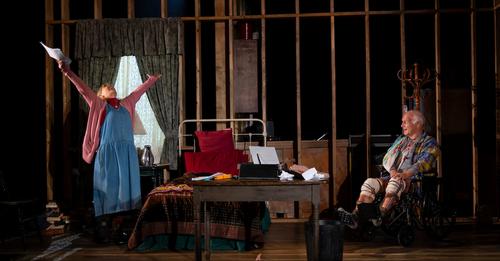
Kelly McAndrew and Dan Butler in ‘Misery’ at Dorset Theatre

By Shelley A. Sackett

Fans of Stephen King’s 1987 novel or Rob Reiner’s 1990 award-winning film, Misery, should not expect more of the same from Dorset Theatre Festival’s season opener, Misery. Playwright William Goldman has transformed the nail-biter of a scary suspense thriller into a lukewarm reminder of its prodigal self.

The excellent cast, director, and production team make the most of the script and gift the audience with an enjoyable evening of theater, but it was hard not to wonder what the same team might have cooked up had they had better-quality raw ingredients.

The plot remains pretty much the same. Annie Wilkes (a convincing and scene-chewing Kelly McAndrew) lives alone in her gothic family home in the remote backcountry of Silver Creek, Colorado. In one of her guest bedrooms lies the shattered body of best-selling romance novelist Paul Sheldon (Dan Butler), whose car went off the road in a snowstorm a few days ago. It seems Annie, his “number one fan,” just happened to be driving behind him when his car plunged into a ravine. Somehow, she managed to wrest his mangled body from the wreckage and bring it home to convalesce.

Paul awakens from the crash to Annie’s chirping chatter as she fills him in on the last few days. His two legs are badly fractured. She has set them to the best of her ability (Isn’t he lucky she’s a nurse!) and plied him with just enough drugs to ebb his pain while increasing his dependence on her.

Annie is more than an obsessed fan of Paul’s Misery series, about an orphaned 19th-century waif named Misery. She is also a lonely, middle-aged homicidal psychopath who talks to God, is divorced, wanders through her house surrounded by photos of dead relatives, and is an expert at lying and stalking.

As she slowly exposes the levels of her derangement and fixation on the Misery character, it becomes clear she intends to do more than just heal Paul. She intends to imprison him. Until death do them part.

Or at least until he writes another novel, which may just spare his life. Or, toys with Annie in this cat-and-mouse game in which she is recast as a lioness and he as a crippled cricket; then again, it may not.

In any case, write he must, as Paul’s life indeed does depend on it. Unbeknownst to Annie, his most recent installment in the Misery series kills off her beloved heroine. Coincidentally, the book’s release overlapped with Paul’s stay at Annie’s.

As his Number One Fan, Annie, of course, has her local bookstore save her all the new Paul Sheldon books. One day, she bursts into his room, triumphantly brandishing her copy.

Annie is excited beyond her wildest dreams. To be reading her idol’s latest Misery book while he is living in her house brings a creepy Little Bo Peep lilt to her gait. Paul knows (as do we) that Little Miss Sunshine will morph into Chucky the moment she reaches the end of the book. Exactly when that will happen is uncertain, but when it does, Annie’s rage will be of force majeure quality.

For his part, Paul is at first grateful, then wary, and finally determined to escape this real-life misery. His pithy, New York sophisticated banter turns less glib as he realizes the peril he is in and plots his escape, no easy feat for a man with two broken legs and an antique wheelchair for a getaway vehicle.

Goldman has provided Annie’s character with the best lines and the grisliest of backstories, and McAndrew milks it for all it’s worth. When Paul pretends to court her, luring her to a romantic dinner as part of his escape plan, Annie sheds her overalls and boots and shows up in a dress befitting Laura Ingalls from “Little House on the Prairie.”. It would be a touching scene if it weren’t for the sheen of Bette Davis’s Baby Jane character with which Annie powdered her nose.

Butler, a talented actor with star-studded credits, does the best he can with the cardboard Paul. Riw Rakkulchon’s revolving set creates a folksy, cozy country home that would be at the top of anyone’s Airbnb list. Thanks to dramatic lighting and sound design, the scenes come to creepy life. Kudos, too, for a system that allows the actors’ words to be easily heard and, more importantly, understood, something increasingly and annoyingly rare in too many Boston theaters.

It’s hard not to miss the intensity and tension generated by the Misery novel and film, but for those in the mood for a Misery-lite summer version that recasts the horror tale as a more whimsical melodrama, Dorset Theatre Festival has just the ticket.

‘Misery’ –Written by William Goldman based on the novel by Stephen King. Directed by Jason Gay. Scenic Design by Riw Rakkulchon; Costume Design by Fabian Fidel Aguilar; Lighting Design by Joey Moro; Sound Design by Daniel Baker/Broken Chord. Presented by Dorset Theatre Festival, Dorset, Vermont, through July 8.

For more information and to buy tickets, visit https://dorsettheatrefestival.org

A.R.T.’s Spectacular ‘Evita’ Raises the Bar on the Term, “Production Values”

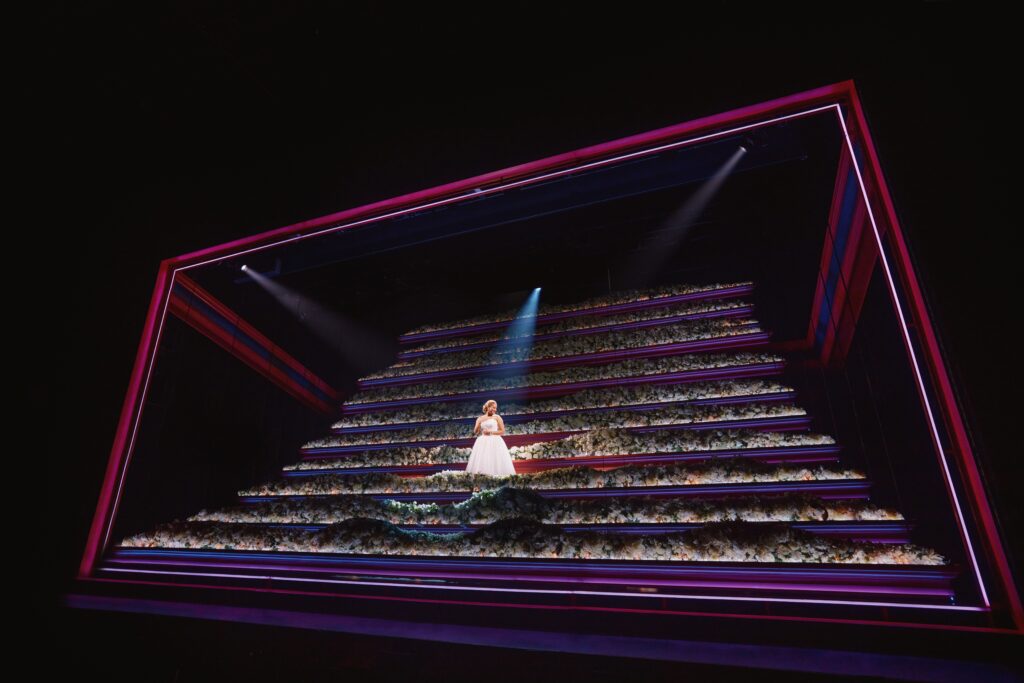
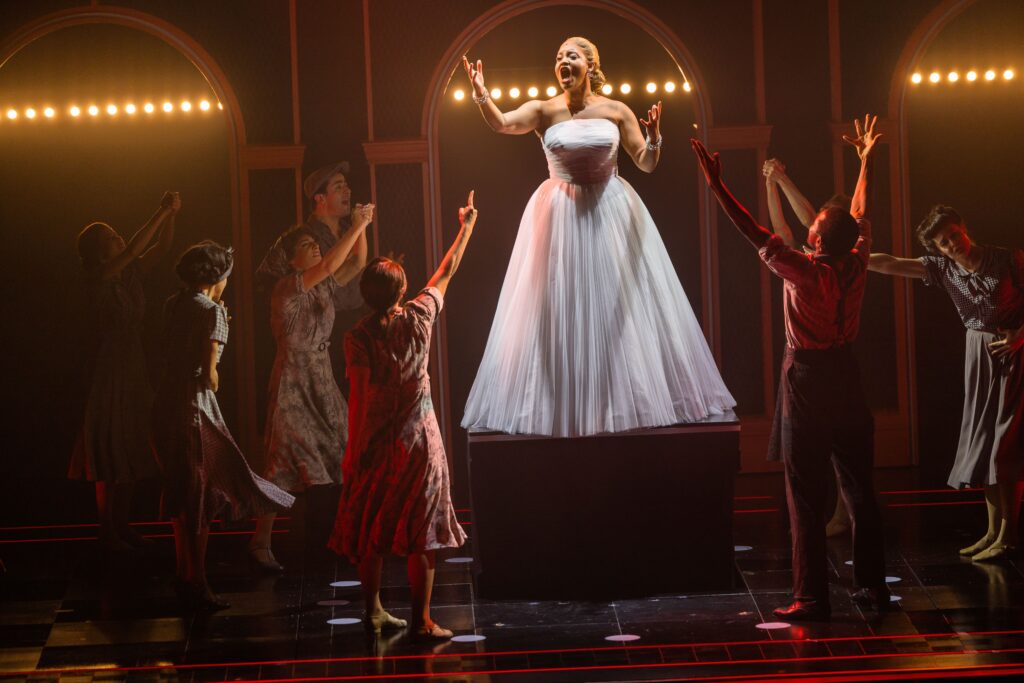
Shereen Pimentel (Eva) in Evita at American Repertory Theater. Photo Credits: Emilio Madrid.

by Shelley A. Sackett

A cross between an iron maiden and a fairy princess gown, the replica of Eva Peron’s famous Dior strapless gown hangs suspended over a neon-framed stage. Like a mummified 3-dimensional diorama, the white bejeweled dress takes on a life of its own, its bodice both unsettling and beckoning, warning the audience: look but do not touch.

This riveting image, with its promise of an evening of highly stylized art and mixed messages, is the perfect introduction to the spectacularly staged ‘Evita’ now at the A.R.T.’s Loeb theater. Its production values — from exquisite costumes, choreography, scenic design, and lighting to orchestration and cast talent — can’t be overpraised. The most striking evening of theater to hit Boston stages in a while is, luckily and uncharacteristically, in town for a good, long run (through July 30), so there is plenty of time to snag a ticket and enjoy.

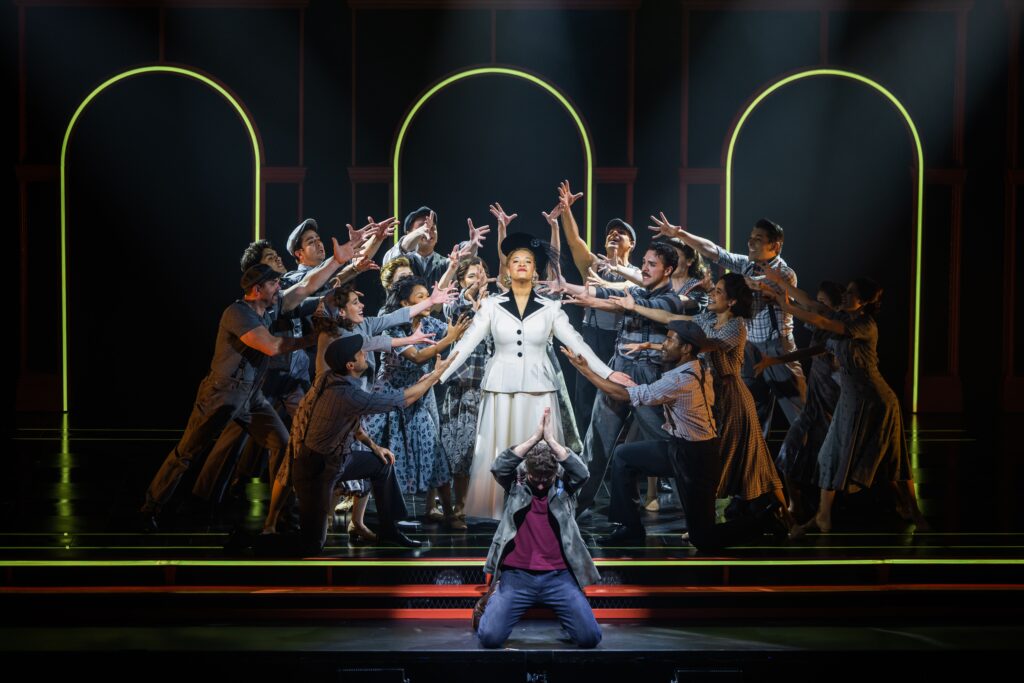
When the scrim lifts and the real show begins, the visuals only get better. A backdrop of silhouetted men and women in gorgeous haute couture hats and heels suddenly breaks into song and dance, like a painting come to life. Cinematic and magical, the effect is thrilling.

Told in vignettes, the storyline is anchored by Eva Duarte Perón and her rise from poverty in rural Argentina to reigning first lady and beloved titular patron saint. Eva’s journey is complicated and full of contradictions. While shamelessly sleeping her way to the top and ruthlessly trampling anyone who gets in her way, she also champions the poor, the disenfranchised, and the everyday working class. Voracious in her personal ambition and an original “mean girl,” she also cares deeply for her beloved country and its people.

Critical observer and cynic Che (the standout Omar Lopez-Cepero) narrates this legend, filling in the fairytale with unflattering morsels of on-the-ground reporting. In his opposing version, Eva’s deceitfulness and egomaniacal greed overshadow her legacy of charisma and beneficence.

Shereen Pimental soars as the larger-than-life Eva, transfixing the audience with her vocal range and regal presence. She commands attention every moment she is on stage, whether as a naïve 15-year-old in search of an acting breakthrough or the haughty, bejeweled dictator of fashion bullying all who don’t kowtow to her. We may feel ambivalent about her, but we can’t take our eyes off her either.

Under Sammi Cannold’s savvy direction, Emily Maltby and Valeria Solomonoff’s sassy, authentic tango choreography, and the exceptional performances by Pimentel and Lopez-Cepero, it’s almost possible to overlook the major drawback of the evening — namely, the play itself, which is more disjointed abstraction than linear storytelling. Spawned from a 1976 concept album by composer Andrew Lloyd Webber and lyricist Time Rice, the musical is short on character development and plot and long on untuneful, long-winded operatic numbers (many overamplified and difficult to decipher). Other than “Don’t Cry for Me, Argentina,” the songs blend, leaving behind no choral snippets that loop in one’s memory banks after the show’s end. Yet “Evita” is not meant to be about traditional dramaturgy. Like its namesake, it is about splash and sparkle and smoke and mirrors, and from the moment the audience lays eyes on the suspended disembodied gown until the orchestra sounds its final note, A.R.T.’s production is an unapologetic feast for all the senses. Highly recommended for anyone looking for an evening of pure epic entertainment.

Lyrics by Tim Rice. Music by Andrew Lloyd Webber. Directed by Sammi Cannold. Choreography by Emily Maltby, Valeria Solomonoff; Music Direction by Mona Seyed-Bolorforosh; Scenic Design by Jason Sherwood; Costume Design by Bradley King; Lighting Design by Bradley King. Presented by the American Repertory Theater in Association with Shakespeare Theatre Company at the Loeb Drama Center, 64 Brattle St., Cambridge through July 30.

For information and tickets, go to: https://americanrepertorytheater.org/

We All Walk The Trail of Tears in ‘And So We Walked’

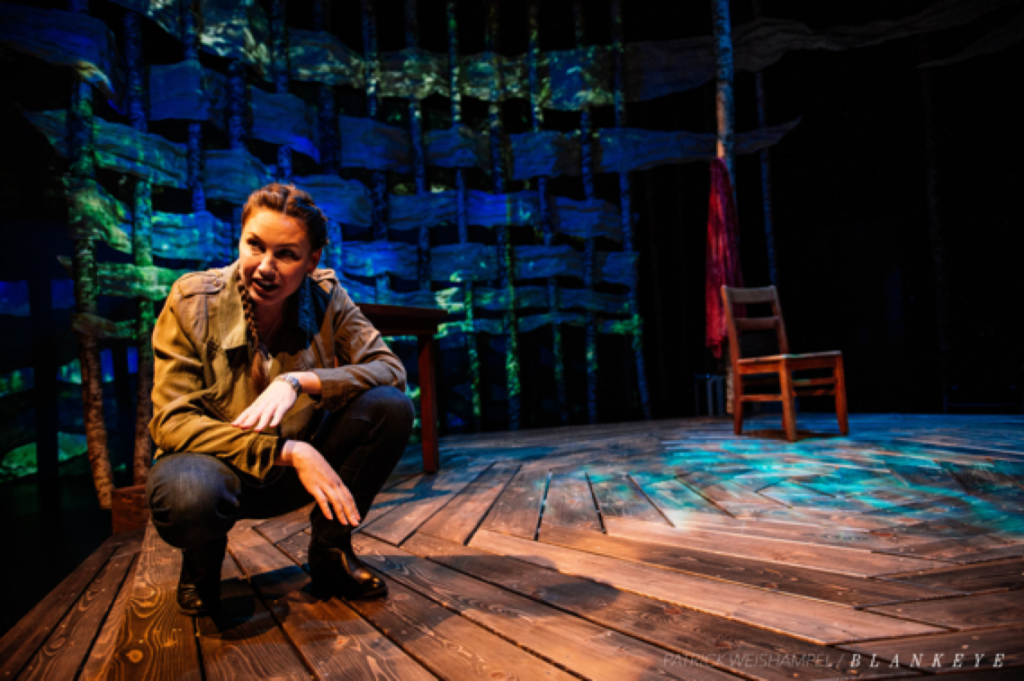
DeLanna Studi in “And So We Walked.” Photos by Patrick Weishampel/Blankeye

By Shelley A. Sackett

When the pre-written announcement acknowledging Indigenous and Enslaved Peoples is read prior to every local theatrical production, it often feels disconnected from the show that follows. Not so with Cherokee actress, artist, and activist DeLanna Studi’s stunning one-woman autobiographical presentation, ‘And So We Walked.”

For 150-minutes (one intermission), we shadow Studi’s and her ancestors’ lives as members of the Cherokee nation. She and her full-blooded 70-year-old Cherokee father (her mother is white) spend six weeks retracing the Trail of Tears, that noxious route trudged by over 100,000 Native Americans in the 1800s after they had been forcibly removed from their homes by the U.S. government. It is the same path her great-great grandparents took during the relocation of 17,000 Cherokee people.

The audience learns how tens of thousands of Native Americans died in retention centers, and many more by way of the trail. The survivors never received the $5 million sale price of their land, nor promised reparations.

“Every great story has truth in it and that truth is dangerous,” Studi explains. “The Cherokee story is written in blood.”

She peppers the evening with anecdotes, history and geography lessons, and terrific metamorphoses into a dozen characters, embodying their subtle physical and dialectic idiosyncrasies. She is a riveting presence on stage; maintaining audience interest for over two hours is no small feat, one the opening night audience acknowledged with its standing ovation.

The simple, elegant set and judicious choice and use of props captures the trail’s atmosphere, straddling between contemporary and pre-removal Cherokee life. Large pieces of white horizontal fabric reflect a variety of projected images, conjuring interior and exterior spaces. Studi is a magician at using the set to invoke a school house, Cherokee Council House, SUV and campfire gathering.

She covers a lot of ground, delving into factual topics such as the forced “reeducation” of Native children in white boarding schools from the 1860s until the 1980s. She also tackles the personal, emotional and cultural issues surrounding what it means to be a Native American in contemporary America. She feels isolated and tribeless, a bridge between two worlds, neither of which she can ever fully claim as home.

Studi replays the scene when, as a young school girl, her teacher announced that “Indians are extinct.” Because she was only half Cherokee, the elders made her sit alone at tribal ceremonies. Later in life, when auditioning for acting roles, she was told she was too white for Native parts and too Native for white roles.

Her father tries to reassure her that blood quantity is irrelevant; she should be proud of her heritage, standing tall and strong as a Cherokee woman.

“Being Cherokee isn’t about blood,” he tells her. “It’s knowing who you are. And keeping it alive.”

On her own, personal trail of tears, Studi discovers who she really is and what her rights and responsibilities are as one of the very few whose ancestors survived the Trail of Tears. Searching for her place and identity, she uncovers her essence and where she fits in.

Studi is especially effective when she addresses the audience directly, letting them in on a joke or expressing a particular emotion on her manipulable face. Although her story is replete with loss, victimization and trauma, she has seasoned it generously with humor and wit.

After their journey, her father asks, “Didja get what you came for?” If ‘And So We Walked’ is representative of what Studi gained, I’d say we all came out winners.

For tickets and information, go to: https://artsemerson.org/

‘And So We Walked’ — Created and Performed by DeLanna Studi. Directed by Corey Madden; Scenic Design by John Coyne; Costume Design by Andja Budincich; Lighting and Projection Design by Norman Coates; Sound Design and Original Music by Bruno Louchouarn. Co-represented by Octopus Theatricals and Indigenous Performance Productions. Presented by Arts Emerson at the Emerson Paramount Center, 559 Washington St., Boston through April 30, 2023.

Deb Schutzman to become executive director at Swampscott’s Congregation Shirat Hayam

Deb Schutzman / STEVEN A. ROSENBERG/JOURNAL STAFF

By Shelley A. Sackett

SWAMPSCOTT — About a year ago, Congregation Shirat Hayam President Ruth Estrich knew the synagogue would be hiring an executive director. The board of directors had included the salary in their budget and generated the revenue to fund it.

The Swampscott synagogue didn’t have to travel far to find the perfect fit: Deb Schutzman has worked at Temple B’nai Abraham in Beverly for 18 years, the last 15 as its executive and education directors. B’nai Abraham is just over 7 miles from Shirat Hayam.

It has been a while since Shirat Hayam had an executive director, and Estrich, a retired corporate executive, knew what the synagogue needed.

“We were looking for a seasoned professional, someone who would be capable of leading our employees, working collaboratively with our clergy, being the face of our congregation with our congregants, and supporting our board and our volunteers,” Estrich said.

In addition, the synagogue wanted someone who would honor Shirat Hayam’s history; create unprecedented growth for the future and attract new members; increase revenue; and provide all segments of the community with a place to call home.

“A piece of cake!” Estrich said with a laugh.

The next step was to craft a contemporary and comprehensive job description. The Shirat Hayam human resource committee – after gathering information from congregational stakeholders – created a draft. They vetted it with two national organizations: the United Synagogue of Conservative Judaism – the major congregational organization of Conservative Judaism in North America – and the North American Association of Synagogue Executives.

Estrich heard about Schutzman through “good old-fashioned networking.” They connected online and set up an in-person meeting.

“I knew immediately and absolutely our search was over. It felt bashert [Yiddish for “meant to be”], like the missing piece of our puzzle was in place,” she said.
Schutzman, who was born in Lowell and lives in Gloucester, brings expertise in community building, facility management, and strategic planning. She also has a deep love for the Jewish community of the North Shore. During her years as executive director at B’nai Abraham, she participated in hiring a new rabbi, a successful merger, increasing adult education programming, adding music to services, and launching a capital campaign.

While Schutzman loved her tenure at B’nai Abraham, she was ready for a change. “Shirat Hayam faces the same challenges as other synagogues. We all need to get people back into the building,” she said.

Although she acknowledged that the pandemic made attending services virtually both easier and more acceptable, “Nothing compares to being physically together. Shabbat is just not an ordinary experience at Shirat Hayam. There is an energy when we are physically together that makes it very special.”

One of her greatest joys at B’nai Abraham was her involvement with the religious school, and she especially loves watching kids come into the sanctuary at the end of Shabbat services and high-five Rabbi Michael Ragozin before chanting the blessings over wine and challah.

“Children are our greatest gifts. While teaching them, we are reminded about what is truly important and meaningful in life. The value of that teaching experience for me was priceless,” she said.

As executive director, Schutzman’s first focus at Shirat Hayam will be assessing its staffing needs. “Shirat Hayam has an incredible staff who have worked tirelessly over the past few years to hold things together during very unusual circumstances,” she said. As the congregation turns the corner on the pandemic and its ramifications, the needs of the community require reevaluation.

“Synagogue life has changed. How we communicate and interact is different now, and we need to ensure that we have the people in place with the skills to meet those needs,” she said.

Schutzman’s longer-range goals are to stabilize the operations side of the synagogue; improve communication; training and support for staff; address deferred facility maintenance; and plan for the future.

“I want to help fill the building not just for services, but for educational and social programming, life cycle events, and celebrations,” she said.

Schutzman attended Hebrew day schools from kindergarten through ninth grade. She lived in Israel for two years during high school and graduated from the New England Academy of Torah in Providence. She studied business administration at Stern College of Yeshiva University in Manhattan and UMass Lowell, after which she spent 12 years in retail store management for Macy’s and Filene’s Basement before joining B’nai Abraham.

She is the proud mother of Benjamin and Andrew and loves kayaking on the Annisquam River from May though November, “especially at sunset.”

With her term as president nearing its end, Estrich will be leaving on a personal high note with Schutzman at the organizational helm. “I’d say that with Rabbi Michael, Cantor Sarah and Deb, we’ve got the dream team and the sky’s the limit. I can’t wait to see where they take us,” she said.

Sassy, Somber and Sensual — Paul Taylor Dance Company Covers All the Bases

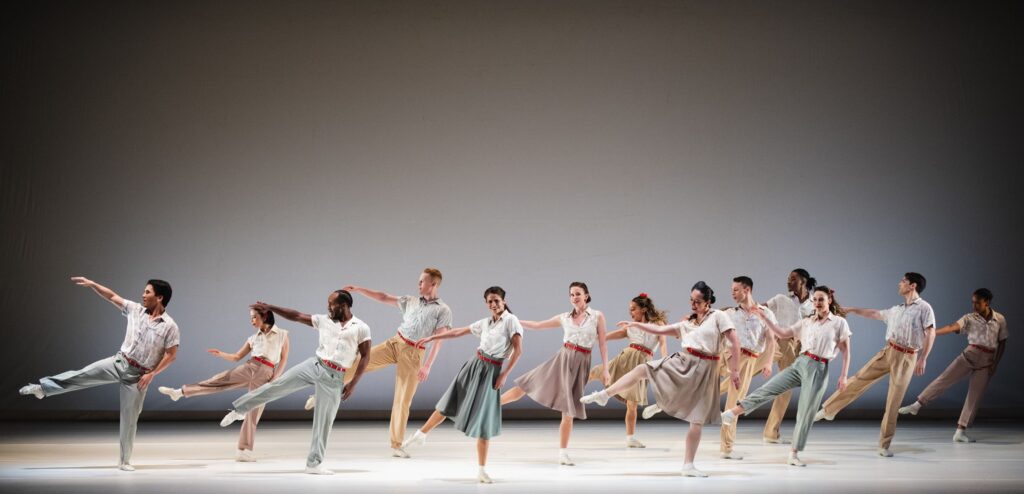
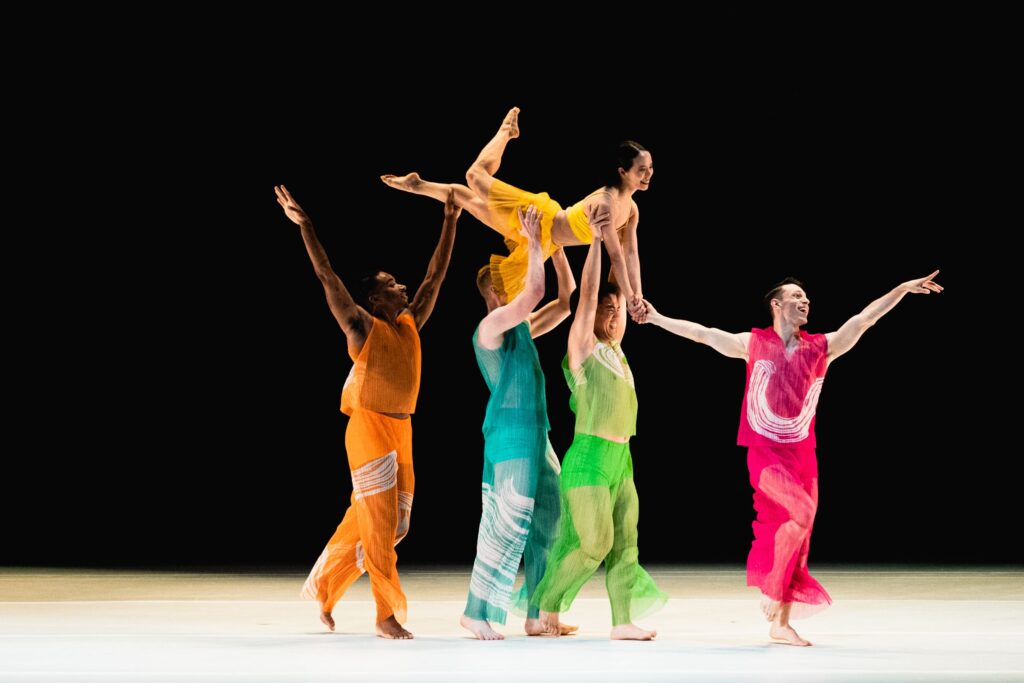
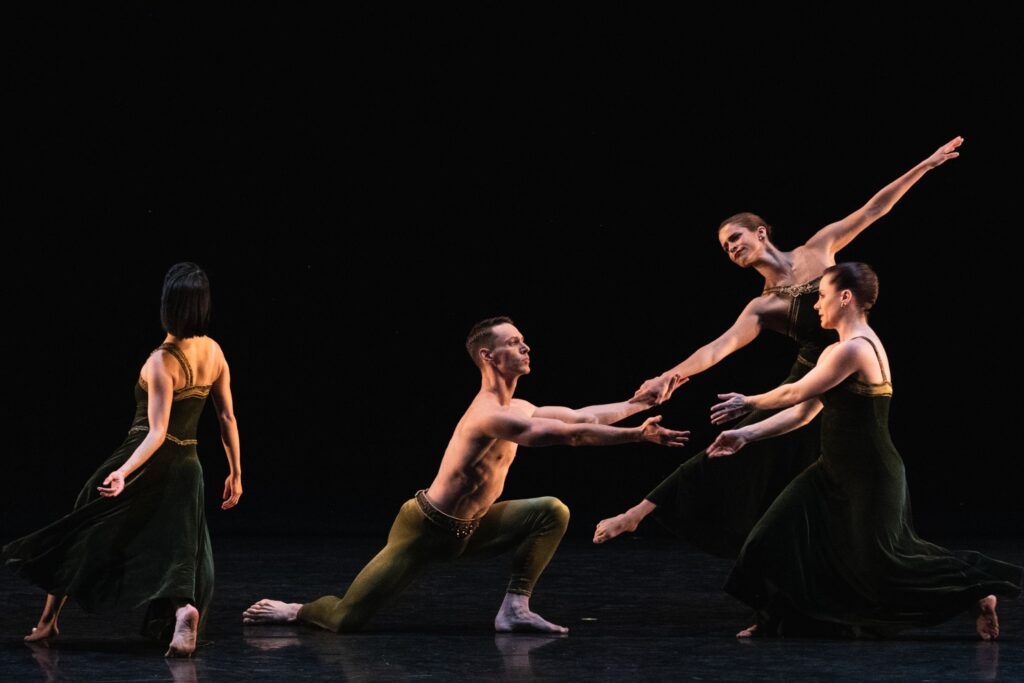
Full cast of Paul Taylor Dance Company at Boch Center — Shubert Theatre. Photos by Ron Thiele

By Shelley A. Sackett

Paul Taylor, whose imagination, emotional breadth and sheer physical ability helped shape and define the purely American art form known as modern dance, never fails to amaze and enchant. The thunderous opening night applause from the standing audience shows that, if anything, the company has only increased its seductive power over its Boston fans.

The three pieces (two by founding Artistic Director Paul Taylor), separated by intermissions, provided an evening of athletic exuberance and emotional depth, choreographer Taylor’s trademark, as well as the unabashed joy of the opening number, Amy Hall Gardner’s “Somewhere in the Middle,” a fun and sassy piece set to a selection of classical jazz music.

The evening opens on Donald Martiny’s jazzy set of textured paint squiggles hanging against a black backdrop. Count Basie’s toe-tapping music sets the mood for the ensemble to burst onto the stage, clad in Mark Eric’s yummy pastel costumes (briefs and bras overlaid with sheer, shimmering fabric). They tumble, leap, roll on the floor with nymph-like speed and charm, matching Ella Fitzgerald’s famous scats and bends with fancy foot and arm work.

Gardner’s piece makes excellent use of the ensemble while also allowing for individual dancers to grab the spotlight. A pas de deux slows things down, the romantic couple engaging in what my companion referred to as the “hunt” of search, attract, repel and retreat. Softer lighting (by the talented Jennifer Tipton) and sexier movements complement the darker, more fitted costumes.

Nonetheless, the overwhelming effect of this selection was of sweet, campy, happy couples who danced their way through dream-like vignettes.

Taylor’s “Brandenburgs” sets an entirely different tone. Johann Sebastian Bach’s Brandenburg Concertos nos. 6 and 3 are from the Baroque era, that period that bridged the Renaissance, with its emotional reawakening, and the Classical era with its return to the staid and formal values of antiquity.

Taylor and costume designer Santo Loquasto reflect the formality and romanticism of this refined early eighteenth century time.

The curtain lifts to a sculptural tableau reminiscent of the figures atop the piece’s namesake gate in Berlin. Slowly, subtle lighting shifts to reveal three women (muses?) and a man (Apollo?) standing in a circle of five male dancers.

The costumes are bejeweled and traditional, regal and lovely but, compared to the other two pieces, uptight and unexciting. The choreography is likewise dignified and constrained. Under Tipton’s thoughtful lighting, the dancers’ skin is luminescent, glowing in silhouette against a matte black backdrop. They shimmer in what feels like slow motion, capturing the sheer genius of Taylor’s talent at spinning breathtaking magic from simple hand gestures.

With the final piece, Taylor’s “Company B,” the evening is back to its opening cheeriness, albeit with a layer of complexity and subtlety not present in Garner’s work. Set during Second World War time, the mood is established by a soundtrack of songs sung by the Andrews Sisters meant “to express typical sentiments of Americans during WWII.” Crafted as a series of interconnected sketches, the dancers shine both collectively and individually.

Loquasto’s costumes are nothing short of adorable. White anklets and sneakers, red belts (for men and women), rolled up button down shirts, wide khakis and twirling skirts feel sock hop cute. The youngsters flirt, smooch and jitterbug, ponytails and skirls flying.

Taylor also conjures up a sense of the darkness of the times. There are silhouettes of men marching to war, couples uncoupling and lovers abandoned. This is a gorgeous, multifaceted and complicated piece, rendered sublime by the gifted cast of dancers.

The highlights are the eight solo numbers, which finally give the audience a chance to appreciate the individual personalities of some of the dancers. All shine, but there are three true stand outs. Alex Clayton is the mannerly guy next door in “Tico, Tico” until he is not. John Harnage, in Boogie Woogie Bugle Boy (of Company B), lights up the stage.

But the real show stopper (who pops in every piece, even when she is one of many in the chorus) is Madelyn Ho in “Rum and Coca-Cola.” Spritely, impossibly lissome and exquisitely cute, it is difficult to look away from this beguiling dancer.

Even if modern dance isn’t your “thing,” don’t miss the magic of this high caliber, delightful and uplifting performance. There’s still time!

For tickets and information go to: https://www.celebrityseries.org/productions/paul-taylor-dance-company/

Paul Taylor Dance Company – Artistic Director Michael Novak; Founding Artistic Director – Paul Taylor; Resident Choreography – Lauren Lovette; Lighting Designer – Jennifer Tipton; Costume Design – Donald Martiny; Costume Design – Mark Eric and Santo Loquasto. Presented by Celebrity Series of Boston at Boch Center — Shubert Theatre, 265 Tremont St., Boston, through April 16.

‘Clyde’s’ serves up redemption, one sandwich at a time

Harold Surratt and April Nixon in the Tony Award nominated “Clyde’s.” / KEVIN BERNE

By Shelley A. Sackett/JEWISH JOURNAL

Tikkun Olam, as explained in the Mishnah, is a Jewish concept defined by acts of kindness performed to perfect or repair the world. There are innumerable ways for us to do tikkun olam in our daily lives, each one with the potential to change everything for everyone.

Although it’s unlikely playwright Lynn Nottage had this concept in mind as she wrote the Tony Award-nominated comedy “Clyde’s,” now in production at the Huntington through April 23, its message runs throughout her play.

The setting (and what a set it is!) is Clyde’s, a truck stop café near Reading, PA. More than a way station for the road-weary, it is also a shelter for its four employees, all felons. For the three recent arrivals who need to show a weekly paycheck to maintain parole, it is also their only shot at getting back on track after derailment. Montrellos (Monty), Clyde’s elder statesman, role model and Zen master, supervises this crew.

Under the annihilative command of Clyde, the owner, achieving that goal is an uphill battle.

The play opens with Clyde and Monty (dressed in bright dashiki and kufi) in mid-conversation. He begs her to taste his latest creation, a sublime twist on the grilled cheese sandwich. She blows cigarette smoke in response. Wearing a glow-in-the-dark orange waist-length wig and exterior black corset, she looks like a cross between a deranged Tina Turner imposter and an S&M dominatrix. The effect is terrifying.

Instead of tasting the sandwich, she uses it to crush out her cigarette, just as she relentlessly snuffs out any hint of hope or happiness she senses smoldering.

The staff live in fear of her temper and she taunts them sadistically with threats to make up a parole violation and report them to the police. Behind the kitchen’s swinging door, without her lurking, they are free to connect and actually enjoy their work. Cautiously, they relearn how to trust, revealing what landed them in the slammer. Letitia, a quick-witted, sassy single mom, broke into a pharmacy to steal unaffordable seizure medicine for her daughter. Rafael, a playful recovering addict, tried to rob a bank with a BB gun while high. Jason, Clyde’s only white employee, is covered in white supremacy tattoos and fresh out of prison for assault.

In his role as mentor, Monty is kind, sage and committed to helping his charges survive their difficult transition. Although he doesn’t reveal why he served time until the play’s end, he has clearly walked the same walk.

His trick is the quest to create the perfect sandwich, that “most democratic of all foods.” Sandwiches can be more than the quotidian ingredients they slap between two pieces of bread for the café’s clientele, Monty counsels. They can reflect their creators’ dreams and truths. They even have the magic power to unlock the gate to their salvation. He is living proof.
The others bite, joining him on his pilgrimage. They bond over shared imaginary recipes, light-heartedly chanting ingredients like tantric mantras. After hours, each secretly works out combos that might earn Monty’s approval and, by extension, launch them toward a sense of self-worth.

Clyde doesn’t see sandwiches (or anything else) through the same rose-tinted lenses as Monty. Although she, too, was imprisoned, empathy and tikkun olam hardly drive her to hire only ex-cons. Rather, she uses them as cheap labor to populate her own sort of jail where she reigns as warden to these “loser” ex-prisoners who float in painful limbo between “real” prison and the ersatz one she has created.

Against great odds, and with Monty’s critical help, her employees ultimately free themselves from her grip by banding together and refusing to follow an order they just cannot abide. Although what triggers their rebellion is on its surface comedic, Nottage deftly handles this turning point moment, plumbing it for deeper beauty, poignancy and strength.

Nottage also has a gift for comedy, and under Taylor Reynold’s tight direction, her zingers are laugh-out-loud funny. The terrific actors playing the kitchen crew are an airtight ensemble that breathe life into their parts.

Unfortunately, the same is not true of the unnuanced Clyde. To be fair, Nottage has created a cardboard caricature, giving the actress little to work with. The distraction of her dozen or so wig and outfit changes only emphasizes the playwright’s missed opportunity in not fully fleshing her out.

Which is too bad, because Clyde exemplifies what can happen when, in pursuit of financial gain and raw power, we lose sight of what really feeds and sustains us. Luckily, her crew has Monty, with his belief in the restorative power of the sandwich, to lead by example and show them a better way.

For more information and to buy tickets, visit www.huntingtontheatre.org.

A love story in the age of (anti)social media

Jeffrey Song and Eunji Lim in SpeakEasy’s ‘Wild Goose Dreams.” / Photo Credit: NILE SCOTT STUDIOS

By Shelley A. Sackett

According to Genesis, the Babylonians wanted to make a name for themselves by building a mighty city and a tower with its top in the heavens. God disrupted the work by so confusing the workers’ language that they could no longer understand one another. The city was never completed, and the people were dispersed over the face of the earth.

Playwright and native South Korean Hansol Jung’s impressive play “Wild Goose Dreams” examines the modern-day Tower of Babel known as the internet, a global nation where algorithms create a universal language that renders its human users more disconnected than connected.

Presented by SpeakEasy Stage Company, it runs through April 8 at Calderwood Pavillion in Boston.

Set in contemporary Seoul, the plot follows the romance between a married South Korean man, Guk Minsung (Jeffrey Song), and Yoo Nanhee (a terrific Eunji Lim), a North Korean defector. They both travel with more than carry-on baggage.

Minsung is a “goose father,” the label given to a man who stays and works in South Korea while his family lives in an English-speaking country. Because South Korea values fluency in English (and because its education system is fiercely competitive), they are assured a better life when they return. Like their migrating namesakes, these fathers sacrifice for the sake of their offspring, sending money but rarely getting to see them. Minsung’s only means of contact with his wife and daughter are his cellphone and Facebook, and he longs for an-person visit.

Like Minsung, Nanhee is lonely, disoriented and (literally) haunted by the family she lives without. Four years ago, she suddenly and without notice left North Korea and her father (an amusing John D. Haggerty). She too was in search of a better life than she could ever have in that impoverished, repressive place. Her flight was full of peril and trauma; guilt and fear still preoccupy her thoughts and dreams. She sends her father money that she doesn’t know if he receives. He appears to her daily, a ghost-like companion invisible to anyone else.

Paralyzed by second-guessing the choices they made, they are isolated and numb. Theirs will be a textbook love story for the modern, dysfunctional age.

Both turn to the internet and online dating for comfort and connection, and depicting that world is where “Wild Goose Dreams” breaks bold new theatrical ground.

Jung’s intrusive and omnipresent cyberspace is portrayed by director Seonjae Kim as a lively, noisy Greek chorus of wild characters who chant and mime the equivalents of cellphone ringing, emojis and various internet functions (reboot is a stitch!). The costumes, sound effects and choreography are dizzying.

On its surface, this parallel universe is eye candy, entertaining and fun. Yet, just like the “real” internet, it smothers and disrupts, ultimately blurring the thinning line between virtual and actual realms, between fantasy and reality.

Amidst this relentless and chaotic cacophony of popups, “what’s on your mind?” and other distractions, Nanhee (screen name Miner’s Daughter) and Minsung (Gooseman) meet. Though they technically speak the same language, they bring different cultural contexts which Jung uses for both empathic and comic purpose. “Is that a joke?” each asks frequently, followed by “Is it a North/South Korean joke?”

Like post-Tower of Babel Babylonians, these two live in a diaspora where babble is the mother tongue.
While staggering in its imagination, creativity and craftsmanship, Jung’s play is not just humor, gimmickry and ingenuity. Below the surface, the gifted playwright skillfully tackles the broader issues of the genuine and overwhelming challenges we face living in a world of generational, cultural and technological disconnects.

Jung cleverly uses a fairy tale to link the various themes and plotlines. The play opens on a simple set with a storyteller (Nanhee’s father) telling his daughter a bedtime tale about an angel who loses the ability to fly and falls in love with a human. Later, the angel must choose between staying on earth with her lover or regaining her power of flight. These forked paths of freedom or family, taking flight or remaining grounded, will show up for the rest of the play. The personal toll they exact from Nanhee and Minsung shape their relationship and its unforeseen conclusion.

Although the play briefly stalls at an hour (at one hour and forty minutes, it could benefit from an intermission or shortening or both), “Wild Goose Dreams” is nonetheless one of the most exciting, out-of-the-box, charming and well-produced pieces of theater to hit Boston this season. Check it out and enjoy the guaranteed post-theater conversation.

For tickets and information, go to https://speakeasystage.com/.

BLO’s ‘Bluebeard’s Castle/Four Songs’ Is A Knockout!

Ryan McKinny, Naomi Louisa O’Connell in BLOs ‘Bluebeard’s Castle/Four Songs’

By Shelley A. Sackett

There needs to be a new term coined for BLO’s current production (and all too brief run) of ‘Bluebeard’s Castle/Four Songs.’ “Opera” just doesn’t begin to describe the multi-sensorial experience provided by this inventive, exciting and unique installation event.

For starters, the venue itself is a star. Through sheer brilliance, the Flynn Cruiseport terminal is transformed into pre-show performance spaces that reflect stage and set designers Anne Bogart and Sara Brown’s desire to explore “how spaces can be gendered.” In the “feminine salon,” costumed and bejewel-masked actresses mingle with early arrivals while Yukiko Oba plays an elegant Liberace-worthy piano. In the “masculine” VIP lounge, VIPs enjoy their cocktails in a traditional gentleman’s club.

By the time the audience is seated, there is no doubt that they are about to share a memorable artistic event.

The set is glorious, with a large bed perched in the center of a three-sided stage. The periphery is set up like a Viennese café, with seating areas and a white piano. Six women, dressed in beautiful gowns, float around the perimeter, alighting on one of the tables à deux before moving on and dazzling the audience.

The plot of ‘Bluebeard’ is fairly straightforward with enough twists and surprises to keep viewers engaged. Judith (the iridescent, silver-throated mezzo-soprano Naomi Louisa O’Connell) leaves her family for Bluebeard (the commanding bass-baritone Ryan McKinny) and his dark, gloomy castle. She sees seven locked doors and, despite her trepidation and Bluebeard’s warnings, insists he open them all. Each reveals something unexpected but the grisly finale ties it together with a stunning mixture of choreography and song.

BLO’s production, however, is anything but “straightforward.” Above the bed is a huge lighted frame that changes hue in a way that brings James Turrell to mind. Bluebeard emerges from the empty bed like Poseidon from the deep, tossing aside the first of a dozen enormous gossamer bed coverings. The effect is breathtaking.

The only opera Bartók ever composed, the brief (one-hour) ‘Bluebeard’ is usually performed with another piece. Instead, BLO pairs it with songs by Alma Mahler, furthering the concept of combining the feminine with the masculine. Mahler sublimated her own talent to men, and it seemed to Bogart that there was a connection between Judith and the female composer.

Bogart interweaves the two pieces seamlessly. Before the songs from ‘Bluebeard’s Castle’ (sung in German) begin, Judith saunters to the on-stage piano and sings three Mahler songs in English. She then speaks directly to the audience, welcoming them and inviting them to enter the world of ‘Bluebeard’s Castle.’ With impeccable timing and to maximum effect, the voice of Bluebeard rings out as he magically appears on center stage. And the magic of that moment holds up throughout the entire evening.

O’Connell

BLO’s production of ‘Bluebeard’s Castle’ is an electrifying, artistic happening. Only here until March 26, it is worth dropping everything to secure a ticket. You’ll be sorry if you don’t.

For information and tickets, go to https://blo.org/bluebeard/

‘Bluebeard’s Castle/Four Songs’ – Music by Béla Bartók, Libretto by Béla Balázs, Arranged by Eberhard Kloke/Music by Alma Mahler, Arranged by Julian Reynolds. Music Director – David Angus, Stage Director – Anne Bogart; Set Designer – Sara Brown; Costume Designer – Trevor Bowen; Lighting Designer – Brian H. Scott. Presented by Boston Lyric Opera at The Terminal @ Flynn Cruiseport, 1 Black Falcon Ave., Boston through March 26.

Speakeasy’s ‘Wild Goose Dreams’ Is A Surreal Romp Between Two Realities

Ciaran D’Hondt, Fady Demian, Elaine Hom, Ryan Mardesich, Amanda Centeno, and John D. Haggerty in Speakeasy’s ‘Wild Goose Dreams’ Photos by Nile Scott Studios

‘Wild Goose Dreams’ – Written by Hansol Jung. Directed by Seonjae Kim; Scenic Design by Crystal Tiala; Costume Design by Machel Ross; Lighting Design by Kathleen Zhou; Sound Design by George Cooke. Presented by SpeakEasy Stage at The Calderwood Pavillion, Boston through April 8.

By Shelley A. Sackett

On its surface, ‘Wild Goose Dreams,’ lays out parallel tales of migration, sacrifice, and dreams. To fully appreciate Hansol Jung’s brilliant script and Seonjae Kim’s spot-on direction, a little background is helpful. Geese migrate with the seasons, traveling great distances and enduring physical hardships to secure food and shelter for their families. Their survival hinges on uprooting themselves and flying to an unknown place that they hope will provide what they need.

Starting in the 1990s, Korean culture mirrored this concept of sacrifice and travel when fathers who could afford to began sending their families to English-speaking countries so their children could achieve their dreams of a better life when they returned to Korea. Known as “Wild Goose Fathers,” they stayed in Korea to earn money. They, like migrating geese, would see their families only seasonally. “Penguin Fathers,” like those flightless birds, were the Wild Goose Fathers who weren’t sure if or when they would ever see their families due to the exorbitant expense of travel. During this same time period, another kind of migration was taking place in Korea. Many people in North Korea began defecting to the South in search of better lives. These flights were full of peril and trauma.

Lim, Song

‘Wild Goose Dreams’ opens on a simple set with a storyteller (a splendid John D. Hoggerty) setting the play’s overarching narrative through a tale replete with metaphor and symbolism (although the audience won’t realize that until the play progresses). His bedtime tale is about an angel who loses the ability to fly and falls in love with a human. Later, the angel must choose between staying on earth with her lover or regaining her power of flight. These contradictory options of freedom and family, and the personal toll they exact, will overshadow the rest of the show.

Jung’s two main characters are the storyteller’s daughter, Yoo Nanhee (a perfectly cast Eunji Lim), and Guk Minsung (the equally terrific Jeffrey Song). Nanhee is a North Korean defector; Minsung is a Goose Father. Both are lonely, disoriented, and haunted by the family they live without. Nanhee’s father makes daily ghost-like appearances; Minsung’s wife and daughter show up sporadically via cellphone and Facebook.

Ciaran D’Hondt, Jeffrey Song, Ryan Mardesich, and Amanda Centeno

Both turn to the internet and online dating for comfort and contact, and depicting that world is where ‘Wild Goose Dreams’ breaks through a theatrical glass ceiling.

Jung’s cyberspace is interpreted by Kim as a lively, noisy Greek Chorus of wild characters that chant and mime the equivalents of cellphone ringing, emojis and various internet functions (reboot is a stitch!). The costumes (Machel Ross), sound effects (George Cooke), and choreography are dazzling.

Amidst this chaotic cacophony of popups, “what’s on your minds” and other distractions, Nanhee (screen name ‘Miner’s Daughter’) and Minsung (‘Gooseman’) meet. Though they technically speak the same language, they bring different cultural contexts which Jung uses for both empathic and comic purpose. “Is that a joke?” each asks frequently, followed by “Is it a North/South Korean joke?”

Despite these communication disconnects, the two share an innocence and ease brought to life by Lim and Song’s effortless portrayals. They are both “lonely and paralyzed,” both preoccupied with those far away and bewildered by the terrain they now inhabit. Yet, both are open to redefining their lives to reflect their growing live (vs virtual) intimacy.

Song, Lim

“Do we have impact on each other?” Minsung asks. “Couldn’t we call that love? Couldn’t that be enough for now?”

Jung’s play is not just humor, gimmickry, and imagination. Below the surface, the gifted playwright skillfully tackles the broader issue of the real and overwhelming challenges we face living in a world of generational, cultural, and technological disconnects. Her ‘Wild Goose Dreams’ is an entertaining, fun, well-produced piece of theater that is guaranteed to spark post-performance conversation.

For information and tickets, go to https://speakeasystage.com/

Wild Goose Dreams’ – Written by Hansol Jung. Directed by Seonjae Kim; Scenic Design by Crystal Tiala; Costume Design by Machel Ross; Lighting Design by Kathleen Zhou; Sound Design by George Cooke. Presented by SpeakEasy Stage at The Calderwood Pavillion, Boston through April 8.