Gloucester Stage Company’s ‘Gloria’ Provocatively Asks, “Who Lives, Who Dies, Who Tells Your Story?”

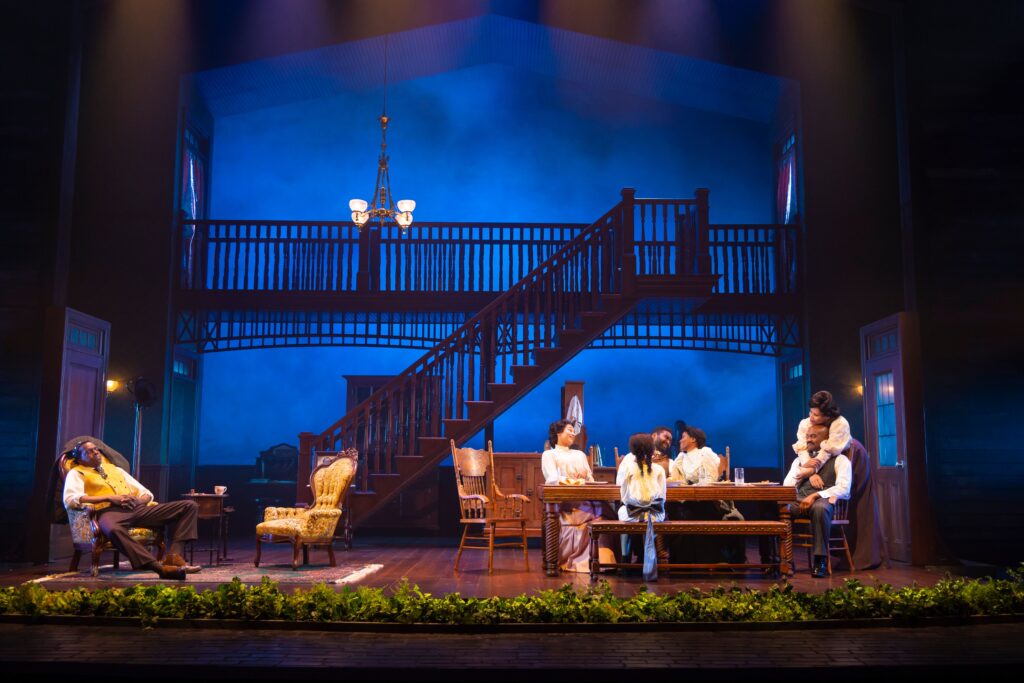
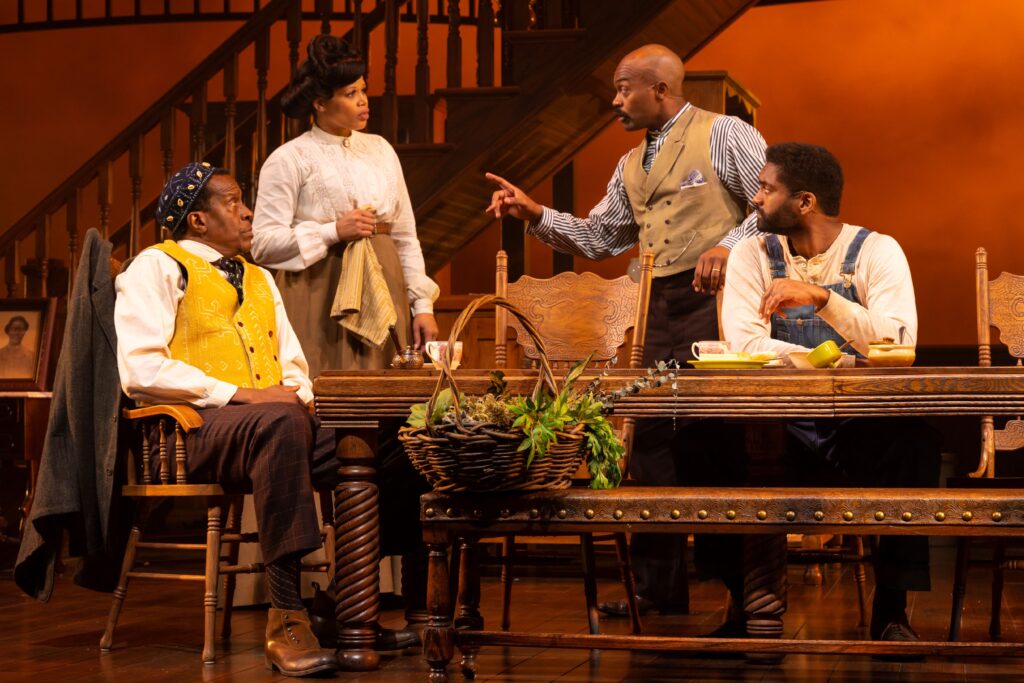
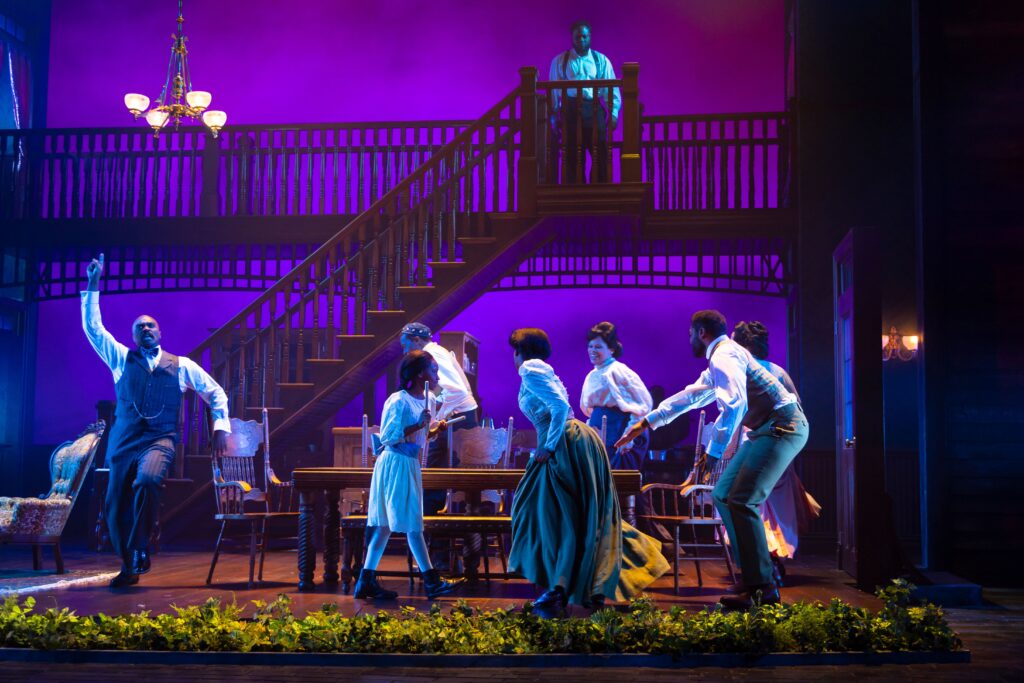
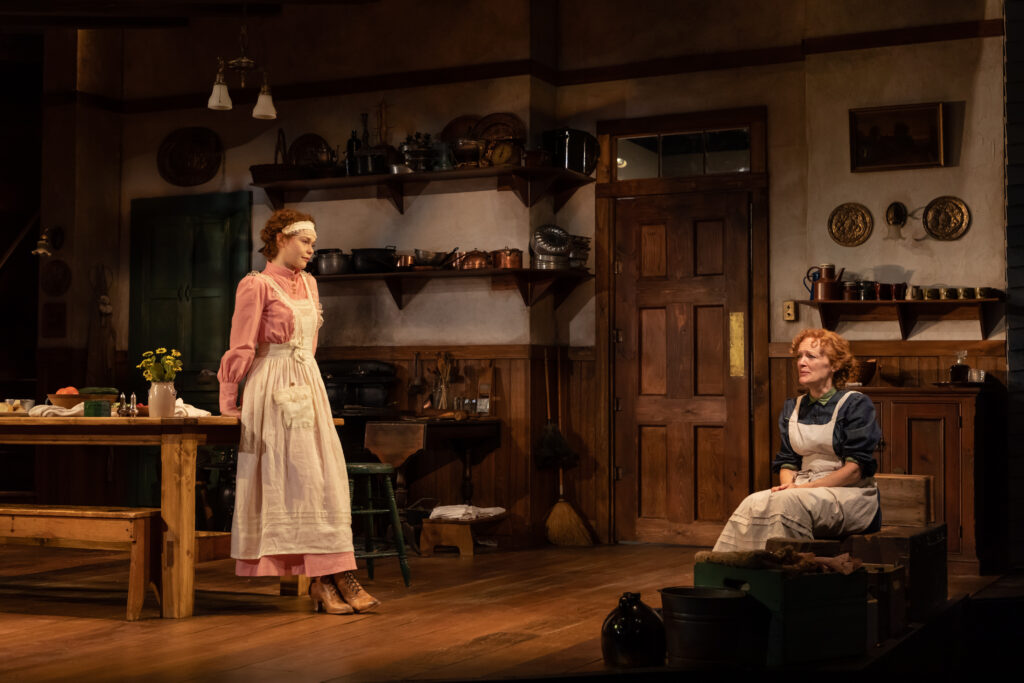
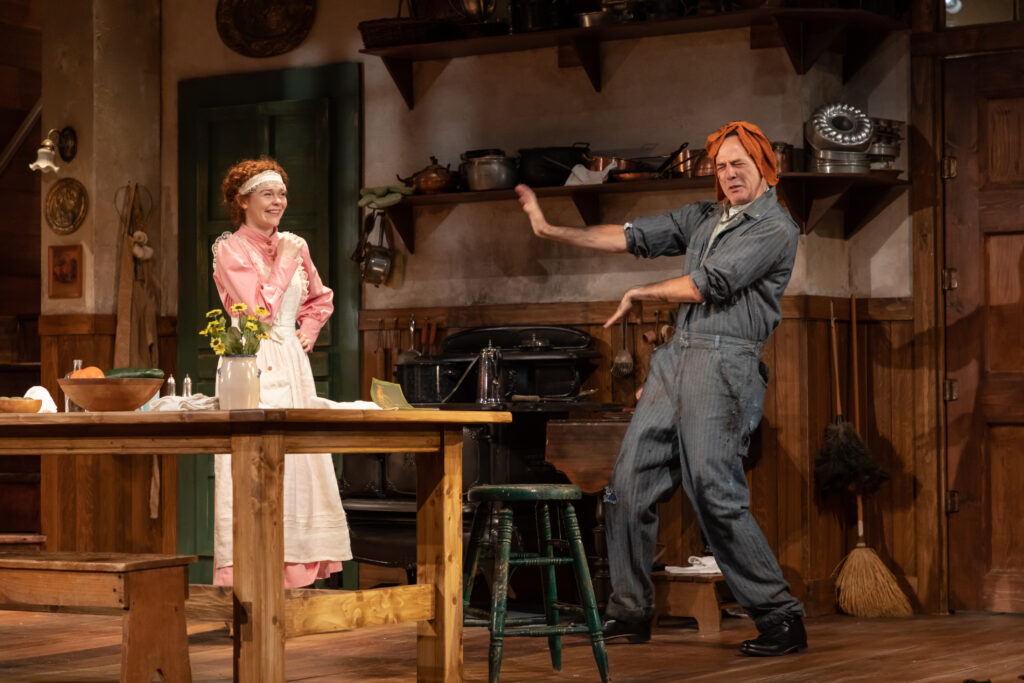
Cast of Gloucester Stage’s production of “Gloria” by Branden Jacob Jenkins. Photos: Shawn G. Henry

by Shelley A. Sackett

‘Gloria’ takes us on a ride inside the rollercoaster that is the essence of a 2010s Manhattan cultural magazine’s editorial assistant bullpen subculture. (Its playwright, Branden Jacobs-Jenkins, worked at The New Yorker for three years). These players are unapologetic and clear about their singular goal: to leave their dead end stepping-stone jobs, climb out of the low prestige depths of editorial assistantship and secure a book deal before turning thirty. Each is constantly on the backstabbing prowl in search of that tipping point moment that will catapult them out of their murky office pit.

Reminiscent of the long-running television hit, “The Office,” the first act of ‘Gloria’ is an entertaining mash-up of deadpan humor, smart and provocative language and near slapstick-caliber physicality. The dialogue is full of wit, sarcasm, social commentary and sharp insight, delivered at breakneck speed. Competitive malice is the glue that binds these folks; shredding insults is their common language. No one is happy and no one is to be trusted, from the Harvard intern (Miles) who wears headphones as a decoy to the jaded almost-30 closet memoirist (Dean), the acid-tongued spoiled shopaholic narcissist (Kendra) and the spiritually eviscerated factchecker (Lorin) and over-educated, underpaid receptionist (Ani) .

Yet, in their individual and collective ways, this motley crew of wannabes somehow endears themselves as they bare their fangs, souls and vulnerabilities. They become like family — with all its good, bad and ugliness —and we accept and appreciate the way they unapologetically let it all hang out. Bryn Boice’s thoughtful and affective direction exposes their naked underbellies, yet still elicits our caring and empathy.

Into this mix enters Gloria, a pathetic and classic spinster loner who has dedicated her life to the magazine. An editor, she is the butt of more than one cruel joke and the object of the bullpen’s venomous envy. The night before, she threw herself an extravagant birthday party, complete with DJ and catered food. She invited the entire staff of the magazine; only one editorial assistant showed up, adding salt to an already unhealable wound.

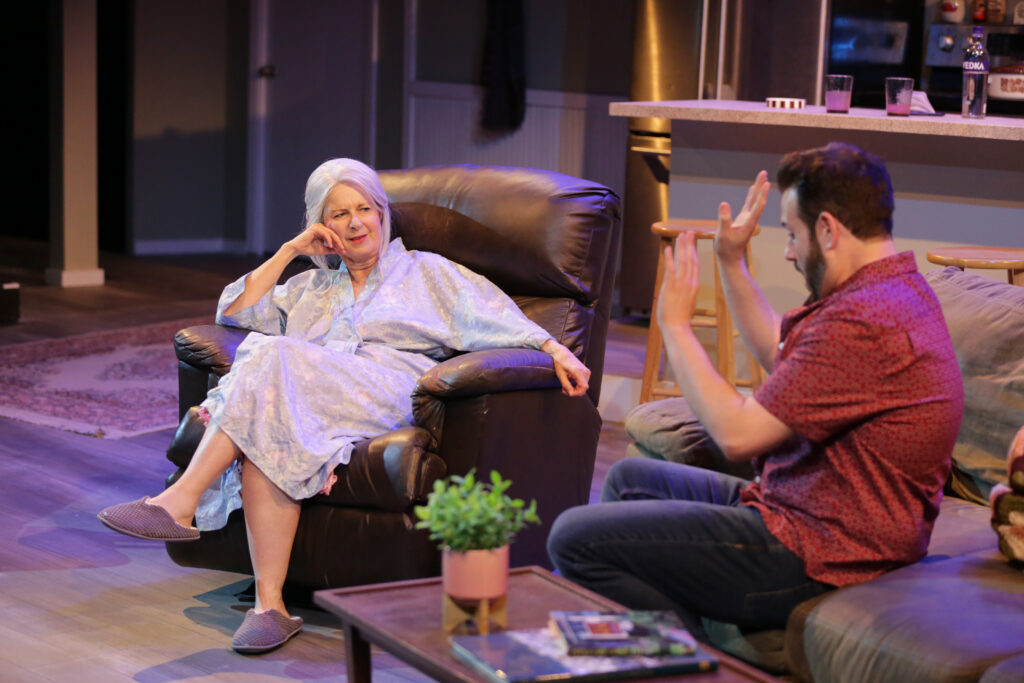
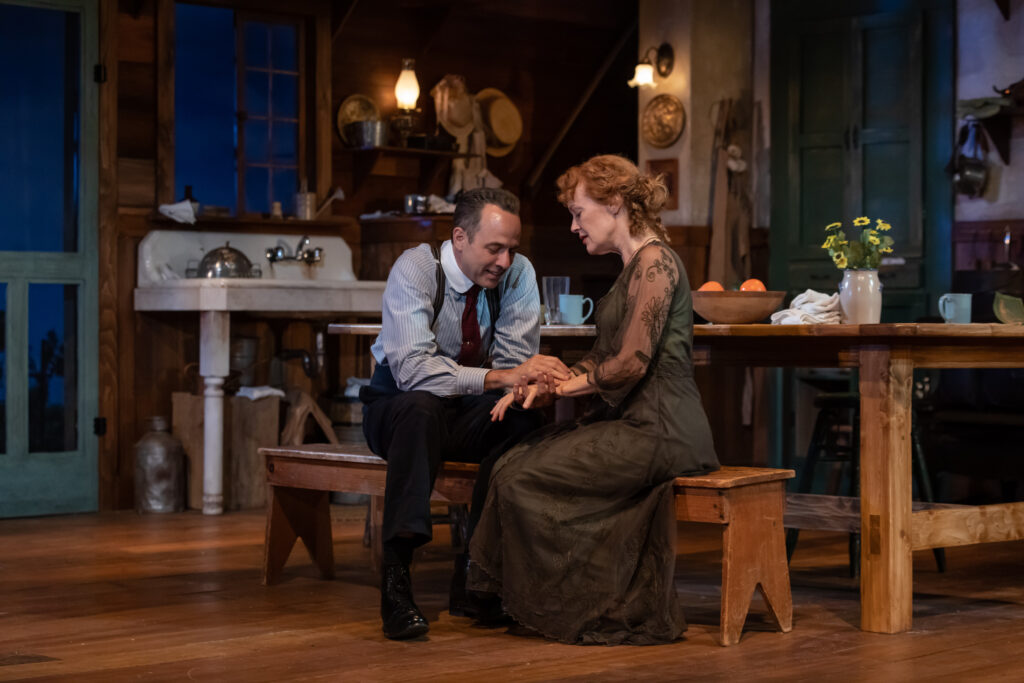
Michael Wood, Ann Dang

The repercussions of this slight go beyond hangovers and lame excuses, but it would be truly criminal to reveal what they are. Suffice it to say that Act I’s ending guarantees that no one is likely to leave during intermission.

Act II shifts gears so dramatically the audience is at risk of whiplash. Eight months later, the same characters are still front and center, but as individuals leading separate lives away from the magazine. All are dealing with the aftermath of a shared trauma that each exploits their own way. Gone is Jacobs-Jenkins’ spicy, electric-paced dialogue, replaced by the dull and relentless thrum of boundless, humorless ambition.

Jacobs-Jenkins does not hide the ball. His message — that we live in an age of exploitation that has no bottom — weighs heavy and depressingly without the fleet-footed wit he brought to his first act, and it’s a weary audience that welcomes the play’s end.

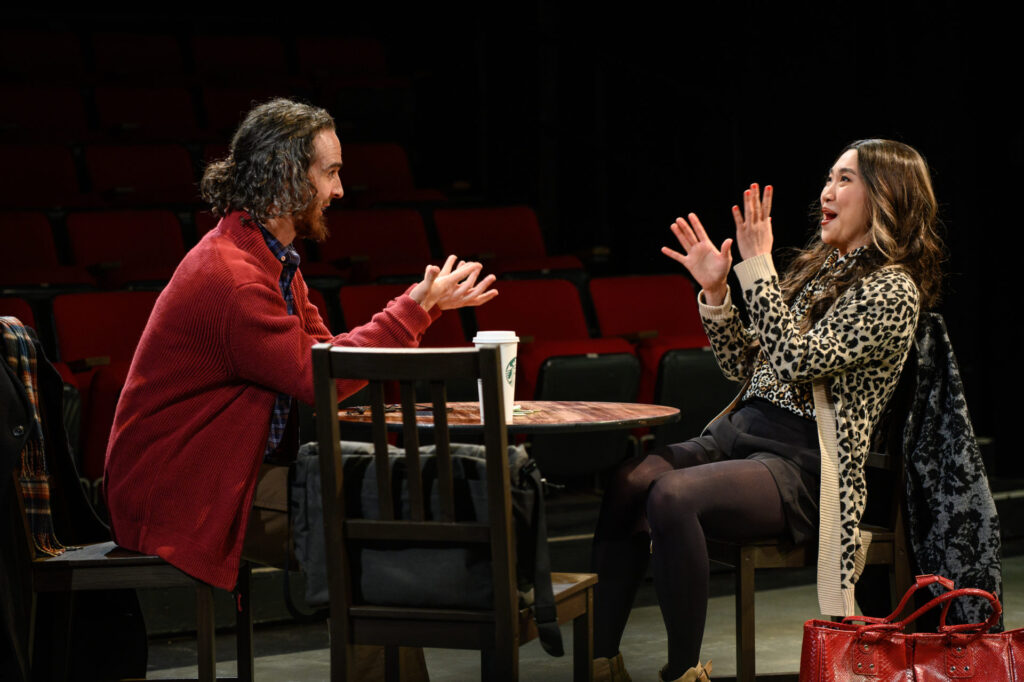
Ann Dang, Theresa Langford, Michael Broadhurst

Despite an uneven script and inconclusive ending, Gloucester Stage’s production is definitely worth seeing. Small touches add a lot. Props such as Asus and Toshiba laptops (remember those?) and a sound track of J. S. Bach: Mass in B minor ground us in the moment. The cast is terrific, and does its best to articulate Act I’s rapid-fire monologues clearly (strong standouts are Michael Wood as Dean and the talented Teresa Langford as Ani; Michael Broadhurst’s meltdown as Lorin gives Peter Finch’s classic “Network” stiff competition). Esme Allen brings an unpretentious ease to Act II’s Nan. And Boice misses no chance to add meaningful touches; under her direction, even changing sets becomes an opportunity for whimsical choreography.

‘Gloria,’ a Pulitzer Prize finalist in 2016, raises important issues for this era of continuing confusion and division over what constitutes news and how it should get disseminated. Should writers only create their own stories, or is it okay to co-opt someone else’s? Whose story is a shared event to tell and who decides what the “true” version of that story is? What are the differences between storytelling as catharsis, opportunism and exploitation and does it even matter anymore? Do those lines still exist?

Perhaps Lin-Manuel Miranda summed it up best in his peerless “Hamilton” when he wrote, “You have no control, Who lives, who dies, who tells your story.”

‘Gloria’ — written by Branden Jacobs-Jenkins. Directed by Bryn Boice. Scenic Design by Jeffrey Petersen; Costume Design by Rachel Padula-Shufelt; Lighting Design by Aja M. Jackson; Sound Design by David Remedios. Presented by Gloucester Stage Company, 267 East Main St., Gloucester through June 26.

For more information and tickets, go to: https://gloucesterstage.com/

Actors’ Shakespeare Project’s ‘The Bomb-itty of Errors’ Brings out The Bomb in The Bard

Cast of Actors’ Shakespeare Project’s ‘The Bomb-itty of Errors’

by Shelley A. Sackett

Actors’ Shakespeare Project’s “The Bomb-itty of Errors” is perfect pre-summer fare. Hip-hop and rap, a live DJ, a brilliantly exhaustive (and sometimes exhausting) script, some sublime acting and — as if that’s not enough — the Bard himself, camouflaged but hardly hidden. All wrapped neatly in a 90-minute intermission-less package that is as invigorating as it is boisterous.

The brainchild of four final-year students at New York’s Tisch School of the Arts, “Bomb-itty” started as a university project in 1998. It was so popular that it received enough support to return to New York the following year for a seven-month run, which in turn led to a lengthy Chicago run.

“Bomb-itty” is true to Shakespeare’s style of rhyming couplets, (sometimes bawdy) humor and historical references. The language often mirrors Shakespeare’s with references to other works sprinkled here and there to stroke the egos of those who recognize them. But the real star of the show is the vibrant, beatbox soundbox and the actors who manage to memorize a super-sized number of lines, which they deliver at break-neck speed.

The result is a theater experience unlike any I’ve experienced. (No, “Bomb-itty” is not a “Hamilton” clone. It’s way more fun.)

Based more than loosely on Shakespeare’s “The Comedy of Errors,” the plot involves two sets of identical twins with identical names, mistaken identities, misfortunes galore and a slew of stereotypes (some more offensive than funny). To get the most out of the rapid fire lines and delivery, either arrive early enough to read the playbill’s summary (twice, at least), or spend some time digesting the on-line Cliff Notes version of the original. Trust me, it is time well spent.

Despite first appearances (the prologue is a gem), “Bomb-itty” adheres closely to Shakespeare’s play.

In the original, a merchant of Syracuse, Egeon, suffered a shipwreck some years ago in which he was separated from his wife, Emilia, from one of his twin sons, later Antipholus of Ephesus, and the son’s slave, Dromio of Ephesus. The other slave’s twin, Dromio of Syracuse and Egeon’s remaining son, Antipholus of Syracuse, remained with Egeon.

When he came of age, Egeon allowed Antipholus of Syracuse and his slave Dromio of Syracuse to go in search of his lost brother. When they didn’t return, Egeon set out after his remaining son, and the play begins as we learn of Egeon’s capture and his condemnation to death by Duke Solinus in the hostile city of Ephesus. The details of Egeon’s story move Solinus to pity, and he grants a reprieve until nightfall, by which time a ransom of a thousand marks must be raised.

Unbeknown to all, the missing Antipholus and Dromio landed in Ephesus after the shipwreck and have thrived there. Antipholus of Ephesus and his servant Dromio are thrown into confusion when, unknown to each other, their twin brothers of the same names arrive in town from Syracuse.

In “Bomb-itty,” the Antipholus and Dromio twins are now quadruplets, put up for adoption after their father, a famous rap MC (Master of Ceremonies), committed suicide. The time is today and Ephesus and Syracuse have been replaced by the US East and West coasts.

Antipholus and Dromio of Ephesus visit Syracuse, New York, to take part in an MC competition. In the ensuing mayhem, one Antipholus is called home to a wife he never married, only to fall in love with her sister, Luciana. Meanwhile, the other Antipholus runs afoul of a policeman who enjoys a questionable relationship with his horse.

Four actors play most of the roles. Henry Morehouse as Dromio of Ephesus and Luciana chews up the stage. He has a natural physicality and stellar delivery and is comfortable and confident. He hands-down steals every scene in which he plays Luciana. A recent graduate of Boston University with a BFA in acting, Morehouse is a talent to be watched. His stage presence is spot-on and magnetic.

Likewise, the veteran actor Malik Mitchell brings the same charisma and acting chops to this production that those of us lucky enough to see him in SpeakEasy Stage Company’s “Once on this Island” have already experienced. His Dr. Pinch, the Rastafarian herbal “doctor,” is a show-stopper.

Anderson Stinson, III is all sinew and smiles in his many roles, shining as Antipholus of Syracuse. DJ Whysham strikes all the right beats and Victoria Omoregie rises to the challenge of her many character and costume changes.

Notwithstanding its gratuitous sexism, misogyny and anti-LGBTQ+ rhetoric (and a truly baffling and unforgivable antisemitic portrayal of a Jewish jeweler), the play is worth seeing for its high-energy, rowdy fun and for showing us what hip-hop and rap in the right hands can produce: a unique and exciting contemporary art form. If you listen carefully, you can feel the Bard’s ghostly presence, his sandaled toes tapping out the beats. For tickets and more information, go to: https://www.actorsshakespeareproject.org/

x

MICHAELHOBAN

Cast of Actors’ Shakespeare Project’s ‘The Bomb-itty of Errors’

‘The Bomb-itty of Errors’ — Written by Jordan Allen-Dutton, Jason Catalano, Gregory J. Qaiyum, Jeffrey Qaiyum and Erik Weiner. Based on ‘The Comedy of Errors’ by William Shakespeare. Directed by Christopher V. Edwards. Scenic Design by Baron E. Pugh; Costume Design by Zoe Sundra; Lighting Design by Max Wallace; Props Design by Steve Viera, Sound Design by Abraham Joyner-Meyers. Presented by the Actors’ Shakespeare Projectat the Charlestown working Theater, 442 Bunker Hill St., Chares through June 26.

by Shelley A. Sackett

Actors’ Shakespeare Project’s “The Bomb-itty of Errors” is perfect pre-summer fare. Hip-hop and rap, a live DJ, a brilliantly exhaustive (and sometimes exhausting) script, some sublime acting and — as if that’s not enough — the Bard himself, camouflaged but hardly hidden. All wrapped neatly in a 90-minute intermission-less package that is as invigorating as it is boisterous.

The brainchild of four final-year students at New York’s Tisch School of the Arts, “Bomb-itty” started as a university project in 1998. It was so popular that it received enough support to return to New York the following year for a seven-month run, which in turn led to a lengthy Chicago run.

“Bomb-itty” is true to Shakespeare’s style of rhyming couplets, (sometimes bawdy) humor and historical references. The language often mirrors Shakespeare’s with references to other works sprinkled here and there to stroke the egos of those who recognize them. But the real star of the show is the vibrant, beatbox soundbox and the actors who manage to memorize a super-sized number of lines, which they deliver at break-neck speed.

The result is a theater experience unlike any I’ve experienced. (No, “Bomb-itty” is not a “Hamilton” clone. It’s way more fun.)

Based more than loosely on Shakespeare’s “The Comedy of Errors,” the plot involves two sets of identical twins with identical names, mistaken identities, misfortunes galore and a slew of stereotypes (some more offensive than funny). To get the most out of the rapid fire lines and delivery, either arrive early enough to read the playbill’s summary (twice, at least), or spend some time digesting the on-line Cliff Notes version of the original. Trust me, it is time well spent.

Despite first appearances (the prologue is a gem), “Bomb-itty” adheres closely to Shakespeare’s play.

In the original, a merchant of Syracuse, Egeon, suffered a shipwreck some years ago in which he was separated from his wife, Emilia, from one of his twin sons, later Antipholus of Ephesus, and the son’s slave, Dromio of Ephesus. The other slave’s twin, Dromio of Syracuse and Egeon’s remaining son, Antipholus of Syracuse, remained with Egeon.

When he came of age, Egeon allowed Antipholus of Syracuse and his slave Dromio of Syracuse to go in search of his lost brother. When they didn’t return, Egeon set out after his remaining son, and the play begins as we learn of Egeon’s capture and his condemnation to death by Duke Solinus in the hostile city of Ephesus. The details of Egeon’s story move Solinus to pity, and he grants a reprieve until nightfall, by which time a ransom of a thousand marks must be raised.

Unbeknown to all, the missing Antipholus and Dromio landed in Ephesus after the shipwreck and have thrived there. Antipholus of Ephesus and his servant Dromio are thrown into confusion when, unknown to each other, their twin brothers of the same names arrive in town from Syracuse.

In “Bomb-itty,” the Antipholus and Dromio twins are now quadruplets, put up for adoption after their father, a famous rap MC (Master of Ceremonies), committed suicide. The time is today and Ephesus and Syracuse have been replaced by the US East and West coasts.

Antipholus and Dromio of Ephesus visit Syracuse, New York, to take part in an MC competition. In the ensuing mayhem, one Antipholus is called home to a wife he never married, only to fall in love with her sister, Luciana. Meanwhile, the other Antipholus runs afoul of a policeman who enjoys a questionable relationship with his horse.

Four actors play most of the roles. Henry Morehouse as Dromio of Ephesus and Luciana chews up the stage. He has a natural physicality and stellar delivery and is comfortable and confident. He hands-down steals every scene in which he plays Luciana. A recent graduate of Boston University with a BFA in acting, Morehouse is a talent to be watched. His stage presence is spot-on and magnetic.

Likewise, the veteran actor Malik Mitchell brings the same charisma and acting chops to this production that those of us lucky enough to see him in SpeakEasy Stage Company’s “Once on this Island” have already experienced. His Dr. Pinch, the Rastafarian herbal “doctor,” is a show-stopper.

Anderson Stinson, III is all sinew and smiles in his many roles, shining as Antipholus of Syracuse. DJ Whysham strikes all the right beats and Victoria Omoregie rises to the challenge of her many character and costume changes.

Notwithstanding its gratuitous sexism, misogyny and anti-LGBTQ+ rhetoric (and a truly baffling and unforgivable antisemitic portrayal of a Jewish jeweler), the play is worth seeing for its high-energy, rowdy fun and for showing us what hip-hop and rap in the right hands can produce: a unique and exciting contemporary art form. If you listen carefully, you can feel the Bard’s ghostly presence, his sandaled toes tapping out the beats. For tickets and more information, go to: https://www.actorsshakespeareproject.org/

‘The Bomb-itty of Errors’ — Written by Jordan Allen-Dutton, Jason Catalano, Gregory J. Qaiyum, Jeffrey Qaiyum and Erik Weiner. Based on ‘The Comedy of Errors’ by William Shakespeare. Directed by Christopher V. Edwards. Scenic Design by Baron E. Pugh; Costume Design by Zoe Sundra; Lighting Design by Max Wallace; Props Design by Steve Viera, Sound Design by Abraham Joyner-Meyers. Presented by the Actors’ Shakespeare Project at the Charlestown working Theater, 442 Bunker Hill St., Charles through June 26.

BLO’s ‘Champion: An Opera in Jazz’ Tackles Fate, Faith, Forgiveness and Redemption

by Shelley A. Sackett

Switching gears overnight due to pandemic-related issues, Boston Lyric Opera is to be commended for its recent perseverance and quick-footed adaptability. Instead of offering three performances of “Champion: An Opera in Jazz” as a full opera as rehearsed and planned, the company pivoted to only two concert-style productions with the masked orchestra on stage, costumed chorus in balcony box seats and main performers making do with a sliver downstage.

The only downside to the downsizing was that fewer people were able to experience this ambitious, modern masterwork that brings to life boxer Emile Griffith’s complicated story through a heart-rending melding of music styles and poignant lyrics. By the show’s end — at least in my row — there was not a dry eye. And isn’t that, after all, why we go to the theater and especially to opera? To feel?

The synopsis provided in the playbill is not a spoiler, but an essential guide. The scenes flip from present to past (with the magnificent Brian Major and Markel Reed respectively playing Emile today and during his boxing hey days of the 1960s) and without a roadmap, it’s easy to get lost.

Emile Griffith was not your typical boxer. Born on St. Thomas in the 1950s, he and his many siblings are abandoned by his mother, Emelda. As a youngster, Emile dreams of reuniting with his mother and becoming either a hat maker, a singer or a baseball player. Eventually, he finds her in New York and she introduces him to the hat manufacturer, Howie Albert. But, instead of offering Emile a job making hats, Howie focuses on Emile’s physique and pegs him as a welterweight boxer. He offers to train Emile, and with Emelda’s encouragement (and nose for money), Emile’s artistic dreams fade away.

The trouble is, Emile is gay at a time and in a profession where that is simply not an option. When Benny “Kid” Paret taunts Emile about being a “maricon,” (a Spanish insult for homosexuals) before and during their high-profile match in 1962, it is as if Benny has waved a cape during a bullfight. Emile literally sees red and in seven seconds delivers the 17 blows that will send Benny to the hospital in a coma, where he will die 10 days later.

Emile sits outside Benny’s room those long 10 days, wanting to say he is sorry and begging for forgiveness. His request is denied, and for the rest of his life, that lack of closure will wrack his soul and shake his faith.

Markel Reed, Terrence Chin-Loy and Brian Major from Boston Lyric Opera’s production of “Champion:An Opera in Jazz.”
Courtesy of David Angus, Boston Lyric Opera

Fifty years later, Emile struggles with the chronic traumatic brain injury, the result of “boxer’s brain” and a brutal beating he suffered outside a gay bar. The opera opens as Luis, his caregiver/adopted son/partner, helps dress him, reminding him of a special meeting they are scheduled to attend. Emile’s mind is afloat, uneasily alighting on memories of his fight with Benny and his own beating at the hands of bigots. He is  confused over the smallest action, such as putting on his shoes. He sometimes doesn’t know who or where he is.

Yet during moments of clarity, he remembers his past and the twist of fate that transformed his prized fists into weapons, forever rewriting his legacy from Champion Boxer to murderer.

During these times, he poses some very deep and heart wrenching questions.

“What makes a man a man; the man he is?” Emile wonders. “Who is this man who calls himself me?” Resigned to a life where redemption is beyond his grasp, he accepts his fate, believing he deserves it. “I go where I go,” he explains.

Blanchard’s music keeps the audience riveted and guessing as he winds from the full-throated operatic to slinky, smoky note-bending jazz to a gospel-tinged chorus to a N’awlins style second line. It’s the musical analog to Alvin Ailey’s “Revelations.”

The cast relishes every note. Baritones Major and Reed are nothing short of spectacular as Emile, both as actors and opera singers. Major is a big guy (think Paul Robeson), yet he controls that physicality to appear graceful and vulnerable. Reed is his foil, a compact pretty boy, all sinew and chartreuse satin. And man, can these guys sing.

The rest of the cast are equally noteworthy, from Tichina Vaughn as Emelda to Terrence Chin-Loy as Benny, Jesus Garcia as Luis, Stephanie Blythe as Kathy and Wayne Tigges and Neal Ferreira as Howie and the Ring announcer.

At the end of the day, however, we can’t help but wonder how Emile, in hindsight, might answer this question: was it worth it?

“Champion: An Opera in Jazz.” Music by Terence Blanchard; Libretto by Michael Cristofer. Music Direction by David Angus; Music Conductor – Kwamé Ryan; Set Design by Sara Brown; Costume Design by Trevor Bowen; Lighting Design by Marcus Doshi. Produced by Boston Lyric Opera at the Emerson Cutler Majestic Theatre, 219 Tremont Street, Boston. (Run has ended)

SpeakEasy’s ‘Once on This Island’ Is A Magical Tour of A Mystical Place

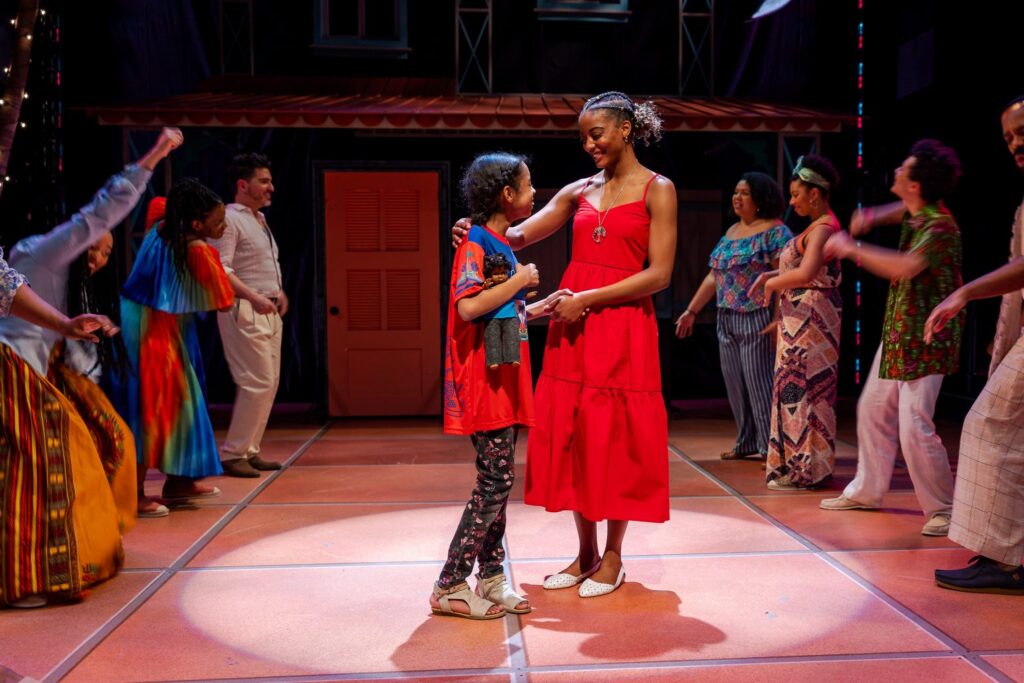
Peli Naomi Woods, Kenny Lee, and the cast of SpeakEasy Stage’s Once on This Island (2022). Photos by Nile Scott Studios.

by Shelley A. Sackett

‘Once On This Island’ is such a happy, toe-tapping, brightly colored musical, it’s easy to forget that its overarching tragic themes are Caribbean colonialism, racism, and slavery. Part ‘Romeo and Juliet’ (which didn’t end well for those star-crossed lovers, either), part Little Mermaid and part multi-cultural folk fable, the show explains the history of the Island Hispaniola and its eventual split into Haiti and the Dominican Republic.

Yet, the show is not heavy. There is also a contagious high-spirited cheerfulness that amounts to one of the most enjoyable theatrical experiences of 2022 (and there has been some stiff competition). Erik D. Diaz’s set is eye candy. Pink tiles, a shimmering crescent moon, lush vegetation and outdoor patio dining evoke the laid back magical vibe of island living.

Malik Mitchell, Peli Naomi Woods, Davron S. Monroe, Christina Jones, and Yewande Odetoyinbo

Under the direction of the talented David Freeman Coleman, live calypso music has the audience smiling and seat dancing before the play begins. The cast slowly moseys onto the stage, dressed in bright island finery. They engage and joke with audience members and each other, bantering in clear, easy to eavesdrop patois. The scene is set and the audience is primed.

Then suddenly, the horseshoe shaped stage is on fire, a burst of simultaneous music, song and dance. While there are a dozen individuals who are a “who’s who” of Boston’s finest actors/singers/dancers, in the prologue number, “We Dance,” they are a single, well-oiled ensemble. Voices blend seamlessly in strong, crisp and tuneful harmony. Jazelynn Goudy’s choreography is exciting and even more eye candy. There is so much to absorb sensorially, it’s hard to take it all in.

And that’s before the outstanding Peli Naomi Woods (Ti Moune) explodes onto the stage, commanding its center with confidence and grace while demonstrating her formidable vocal and dancing prowess.

Davron S. Monroe

The overlapping stories of Ti Moun and Haiti (referred to as “the jewel of the Antilles”) unfolds for the next 90 intermission-less minutes as an operetta, (a form of theatrical light opera) that includes spoken dialogue, songs, and dances. Told as a Hans Christian Anderson type of fairy tale fable, we learn about the history of the island and the caste system that divides people according to skin color, origin and wealth. The Beauxhommes, descendants of European colonialists, have the money, the power and the land. The native islanders are poor and stuck in their station. There is no possibility of fraternization, let alone marriage, between the two. Their futures are indelibly tracked.

Still, they all serve the caprices of the local gods, praying to them, fearing them and dancing to their music.

Through Lynn Ahrens (book and lyrics) and Stephen Flaherty’s (music) magnificent libretto, we learn Ti Moun’s story. It all starts with a big storm that left her an orphan. The gods spared her life for a purpose; they chose her for a magical adventure.

She is cared for by Ton-Ton Julian and Mama Euralie and grows up into the magnificent Woods. All is fine until Daniel, son of a wealthy Beauxhomme landowner, catches her eye as he races through her village in a splashy sports car. She becomes convinced they are each other’s destiny. She is determined to find a way for them to be together.

Peli Naomi Woods, Reagan Massó

One day, Daniel crashes his car and Ti Moun finds him. She decides the gods orchestrated this, revealing their plan for her and the reason she survived the storm. She goes into hiding with him, resolved to nurse him back to health. Papa Ge, the Demon of Death, comes to claim him, and Ti Mouns makes a bargain: her life for Daniel’s, payable at Papa Ge’s whim.

Ti Moun believes that love’s force can overcome all, even a bargain with the death god. Like Romeo and Juliet, these two really do love each other but, notwithstanding Ti Moun’s faith, no love is strong enough to overpower social and political mores.

To call “Once on This Island” enjoyable is like saying the Taj Mahal is a nice space. This production sparkles on every level. The musicians are first class. The choreography is inventive and inspired. In one knock-out number, Goudy arms the dancers with silver, shimmering umbrellas. The effect is otherworldly — are they jellyfish? Protective kites? Homage to Alvin Ailey’s “Revelations?” Or are they just there because it’s raining?

It’s hard to know where to begin to give shout outs among the cast. Woods (Ti Moun) is an undergraduate senior at Boston Conservatory at Berklee with a bright future that we hope will remain in Boston — at least for a little while. Anthony Pires, Jr. (Ton-Ton Julian) brings a lithe physicality, knock ‘em dead pipes and an irresistible twinkle in his eye to his role. Christina Jones (Erzulie) possesses a quiet substance and the voice of angel. And Becky Bass  (Steel Pannist and narrator/storyteller) is fresh, nuanced and natural. Her facial expressions and body language are magnetic. Kenny Lee, who plays the pivotal role of Daniel, could use a little more seasoning, but that’s something that additional stage time should cure.

Don’t miss this balm of a show. It is a four course, five star theatrical feast.

Once On This Island.” Book and Lyrics by Lynn Ahrens. Music by Stephen Flaherty. Directed by Pascale Forestal. Music Direction by David Freeman Coleman; Choreography by Jazelynn Goudy; Scenic Design by Erik D. Diaz; Costume Design by Chelsea Kerl; Lighting Design by Aja M. Jackson; Sound Design by Andrew Duncan Will. Presented by Speakeasy Stage, Boston Center for the Arts, 527 Tremont Street, Boston, MA through April 16.

For more information and tickets, go to: https://www.speakeasystage.com/

Lyric Stage’s Superb ‘The Book of Will’ Takes Us Back to the Time of the Bard

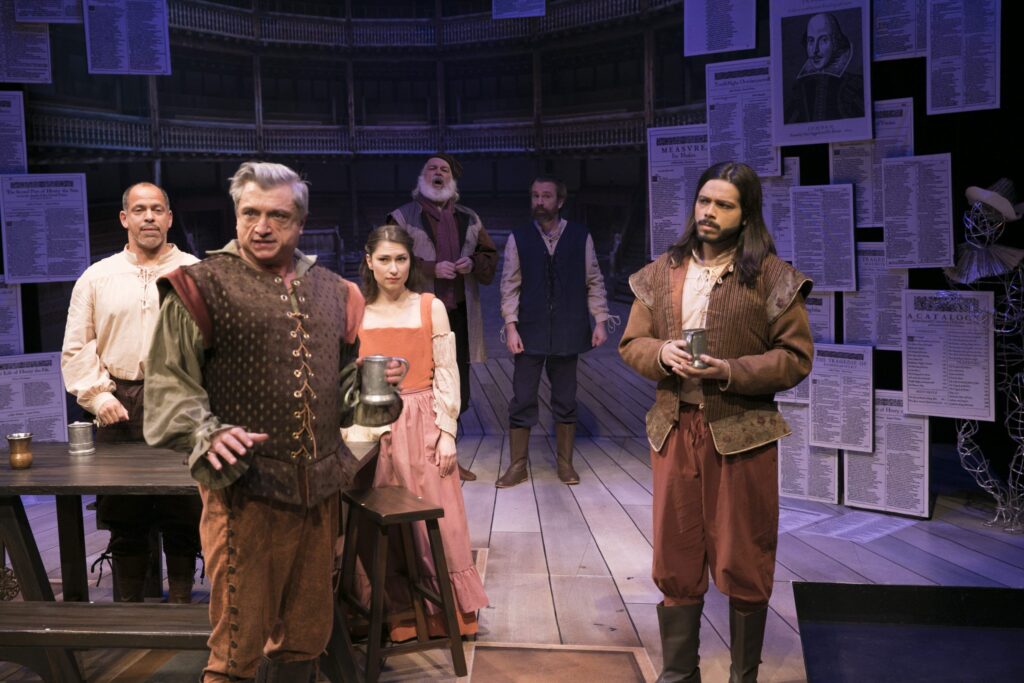
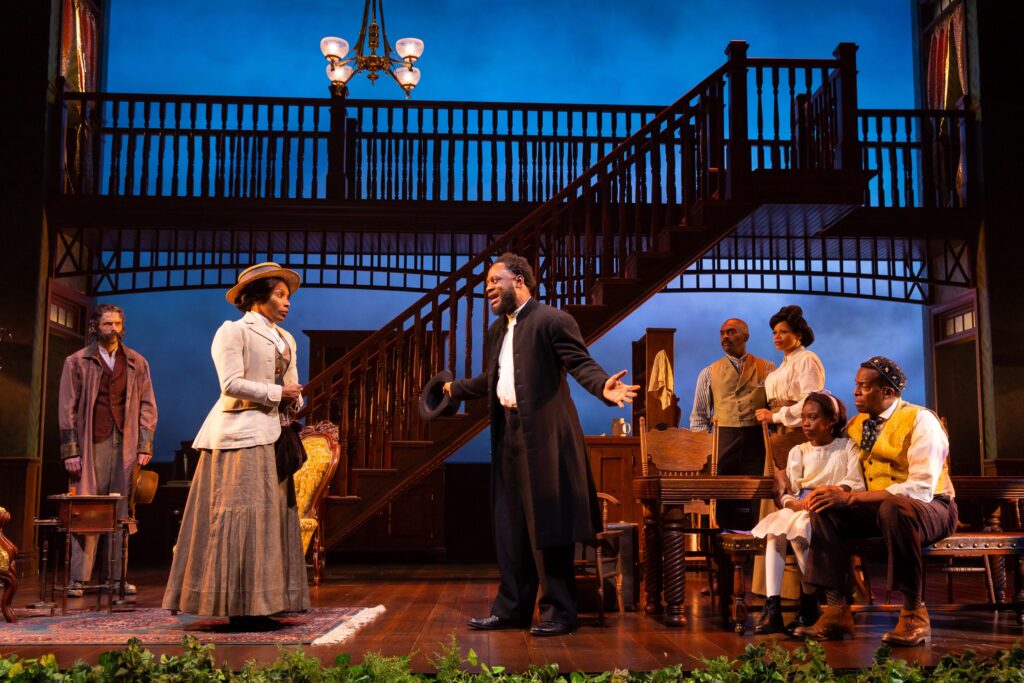
Cast of ‘The Book of Will’ at Lyric Stage

By Shelley A. Sackett

Ever wonder about the immediate aftermath of Shakespeare’s death, how his plays were preserved in an era when plays were not considered to be important works of literature, plots were largely constructed by the actors and written out in a ‘fair copy’ for their records by the company scribes, and new plays were churned out at an incredibly fast rate to provide the companies with enough material to keep performing new shows all the time?

Well, wonder no more.

The Lyric Stage Company of Boston’s must-see production of ‘The Book of Will’ brings the story of Shakespeare’s legacy, and the women and men devoted to creating and preserving it, to life. Director Courtney O’Connor weaves magic from a smart and inspired script by playwright Lauren Gunderson. For two hours and 15 minutes (with intermission), we willingly time travel back to an era of pubs, plays and camaraderie.

Sound Elizabethan and dull? Not a chance! But first, a little more context.

Playwriting then was a little like writing for a sitcom or a soap opera in the modern day, and once a play was performed, the acting companies would only keep the scripts if they felt they might revive them again down the road. If not, they might sell them off to a publishing house, who would try and make a quick profit on them.

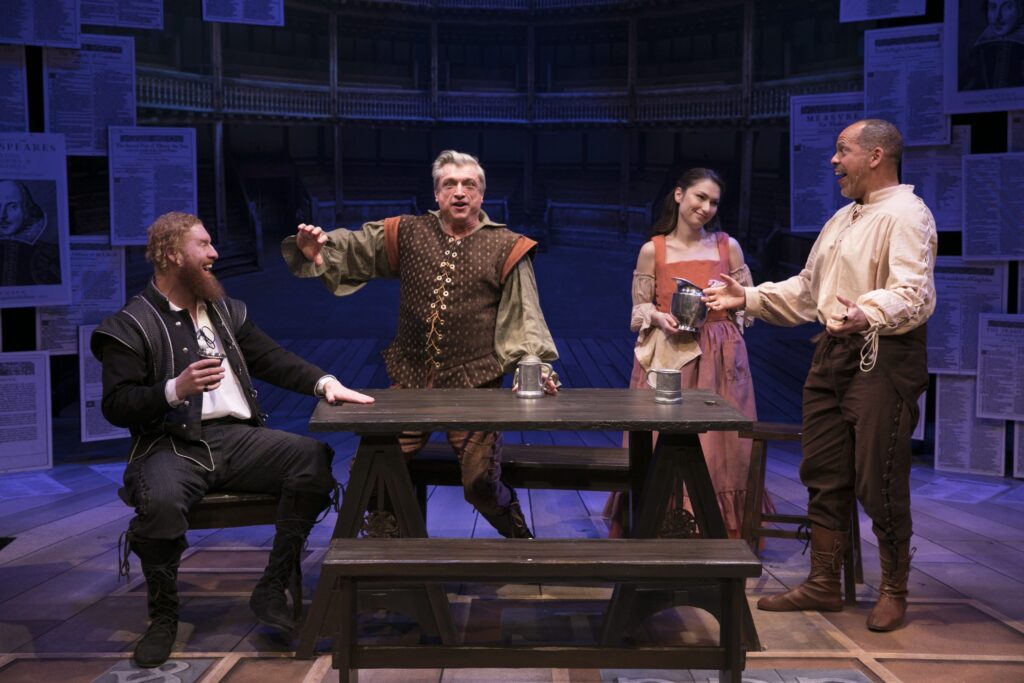
Ed Hoopman, Will McGarrahan, Grace Experience, Joshua Wolf Coleman

By Shakespeare’s time, printing was more common, and book publishing was more of a commercial enterprise. Yet, Shakespeare’s plays were not published all together in his own lifetime. John Heminges, Richard Burbage, and Henry Condell, fellow actors in the Kings Men and devoted friends of the Bard, began collecting the various published versions of Shakespeare’s plays, actors’ scripts, and scribal copies, and edited them together into the First Folio, published in 1623.

The whole project was perhaps an attempt to eulogize Shakespeare and make his work last forever. It’s partly these reasons that allowed his writings to become part of the fabric of English culture and language. His works, which most certainly would have been lost, have been read and circulated endlessly and have had a life of their own, though Shakespeare himself is long dead.

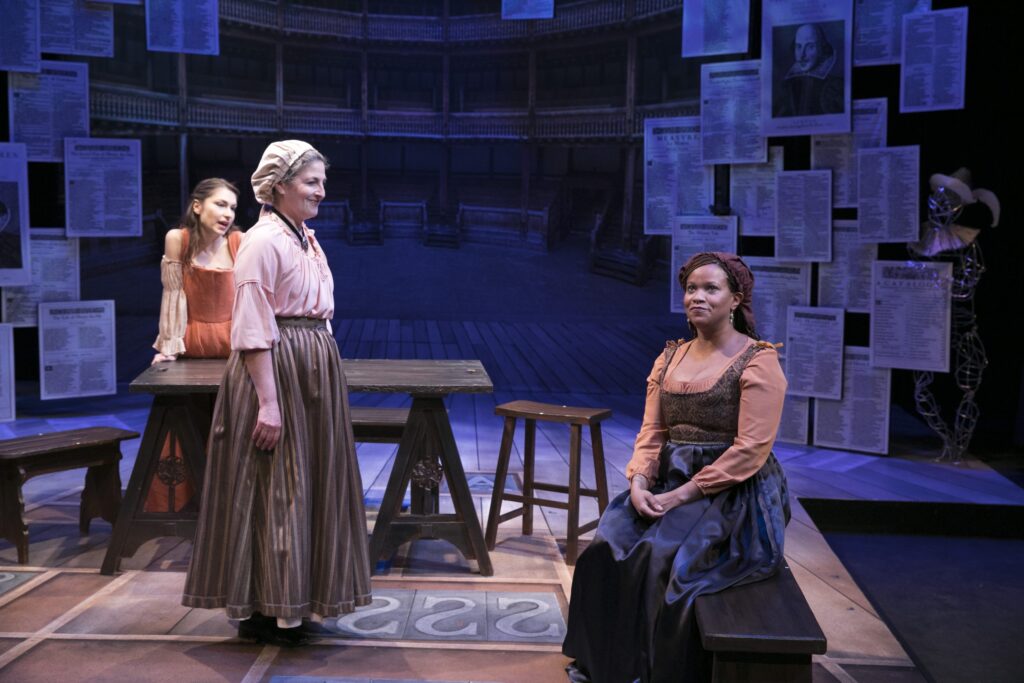
Experience, Sarah Newhouse, Shani Farrell

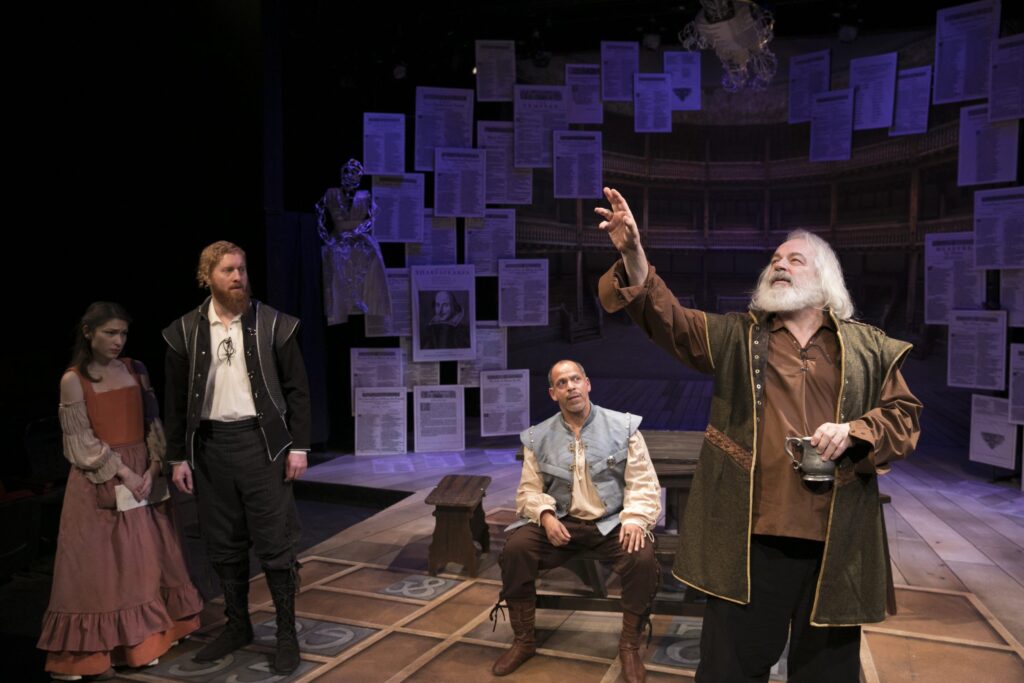
Janie E. Howland’s set, Elisabetta Polito’s costumes and Elizabeth Cahill’s sound design thrust us immediately into the thick of Stratford-on-Avon between 1619 and 1623. From the get-go, the talent and credibility of the actors is obvious. Particularly noteworthy are Fred Sullivan, Jr. as Ben Jonson and others, Will McGarrahan as Richard Burbage and William Jaggard, and the magnificent Ed Hoopman as Henry Condell. (I could listen to Hoopman recite the phone book.)

If Gunderson has strayed from historical fact, it is in her inclusion of women as prominent players in the project. These women are interesting, compelling, ambitious, funny and, in their own ways, powerful. There is not one weak link among the actors. Grace Experience as Alice Heminges (whom she plays with an Audrey Hepburn elegance), Shani Farrell as Elizabeth Condell, and Sarah Newhouse as Rebecca Heminges each bring their own nuances to their roles.

Lest you think this is a play reserved for Shakespeare nerds, think again. Gunderson has infused the script with humor, poetry, pathos and intrigue — ingredients for entertaining theater — as well as factual history.

Experience, Hoopman, Coleman, Fred Sullivan, Jr.

“Shakespeare doesn’t need much help in being revered. He needs help in being human. That’s the real heart of this story,” Gunderson said in an interview. “It really has to be the emotional reason that these people did this almost impossible thing. It comes down to their loves and friendships that really provide the engine for this effort.”

“The Book of Will.” Written by Lauren Gunderson. Directed by Courtney O’Connor. Scenic Design by Janie E. Howland; Costume Design by Elisabetta Polito; Lighting Design by Christopher Brushberg; Sound Design by Elizabeth Cahill. Produced by The Lyric Stage Company of Boston, 140 140 Clarendon St., Boston through March 27.

For more information and tickets, go to: https://www.lyricstage.com/

GBSC’s ‘Incident’ Is a Pleasant Trip Down Memory Lane

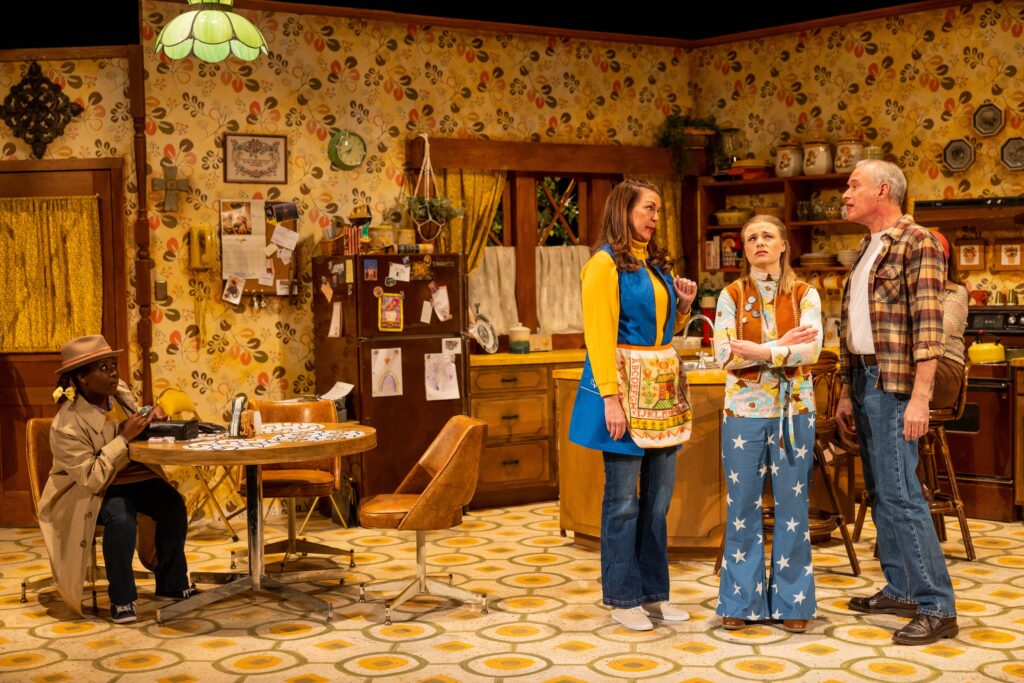
Cast of ‘Incident at Our Lady of Perpetual Help’ at Greater Boston Stage

By Shelley A. Sackett

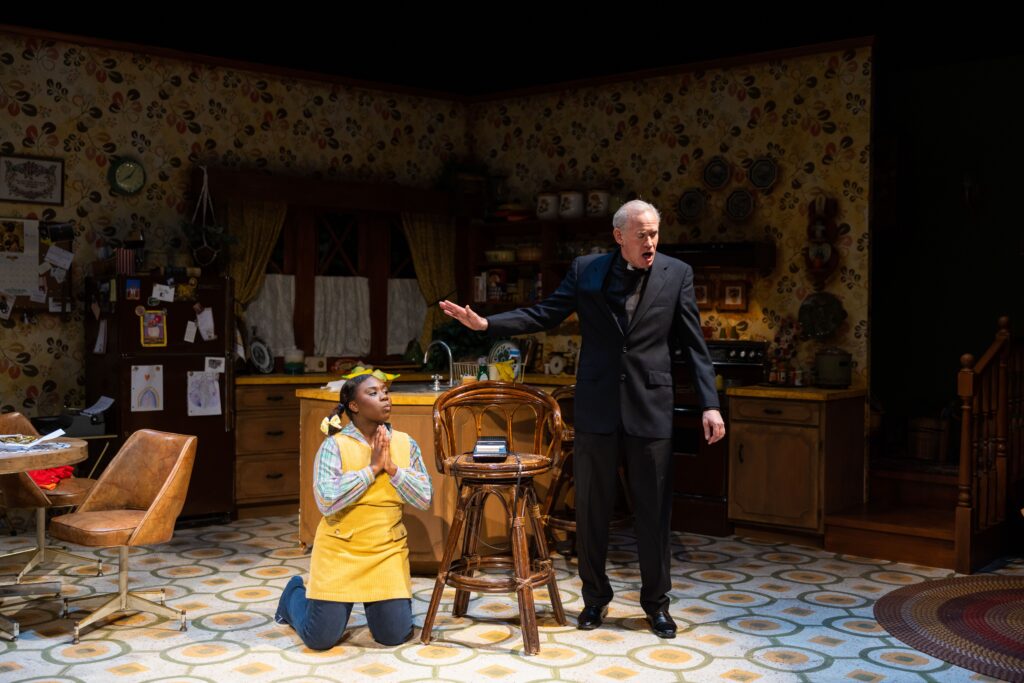
‘Incident at Our Lady of Perpetual Help’ will strike a particular chord among those of us whose wallets now hold Medicare and AARP cards. Written by Seattle-based playwright, Katie Forgette, it is a loving trip down her personal memory lane. She was raised Catholic and attended parochial school for 12 years. Her father was a hard working cab driver; her mother had many jobs, in addition to birthing ten children and caring for her own disabled mother.

The family wasn’t poor, but only because her parents sacrificed personal goals and worked as hard as they could to be financially comfortable.

Her play is set in the 1970s, and Shelley Barish has created a believable set that focuses on the main gathering place in the house — the kitchen. Homey, shabby and beloved, the room is full of interesting mementos of that era without feeling cluttered. (I was not alone in noticing that the clock on the set wall told the actual time, a nice touch and a visual clue that the connection between past and present is real and fluid).

Linda O’Shea/Forgette, played by Autumn Blazon-Brown, is our 20-something year old protagonist. She makes clear from the get go that, although she is narrator, she may not be a reliable one. “Memory shifts things,” she says. Telling old stories almost always involves the fallibility of memory. Two people, especially family members, remember the same event differently. She talks about the plasticity of memories, how they change over time and with each recollection to the point where, even when it comes to your own life, you may be considered an unreliable narrator.

She also points out the changes since the 1970s in the ways we communicate. “There was no posting; you lived your life in person,” she says wistfully.

Vin Vega, Barlow Adamson

Nonetheless, she is determined to tell the story of her family from her perspective to the best of her recollection.

And so we meet her mother, Jo (Amy Barker), father, Mike (Barlow Adamson), younger sister, Becky (Vin Vega) and Jo’s sister, Aunt Terri (the always fabulous Maureen Keiller). Over the next hour and 45 minutes (including an intermission), this cast of characters (along with a few hysterical cameos by a neighbor and priest) have one job and one job only — to tell the family story the way Linda remembers it.

Some of the characters are not too happy about their supporting roles. They want a monologue of their own, a chance to step up to the mike and explain their version of things. But Linda maintains control, doling out audience access sparingly and under strict time limits.

Although the plots twists and turns and the script’s clever lines draw easy laughs, the real meat and message lie in the family dynamics. They are a tight knit bunch, glued together by bonds of love, loyalty and compassion and — most importantly — humor. They soldier on, often griping and acting out, but they are actors cast in the same play and, at the end of the day, blood is thicker than anything.

Amy Barker, Autumn Blazon-Brown, Barlow Adamson

We are also treated to local parish customs and the hold the Catholic Church had over more than the religious aspects of their lives. Father Lovett and the infuriatingly patronizing church lady, Betty Heckenbach (both played with superb comic timing by Adamson) are examples of the hypocrisies and cruelty the church doled out with its communion wafers.

All the O’Sheas kowtow under the pressure to conform except Terri, who has known the pains of marital separation and barrenness, and isn’t afraid to call a spade a spade.

The riveting Keillor is her usual scene stealing self. (She was likewise phenomenal as Sherri Rosen-Mason in the SpeakEasy Stage’s 2019 production of ‘Admissions’). Her performance is calculated, physical and impeccably paced. Yet, it doesn’t have that “staged” feel. Rather, she makes Terri the warmest, realest and most 3-dimensional character on the stage.

Maureen Keillor

While Barker brings a warmth and strength to Jo and Adamson is great in his cameo roles, Vega and Blazon-Brown are weak links, delivering their lines in muffled tones at the speed of light. Too many great jokes are quashed and after a certain time, audience frustration sets in and we stop trying to catch every sentence.

Nonetheless, for Keillor’s performance and a feel-good theatrical experience, ‘Incident’ fits the bill. There are some real belly laughs, thought-provoking messages and zinger one-liners in this production. For tickets and information, go to: https://www.greaterbostonstage.org/

Review: MRT’s ‘Erma Bombeck: At Wit’s End’ a Delightful Breath of Fresh Air

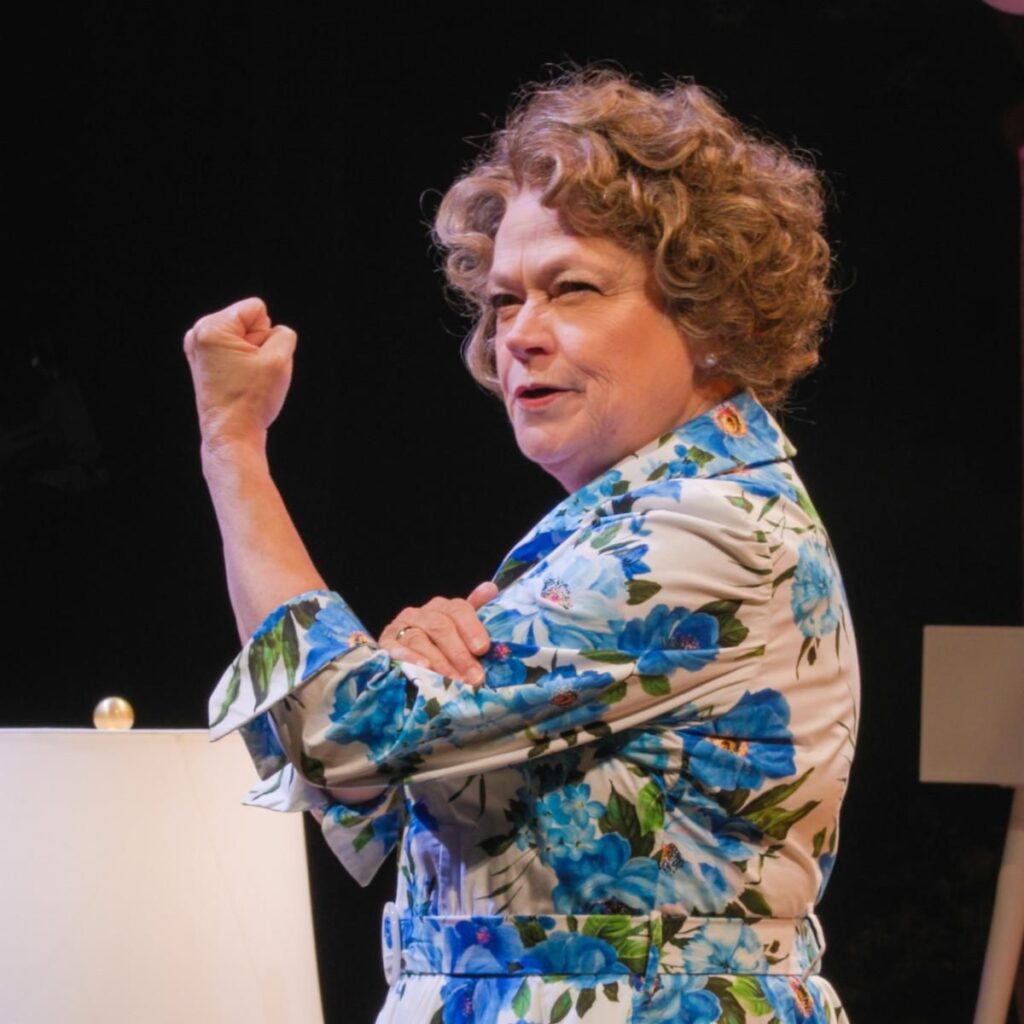
Karen MacDonald as Erma Bombeck in MRT’s ‘Erma Bombeck: At Wit’s End’

by Shelley A. Sackett

Karen MacDonald is nothing short of spectacular in the one-woman show, ‘Erma Bombeck: At Wit’s End,’ now playing at Merrimack Repertory Theatre through March 13. For 80 intermission-less minutes, she doesn’t just play Erma Bombeck; she IS Erma Bombeck, from her impeccable timing to the subtlest gesture and most delicate modulation. Don’t let this one slip away without seeing it. It is a balm of enormous power during these dark tundra days.

That power comes from Bombeck herself, whose simple, perceptive and — most importantly — funny writings are the backbone of the script. It feels so good to just relax, witness a magnificent performance, and laugh.

Daniel Zimmerman’s scenic design sets a perfect table for this theatrical feast. Complete with shag carpet (mustard and chartreuse), mid-century modern furniture and Hoover upright vacuum cleaner, we are instantly transported back to 1960s suburbia. His backdrop creation of a birds eye drone view of a typical neighborhood is as brilliant as it is effective. The effect is like being in a shadow box or viewing a large 3-D cinematic screen turned on its head.

We first meet Erma in her spotless living room, clad in a belted flowered shirtwaist dress, apron, pearls and heels, enjoying a moment’s peace before she starts ironing, vacuuming and folding laundry. MacDonald establishes rapport with the audience before she even utters a word. Yes, she really IS that good an actor.

By the time Erma utters her first line, she has the audience in the palm of her hand. “How,” she asks half in earnest, half rhetorically, “did I end up in suburbia?”

The rest of the monologue traces Erma’s life, from Bellbrook, Ohio to Cherrywood

Orchards community and motherhood to her spectacular career as columnist, book author and nationally sought speaker. Along the way, we are treated to snippets of Erma’s insightful, playful yet always spot-on humor and advice.

A bright woman straddling a line between domestic bliss and oblivion, Erma was a self-described “willing prisoner.” She had her kids early in life and compares the drudgery and workload of stay-at-home motherhood (the second oldest profession) to prostitution (the first), the difference being that mothers don’t get paid.

“I signed up for this life sentence,” she admits (though without, she notes, the usual possibility of parole for good behavior). At the end of the day, however, she offers a one-size-fits-all piece of advice: “If you can laugh at it, you can live with it.”

She escapes her sadness and emptiness by getting back to her writing, which was interrupted by her new role as housewife. She decides to use humor to tell the truth about her life in a column. After her third (and last) child starts kindergarten, she gets started.

Her success is immediate, her popularity taking off like a rocket into space. She goes from one column in a small, local papers to three columns weekly in a syndication of 900 papers nationwide. Yet she never loses sight or grasp of who she is and what her goals are.

“There was love in every line I wrote,” she says. There is also honesty, wit, laughter and pain. Remarkable for their  absence are anger and resentment.

We learn more about how a chance lecture by Betty Friedan launched Erma on her quest to pass the Equal Rights Amendment. She travelled for two years to garner support, writing her columns while on the road. She never missed one deadline during her entire career.

Towards the end of the play, Erma waxes poetic as she wistfully reflects on her career, cancer and waning years. “I was a stay at home mom,” she says. “The key to my writing is I am ordinary. Most of us are unremarkable.”

Although she never won a Pulitzer Prize, she is proud of her columns’ status as “top billing on the refrigerator.” She is such a good sport about everything, rolling with the punches and still harboring no resentment, regrets or complaints. “My plan was to wear out, not rust out,” she admits. “I wrote for me and the other mothers waiting to be recognized. I valued what everyone else took for granted- good old Mom.”

Her final words of advice on staying upbeat through the trials and tribulations of motherhood? “Seize every moment to make a difference,” she urges. “Who wants to live with regrets? Think of all those women on the Titanic who passed up the dessert tray.”

“Erma Bombeck: At Wit’s End.” Written by Allison Engel and Margaret Engel. Directed by Terry Berliner; Scenic Design by Daniel Zimmerman; Costume Design by Teresa Snider; Lighting Design by Joel Shier; Sound Design by Scott Stauffer; Original Music Composed by Brett Marcias. Produced by Merrimack Repertory Theatre, 50 East Merrimack Street, Lowell, MA through March 13.

For tickets and information, go to: https://mrt.org/

An Interview: Meet the Star and Director of MRT’s ‘Erma Bombeck: At Wit’s End’

Karen MacDonald stars as Erma Bombeck in “Erma Bombeck: At Wit’s End. / Photo: Megpix/Meghan Moore

by Shelley A. Sackett

LOWELL — It may surprise many to learn that Erma Bombeck, the celebrated humorist, was not Jewish. With lines like, “If Life Is a Bowl of Cherries, What Am I doing in the Pits?” the big-hearted mother of three had the wit, wisdom, and chutzpah that are hallmarks of a classic Jewish mother. Her nationally syndicated column, “At Wit’s End,” ran in 900 newspapers and championed the undervalued everyday lives of millions of stay-at-home suburban moms, offering them a cathartic lifeline of truth, daring, and laughter. She boosted their spirits by poking fun at herself and her life’s ups and downs in an original, comic voice that was both sassy and satiric.

Born in small-town Bellbrook, Ohio, to a working-class family in 1927, she wrote her first humorous column for her junior high school newspaper and went on to write for the Dayton Herald. She wrote a series of columns while at home with her young children and resumed her writing career in 1965 with biweekly humor columns. Within three weeks of the first articles’ publication, she was picked up for national syndication, appearing three times a week in 36 papers under the title “At Wit’s End.”

By the time of her death in 1969, she had written 15 books and appeared regularly on “Good Morning America.”
As a timely antidote to a bleak January’s cold, snow, and COVID, Merrimack Repertory Theatre in Lowell is serving up a sunny dose of Bombeck’s humor in its one-woman show, “Erma Bombeck: At Wit’s End,” from Feb. 24 through March 13.

Boston based actor, director, and teacher Karen MacDonald will bring Erma’s larger than life personality to the stage. She remembers Bombeck as part of her family’s life from a young age. Her mother, a big fan, would laugh out loud as she read the column every morning, often posting her favorites on the refrigerator.

“You couldn’t bother Mom until she finished ‘reading her Erma,’” MacDonald said by email.

In preparation for the role, MacDonald, who loves doing research, read many of her books, a biography, and revisited “The Feminine Mystique,” a book by Betty Friedan that Bombeck credited as her personal wake-up call.

In the course of her research, MacDonald discovered that Bombeck was complex, funny, and an astute observer of ordinary life. She also discovered much to admire: Bombeck’s diligence in writing three columns a week; her deep respect for the work women do; her devotion to her family; and her commitment to the Equal Rights Amendment.

“There is a rich amount of material for an actor to work with,” said MacDonald.

While pointing out that no one could really “play” Erma but Erma herself, “You want to gather as much as you can to bring to life such a fascinating woman, MacDonald said. “Then, you synthesize all that information and, hopefully, come up with your own Erma, true to her and true to yourself.”

Director Terry Berliner is also no stranger to Bombeck’s writing. “Erma Bombeck has always been part of my life. I do not know a world without her. Her stories showed me the importance of perspective, the power of a good story, and the significance of capturing the truth,” she said by email.

Although Bombeck was the epitome of a woman’s voice being heard across America at her time, she was written off by many for that very reason – because she was a woman in a man’s world. Playwright twin sisters Allison and Margaret Engel, who primarily work as reporters, co-wrote “At Wit’s End” to amplify that voice and garner the acclaim they believe she deserves.

“She was the most widely read columnist in the history of the country, yet she never won the Pulitzer Prize and is rarely mentioned in journalism schools,” the Engels said in an interview. “Most likely, her subject matter – families and children – was not considered as important as the thoughts of political pundits. Yet she chronicled a very important transformation in the lives of ordinary women in this country.”

MacDonald hopes the play will be “just the tip of Iceberg Erma” and that audiences will leave with a curiosity to reread her work, to learn more about her life, and to reconsider her place in American humor.

On a more visceral level, she also hopes “folks will find some relief, in these strange days, with laughter. It feels good to laugh.”

The play will be available virtually throughout its run. For access or in-house tickets, visit mrt.org/ERMA. The Merrimack Repertory Theatre, located at 50 East Merrimack St., Lowell, is requiring all guests to show proof of COVID vaccination or a recent negative test and to wear masks at all times in the building. To learn more about the COVID policy, visit mrt.org/covid.

The Huntington’s Terrific ‘What The Constitution Means to Me’ Is A Timely Romp Through Murky Waters

Cassie Beck in the Huntington’s ‘What the Constitution Means to Me’ at the Emerson Cutler Majestic Theatre. Photos: Joan Marcus

by Shelley A. Sackett

What The Constitution Means to Me asks us to think about and get personal with the US Constitution, and that request couldn’t come at a more timely moment. It seems that hallowed document is front and center in our daily lives, whether we invite it or not. We read the news and, while we were aware Trump was shredding the Constitution with the hope it could never be pieced back together again, we now have to wonder — did he also flush it down the toilet?

We browse news of the Supreme Court’s latest actions and can’t help shivering at how the majority of the chief enforcers of our alleged democracy seem hell-bent on following his lead, emboldening those who would discriminate, marginalize and disenfranchise.

Which is why the Constitution is something I — and I’m sure I’m not alone — have thought about a lot lately.

Jocelyn Shek, Mike Iveson and Beck

That experience cemented a deep love for and knowledge of the document she unapologetically venerated until she realized, as she grew older and the rose tint of her glasses faded, that its authors’ intentions were more repressive than liberating.

The spectacularly talented Cassie Beck channels Heidi, and she is a powerhouse and marvel to witness. She is a consummate storyteller, appearing extemporaneous and almost ditzy at times as she methodically lays the groundwork for some heady conclusions. She addresses the audience with warmth, humor and honesty, whether playing her 15-year-old or 41-year-old self. She confesses of late she has been troubled by an unanswered question: what was it she had loved so much about the Constitution when she was a teenager?

For the next hour of the 105-minute intermission-less production, Heidi/Cassie wanders through the Constitution, exposing its flaws and malevolent intent with stories from her own family and from Supreme Court cases. (Authentic recordings of actual Supreme Court hearings add a compelling touch). She highlights how the Framers — all white male property owners — deliberately omitted reference to anyone else when they drafted the Constitution meant to provide equal protection under the laws of the land that document would rule.

Iverson

The Constitution, she points out, “was designed to protect the men who made it and their property — which was sometimes people — from the government.”

This has resulted in sanctioned violence against generations of Native Americans, people of color and women, including her own mother, whose first memory of her stepfather was him socking her mother in the face.

Along for the ride, we learn quite a bit about the Constitution in a way that is not at all reminiscent of law school. Schreck’s understanding and appreciation of that document is deep, and her script transforms complicated concepts into easily relatable vignettes. She tells story after story about women in particular who, she notes, aren’t even acknowledged as existing until the 19th Amendment, ratified in 1920. “What does it mean if the Constitution doesn’t protect women?” she bemoans. By way of tragic example, she shares her own mother’s and grandmothers’ stories of heart-wrenching abuse, allowed by “centuries of laws that told them they were worthless.”

Later, after treating the audience to her primal scream/howling sob — her instinctive coping mechanism against rage and despair that has chased away more than a few boyfriends — she wonders aloud, ”Maybe this is just the appropriate response to everything right now?” That line drew thunderous applause.

Beck, Iverson

Lest this paint a dark and pedantic image of this dazzling production, be assured that there are as many moments of hilarity and lightness as there are of stark reckoning. Teenage Heidi doesn’t only love the Constitution; she also loves Patrick Swayze, magic spells and making out with boys. Beck is charming and engaging, and the physicality and expressiveness of her acting chops is as mesmerizing as it is enjoyable. This is Broadway-quality acting at our own back door.

The last 15 minutes of the show unfortunately break the mood and shift the pace. They are devoted to a debate about whether the Constitution should be scrapped or tweaked. A parliamentary debater, Emilyn Toffler, a 17-year-old Californian — who was annoyingly difficult to hear and understand — joined Beck on stage. The audience received pocket-sized copies of the Constitution (a nice party favor) and, after listening to both sides, was asked to vote whether to preserve the US Constitution as written or scrap it and start over. “It is because of the Constitution, not in spite of it, that we can have this debate,” said Toffler, who was arguing for preservation. In the end, the representative audience member chosen at random to deliver the verdict, agreed.

And so, at least as of last Wednesday night’s performance, the Constitution remains the ruling document of the land. For more information and tickets, go to: https://www.huntingtontheatre.org/
‘What the Constitution Means To Me’ — Written by Heidi Schreck. Directed by Oliver Butler; Scenic Design by Rachel Hauck; Costume Design by Michael Krass; Lighting Design by Jen Schriever; Sound Design by Sinan Refik Zafar. Presented by Huntington Theater Company at Emerson Cutler Majestic Theatre through March 20.

SpeakEasy’s ‘People, Places & Things’ Takes Us Into the Belly of Addiction

Marianna Bassham and the cast of People, Places & Things. Photos by Nile Scott Studios.

by Shelley A. Sackett

Like Jonah’s whale, addiction can swallow us whole. Unlike Jonah, however, who was freed after a mere three days of praying and repenting, those stuck in the belly of the addiction beast have a much tougher, longer and shakier road to hoe.

Some are up to the challenge and some crumble under the beast’s daunting weight. Some make it and some fake it. Some don’t know the difference and some could care less. And some will circle their self-destructive drain as long as they can, all the while ferociously denying they’re about to drown.

People, Places & Things, SpeakEasy Stage Company’s first-rate, must-see production, covers a lot of ground and checks a lot of boxes. Playwright Duncan Macmillan unsentimentally tackles the uncertain journey from addiction and recovery and the many shapes and forms it can take. For two and a half hours, the audience is in the thick of the raw process of rehab, detox, group therapy, relapse and the harrowing realization of what “one day at a time’ really looks like.

Nael Nacer, Bassham

If this sounds like a maudlin, predictable trope, it is anything but. Working with Macmillan’s sharp, incisive script, director David R. Gammons has created a phantasmagoria with flashing strobes (light design by Jeff Adelberg) and vibrating sounds (David Wilson) that make us feel like we are marching right beside these crumbling, addicted minds on the verge of self-destruction. He has also amassed a splendid ensemble cast to bring the script to life, most notably the exceptionally talented Marianna Bassham as Emma. Her performance alone is reason enough to high tail to BCA.

The play opens as a play within a play, with a backstage section with costumes and make up tables visible behind a curtain that bisects the sparse set. In the forefront, an area rug and furniture mark the set of Chekhov’s The Seagull, which the audience is plopped into as if dropped from a time machine. It is the final act and the main character Nina (played by Emma/Bassham) is on stage, holding a stuffed seagull and delivering a tragic speech. All seems normally Chekhovian until it becomes obvious that this Nina is completely out of it. She stumbles, blunders and eventually falls, taking the entire stage with her and plunging the set into darkness.

As the lights come back up, we are in the reception area for rehab and Emma is about to let us through the keyhole of what it means to live in her chaotic inner and outer world. The impossibly willowy Bassham is mesmerizing. Her staccato cadence and flawless timing, fluid physicality and frantic attempts to minimize the seriousness of her addiction are simultaneously heartbreaking and hilarious. Macmillan knows his way around clever dialogue and director Gammons has a powerhouse to deliver them in Bassham.

Kadahj Bennett, Bassham

The intake scenes with the Doctor (an excellent Adrianne Krstansky, who also plays the therapist and Emma’s mother) clue us in to the obstacles Emma will face on her road to recovery, which demands truthfulness as a non-negotiable first of 12 steps. She is an actress, we slowly realize, whose stage is both life and theater. The lines between acting and living her life have become so blurred that when she gives her name as “Nina,” her most recent role, we half believe she believes it.

In fact, she thinks she just needs “a tune up” and is only checking into rehab because no one will hire her unless she is certified as clean. This is all one colossal opportunity for her to both write the script and star in it. She’s not even willing to talk the talk, let alone walking the walk,  “Drugs and alcohol have never let me down,” she declares. “Addiction is a parasite. It will eat you until you’re dead,” the Doctor counters.

Once she is admitted, the bulk of the play is a behind-the-scenes look at residential rehab, from group therapy sessions to tragic relapse and back again. As always, the immensely talented Nael Nacer (Mark) is a standout. A fellow addict, he befriends Emma and holds her feet to the fire. He really cares about his recovery and he cares about her.

Mark has been around the rehab block and knows that recovery cannot happen without honesty, both with oneself and with others. Nacer brings confidence and decency to the role, a casual elegance that makes Mark seem genuine and transparent. He is the perfect foil to Emma’s desperate hiding behind defiance and lies. “If I’m not playing a character, I’m not sure I’m really there,” she finally admits.

There are moments of real surprise and pathos. In particular, a powerful scene when post-rehab Emma tries to make amends to her parents sheds unexpected light on the possible underlying reasons for Emma’s addictions and low self-esteem.

Macmillan has certainly given us plenty to chew on and posed some provocative, core questions. How do we make sense of a world that feels like it’s spinning out of control without self-medicating? How do we live an honest life in a world built on lies, where people reinvent themselves on social media and the “news” embraces alternative facts? How do we let go of control in the midst of chaos? How do we learn to love and be kind to ourselves? And, most importantly, how do we acknowledge those people, places and things that render us powerless over addiction — and then have the courage to leave them behind?

‘People, Places & Things’ — Written by Duncan Macmillan. Directed by David R. Gammon;, Scenic Design by Jeffrey Peterson; Costume Design by Gail Astrid Buckley; Lighting Design by Jeff Adelberg; Sound Design by David Wilson, Video Design by Adam Stone. Presented by SpeakEasy Stage Company at Boston Center for the Arts through March 5.

For more information and tickets, go to: https://www.speakeasystage.com/