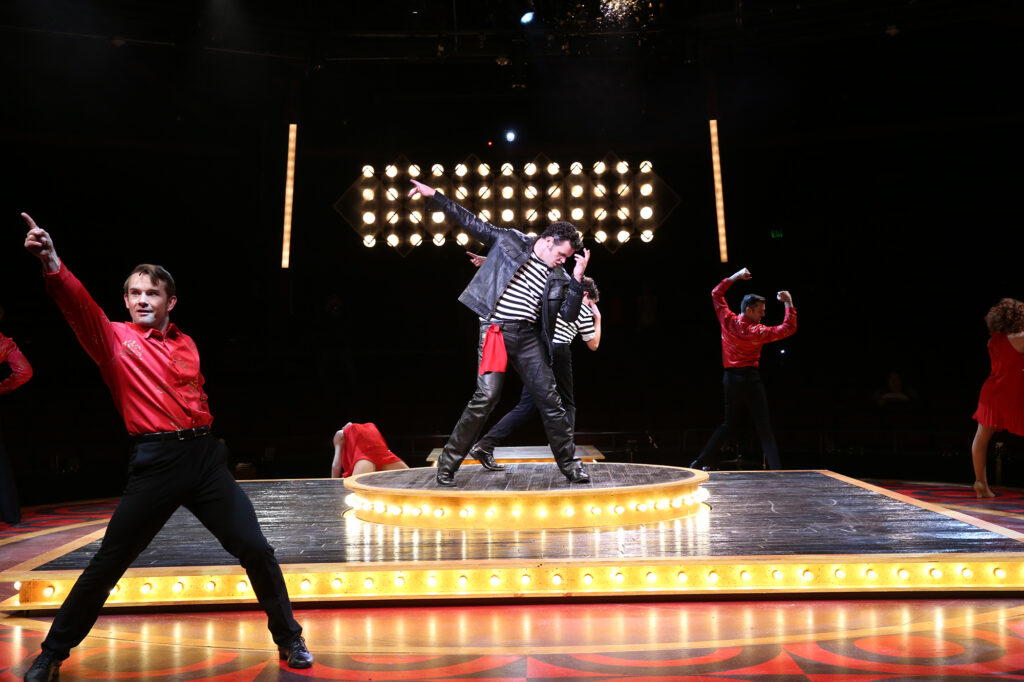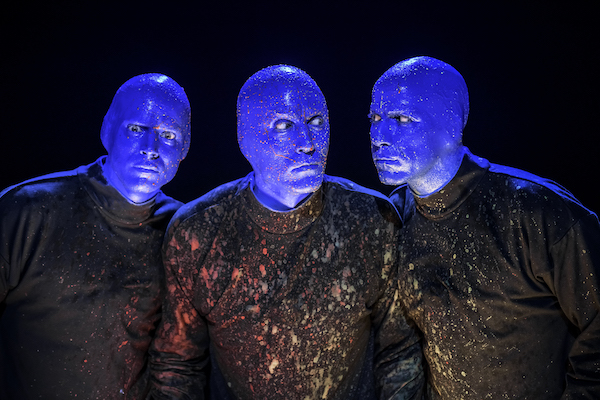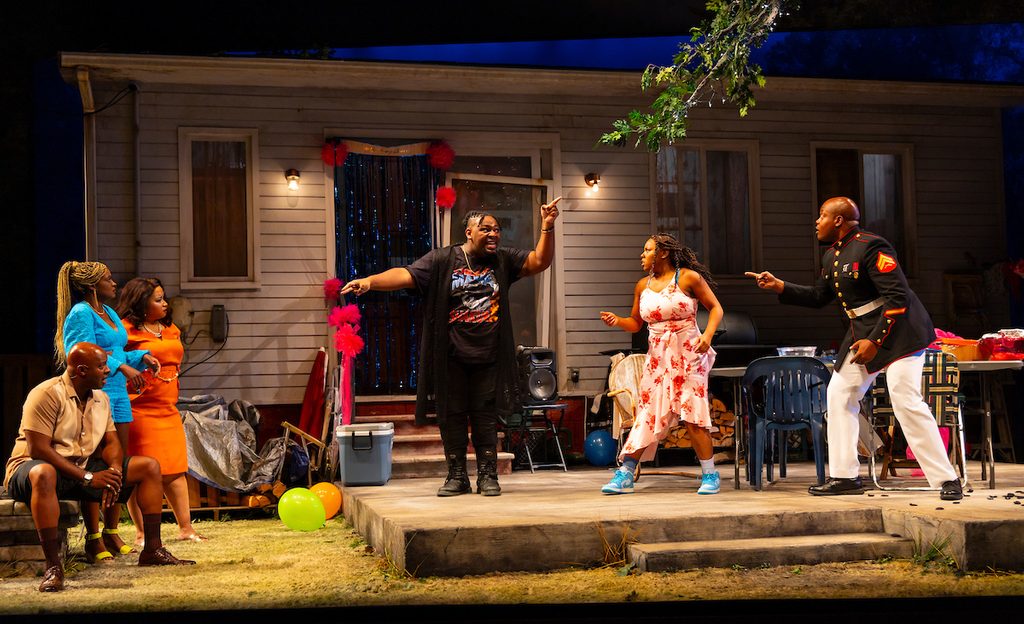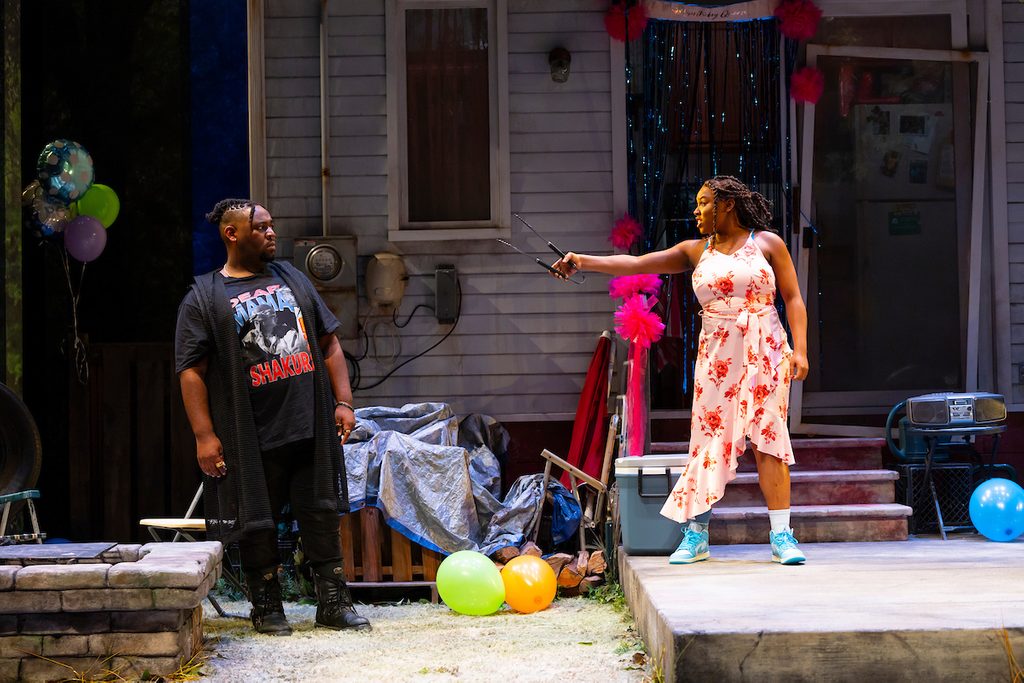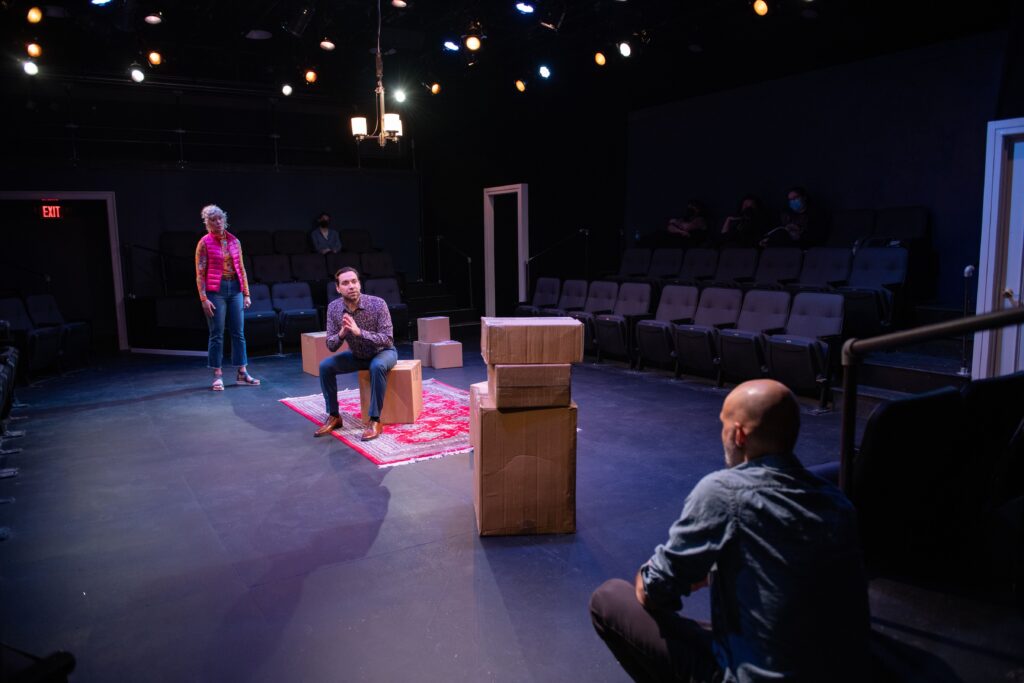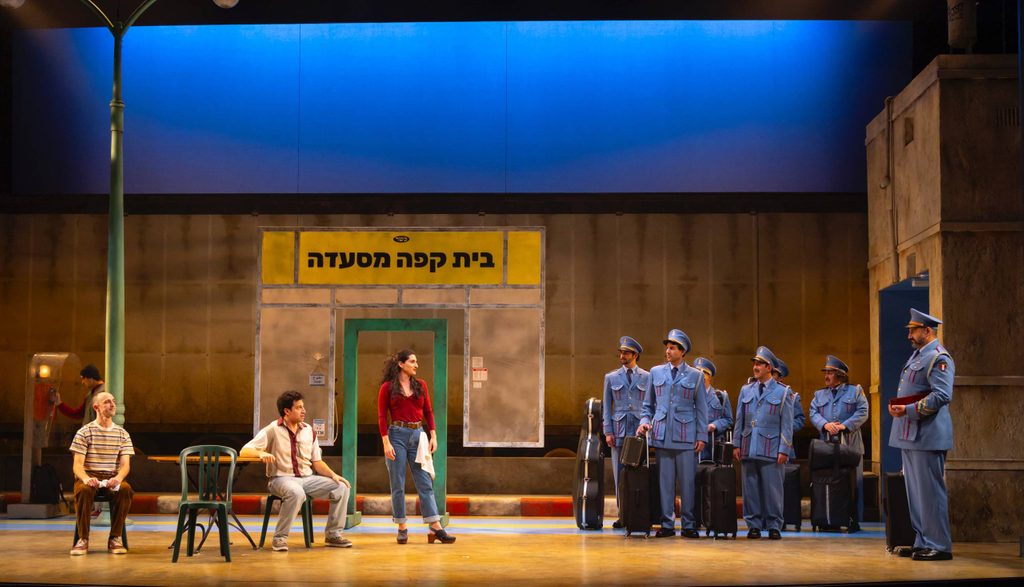
Speakeasy’s ‘Wild Goose Dreams’ Is A Surreal Romp Between Two Realities

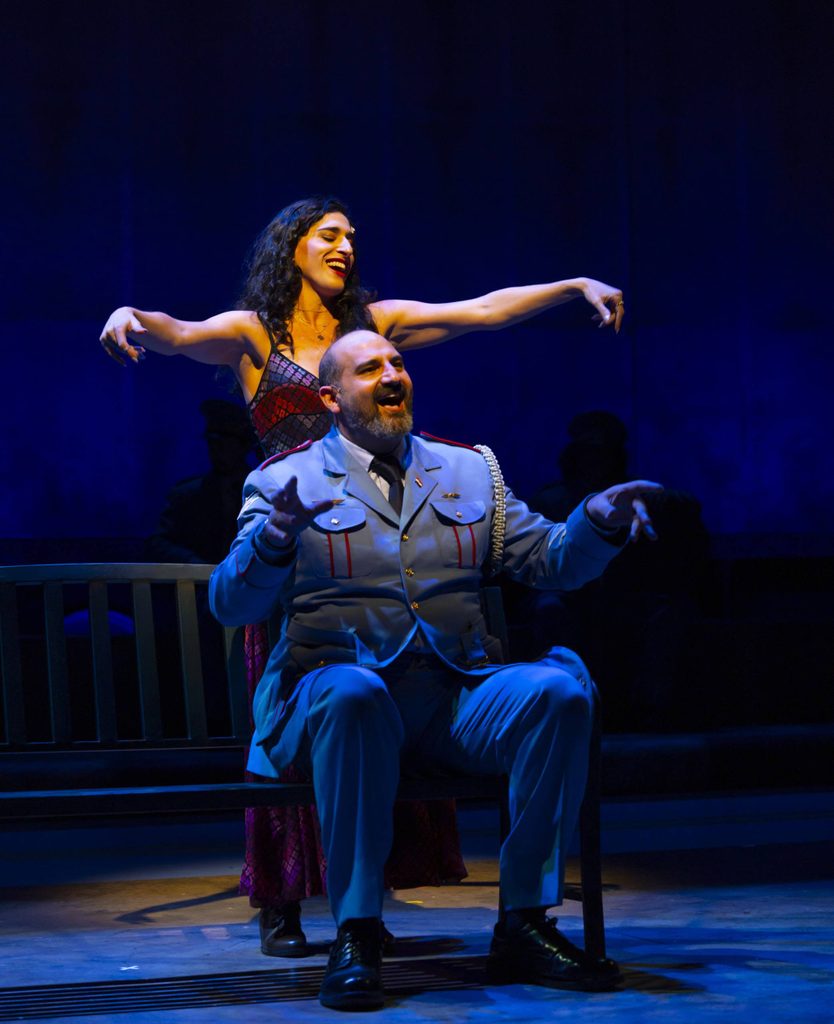
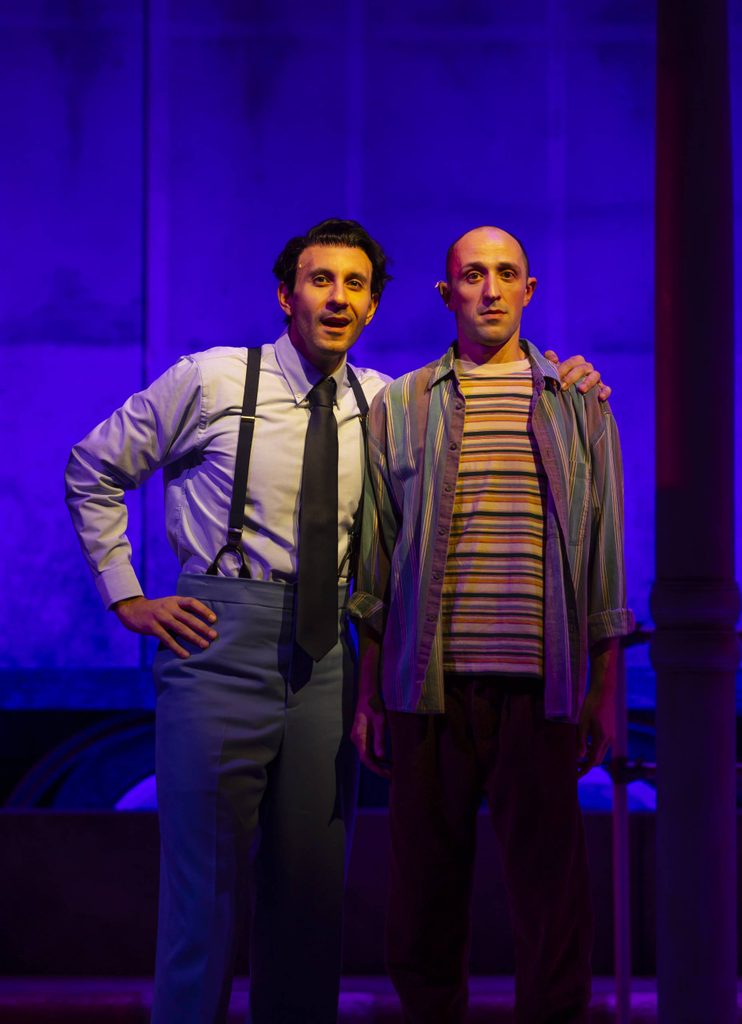
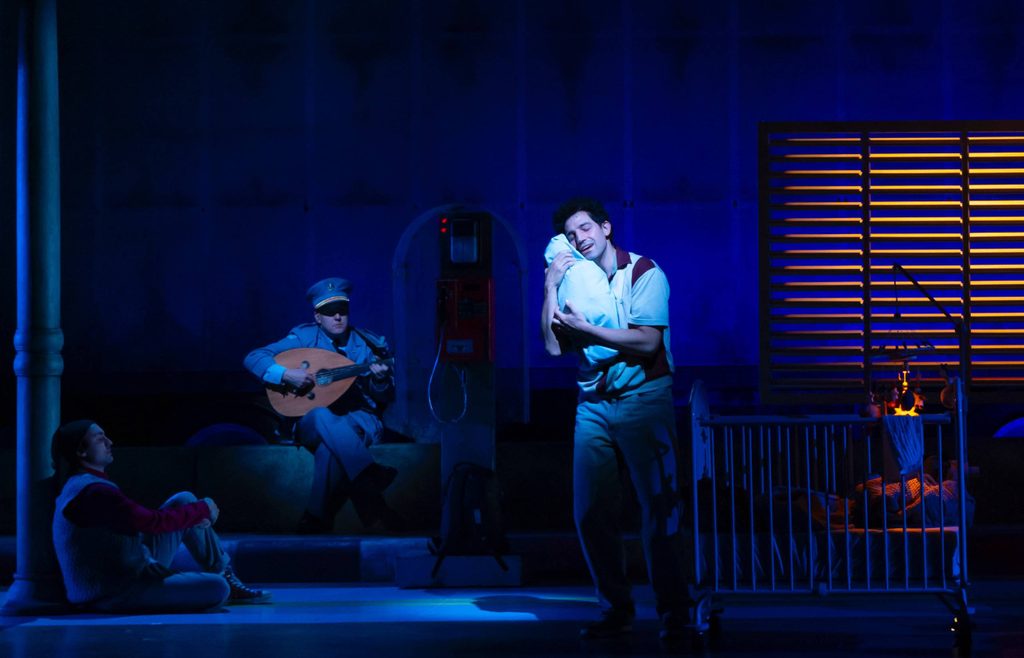
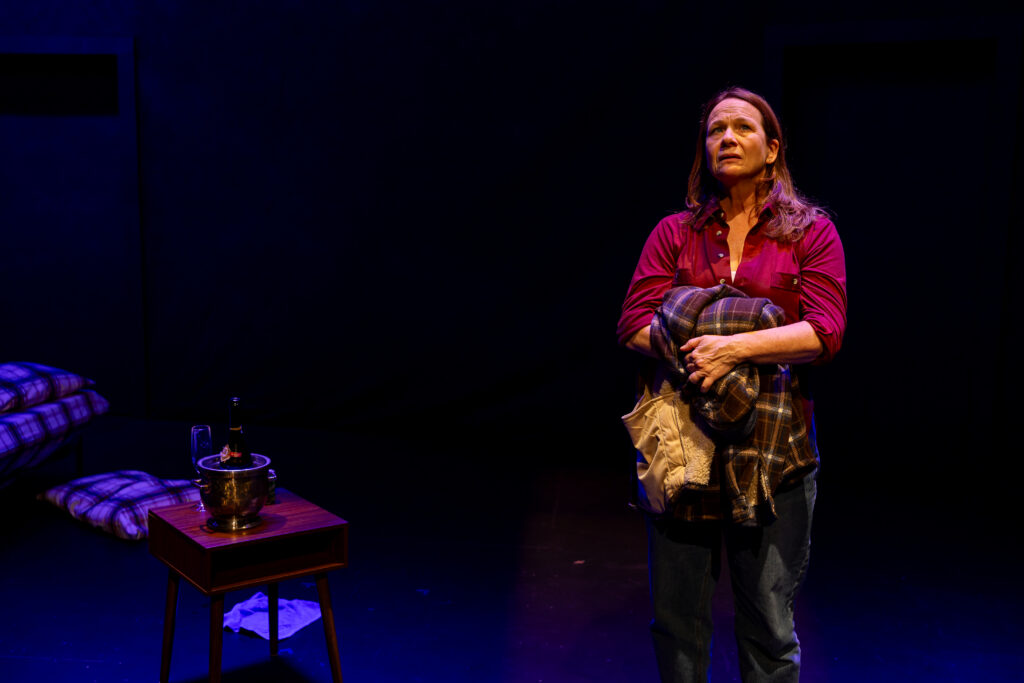
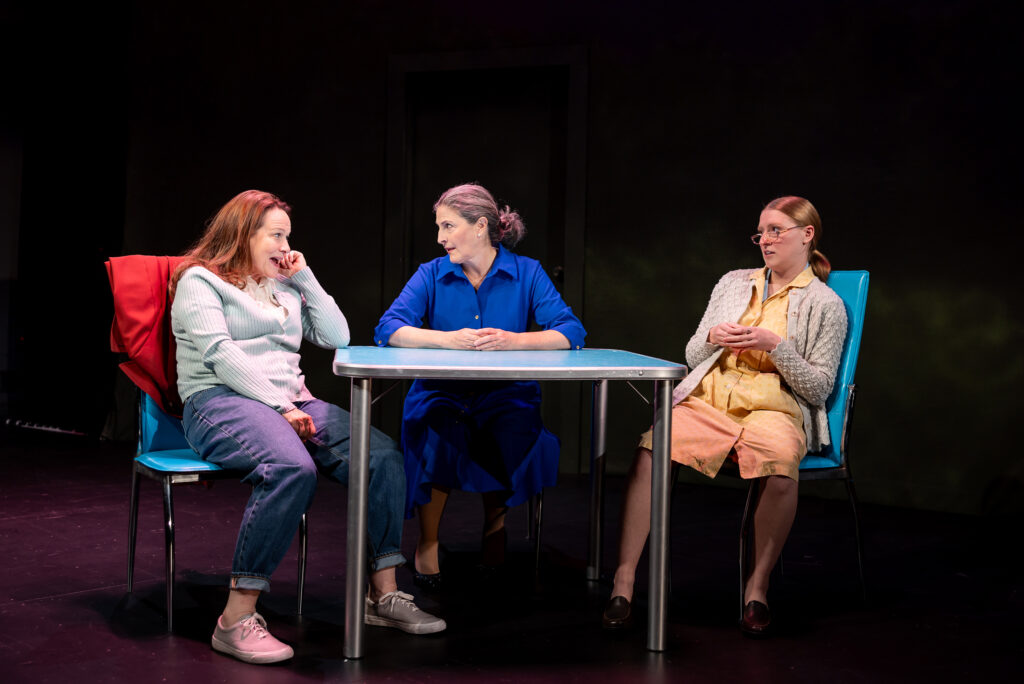
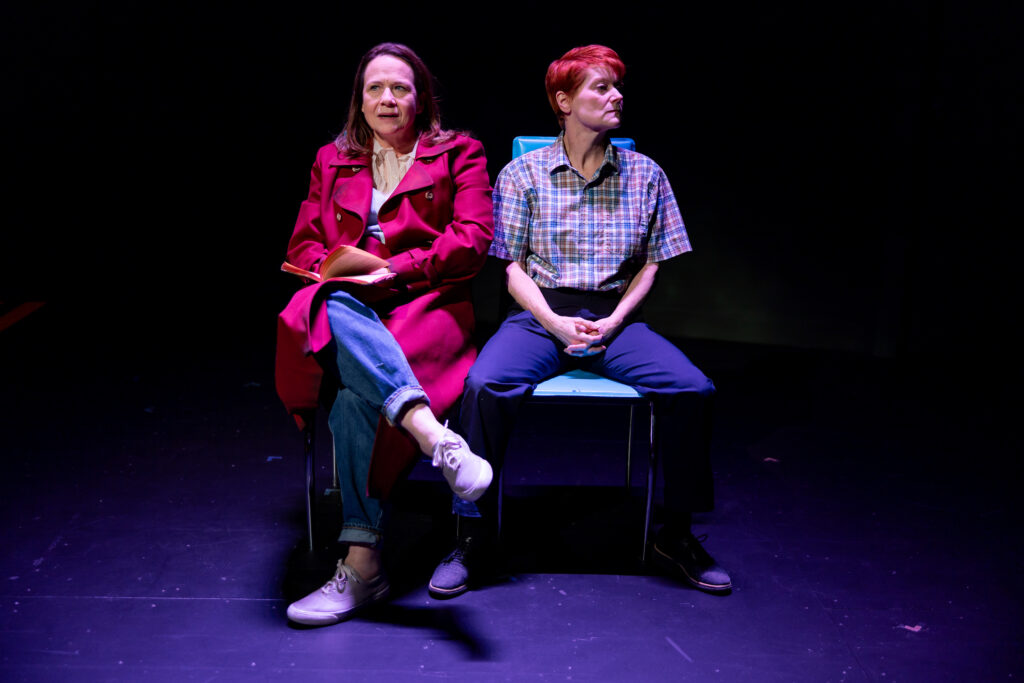
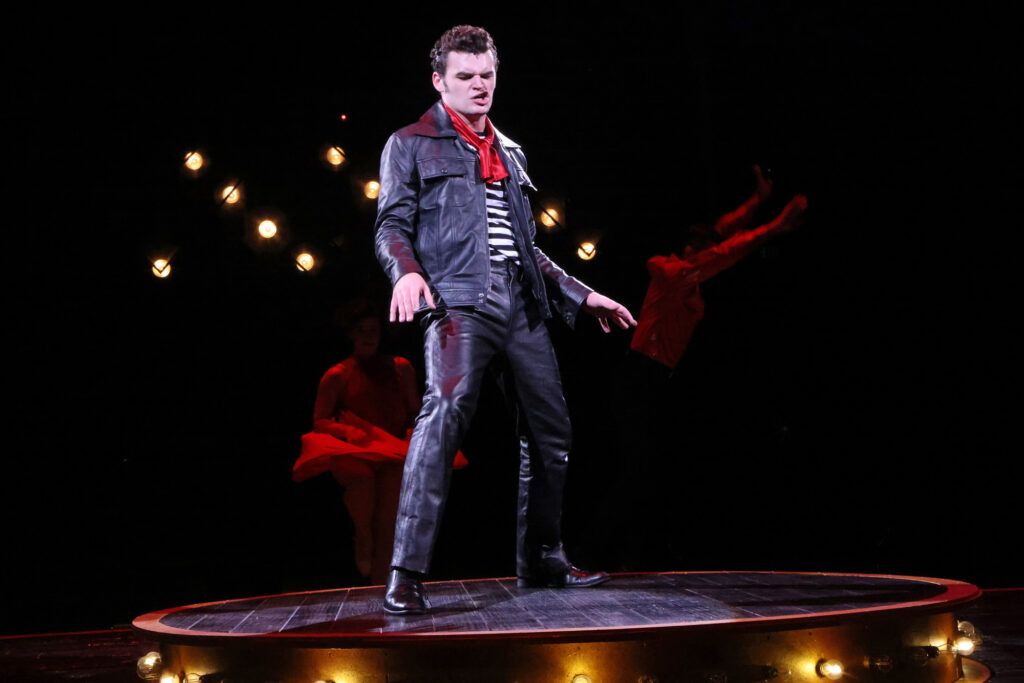
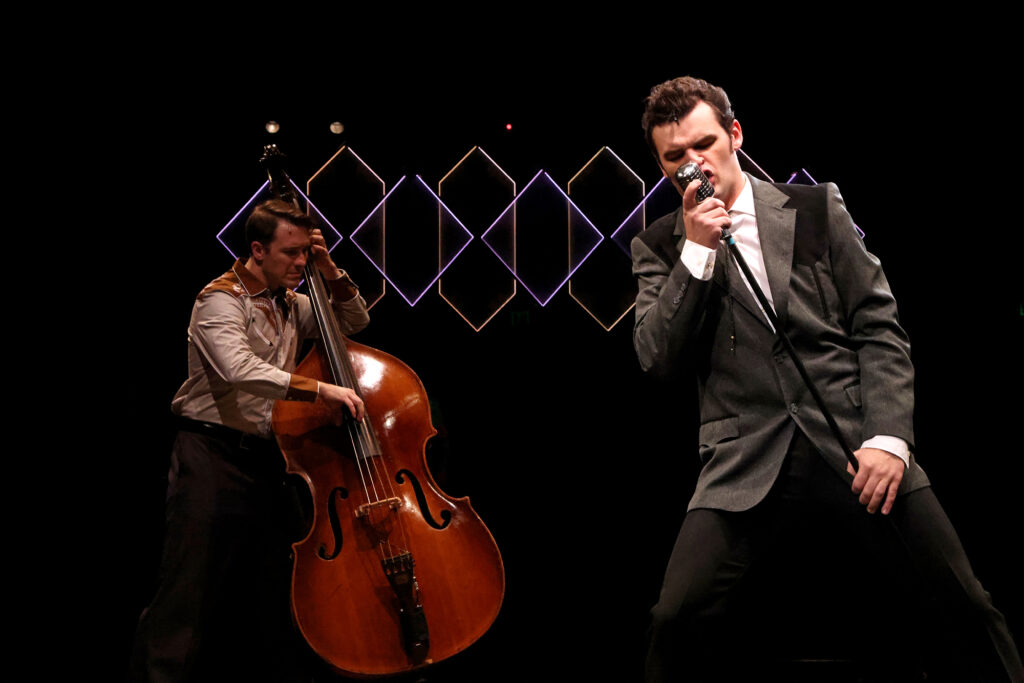
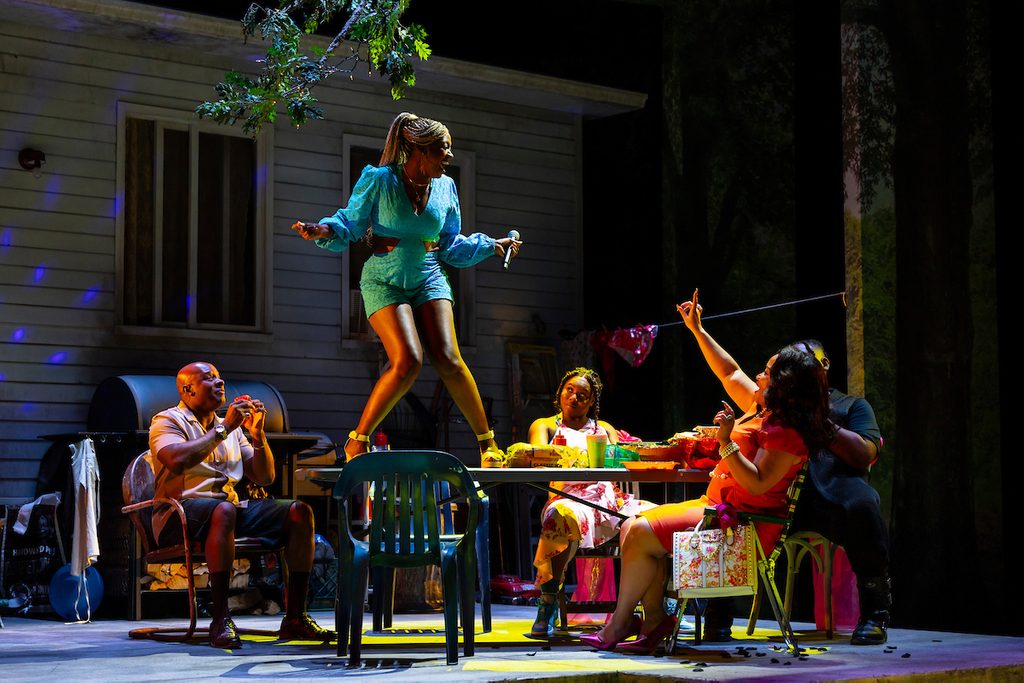
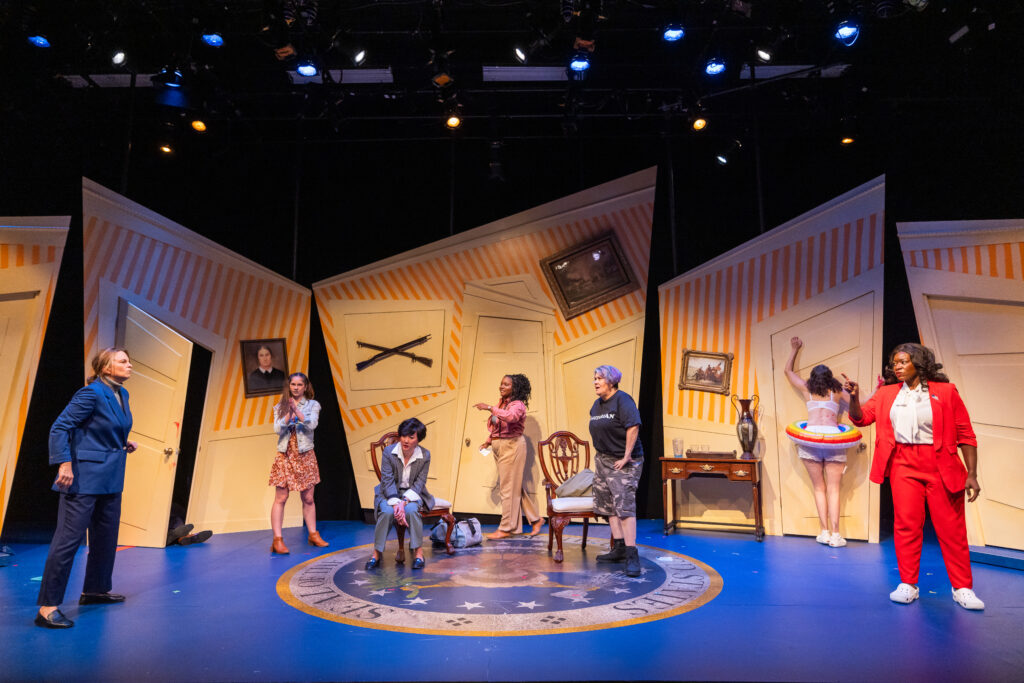
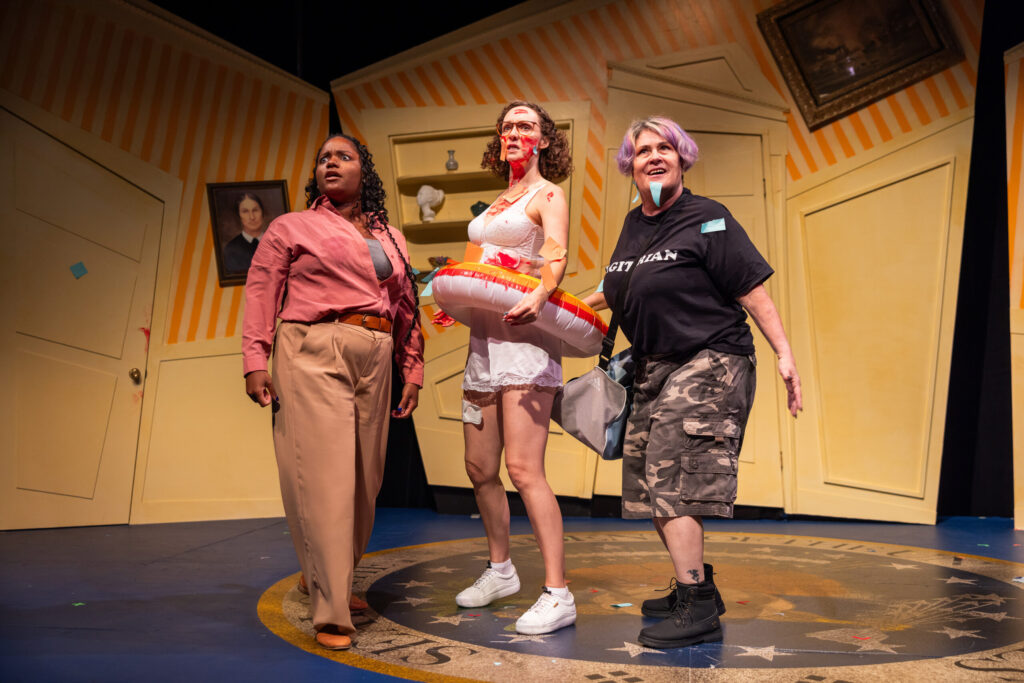
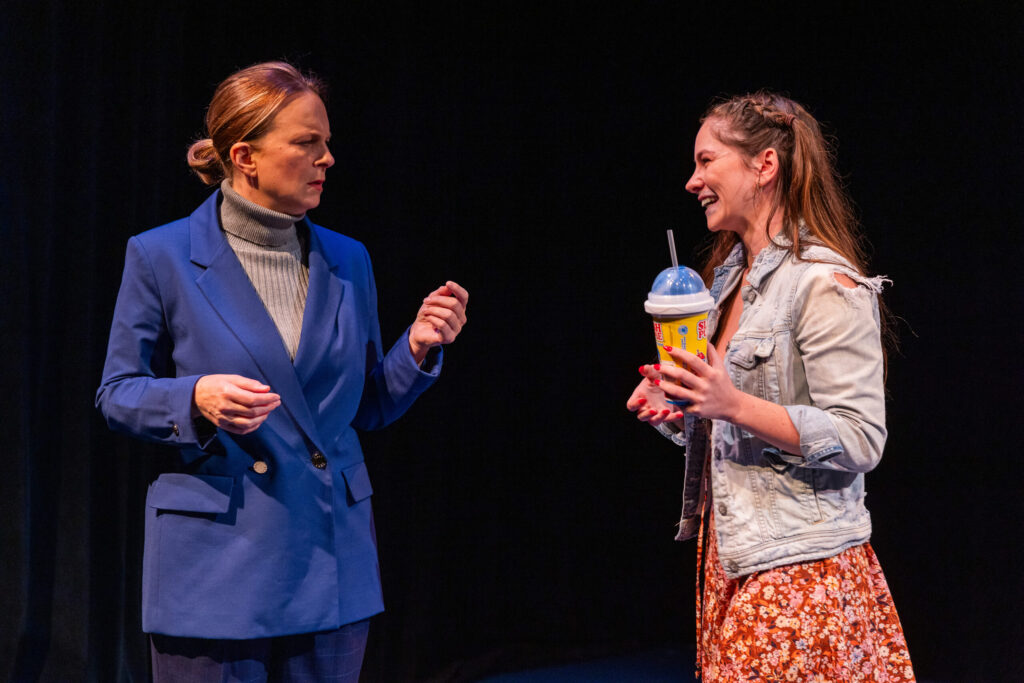
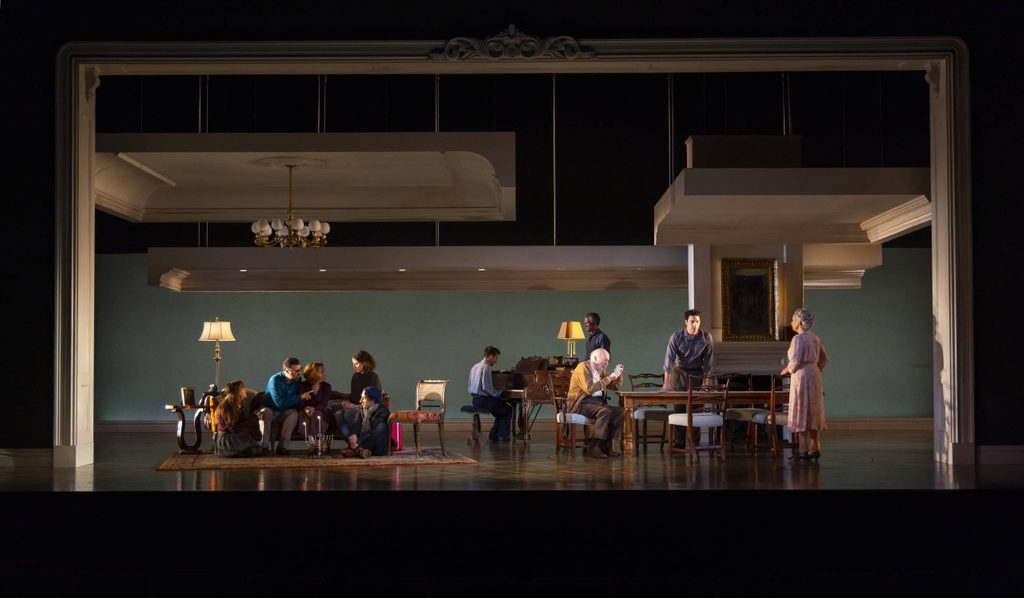
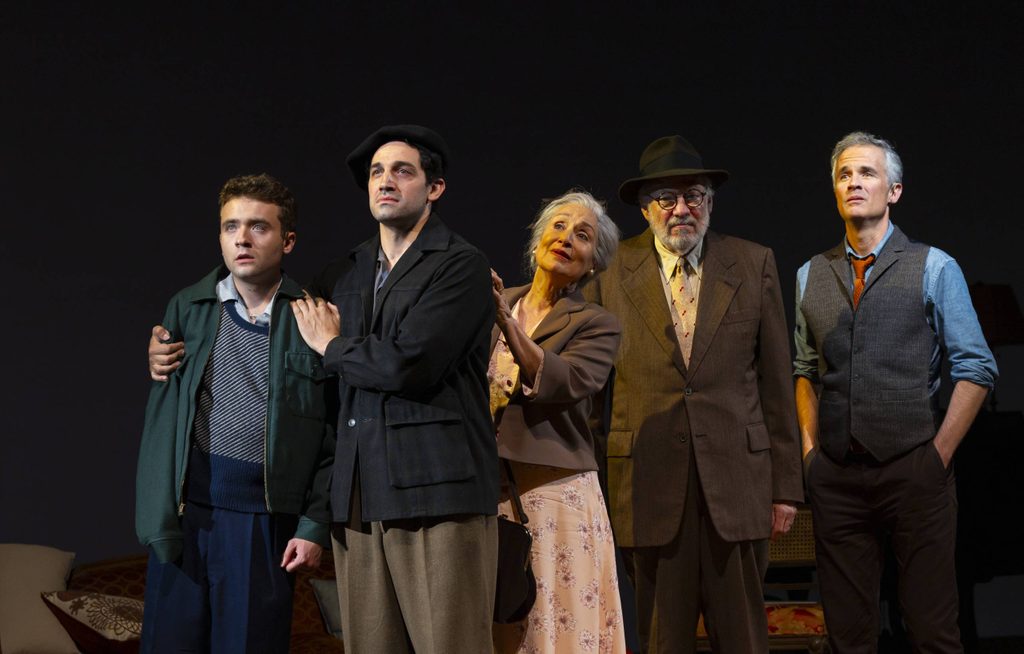
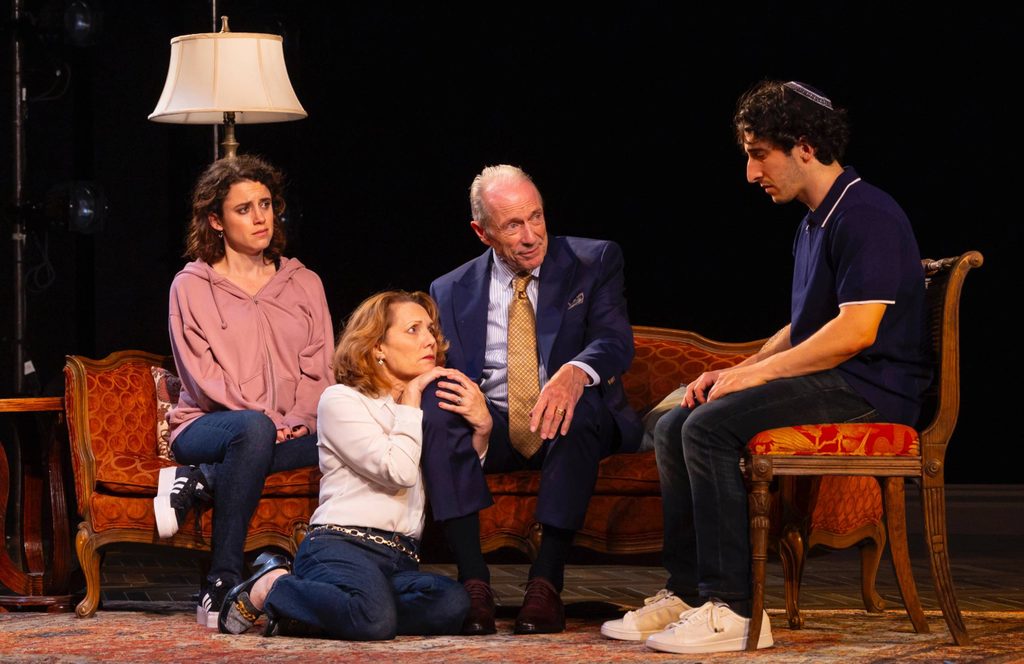
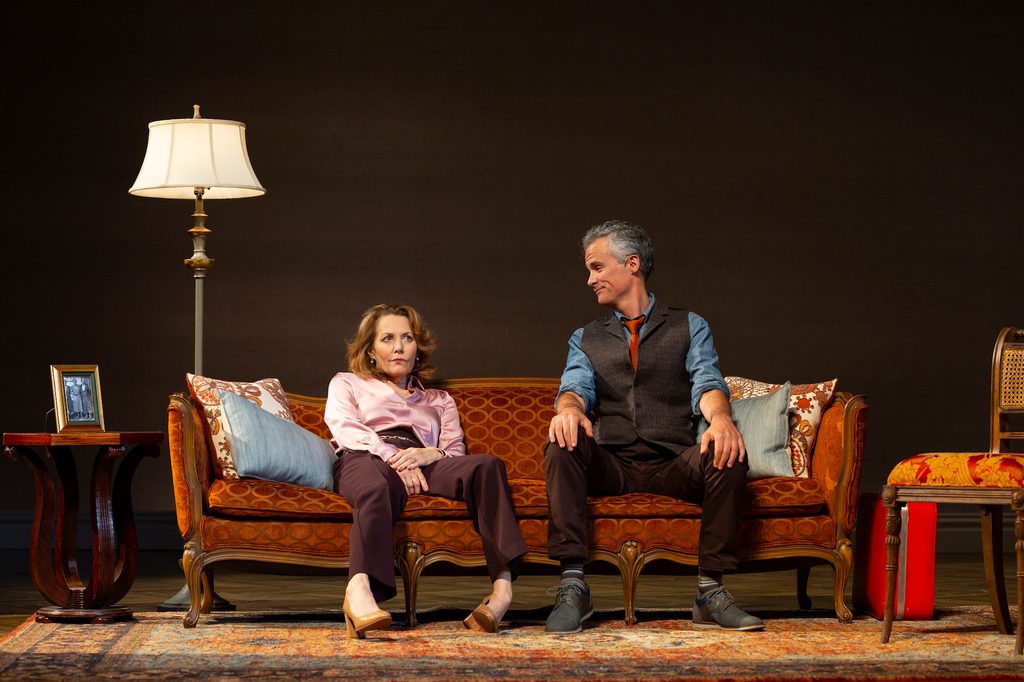
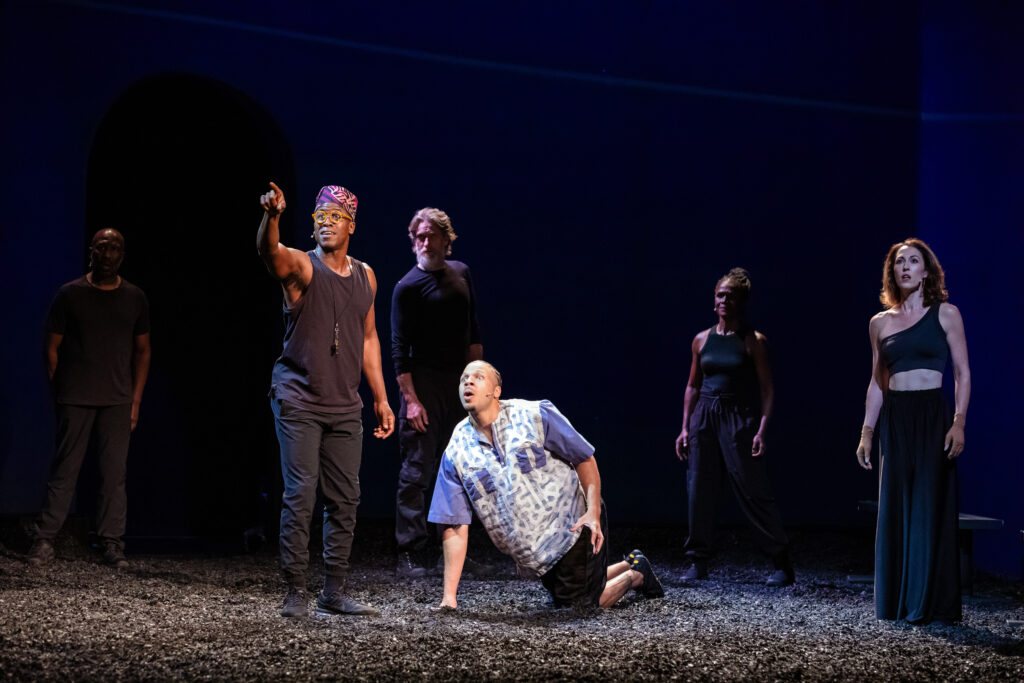
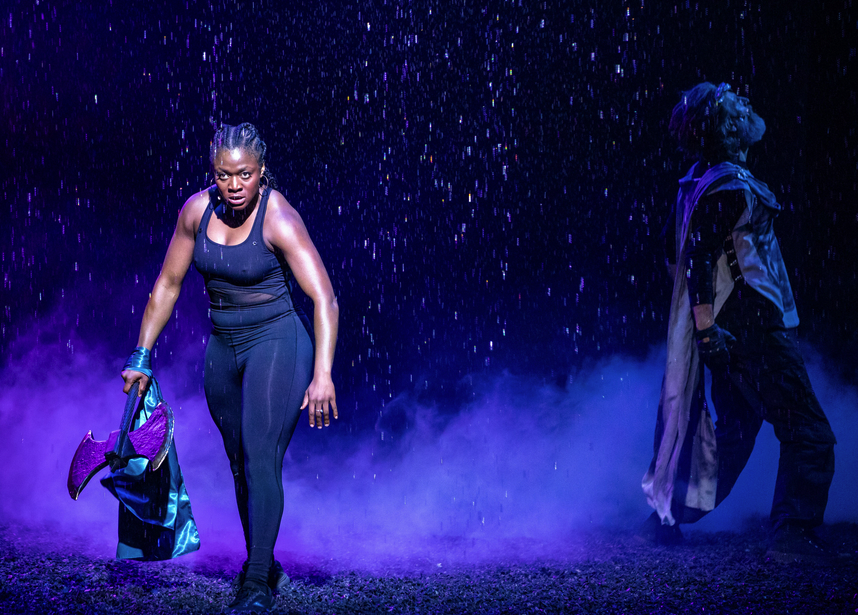
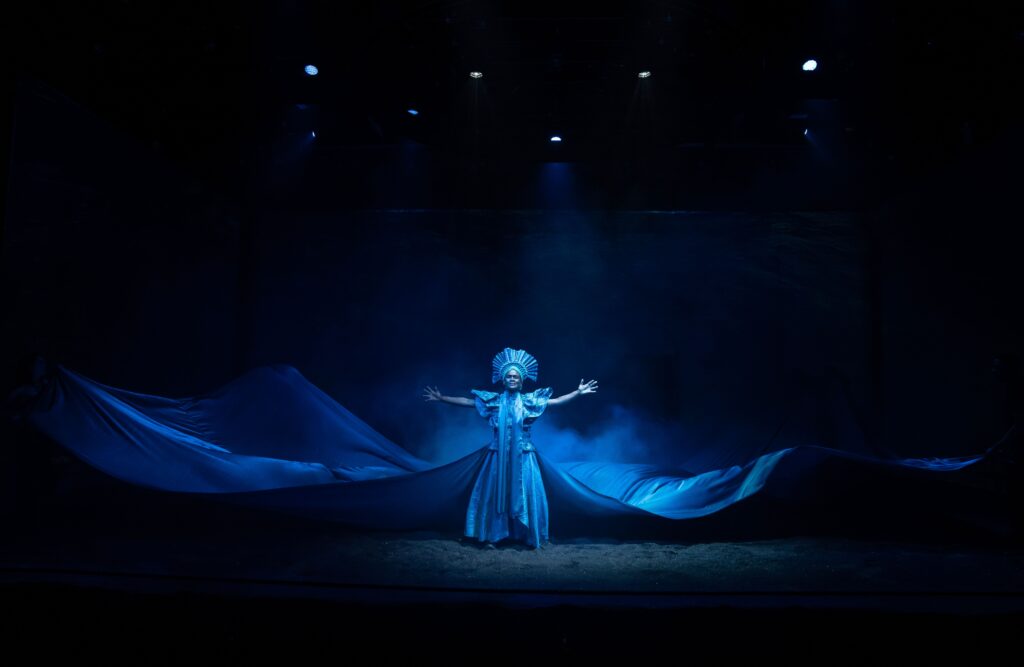
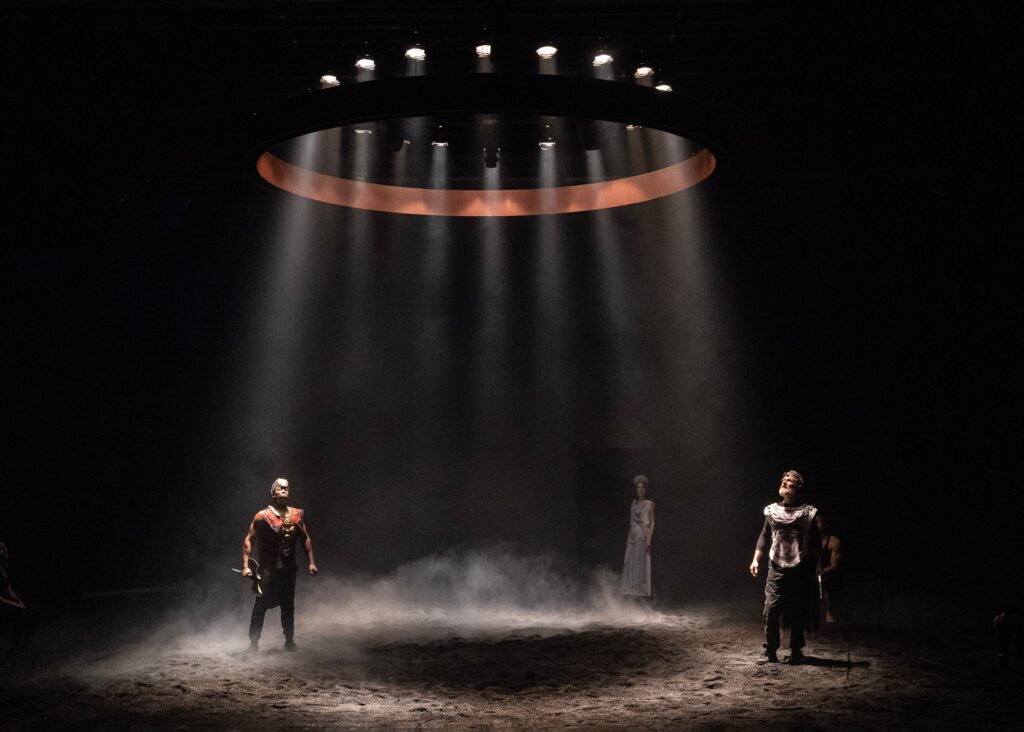
Ciaran D’Hondt, Fady Demian, Elaine Hom, Ryan Mardesich, Amanda Centeno, and John D. Haggerty in Speakeasy’s ‘Wild Goose Dreams’ Photos by Nile Scott Studios

‘Wild Goose Dreams’ – Written by Hansol Jung. Directed by Seonjae Kim; Scenic Design by Crystal Tiala; Costume Design by Machel Ross; Lighting Design by Kathleen Zhou; Sound Design by George Cooke. Presented by SpeakEasy Stage at The Calderwood Pavillion, Boston through April 8.

By Shelley A. Sackett

On its surface, ‘Wild Goose Dreams,’ lays out parallel tales of migration, sacrifice, and dreams. To fully appreciate Hansol Jung’s brilliant script and Seonjae Kim’s spot-on direction, a little background is helpful. Geese migrate with the seasons, traveling great distances and enduring physical hardships to secure food and shelter for their families. Their survival hinges on uprooting themselves and flying to an unknown place that they hope will provide what they need.

Starting in the 1990s, Korean culture mirrored this concept of sacrifice and travel when fathers who could afford to began sending their families to English-speaking countries so their children could achieve their dreams of a better life when they returned to Korea. Known as “Wild Goose Fathers,” they stayed in Korea to earn money. They, like migrating geese, would see their families only seasonally. “Penguin Fathers,” like those flightless birds, were the Wild Goose Fathers who weren’t sure if or when they would ever see their families due to the exorbitant expense of travel. During this same time period, another kind of migration was taking place in Korea. Many people in North Korea began defecting to the South in search of better lives. These flights were full of peril and trauma.

Lim, Song

‘Wild Goose Dreams’ opens on a simple set with a storyteller (a splendid John D. Hoggerty) setting the play’s overarching narrative through a tale replete with metaphor and symbolism (although the audience won’t realize that until the play progresses). His bedtime tale is about an angel who loses the ability to fly and falls in love with a human. Later, the angel must choose between staying on earth with her lover or regaining her power of flight. These contradictory options of freedom and family, and the personal toll they exact, will overshadow the rest of the show.

Jung’s two main characters are the storyteller’s daughter, Yoo Nanhee (a perfectly cast Eunji Lim), and Guk Minsung (the equally terrific Jeffrey Song). Nanhee is a North Korean defector; Minsung is a Goose Father. Both are lonely, disoriented, and haunted by the family they live without. Nanhee’s father makes daily ghost-like appearances; Minsung’s wife and daughter show up sporadically via cellphone and Facebook.

Ciaran D’Hondt, Jeffrey Song, Ryan Mardesich, and Amanda Centeno

Both turn to the internet and online dating for comfort and contact, and depicting that world is where ‘Wild Goose Dreams’ breaks through a theatrical glass ceiling.

Jung’s cyberspace is interpreted by Kim as a lively, noisy Greek Chorus of wild characters that chant and mime the equivalents of cellphone ringing, emojis and various internet functions (reboot is a stitch!). The costumes (Machel Ross), sound effects (George Cooke), and choreography are dazzling.

Amidst this chaotic cacophony of popups, “what’s on your minds” and other distractions, Nanhee (screen name ‘Miner’s Daughter’) and Minsung (‘Gooseman’) meet. Though they technically speak the same language, they bring different cultural contexts which Jung uses for both empathic and comic purpose. “Is that a joke?” each asks frequently, followed by “Is it a North/South Korean joke?”

Despite these communication disconnects, the two share an innocence and ease brought to life by Lim and Song’s effortless portrayals. They are both “lonely and paralyzed,” both preoccupied with those far away and bewildered by the terrain they now inhabit. Yet, both are open to redefining their lives to reflect their growing live (vs virtual) intimacy.

Song, Lim

“Do we have impact on each other?” Minsung asks. “Couldn’t we call that love? Couldn’t that be enough for now?”

Jung’s play is not just humor, gimmickry, and imagination. Below the surface, the gifted playwright skillfully tackles the broader issue of the real and overwhelming challenges we face living in a world of generational, cultural, and technological disconnects. Her ‘Wild Goose Dreams’ is an entertaining, fun, well-produced piece of theater that is guaranteed to spark post-performance conversation.

For information and tickets, go to https://speakeasystage.com/

Wild Goose Dreams’ – Written by Hansol Jung. Directed by Seonjae Kim; Scenic Design by Crystal Tiala; Costume Design by Machel Ross; Lighting Design by Kathleen Zhou; Sound Design by George Cooke. Presented by SpeakEasy Stage at The Calderwood Pavillion, Boston through April 8.

‘The Great Leap’ Tackles Bigger Issues Than Basketball 

Tyler Simahk, Barlow Adamson, and Gary Thomas Ng in The Great Leap at Lyric Stage

By Shelley A. Sackett

Award-winning playwright Lauren Yee has skin in the game with her play, ‘The Great Leap,’ now making its Boston premiere at Lyric Stage Company. Her father, a rare 6’1” Asian-American basketball player, was part of the 1981 team the US sent to China for a “friendship game” between Beijing University and the University of San Francisco. The Americans were demolished during the exhibition games.

Yee suspects the team, composed of non-NBA, non-college players, was hand-picked by the Chinese so the Americans would lose. Her father, who recounted his experiences to her as she wrote her play, was very helpful. “On stage, you’ll see a version of my father; it’s not pretending to be him,” Yee says in the program notes.

She sets her drama in 1989, a year that saw rising demonstrations for political and economic reform in Tiananmen Square. Using humor, spicy vernacular and some actual on-stage dribbling sequences, she weaves together an absorbing story while making some astute points about the intersection and consequences of politics, cultural identity and human foibles.

The plot is pretty straightforward.

It is 1989. Manford (an outstanding Tyler Simahk), “the most feared basketball player in Chinatown,” is a pushy and single-minded 17-year-old. The play opens with him confronting the San Francisco University basketball coach, Saul (a first-rate Barlow Adamson), demanding that Saul put him on the team he is taking to China to play in an exhibition match against Beijing University on June 3 and 4.

Saul has heard of Manford, ”the only guy who got thrown out of a game for fighting with his own teammate.” Manford knows a thing or two about Saul, too, and wastes no time striking at Saul’s Achilles’ heel. With an 8-20 losing record, his career is circling the drain. A loss to a Chinese team would finish him. Only Manford can rescue him from this fate.

“I am the most relentless person you ever met,” Manford taunts.

Turns out Coach Saul was at the helm of the team that traveled to Beijing in 1971 to advise a politically appointed amateur, Wen Chang (an outwardly cardboard but inwardly emotive Gary Thomas Ng) about the American game of basketball. This was at the height of the ferocious Cultural Revolution. Wen’s assignment was more about his Communist “rehabilitation” than a perfect job match.

Jihan Haddad, Adamson

Eighteen years later, Saul is headed back for a rematch against Wen. Manford’s mission is to convince Saul that the Americans will lose unless Manford is on the team. He’s better than any point guard Saul has on his SFU roster and he knows what Saul will be facing when he returns to Beijing. “Eighteen years ago, you went as their guest. You’re going back as their enemy,” he warns.

Manford has another reason he needs to return, and that hidden secret drives the ending’s delicious plot twist and would be an unconscionable spoiler to reveal. He has just lost his mother, who fled Beijing before he was born and whom he claims he didn’t really know (she spoke only Chinese). His father was never in the picture. He now lives with the family of his “cousin” Connie (a terrific Jihan Haddad), a 25-year-old graduate student and Manford’s cheerleader and True North.

The rest of the almost two-hour (one intermission) production flips back and forth between 1971 and 1989, filling in the gaps in the storyline and fleshing out its four characters. The flashbacks to 1971 (wonderfully costumed by Seth Bodie) contrast the brash, arrogant Saul and Wen, the hollowed-out victim of a regime he hates but resignedly obeys. Eighteen years later, their positions and perspectives have shifted. Wen is on top of his game and is chomping at the bit to give Saul a taste of the medicine he dished out in 1971.

Yee tackles many big-ticket issues in her play (the human cost of the Cultural Revolution, taking a stand vs standing still, living an authentic life, and cultural identity) and by its end, we understand her four characters and what makes them tick. Although overlong and in need of some editing, “The Great Leap” is greatly satisfying and its ending alone is worth the price of admission.

For tickets and information, go to:www.lyricstage.com

The Great Leap – Written by Lauren Yee. Directed by Michael Hisamoto. Scenic Design by Baron E. Pugh. Costume Design by Seth Bodie. Lighting Design by Michael Clark Wonson. Sound Design by Elizabeth Cahill. Presented by Lyric Stage Company of Boston through March 19, 2023.

‘Boulevard of Bold Dreams’ Shines a Light on Hattie McDaniel and Her 1940 Oscar

Samantha Jane Williams, Michelle Fenelon, and Stewart Evan Smith in ‘Boulevard of Bold Dreams’ at GBSC. Photos by Nile Scott Studios

By Shelley A. Sackett

Playwright LaDarrion Williams has cherry-picked a dramatic moment in history to explore in his well-crafted ‘Boulevard of Bold Dreams.’ The date is February 29, 1940, the night of the Academy Awards. The setting is Los Angeles’ Ambassador Hotel bar, outside the grand ballroom where the awards will be presented.

Before the ceremony even starts, this year’s Oscars have made history. Hattie McDaniel is the first Black actor to be nominated for an award. She is up for the Best Supporting Actress Oscar for her performance as Scarlett O’Hara’s ‘mammy’ in the Civil War era blockbuster, “Gone With the Wind.”

Working in the sumptuous Art Deco lounge (kudos to set designer Rachel Rose Burke) are Black employees Arthur Brooks (Stewart Evan Smith), a bartender, and Dottie Hudson (Michelle Fenelon), a chambermaid. The two banter as comfortably as rivalrous siblings. In the course of their intimate conversation, the audience picks up that they have been friends since they were two years old. Together, they left rural Alabama for Hollywood to follow their dreams. Dottie, a talented singer, is waiting for her big break. Arthur dreams of becoming a film screenwriter and director. He even has a title for his first project: ‘The Boulevard of Bold Dreams.”

Williams, Smith

Their big dreams, however, run smack into the reality of 1940s California, where most working-class Blacks are relegated to subservient positions and racism is less violent but no less virulent than the version they lived with in Alabama. While waiting for their dreams to come true, they work day jobs they hate.

The silver lining is they work in the same hotel and get to hang out. A lot. They talk about everything under the sun. This evening, Hattie McDaniel is topic number one. The white hotel owner just directed Arthur to set up a table for her in the back corner of the theater, out of sight of the white guests. Allowing her in the hotel at all is a major concession in this whites-only establishment; sitting with her castmates would be out of the question.

The two debate the double-edged sword of the evening and whether McDaniel should attend or not. McDaniel’s nomination for the movie industry’s highest honor is a milestone breakthrough and achievement for Blacks everywhere. “She came out here with nothing but $50 and a dream. She’s a credit to our race,” Arthur says.

Fenelon, Smith

Dotty, on the other hand, thinks McDaniel should strike back at the white establishment that has used and abused her, and refuse to attend. Dotty chafes at the Mammy role that practically venerates slavery and has McDaniel “shucking and jiving for those white folk.” On top of that, and most unforgivable, is the fact that McDaniel was not even allowed to attend the movie’s premiere with her fellow castmates because it debuted at a whites-only theater in Atlanta.

Their hypothetical debate turns real when Hattie McDaniel (Samantha Jane Williams) herself wanders into the bar, seeking a moment alone while she wrestles with the very issue Dotty and Arthur have been discussing. For her, the matter is far more pressing. She has decided she won’t attend the awards ceremony under her agent’s conditions (the studio has even written her acceptance speech, not trusting her to speak on her own ). “What’s the point if I’m not treated like a human being? All I want is to sit with my cast,” she says sadly.

Arthur and Dotty have only minutes if they are to convince her otherwise.

McDaniel describes the negative reaction that has worn her down. Even the NAACP, criticizing the part as “a disgrace to colored folks,” urged her to refuse the role. “My own worst enemy ain’t the white folks. It’s my own people,” she explains.

Over drinks and stories of hardships and dreams, the three reveal their experiences with a racist system designed to keep them down. Arthur tries to convince McDaniel of the importance of the day for Blacks everywhere. Dottie ferociously attacks McDaniel for her part in perpetuating the myth of Blacks with her roles playing happy maids and slaves. She accuses her of being the worst kind of sell-out.

“I’d rather play a maid in the movies than be one in real life,” McDaniel finally fires back. She takes on these maid roles with “pride and responsibility,” she explains, as an homage to Black women and their sacrifices. She wants to show the human value of caregivers like her own mother, a former slave, who made a living mothering the children of a white family who acted like she didn’t exist. “I took those roles for me. I’d play a thousand maids to show people my mother’s worth,” she says. “I made you see them. You know them now.”

Fenelon, Smith, Williams

Eventually, McDaniel’s ambivalence about attending the ceremony wanes. She attends and (no spoilers here) wins, beating out cast mate Olivia de Havilland. The show’s closing scene projects her actual acceptance speech onto a vintage black and white TV along with speeches of ten Black actors who won Oscars since, a clever touch. Especially poignant is hearing Mo’Nique, best-supporting actress winner 70 years later for “Precious,” declare, “I’d like to thank Miss Hattie McDaniel for enduring all that she had to so that I would not have to.”

Williams’ script does an excellent job of bringing us into the hearts and minds of his fictionalized characters while also conjuring up McDaniel’s conflicted viewpoint. At 100 minutes (no intermission), the play both flows and informs. Yet, given the personal pain and humiliation that accompanied her trailblazing triumph, we can’t help wondering how the real Hattie McDaniel, armed with 20-20 hindsight, might truthfully answer Dotty’s question: Was it worth it?

‘Boulevard of Bold Dreams’ — Written by LaDarrion Williams; Directed by Taavon Gamble; Scenic Design by Rachel Rose Burke; Lighting Design by Corey Whittemore; Costume Design by Klara Escalera; Sound Design by James Cannon; Property Design by Emily Allinson. Presented by the Greater Boston Stage Company at 395 Main St., Stoneham, MA through March 19.

For tickets and information, go to https://www.greaterbostonstage.org/

A.R.T’s ‘Wife of Willesden’ is a Pleasure with a Capital P

Clare Perkins in ‘The Wife of Willesden’ at the A.R.T. Photo Credits: Marc Brenner

by Shelley A. Sackett

Whether by design or chance, the slightly tardy start to “The Wife of Willesden” gifted the audience with a few bonus minutes to soak in the vibe of Robert Jones’s magnificent set while seat dancing to disco party tunes. The stage, meant to represent a pub in Willesden (a multi-racial part of North London’s Brent) feels more like a holy shrine to drink and camaraderie. Six triple-case bays are filled floor to ceiling with glimmering bottles. A disco ball sparkles from above. A barmaid cuts fruit while local revelers mill about. Members of the audience sit at small tables on the stage, further breaking down the fourth wall. The effect is, well, intoxicating.

And then boom! The play starts.

Enter Author (Jessica Murrain), an undisguised stand-in for playwright Zadie Smith, who profusely apologizes for the play we are about to see and introduces us to the pub’s lively, diverse clientele. “If there is a person in Brent who doesn’t think their life should be turned into a 400-page story, I’d like to meet them,” she declares.

Based on Chaucer’s 1392 “The Canterbury Tales,” Smith’s raucous modernized reworking has the pub’s motley group of locals gathered for a story-telling competition with the prize of a full English breakfast to the winner. The first few stories are told by pompous men, who drone on about themselves with misplaced over-confidence. Lurking in the background is Alvita, the Wife of Willesden. Finally, fed up with the men’s yawning yarns and itching for center stage, she grabs the imaginary mic and never puts it down.

Marcus Adolphy, Perkins, George Eggay, and Andrew Frame

As Alvita, Clare Perkins is a category 6 hurricane. Poured into a scarlet body-hugging dress and shod in weapon-grade stilettos heels, she bursts into the spotlight and commands it for the rest of the evening. Brash and boozy, fierce and wise, Alvita has a story to tell, a folktale about an 18th-century Jamaican soldier and a life-changing lesson he learned. But first, she needs to introduce herself and provide a little context. By way of prologue to her actual tale, she recounts her romantic history of five marriages with full Monty unapologetic focus on sex, pleasure, and her rapacious libido.

“The shock never ends when women say things usually said by men whether today or 600 years ago,” she says with a wink. Alvita is a consummate narrator. She imitates, animates, and intimidates, bringing her history to life with the help of her husbands, who happen to be at the pub. They are her willing props as she details their virtues and vices, defending her right to marry as many times as she pleases. She is utterly devoid of regrets and chafes at anyone who dares to judge her. Her philosophy of life defies conventions and rules, be they religious, political, or matrimonial. “What you call laws, I call advice,” she tells her strict, churchgoing aunt. “I think God likes variety.”

Most of all, Alvita is an unashamed pleasure seeker. She wears her libido on her sleeve like a badge of honor. “I demand pleasure,” she half growls, half purrs. “I’m all about what feels good.” Eventually, (and just in the nick of time, as the prologue begins to feel more like a reprise), Alvita launches into the meat of her story — the Jamaican folktale. A young 18th-century soldier is sentenced to die for raping a woman. In the spirit of restorative justice, the benevolent Queen Nanny agrees to spare his life under one condition. He has a year and a day to comb the earth and discover the answer to the same question Alvita poses rhetorically throughout the play: What do women want?

The folktale’s answer echoes Alvita’s feminist refrain— women want to be free of fear, to be happy, to follow their own path of their own making, and, most importantly, to be deliciously, eternally, and completely satisfied sexually. She looks at the men around her and the power they claim as rightfully theirs and basically says, “I’ll have what they’re having.”

Perkins’s performance cannot be overpraised. She doesn’t steal the show; she IS the show. Her charismatic Alvita may present as part stand-up comic, part Tina Turner, but beneath that flashy exterior beats a tender heart with a sage message. Perkins effortlessly melds Alvita’s contradictory traits into a single nuanced and likable character.

Kiln Theatre Artistic Director Indhu Rubasingham brings a playfulness to the 95-minute (no intermission) production, changing mood, time, and place with, for example, a simple gold tray behind the head to represent an apostle or bar rags to represent togas. The superb ensemble cast doesn’t seem to be acting when frolicking on stage; they are thoroughly enjoying themselves.

Claudia Grant, Ellen Thomas, Scott Miller, and Frame

Finally, there is Smith’s ambitious and smart play. Although the cast’s uneven Jamaican, Nigerian, and North London accents and rapid-fire delivery made some of the lines impossible to decipher, Smith’s rhyming couplets in today’s vernacular evoked Chaucer’s Middle English in rhythm and meaning. That is no small feat. I wouldn’t be surprised if there is an uptick in interest in the original as a result. Or in Smith’s award-winning novels.

Though not without flaws, “The Wife of Willesden” is clever, fast-paced, and beautifully produced with a timely message and, above all else, the magnificent Clare Perkins in a role she was born to play. Although studying Chaucer is hardly a prerequisite, a cursory google search would enhance appreciation for Smith’s remarkable talent while scattering a few breadcrumbs to make following its path easier. For tickets and information, go to: https://americanrepertorytheater.org/

The Wife of Willesden’ – Adapted by Zadie Smith from Chaucer’s ‘The Wife of Bath’ from The Canterbury Tales; Directed by Kiln Theatre Artistic Director Indhu Rubasingham; Design by Robert Jones, Lighting Design by Guy Hoare; Composition and Sound Design by Drama Desk Ben and Max Ringham. The Wife of Willesden is a Kiln Theatre Production and is presented in association with BAM (Brooklyn Academy of Music) at the Loeb Drama Center, 64 Brattle St., Cambridge, MA through March 17

‘Seven Guitars’ Is August Wilson – And Boston Theater – at Its Finest

Cast of Actors’ Shakespeare Project’s ‘Seven Guitars’. Photo by Ken Yotsukura Photography. 

by Shelley A. Sackett

It’s hard to know where to begin praising Actors’ Shakespeare Project’s production of August Wilson’s ‘Seven Guitars.’ Jon Savage’s urban backyard set, with its backlit city side panels, gardens, make-do furniture, and hints of multiple interior spaces, combines simplicity with depth. Amanda E. Fallon’s lighting, Dewey Dellay’s pitch-perfect musical compositions, and Abe Joyner-Meyer’s toe-tapping sound design complete the immersive capsule. We are indeed time travelers to a 1948 rooming house in Pittsburgh’s Hill District.

Maurice Emmanuel Parent’s intimate and sensitive direction elicits a natural rhythm from the cast of seven first-rate actors who miraculously coalesce as an ensemble without diminishing their unique bright lights. And then, of course, there is Wilson’s multi-layered, music-infused drama, with dialogue the actors imbue with lyricism and individuality.

Regina Vital, Johnnie Mack, Valyn Lyric Turner, Maya Carter

The play opens in the rooming house backyard right after the funeral of its main character, Floyd “Schoolboy” Barton, a young blues guitarist (played by the exceptional Anthony T. Goss) who was killed just as his dream of stardom was about to come true. His murder remains unsolved.

Wilson has a knack for gathering strangers, putting them under the same roof, and creating a convivial family unit through which a complete social picture materializes. Small talk is never small from this playwright. There is a living power that pulses with every word.

The solemn scene of mourning quickly turns playful, as we meet the residents and witness the warmth and ease with which they address each other. “He almost make it where you want to die just to have somebody talk over you like that,” says Canewell (Omar Robinson), one of Floyd’s musician friends and band sidemen, about the Reverend’s eulogy.

Anthony T. Goss, Carter

Vera (Maya Carter), Floyd’s girlfriend, observes she saw six angels dressed in black carrying Floyd away into the sky. Louise (a spirited Regine Vital), the lively boardinghouse owner, her tenant, Hedley (Johnnie Mack), a Bible-thumping elder, and Red Carter (Dereks Thomas), another of Floyd’s musician sidemen, round out the group. (Ruby (Valyn Lyric Turner), Louise’s pregnant niece will arrive late in Act I. All but Louise also saw the angels whisk Floyd away.

From the get-go, the characters’ quirks and reflections on life, loss, and the history and burden of being Black in white America pepper their conversations, bonding these folks in a natural and kindhearted way. Family, in all of Wilson’s plays, is not defined by biology; it is defined by fate and choice.

The rest of the play is through flashbacks that retell the story leading up to and including, the murder. Floyd explodes onto the stage, freshly released from a 90-day stint in a workhouse detention and ready to kickstart his paused career and love affair with Vera. His plans to return to Chicago and pursue celebrity hinge on convincing Vera and sidemen Red and Canewell to return with him.

Johnnie Macks, Dereks Thomas, Goss, Omar Robinson

Floyd has an uphill battle on his hands. He left Vera for another woman when he went to Chicago the first time, and convincing her that he’s on the up and up will take all the swagger and charm he can muster. Likewise his bandmates, who were burned by their first experiences in the Windy City and the wily ways of the white record industry.

While “Seven Guitars” satisfies its audience with a plot-driven narrative, it is through its seven characters and their conversations that Wilson’s underlying messages surface. These seven are a microcosm of the ways in which racism and its oppressive economic and legal system have stacked the deck against the Black man. Yet, despite these shackles, there emerge layers of folklore, superstitions, family traditions, and shifting dreams that paint a broader, deeper social picture.

Wilson interweaves big ticket topics — male/female relationships, police brutality, the danger of being black in a white land — organically through his characters’ conversations and monologues, giving each their moment in the spotlight. Even the occasional existential soapbox riff – thanks to Wilson’s light and shrewd pen –  blends naturally with banter about recipes and family histories.

Carter, Goss

Each character has their moment, and the actors glow without showboating. All sinew and kinetic energy, Goss brings a riveting physicality to the charismatic, angry Floyd. In his hands, even a hat becomes punctuation. Carter embodies Vera, centering the play’s melancholy and grace with her calm and passion. Vital is wonderfully entertaining as the chatty Louise, whose gossip takes on the gravitas of living history. As Hedley, Wilson’s resident seer, Mack underplays the character, lending a gentle touch that tempers his apocalyptic rants. Robinson (Canewell) and Thomas (Red) round out and individualize the band members, while Turner brings nuance to the mantrap Ruby.

Though “Seven Guitars” clocks in at 2 hours 45 minutes (with one intermission), the pace and quality of the play and its staging never lag. Nominated for a Pulitzer Prize and winner of the New York Drama Critics Award for Best Play, it is fifth in Wilson’s theatrical saga of “The Pittsburgh Cycle,” ten plays set in a different decade of the 20th century. Wilson remains one of the most important voices in modern American theater, his life-size dramas drawing audiences wherever they play.

Don’t miss the chance to see Actors’ Shakespeare’s Project flawless production of this infrequently staged play. It is a must-see bases-loaded home run! For tickets and information, go to: https://www.actorsshakespeareproject.org/

‘Seven Guitars’ by August Wilson. Directed by Maurice Emmanuel Parent. Scenic Design by Jon Savage; Sound Design by Abe Joyner-Meyers; Original Music Composition by Dewey Dellay; Lighting Design by Amanda E. Fallon Presented by Actors’ Shakespeare Project, Hiberian Hall,182 Dudley St., Roxbury through March 5. Photo by Ken Yotsukura Photography. 

The Huntington’s ‘The Art of Burning’ Smolders and Sparks

Adrianne Krstansky, Michael Kaye and Rom Barkhordar in The Huntington’s ‘Art of Burning’
Photo Credit: T Charles Erickson

“The Art of Burning” by Kate Snodgrass. Directed by Melia Bensussen. Scenic Design: Luciana Stecconi; Lighting Design: Aja M. Jackson; Sound Design: Jane Shaw; Costume Design: Kate Harmon. Presented by The Huntington, Calderwood Pavilion at the BCA, 527 Tremont Street, Boston through February 12.

by Shelley A. Sackett

Patricia (Adrianne Krstansky), a frumpy middle-aged painter, opens Kate Snodgrass’ ‘The Art of Burning’ mid-conversation with her friend Charlene (Laura Latreille). “Sometimes we have to kill the things we love to save them,” she announces seemingly out of the blue. Charlene adds critical context. The two have just seen a production of “Medea” and are debriefing outside the theater.

In the ancient Greek tragedy by Euripides, Medea takes vengeance on her unfaithful husband Jason by murdering his new younger wife as well as her own two sons, after which she escapes to Athens to start a new life. To Charlene’s discomfort, Patricia not only sympathizes with Medea, she praises her.

“She saves her children,” Patricia explains. “She doesn’t want to but she has to. The world will make their lives miserable and she doesn’t want that. She loves them.” Patricia may look mousey, but she is a mouse that roars.

Under Melia Bensussen’s fast-paced direction, the audience is quickly brought up to speed as the brilliantly designed (Luciana Stecconi) and lit (Aja M. Jackson) set morphs into a conference room. This is the divorce war room. Patricia’s husband Jason (groan…) has – you guessed it! – left her for a younger woman (Vivia Font). Jason (Rom Barkhordar) has enlisted Mark (Michael Kaye), a family friend and Charlene’s husband, to mediate their contentious divorce despite glaring and unethical conflict of interest.

Adrianne Krstansky, Michael Kaye and Rom Barkhordar

While waiting for Jason to arrive, Patricia continues her tribute to Medea, much to Mark’s discomfort. The more Mark squirms, the more Patricia rhapsodizes. Adding to the slow burn are these facts: Patricia recently torched Jason’s antique desk on their front lawn and their divorce hinges on who will have custody of their 15-year-old daughter Beth (Clio Contogenis). As the animosity and toxicity of their marriage is revealed, the audience feels increasingly sorry for the teenager who must choose between these two. “Custody” in this context feels more like incarceration than protective caregiving.

Through Patricia’s unhinged tirades, Snodgrass seems to want us to wonder whether she is grandstanding or has become so untethered that she imagines herself a 21st century reincarnation of the Greek cuckolded princess. Unfortunately, the characters are too undeveloped and the play too full of clichés and tropes to create the kind of tension required to pull off this level of subtle, emotion-driven drama. Instead, the audience is served up a contemporary look at conflicted, flawed characters who are doing the best they can, more of a slow roasted marshmallow than daring flambé.

Which by no means suggests that the 85-minute intermission-less play should be ignored. Snodgrass raises important issues and the cast capably rises to the occasion. She adds meat to the play’s bones through the interactions between mediator Mark and Charlene (played with comic spunk by a splendid Latreille), who are going through their own marital bumps. Their scenes together bring a chemistry and ease that underscore the tedium of Patricia and Jason’s cardboard, rancorous  communication.

As Patricia, Krstansky delivers her pithy lines with a deadpan earnestness and impeccable timing that hints at the blaze raging inside her. The more controlled she appears, the more hysterical her character reads. Kudos to the talented actress for pulling off this marvelous feat.

Clio Contogenis, Krstansky

Her scenes with daughter Beth (Contogenis brings a welcome multi-dimension to the role) are among the most meaningful and poignant. Beth tries to explain to her mother that her anxiety and discomfort go way deeper than reactions to her parents’ divorce and normal teenage growing pains. She is that Gen-Z “woke” teen who viscerally feels the existential crisis of the world with every pulsating neuron in her body. She lives in a constant state of fear and disgust and marvels at the psychological trauma inflicted upon her by her clueless parents’ irresponsible childrearing.

Poor Beth, it seems, is the fulcrum of her parents’ dysfunctional marriage. How and why the two ever got together, let alone thought they could parent, becomes even more a mystery as Beth fills in the gaps.

Unlike Jason, Patricia finally listens — and really hears — her daughter after a pivotal interaction where she faults her Beth’s outfit for provoking sexual date abuse. “Guys never get blamed, Mom. You don’t know. You don’t get anything!” Beth cries. All Patricia can demurely offer is a heartfelt, “I’m just trying to help.” By the end of the play, the path these two bravely forge together is the most inspiring and meaningful of all the characters’ relationships, and the coals post-theater discussions love to fan. For tickets and information, go to: https://www.huntingtontheatre.org/whats-on/the-art-of-burning/

Lyric Stage’s Genre-Defying ‘Preludes’ Is A Trip

Cast of ‘Preludes’ at Boston Lyric Stage

by Shelley A. Sackett

I readily admit I am one of those theatergoers who enjoys plot, dialogue and purpose. You can throw in all the special effects, time warp gimmickry and non sequiturs you want, but they are the icing, not the cake. You can give me experimental, but don’t leave out the context.

So it took me some time to figure out exactly what was going on in ‘Preludes.’ In fact, it took me until intermission when I both googled a synopsis and read the playbill’s fine print.

The setting of Dave Malloy’s mash up of musical and drama is inside the mind of Russian composer Sergei Rachmaninoff. The play opens in 1900 Moscow. “Rach” (Dan Prior) is having a bad day. In fact, he’s had a bad three years’ worth of bad days, starting with the ruinous premiere of his “First Symphony.” Critics viciously panned the piece (and the drunk conductor), leaving Rach in a creative void, wondering if he would ever write again.

Dan Prior and Aimee Doherty

He also fears that his wildly successful “Prelude in C-sharp Minor,” which he wrote as a 19-year-old, was the sum total of his career. Does he have talent or only luck? Was that the best piece he will ever pen? And most importantly, how did he do it?

At the urging of his frustrated fiancée, piano teacher Natalya (Kayla Shimizu), Rach visits hypnotherapist Nikolai Dahl (Aimee Doherty) for help clawing his way out of this black hole of asphyxiating self-doubt and paralyzing writer’s block. Dahl puts him into a trance and, with the audience in lock step, Rach takes a tour of every trauma that paved his path to the present.

Although this is no yellow brick road, the journey is peppered with its own version of winged monkeys, wicked witches and ruby red shoes. People float in and out of Rach’s internal world of jumbled stream of consciousness and disorienting ordeals. Chekhov Tchaikovsky and Tolstoy (all played by the always fabulous Will McGarrahan) show up, offering varying degrees of encouragement and torture. Where does art come from? they ask unhelpfully.

Prior, Kayla Shimizu

Against the gossamer confusion of Rach’s mind are shimmering tidbits of actual plot. His impending marriage to his first cousin Natalya requires the permission of the Czar, and the two discuss and plan their audience with him. Rach’s personal and professional struggles are likewise real and earthbound.

And then there is the brilliance behind Malloy’s use of music and musicians as integral parts of his theatrical vision. A Liberace-worthy white piano occupies center stage. Dan Rodriguez (also Musical Director), in formal attire, plays a combination of Rachmaninoff, Malloy and Rachmaninoff/Malloy hybrid pieces throughout the two hour (one intermission) production. (Thank goodness the volume was lower during the second act. It drowned out the actors during the first half, adding to audience frustration).

A heartbeat like rhythm is a cloud cover for the stage. The use of classical, electro-pop and musical loops lend an excitement and wildness. The 13 musical numbers give Malloy and the actors a chance to show their musical chops. Every duet is resplendent, especially those with Prior and Shimizu. Anthony Pires, Jr. is a showstopper as Chaliapin, his movements as lithe as his baritone is full-bodied.

Although ‘Preludes’ floats in the metaphorical ephemeral, it also celebrates Rachmaninoff’s music, legacy and determination to find his own creative agency. Malloy and Lyric Stage Company have given us an opportunity to expand our theatrical horizons, loosen the reins and just go with the flow, and for that we thank them. For more information and tickets, go to: https://www.lyricstage.com/show-item/preludes/

‘Preludes’ — Music, Lyrics, Book and Orchestration by Dave Malloy. Directed by Courtney O’Connor; Music Direction by Dan Rodriguez; Scenic Design by Shelley Barish; Costume Design by Rachel Padula-Shufelt; Lighting Design by Karen Perlow; Sound Design by Andrew Duncan Will. Presented by The Lyric Stage Company of Boston, 140 Clarendon St., Boston through February 5.

High Spirited ‘Chicken & Biscuits’ Marks Front Porch’s First Solo Production

Cast of ‘Chicken & Biscuits’ by The Front Porch Arts Collective at Suffolk University Modern Theatre

By Shelley A. Sackett

The architectural bones of Suffolk University’s Modern Theater are a set made to order for ‘Chicken & Biscuits,’ the first solo production by The Front Porch Arts Collective, a Black theater company whose previous presentations have been in collaboration with other larger companies.

With its dark wood pews and balconies and Cluny-esque murals, we feel like part of a congregation even before the setting shifts from Reverend Reginald and Baneatta Mabry’s New Haven home to the sunlit church where Reginald will preside over the funeral of revered Pastor Bernard (“B”) Jenkins, his former father-in-law.

The play opens in the Mabry home, with Baneatta and Reginald preparing to attend Bernard’s funeral. Baneatta sits alone, having a private tête-a-tête with God, with Whom she is on intimate and joking terms. Within easy eavesdropping distance, the audience gets the lay of the land. All is not peace and love between Baneatta and her younger sister, Beverly, who buttoned-up Baneatta describes as a wild woman. The two have not seen each other in a while and, based on that most recent encounter, Baneatta anticipates the worst.

Reginald comes downstairs, interrupting Baneatta’s conversation. With B’s passing, Reginald inherited his pulpit. Bernard’s funeral is his first lead sermon in this new role, and he’s as nervous as his wife, but for different reasons. B was the glue that held both family and church together, leaving Reginald with pretty big shoes to fill. That his opening act will be B’s eulogy is daunting enough without the threat that the two rivalrous sisters will be at each other’s throats.

“Today should be a day of memory and healing for the family, not chaos,” he reminds Baneatta, offering her the chance to talk.

“I already talked about it with Jesus,” she replies, to her husband’s visible relief.

The scene shifts to Beverly and her 15-year-old daughter La’Trice as they get ready for the funeral, and we immediately understand the Mabry’s trepidation. Beverly is smoking a cigarette in her nonsmoking hotel room, defiantly blowing the smoke out an opened window. She is as brazen, brassy and flamboyant as Baneatta is proper, reserved and patrician. She is a spitfire to be reckoned with and she is also VERY loud.

For her father’s funeral, she has chosen a sausage-casing tight and revealing blue lounge singer dress and rhinestone studded belt and stilettos (Costume design by Zoe Sundra) . Even her aspiring rapper daughter, dressed in raggedy chic hip hop, asks if she maybe should tone it down a bit. Beverly will hear none of it. This funeral is a celebration, she says; and besides, there may be some good husband hunting to be had.

Rounding out the family are Kenny, Reginald and Baneatta’s gay son, and his sister Simone.  Kenny has brought his white, Jewish partner Logan to the funeral, hoping that his mother and sister will finally accept him for who he is, as his grandfather did. Simone, unlucky in love and as serious and perfection-obsessed as her mother, is nursing a recently trampled heart, searching for her lost self-esteem.

There is also a shadow lurking in the wings, a mysterious series of phone calls from someone Baneatta does not want to hear from, especially not on the day of her daddy’s funeral. (No spoilers here!)

As the family gathers, each member’s backstory is exposed, along with their strengths and Achilles’ heels. The conversations leading up and after the funeral service are meaty and thought-provoking. La’Trice confides in Simone that she wonders if she would have turned out a different person if she had known her father, whom she has never met. Simone confesses to Kenny that after her Black boyfriend dumped her for a white girl, she stopped eating for three months. “I can’t understand why God would want me to hurt this way,” she tells him.

For his part, Kenny wants to be open and accepted, something his mother and sister have refused to do. “A life style is something you choose. My sexuality is who I am,” he explains to Simone. “How do you find yourself while you’re trying to hide yourself?”

While the family may present as dysfunctional and unhealable, Reginald’s brilliant eulogy and each member’s parting words show how much their father and grandfather touched each of their lives. “You weren’t perfect, but you loved us perfectly,” Baneatta shares.

The play, however, and especially this production, is a lot more than somber reflections on family dynamics. God, shame, love, loyalty, joy, secrets and empathy are all given their moment in the sun.

It is also a hilarious dramedy with a script full of belly laughs. When the mysterious caller shows up at the funeral, a slow-motion meltdown of destruction set to a Rap song ensues. Thanks to Lyndsay Allyn Cox’s direction and her talented cast, there are also engaging performances all around. Robert Cornelius brings his honeyed baritone and charismatic presence to the role of Reverend Reginald Mabry. Jacqui Parker plays Baneatta with grace, gravitas and soul. She is the cornerstone of ‘Chicken & Biscuits,’ and Parker commands the stage, grounding and centering the play from start to finish.

Thomika Bridwell gives it her all — and then some — when playing the irrepressible side of Beverly, but truly shines when modulating and portraying her quieter, more contemplative counterpart.

Lorraine Kanyike brings a freshness to La’Trice, and Adrian Peguero and Sabrina Lynne Sawyer stand out as siblings no longer rivalrous. But it is Mishka Yarovoy who chews up the scenery as Logan, Kenny’s neurotic Woody Allenesque partner whose spot on physical comedy is matched by his impeccable timing.

Erik D. Diaz’s economical and effective set magically transforms the Mabry home into a church by removing of a few panels to replace windows overlooking a tree-lined street with stained glass panes. M. Berry’s lighting design and Anna Drummond’s sound design complete the effect.

By the end of the one hour and 45 minute (no intermission) performance, the audience has bonded with this family and is ready to join them in their cathartic denouement of digging into chicken, biscuits and all the fixings, Bernard’s favorite dinner. After all, we’ve been riding shotgun on the messy journey that pulled them apart. It’s only fair that we share the glory too.

Chicken & Biscuits’ — Written by Douglas Lyons. Directed by Lyndsay Allyn Cox; Scenic Design by Erik D. Diaz; Costume Design by Zoe Sundra; Lighting Design by M. Berry; Sound Design by Anna Drummond. Presented by The Front Porch Arts Collective at Suffolk University Modern Theatre, 525 Washington St., Run has ended.

‘Little Women: The Broadway Musical’ Is Another Home Run for Greater Boston Stage

Cast of ‘Little Women’ at Greater Boston Stage Company – L to R Sarah Coombs, Liza Giangrande, Amy Barker, Abriel Coleman, Katie Shults

‘Little Women: The Broadway Musical’ – Book by Allan Knee based on the novel by Louisa May Alcott. Lyrics by Mindi Dickstein and Music by Jason Howland. Directed and Choreographed by Ilyse Robbins. Music Directed by Matthew Stern. Scenic Design by Shelley Barish. Lighting Design by Katie Whittemore. Costume Design by Gail Astrid Buckley. Sound Design by John Stone. Presented by the Greater Boston Stage Company, Stoneham through December 23.

by Shelley A. Sackett

Greater Boston Stage Company has a knack for picking the perfect material and director for its holiday offering. Last year, the musical, ‘All Is Calm,’ also directed and choreographed by the talented Ilyse Robbins, was a crowd pleaser that raised the bar and spoke to audience members of all faiths with a message that transcended the usual Christmas pablum. This year, with its flawless production of Little Women: The Broadway Musical, that bar got even higher. At 150 minutes (including intermission), the play didn’t seem too long, a feat in and of itself.

Based on Louisa May Alcott’s tale of four respectable sisters growing up poor but honest in Civil War-era Concord, MA, the musical follows the adventures of Meg, Jo, Beth and Amy March. Their individual personalities bubble up from the get go. Meg (the riveting Sara Coombs) is the eldest and most traditional of the sisters, prim and proper but romantic and sweet-natured. Jo (Liza Giangrande, giving a grand performance), the willful, spirited center and Alcott proxy in her novel, “Little Women”, is a perfect musical-theater heroine. Equally driven to become a published author and challenge stereotypes about what it means to be a woman, she belongs on the masthead of Ms. Magazine.

Beth (third year Boston Conservatory at Berklee student Abriel Colemanis) is timid, musical, and selflessly encouraging and helpful. By contrast, Amy (Katie Shults) is the spoiled baby of the family, overindulged and used to getting her own way. Shults plays her perfectly, capturing her pouty, tantrum-prone outbursts without erasing her underlying puppy-like irresistibility. At the helm of this brood is Marmee (the rock solid Amy Barker), the backbone of the March family who manages to remain strong in spite of the difficulties she faces.

The play opens in New York, where Jo is living at Mrs. Kirk’s boarding house, trying to peddle her wild, swashbuckling stories to anyone who will listen to her pitch. Fritz Bhaer (subtly and effectively played by Kevin Patrick Martin), the sensible German professor also boarding with Mrs. Kirk, tries to persuades Jo that she is better than the “blood and guts stuff” she has chosen to write. She should try, he urges, to write more from her heart about what she knows.

In a magnificent flashback that establishes the cast’s astonishing vocal and physical abilities, Jo tells him about the “Operatic Tragedy” she wrote and had her family perform on Christmas one year. The actors bring Jo’s story to life in true melodrama form. Coombs, in particular, shines.

Thanks to a well-designed triptych set (Shelley Barish) and spot-on lighting (Katie Whittemore), the audience has no trouble following the action as it moves from the March home to New York to the March attic, which is Jo’s special writing cave.

Along the way, we are introduced to characters who add spice while moving the plot along. Wealthy Aunt March (a terrific Deanna Dunmyer) wants to take Jo under her wing and treat her to a tour of Europe, but only if she agrees to change from a tomboy to a proper society lady. Their duet, “Could You?” is as musically stunning as it is hilarious. Dunmyer steals every scene she is in with her acerbic wit and perfect, sing-song cadence.

When Meg and Jo are invited to a St. Valentine’s Day ball, they meet Theodore “Laurie” Laurence (Kenny Lee, talented and poised beyond his years), the lonely and guileless boy next door who infiltrates the March sisterhood and becomes an honorary brother. He and Jo share an ease and intimacy that, unfortunately for Laurie, doesn’t translate into romance.

While hardly the most sophisticated or musically unforgettable show to hit Broadway (critics gave it a lukewarm reception when it played in 2005), the cast and crew at Greater Boston Stage hone in on its strengths and wring it dry. Robbins’ director and choreographer chops are on full display and Music Director Matthew Stern is worth his weight in gold. Gail Astrid Buckley’s period costumes add just the right touch.

But the real standing ovation goes to the universally airtight performances by an impeccable ensemble cast. What a gift to their audience, especially to this viewer, who has the enviable pleasure of writing an effusive review of a not-to-be-missed show. For tickets and information, go to: https://www.greaterbostonstage.org/

Cirque de Soleil’s ‘Twas the Night Before…’ Is True Family Holiday Fare

Cirque du Soleil’s ‘Twas the Night Before…’ at the Boch Center

by Shelley A. Sackett

‘Twas the Night Before…, Cirque de Soleil’s first Christmas show, delivered a sunny holiday respite from the blinding rain last Wednesday night. But the 85-minute intermission-less show was more than just shelter from the storm — it was a family-friendly retelling of the familiar Christmas classic with all the thrill, glitz, and mind-boggling contortions that have become Cirque de Soleil trademarks.

The lighting, set design and costumes were nothing to sneeze at, either.

Inspired by Clement Clarke Moore‘s poem, “A Visit From St. Nicolas,” the updated Cirque version tells the story of teenaged Isabella (Alicia Beaudoin) and her journey from world weary self-absorbed indifference to renewed wide-eyed reverence and appreciation for the magic that is the Christmas spirit.

The show opens on Christmas Eve, and Isabella and her father (Benjamin Thomas Courtney) are set to read “A Visit from St. Nicholas,” as they do every year. Only this year, Isabella feels she is too cool for such an old fashioned and boring tradition. She is simply too trendy for her father and his outdated ways.

Alicia Beaudoin and Benjamin Thomas Courtenay

Her dad is frustrated that his once close relationship with his daughter has been disrupted by smart phones and social media. He hopes reading the poem together will rekindle Isabella’s passion for Christmas. He tries everything, but not even the gift of a bow-adorned bicycle can snap her out of her Scrooge-like mood.

Suddenly, like magic, the poem comes to life. A snowstorm comes out of nowhere, , separating Isabella and her father and sending them on a fantastic journey full of — you guessed it — circus performers.

And this is where the show really takes off.

Isabella wanders through this wonderland, and we walk in her shadow through an enchanted wonderland of tinsel arches (12,200 linear feet of garland) and piles of glistening snow (5,000 cubic feet, or five large dump trucks’ worth). Each change of hue in the lighting creates a new mood and dream-like charm, signaling a new act that is inspired by separate lines from the poem.

In the Land of the Poem, Isabella encounters the Straps Duo, an aerial act performed 20 feet in the air. Jolly the Juggler is a colorful and comedic character who befriends her and becomes her guide. The Acrobatic Table Act features naughty children who make a ruckus while waiting for Santa to arrive. Their charming striped pajama costumes with animal ear hoodies evoke children’s cake toppers come to life.

There is the saucy and spoiled starlet, Ava, who performs remarkable feats on a gilded luggage rack in a sequined outfit that makes her look like the gift she thinks she is. Two disco-clad green-haired roller skaters reach speeds up to 30 mph on a platform just six feet in diameter. Most remarkably, an artist is suspended by her hair, performing 100 turns at a top speed of seven turns per second. Clad in a silver sequined costume and palming globe lights, she is breathtaking, part spritely ballerina, part sexy Tinkerbelle.

There is a snowball fight that overflows into the audience, disco dancers, performers in the aisles and other tricks guaranteed to thrill the youngsters and keep them engaged. In short, it is good old-fashioned family entertainment with something for everyone.

Eventually, Isabella and her father reunite, and together they read aloud the familiar lines that introduce Santa’s reindeer — and the Cirque Hoop Divers, acrobats dressed in charming and effective gold lamé. They look like globs of human mercury as they sail through hoops as high as 10 feet and as small in diameter as 18 inches.

Although the recorded soundtrack is an energetic mixture of original and traditional Christmas, it is way too loud to enjoy. (I wish I had had earplugs. It was that loud). The costumes are, as always, superb and the makeup and hair departments bring life to the show’s colorful characters.

There would be no Cirque de Soleil without the remarkable cadre of Cirque performers who exact the super-human from their human bodies, and ‘Twas is no exception. “How do they do that?” my friend and I kept asking each other, knowing full well that for our earth bound selves, these questions were merely rhetorical.

‘Twas the Night Before…’ – Conceived and Directed by James Hadley. Production by Cirque de Soleil at Boch Center Wang Theatre, 270 Tremont St., Boston through December 11.For more info and tickets, go to: https://www.cirquedusoleil.com/twas-the-night-before