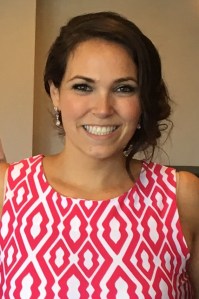
Swampscott native takes the helm at Jewish Big Brothers Big Sisters

DECEMBER 28, 2017 – When Harvey Lowell steps down after 21 years as president and CEO of Jewish Big Brothers Big Sisters of Greater Boston, he will pass the baton to Kimberlee Schumacher, who brings strong vision and 20 years of executive experience, including as vice president of strategy and development of the organization.

“The fact that Kimberlee has been leading our strategic planning process for the last 18 months, and helping us create a vision for our future, will ensure a smooth transition into her new role,” David Franklin, chairman of the board of trustees, said in a Dec. 12 statement announcing Schumacher’s appointment.

Schumacher, a Swampscott native who now lives in Arlington, will bring a blend of innovation and respect for past practices to her new position. “I am incredibly honored and humbled to be in the position of implementing the new strategic plan,” she said.

One aspect of Lowell’s legacy Schumacher plans to maintain is a deep commitment to the mission of JBBBS: reaching out to the most vulnerable children and adults in the community.
She was selected following a national search conducted by Commongood Careers, a leading executive search firm specializing in nonprofits.

Founded in 1919 as the Jewish Big Brother Association, the JBBBS is New England’s oldest youth mentoring organization. Today, with financial support from Combined Jewish Philanthropies, The United Way, and other foundations and grants, the Newton-based organization matches over 250 Jewish and non-Jewish children from over 90 towns in eastern Massachusetts with adult mentors.

In 1992, JBBBS inaugurated Friend 2 Friend, the first program of its kind to pair adults with mild to moderate disabilities with a mentor. The program currently serves 175 adults who benefit from the social interactions it provides.

One of the biggest challenges the organization faces is finding and keeping volunteers. “We are always looking for new volunteers,” Schumacher said, noting the current waiting list of around 80 kids and adults with disabilities. “I’d like to encourage anyone who is interested to consider volunteering. It’s truly an incredible experience and our community needs you.”

Schumacher credits her parents for instilling such a strong love of Judaism. “They taught me the value of committing to and being part of the Jewish community,” she said. Growing up, she belonged to Temple Emanu-El in Marblehead and Congregation Shirat Hayam in Swampscott.

As a teenager, her involvement in the Temple Emanu-El SMARTY youth group provided a platform to develop leadership skills at a young age. She became its president while a Swampscott High School junior and worked as a SMARTY adviser while an undergraduate at Brandeis University.

Schumacher believes her experiences as a teen leader fueled her passion to continue working in the community at CJP, the Jewish Federation of the North Shore, and now at JBBBS. “I am extremely grateful for the mentoring relationships I formed in high school. The wonderful people I worked with then remain my mentors today,” she said.

She is also grateful to be at the helm of JBBBS. “I believe strongly in giving back to the community, and working in the nonprofit world allows me to live my life according to the values I was raised with,” she said.

Georgia O’Keeffe as artist, model, and designer at Peabody Essex Museum

Shelley A. Sackett

DECEMBER 28, 2017 – SALEM – Few people outside academia realize that Georgia O’Keeffe (1887-1986), the iconic artist famous for paintings of enlarged flowers and New Mexico landscapes, was an accomplished seamstress who lavished as much creative juice on her self-presentation as on her work. With the opening of its multi-disciplinary exhibition, “Georgia O’Keeffe: Art, Image, Style,” the Peabody Essex Museum in Salem opens the door to her closet.

O’Keeffe’s paintings are presented alongside her never before exhibited handmade garments and dozens of images of the artist taken by photographers, including her Jewish husband, Alfred Stieglitz. The show, first curated at the Brooklyn Museum by art historian Wanda M. Corn, is the first to explore how the renowned artist deliberately and adeptly shaped her public image and myth, creating her own celebrity fame.

The 125 works expand our understanding of O’Keeffe while underscoring her fierce determination to be in charge of how the world understood her identity and artistic values. The powerful public persona she created through her clothes and the way she posed for the camera unequivocally proclaimed her independence and modern, progressive lifestyle.

“O’Keeffe drew no line between the art she made and the life she lived,” Corn said. “She strove to make her life a complete work of art, each piece contributing to an aesthetic whole.”

Corn discovered O’Keeffe’s cache during a 1980 cross-country stopover in New Mexico on her way to Stanford University, where she taught art history. She visited O’Keeffe’s homes in the Southwest state at Ghost Ranch and Abiquiú, finding closets full of the artist’s clothing preserved in beautiful condition. Because most were without labels, she had to guess which ones the artist created and which she bought. Corn said if she could sit down with O’Keeffe, “My first question would be, ‘Was I right in my attributions?’”

Most of the clothes and desert artifacts now belong to the Georgia O’Keeffe Museum in Santa Fe, founded the year of her death in 1986.

The provocative photographs by Stieglitz (1864-1946) dominate the exhibition’s walls at the Peabody Essex. It’s hard to imagine the different path O’Keeffe’s life might have taken had she not caught his eye in 1916, when he was 52, married, and a world-famous photographer based in New York and she was 28 and still unknown.

Instantly infatuated with O’Keeffe and her art, the son of German-Jewish immigrants wooed and won her. She moved to New York and soon, he began taking nude photographs of her, one of which hangs beside an O’Keeffe painting at the Peabody Essex exhibit. The two married in 1924. For years, Stieglitz photographed O’Keeffe obsessively, teaching her how to pose and helping make her the most photographed artist of the 20th century.

In 1927, O’Keeffe visited New Mexico and fell in love with the desert landscape. Her art and clothing would change in response to it. She lived there part of the year from 1929 on, moving there permanently after Stieglitz’s death in 1946. The younger generation of photographers who visited her in New Mexico cemented her status as a pioneer of modernism and a contemporary style icon.

Sprinkled throughout the rooms of paintings, paired clothing, and photographs at the Peabody Essex exhibit are small screen films, including fascinating home movies of O’Keeffe and Stieglitz in New York and a one-minute 1977 video portrait, the only such interview the artist granted.

One standout in the exhibition’s predominantly black and ivory palette is an orange Andy Warhol diamond-dusted print that introduces the idea of “Saint Georgia,” showing a meditative, mystical, Mother Theresa-like O’Keeffe. Another is a video of the House of Dior’s 2018 O’Keeffe-inspired cruise collection that features her signature gaucho hat.

“O’Keeffe’s aesthetic legacy of organic silhouettes, minimal ornamentation, and restrained color palettes continues to capture the popular imagination and inspire leading designers and tastemakers of today,” said Austen Barron Bailly, organizing PEM curator.

“Georgia O’Keeffe: Art, Image, Style” runs through April 1 at the Peabody Essex Museum, East India Square, 161 Essex St., Salem. For more information, call 978-745-9500 visit pem.org.

Marblehead, Swampscott congregations unite to study Israel’s history

DECEMBER 14, 2017 – Round tables in the Temple Emanu-El social hall were draped with white paper cloths. The coffee pot and cookies beckoned from the corner. Around five minutes before 7, a steady flow of adults greeted each other, staking out a seat within just the right view (and hearing range). They clutched textbooks and pens, and bore the excited, eager look that marks adult learners.

For four Tuesday nights this fall, 30 people attended a class co-taught by Rabbis David Meyer of Temple Emanu-El in Marblehead and Michael Ragozin of Congregation Shirat Hayam in Swampscott. Titled “Israel’s Milestones and Their Meanings: The Legacy of the Past and the Challenge of the Future,” the curriculum was developed by the Shalom Hartman Institute iEngage in New York and addressed three pivotal moments in Israel’s history: 1917, 1947, and 1967.

The rabbis alternated locations, with two classes at Shirat Hayam and two classes at Temple Emanu-El. While the class appreciated the readings and history, it was the interaction of the rabbis that most resonated.

“I love the idea of co-teaching between the two rabbis,” said Temple Emanu-El member Judy Mishkin. “They are wonderful together, they are wonderful separately.”

For Brenda and Shelley Cohen of Marblehead, these evenings were a way to share. “My husband is a history buff and he fills in everything I don’t know,” Brenda said with a laugh.

Asked what “Tuesday night date night” meant to him, Shelley, a Shirat Hayam member and retired dentist, deadpanned, “A quick supper.”

The rabbis stressed the importance of uniting a community challenged by divergent views toward Israel and American politics. “We thought we could do something that would bring a measure of healing and acceptability into the conversation around Israel,” Rabbi Ragozin said.

“There’s something inherently beautiful about bringing the two congregations together. The participants don’t necessarily know each other, so they might feel they’re in a safe setting to openly discuss and critique Israel.”

Rabbi Meyer agreed. “We really sought to create a fresh dialogue and a new conversation about Israel, about the role Israel plays in the world and in our lives,” Rabbi Meyer said.

The two also relished the idea of working together. “I’m always learning something from David. He’s a mentor and a mensch,” said Rabbi Ragozin, referring to himself as “the new young rabbi in town.”

“Our congregations are separated by only a mile and a half, but our programming tends to be separated, so it’s certainly allowed Michael and me to work together and get to know each other,” Rabbi Meyer said. “And that’s all positive.”

“It’s a luxury to have two rabbis teaching us,” said Margaret Somer, a Swampscott resident and Shirat Hayam member. Even more important to her, however, was thinking about the 1967 Six-Day War, especially as the celebration of another historical miracle – Hanukkah – approaches.

“It was a major, major moment in history, a transformation of how the Jewish people feel about themselves, the confidence and assertiveness,” she said, pausing as she searched for the exact words that summed up how she felt. She smiled broadly. “It’s OK to be Jewish,” she said triumphantly.

Anti-Defamation League honors Swampscott native

Diana Headshot

Diana Leader-Cramer

The Anti-Defamation League New England Region will present its 2017 Krupp Leadership Awards to Diana Leader-Cramer Moskowitz and Monica Snyder at its 15th Annual Young Leadership Celebration on Saturday, Dec. 16 at The Colonnade Hotel in Boston.

The award is given to community members who demonstrate outstanding dedication and leadership on behalf of the ADL.

Diana Leader-Cramer Moskowitz, a credit research analyst at Loomis Sayles, is one of the longest-serving members of the ADL Associate Board and has held various leadership positions, including co-chair of the programming and governance committees.

The Swampscott native credits Epstein Hillel School (then Cohen Hillel Academy) and her parents, “who lead and continue to lead by example,” for instilling in her a deep sense of wanting to give back to the Jewish community.

“Philanthropy has always been an important part of my Jewish identity and an important outlet for me. Despite working full-time and going to school part-time when I was pursuing my MBA, it was essential to me to stay involved with and support the causes that were important to me, such as the ADL,” the Wellesley resident and Washington University and Boston University alumna said.

After attending Cohen Hillel Academy, she volunteered as a teachers aid at the school and later continued her involvement with Temple Israel as a Torah reader until leaving for college. While in college, she continued to be an active member of the Jewish community, minoring in Jewish studies and becoming a member of the local Hillel and Jewish Student Union.

Monica Headshot

Monica Snyder

As an employment lawyer at Fisher & Phillips, LLP, a national labor employment firm in Boston, Monica Snyder’s chosen field greatly influences her involvement at ADL.

“My law firm represents employers in dealing with a wide array of employment matters, including issues involving discrimination,” she said. “I became a lawyer, in part, to cure the injustices in this world,” the Boston resident and Amherst College and Boston University School of Law alumna added.

Snyder co-chairs the Glass Leadership Committee and the Young Lawyers Committee, which provides opportunities for Boston area attorneys to network and to generate discussions through round tables and speakers.

A group made up of members of several ADL boards, directors and the prior year’s winners selects honorees.

“Monica and Diana embody ADL’s values and believe deeply in ADL’s mission. They are both widely respected leaders,” said Daniel Hart, director of Development New England Region Anti-Defamation League and a member of the selection committee.

The Young Leadership Celebration was created 15 years ago to recognize young leaders with a once-a-year signature event and to broaden ADL’s reach in the young leadership community in the Greater Boston area.

Both Snyder’s and Leader-Cramer Moskowitz’s involvement with ADL started with their acceptance into the Glass Leadership Institute, a year-long program that meets on a monthly basis, giving young adults the opportunity to learn what the ADL does first hand about issues facing communities. Shortly after, each decided to take on leadership responsibilities.

“This program gave us the opportunity to meet with experts from across the organization and learn about the different ways they make an impact on a daily basis. Gaining a full understanding of all the important work the ADL does motivated me to stay involved,” Leader-Cramer Moskowitz said.

Actively engaged in ADL since 2010, she spent two weeks in Germany in 2012 representing ADL in its partnership with the German government’s Close-Up program.

“I learned about Germany’s history and modern Jewish life. I am passionate about the ADL’s mission of promoting equality and fair treatment for all,” Leader-Cramer Moskowitz said.

She is proudest of her role in helping to create the Breaking Barrier speaker series that brings interesting and engaging speakers that are important to the ADL and to the community at large. Last year, Khizr Khan, the Pakistani American parent of United States Army Captain Humayun Khan, who was killed in 2004 during the Iraq War, joined the group for a conversation on religious freedom, civil rights, and security issues.

The 2017 series welcomed Christian Picciolini, a former neo-Nazi who now helps others counter all types of racism and violent extremism.

“These speakers bring important topics to the forefront and engage the community in discussions about what is happening and also what can be done to combat hate and promote equality for all,” Leader-Cramer Moskowitz said. “ADL’s expanded efforts to combat all kinds of hate is something that is critically and increasingly important today.”

For more information or to buy tickets, visit: http://bit.ly/2B5ugUF

In 2017, Salem Council on Aging saw much change

Terry ARnold

Teresa Arnold, new executive director of Salem’s Council on Aging.


Salem seniors have much to look forward to in 2018.

In September, Salem not only broke ground on the Mayor Jean A. Levesque Community Life Center, but also appointed Teresa Arnold as Salem Council on Aging’s executive director.

“Terry is very highly qualified and has a wonderful reputation,” said Lynda Coffill, chairman of the Council on Aging Board of Directors. “She’s already established relationships with some of the seniors and has done a terrific job of communicating with the board.”

Mayor Kim Driscoll picked Arnold based on the Gloucester resident’s reputation, qualifications and management style amassed over a 25-year career, she said.

“Terry brings the kind of positive and supportive attitude that is so important for a COA director who interacts daily with our senior population,” said Driscoll. “I’m especially excited that she will be at the helm of the COA when we move into the new building this coming year.”

The city anticipates a 2018 completion for the 20,000-square-foot, state-of-the-art building on Bridge Street. The facility will house the COA, Veterans Services and Park and Recreation departments.

Arnold is delighted with her new job.

“I am very pleased to be part of a solid city with excellent leadership,” she said. “While I live in Gloucester, I’ve always been fond of Salem and its incredible history, not unlike my own hometown. However, I can help serve seniors and people living with disabilities, I certainly will.”

The same night the Salem City Council confirmed Arnold, councilors also voted to move the executive-director position under the mayor’s supervision.

Revolving turnover

Salem City Councilor President Elaine Milo said she has seen a trio of COA executive directors come and go over a three-years time span.

“High turnover in any organization is not healthy,” she said.

Milo added she believes Arnold will bring a professional, positive atmosphere to the Council on Aging.

“My sense is that she will work hard to cultivate outside relationships with community organizations that have much to offer seniors and vice versa,” said Milo. “I look forward to working with her.”

Arnold is aware of worries over the revolving-door of leadership and expressed a confidence in current COA staff.

“I can understand the concern of the community not wanting to see a lot of turnover. I hope that my tenure here is lengthy and that we can move forward toward the new Community Life Center,” said Arnold. “We have some good opportunities ahead to make the center a vibrant hub.”

Arnold possesses experience across program and business development, operations, advocacy, government and board relations and clinical and quality management. She holds a master’s degree in management from Lesley University.

Before arriving in Salem, Arnold headed up the Greater North Shore Link in Danvers, an aging and disability consortium. She also worked in several senior-serving outfits from Caregiver Homes to SeniorCare.

In her appointment letter, Driscoll wrote: “Throughout her career, Teresa has been dedicated to leading programs that preserve the dignity and independence of seniors.”

Over the years, Arnold said she amassed a bag of successful programs to pull from. One in particular that she mentioned: Providing an enhanced evening-and-weekend schedule of medical rides for seniors.

“Transportation needs never go away,” she said.

Ensuring seniors, including those with disabilities, maintain a high quality of life and independence are top priorities, said Arnold.

“I’ve been able to provide seniors — as well as individuals living with a disability and their families and caregivers — the resources they need to access long-term supports and services in order to stay as independent as possible and to hopefully age in place,” Arnold said.

Nothing could make Andrew J. LaPointe, president of the Friends of the Salem Council on Aging, and Shubert, his seeing-eye dog, happier.

“Our seniors are Salem’s most valuable assets,” said LaPointe. “Terry will also work with me to include the many seniors with disabilities, so they can be a part of all the great programs that are offered.”

At-large Councilor Thomas Furey was the sole vote against Arnold. He argued for hiring someone who possessed institutional memory and a familiar face among local seniors, especially in light of turnover.

“There has been a revolving door of outside COA directors who come in and out. They leave it in a vacuum of leadership,” said Furey, “so I voted against the outsider from Gloucester. We need continuity and stability. There are several people inside the COA who could take over very easily.”

Filling the post came after a six-member search committee executed a lengthy vetting process: Advertising the open position, ranking qualified applicants, conducting initial interviews and sending the mayor an appointment recommendation.

Arnold ultimately rose to the top, and the committee supplied Driscoll with her name. The mayor performed the final interview and sent the Arnold appointment for the City Council’s confirmation consideration.

Arnold now leads a city agency annually serving more than 2,000 seniors, to whom the COA an array of services and support “to ensure all seniors can maximize of their lives,” according to council’s website.

During just one week in December, the COA will offer 34 activities: Meditation, quilting, creative writing, water aerobics, drum class, line dancing and trips to North Shore Mall and, for an evening concert, Salem State University.

Community Life Center

The new facility will be called Salem’s Community Life Center, a name that better reflects the diversity in age the COA serves. Currently, the COA seeks programs that broaden its appeal to a cross-generational age range of seniors.

“We go from 60 to 100 years old,” said Coffill. “We have to make sure we have activities geared to all age groups.”

Reaching out to younger seniors to pull them in the COA constitutes another priority on Arnold’s docket.

“Terry wants to introduce new opportunities for 50 and 60-years-old to join older adults at the new Community Life Center, to make it a central gathering place for all,” said Salem for All Ages Task Force Co-Chairman Pat Zaido.

The 14-member task force was formed the AARP and the World Health Organization certified Salem as an “Age Friendly City.” Members are currently executing a five-year action plan to ensure Salem remains age-friendly across transportation, social participation and social inclusion.

Arnold, in her role, sits on the task force, and she and Zaido have already had four or five meetings. She has been impressed by Arnold’s maturity, experience and passion.

“With 25 years of experience working with seniors and the disabled,” said Zaido, “it is obvious she is committed to this population.”

‘Arc Tank’ competition is changing lives of disabled through innovation

NOVEMBER 30, 2017 – In 2002, Jo Ann Simons and Steven P. Rosenthal happened to pick neighboring elliptical machines at the Jewish Community Center of the North Shore in Marblehead. During their workout, they chatted. Simons learned of Rosenthal’s interest in philanthropy; Rosenthal learned about Simons’ interest in intellectual and developmental disabilities.

Neither had a clue that 15 years later, they would partner to revolutionize the way their two fields could intersect.

It all started when Rosenthal was planning his 2017 donations. The Marblehead resident and former CEO of Northland Investment Corp. knew he wanted to do more than just write the traditional check to a nonprofit that supports his core values of “tikun olam” (repair the world). He wanted to inject innovation and creativity into the process, setting an example that might encourage other philanthropists to think outside the box.

He immediately thought of Simons, now CEO of Danvers-based Northeast Arc, which is at the forefront of providing innovative services, education, and training to 9,000 adults and children with disabilities each year.

“We are a thought leader. We want to establish ourselves as the most innovative, creative, strategic organization in our industry,” Simons said of Northeast Arc, which has 1,100 employees and a $250 million budget, and reaches 190 communities throughout eastern Massachusetts.

It was a good fit. Rosenthal, who now runs the Boston real estate investment firm called West Shore LLC, donated $1 million to Northeast Arc to launch The Changing Lives Fund. He, Simons, and the Arc board of directors then brainstormed to come up with a groundbreaking approach to spending that money.

“We thought, what a novel concept if — instead of keeping the money — we decided we were going to try to inspire the most creative ideas within our industry,” said Simons, who lives in Swampscott and is a Swampscott High School graduate. “Steve’s vision of philanthropy helps us identify a new, nuanced role.”

Borrowing from the name and competitive methodology of “Shark Tank,” the popular ABC television show, the team created “Arc Tank,” where anyone with a creative concept to aid people with disabilities can pitch an idea and compete for funding from The Changing Lives Fund.

“We realized we can develop initiatives that support our mission and leverage the money for a greater impact if we give it away,” Simons said.

Of the 100 proposals from all over the world that flooded in after the competition was advertised, 45 were selected for the “holding tank.” Outside reviewers recommended seven finalists.

The inaugural Arc Tank contest, collaboration between Northeast Arc and the JFK Library Foundation, took place on Nov. 15 at the JFK Presidential Library and Museum and awarded $200,000. Over 300 people attended.

A panel of judges awarded grants to three winners who “positively disrupted the conventional methods of providing services to persons with disabilities.”

• Pathways to Inclusive Healthcare,” submitted by Dr. Carolyn Langer, associate professor at UMass Medical Center in Worcester, received $80,000 to develop a pipeline of healthcare professionals to ease the transition from pediatrics to adult medicine care.

• The Center for Public Representation of Northampton, a public service law firm, received $85,000 for its proposal, “Disrupting the Guardianship Pipeline,” to create an effective alternative to guardianship, often the only option for people with intellectual and developmental disabilities.

• “Water Wise,” submitted by the YMCA of the North Shore in Beverly, addresses the fact that drowning is a leading cause of death for children with Autism spectrum disorder by developing a water safety program that targets specific needs. The $30,000 grant will fund the program in two locations next year, with plans to expand to eight sites by 2019.

In addition, two incubator proposals were awarded $2,500 each.  Andrew Holmes of Winchester, a junior at Olin College of Engineering in Needham, is developing “Shop, Drop and Roll,” a wheelchair attachment that simplifies the transport and accessibility of goods on the back of a wheelchair. Nathaniel Lorenz Galdamez, a freshman at Swampscott High School, is designing “The BIONIC hand,” a wrist device to assist computer usage.

Rosenthal couldn’t be more pleased with the first Arc Tank. “The event was a terrific success. I think we have started an important and much needed conversation about innovation and philanthropy,” he said.

Salem Film Fest presents special Thanksgiving weekend screening

FOR AHKEEM

By Shelley A. Sackett

Above: Daje Shelton in “For Ahkeem,” a documentary film directed by Jeremy S. Levine and Landon Van Soest.

BEVERLY — By the Sunday after Thanksgiving, even the most diehard football fan and Black Friday shopper should be ready to trade leftover pie for popcorn and venture out to the Cabot Theatre where Jeremy Levine, a Beverly native and Emmy Award winning documentary filmmaker from New York, will be returning home to screen his latest feature film, “For Ahkeem.”

The film tells the intimate and frank story of Daje Shelton, a strong-willed Black 17-year-old girl in North St. Louis, Missouri. The audience walks beside her as her path takes her from public school expulsion to the court-supervised Innovative Concept Academy, an alternative school for delinquent youth and her last chance to earn a diploma.

Shot over a two-year period against the charged backdrop of nearby Ferguson, we witness Daje’s struggles as she copes with academic rigors, the murders and funerals of friends, teenage love and a pregnancy that results in the birth of a son, Ahkeem.

With motherhood comes the realization that she must contend with raising a young Black boy in a marginalized neighborhood. The film illuminates the challenges that many Black teenagers face in America today, and witnesses the strength and resilience it takes to survive.

“For Ahkeem” will screen on Sunday, November 26 at 4:30 p.m. at The Cabot Theatre, 286 Cabot Street in Beverly as part of a special Salem Film Fest Presents — the documentary fest’s first cinema presentation outside of Salem. Levine will be on hand at to answer audience questions at the post-screening Q&A.

Salem Five Charitable Foundation is underwriting the screening and three local organizations are community partners: The Beverly Human Rights Committee, First Church Salem, UU and Salem No Place for Hate.

For Levine, who attended Beverly High School and worked for years as a counselor at the Waring School, the film he co-directed is more than a simple coming-of-age story. “It highlights the horrible effects of the school-to-prison pipeline, where we suspend and expel huge numbers of students — especially black and brown students — and the impact that has on girls like Daje from the time they’re five-years-old,” he said by phone from New York City, where he and co-director Landon Van Soest run Transient Productions, a full-service production company.

The film also approaches some of the most pressing social challenges facing America today — racial bias, social inequality, public education, police brutality and a biased criminal justice system.

“We wanted to tell a deeply personal story about what it means to live your life when so many systems are set against you,” Levine, an Ithaca College alumnus with a degree in Documentary Studies, said.

“For Ahkeem” has had an award-winning festival run starting in February at the Berlin Film Festival, followed by prestigious showcases like the Tribeca Film Festival, Canada’s Hot Docs, and the DMZ International Film Festival in South Korea.

While the film’s worldwide audience and awards —such as the Grand Jury Prize Award at Boston’s Independent Film Festival — thrill Levine, for him the screenings and discussions at high schools and prisons fulfill a greater mission of trying to do better for future generations of children.

In Tribeca, New York City, for example, approximately 500 high school students attended a screening. “When Daje came out for the Q&A afterwards, the kids erupted in applause,” Levine said.

The ensuing discussions included kids “really opening up about some of the challenges they face in their lives. It was really incredible,” Levine added. He is currently working to bring the film to more public high schools through a grant program.

Screenings at prisons have been equally powerful. When the lights came up at one screening for 100 inmates, all the tears in the room full of men touched Levine. “One of them wrote a poem for Daje and Ahkeem. Another man said, ‘Who knew I could learn so much about being a man from the story of a young woman?’” he said.

Levine credits the culture of Judaism and Hebrew School lessons at Temple B’nai Abraham in Beverly, “a part of my life growing up”, with imbuing in him a sense of responsibility to try to make the world a better place. “I learned about the long suffering of our heritage and the injustice of that. That kind of moral underpinning is definitely huge in the work I do,” he said.


“For Ahkeem” will screen on Sunday, November 26 at 4:30 p.m. at The Cabot Theatre, 286 Cabot Street in Beverly as part of a special Salem Film Fest presentation. For more information or to buy tickets, visit theCabot.org.

Manna rains on Marblehead interfaith project


Pictured left to right: Rabbi David Cohen-Henriquez and Pastor Jim Bixby

When Temple Sinai’s Rabbi David Cohen-Henriquez and Pastor Jim Bixby from Clifton Lutheran Church first met at a Marblehead Ministerial Association meeting last summer, they both sensed a spiritual connection that went beyond them being among the youngest in the room.

“His church and Temple Sinai have a lot of similarities,” said Cohen-Henriquez, who is known as “Rabbi David” to his congregants. “Both are small. Both are in Marblehead. And both are dealing with contemporary theological challenges where people are not going to services like they used to. We are both striving to find ways to engage the new generations.”

Bixby, who congregants call “Pastor Jim,” grew up in Miami next door to many Panamanians, and he was fascinated when he found out Cohen-Henriquez was born in Panama. “I said to myself, ‘I don’t think I know anyone from Panama who is Jewish, let alone a rabbi, let alone a man with a hyphenated last name and a gift for storytelling,’” Bixby said with a chuckle.

The two spoke at length and realized their connection ran deeper than congregational size and demographics. Both aspired to engage their communities into social action while connecting personally and spiritually with their neighbors of different faiths.

Bixby learned of Temple Sinai’s decision to focus its social action on homelessness and of its support for Lynn shelters. He shared his church’s emphasis on helping recently arrived refugees and immigrants at Lynn’s New American Center.

With both congregations committed to providing food for marginalized people in need in Lynn, the two spiritual leaders decided to combine forces.

The result is “The Manna Project,” a joint mission with three components: a pulpit exchange, a Harvest Festival, and a food-packing event to benefit the needy in Lynn.

The September pulpit exchange was a huge success. Bixby addressed a Friday night Shabbat service and Cohen-Henriquez spoke at a Sunday morning church service. Both events drew congregants from both communities and thrilled the two clergymen.

Cohen-Henriquez had been in churches before, but had never been to a Sunday service, and certainly had never spoken to a congregation from a Christian pulpit.

The similarities between the two traditions impressed him. The Lutheran selected reading (similar to the weekly Torah parsha) during his appearance happened to be about the crossing of the Sea of Reeds, known to Jews as the parting of the Red Sea. He captivated the churchgoers with midrashim that retold familiar biblical stories in ways outside the traditional Lutheran framework.

“Seeing people react to these stories that fill in the blanks, appreciating and rediscovering treasures that were already there, was really satisfying,” Cohen-Henriquez said.

The communitywide Harvest Fest, timed to coincide with the end of Sukkot and Oktoberfest, was a fund-raiser with vendors, games, and food, which both communities prepared and sold together. Shepherded by Temple Sinai Executive Director Susan Weiner, and Clifton Lutheran Church UpReach Council member Pat Small, the event raised $2,000 toward its $5,000 goal. Each dollar raised buys a meal for a family of four.

To fill the fund-raising gap, The Manna Project will sell tickets for a monthlong daily raffle in January. Bixby and Cohen-Henriquez went to local Marblehead businesses soliciting donations. (“Seeing a pastor and a rabbi entering your store must be like the opening of a joke,” Cohen-Henriquez said with a laugh).

Both were struck by how generous the business owners were and by how much they appreciated seeing clergy from different traditions work together.

The Manna Project’s third and capstone event is a food-packaging gathering on March 4, which will involve both communities’ social action committees and many volunteers. “We will need as many hands on deck as possible in order to get out the 3,000 to 4,000 meals we hope to prepare. Many hands make light work!” said Small.

In the meantime, both the pastor and the rabbi are positive their collaborations will not end with The Manna Project.

“Our communities are getting to know each other. We even see our missions as intertwined,” Bixby said.

“It’s a consciousness that transcends how you pray,” echoed Cohen-Henriquez. “There are many more things that bond us than separate us.”

For more information on The Manna Project, call Temple Sinai at 781-631-2763 or Clifton Lutheran Church at 781-631-4379.

Ruderman Summit gives voice to disabled


Above: Jay Ruderman, president of the Ruderman Family Foundation, presents Oscar-winning actress Marlee Matlin with the Morton E. Ruderman Award in Inclusion in Tel Aviv earlier this year.

BY SHELLEY A. SACKETT

NOVEMBER 2, 2017 – Over 1,000 attendees will have the opportunity to hear 50 speakers address ways to open doors for people with disabilities when the Ruderman Family Foundation holds its 2017 Inclusion Summit at the Seaport Hotel & World Trade Center in Boston on Nov. 19 and 20.

Among those who will appear are disability activist Marlee Matlin, a Jewish performer who is the only deaf film star ever to receive an Academy Award for Best Actress in a Leading Role for 1986’s “Children of a Lesser God;” Senator Maggie Hassan of New Hampshire; Richard Marriott, chairman of the Marriott Foundation for People with Disabilities; and Joyce Banda, former president of Malawi.

“These are people who spend time and effort trying to change their community,” said Jay Ruderman, president of the Ruderman Family Foundation.

For over a decade, the foundation’s philanthropic mission has emphasized both advocacy for the inclusion of people with disabilities worldwide and educating Israeli leaders on the American Jewish community. This is the second Inclusion Summit, and Ruderman expects the conference to sell out.

“Our approach to disability inclusion is very holistic and includes all aspects of life, from birth to death: entertainment, education, employment, housing, sports, politics, and more,” Ruderman said. “The purpose of the summit is to convene the movers and shakers in all these fields to share best practices and network. We want to amplify the momentum of the disability rights movement so that it can have a more prominent presence in mainstream American culture.”

Although the foundation  – which has offices in Boston and Israel – has a global reach, it has invested more than $20 million in strategic multiyear initiatives in the Metro Boston area. These programs touch the lives of people of all ages with all types of disabilities.

On the North Shore, Temple Sinai in Marblehead and Congregation Shirat Hayam are partners in the Combined Jewish Philanthropies/Ruderman Synagogue Inclusion Project, which helps create religious communities where people of all abilities can fully participate. The Jewish Community Center of the North Shore also partners with the foundation to offer a year-round early childhood education program and an inclusive summer camp that makes a fun experience available to both campers and staff with   disabilities.

It doesn’t stop there. The foundation’s partnerships with CJP and Newton-based Gateways: Access to Jewish Education provide opportunities for children with disabilities in kindergarten through grade 12 to receive a Jewish education in an inclusive community. The Morton E. Ruderman scholarship helps defray the cost of both school-based and ancillary services for students with physical and emotional challenges. The goal of both programs is to mainstream students with disabilities in Jewish educational programs.

High school students benefit from a number of Ruderman Family Foundation partnerships. Student-athletes with visual or mobility impairments can participate in high school sports across eight states through the Northeast Youth and High School Inclusive Sports Initiative, a joint program with Adaptive Sports New England. New England Yachad and the foundation sponsor high school clubs, a youth leadership board, and a Jewish youth group network that provide opportunities for participants with and without disabilities to attend retreats, leadership training, and meetings.

Young adults with disabilities can receive training and job placement though Transitions to Work, a partnership among the Ruderman foundation, CJP, and Jewish Vocational Services. Since 2011, 200 individuals have graduated from the program. Of the 72 percent who achieve competitive employment, over 90 percent stay at their jobs for at least one year.

Partnerships with the Boys & Girls Clubs of Boston and Dorchester; Brookline Community Mental Health Center; Mass. General Hospital; and the Boston Jewish Film Festival all further the foundation’s mission: inclusion of children and adults with disabilities as a social justice imperative.

Jay Ruderman feels strongly that bringing public attention to injustices suffered by people with disabilities is critical to starting a public debate. His family’s foundation’s current strategy of developing a strong advocacy presence is aimed at raising the general public’s awareness.

“We recognize that our grantees are excellent at providing services, but to change minds, and ultimately to change social attitudes, we also need advocacy,” he said.

All this activity and global impact is the outgrowth of the belief and commitment of foundation founder Morton E. Ruderman that disability rights are civil rights. When Jay Ruderman contemplates how far the foundation has come since it was established in 2002, he thinks his father, who died in 2011, would be surprised.

“We started out as a foundation that was really focused on the Jewish community in Boston, and now we’ve expanded to having worldwide reach. I think he’d be proud of that,” he said.

For more information or to register, visit inclusion2017.org.

Swampscott author explores a 430-year-old mystery


NOVEMBER 2, 2017 – SWAMPSCOTT – About five years ago, Deahn Berrini and her family were enjoying dinner at their Swampscott home. Her son, knowing of her interest in Native American people, mentioned that researchers had just discovered a clue to the lost colony of Roanoke Island, off the coast of North Carolina.
“I said, ‘That could be a good story.’ And then my son said, ‘Hey, mom. You could write that,”’ said Berrini, the daughter of an Air Force father, who was born in Wiesbaden, Germany. A member of Temple Emanu-El in Marblehead, she grew up in Ipswich and attended Brown University, where she majored in history, and Boston College Law School.

When her son brought it up, she found herself drawn to that unsolved puzzle of the mysterious disappearance of 115 British men, women, and children in 1587. Once she started her research, she knew she wanted to write the story, but not from the colonists’ point of view.

Some have speculated that Native Americans attacked and killed the English colonists. Others theorize they tried to return to England and were lost at sea, or might have been killed by Spaniards who came north from Florida. One theory suggests the settlers were absorbed into friendly Native American tribes.

When Berrini approached the story from the point of view of the people who were already there – the Croatoan Native American tribe – her heart and her imagination followed. “The characters came to me fully formed,” she said.

“When we think of the story we’re taught in middle school, it’s from the white British point of view. We’re never taught to think about the native peoples who were living there before the Europeans arrived. It was a thriving place up and down the eastern seaboard. We have very little consciousness of that.”

Four years and three rewrites later, Berrini hopes to change that with the publication of her third historical novel, “A Roanoke Story,” on Nov. 30. She will launch her book tour by reading from and discussing the book at the Swampscott Public Library from 7 to 9 p.m. on Monday, Nov. 13.

In addition to broadening our understanding of history, Berrini also sees a clear connection between “A Roanoke Story” and the abiding Jewish tenet of social justice. As head of Temple Emanu-El’s social action committee for the past five years, she has championed shedding light on unfairness and untruths.

“A lot about our country’s origins has been mythologized to make it easier to swallow,” she said. “I hope readers will look at the colonization of this country with a greater sense of the people whose land we invaded. Telling the story from the point of view of the marginalized people, that’s the social justice component.”

The Swampscott Public Library is at 61 Burrill St.
For more information, visit swampscottlibrary.org or call 781-596-8867.