Umbrella Stage Co.’s ‘Hairspray’ Kicks Off Summer with A Rollicking Good Time

By Shelley A. Sackett
 
Hairspray, the musical set in 1962 Baltimore with an offbeat following, features an outcast yet optimistic high schooler who lands a spot on a local TV dance show and campaigns for racial integration. It originated as a cult-classic 1988 John Waters film with Divine, Ricki Lake, John Waters, Jerry Stiller, Deborah Harry and Sonny Bono, evolved into a 2002 Tony Award-winning Broadway musical, and became a blockbuster 2007 movie adaptation (John Travolta, Michelle Pfeiffer, and Christopher Walken).
 
With Umbrella Stage Company’s recent bang-up production, it once again proved that, despite being almost four decades old, it will never lose its staying power for one very important reason — it is FUN.

On its surface, the story is about teenagers who just want to fit in and be accepted by the “in” (as in WASP) crowd. Pleasantly plump, jovial and chatty Baltimore teenager Tracy Turnblad (Nora Sullivan) and best friend Penny Singleton (Maggie Cavanaugh) race home after school every day to watch “The Corny Collins Show,” a local TV danceathon. Tracy yearns to be a dancer on the show, even dreaming of being hand-picked by Corny (Joshua Lapierre) to be on his Council (the super Popular Kids). Some of those kids go to Tracy and Penny’s school.

Tracy’s mother, Edna (played in drag, as Waters tradition demands, by an outstanding Robert Saoud), is as oversized and big-hearted as her daughter. She worries Tracy will be crushed if she reaches too high. Dad Wilbur (Chip Phillips) is Tracy’s biggest cheerleader. He encourages her to live large, dream big and go for it.
 
By hook and by crook, she passes the audition and becomes an overnight teen celebrity. The show is produced with an iron fist by stage manager, Velma (Aimee Doherty in a role that finally fits her like a glove), the mother of dancer, Amber, whom she is scheming to get elected to the inner Council.
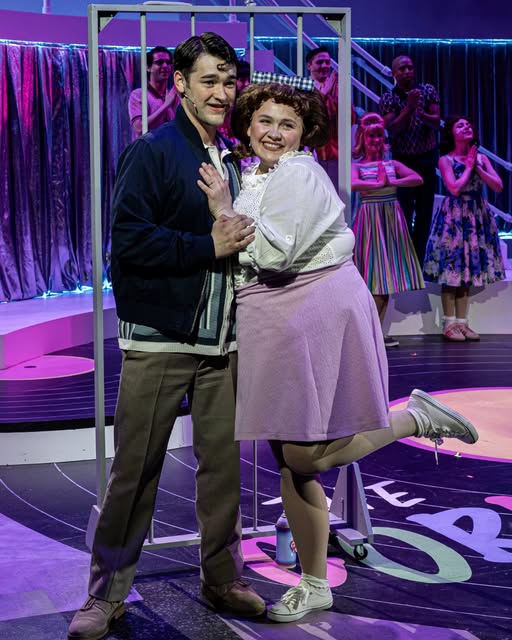
Nick Corsi, Sullivan

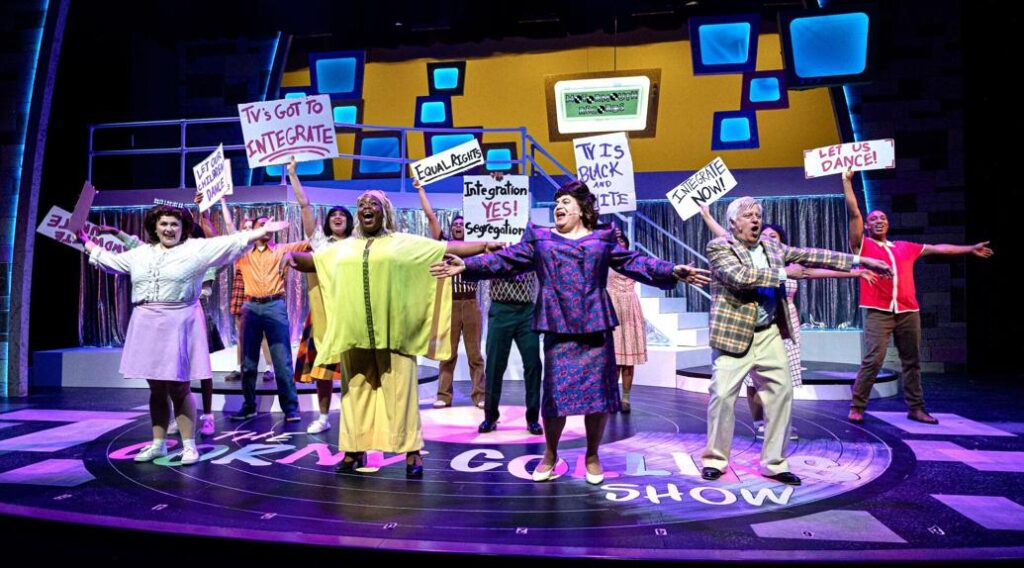
Station policy (it is 1962 after all), which Velma cheerfully enforces, dictates the show’s “whites only” policy. The one exception is a monthly Negro Day, hosted by local R&B disc jockey “Motormouth” Maybelle Stubbs (Barbara Pierre, whose singing raises the roof and then sets it on fire).
 
(The “Corny Collins Show” was inspired by the real “Buddy Deane Show,” which ran from 1957 to 1964 and held segregated “Negro Days” rather than integrate its broadcast.)

Tracy is regularly sent to detention (her teased, lacquered hair is also “too big”). There, she meets Black kids who teach her how to dance in a whole new and exciting way. They also teach her about racism, Baltimore style.
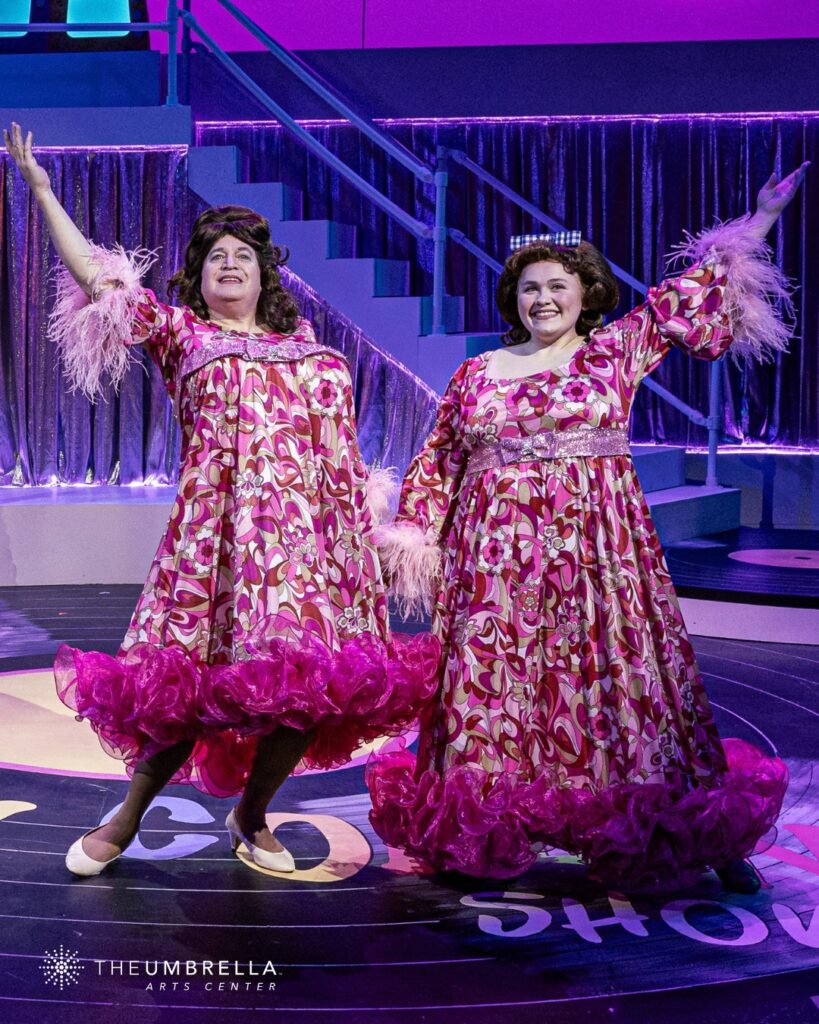
Robert Saoud, Nora Sullivan


Tracy returns to “The Corny Collins Show,” determined to use her newfound fame to advocate for racial integration on the show, win the heart of Amber’s boyfriend, heartthrob Link Larkin (Nick Corsi), and defeat the racist and sizeist Velma. She takes on the daunting task of challenging these social norms by being her bright and breezy plus-sized self, a proud woman on television advocating for what is right.
 
Eventually she succeeds after protests, arrests and a whole lotta music, singing and dancing.
 
Which brings me to the real reason to see Hairspray: the MUSIC, the SINGING and the DANCING.
 
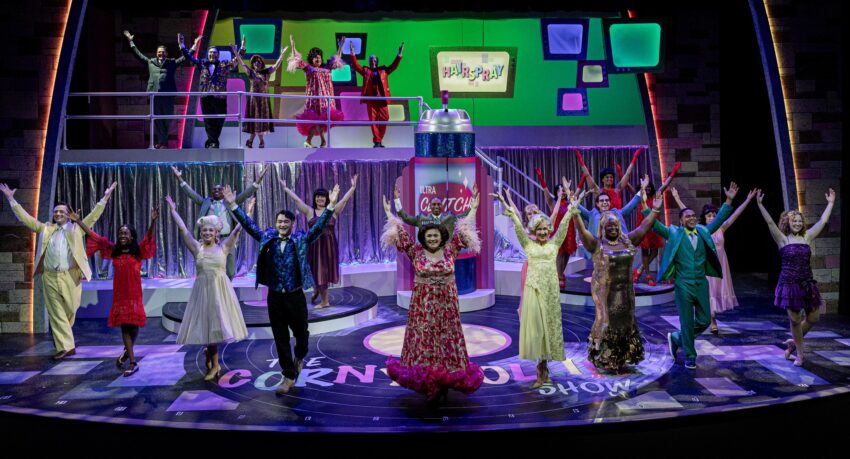
This is one non-stop, high energy extravaganza that runs on the even higher octane of Tracy’s infectious happiness and confidence. From the opening note, the fabulous band (Jordan Oczkowski, conductor), cast and ensemble are in full-throated sync as they frolic, leap, bop and cavort. (Najee A. Brown, director and choreographer). The sound is perfect (Alex Berg), the band audible, the singers comprehensible. Cameron McEachern’s vibrant set with colorful TVs, records, and “Hullabaloo” and “Shindig” era scaffold-like structures transports the audience (and their nostalgic parents and grandparents) back to the glories of glorious sixties culture.
 
Notwithstanding the sheer joy of the production, there are meaty issues acknowledged and addressed head-on. When Motormouth discovers her son, Seaweed, and Penny have fallen in love, she warns them, “So you two better brace yourselves for a whole lot of ugly coming your way on a never-ending train of stupid.”
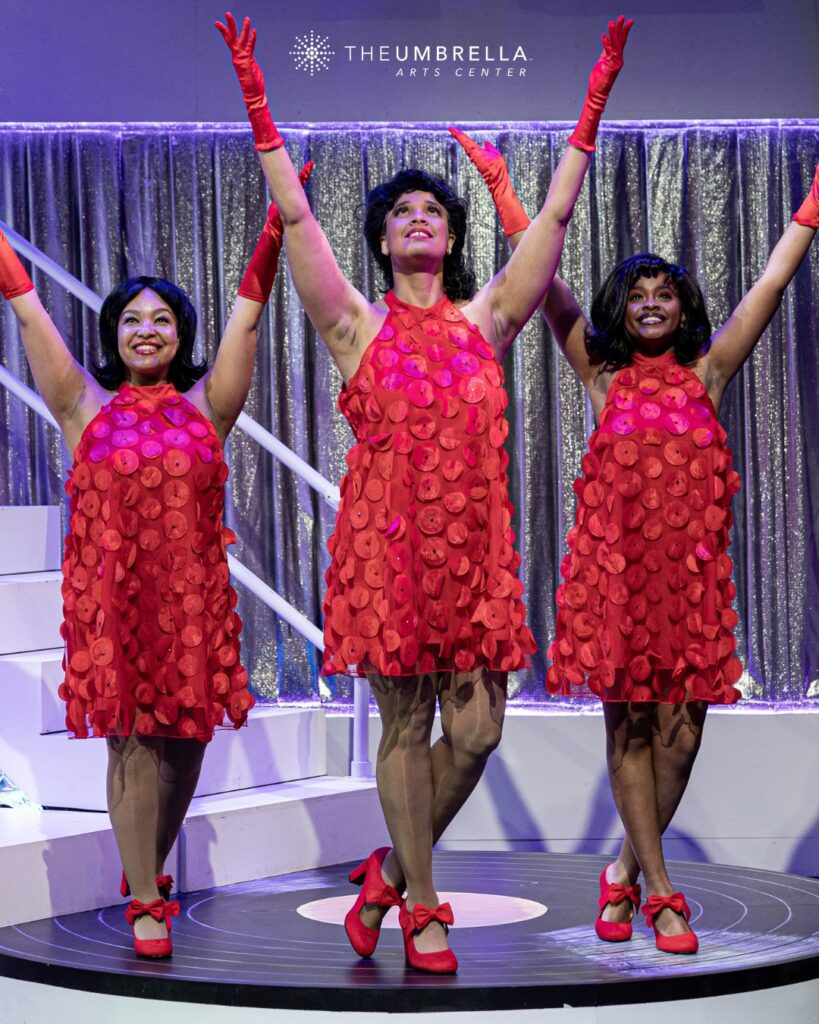


Simone Alyse, Pearl Scott, and Nikita Darosa


Although all ends well enough and the caliber of production is steady to the finish line, this entertainment is neither fluff nor dated. For every laugh and dream that burns bright, there are tears and dreams snuffed out. The 1960s were a time of reckoning, awakening, and wrestling with the disparity between what is and what could and should be. The fight for people of ALL sizes, shapes, politics, races and religions to be accepted does not just lie below the surface of this show.
 
“You can’t get lazy when things get crazy,” Motormouth sings in the showstopping finale, “You Can’t Stop the Beat.” “Fighting for equality, for what is right, is the light that will melt the darkness.”
 
Her words were spot on in 1962 and, 64 years later, are sadly even more so today. 

‘Hairspray’ – Directed by Najee A. Brown. Book by Mark O’Donnell and Thomas Meehan. Choreography by Najee A. Brown; Music Direction by Jordan Oczkowski; Music by Marc Shaiman. Lyrics by Scott Wittman and Marc Shaiman. Scenic Design by Cameron McEachern; Lighting Design by SeifAllah Salotto-Cristobal; Sound Design by Alex Berg; Costumes by Emerald City Theatricals. (The run of this show concluded May 17).
 

Second Stage’s ‘The Receptionist’ Shines A Light on the Underbelly of the Underworld

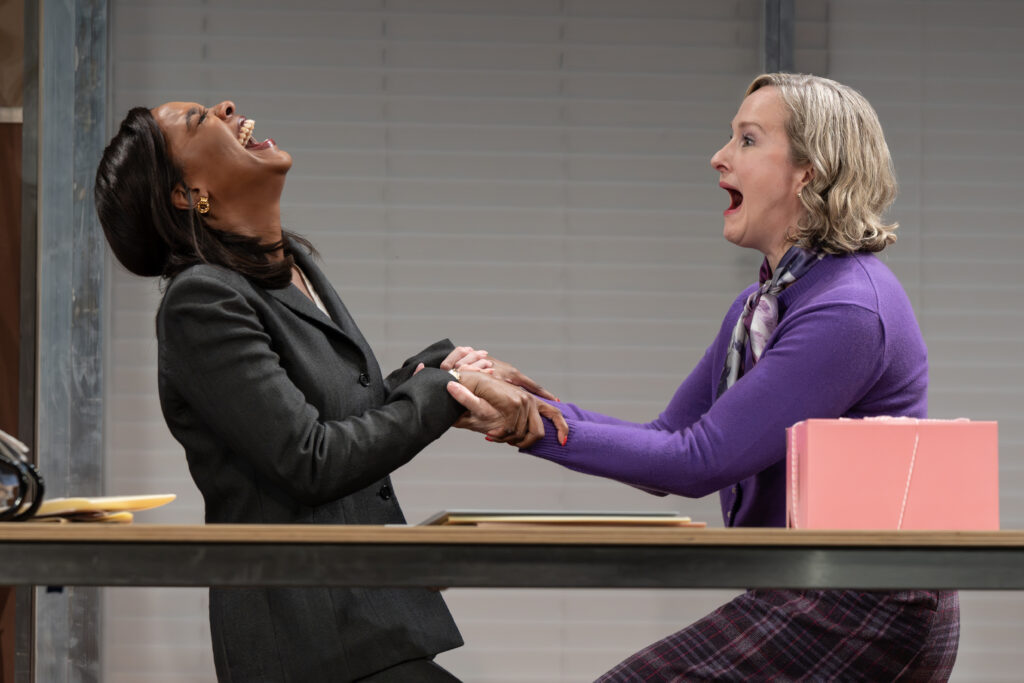
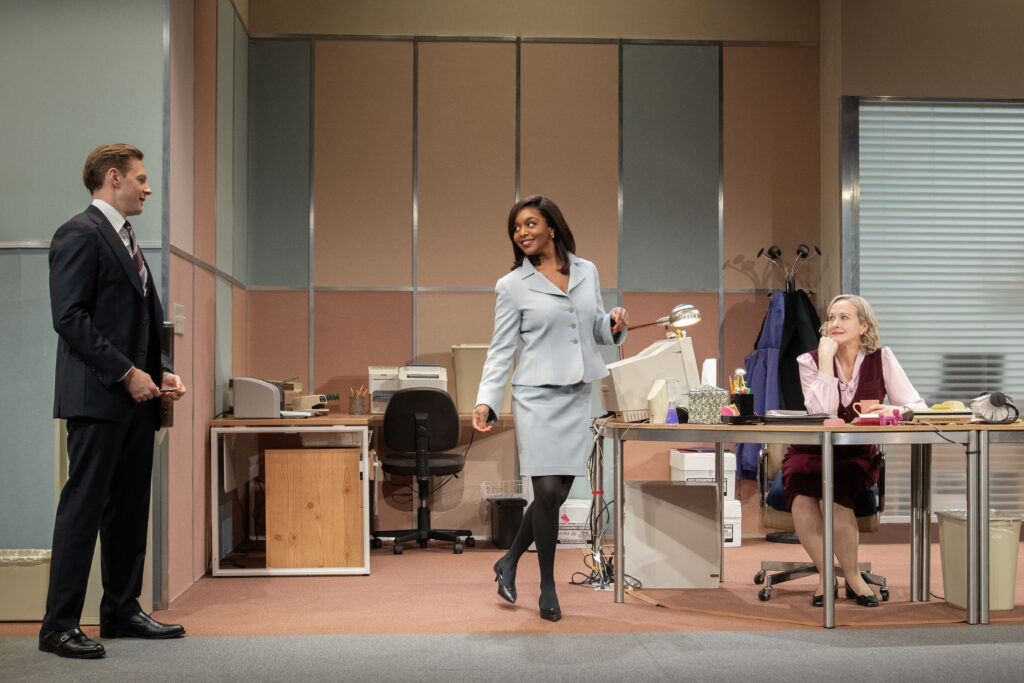
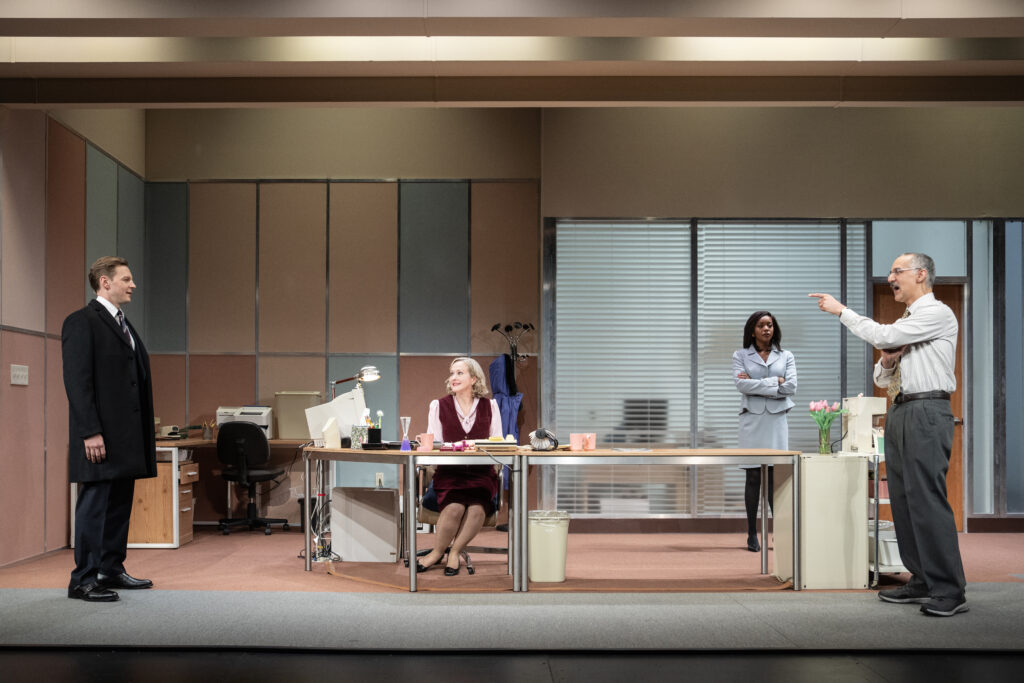
Will Pullen, Katie Finneran, Mallori Johnson, and Nael Nacer in Second Stage’s ‘The Receptionist’
Photos by Joan Marcus

“The Receptionist” – Written by Adam Bock; Directed by Sarah Benson; Scenic Design by dots; Costume Design by Enver Chakartash; Co-Lighting Design by Stacey Derosier and Bailey Costa; Sound Design by Bray Poor. Presented by Second Stage at the Pershing Square Signature Center, 480 W. 42nd St., New York, through May 24.

By Shelley A. Sackett

A frumpy, somewhat dazed man stands in a cardboard booth lined with some sort of metallic padding. It looks like a cross between a confessional, a detention unit, and a fourth grader’s science fair version of a spaceship.

The man’s name is Mr. Raymond (Nael Nacer, sadly underused). He is fidgety and nervous as he addresses the audience.

“I like fly fishing. There’s nothing like it. I love everything about it. I love catching fish. I love letting them go, too. I have a philosophy when it comes to a caught fish. If you catch a fish and it’s ok, you let it go. But if it’s snagged or it’s got a hook in its gills, you can’t put it back in the stream because it’ll die. So if that happens, I think you should prepare the fish to be killed,” he says matter-of-factly.

Johnson and Nacer

As if momentarily distracted by an almost PTSD type of unwanted, interfering thought, he pauses and then describes his wife’s reactions to pictures of people “over there” and what “we” are doing to them. He can’t finish his sentences.

“When things are hard,” he continues, after regaining his composure, “I think about fly fishing.”

Nacer brings a nuance to Mr. Raymond that is heartbreaking and intriguing. Unlike his colleagues, he lives in the gray – half in the dark and half in the light.

He is also a mystery. Why is he agitated, losing his train of thought mid-sentence? Why does he conclude with an explanation about how he kills the fish “humanely” and then eats it? “And that’s okay,” he explains. “Because everything out there is eating something.”

His monologue, part confession, part plea for help, ends, and Mr. Raymond ambles off stage, leaving us to wonder how and when his message will make sense (and bringing to mind Mark Rylance in the existentialist “Nice Fish”).

The scene abruptly shifts gears to the mundane here and now — the reception area of a shabby, mind-numbingly drab office reception area (with an elevator door that actually works, the only visual excitement on the set). Beverly Wilkins (Kate Finneran in a role she was born to play), the titular receptionist, handles her desk as if captain of a fleet. Brisk, efficient and in command of her domain, she interrupts her gossipy calls to friends and family only when forced to.

“Northeast Office, please hold,” she repeats – and repeats – as she rolls her eyes in irritation and puts callers through to the voice mail of her two higher-ups, head honcho Mr. Raymond and second-in-command, Lorraine Taylor, both missing in action.

She’s used to Lorraine being late; Mr. Raymond’s absence alarms her. A client contact apparently did not go well for him. Something is amiss. Something enigmatic, significant and menacing.

She distracts herself by playing “Dear Abby” to friends and family, making coffee, straightening the blinds and shredding some documents. She even orders a birthday cake. She is a whirling dervish of meaningless activity and bossy, judgmental, boundary-less encounters.

Owing to Finneran’s physical comedic flair and timing and director Sarah Benson’s crisp pacing, Beverly is engaging, endearing and more multi-layered than she at first presents.

She is also a riot. Playwright Adam Bock has given her most of the funniest lines, and she knows just how to milk their delivery for all they’re worth.

By the time Lorraine (Mallori Johnson) shows up, however, even Finneran can’t keep Bock’s stand-up comic/sitcom patois from becoming monotonous, and we crave anything and anyone more than just Beverly.  

Lorraine and Beverly engage in small talk about personal crises. Although Lorraine is clearly Beverly’s superior professionally, she seeks Beverly’s stern counsel on everything from romance to attire. (Beverly looks like she shops in the Target clearance department; Lorraine is sleek, chic, and skin-tight.)

Johnson and Finneran

Just when it seems Bock will never get to the point of all this banter (the play, after all, is only 75 minutes and we’re almost at the half-hour point), Beverly lets slip that Mr. Raymond was summoned to the Central Office yesterday and never returned to the office.

Almost on cue, Martin Dart (Will Pullen) arrives, without an appointment, from that same Central Office.

He is looking for Mr. Raymond and will wait until he returns. He is married with a four-year-old who eats paste. He jokes with Beverly and flirts in a creepy, cringe-worthy way with the willing and desperate Lorraine. He even wears blood red socks.

He steps out to pick up pastries and a paper and so is gone when Mr. Raymond finally arrives and exposes what really goes on at this seemingly unremarkable office. His great reveal and his tenuous circumstance change everything.

Again, Nacer brings a sensitivity to a character who is blessed with three, rather than two, dimensions. Mr. Raymond is the meatiest (and smallest) role, and one can’t help wishing Bock had pared the other three and padded this one.

With Mr. Raymond’s acknowledgment of events, all that was light and comfortable suddenly is not. Loyalties, responsibilities and the banality of evil take center stage. Mr. Dart shape shifts into a Stasi-like commandant, official, brutal and terrifying. Everyone is ambiguous. No one can be trusted. Everyone is a potential liar. No one is above suspicion. No one is safe.

Like zombies in a “Twilight Zone” episode, our office mates wander in a world that not only no longer welcomes them, but actually may persecute and prosecute them.

Pullen, Johnson and Finneran

It is impossible to detail any more of the plot without becoming a spoiler, but Bock’s outrage over issues he found compelling and relevant in 2004 (he started writing in response to the Iraq war “Torture Memos”) now leaves us nostalgic for those “good old days” when complicity, compliance and corruption were still alarming and shocking.

But for the outstanding cast (especially Finneran and Nacer) and elevated production, The Receptionist would leave us feeling like its revival was merely an opportunity to rub salt into an open, unhealed wound, still festering after more than two decades.

And if we want that feeling, all we have to do is read the front page of the newspaper.

For more information, go to https://2st.com/shows/the-receptionist